Financial Markets

BCA’s House View recommends staying underweight stocks versus bonds, even in a stagflationary scenario. The US and global economies are likely to enter a recession this year unless tariffs are swiftly reversed or meaningful fiscal stimulus is enacted. The…
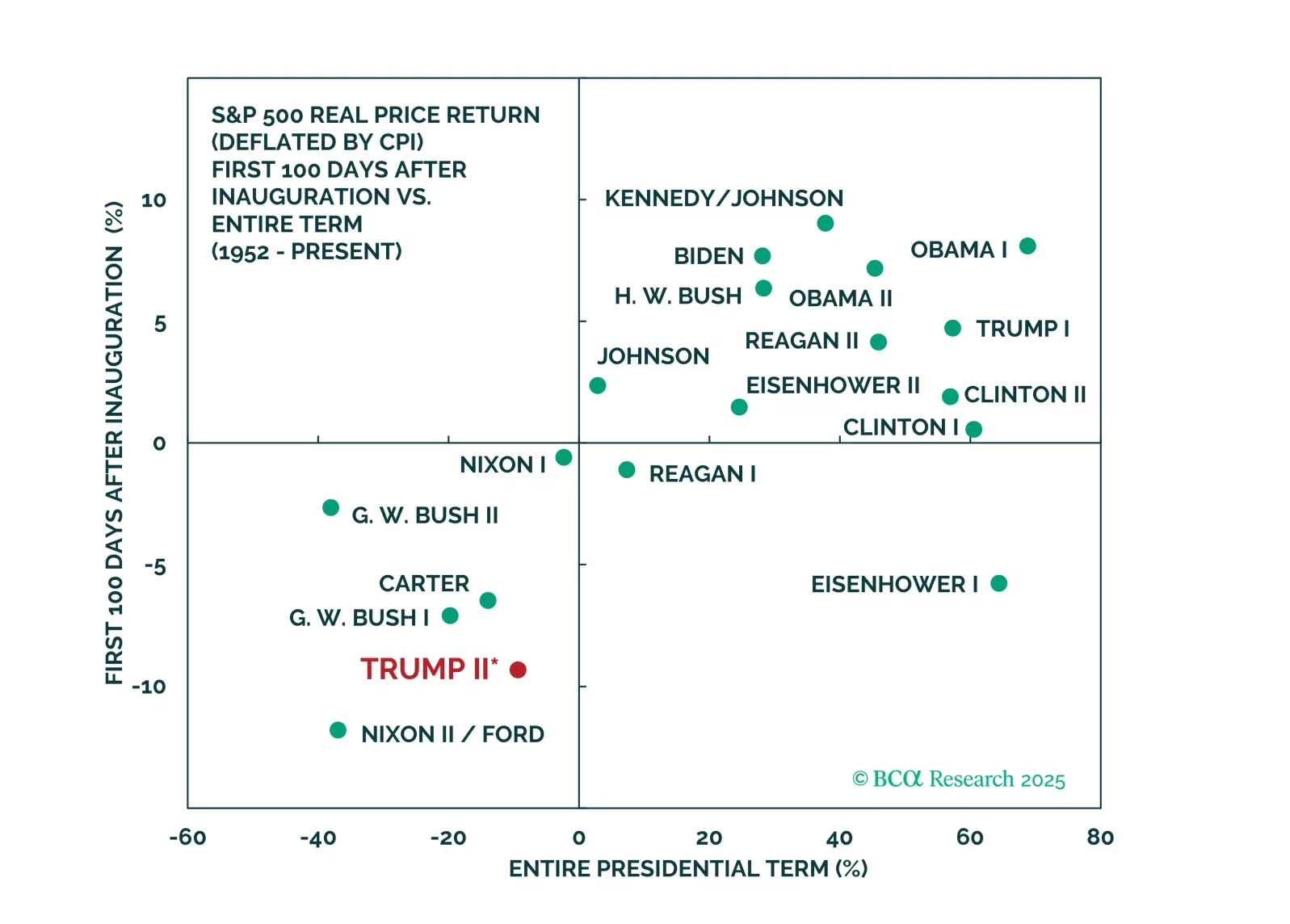
Do not play the bounce in US and global cyclical assets as Trump backpedals from the trade war. China will talk, but the pace will be slow and the outcome disappointing. Fiscal stimulus will surprise marginally in the EU, China, and even the US, but still may not rescue the business cycle.
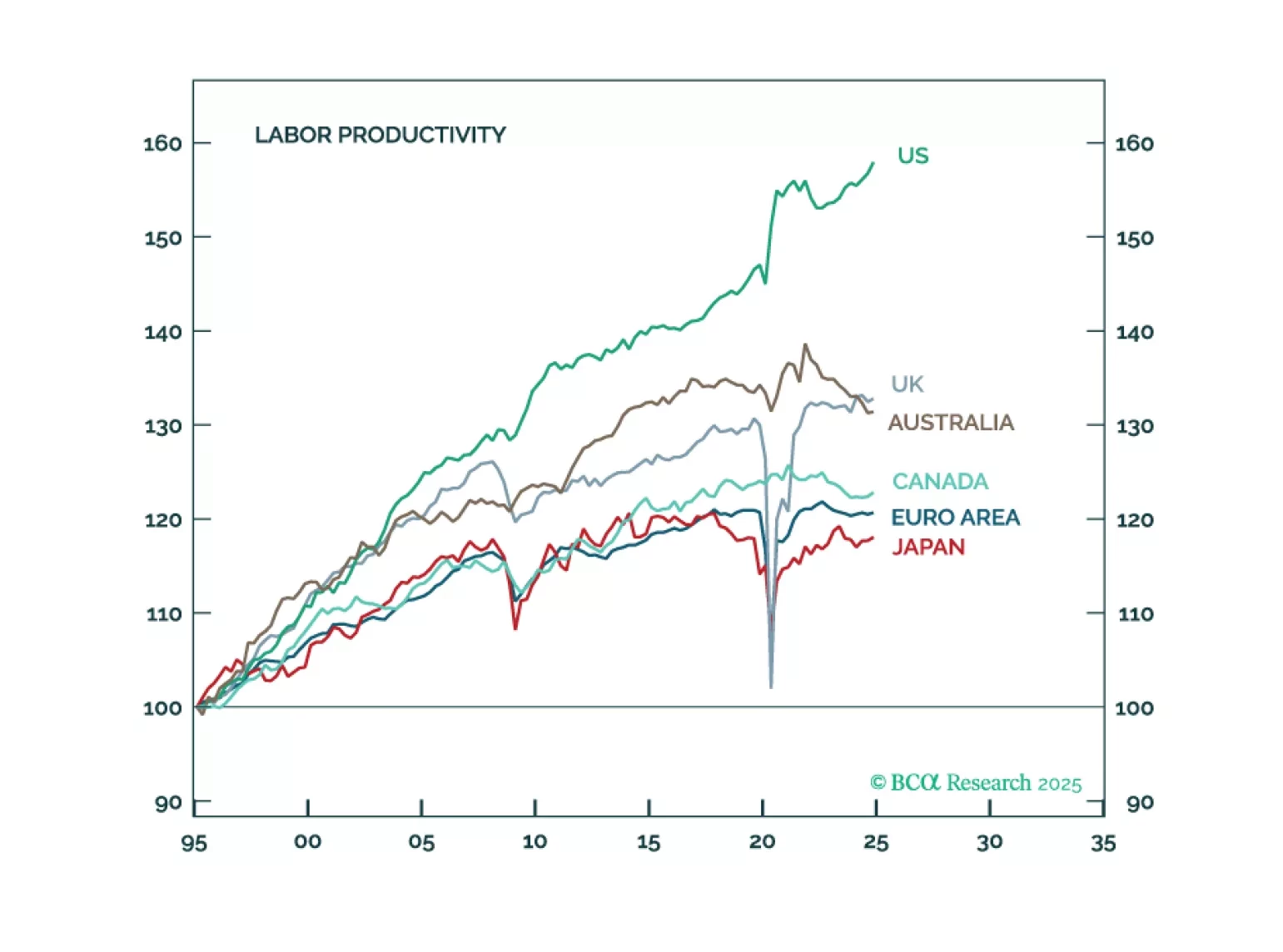
Although the sell-off in the US dollar and relative outperformance of non-US stocks will pause over the coming months as a global recession begins, the fading of US exceptionalism will still cause the dollar to weaken and US stocks to underperform over a multi-year horizon.

The US dollar’s underperformance since Liberation Day highlights shifting dynamics in global markets, but the recent “Sell America” move is overdone. During April’s market turmoil, the dollar failed to act as a safe haven, with US equities, bonds, and the DXY…
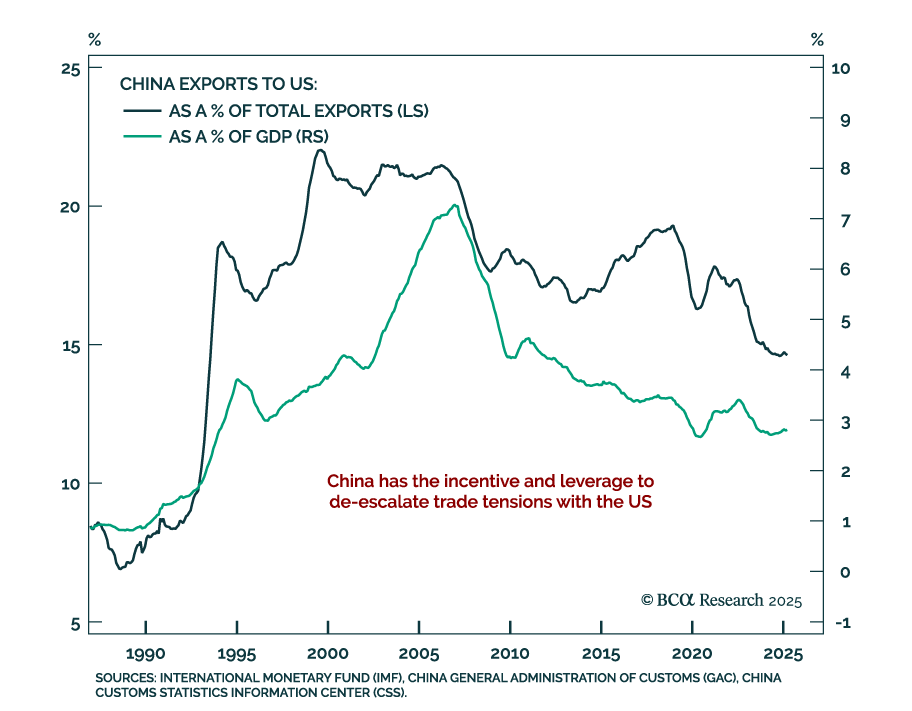
Trade headlines shift too fast to interpret reliably, but cutting through the noise reveals the US is pivoting from escalation to de-escalation. As the equity and bond selloff intensified, the tone from Washington softened, suggesting political limits to how…
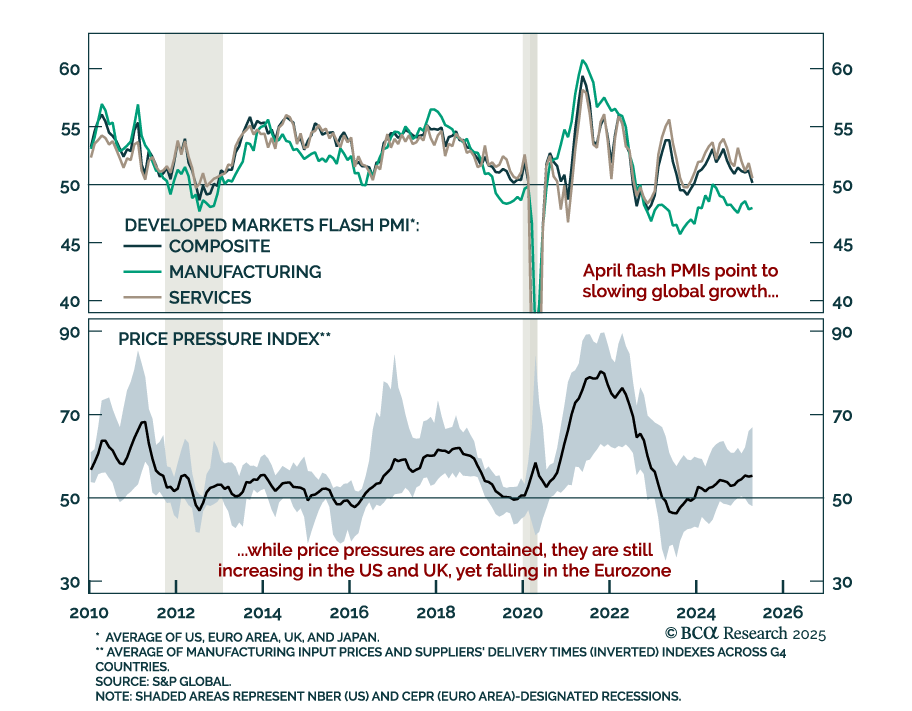
April PMIs confirm global growth is stalling, reinforcing our overweight in government bonds and underweight in risk assets. Services witnessed the worst deterioration, but manufacturing is still contracting even if broadly stable. This mirrors recent US…
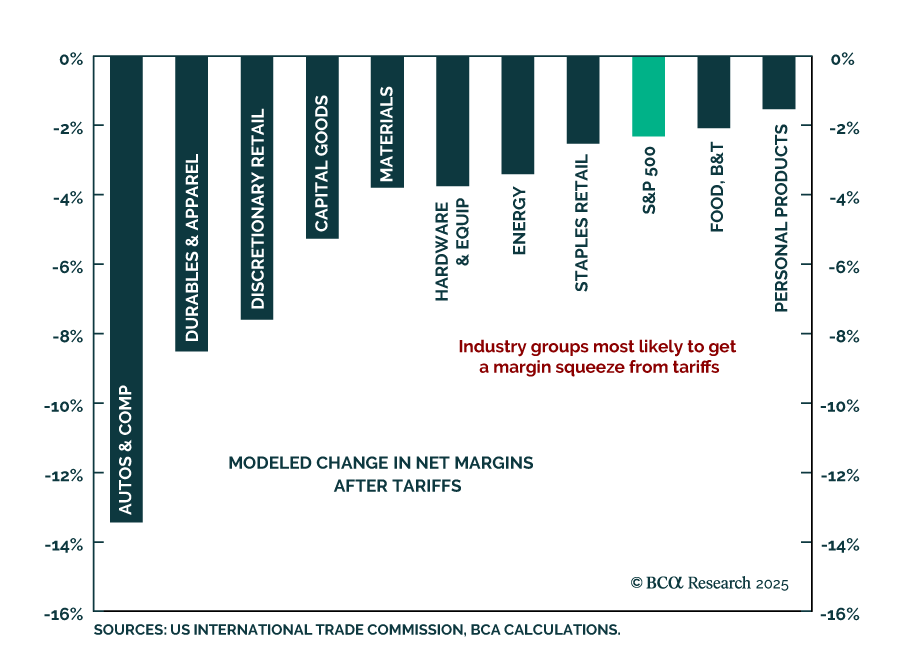
Our US Equity strategists warn that tariffs will meaningfully compress S&P 500 margins, with little pricing power to offset rising input costs. A two-point hit to net margins and falling multiples will drive earnings downgrades and negative forward…
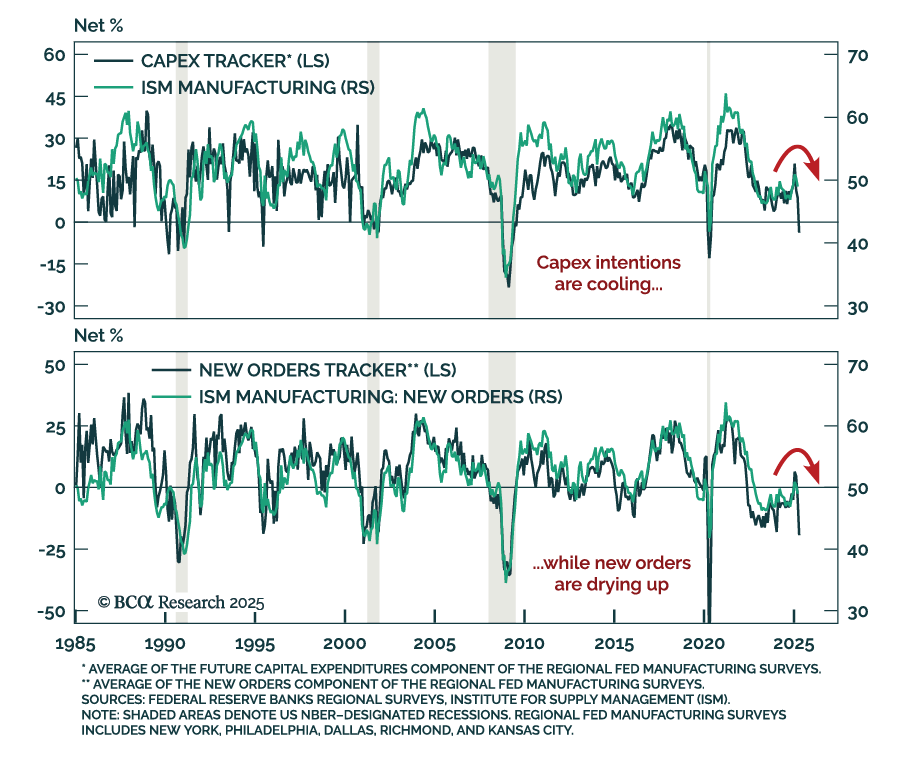
Advanced US indicators for April continue to deteriorate, reinforcing our defensive positioning as recession risks remain underpriced. After weak Empire and Philly Fed manufacturing prints, the Philly Fed services survey shows the slowdown is spreading beyond…
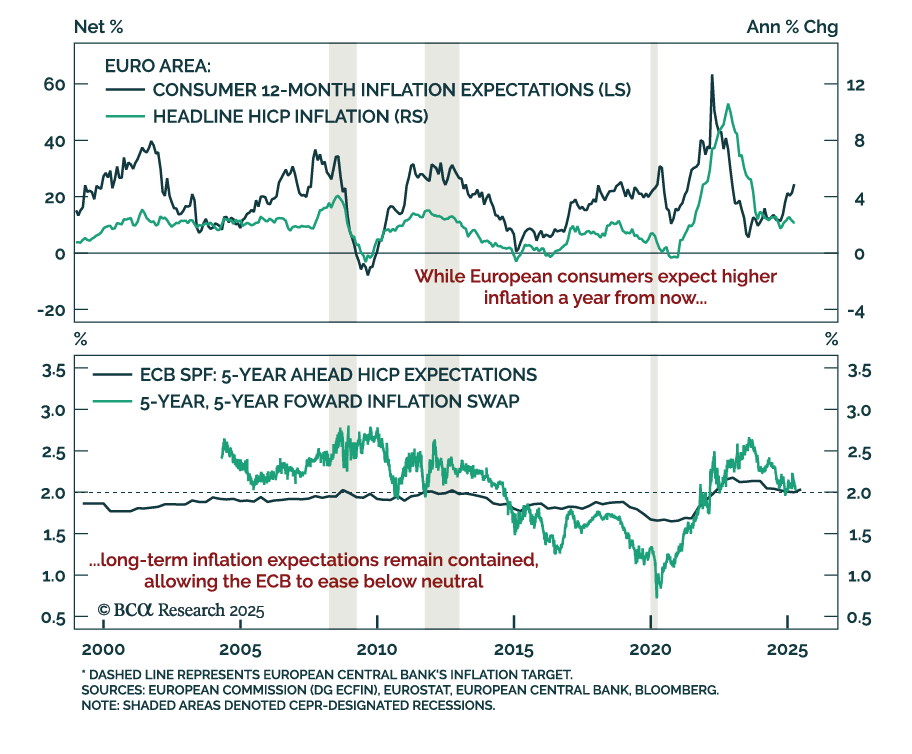
Weak European consumer confidence adds to recent sentiment misses and reinforces our tactical long December 2025 ESTR futures versus SOFR position. April flash Consumer Confidence fell to -16.7 from -14.5 in March, missing expectations and aligning with…
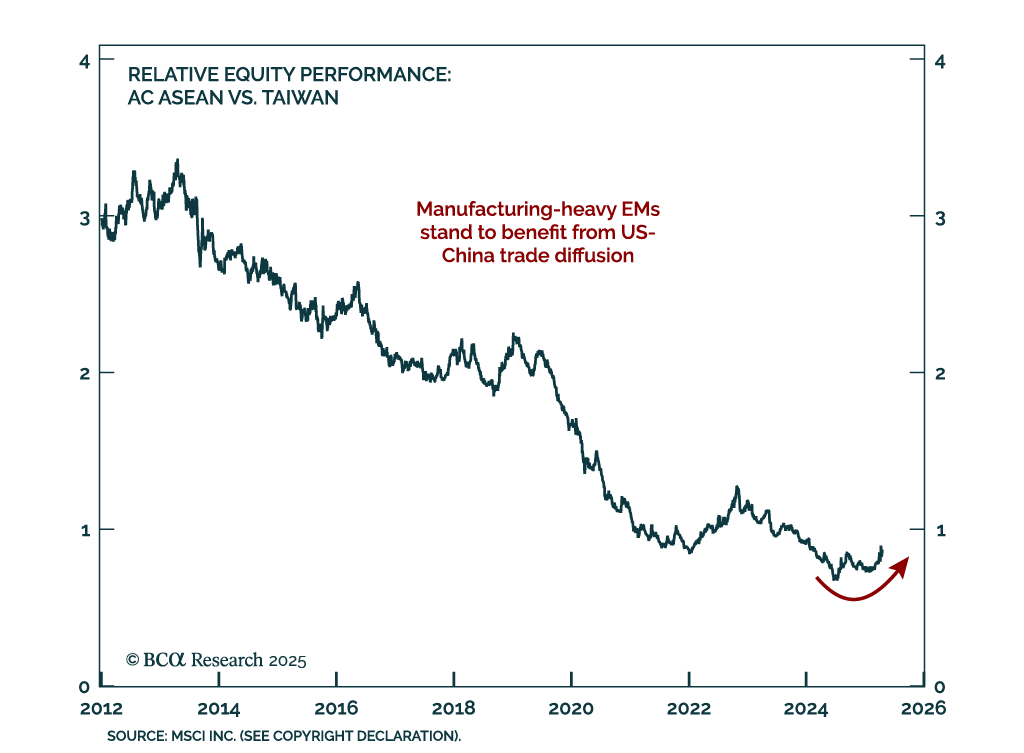
Our Geopolitical and GeoMacro strategists recommend buying tail-risk protection and adding exposure to manufacturing-oriented EMs as the risk of US-China military escalation rises. They now see a 10% chance of full-scale war over Taiwan and a 25% chance of a…