
Sorry, you need to enable JavaScript to visit this website.
Skip to main content

Manufacturing

After falling throughout most of the second half of 2023, the US economic surprise index has surged over the past few weeks, indicating that economic conditions are firm at the start of the year. Indeed, Manufacturing PMIs delivered a positive signal last…
China’s official NBS PMI indicates that growth conditions remain sluggish. Although the composite index ticked up from 50.3 to 50.9, it is still barely in expansionary territory. Notably, the manufacturing PMI – which inched up by 0.2 points in January –…
Over the past few months, we have been highlighting that several indicators are pointing to an industrial recovery in Europe. Notably, Swedish indicators were a cause for optimism. The Swedish PMI’s new orders-to-inventories ratio has rebounded sharply over…
S&P 500 operating margins have been in a downdraft for nearly two years – but the consensus is still penciling in expansion for 2024. How likely is that? Our US Equity Strategy colleagues have addressed this question in their recent “Marginally Better…
China’s industrial profits registered their second consecutive annual contraction last year, falling by 2.3% in 2023. The full year contraction comes despite a surge in industrial profits near year-end. Profit growth came in at 16.8% y/y in December…
Flash PMIs sent a generally positive update on economic activity across major DM economies in January – particularly in the case of manufacturing. In the US, the composite index rose to a 7-month high of 52.3, beating expectations it would remain broadly…
Some key Asian trade indicators are warning against betting on a sustained rebound in global trade activity. In particular, Taiwanese export orders collapsed by 16% y/y in December – significantly below expectations of a minor 1.0% y/y contraction. This…

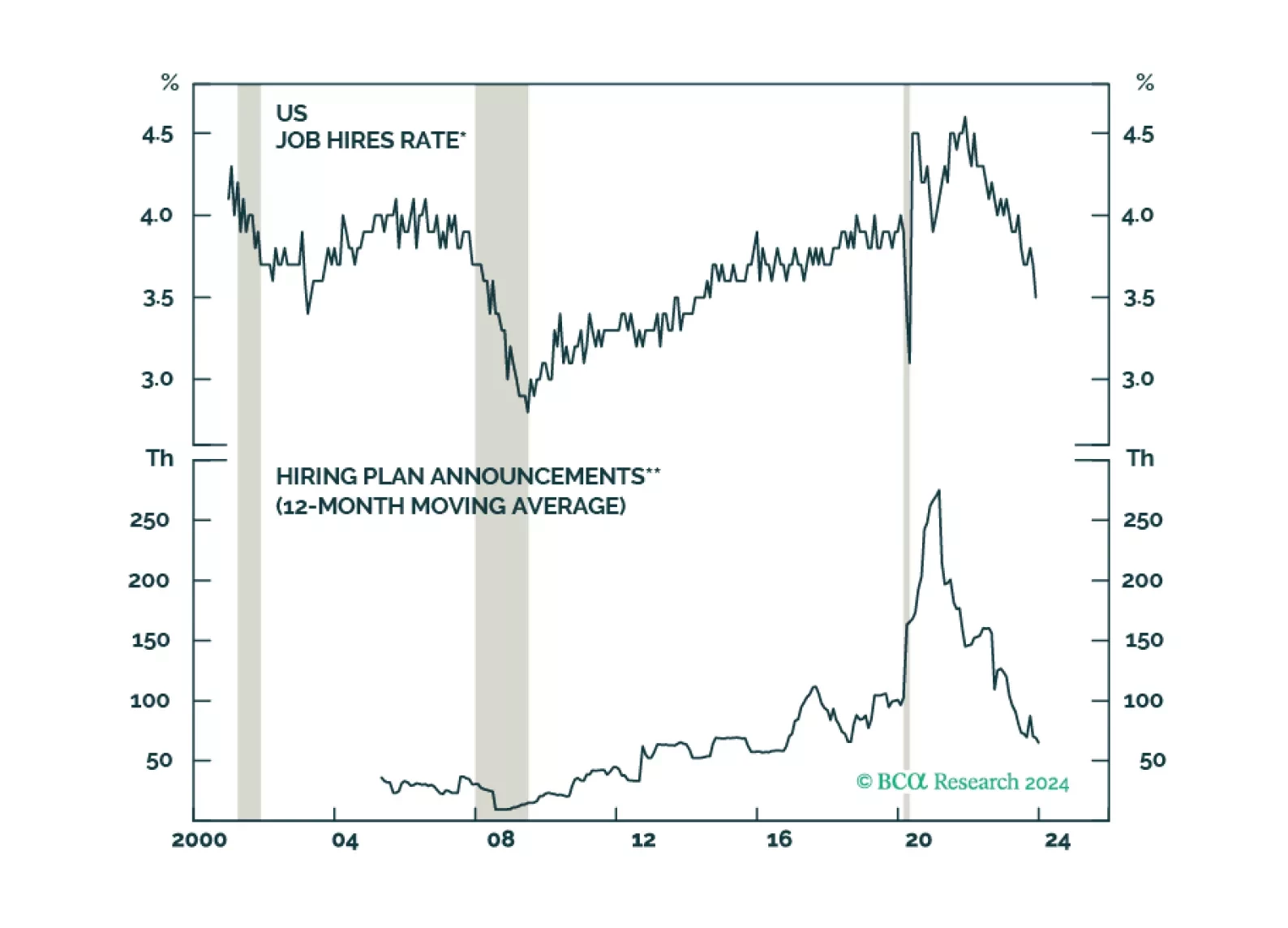
Investors have taken comfort in the fact that unemployment has remained low in the major economies. But underneath the surface, there are clear signs that labor demand is weakening. The clock keeps ticking towards our H2 2024 recession call. After being bullish on risk assets last year, we are slowly turning more defensive.
The New York Fed’s Empire State Survey delivered a somber signal about US manufacturing conditions. The headline general business conditions index plunged from -14.5 to -43.7 in December, disappointing expectations of an improvement to -5.0.  This move…

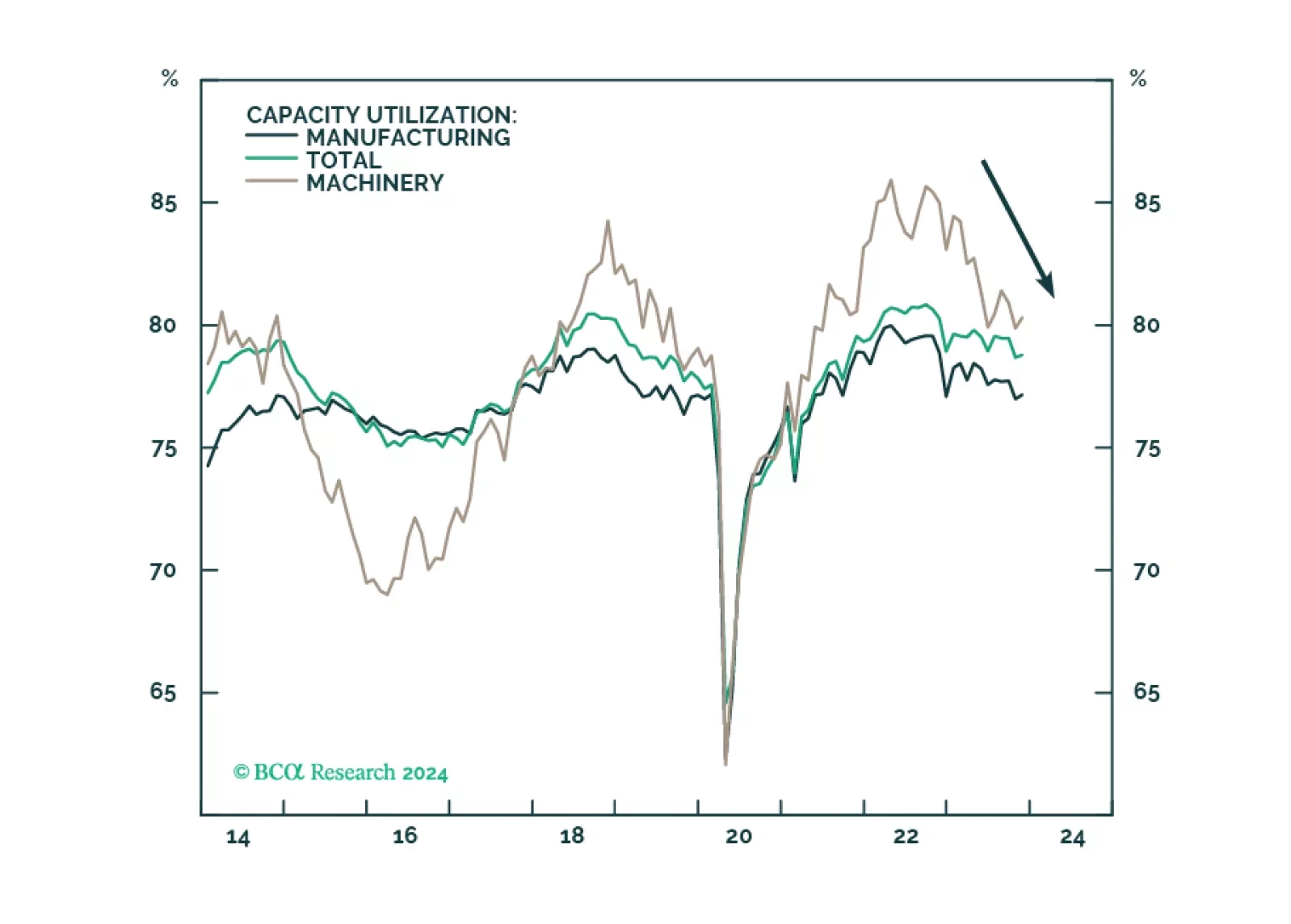
The US manufacturing renaissance, spurred on by reshoring, automation, and government spending, is running its course but progress has slowed on the back of tight monetary conditions and the manufacturing recession. The deceleration of these positive trends weighs on the outlook for the Capital Goods industry group, impeding its performance over the short term. However, we reiterate that positive long-term trends for the industry remain intact. We downgrade Capital Goods to a tactical underweight. It remains a strategic overweight.