Special Report
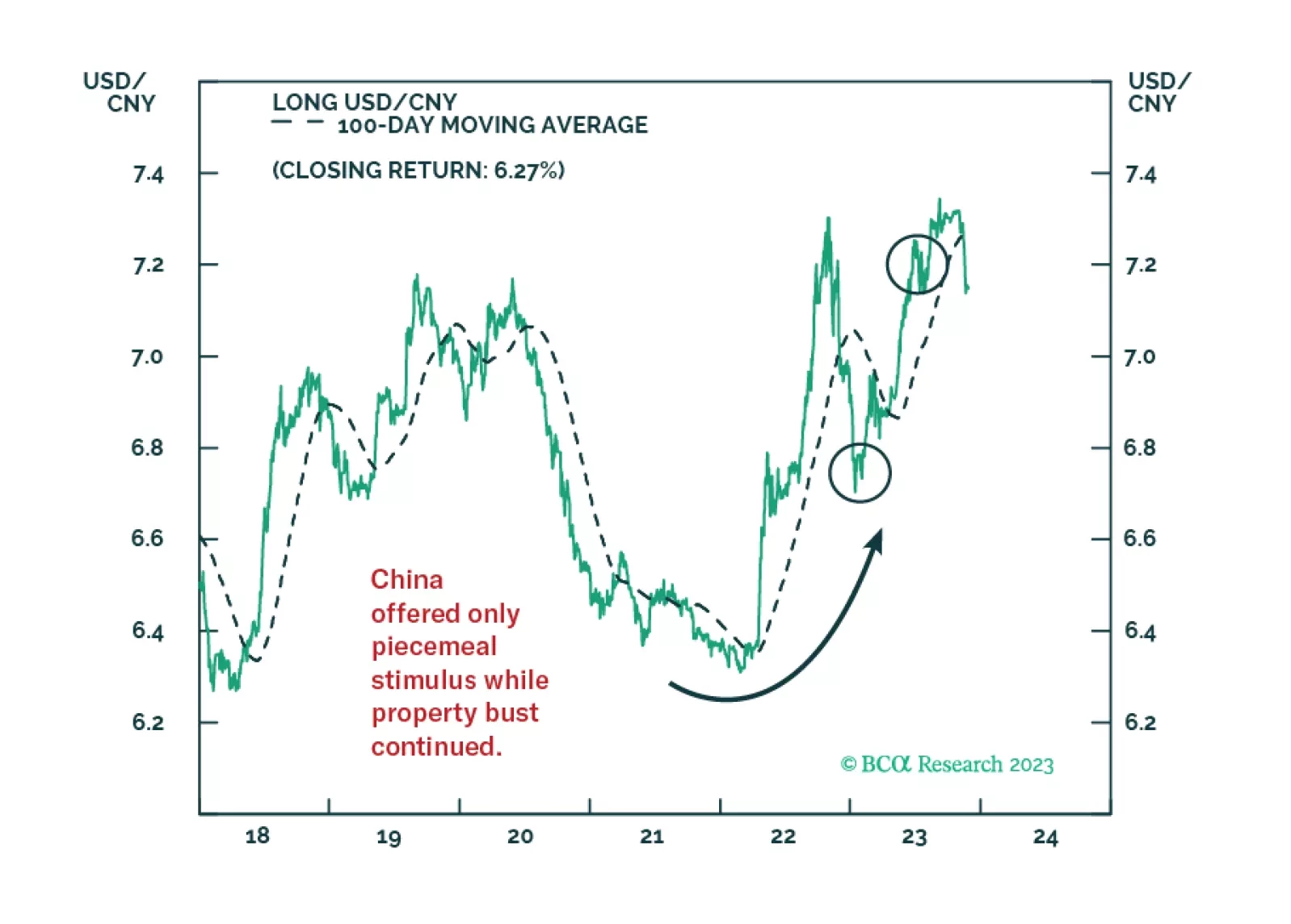
Executive Summary Major EM’s Defense Spends Will Be Comparable To That Of Developed Countries Tectonic geopolitical trends are taking shape in Emerging Markets (EMs) today that will leave an indelible imprint on the next decade. First, EMs have gone on a relatively unnoticed public debt binge at a time when the economic prospects of the median EM citizen have deteriorated. This raises the spectre of sudden fiscal populism, aggressive foreign policy or social unrest in EMs. China, Brazil and Saudi Arabia appear most vulnerable to these risks. Second, the defense bill of major EMs could be comparable to that of the top developed countries of the world in a decade from now. Investors must brace for EMs to play a central role in the defense market and in wars, in the coming years. To profit from ascendant geopolitical risks in China, we reiterate shorting TWD-USD and the CNY against an equal-weighted basket of Euro and USD. To extract most from the theme of EM militarization, we suggest a Long on European Aerospace & Defense relative to European Tech stocks. Trade Recommendation Inception Date Return LONG EUROPEAN AEROSPACE & DEFENSE / EUROPEAN TECH EQUITIES (STRATEGIC) 2022-03-18 Bottom Line: Even as EMs are set to emerge as protagonists on the world stage, investors must prepare for these countries to exhibit sudden fiscal expansions, bouts of social unrest or a newfound propensity to initiate wars. The only way to dodge these volatility-inducing events is to leverage geopolitics to foresee these shocks. Feature Only a few weeks before Russia’s war with Ukraine broke out, a client told us that he was having trouble seeing the importance of geopolitics in investing. “It seems like geopolitics was a lot more relevant a few years back, with the European debt crisis, Brexit, and Trump. Now it does not seem to drive markets at all”, said the client. To this we gave our frequent explanation which is, “Our strategic themes of Great Power Struggle, Hypo-Globalization, and Nationalism/Populism are now embedded in the international system and responsible for an observable rise in geopolitical risk that is reshaping markets”. In particular we highlighted our pessimistic view on both Russia and Iran, which have incidentally crystallized most clearly since we had this client conversation. Related Report Geopolitical StrategyBrazil: The Road To Elections Won't Be Paved With Good Intentions Globally key geopolitical changes are afoot with Russia at war. In the coming weeks and months, we will write extensively about the dramatic changes we see taking shape in the realm of geopolitics and investing. We underscored the dramatic geopolitical realignment taking place as Russia severs ties with the West and throws itself into China’s arms in a report titled “From Nixon-Mao To Putin-Xi”. In this Special Report we highlight two key geopolitical themes that will affect emerging markets (EMs) over the coming decade. The aim is to help investors spot these trends early, so that they can profit from these tectonic changes that are sure to spawn a new generation of winners and losers in financial markets. (For BCA Research’s in-depth views on EMs, do refer to the Emerging Markets Strategy (EMS) webpage). Trend #1: Beware The Wrath Of EMs On A Debt Binge Chart 1The Pace Of Debt Accumulation Has Accelerated In Major EMs Investors are generally aware of the debt build-up that has taken place in the developed world since Covid-19. The gross public debt held by the six most developed countries of the world (spanning US, Japan, Germany, UK, France and Italy) now stands at an eye-watering $60 trillion or about 140% of GDP. This debt pile is enormous in both absolute and relative terms. But at the same time, the debt simultaneously being taken on by EMs has largely gone unnoticed. The cumulative public debt held by eight major EMs today (spanning China, Taiwan, Korea, India, Brazil, Russia, Saudi Arabia and Turkey) stands at $20tn i.e., about 70% of GDP. Whilst the absolute value of EM debt appears manageable, what is worrying is the pace of debt accumulation. The average public debt to GDP ratio of these EMs fell over the early 2000s but their public debt ratios have now doubled over the last decade (Chart 1). EMs have been accumulating public debt at such a rapid clip that the pace of debt expansion in EMs is substantially higher than that of the top six developed countries (Chart 1). These six DMs have a larger combined GDP than the eight EMs with which they are compared. Related Report Geopolitical StrategyIndia's Politics: Know When To Hold 'Em, Know When To Fold 'Em (For in-depth views on China’s debt, do refer to China Investment Strategy (CIS) report here). Now developed countries taking on more debt makes logical sense for two reasons. Firstly, most developed countries are ageing, and their populations have stopped growing. So one way to prop up falling demand is to get governments to spend more using debt. Secondly, this practice seems manageable because developed country central banks have deep pockets (in the form of reserves) and their central banks are issuers of some of the safest currencies of the world. But EMs using the same formula and getting addicted to debt at an earlier stage of development is risky and could prove to be lethal in some cases. Also distinct from reasons of macroeconomics, the debt binge in EMs this time is problematic for geopolitical reasons. This Time Is Different EMs getting reliant on debt is problematic this time because their median citizen’s economic prospects have deteriorated. Growth is slowing, inflation is high, and job creation is stalling; thereby creating a problematic socio-political backdrop to the EM debt build-up. Growth Is Slowing: In the 2000s EMs could hope to grow out of their social or economic problems. The cumulative nominal GDP of eight major EMs more than quadrupled over the early 2000s but a decade later, these EMs haven not been able to grow their nominal GDP even at half the rate (Chart 2). Inflation Remains High: Despite poorer growth prospects, inflation is accelerating. Inflation was high in most major EMs in 2021 (Chart 3) i.e., even before the surge seen in 2022. Chart 2Major EM’s Growth Engine Is No Longer Humming Like A Well-Tuned Machine Chart 3Despite Slower Growth, Inflation In Major EMs Remains High Rising Unemployment: Employment levels have improved globally from the precipice they had fallen into in 2020. But unemployment today is a far bigger problem for major EMs as compared to developed markets (Chart 4). If the economic miseries of the median EM citizen are not addressed, then they can produce disruptive sociopolitical effects that will fan market volatility. This problem of rising economic misery alongside a rapid debt build-up, can also be seen for the next tier of EMs i.e. Mexico, Indonesia, Iran, Poland, Thailand, Nigeria, Argentina, Egypt, South Africa and Vietnam. While the average public debt to GDP ratios of these EMs fell over the early 2000s, the pace of debt accumulation has almost doubled over the last decade (Chart 5). Furthermore, the growth engine in these smaller EMs is no longer humming like a well-tuned machine and inflation remains at large (Chart 5). Chart 4Unemployment - A Bigger Problem In Major EMs Today Chart 5Smaller EMs Must Also Deal With Rising Debt, Alongside Slowing Growth Chart 6The Debt Surge In EMs This Time, Poses Unique Challenges History suggests that periods of economic tumult are frequently followed by social unrest. The eruption of the so-called Arab Spring after the Great Recession illustrated the power of this dynamic. Then following the outbreak of Covid-19 in 2020 we had highlighted that Turkey, Brazil, and South Africa are at the greatest risk of significant social unrest. We also showed that even EMs that looked stable on paper faced unrest in the post-Covid world, including China and Russia. In this report we take a decadal perspective which reveals that growth is slowing, and debt is growing in EMs. Given that EMs suffer from rising economic miseries alongside growing debt and lower political freedoms (Chart 6), it appears that some of these markets could be socio-political tinderboxes in the making. Policy Implications Of The EM Debt Surge “As it turns out, we don't 'all' have to pay our debts. Only some of us do.” – David Graeber, Debt: The First 5,000 Years (Melville House Publishing, 2011) The trifecta of fast-growing debt, slowing growth and/or low political freedoms in EMs can add to the volatility engendered by EMs as an asset class. Given the growing economic misery in EMs today, politicians will be wary of outbreaks of social unrest. To quell this unrest, they may resort broadly to fiscal expansion and/or aggressive foreign policy. Both of these policy choices can dampen market returns in EMs. Chart 7India's Performance Had Flatlined Post Mild Populist Tilt Policy Choice #1: More Fiscal Spending Despite High Debt Policymakers in some EMs may respond by de-prioritizing contentious structural reforms and prioritizing fiscal expansion. The Indian government’s decision to repeal progressive changes to farm laws in late 2021, launch a $7 billion home-building program in early 2022 and withholding hikes in retail prices of fuel, illustrates how policymakers are resorting to populism despite high public debt levels. As a result, it is no surprise that MSCI India had been underperforming MSCI EM even before the war in Ukraine broke out (Chart 7). Brazil is another EM which falls into this category, while China’s attempts to run tighter budgets have failed in the face of slowing growth. Policy Choice #2: Foreign Policy Aggression EMs may also adopt an aggressive foreign policy stance. Russia’s decision to invade Ukraine, Turkey’s interventions in several countries, and China’s increasing assertiveness in its neighboring seas and the Taiwan Strait provide examples. Wars by EMs are known to dampen returns as the experience of the Russian stock market shows. Russian stocks fell by 14% during its invasion of Georgia in 2008 and are down 40% from 24 February 2022 until March 9, 2022, i.e. when MSCI halted trading. If politicians fail to pursue either of these policies, then they run the risk of social unrest erupting due to tight fiscal policy or domestic political disputes. In fact, early signs of social discontent are already evident from large protests seen in major EMs over the last year (see Table 1). Table 1Social Unrest In Major EMs Is Already Ascendant Bottom Line: The last decade has seen major EMs go on a relatively unnoticed public debt binge. This is problematic because this debt surge has come at a time when economic prospects of the median EM citizen have deteriorated. Politicians will be keen to quell the resultant discontent. This raises the specter of excessive fiscal expansion, aggressive foreign policy, and/or social unrest. All three outcomes are negative from an EM volatility perspective. Trend #2: The Rise And Rise Of EM Defense Spends Great Power Rivalry is an outgrowth of the multipolar structure of international relations. This theme will drive higher defense spending globally. In this report we highlight that even after accounting for a historic rearmament in developed countries following Russia’s invasion of Ukraine, a decade from now EMs will play a key role in driving global military spends. The defense bill of the six richest developed countries of the world (the US, Japan, Germany, UK, France and Italy) will increasingly be rivaled by that of the top eight EMs (China, Taiwan, Korea, India, Brazil, Russia, Saudi Arabia and Turkey). While key developed markets like Japan and Germany in specific (and Europe more broadly) are now embarking on increasing defense spends, the unstable global backdrop will force EMs to increase their military budgets as well. The combination of these forces could mean that the top eight EM’s defense spends could be comparable to that of the top six developed markets in a decade from now i.e., by 2032 (Chart 8). This is true even though the six DMs have a larger GDP. The assumptions made while arriving at the 2032 defense spend projections include: Substantially Higher Pace Of Defense Spends For Developed Countries: To reflect the fact that Russia’s invasion of Ukraine will trigger a historical wave of armament in developed markets we assume that: (a) NATO members France, Germany and Italy (who spent about 1.5% of GDP on an average on defense spends in 2019) will ramp up defense spending to 2% of GDP by 2032, (b) US and UK i.e. NATO members who already spend substantially more than 2% of GDP on defense spends will still ‘increase’ defense spends by another 0.4% of GDP each by 2032 and finally (c) Japan which spends less than 1% of GDP on defense spends today, in a structural break from the past will increase its spending which will rise to 1.5% of GDP by 2032. China And Hence Taiwan As Well As India Will Boost Spends: To capture China’s increasingly aggressive foreign policy stance and the fact that India as well as Taiwan will be forced to respond to the Chinese threat; we assume that China increases its stated defense spends from 1.7% of GDP in 2019 to 3% by 2032. Taiwan follows in lockstep and increases its defense spends from 1.8% of GDP in 2019 to 3% by 2032. India which is experiencing a pincer movement from China to its east and Pakistan to its west will have no choice but to respond to the high and rising geopolitical risks in South Asia. The coming decade is in fact likely to see India’s focus on its naval firepower increase meaningfully as it feels the need to fend off threats in the Indo-Pacific. India currently maintains high defense spends at 2.5% of GDP and will boost this by at least 100bps to 3.5% of GDP by 2032. Defense Spending Trends For Five EMs: For the rest of the EMs (namely Russia, Saudi Arabia, South Korea and Brazil), the pace of growth in defense spending seen over 2009-19 is extrapolated to 2032. For Turkey, we assume that defense spends as a share of GDP increases to 3% of GDP by 2032. Extrapolation Of Past GDP Growth For All Countries: For all 14 countries, we extrapolate the nominal GDP growth calculated by the IMF for 2022-26 as per its last full data update, to 2032. This tectonic change in defense spending patterns has important historical roots. Back in 1900, UK and Japan i.e., the two seafaring powers were top defense spenders (Chart 9). Developed countries of the world continued to lead defense spending league tables through the twentieth century as they fought expensive world wars. Chart 8Major EM’s Defense Spends Will Be Comparable To That Of Developed Countries Chart 9Back In 1900, Developed Countries Like UK And Japan Were Top Military Spenders Chart 10By 2000, EMs Had Begun Spending Generously On Armament But things began changing after WWII. Jaded by the world wars, developed countries began lowering their defense spending. By the early 2000s EMs had now begun spending generously on armament (Chart 10). The turn of the century saw growth in developed markets fade while EMs like China and India’s geopolitical power began rising (Chart 11). Then a commodities boom ensued, resulting in petro-states like Saudi Arabia establishing their position as a high military spender. The confluence of these factors meant that by 2020 EMs had becomes major defense spenders in both relative and absolute terms too (Chart 12). Going forward, we expect the coming renaissance in DM defense spending in the face of Russian aggression, alongside rising geopolitical aspirations of China, to exacerbate this trend of rising EM militarization. Chart 11The 21st Century Saw Developed Countries’ Geopolitical Power Ebb Chart 12EMs Today Are Top Military Spenders, Even In Absolute Terms Why Does EM Weaponizing Matter? History suggests that wars are often preceded by an increase in defense spends: Well before WWI, a perceptible increase in defense spending could be seen in Austria-Hungary, Germany, and Italy (Chart 13). These three countries would go on to be known as the Triple Alliance in WWI. Correspondingly France, Britain and Russia (i.e., countries that would constitute the Triple Entente) also ramped up military spending before WWI (Chart 14). Chart 13Well Before WWI; Austria-Hungary, Germany, And Italy Had Begun Ramping Up Defense Spends Chart 14The ‘Triple Entente’ Too Had Increased Defense Spends In The Run Up To WWI History tragically repeated itself a few decades later. Besides Japan (which invaded China in 1937); Germany and Italy too ramped up defense spending well before WWII broke out (Chart 15). These three countries would come to be known as the Axis Powers and initiated WWII. Notably, Britain and Russia (who would go on to counter the Axis Powers) had also been weaponizing since the mid-1930s (Chart 16). Chart 15Axis Powers Had Been Increasing Defense Spends Well Before WWII Chart 16Allied Powers Too Had Been Increasing Defense Spends In The Run Up To WWII Chart 17Militarily Active States Have Been Ramping Up Defense Spends Russia, Ukraine, Turkey and Gulf Arab states like Iraq have been involved in wars in the recent past and noticeably increased their defense budgets in the lead-up to military activity (Chart 17). Given that a rise in military spending is often a leading indicator of war and given that EMs are set to spend more on defense, it appears that significant wars are becoming more rather than less likely, which Russia’s invasion of Ukraine obviously implies. A large number of “Black Swan Risks” are clustered in the spheres of influence of Russia, China, and Iran, which are the key powers attempting to revise the US-led global order today (Map 1). Map 1Black Swan Risks Are Clustered Around China, Russia & Iran Distinct from major EMs, eight small countries pose meaningful risks of being involved in wars over the next. These countries are small (in terms of their nominal GDPs) but spend large sums on defense both in absolute terms (>$4 billion) and in relative terms (>4% of GDP). Incidentally all these countries are located around the Eurasian rimland and include Israel, Pakistan, Algeria, Iran, Kuwait, Oman, Ukraine and Morocco (Map 2). In fact, the combined sum of spending undertaken by these countries is so meaningful that it exceeds the defense budgets of countries like Russia and UK (Chart 18). Map 2Eight Small Countries That Spend Generously On Defense Chart 188 Countries Located Near The Eurasian Rimland, Spend Large Sums On Defense Bottom Line: As EM geopolitical power and aspirations rise, the defense bill of top developed countries will be challenged by the defense spending undertaken by major EMs. On one hand this change will mean that certain EMs may be at the epicenter of wars and concomitant market volatility. On the other hand, this change could spawn a new generation of winners amongst defense suppliers. Investment Conclusions In this section we highlight strategic trades that can be launched to play the two trends highlighted above. Trend #1: Beware The Wrath Of EMs On A Debt Binge Investors must prepare for EMs to witness sudden fiscal expansions, unusually aggressive foreign policy stances, and/or bouts of social unrest over the next few years. The only way to dodge these volatility-inducing events in EMs is to leverage geopolitics to foresee socio-political shocks. Using a simple method called the “Tinderbox Framework” (Table 2), we highlight that: Table 2Tinderbox Framework: Identifying Countries Most Exposed To Socio-Political Risks Within the eight major EMs; China, Brazil, Russia and Saudi Arabia face elevated socio-political risks. Amongst the smaller ten EMs, these risks appear most elevated for Egypt, South Africa and Argentina. It is worth noting that Brazil, South Africa and Turkey appeared most vulnerable as per our Covid-19 Social Unrest Index that we launched in 2020. We used the tinderbox framework in the current context to fade out effects of Covid-19 and to add weight to the debt problem that is brewing in EMs. Client portfolios that are overweight on most countries that fare poorly on our “Tinderbox Framework” should consider actively hedging for volatility at the stock-specific level. To profit from ascendant geopolitical risks in China, we reiterate shorting TWD-USD and the CNY against an equal-weighted basket of Euro and USD. China’s public debt ratio is high and social pressures may be building with limited valves in place to release these pressures (Table 2). The renminbi has performed well amid the Russian war, which has weighed down the euro, but China faces a confluence of domestic and international risks that will ultimately drag on the currency, while the euro will benefit from the European Union’s awakening as a geopolitical entity in the face of the Russian military threat. Trend #2: EM’s Will Drive Wars In The 21st Century Wars are detrimental to market returns.1 Furthermore, as the history of world wars proves, even the aftermath of a war often yields poor investment outcomes as wars can be followed by recessions. It is in this context that investors must prepare for the rise of EMs as protagonists in the defense market, by leveraging geopolitics to identify EMs that are most likely to be engaged in wars. While we are not arguing that WWIII will erupt, investors must brace for proxy wars as an added source of volatility that could affect EMs as an asset class. To profit from these structural changes underway we highlight two strategic trades namely: 1. Long Global Aerospace & Defense / Broad Market Thanks to the higher spending on defense being undertaken by major EMs, global defense spends will grow at a faster rate over the next decade as compared to the last. We hence reiterate our Buy on Global Aerospace & Defense relative to the broader market. 2. Long European Aerospace & Defense / European Tech Up until Russia invaded Ukraine and was hit with economic sanctions, Russia was the second largest exporter of arms globally accounting for 20% global arms exports. With Russia’s ability to sell goods in the global market now impaired, the two other major suppliers of defense goods that appear best placed to tap into EM’s demand for defense goods are the US (37% share in the global defense exports market) and Europe (+25% share in the global defense exports market). Chart 19American Defense Stocks Have Outperformed, European Defense Stocks Have Underperformed Chart 20Defense Market: Russia’s Loss Could Be Europe’s Gain But given that (a) American aerospace & defense stocks have rallied (Chart 19) and given that (b) France, Germany, and Italy are major suppliers of defense equipment to countries that Russia used to supply defense goods to (Chart 20), we suggest a Buy on European Aerospace & Defense relative to European Tech stocks to extract more from this theme. In fact, this trade also stands to benefit from the pursuance of rearmament by major European democracies which so far have maintained lower defense spends as compared to America and UK. This view from a geopolitical perspective is echoed by our European Investment Strategy (EIS) team too who also recommend a Long on European defense stocks and a short on European tech stocks. Ritika Mankar, CFA Editor/Strategist ritika.mankar@bcaresearch.com Footnotes 1 Please see: Andrew Leigh et al, “What do financial markets think of war in Iraq?”, NBER Working Paper No. 9587, March 2003, nber.org. David Le Bris, “Wars, Inflation and Stock Market Returns in France, 1870-1945”, Financial History Review 19.3 pp. 337-361, December 2012, ssrn.com. Strategic Themes Open Tactical Positions (0-6 Months) Open Cyclical Recommendations (6-18 Months) Regional Geopolitical Risk Matrix