Sorry, you need to enable JavaScript to visit this website.
Skip to main content

Australia

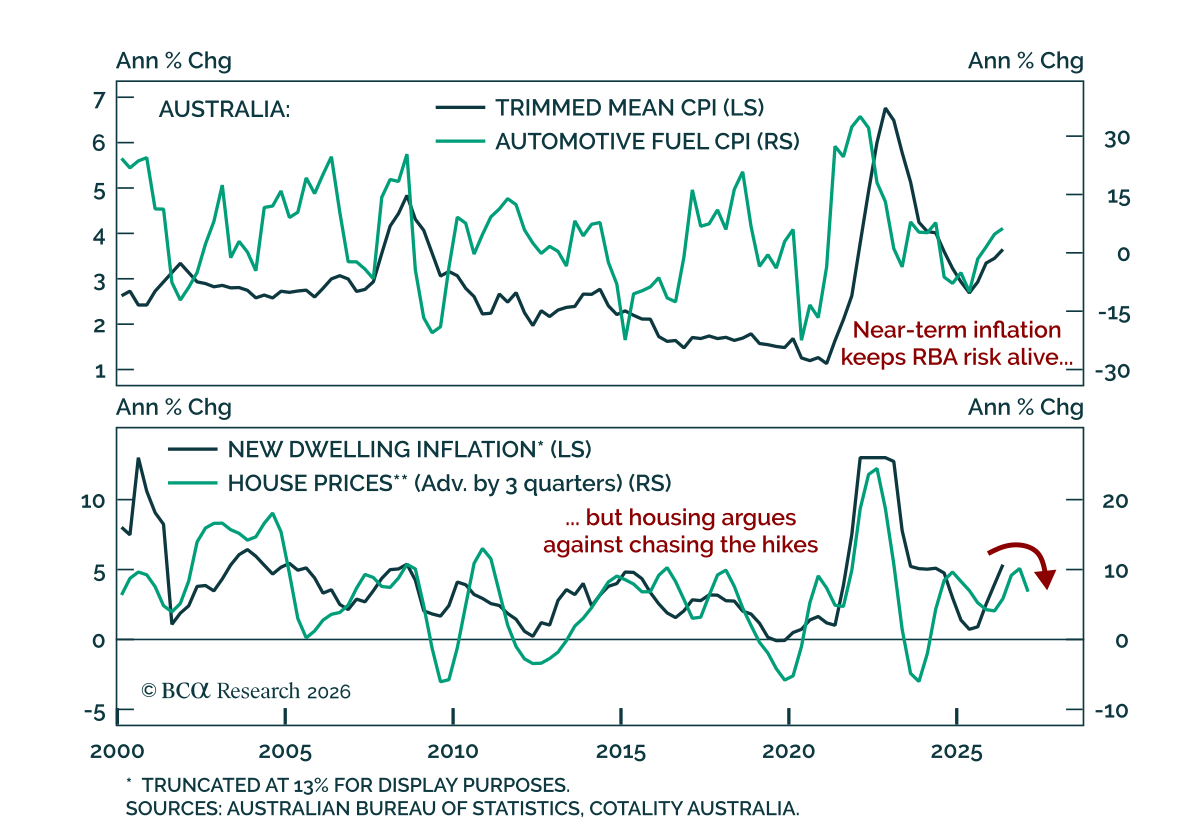
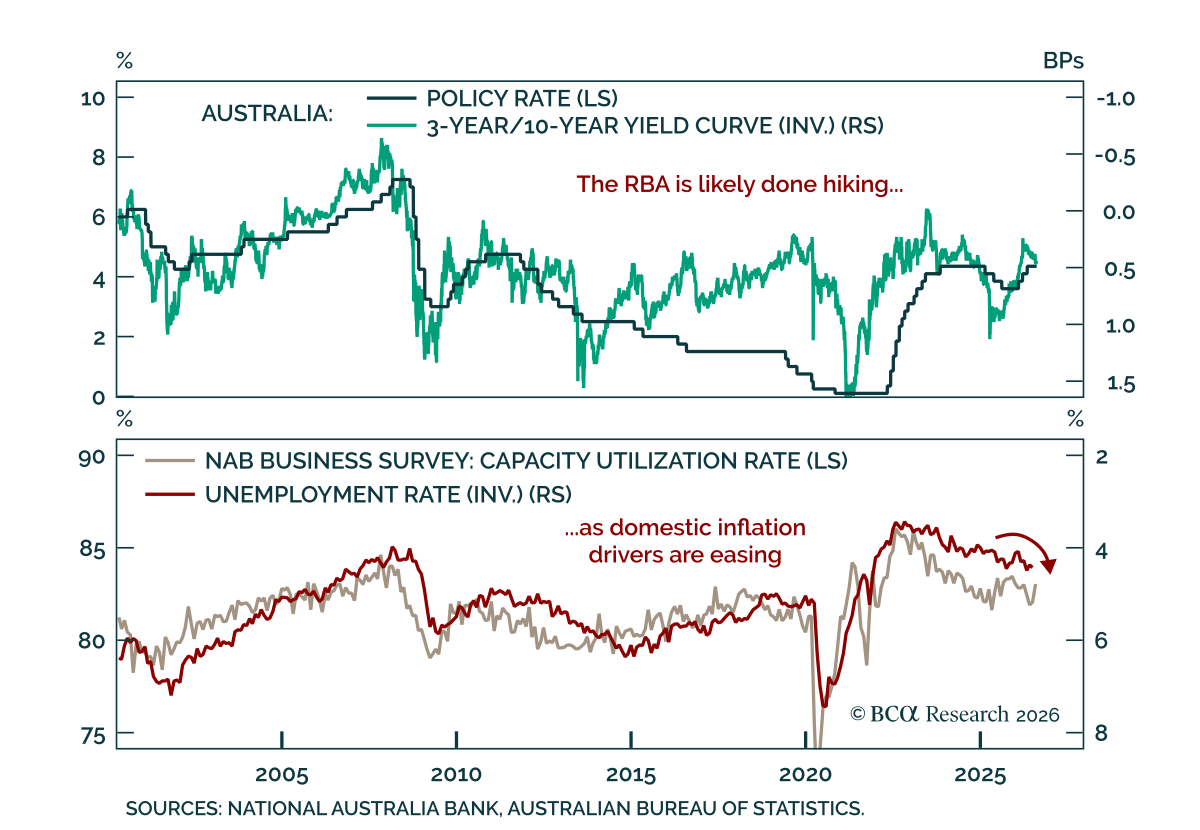
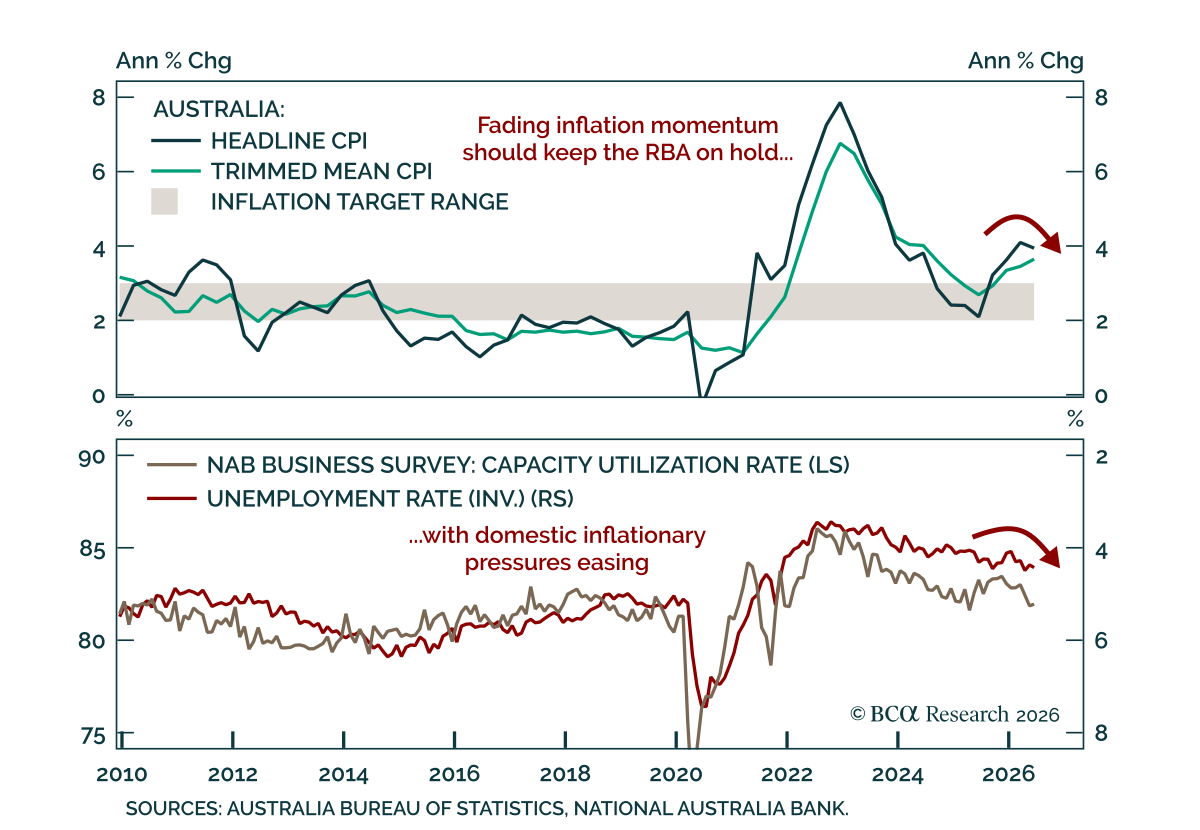
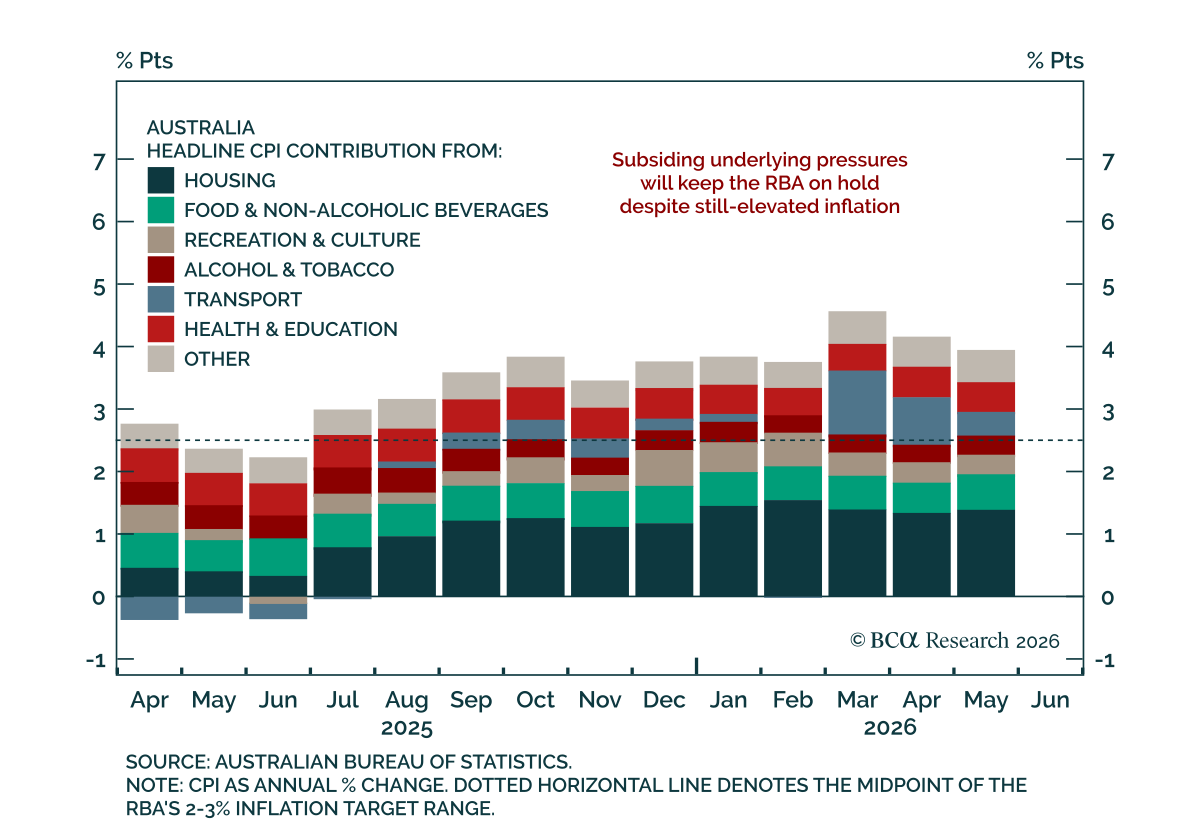
Australian CPI remains hot, but growth risks will limit further RBA tightening. April headline inflation decelerated more than expected to 4.2% y/y (0.4% m/m) from 4.6% (1.1%), partly reflecting a government fuel tax cut. The trimmed mean ticked up to 3.4%…
Our GeoMacro strategists see Australia as the most geopolitically conflicted major economy in the world. Its security depends on the US, its export revenues on China, and its trade routes run through waters both powers contest. How that triple exposure…
The Hormuz shock has pushed rate expectations higher in both Australia and Canada, but the inflation and growth transmission is already diverging. Canada’s status as a net energy exporter helps cushion the domestic growth impact from higher oil prices, while…

In this month’s Beta Report, we assess what that structural tension means for investors under two distinct scenarios. In our base case – a multipolar world order – Australia's position turns out to be more advantageous than it appears. The great power capital expenditure race generates demand for precisely what Australia produces. In the tail risk – a hard bipolar rupture – the calculus inverts, and the same commodity dependencies that long appeared as structural strengths begin to look like structural liabilities.

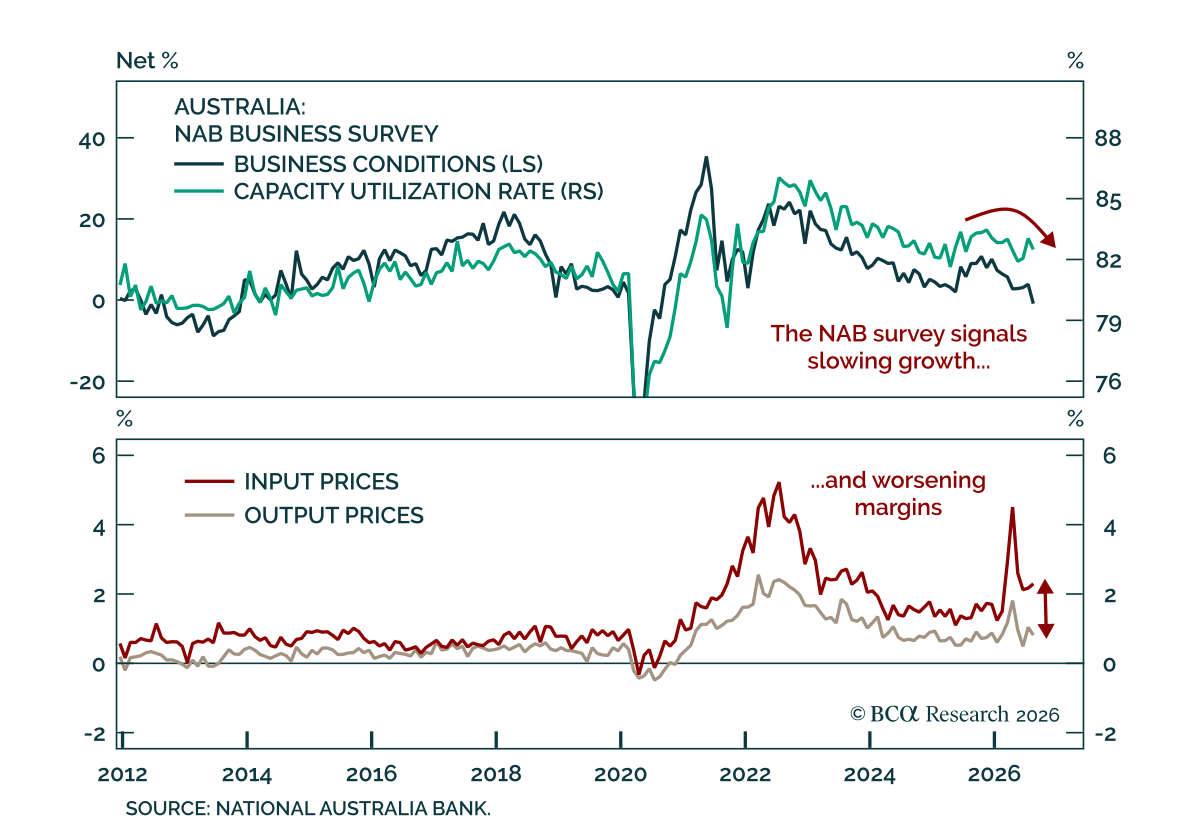
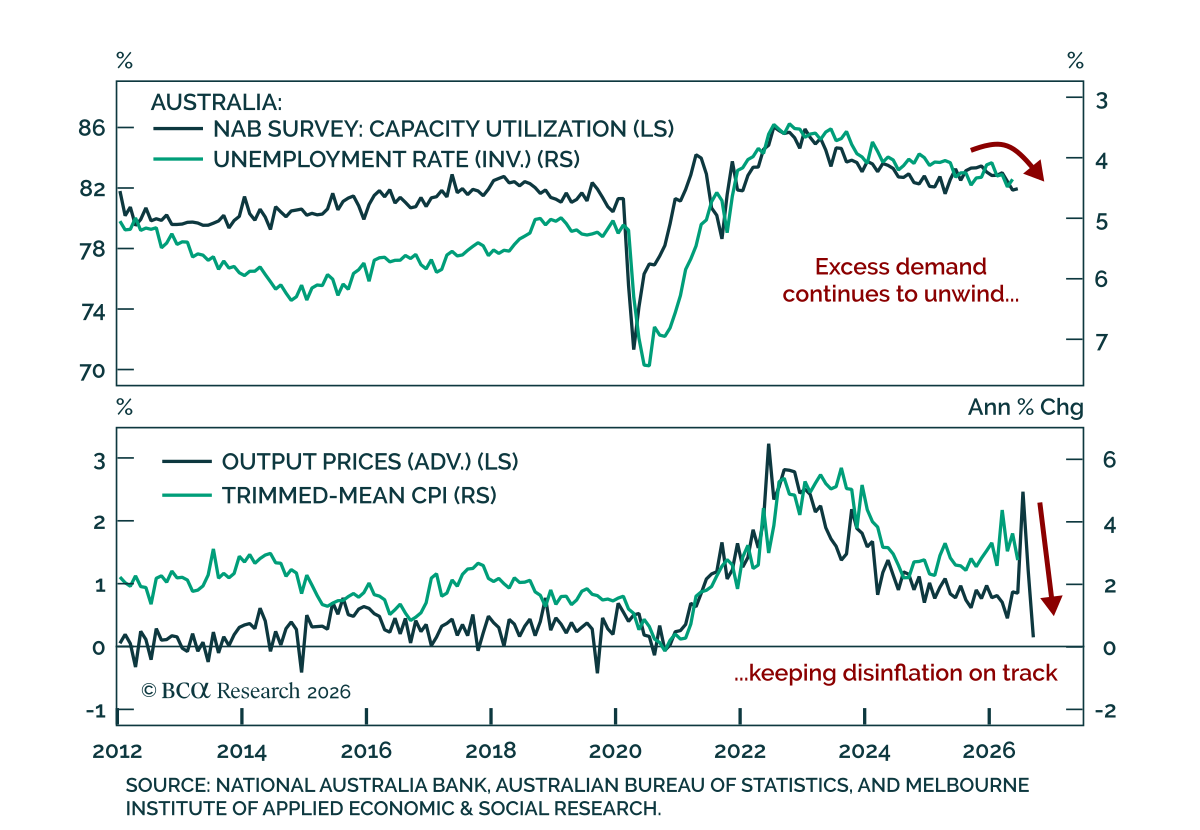
The April NAB survey points to a worsening growth-inflation mix in Australia. Business conditions moderated to +3 from +6, a fourth consecutive decline that left the index firmly below its long-term average. Business confidence, the more forward-looking…

Volatility is high, but the path for yields is clearer than it looks. Across three oil scenarios, we show how policy responses shape fixed income markets and why the balance of risks still points to lower yields.

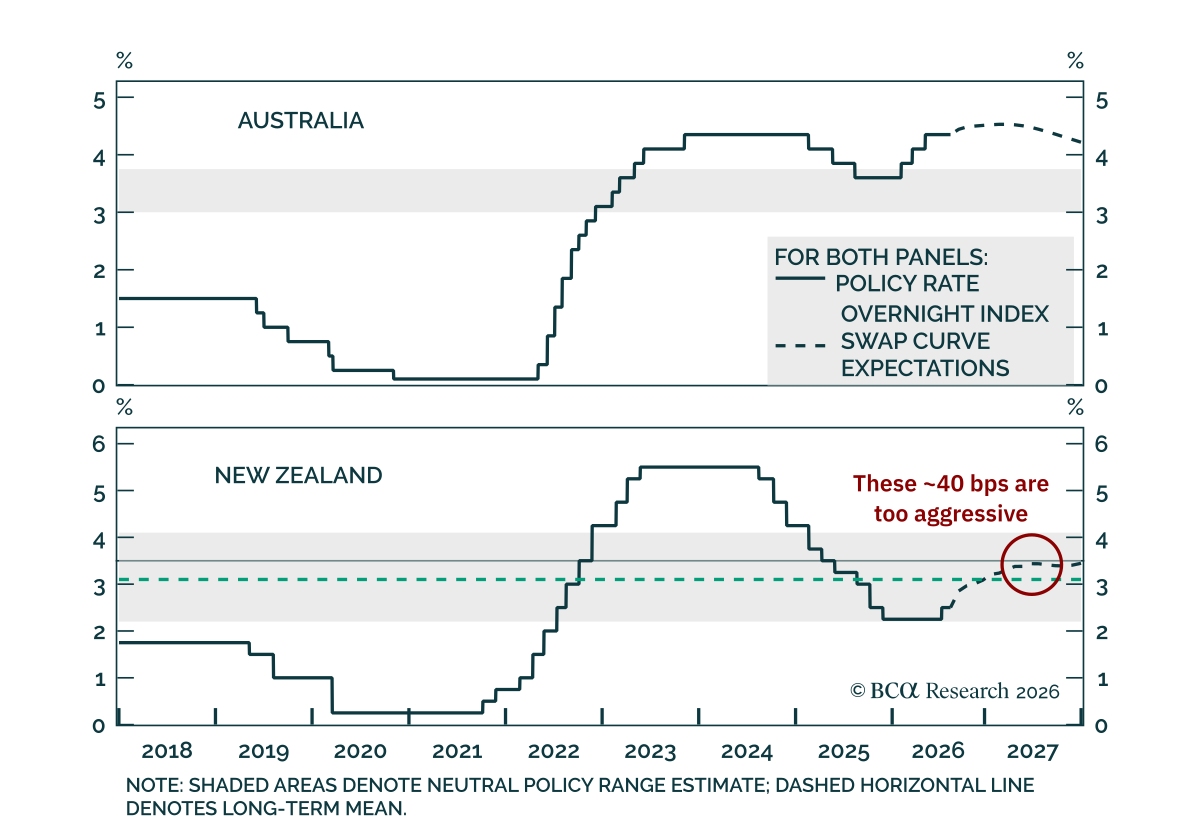
The RBA delivered a second rate hike this year, but markets may be overpricing further tightening. The RBA raised the policy rate by 25 bps to 4.1%, in line with expectations. Tightening was anticipated regardless of the energy shock. The vote was split 5-4,…

Interest rate volatility is very low across developed market fixed income. Investors should maximize the carry in their portfolios to outperform in a low rate vol environment.

Australian January CPI surprised slightly to the upside, but underlying inflation pressures remain modest. Headline inflation was steady at 3.8% y/y, while the trimmed mean rose to 3.4% from 3.3%. The odds of a May rate hike increased to above 70% following…
AUD/NZD has broken out to a decade high after trading sideways since 2015. Our Chart Of The Week comes from Chester Ntonifor, GeoMacro and Access strategist. Given that the momentum of the move has been sustained since last April (the longest stretch outside…