Special Report
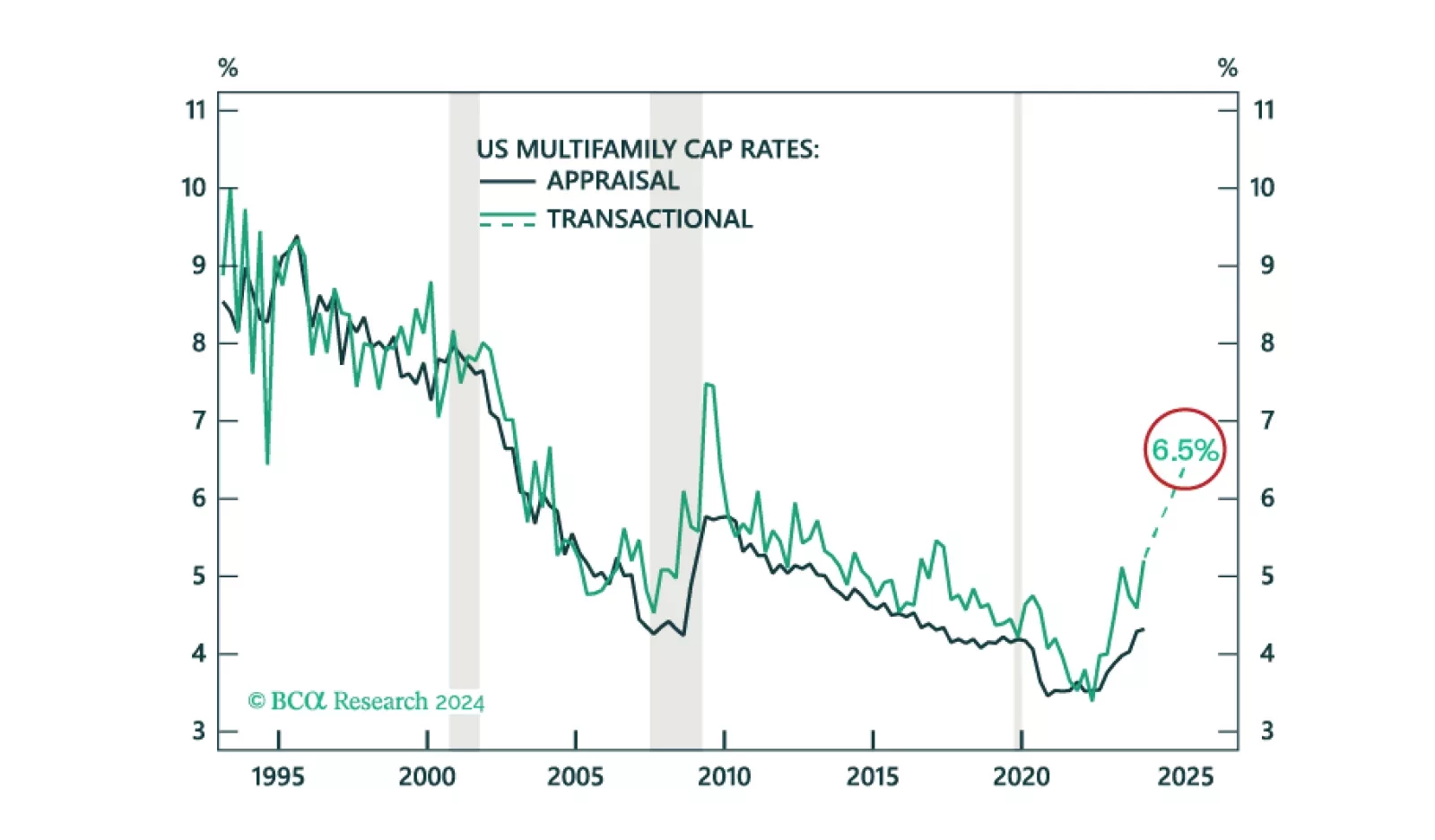
Highlights As investors’ hunt for yield continues, REITs emerge as an attractive asset class. Characterized by an attractive risk-adjusted return (comparable to public equities), and high dividend yields, REITs can add value to investors’ portfolios. The macro backdrop is supportive: Moderate levels of inflation and rising rates have historically been positive for REITs’ performance. Valuations, albeit currently looking frothy, are reflective of a recovery that was broad-based and swift. REITs’ risk premium is attractive, currently 540 basis points. Fundamentals remain supportive of a positive outlook on REITs. Even though cap rates (which historically have moved in lockstep with interest rates) could rise given our macro outlook, the cap-rate spread remains close to its historical average. The pandemic has accelerated some existing trends in the real-estate sector and established new ones. Those will create opportunities for investors. For example, the decline of retail and rise of e-commerce, working from home, and migration away from city centers are observable patterns with investable opportunities. Accordingly, the Global Asset Allocation (GAA) service upgraded the Real Estate sector to Overweight in its July 2021 Quarterly Outlook. In the near-term – given current elevated levels of inflation – we prefer REITs with short-term leases (such as self-storage and residential REITs) over those with long-term leases (such as retail and office) since the former can adjust rents more quickly. Structurally, we favor sectors supported by the growth of the digital economy. The post-pandemic environment should be positive for sectors such as data centers and industrial REITs. Feature In today’s environment of accommodative monetary policy, low interest rates, unattractive valuations and poor return prospects for income-generating assets, investors have been forced to dial up their risk appetite. Real estate stands out as a particularly attractive alternative. The Global Asset Allocation (GAA) service turned positive on real estate in July given the favorable macro backdrop in which: Inflation – while likely to come down from current elevated levels – will be higher in future than in recent decades; There is tight supply in some segments of commercial real estate (CRE); Rental growth is accelerating. This Special Report focuses on REITs, which are the simplest way for most investors to get liquid exposure to the real estate market. The report is structured as follows. We first look at the broad US REITs market (mainly equity REITs) and analyze its historical risk-return characteristics, fundamentals, and valuations. We then assess how REITs fared in previous environments of rising rates and inflation. In the second section, we analyze various sectors of the REITs market, identifying likely losers and winners from our base-case expectations for inflation and growth, and based on our views of how long-term demand for real estate will shift following the pandemic. While we have concerns about potential weaknesses in some segments of commercial real estate (e.g., retail), we highlight opportunities in more technology-driven segments of CRE. Introduction The REITs market in the US as of Q3 2021 has a market value of close to $1.5 trillion. The bulk of this is equity REITs – trusts that own and operate income-producing assets and earn income mostly through rents. The remaining are mortgage REITs which lend money directly to real-estate owners or indirectly by purchasing mortgages or securitized securities such as mortgage-backed securities (MBS) and earn income on those investments. While technically considered equities, the business model of mortgage REITs makes them more like bonds than equities. The composition of the REITs market has changed over the years. While the traditional retail and residential segments dominated the market in the first years of the millennium, structural changes have shifted the balance towards segments such as infrastructure, data centers and industrial (Chart 1). The pandemic accelerated trends that were already in play: For example, the rise of e-commerce, digitalization of services, increased teleworking, and reshoring of manufacturing and supply chains. These have had adverse effects on traditional real estate segments such as retail. Historical Risk And Return, Valuations, Fundamentals & Correlations Since 1973, US all-equity1 REITs have outperformed both public equities and fixed-income assets (both government bonds and investment-grade corporate bonds) on an absolute basis, providing investors with an 11.9% annualized return versus 10.8%, 6.8%, and 7.6% respectively. On a risk-adjusted basis however, REITs’ performance was equal to that of their public equity counterparts, but lower than fixed-income assets because of REITs’ higher volatility. The negative skewness and excess kurtosis also indicate a high probability of large negative returns. Mortgage REITs (split between Home Financing and Commercial Financing), on the other hand, have returned only 5.2% on an annualized basis, while racking up annualized volatility 3.5 percentage points higher than their all-equity counterparts (Table 1). Table 1Historical Risk-Return Characteristics In order to generate the sort of yields investors expect, mortgage REITs resort to leverage (about 6-8 times) which increases volatility (Chart 2). For example, REITs focusing on residential/home financing buy low credit-risk securities (with almost zero default risk), add leverage, and hedge changes in interest rates via derivatives. Mortgage REITs focusing on commercial financing use less leverage, but take on additional credit and default risk embedded in their underlying assets. Both types of REITs remain highly exposed to the economic cycle and financial conditions. Despite disappointing returns (mainly stemming from narrowing net interest spreads), mortgage REIT investors have been entranced by the high dividend yields. These have averaged 11.3% over the past four decades and are still close to 8% today, much higher than the yields of their all-equity counterparts and other assets (Chart 3). Chart 2Mortgage REITs Are Volatile... Chart 3...And Have High Dividend Yields Table 2Attractive Dividend Yields Across Sectors Dividend yields for all-equity REITs are also attractive in today’s low-yielding investment environment, even though they are at all-time lows – currently they average 2.9%, 150 basis points higher than for public equities. In fact, all REIT sectors and subsectors (with the exception of the lodging/resorts sector) currently have dividend yields higher than those of public equities (Table 2). Even though REITs are considered equities, analyzing them requires different indicators. Whereas equity investors rely on multiples such as price-to-earnings (P/E) or price-to-book (P/B), for REITs price-to-funds from operations (P/FFO) is a more important valuation tool. FFO is favored over earnings since it adds back depreciation and amortization expenses, and adds to net income any gains (or subtracts any losses) from sales of underlying assets. REITs traded at a steady 17x FFO between the end of the Global Financial Crisis (GFC) and the start of the pandemic. FFO fell by 30% in the first two quarters of 2020 compared to Q4 2019, pushing the P/FFO multiple to 24.7 – an all-time high. But FFO as of Q3 2021 has inched back above its pre-pandemic level (Chart 4). The risk premium for REITs (calculated as the FFO yield minus the real 10-year treasury yield) – currently at 5.4% – remains higher than the pre-GFC bottom of 3.5%. (Chart 5). Chart 4Valuations Reflect A Swift Recovery Chart 5REITs Risk Premium Is Still Elevated With the exception of the lodging/resorts sector, REITs’ FFO as of Q3 2021 is higher than one year ago. The occupancy rate for major sectors of the REITs market is starting to rise. Overall net operating income (NOI) for Q3 2021 was 4.5% higher than its pre-pandemic (Q4 2019) level (Chart 6). Chart 6Occupancy Rates Are Rising Again This however is the result of a large year-on-year increase in inorganic or non-same-store net operating income (NOI) – income from assets owned for less than 12 months (either recently acquired or developed) (Chart 7). M&A activity has been increasing, and amounted to almost $47 billion over the past four quarters – driven by activity in the infrastructure, self-storage, and free-standing2 segments (Chart 8). Chart 8...As M&A Activity Rose Chart 9REITs Have Low Leverage... The real-estate sector has historically been seen as risky due to its high leverage, but leverage has been on the decline. Over the past decade, REITs’ reliance on equity capital has increased, with the equity/assets ratio rising from 32% in 2008 to 43% in 2021. The ratio of debt to book assets stands at around 49%, much lower than the 58% during the GFC (Chart 9). REITs have also extended the average maturity of their debt from 5 years in 2008 to over 7.5 years today. The fall in interest rates over the past two decades has benefited equity REITs: As rates fell, so did the interest they paid on their debt. Liquidity ratios also improved, with REITs’ coverage ratio (earnings relative to interest expense) at 6x, cash levels and undrawn lines of credit relative to interest expense close to 2x and 7x, respectively (Chart 10). In summary, REITs are an attractive asset class, since leverage is lower, earnings continue to rise, and cap rates – while declining – remain high compared to the risk-free rate. REITs, however, remain highly correlated to public equities: The current 3-year rolling correlation between REITs and public equities is above its historical average of 0.57 (Chart 11). This high correlation undermines the diversification benefit of REITs to investors’ portfolios. Moreover, investors should note that the correlation between REITs and direct real estate (DRE) has averaged only 0.1 over the past four decades. Even when DRE is lagged to account for its appraisal-based methodology, correlation does not rise. Chart 10...And Ample Liquidity Buffers Chart 11REITs Remain Highly Correlated To Equities In a previous Special Report we showed however that, while both direct and indirect real estate exposure can add value to investors’ portfolios on a risk-adjusted basis, direct real estate should be favored given its low correlation to other financial assets (such as equities and bonds) as well as the illiquidity premium that investors with no need for immediate liquidity can harvest. The Macro Outlook Our base case is that interest rates will inch higher over the next 12 months and that inflation will moderate but remain higher than during the past decade. How would such an environment affect the outlook for real estate – and REITs in particular? Interest rates and cap rates tend move in lockstep (with the exception of a divergence from mid-2003 until the GFC). This implies that rising rates could lead to higher cap rates, and thus lower property values (Chart 12, panel 1). The current cap-rate spread (the difference between the cap rate and the 10-year Treasury yield) is close to its long-term average of 365 basis points. This should help mitigate downward pressure on property values and act as a buffer when rates rise (Chart 12, panel 2). As long as rising rates are reflective of strengthening economic growth – and we expect US growth to remain above trend for the next two years at least (Chart 13) – and do not hurt the health of corporate tenants or increase defaults, demand for real estate should rise. Chart 12Interest Rates And Cap Rates Tend To Move In Lockstep Chart 13Above-Trend Growth Should Bolster Demand For Real Estate Historically, rising rates coincided with strong performance from REITs. On average, REITs returned 25.4% during episodes of rising interest rates, even higher than the return from equities of 24.5%. However, that figure is distorted by some outliers: REITs returned over 100% between 1976 and 1980, and in 2003-2007 (Table 3). The median return of REITS was only 7.1% versus 22.5% for equities. Excluding those two periods lowers REITs’ mean return to 9.4%. Valuation data begins only in 2000, but we can see that REITs were attractively valued in 2003, trading at about 9x P/FFO. By the peak of the market in Q1 2007, they were trading at more than 17x P/FFO. Table 3REITs Fared Well In Previous Periods Of Rising Interest Rates REITs however fared poorly in periods of rising inflation. In a Special Report published in mid-2019, we showed that REITs were a poor hedge against very high inflation and that, much like equities, once the economy overheats and inflation rises sharply (which we define as CPI above 3.3%), REITs produced negative excess returns over cash (Chart 14 and Table 4). For investors able to be more granular in REIT allocations, drilling down to sub-categories of the market might be beneficial, particularly given the low correlation between REIT sectors (Chart 15). Table 4REITs Are Not A Good Inflation Hedge (II) Chart 15Low Correlation Between REIT Sectors The real estate market is diverse. Each sector is driven by different dynamics, reacts differently to the business cycle and changes in consumer behavior, and therefore has different return characteristics. Annual returns by sector have ranged from 4% to 19% since 1994 (Table 5). Moreover, sectors do not react in the same way to rising interest rates or inflation. Properties with short-term leases, such as hotels, storage, and apartments, can reprice and adjust rents as prices rise. On the other hand, those on the other end of the lease spectrum, e.g., retail and healthcare, have less flexibility to do so (Diagram 1). REITs with shorter-term leases (an equally-weighted basket of lodging, self-storage, and residential) outperfomed those with longer-term leases (an equally-weighted basket of healthcare, industrial, retail, and office) during periods of rising interest rates (Chart 16). Table 5REIT Sector Historical Returns Diagram 1Short-Term Leases Outperform... Chart 16...During Periods Of Rising Interest Rates Bottom Line: The REITs market has recovered after the slump early in the pandemic. Current multiples appear expensive. However, they may just reflect a recovery that has been broad-based and swift. Cap rates historically have moved in lockstep with rising rates. If rates rise, as we expect, cap rates are likely to rise in tandem, putting downward pressure on property prices. The cap rate spread however remains close to its historical average and this should act as a buffer when rates rise. Moderate levels of inflation and rising rates are usually a positive for REITs’ performance. However, just like equities, once inflation rises too high (historically above 3.3%), REITs’ returns fall. We prefer REITs with short-term leases compared to those with long-term leases, as the former can reprice and adjust rental pricing more quickly. The Post-Covid Environment The pandemic has accelerated some existing trends in the real-estate sector and established new ones. Some sectors will struggle in this new environment, while others will flourish. In this section, we describe the likely post-pandemic world and how it will impact various segments of the real-estate market. We also assess where there are opportunities that investors can capitalize on. Retail The “death of retail” is not a new phenomenon. As technological advances led to the rise of e-commerce, consumer spending shifted from in-store to online. Over the past two decades, non-store retail sales in the US have grown at an annualized 9.5%, compared to 3.1% for in-store sales. E-commerce has risen to almost 14% of total retail sales (Chart 17). This shift is reflected in the halving of the weight of retail REITs in the REITs index over the past decade. The composition of the sector has also changed and is no longer dominated by regional malls and shopping centers but by free-standing properties: These include restaurants, theaters, fitness centers, pharmacies, etc. (Chart 18). Chart 17The Rise Of E-Commerce... Chart 18...Had An Adverse Impact On The Retail Sector The headwinds facing the sector – particularly shopping centers – have not abated. The size of vacant shopping center space has increased to 220 million square feet, approximately 11% of total retail space available: This is close to its post-GFC high. Private multi-retail capex continues to decline and is below its post-GFC low (Chart 19). Retail REITs’ occupancy rate is among the lowest among CRE: 94% as of Q3 2021, although it is higher than during the past two recessions. Funds from operations (FFO) and net operating income (NOI) have been declining over the past few years, with the exception of free-standing properties which saw low but positive growth (Chart 20). Chart 19Plenty Of Vacant Inventory In Shopping Centers... Chart 20...But There Could Be Opportunities In Free-Standing Properties The pandemic exacerbated some other underlying trends and threats. Smaller in-store retailers have shifted to an online presence, aided by companies like Shopify, which saw the numbers of merchants on its platform grow from 1.07 to 1.75 million in 2020. Consumers are also likely to favor shopping in smaller-scale, local shops as they find convenience in stores close to home. Additionally, given the positive correlation between household density and retail space, as households migrate from city centers to the suburbs there will be less need for retail space within city centers. Bottom Line: We recommend investors underweight the retail sector within their broad real estate exposure. The structural headwinds are not likely to disappear. Within retail, we would favor free-standing properties over shopping centers and regional malls. Office There has long been a close link between office demand and employment. As the labor market tightens, demand for offices increases and rents tend to rise (Chart 21). Investors in office REITs have earned 9.6% annualized returns, 90 basis points annualized below the overall return of the all-equity REITs index, over the past two decades. The sector is currently flush with supply. Estimates show that almost 18% (close to 800 million square feet) of total office space is vacant, yet capex has continued to increase over the past decade (Chart 22). Chart 21The Pandemic Has Changed Office Demand Dynamics Chart 22...Leaving The Sector With Empty Space The pandemic, however, might be the catalyst for change. After social restrictions were imposed and offices shut down, the BLS estimates that in May 2020 as many as 35-40% of US employees were telecommuting, strictly because of the pandemic (Chart 23). Since then, as restrictions were lifted and vaccination rates rose, this number has come down to 12%,3 as more employees returned to some sort of pre-pandemic normalcy. The US Household Pulse survey (published by the US Census Bureau), however, shows close to 40% of employees working at home as of the end of September (Chart 24). Chart 25Mobility Data Showing No Full Return To Offices The true number of employees who telework likely lies in between the BLS’s 15% and the Census Bureau’s 40%. A study by Jonathan Dingel and Brent Neiman estimated, based on job characteristics,4 that 37% of jobs in the US can be done entirely from home (46% if weighted by wages). Whether employees will favor a work-from-home versus a return-to-office environment is still unclear. Most surveys show a 50-50 split. High-frequency data such as the Google Mobility Trends show that the number of people going to their workplace has not yet returned to normal (Chart 25). It is likely however that office utilization rates will not return to pre-pandemic levels. This might incentivize firms to search either for offices with flexible leases or co-shared space. Chart 26Are Employers Leaving City Centers With Their Employees? Companies face the choice of downsizing and so reducing business costs, or keeping the same premises which would allow for lower office density and enable social distancing between employees who return to the office. Estimates by CBRE suggest that office demand will not fall by as much as the reduction in the time employees will be in the office. CBRE argues that, while the average US employee is likely to spend 24% less time in an office, demand for office space will fall by only 9%. This calculation factors in more space per employee to allow for social distancing and collaborative working. Additionally, as more employees move away from inner cities, employers could move with them. This trend is reflected in suburban office prices which have risen by 15.1% since the beginning of 2020, compared to those in central business districts (CBD) which have risen by a mere 0.2% (Chart 26). Bottom Line: Investors in office space should be wary of corporates which are unwilling to return to offices operating at full capacity, and instead focus on single-tenant assets with long-term leases. Healthcare Chart 27Like Equities, Healthcare REITs Are A Defensive Play REITs within this sector are focused on hospitals, senior and nursing homes, and laboratories. Since 1994, healthcare REITs have returned 10.7% annualized, with 21.1% annual volatility. These numbers, however, mask the underlying reality. Healthcare, being a defensive sector, outperformed the broad REITs market only during the dot-com recession and the GFC. In the short-lived pandemic-driven recession in 2020, healthcare REITs underperformed the broad index by 15%. On the other hand, during bull markets, particularly post the GFC, healthcare REITs significantly underperformed the broad market (Chart 27). The sector also has a high dividend yield, which has averaged 6.7% over the past 25 years, 160 basis points higher than the broad index’s historic average (Chart 28). In a Special Report published last year, we explained the structural reasons for our longstanding overweight position on Healthcare equities. We expect demand for healthcare services to continue to rise as life expectancy increases, populations age, and retiring baby boomers spend their accumulated wealth (mainly on healthcare) (Chart 29). Chart 28Healthcare REITs Have High Dividend Yields Chart 29An Aging Population Will Support Demand For Healthcare Elder care facilities will play a major role in supporting the increasingly aging population over the coming years. The pandemic has emphasized the need for high-quality senior housing: In our previous report, we highlighted that lack of funding and mismanagement – particularly in for-profit nursing homes – were reasons why they had almost four times as many Covid infections as those run by the government or non-profits. Chart 30...Increasing Investment In Healthcare Facilities Chart 31Healthcare REITs' Fundamentals Are Recovering The private sectors has already began to step in to meet this demand: Healthcare private construction expenditure has risen over the past few years and is likely to rise further (Chart 30). Cap rates continue to inch lower, but still have a decent spread over 10-year Treasurys (Chart 31, panel 1). Fundamentals have also began to improve: FFO and NOI growth seem to have bottomed, after dipping into negative territory as a result of the pandemic (panels 2 & 3). The sector has been going through a phase of consolidation: There have been significant acquisitions over the past few quarters, particularly of distressed operators (panel 4). Bottom Line: There is a structural long-term case to favor REITs in this sector, particularly an aging population with ample savings to spend on healthcare. Federal support and oversight have helped bolster confidence (for both occupants of care homes and investors) during the pandemic, and are likely to continue. Lodging/Resorts Chart 32Income Has Been The Only Source Of Return For Lodging REITs Chart 33The Travel Industry Has Not Yet Recovered Lodging REITs have been the worst performing sector over the past 27 years. Since 1994, they have returned only an annualized 4.1%, 640 basis points lower than the all-equity REITs index, with annual volatility 14 percentage points higher. They have steadily underperformed the market since 1997. Property prices within the sector have consistently declined, and income has been the only source of return (Chart 32). Lodging demand is closely linked to travel, which has been deeply impacted by the pandemic. The number of US domestic airline passengers is still only half that of the pre-pandemic period (Chart 33). With vaccines rolled out and most pandemic restrictions likely to be lifted eventually, the travel sector is set to rebound, albeit not equally across segments. Chart 34Personal Travel Likely To Recover Before Business Travel Chart 35The Hotel Industry's Recovery Personal and leisure travel is likely to return first: More people are now comfortable about going on vacation and want to make up for the “lost travel” of the past two years (Chart 34). Hotel occupancy rates, while still below 2019 levels, continue to rise, and revenue per available room (RevPAR) is close to 2019 levels (Chart 35). Business travel, on the other hand, might not recover as fast. The shift to remote working and videoconferencing is likely to push companies to review travel budgets. Business travel, which halved between 2019 and 2020, is forecast to return to its pre-pandemic level only in 2024/2025. This is likely to have a larger adverse impact on higher-end, major-city hotels. Chart 36The Pandemic's Effect On The Lodging Sector The industry has been facing other headwinds for the past few years. The threat from online lodging platforms, such as Airbnb, has put downward pressure on occupancy rates, which have been declining recently after having hovered around the mid-60% level over the past 30 years. Bottom Line: Real spending on hotels and motels remains 26% below trend (Chart 36). A revival in leisure travel, the easing of restrictions, and pent-up demand will support the sector in the short-term. However, domestic business travel and international tourism might be slow to recover. Investors in lodging and resorts should reduce exposure to major-city assets and focus instead on rural or resort-based getaways. Residential Residential REITs are primarily focused on apartments, rather than single-family homes or manufactured (mobile) homes – although the share of apartments has been declining over the past few years (Chart 37). Since 1994, residential REITs have outperformed the broad market by an annualized 1.8 percentage points. More recently, since the single-family homes segment was added to the sector (in December 2015), residential REITs have continued to outperform the broad market, driven by a 21.4% annualized return from the manufactured homes segment, 19.4% from single-family homes, and 12.3% from apartments. The sector’s outperformance should not come as a surprise. The housing sector has been undersupplied for decades: The ratio of annual housing starts to the total number of households is 1.2% – 0.7 percentage points below its pre-GFC average (Chart 38). This has pushed up prices, increasing unaffordability, particularly for first-time buyers (Chart 39). This increased the percentage of US housing inventory occupied by renters rather than owners (Chart 40). Chart 37Apartments Make Up The Majority Of Residential REITs Chart 38Housing Undersupply Is No New Issue... Chart 39...Making Home Prices Unaffordable... Chart 40...Particularly For Young Adults Chart 41The Pandemic Pushed Renters Outside Of Major Cities The pandemic, and its impact on shopping and work, has pushed city residents to the suburbs. This is reflected in the gap between the rental vacancy rate in large cities versus that in the suburbs (Chart 41). It is also noticeable in REITs’ performance: Ones dominated by suburban housing have outperformed those focused on city centers over the past year. Home prices, appreciating faster than rental growth, will remain a tailwind for residential REITs (Chart 42). Supply shortages will keep prices high. Fundamentals also remain supportive of a positive outlook on the sector: The cap rate on residential REITs is about 260 basis points over the 10-year Treasury yield, and both FFO and NOI growth seem to have troughed (Chart 43). Chart 42Rising Home Price Will Be A Tailwind For Residential REITs Bottom Line: Investors should favor the residential sector within the REITs market, favoring single-family homes and manufactured homes over apartments, and out-of-city over downtown properties. Chart 43Improving Fundamentals For The Residential Sector Data Centers Data centers are facilities that provide space for customers’ servers and other network and computing equipment. Due to the high and complex technical set-up specifications, leases are usually longer (upwards of five years). Properties that support the digital economy have attracted a lot of demand over the past few years. New technologies such as artificial intelligence, virtual reality, and autonomous vehicles will prove a tailwind over the coming years. Since data first became available (January 2016), data centers have outperformed the REITs benchmark by almost 60 percentage points (Chart 44). The pandemic has accelerated those trends, as social restrictions led offices, schools, and stores to close. This led to an increase in internet traffic and data creation. Estimates by OpenValut show that broadband usage increased by 51% in 2020 compared to 2019, partly due to remote learning and teleworking. Demand for data centers is expected to continue to grow. Fundamentals for the sector remain supportive: The cap rate – albeit now lower than post the GFC– is still near that of the broad benchmark (Chart 45, panel 1) and both NOI and FFO continue to grow (panels 2 & 3). Chart 44Sectors Supporting A Digitalized Economy Will Be Long-Term Outperfomers Chart 45...Supporting Fundamentals' Growth Bottom Line: Internet traffic remains the primary driver of the performance of data-center REITs. The move towards a more digitalized economy is likely to prove a tailwind for the sector. This should also immunize the sector over the economic cycle as dependence on data increases structurally. A new normal in remote working and learning, as well as continued investment in new technologies, support an allocation to the sector. Industrial Technological advances, particularly the rise of e-commerce, have also helped the industrial sector, increasing the need for logistics and fulfillment centers. Research by Prologis shows that e-commerce requires more than 3x the logistics space of brick-and-mortar sales. That is why investment in the sector has been rising over the past decade (Chart 46). Demand shows no signs of cooling: The occupancy rate of industrial REITs is at an all-time high, 4 percentage points higher than its 20-year average (Chart 47). Rental growth for industrial properties – particularly down the value chain closer to the end-consumer – has been robust due to the scarcity of permittable land. Chart 46Increased Demand For Warehouses Has Translated Into More CAPEX... Chart 47...And Pushed Up Occupancy Rates The pandemic has also revealed how vulnerable current supply chains are and has accelerated a trend BCA Research has highlighted for years: The decline of globalization. Going forward, companies will move to reshore some of their production to gain greater control over supply chains (Chart 48). This will amplify the need for industrial space. Bottom Line: We expect the industrial sector to continue to outperform the broad REITs market, supported by continued investment in fulfillment and logistics centers. Fundamentals remain strong: Same-store NOI is growing at over 6% a year, and acquisitions have increased, with more than $5.5 billion over the past four quarters (Chart 49). The industrial sector has been one of the quickest to revive projects put on hold during the pandemic, with the development pipeline as of Q3 2021 34% higher than in Q4 2019. Chart 48The End Of Globalization, And Supply Chain Reshoring Will Increase The Need For Industrial Space Chart 49Increased M&A Activity In The Industrial Sector Amr Hanafy Senior Analyst Amrh@bcaresearch.com Footnotes 1 All-equity REITs refer to equity REITs plus infrastructure and timberland REITs. 2 Free-standing REITs own stand-alone properties away from malls and are a subsector of the retail sector. 3 This does not include those whose telework was unrelated to the pandemic, such as those who worked entirely from home prior to the pandemic. 4 Jonathan I. Dingel and Brent Neiman, "How Many Jobs Can Be Done At Home?" NBER Working Paper No. 26948, April 2020.