Sorry, you need to enable JavaScript to visit this website.
Skip to main content

CRE Retail

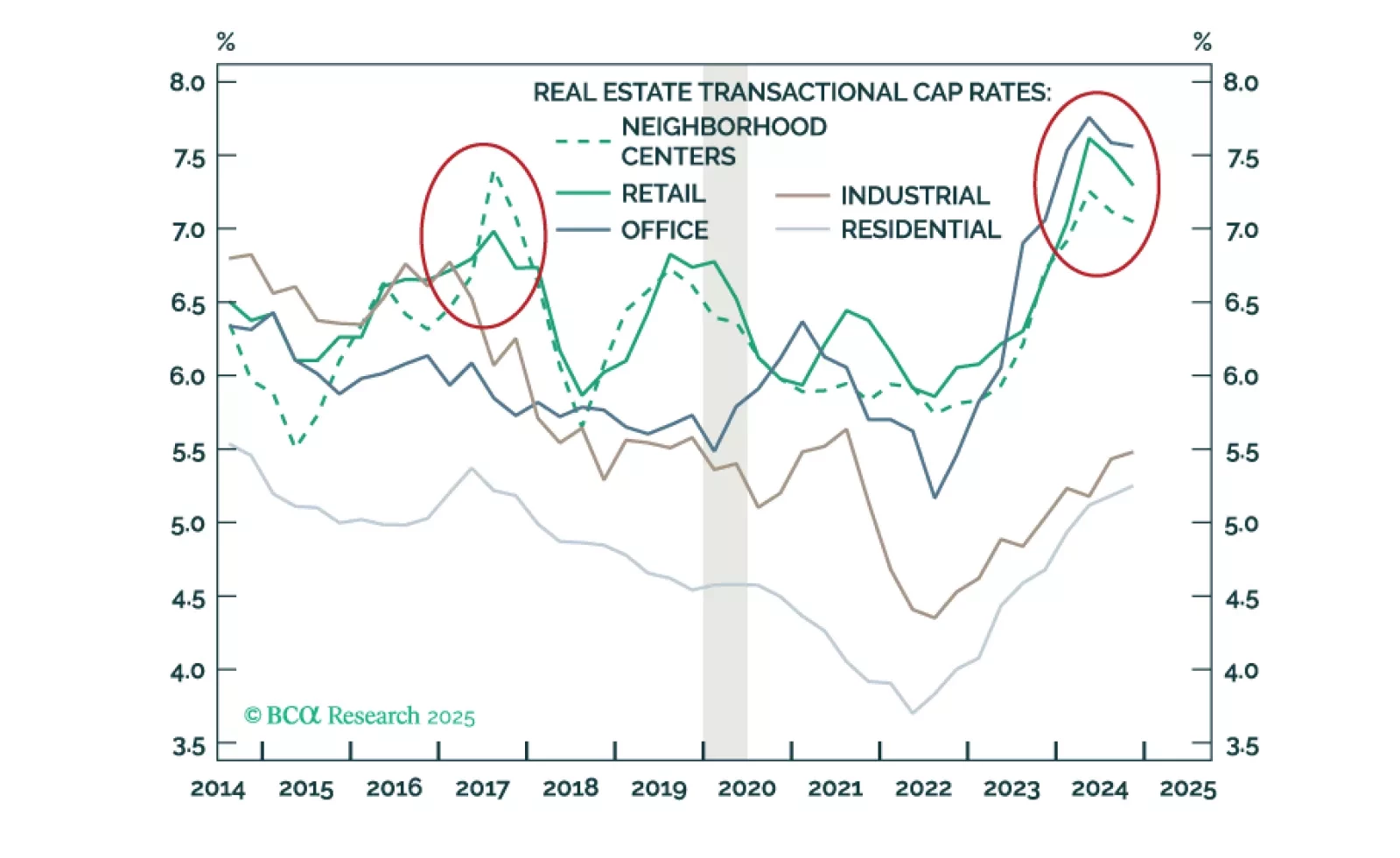
It is time to bet on brick-and-mortar again. The next time you step around your partner's Amazon package on your way to a physical store, consider this: Rock-bottom investor expectations, attractive initial fundamentals, and ongoing demographic shifts make Retail Real Estate a buy for the first time in a decade.

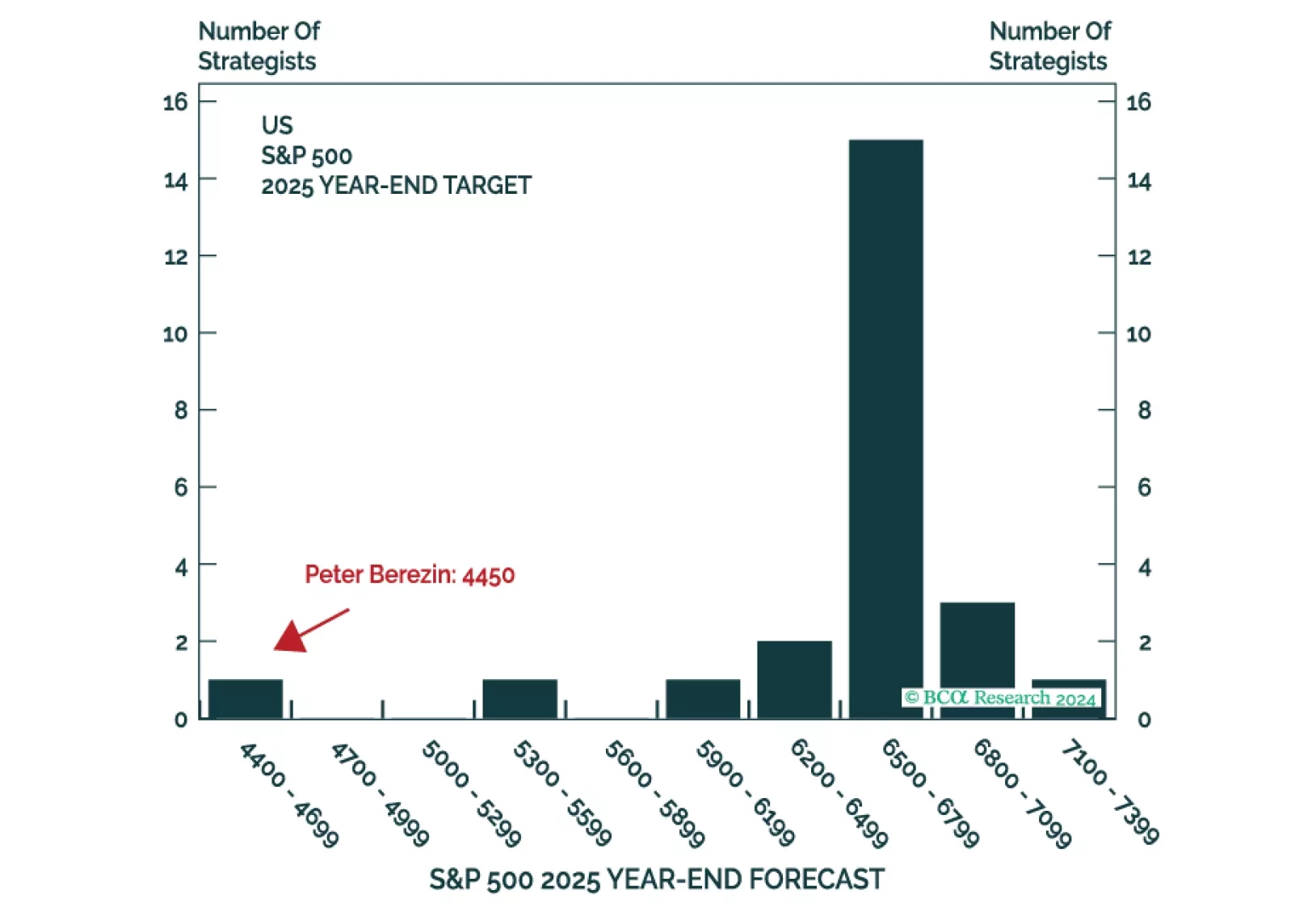
This is the time of the year when strategists are busy sending out their annual outlooks. Here on the Global Investment Strategy team, we decided to go one step further. Rather than pontificating about what could happen in 2025, we decided to harness the power of the multiverse to tell you what did happen (in at least one highly representative timeline).

Next week, please join me for a Webcast on Tuesday, December 17 at 10:30 AM EST (3:30 PM GMT, 4:30 PM CET) to discuss the economy and financial markets.

And with that, I will sign off for the year. I wish you and your loved ones a very happy and healthy 2025. We will be back in the first week of January with our MacroQuant Model Update.

BCA Research’s US Investment Strategy service argues that despite investor worries, while several malls are likely to fail in in 2020 and 2021 their disappearances are not likely to hurt the economy. Retail properties do not undergird the banking system…
Highlights Several malls are likely to fail in 2020 and 2021, but the overall economy will emerge unscathed … : Although lenders will recover a good bit less than par and equity holders will be wiped out, the losses will not create an observable macroeconomic drag. … because no critical element of the financial system has concentrated exposure to them: The amounts involved are not that large and the banking system’s stake is negligible. Malls disrupted the existing retailing footprint during their rise, and now it’s their turn to be disrupted: Creative destruction is natural and healthy. It will be a net positive for the economy if obsolete malls make way for more productive uses of their space. Feature As detailed in the first part of our Mallpocalypse Special Report, enclosed shopping malls are under pressure from a variety of forces. Department stores, which have typically anchored malls, are in the throes of a protracted structural decline; the apparel retailers that fill most of the leasable area between the anchors are in disarray; and e-commerce continues to take share from brick-and-mortar retailers. The pandemic, which forced many malls to close for an extended period and will likely undermine foot traffic until an effective vaccine is available, intensified the pressure. It pushed several national store chains into bankruptcy, emboldened many of their peers to stop paying rent and stymied malls’ pivot to gyms, movie theaters, restaurants and entertainment centers to fill their vacant spaces. Property analysts and investors estimate that the weakest 25% of malls face the possibility of extinction. Their owners’ equity stakes are likely to be wiped out and their lenders will recover considerably less than par. This installment examines the macroeconomic consequences of mall investors’ losses and the obsolescence of a formerly important aspect of the capital stock. Our view is that the malls’ demise does not constitute a macro threat; the mallpocalypse is not the commercial real estate analogue of the subprime crisis. Mall Exposures Are Diffused The sparks generated by the subprime mortgage collapse helped fuel the conflagration of the global financial crisis because they eroded commercial banks’ capital base; hobbled two major investment banks such that counterparties refused to deal with them; brought about declines in the prices of homes, which constitute a meaningful share of the collateral of the US banking system; and crippled the massive multi-line insurer that had been the biggest seller of the credit default swaps that the major banks and broker-dealers were using to hedge some of their residential mortgage exposures. With so many of the biggest players circling the wagons, liquidity dried up, credit spreads blew out and a major financial crisis ensued. No bank or major bank counterparty is sitting on a pile of mall mortgages. Mall failures will not have anything close to the same impact. Retail properties do not undergird the banking system like single-family homes and exposure to them is diffused across owners and creditors that can sustain losses without setting off broad ripple effects. More than half of US malls1 are owned by publicly traded REITs with the remaining ownership scattered among several privately held specialist investors. Developing and owning real estate is a leveraged pursuit and mall owners aren’t shy about borrowing, especially Simon Property Group (SPG), the largest player in the space (Table 1). Like some of its mall REIT peers, and nearly all its shopping center/strip mall counterparts, however, it does the bulk of its borrowing via bond issues. The effect is to reduce the concentration of creditor exposures; instead of borrowing from a bank or a syndicate of banks, SPG and many other publicly traded REITs sell bonds to a range of institutional investors. The mortgages it does take out predominantly wind up being securitized and dispersed across the institutional investor community. Table 1Large US Mall Owners Mallpocalypse, Part 2: Who’s On The Hook? Mallpocalypse, Part 2: Who’s On The Hook? Creditor exposures to mall owners are thereby atomized, making losses a micro issue rather than a macro one. Distributing credit losses across a wide swath of investors neutralizes the systemic risk posed by any given borrower or common group of borrowers. Alan Greenspan was compelled to recant his spectacularly ill-timed praise for securitization’s risk-mitigating properties, but it was conceptually sound. Residential mortgage securitization wasn’t the problem per se, it was that the private-label mortgage market had become a largely closed system in which the banks swapped positions with one another, amplifying counterparty exposures within the banking system without anyone seeming to care, if indeed they were aware. Table 2Top 15 Holders Of SPG Debt Mallpocalypse, Part 2: Who’s On The Hook? Mallpocalypse, Part 2: Who’s On The Hook? The primary owners of SPG’s bonds are the dominant index ETF sponsors, insurers and active mutual fund managers (Table 2). They are unlevered investors whose involvement diversifies exposure to credit losses away from the banks, thereby dissipating systemic risk. Although their losses cause financial conditions to tighten at the margin as spreads widen in response, they don’t disrupt financial intermediation in the way that sizable bank losses do. The worst outcome is a barely observable decline in funds available for consumption or investment and marginal employment declines as defaulting borrowers and their chastened creditors tighten their belts. Institutional investors are agents for the wealthier households that own a disproportionate share of financial instruments. They have a low marginal propensity to consume, which is to say that their consumption patterns are relatively insensitive to one-off income reversals and their investment losses don’t therefore perturb the broad economy. Equity holders in ailing mall REITs may have their stakes wiped out (Chart 1, bottom panel), adding insult to the injuries retail REIT investors have already sustained so far this year (Chart 1, top panel), but no critical intermediaries are shareholders and the overall market cap of retail REITs is not meaningful. Chart 1Trees Falling In Abandoned Mall Courtyards Do Not Make A Sound Trees Falling In Abandoned Mall Courtyards Do Not Make A Sound Trees Falling In Abandoned Mall Courtyards Do Not Make A Sound The Big Short 2.0 Investors who foresaw a future in which e-commerce wipes out department stores and other national chains with sizable mall footprints have sought out ways to bet against malls. Many of them have gravitated to selling the CMBX 6 Index (Box 1). The trade has been talked about so much in credit circles over the last few years that the financial media have labeled it The New Big Short, after the book and movie about investors who anticipated the wreckage of the subprime crisis. The New York Times devoted an article to it last week, and Bloomberg, The Wall Street Journal and countless credit market blogs have been following it for a while. Box 1: The CMBS Insurance Marketplace Credit default swaps (CDS), developed in the mid-nineties as a tool for hedging lending exposures, have become a wildly popular way for investors to bet on the fate of a given bond issue or security. Bonds can be quite illiquid relative to equities, and CDS vastly ease the process of obtaining exposure to them. They are effectively an insurance contract in which the protection buyer pays the protection seller a flat annual fee to indemnify the buyer against missed or partial interest or principal payments. The CMBX indices provide a reference point for buying and selling protection on a large basket of commercial mortgage backed securities (CMBS). They are composed of 25 equally weighted CMBS of common vintage, each of which contains at least 40 loans, and they are divided into quality tranches from AAA to BB, based on the level of credit enhancement provided to each tranche. The BB tranche absorbs losses first, then the BBB- tranche, and so on, up to the AAA tranche. The protection seller is said to go long the index while the buyer shorts it. CMBX trades between counterparties are zero-sum. They produce no aggregate increase or decrease in wealth because the longs’ and the shorts’ return profiles are perfect inverses. The weakest mall REITs aren't long for this world, but their ultimate demise will not trigger any broader repercussions. The CMBX 6, consisting of whole loans issued in 2012, became the darling of the retail bears because a comparatively large 44% of the face value of its mortgages backed retail properties (27% non-mall retail, 17% malls). As of late 2019, the index contained loans on 37 malls (Table 3). Publicly traded REITs have a stake in 26 of the 37 malls in the index and account for 70% of the outstanding principal balance. Table 3Mall Mortgages In The CMBX 6 Index Mallpocalypse, Part 2: Who’s On The Hook? Mallpocalypse, Part 2: Who’s On The Hook? Live By Disruption, Die By Disruption Obsolete malls are not likely to hurt the macroeconomy. Their disappearance will reslice the pie, creating micro winners and losers, but it shouldn’t cause it to shrink. Unwanted malls are a drag on the capital stock, because they’re not worth the cost of maintaining them, and converting the sites to better uses should act to boost productivity. Creative destruction is a positive feature of capitalism and a sign of economic health. The macro-economy didn't suffer when malls disrupted traditional downtown shopping districts and there's no reason to think it will now that the malls themselves are being disrupted. To those inclined to think we’re being cavalier about economic shifts and the near-term disruptions they provoke, we would point to the decades when the malls themselves were the disruptors. Mall construction – and branch department stores – thrived amidst the city-to-suburb migration that unfolded across the ‘50s, ‘60s and ‘70s. Population and wealth flooded out of the cities and into the suburbs, leaving some nasty micro-level scars as once-thriving retail quarters in the urban core became derelict. That outmigration did not produce a wave of bank failures, however. Citing Detroit’s experience in the ‘50s through the ‘70s in its Special Report examining the potential commercial real estate impact of a sizable uptake in work-from-home arrangements, our Global Investment Strategy service found no evidence that urban flight imposed undue stress on the financial system.2 Outmigration was also pervasive along the mid-Atlantic I-95 corridor in those decades. Suburbs of New York, Philadelphia and Washington, DC all experienced phenomenal growth while their core metropolitan areas shrank (Chart 2, top three panels). Even a growing city like Atlanta (Chart 2, bottom panel) saw its surrounding suburban counties welcome six times as many net new residents over the period. Chart 2City And Suburb Net Population Change By Decade Mallpocalypse, Part 2: Who’s On The Hook? Mallpocalypse, Part 2: Who’s On The Hook? Despite inevitable home price declines in several city neighborhoods and reduced demand for retail and office space, aggregate residential (Chart 3) and commercial mortgage performance (Chart 4) held up quite well and there was no uptick in bank failures (Chart 5). Inflation helped to hold down defaults then in a way it won’t now, but the bottom line is that the shift in consumer preferences toward shopping malls did not feed broader disruptions, even though credit exposures were nearly entirely concentrated within the banking system. With exposure to mall operators’ equity, mortgages and unsecured loans widely dispersed away from the banking system, and retail accounting for only a modest share of commercial property value (Chart 6), the shift away from shopping malls will not have broader macro consequences. Chart 3Urban Flight Didn't Undermine Residential ... Urban Flight Didn't Undermine Residential ... Urban Flight Didn't Undermine Residential ... Chart 4... Or Commercial Mortgage Performance ... Or Commercial Mortgage Performance ... Or Commercial Mortgage Performance Chart 5Urban Flight Didn't Promote Bank Stress Urban Flight Didn't Promote Bank Stress Urban Flight Didn't Promote Bank Stress Of Diamonds And Malls The forces behind the rise and fall of malls closely resemble the forces that drove the postwar waves of stadium construction: population shifts, increased reliance on automobiles and fashion’s impermanence. For the first half of the twentieth century, professional baseball’s sixteen franchises were spread across just ten cities. Its geographic footprint stretched from Boston to Washington on the Atlantic seaboard and along the Ohio River, the Great Lakes and the Mississippi to Chicago and St. Louis. The spread of franchises beyond the northeast and industrial midwest has tracked and foreshadowed the southern and westward movement of the population. Franchise moves, expansion and the mothballing of old city-center stadiums without parking led to a multi-decade boom in stadium construction that roughly coincided with the boom in mall construction. On undeveloped parcels on their outskirts, one city after another erected bland, utilitarian stadiums that were as uniform as the malls that had begun to dot suburban highway interchanges. They were hulking concrete structures with synthetic Astro-turf surfaces that could host baseball in the spring and summer and football in the winter, with capacity for between 50,000 and 70,000 fans and their cars. The early ‘90s witnessed a new stadium construction boom, motivated by franchises’ desire to reconfigure their seating to maximize revenues from businesses who used the games as a vehicle for entertaining clients. Stadiums without luxury boxes and enclosed suites were swiftly seen as obsolete. The popularity of Baltimore’s new park (1992), showcasing a retro design that hearkened back to the days of center city stadiums with brick facades and asymmetric quirks, made the stadiums of the sixties and seventies look hopelessly passé. The stock of dual-sport, artificial turf stadiums with concrete facades was eradicated over the next decade-plus, including Houston’s iconic Astrodome. The first fully enclosed stadium, billed as “the eighth wonder of the world” upon its 1965 opening, was the subject of rapturous national media coverage akin to the attention lavished on Southdale, the first mall, a decade before. The conversion of the stadiums did not bring ruin for any franchise, its municipal host,3 or the syndicate of banks and muni bond buyers that financed it. In cities where the new stadiums have been built closer to the center of town, the new ballparks have been a catalyst for a range of commercial and residential development. The broadly positive impact of scrapping faded stadiums for newer, better designed replacement stock looks like what we might expect from the scrapping of obsolete malls to make way for properties able to make better use of the space. Investment Implications Investors should not fear negative economic or market consequences from the retirement of underperforming malls. Their exit will not produce investment losses on a scale that slows the economy or interrupts banks’ intermediation function. Specialist real estate investors may find several opportunities in an industry in which the three most important factors are location, location and location. Credit and equity analysts and PMs may well find ways to profit from micro distinctions, but the lack of macro impacts means the demise of a meaningful share of the country’s malls does not have asset allocation implications. Investors in US assets will continue to be best served by taking their asset allocation cues from the fiscal and monetary policy backdrop. Mallpocalypse may be a clever phrase, but culling the nation’s underperforming malls from the capital stock won’t have adverse impacts on financial markets or the broad economy. Doug Peta, CFA Chief US Investment Strategist dougp@bcaresearch.com Footnotes 1 There are around 1,300 malls in the US, including outlet malls and lifestyle centers. 2 Please see the August 28, 2020 Global Investment Strategy Special Report, "Working From Home, Urban Flight, And Commercial Real Estate Loans: How Bad Can Things Get?" available at gis.bcaresearch.com. 3 The merits of using public funds to subsidize stadium construction for private concerns are hotly contested. Taking the existing level of public subsidies as a given, however, successful facilities upgrades confer an overall economic benefit, even if it involves a transfer of wealth from taxpayers to private entities.
Highlights COVID-19 shutdowns have intensified the pressure on the original “everything stores,” … : A combination of factors has been weighing on department stores since at least the early 2000s. Pandemic store closures have turned up the heat. … and turned an unwelcome spotlight on the future of shopping malls: Bankruptcy filings by anchor tenants pose an existential threat to already struggling malls. Shelter-at-home orders and universal telecommuting have debilitated the fashion industry, further testing malls’ resilience: Apparel retailers account for an estimated 60% of leased mall space, and their struggles are ramping up the pressure on mall operators. City-to-suburb migration may act to accelerate incumbent malls’ decline: Chester County, Pennsylvania has steadily gained wealth and population since the 1970s, but all the legacy malls within a 15-mile radius of the county seat are dead or dying. Feature Dear Client, US Investment Strategy will take its second summer break next week, so there will be no publication on August 24th. We will return on the 31st with Part 2 of the Mallpocalypse series. Best regards, Doug Peta Come On. How Can It Be That Bad? The July 31st episode of BCA’s Friday Conversations webcast series featured a construction executive who expressed the view that a considerable share of America’s enclosed shopping malls has very little value.1 Many malls, he argued, are no longer viable as originally intended and a daunting mix of financial and zoning obstacles stand in the way of repurposing them for other uses. A client in attendance thought we were laying it on a little thick. “Aren’t you being extreme?” he asked. “Why won’t things go back to normal [for enclosed shopping malls] once there’s a vaccine?” Like casinos, malls created a self-contained environment where customers would spend more the longer they stayed, ...  We confess to a weakness for invented mash-up catchphrases that refer to the patently ridiculous (Sharknado) or relentlessly overhyped (the Snowmageddon build up to potential winter storms). It was with tongue in cheek that we titled the webcast “Mallpocalypse,” but this multi-part Special Report is testament to the dire prognosis for much of the stock of US malls. Malls were under pressure well before COVID-19 emerged and they would remain under pressure even if it were already in full retreat. The pandemic has dramatically accelerated weaker malls’ demise, and few of them appear to have a path back to viability. A Brief History Of The Shopping Mall The fully enclosed, temperature controlled Southdale Center in the Twin Cities suburb of Edina, Minnesota was the world’s first shopping mall. Its 1956 opening was front-page news across the national media, which greeted it with rapturous praise. It was designed by Austrian émigré Victor Gruen, who had made his name by reconfiguring New York City’s retail entryways in a way that lured prospective consumers into stores and helped to keep them there. His mall design achieved the same effect on a much greater scale. Southdale positioned 72 stores across two levels joined by escalators and bookended by two branch department store “anchors.” The open floor plan in the body connecting the anchors allowed for unimpeded views of nearly every storefront. “A ‘garden court’ under a skylight, with a fishpond, enormous sculpted trees, a twenty-one-foot cage filled with bright-colored birds, balconies with hanging plants and a café,”2 meant to evoke the feeling of a town square, was set in the center of the mall, inviting visitors to linger. Vast parking lots stood ready to accommodate thousands of their cars (Box 1). Malls revolved around the department store anchors that promised to deliver foot traffic that their rank-and-file tenants wouldn’t find on the high street or in supermarket-anchored shopping centers. Developers couldn’t get bank funding without contractually committed anchors and most mall leases today contain a provision that automatically resets rent lower, or allows tenants to exit their lease without penalty, if multiple anchors close. Per the 2019 10-K for Simon Property Group, the country’s largest mall owner, the rounded average base minimum rent for anchor tenants with leases expiring between 2020 and 2029 ranges from $4 to $8, while the average base minimum rent for inline tenants ranges from $50 to $65. Anchors are the belle of the ball and malls that lose them risk entering a death spiral. Box 1: The ‘70s: If It Ain’t Broke, Don’t Fix It Other developers faithfully followed Gruen’s initial template during the mall building boom from the mid-fifties to 1990. The three malls within a 15-mile radius of my hometown – Concord Mall (Wilmington, DE, opened 1968), Exton Square Mall (Exton, PA, 1973) and Granite Run Mall (Media, PA, 1974) – had every element but swapped out the bright-colored birds for outsized fountains. Concord Mall meant ICEEs in blue and red cups with a cartoon polar bear, Exton Square was Baskin-Robbins’ mandarin chocolate sherbet and Granite Run was large square floor tiles with a beguiling pattern of cross-sectioned stones, but this elementary schooler’s dominant mall impression was the Niagara-like roar of the fountains, which seemed to fill every cubic foot of the area outside the stores. The Long-Running Department Store Crisis The minimum base rent comparison is not quite apples-to-apples, as anchor tenants often own their own spaces, but anchors are malls’ drawing card. As Simon’s 10-K puts it, “our [properties] rely upon anchor tenants to attract customers.” Ideally, an anchor will comfortably fill the two-level bookend spaces and bring a steady stream of consumers who may spend at the stores they pass on the way. Fit is essential: dollar store customers aren’t likely to pony up for luxury brands or the merchandise on offer at high-end boutiques. Gyms and movie theaters can absorb the space, but shopping may not be on their clientele’s agenda. ... and they counted on department stores to lure them inside it. Before the advent of category-killers in the ‘90s, department stores were an ideal anchor. They were trusted well-known brands that shoppers in their area were conditioned to seek out for a broad range of purchases (Box 2). Despite their struggles, department stores remain the go-to anchors at most malls. High-end brands like Neiman Marcus, Nordstrom or Saks might anchor a mall with luxury tenants, while Dillard’s, JCPenney, Lord & Taylor or the ubiquitous Macy’s might anchor a mall seeking a more general clientele. Box 2: The ‘80s: Best. Purchase. Ever. At 19, I ventured to the massive King of Prussia Mall for a post-Christmas department store sale where I wrote my first check with a comma to purchase a floor model Sony rack system (turntable, amplifier, receiver and dual tape deck) and a CD player. The nearly three-foot-high speakers and cabinet were an early concession to marital comity (reciprocated by the gift of higher-end bookshelf speakers) but the amplifier would keep spreading joy until 2012, when it succumbed just three blocks from BCA’s Montreal office to time and the steady thump of Crazy Horse. Unfortunately for mall operators, department stores have been losing ground for at least 25 years and openly reeling for the last ten. The big-box, category-killer stores, like Home Depot, the late Circuit City, Best Buy, Barnes & Noble, Sports Authority and the late Toys ‘R’ Us, reshaped the retail landscape in the ‘90s, ushering in power centers and stealing business from department stores’ more expensive, less specialized and comparatively thinly stocked individual departments. The steady buildup of e-commerce (Chart 1), the shift in popular appeal from suburbia to urban centers and millennials’ celebrated preference for experiences over things contributed to further erosion. Private equity’s foray into the field exacerbated the other pressures. Its modus operandi of levering its portfolio companies up to the gills left the store chains it acquired dangerously unprepared to contend with falling revenues. Chart 1Perpetual Motion Machine Perpetual Motion Machine Perpetual Motion Machine A Rotten Time For A Pandemic Many department stores and other retail chains were staggering before a sick bat straggled into a live animal market in Hubei province. The subsequent pandemic has forced a long list of them, including Neiman Marcus, JCPenney and Lord & Taylor, into Chapter 11 to shrink their debt and their cost bases under the protection of the bankruptcy code (Table 1). Several national chains not in bankruptcy are trimming their footprints as well. Nordstrom has announced plans to close a sixth of its locations, and mall stalwart Macy’s (which also owns Bloomingdale’s) wants to shutter 125 of its 850 locations (Table 2). The pandemic has cut a wide swath through apparel retailers, department stores, gyms and restaurants and the toll continues to mount. Table 1Selected Pandemic Retail Bankruptcies Mallpocalypse, Part 1: An Overnight Collapse Decades In The Making Mallpocalypse, Part 1: An Overnight Collapse Decades In The Making Table 2Selected Store Closures Outside Of Bankruptcy Mallpocalypse, Part 1: An Overnight Collapse Decades In The Making Mallpocalypse, Part 1: An Overnight Collapse Decades In The Making Chapter 11 bankruptcy offers struggling businesses a second chance while protecting the interests of senior lenders and secured creditors, but it is cold comfort for unsecured creditors. From a landlord’s perspective at the back of the priority line, the time out that bankruptcy grants an ailing debtor is an excruciating limbo when it is enjoined from initiating eviction proceedings. The landlord collects little, if any, rent and is unable to market the space or spruce it up while the tenant is shielded by the court. The Fashion Industry Was Already A Mess The outlook for department stores is undoubtedly bleak, but the fashion industry, which has relied on department stores’ retail distribution channel, may have it worse. According to a wide-ranging New York Times Magazine cover story,3 the entire fashion ecosystem has been busily devouring itself ever since the financial crisis. Although turmoil in the fashion industry would not typically register with most non-specialist investors, apparel retailers account for around 60% of leased mall space and have become another flash point for mall distress. According to the apparel component of the consumer price index, clothing prices peaked in 1998, rebounded somewhat in 2011 and 2012, and had resumed drifting lower before plunging to 1998 levels in May. The decline in women’s clothing prices has been even more severe, falling 27% from their 1993 peak to slip all the way to 1981 levels (Chart 2). One culprit has been fast fashion. Enabled by social media’s instantaneous dissemination of runway designs, nimble non-luxury retailers like Zara and H&M are able to rush their own versions into production, front-running high-end collections and compelling department stores to discount their own inventory as soon as they receive it. Chart 2Salmon Have It Easier Salmon Have It Easier Salmon Have It Easier Discounting has been ruinous for the department stores’ apparel margins, as producers’ prices have failed to follow consumer prices lower (Chart 3). Department stores struck back by presenting designers with ridiculously one-sided vendor agreements. Designers reluctantly acquiesced, lest they lose access to the stores’ once-mighty distribution channel and fail to meet their lofty growth targets. Those targets are courtesy of a new breed of investor, eager to discover the next fashion star and ramp his/her operation up to scale immediately. The accelerated timetable pushes fledgling designers to expand well beyond the capacity of their bare-bones organizations and makes an inherently fickle business even more tenuous. Chart 3Rising Production Costs + Falling Prices = A Lot Of Red Ink Rising Production Costs + Falling Prices = A Lot Of Red Ink Rising Production Costs + Falling Prices = A Lot Of Red Ink E-commerce further eroded department stores’ and other brick-and-mortar retailers’ positions, a story with which investors are already familiar. The bottom line is that department stores (Chart 4) and apparel retailers (Chart 5) have been badly lagging the broader market for an extended period. Their relative market performance is consistent with their constituents’ cycling in and out of Chapter 11. Even though they shrink their debt loads and store footprints with every trip to the courthouse, they haven’t been able to do so fast enough to overcome revenue and margin headwinds that show no signs of letting up. Chart 4Gradually, Then Suddenly Gradually, Then Suddenly Gradually, Then Suddenly Chart 5Ex-The Discount Stores, Apparel Retailers Have Gotten Crushed Ex-The Discount Stores, Apparel Retailers Have Gotten Crushed Ex-The Discount Stores, Apparel Retailers Have Gotten Crushed Then the pandemic arrived and nearly the entire white-collar workforce, ex-health care professionals, ceased going to the office or traveling to meet clients in person. For five months and counting, the primary consumers of professional attire have had no reason to wear it, much less buy more. It’s no surprise that Brooks Brothers, Ann Taylor, JoS. A. Bank and Men’s Wearhouse have been among the casualties. Overall sales of clothing fell off a cliff in March, April and May (Chart 6, top panel) but clothing stores fared even worse (Chart 6, bottom panel). Chart 6Apparelocalypse Apparelocalypse Apparelocalypse With department store anchors, who occupy approximately 30% of malls’ leasable area, and apparel retailers under siege, mall operators have few places to turn to fill their space. The new breed of anchor stand-ins – fitness centers, movie theaters and entertainment spaces – are not able to open in every state and haven’t been paying rent. Gold’s Gym, 24 Hour Fitness and Chuck E. Cheese have already filed for bankruptcy and the big movie theater chains’ future is deeply uncertain. There’s Gold In Them Thar Hills, But Someone Else Has Already Staked A Claim Green Street Advisors, the leading commercial real estate research and advisory firm, estimates that half of all mall-based department stores will close by the end of 2021. Estimates of the share of malls that will close in the aftermath range from a quarter to a third. If the US has around 1,200 malls, 300 or 400 may soon disappear. Their owners and the entities that have lent to them will recoup only a fraction of their initial investments. If their losses lead to a reduction in the availability of credit, or trigger a self-reinforcing wave of defaults and bankruptcies, they could have a broader macro impact. We will explore the potential macro effects in the next installment of the series. We close this one by noting the sad fate of the ‘70s-era malls within a 15-mile radius of West Chester, Pennsylvania. Granite Run Mall was razed in 2016 and replaced with an open-air mixed-use facility that retained the original mall’s anchor spaces. Concord Mall was sold to a buyer of distressed malls in January, which has yet to disclose its plans for the site. Exton Square Mall, which underwent an ill-fated 2000 expansion that more than doubled its leasable area, is now owned by the ailing publicly traded Pennsylvania Real Estate Trust (PEI). PEI classifies the property as a non-core asset, along with the other two weakest malls in its portfolio. The Chester County mall experience bears on a client question from the July 31st webcast: “People are fleeing cities for the countryside. Isn’t that the opportunity?” Chester County, which has the highest mean household income in Pennsylvania and the 27th highest in the United States, bucks the state’s broader demographic decline. West Chester, the county seat, added a third public high school in 2006; its university has steadily grown enrollment, increasing its share of students in the 14-school State System of Higher Education consortium from 12.1% in 2010-11 to 18.5% in 2019-20; and new highway arteries and commuter rail stations have made it much more feasible for residents to work in Philadelphia, 25 miles to the east, than it was in the ‘70s and ‘80s. Chester County has been a prime suburban development opportunity for 20 or 30 years and commercial and residential developers have been making the most of it, converting acreage formerly devoted to feed corn into high-end housing, office parks, luxury auto dealerships and other commercial uses. It’s not that the market can’t support retail, it’s that it no longer wants 50-year-old spaces that were built to serve a humbler, less affluent constituency. A range of newer open-air options featuring more upscale retailers and restaurants have supplanted Concord, Exton Square and Granite Run. The area has improved; it’s the old nags that couldn’t keep up.   Doug Peta, CFA Chief US Investment Strategist dougp@bcaresearch.com Footnotes 1 Please see BCA Research Webcast "Mallpocalypse", from July 31, 2020, available at bcaresearch.com. 2 Gladwell, Malcolm, "The Terrazzo Jungle," The New Yorker, March 15, 2004. 3 Aleksander, Irina. "Sweatpants Forever," The New York Times Magazine, August 9, 2020, pp. 28-33 and 42-43.