Sorry, you need to enable JavaScript to visit this website.
Skip to main content

Central Europe

In the recently held Polish general elections, the ruling Law & Justice Party (PiS) lost power. Chances are that a coalition led by the Civic Platform party will form a government next month. The new coalition ran on a pro-European Union (EU) platform…

Poland’s inflation will stay elevated. And yet, its return to the European mainstream has improved its financial market outlook. Accordingly, we are recommending new trades on Polish equity, fixed income, and currency.

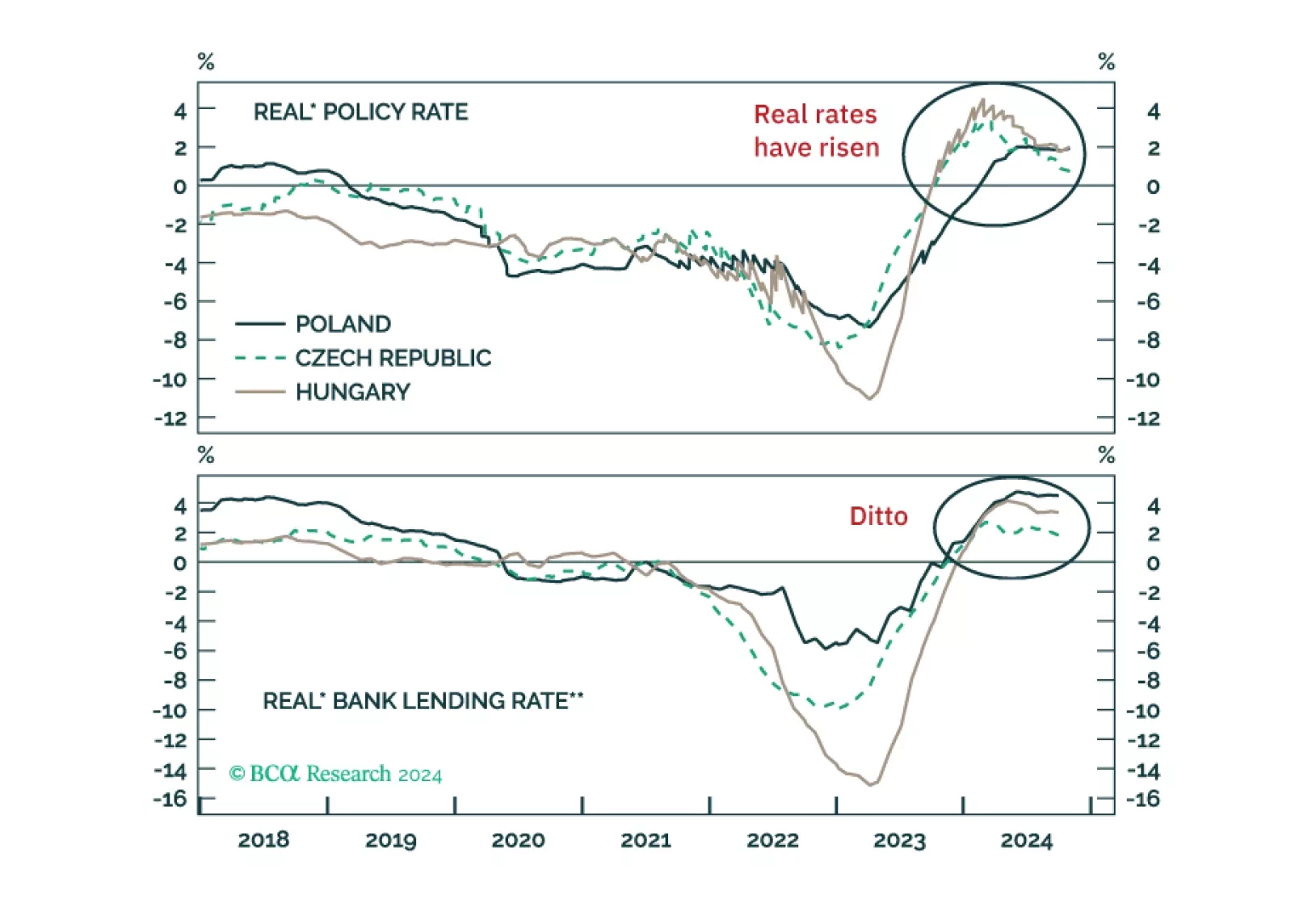
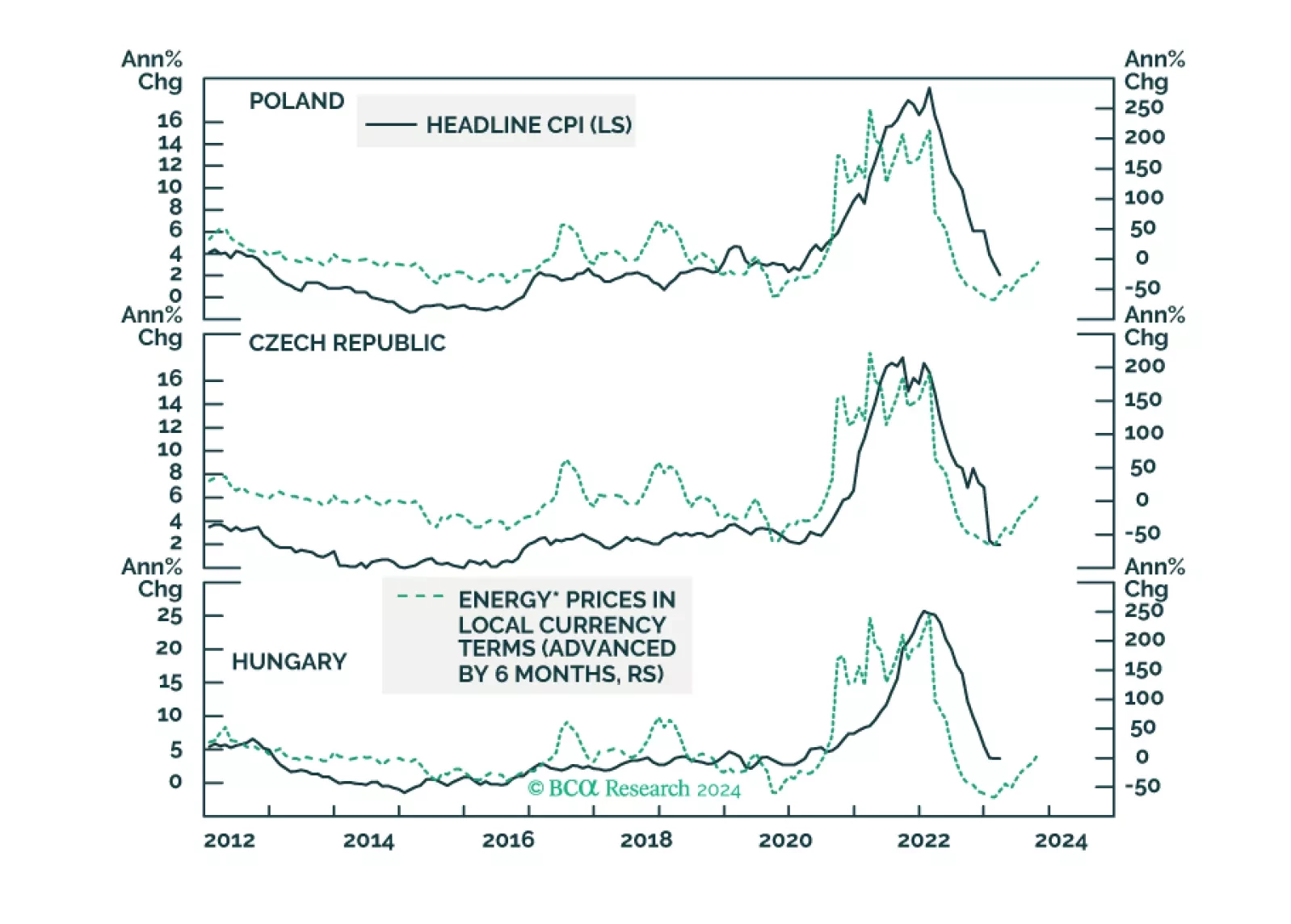
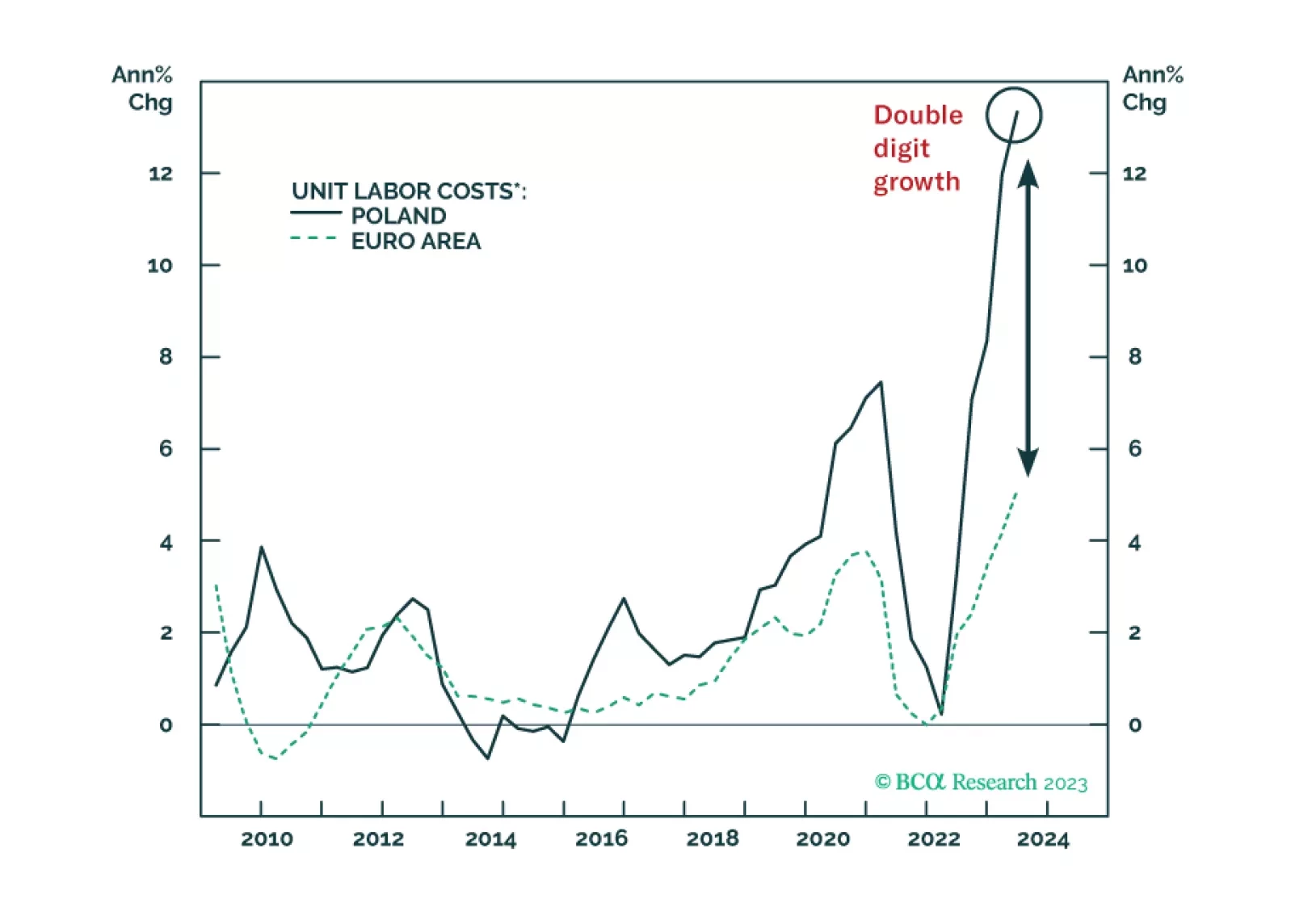
Real wages are set to rise in CE3 economies with implications for their asset markets and currencies. Of the three, Polish assets and the zloty are the most vulnerable.

The Polish central bank delivered a larger-than-anticipated 75 basis point rate cut on Wednesday – slashing the policy rate to 6%, versus expectations of 6.5%. The aggressive move marks the first rate cut following a 11-month-long pause after the NBP lifted…

The growth and inflation profiles of the three central European countries are set to diverge. The outlook for Polish and Hungarian Bonds are not attractive anymore. Book profits on them. Instead, initiate a new trade: pay Polish / receive Czech 10-year swap rates.

It’s time to go overweight Hungarian domestic bonds in an EM and European core bond portfolios. Currency investors should book profits on our long CZK / short HUF trade, which has generated 29.4% gains since its inception in June last year.

Executive Summary Poland: Wages Are Surging Poland: Wages Are Surging Poland: Wages Are Surging Hungary is exhibiting classic signs of an overheating economy –as rising inflation coincides with very strong domestic demand. Yet, authorities are still pursuing very stimulative monetary and fiscal policies. The upcoming appointments of new Czech National Bank (CNB) governor Aleš Michl and three new monetary policy board members entails a dovish shift in monetary policy. Core inflation in Poland will continue to rise due to the unfolding wage-price spiral. The reluctance of policymakers to tighten monetary and fiscal policies substantially in such an environment heralds a weaker currency and higher local bond yields. Continue to underweight Central European equities and local currency bonds relative to their respective EM benchmark. Underweight Central European local currency bonds within European core bond portfolio. Recommendation INITIATION DATE RETURN Receive Czech And Pay Polish 10-Years Swap Rates 2022-03-08 100 BPS Long CZK/Short HUF 2021-06-03 12.4% Short PLN/Long USD 2022-03-02 3.1% Bottom Line: The Hungarian and Polish economies are overheating, yet their monetary and fiscal policies remain accommodative. This is negative for their currencies and local bonds. Even though the incoming leadership of the Czech central bank will cultivate a more dovish stance than the current leadership, Czech macro policies are less stimulative than those in Hungary and Poland. By extension, the Czech currency and local bonds will outperform their Hungarian and Polish counterparts.   Hungary: Classic Overheating Chart 1Hungary Is Overheating Hungary Is Overheating Hungary Is Overheating The Hungarian economy is exhibiting signs of classic overheating as rising inflation coincides with very strong domestic demand (Chart 1). Yet, authorities are not tightening monetary and fiscal policies meaningfully. The central bank is well behind the inflation curve. Accordingly, the currency will continue to depreciate and local bond yields will rise. The only way to reverse these dynamics is for authorities to tighten monetary or fiscal policies dramatically, which will likely cause a recession. Looking forward, authorities will continue to pursue their pro-growth agenda despite the unfolding wage-price spiral. Inflation is broad-based and will accelerate further. High inflation is not limited to goods. Core, trimmed-mean and service inflation are also very high, in some cases in double digits (Chart 2). Chart 2Hungary: Inflation Is Broad-Based Hungary: Inflation Is Broad-Based Hungary: Inflation Is Broad-Based Chart 3Hungary: Wage Growth Is In Double Digits Hungary: Wage Growth Is In Double Digits Hungary: Wage Growth Is In Double Digits Hungary’s labor market is tight, and wages are surging (Chart 3). Notably, wage growth is in double digits and is well above core inflation. Wage growth will remain robust as the government is set to boost public wages and the private sector is struggling to fill vacant positions. Employment is at an all-time high, and the number of unemployed people is approaching pre-pandemic lows (Chart 4). Strong employment and solid real wage growth will support consumer spending for now.   Despite a major slowdown in the euro area, Hungarian exports will suffer less than those of other EU members. Almost 50% of Hungary’s manufacturing output comes from automotive, food and beverages, as well as industrial electrical equipment sectors. Demand for these sectors remains robust despite a potential drop in demand for consumer goods in the EU.   Despite the central bank raising rates by a cumulative 530 bps since June 2021, real policy rates and real commercial bank lending rates (deflated by core CPI) are at all-time lows, and money and private credit are booming (Chart 5). In brief, the central bank remains behind the inflation curve. The National Bank of Hungary (NBH) has also been the most aggressive central bank in the region in monetization of public debt and corporate debt. There is little evidence to suggest that it is planning to tighten liquidity as a means of reining in inflation. Chart 4Hungary: Labor Market Is Currently Very Tight Hungary: Labor Market Is Currently Very Tight Hungary: Labor Market Is Currently Very Tight Chart 5Hungary: Money And Credit Are Booming Hungary: Money And Credit Are Booming Hungary: Money And Credit Are Booming Chart 6Hungary: Twin Deficit Hungary: Twin Deficit Hungary: Twin Deficit Fiscal policy will remain loose and unorthodox measures will likely persist. Government primary spending has reached 46% of GDP and is unlikely to retrench much. In particular, in response to the EU’s recent €7.2 billion (4.6% of GDP) cut in funding to Hungary, prime minister Orbán has announced spending cuts and tax hikes to prop up government revenues (Chart 6, top panel). The government has imposed “windfall” taxes1 on some firms or industries where profits are excessive from the government’s perspective. The majority of spending cuts (€3 billion or 2% of GDP) will be in public investments. Meanwhile, authorities continue subsidizing household utility bills and raising public wages and pensions. This will keep consumption strong.   A very wide current account and trade deficits are also signs that the economy is overheating (Chart 6, bottom panel). Bottom Line: Super-loose monetary and fiscal policies amid an overheating economy warrant further currency depreciation and higher bond yields.  The Czech Republic: A Policy Shift Coming The recent appointments of Czech National Bank (CNB) governor Aleš Michl and three new monetary policy board members entails a dovish shift in monetary policy. Notably, Aleš Michl, a current board member of the monetary policy committee, has been a strong opponent of the CNB’s hawkish stance alongside current board member Oldřich Dědek. Both men have been the only two of the seven-member  committee to vote against rate hikes in the past eight meetings. In addition, President Zeman recently appointed three new members to the monetary policy committee to replace hawkish members that have reached the end of their terms. These new appointments are likely to be aligned with the forthcoming CNB governor’s dovish approach to monetary policy. Chart 7Czech Output Gap And Core Inflation Czech Output Gap And Core Inflation Czech Output Gap And Core Inflation Altogether, these appointments will result in a major shift in the CNB’s monetary policy board, whereby at least four out of the seven board members will likely vote against further rate hikes after July. Therefore, the CNB policy will undergo a dovish pivot. This will occur at a time when genuine inflation is still high and inflationary pressures are intense: The very large positive output gap heralds persistent inflationary pressures (Chart 7, top panel). Indeed, core and trimmed-mean CPIs are surging, which suggest that inflation is broad-based (Chart 7, bottom panel). Job vacancies exceeding the number of unemployed people entails a very tight labor market (Chart 8). The upshot is rising wages (Chart 9).   Domestic consumption remains robust due to considerable household income gains. Chart 8The Czech Republic: Labor Shortages Are Pervasive The Czech Republic: Labor Shortages Are Pervasive The Czech Republic: Labor Shortages Are Pervasive Chart 9Wage Growth Is Lower In Czech Than In Hungary And Poland Wage Growth Is Lower In Czech Than In Hungary And Poland Wage Growth Is Lower In Czech Than In Hungary And Poland Chart 10Fiscal Policy Is Tightening More In Czech Than In Hungary And Poland Fiscal Policy Is Tightening More In Czech Than In Hungary And Poland Fiscal Policy Is Tightening More In Czech Than In Hungary And Poland On the one hand, a dovish monetary policy shift is negative for the Czech koruna. On the other hand, the country’s fiscal thrust will still be negative this and next year (Chart 10). This is in contrast to Hungary and Poland. Besides, the central bank considers a weak currency to be a risk to its “fulfilment of price stability” and regards the “easing of the monetary conditions” as “inappropriate”. Last month, the CNB board convened in an emergency meeting to announce the selling of foreign exchange reserves to stem volatility in the currency. The Czech Republic has a lot of foreign exchange reserves that could be utilized to stem any large moves in the koruna. Even newly appointed governor Aleš Michl considers a strong koruna to be an important part of his mandate. His recent comments to local media suggest that the CNBs’ intention is to defend the currency against any medium to long-term weakness: “I want a strong koruna based on long-term cash flows to the country and investor interest in the Czechia. The koruna has not strengthened in trend since 2008. Everyone is only evaluating short-term fluctuations, but they do not perceive this significant change. The koruna will only be strong if we have long-term balanced public finances.” Overall, the selling of foreign exchange reserves to defend the currency will tighten monetary conditions and prevent short-term interest rates from falling. Whenever a central bank sells foreign currency, it is forced to purchase local currency which lowers commercial banks’ excess reserves at the central bank. The latter could reduce money origination by commercial banks. While long-term bond yields could rise as the central bank falls behind the inflation curve, the currency will likely be range bound versus the euro for some time. Bottom Line: Even though the central bank is shifting into a dovish mode, it will maintain the policy of a strong currency. Plus, the fiscal policy will be tightening, which is not the case in Hungary and Poland. We reiterate our long CZK / short HUF trade. Poland: Misguided Macro Policy Chart 11Poland: Wages Are Surging Poland: Wages Are Surging Poland: Wages Are Surging Inflation in Poland will continue to rise due to the unfolding wage-price spiral (Chart 11). Besides, the central bank is still behind the inflation curve, and fiscal policy has not tightened substantially. The reluctance of policymakers to tighten monetary and fiscal policies amid the wage-price spiral warrants a weaker currency. Also, a top in domestic bond yields might not be imminent. A buying opportunity in Polish local currency bonds will emerge only when authorities take measures to bring down inflation and when geopolitical tensions between Russia and the west abide. The central bank and government continue to blame inflation on the war in Ukraine, i.e., on supply-side factors rather than excessive domestic demand. Chart 12Poland: Consumer Spending Has Overshot Poland: Consumer Spending Has Overshot Poland: Consumer Spending Has Overshot Contrary to policymaker rhetoric, Poland is experiencing an inflationary boom, whereby rising inflation is not only the result of supply-side bottlenecks but is also due to excessive demand. Chart 12 illustrates that retail sales have overshot above a reasonable uptrend trajectory. Critically, the labor market is very tight. As a result, wage growth is skyrocketing both in nominal and real terms. With productivity growth well below wage growth, unit labor costs are accelerating. This will squeeze company profit margins and lead these to hike selling prices to protect profit margins. With such robust income growth, consumers might accept higher prices and the wage-price spiral will likely be sustained. Meantime, fiscal policy will remain accommodative at least throughout early 2023, until the scheduled parliamentary elections take place. The government has provided subsidies on energy and has cut the VAT rate. These programs effectively amount to stimulus for households. Chart 13Poland: Interest Rates Are Very Low/Negative Poland: Interest Rates Are Very Low/Negative Poland: Interest Rates Are Very Low/Negative In addition, the central bank will not likely hike rates aggressively. Recent comments by central bank governor Adam Glapinski appear to suggest that the National Bank of Poland (NBP) is likely to pause or slow its rate hikes. Even though the central bank has hiked its policy rate by 590 bps in the past 12 months, real policy and prime lending and mortgage rates as well as government bond yields remain very negative (Chart 13). This signifies that the monetary tightening has been insufficient. Lastly, in the current geopolitical climate, Poland is the most vulnerable among Central European nations to any escalation between Russia and the west. This is due to its extensive border with Ukraine, and due to it being the transit route for arms into Ukraine from the west. Poland has adopted a hard stance on Russia. This makes Poland an easy target for Russian rhetoric. While chances of direct conflict are slim, any further escalation by Russia will make Polish financial markets vulnerable to selloff. Bottom Line: For now, investors should continue to underweight Polish domestic bonds within both EM local currency bonds and core European bond portfolios. Also, we continue to recommend shorting PLN versus the USD. Investment Recommendations The Hungarian and Polish economies are overheating, and their monetary and fiscal policies remain accommodative. This is negative for their currencies and local bonds. Even though the incoming leadership of the Czech central bank will be more dovish than the current leadership, Czech macro policies are less stimulative than those in Hungary and Poland. Hence, the inflation outlook is more benign for the Czech economy than it is in Hungary and Poland. By extension, the Czech currency and local bonds will outperform their Hungarian and Polish counterparts. Chart 14Our Trade: Long CZK / Short HUF Our Trade: Long CZK / Short HUF Our Trade: Long CZK / Short HUF In light of this, we recommend the following to investors: Underweight Central European local currency bonds within European core bond portfolio. Keep the long CZK / short HUF trade (Chart 14); Hold onto the short PLN / long USD trade. Maintain the relative rates trade of receiving Czech and paying Polish ten-year rates. This spread has widened by 100 bps since our recommendation on March 8, 2022. Maintain underweight in local bonds and equities for Central Europe relative to their respective EM benchmarks.   Andrija Vesic Associate Editor andrijav@bcaresearch.com   Footnotes 1     A windfall tax is extra tax on profits of a particular company or industry that is deemed to have earned excessive profits.
Executive Summary Loss Of Russian Production Will Lift Brent Loss Of Russian Production Will Lift Brent Loss Of Russian Production Will Lift Brent With German imports of Russian oil close to 10% of its total requirements – following an impressive decline from 35% pre-invasion – we expect the EU to declare an embargo on Russian oil imports this week or next. Smaller states – e.g., Hungary and Slovokia – will be granted embargo waivers; their import volumes will not affect the EU effort. Russia will be forced to shut in ~ 1.6mm b/d of production, rising to 2mm b/d next year (vs. pre-invasion levels). Demand will fall as Brent prices surpass $120/bbl by 2H22, in our revised base case. Prices above $140/bbl are likely if Russia immediately halts EU oil exports. Our revised forecast calls for Brent to average $113/bbl this year, and $122/bbl next year. WTI will trade $3/bbl lower. Per earlier threats, Russia will cut EU natgas exports following the EU embargo. Benchmark euro natgas prices will go back above €225/MWh, and trigger an EU recession. Bottom Line: An EU embargo on Russian oil imports is close. Brent crude will rally above $120/bbl by 2H22, with $140/bbl or higher likely, depending on how quickly Russia reacts to the EU oil embargo. Eurozone natgas will trade above €225/MWh again. We remain long the S&P GSCI index, the COMT ETF, and the XOP and CRAK ETFs to retain exposure to higher prices. We are getting long 1Q23 ICE Brent futures and 4Q22 TTF futures at tonight's close. Feature Related Report  Commodity & Energy StrategyDie Cast By EU: Inflation, Recession Risks Rise The stage is set for the EU to announce an embargo on Russian oil imports this week or next. Odds of an EU embargo being declared sooner rather than later increased, in our view, in the wake of Germany's success in cutting Russian oil imports by more than half in a very short period – from ~ 35% prior to Russia's invasion of Ukraine on 24 February to ~ 12% earlier this month (Chart 1). Further reductions in Russian oil imports we expect from Germany will make it easier for the EU's largest economy to walk away from Russian crude and product imports sooner rather than later.1 Other EU member states already stand with Germany on the issue of an embargo on Russian imports. Those that do not – Hungary and Slovakia, e.g. – do not import Russian oil on a scale that can meaningfully derail EU solidarity on the embargo, which means waivers for these states can be expected to keep the embargo on track. In addition, four of the Five-Eyes states – the US, UK, Australia and Canada – already have imposed embargoes on Russian oil imports. Chart 1EU Energy Import Dependency (2021) EU Energy Import Dependency (2021) EU Energy Import Dependency (2021) Russian Shut-ins Will Tighten Supply The immediate fallout of the EU embargo will be to accelerate the rate at which Russia is forced to shut in production, as increasing volumes of its oil remain stranded on the water looking for a home. We reckon 1mm b/d or so of Russian crude oil output already has been cut. This will continue to increase. Russia will be forced to shut in ~ 1.6mm b/d of crude output this year, rising to 2mm b/d next year (averages vs. pre-invasion levels), in our modelling. This takes Russian oil production down to 8.4mm b/d this year, on average, and 8.0mm b/d next year.2 As more and more Russian crude is shut in, the pipelines carrying Urals and Eastern Siberia-Pacific Ocean (ESPO) crude from the Siberian oil fields to ports will fill, along with inventory in the ports where ships are loaded for export. When storage and pipelines fill, the only alternative Russian producers will have will be to shut in crude and condensate production. While some states obviously will benefit from the increasing availability of Russian crude on offer at 30% discounts or more – e.g., India and China – there is a limit as to how much surplus Russian output they can take in. China, in particular, will not want to jeopardize long-term contracts with key suppliers – e.g., the Kingdom of Saudi Arabia (KSA) – nor will India, which will limit the total volumes both are willing to take from Russia longer term. Security of supply becomes an increasingly important consideration as Russia's oil output continues a long-term decline going forward: Costs were rising prior to Russia's invasion of Ukraine from 2008 to 2019. Falling drilling efficiency and production, were accompanied by rising water cuts – i.e., the amount of water being produced drilling for oil – in Russia's largest fields, which rose to as high as 86%. Shutting production from these older fields will force hard choices as to whether these fields are ever revived.3 Demand Will Be Stressed Shortly after Russia invaded Ukraine, the country's Energy Ministry Alexander Novak warned the EU it would cut off natural gas pipeline supplies being sent to the continent, in retaliation for embargoing oil imports.4 Oil exports of close to 5mm b/d accounted for just under half of Russia's revenue from energy exports last year, with OECD Europe representing half of that amount.5 For Russia, oil exports are far more important than gas exports, which will incline it to immediately cut pipeline flows to Europe as soon as an oil embargo is announced. For the EU, natgas exports from Russia are critical to the economies of its member states (Chart 2). The EU imported ~ 155 bcm of natgas from Russia in 2021, or just over 40% of its total natgas consumption. Germany's share amounted to 45 bcm, or 45% of domestic gas use . If, as we expect, the EU is close to announcing its oil embargo on Russia, an immediate retaliation from Moscow in the form of a cutoff of pipeline exports to the EU most likely will follow. This will throw the EU into a recession, as natgas prices surge. Chart 2Losing Russia's Natgas Will Be Painful For EU Oil, Natgas Prices Set To Surge Oil, Natgas Prices Set To Surge Revised Forecast Reflects Falling Russian Output We are revising our Brent forecast and crude oil balances in line with our expectation Russian oil output will decline meaningfully. As noted above, we now expect Russian crude oil output to fall to 8.4mm b/d this year and 8.0mm b/d in 2023. This pushes non-core OPEC 2.0 production – which now includes Russia – lower, as a result (Chart 3). We moved Russia out of the core OPEC 2.0 producer group, given the production declines we expect this year and next, and into the "Other Guys" group. Our base case demand reflects a shift in OECD vs. non-OECD consumption estimates, with the OECD gaining incrementally, while EM demand (via non-OECD consumption) falls incrementally (Chart 4). Chart 3Falling Russia Output Pushes Non-Core OPEC 2.0 Output Lower Oil, Natgas Prices Set To Surge Oil, Natgas Prices Set To Surge Chart 4DM Demand Shifts Higher, EM Shifts Lower DM Demand Shifts Higher, EM Shifts Lower DM Demand Shifts Higher, EM Shifts Lower The lower EM demand growth reflects weaker China oil consumption resulting from the country's zero-COVID policy. In addition, because we expect Russia to act quickly on cutting off EU natgas exports, benchmark TTF natgas prices will move back above €225/MWh. Higher oil and natgas prices in the EU will lead to recession later this year. How quickly this shows up depends on how quickly Russia reacts to an EU oil embargo. In addition, a strong USD – bid higher by global economic uncertainty and safe-haven demand – will pushing the local-currency costs of refined products like gasoline, diesel and jet fuel higher, also will contribute to lower EM demand (Chart 5). Chart 5USD Remains Well Bid Oil, Natgas Prices Set To Surge Oil, Natgas Prices Set To Surge In our base case, we expect a tighter market on balance (Chart 6). Oil inventories remain under pressure, owing to falling as Russian output and declines in production outside core OPEC 2.0 and the US (Chart 7). We cannot rule out additional SPR releases from the US or IEA to offset tightening global inventories. Chart 6Global Balances Tighten Global Balances Tighten Global Balances Tighten Chart 7Inventories Draw As Supply Tightens Inventories Draw As Supply Tightens Inventories Draw As Supply Tightens Our forecast for Brent this year has been lifted on the back of a much stronger expectation of an EU oil embargo against Russia. This will result in 2mm b/d of Russian production being shut in by next year, which will not be fully replaced (Table 1). We are lifting our Brent forecast to $110/bbl for 2022, and $115/bbl for next year as a result (Chart 8). Chart 8Loss Of Russian Production Will Lift Brent Loss Of Russian Production Will Lift Brent Loss Of Russian Production Will Lift Brent Table 1BCA Global Oil Supply - Demand Balances (MMb/d, Base Case Balances) To Dec23 Oil, Natgas Prices Set To Surge Oil, Natgas Prices Set To Surge Investment Implications An EU embargo on Russian oil imports is close at hand, in our view. Brent crude will rally above $120/bbl by 2H22, with $140/bbl or higher possible, depending on Russia's reaction to the EU oil embargo. We expect Brent prices to average $113/bbl this year, and $122/bbl in 2023. WTI will trade $3/bbl lower on average. Eurozone natgas will trade above €225/MWh again and stay at elevated levels, likely moving higher following a Russian cutoff of natgas supplies to the continent. This will throw the EU into recession. We remain long the S&P GSCI index, the COMT ETF, and the XOP and CRAK ETFs to retain exposure to higher prices. We are getting long 1Q23 ICE Brent futures and TTF natgas futures at tonight's close. A word of caution is in order: We are assuming Russia will follow through on its threat to shut off natgas exports to the EU in the event of an embargo against importing its oil is declared. This, we believe, is Russia's red line. If the EU fails to declare an embargo, or if Russia fails to follow through on its threat to cut off gas supplies in the wake of an EU oil embargo of its exports we will have to re-assess our outlook.   Robert P. Ryan Chief Commodity & Energy Strategist rryan@bcaresearch.com Ashwin Shyam Research Analyst Commodity & Energy Strategy ashwin.shyam@bcaresearch.com Paula Struk Research Associate Commodity & Energy Strategy paula.struk@bcaresearch.com     Commodities Round-Up Energy: Bullish European natural gas inventories are building at a rapid rate, as competition from Asia – typically led by Chinese demand – remains weaker than in previous seasons. EU natgas storage stood at ~446 MWh as of May 16, 2022, the latest available reports indicate (Chart 9). The EU has weathered two extremely difficult winters in 2020-21 and 2021-22. Natgas storage levels were drawn hard to meet space heating demand, which, owing to a winter energy crisis in China at the time, forced European buyers into a competition for liquified natural gas (LNG) during the former period. Following unexpected spring-summer demand in 2021 when cold weather lingered in Europe and wind power generation fell sharply, storage owners again were hard pressed to secure LNG to rebuild storage levels going into this past winter, which caused European TTF natgas prices to soar, as demand surged (Chart 10). With the threat of a cutoff of Russian natgas hanging over the EU, there is a singular focus right now on getting storage as full as possible ahead of next winter. The EU aims to replace two-thirds of Russian gas imports before yearend. Precious Metals: Bullish The Fed has adopted a more hawkish rhetoric, as it acts more aggressively to reduce US inflation. Interest rates have increased from near-zero levels in March to 0.75%, and BCA’s US Bond strategy service expects two more 50 bps rate hikes in June and July. Post July, rate hikes will depend on the Fed’s assessment of inflation, inflation expectations and financial conditions. The Fed faces the risk of either remaining behind the inflation curve or sparking a recession in case it’s either not hawkish enough, or too hawkish. Base Metals: Bullish High power prices in Europe will continue to plague refined base metals production in the continent and keep refined metal prices buoyed. LME Europe aluminum stocks are close to 17-year lows. In China – whose metal smelters were also hit by high power prices in 2021 – aluminum smelting has revived, with the country reportedly producing a record amount of primary aluminum in April. Lockdowns, however, have reduced economic activity, demand for the metal and its domestic price. China has taken advantage of this arbitrage opportunity, sending most of its primary aluminum exports to Europe. This aluminum price spread between the two states has contributed to China’s steady rise in primary aluminum exports this year, after having exported nearly none in 2020 and 2021. Chart 9 Oil, Natgas Prices Set To Surge Oil, Natgas Prices Set To Surge Chart 10Dutch Title Transfer Facility Going Down Dutch Title Transfer Facility Going Down Dutch Title Transfer Facility Going Down     Footnotes 1     German officials have stated the country will wind down all oil imports from Russia by year end, even if the rest of the EU does not join it in an embargo.  We highly doubt Germany will act alone, given the support an embargo already has received from EU member states.  Please see Germany to Stop Russian Oil Imports Regardless of EU Sanctions, published by bloomberg.com on May 15, 2022. 2     Our expectation for shut-in volumes is lower than the IEA's, which sees Russia being forced to shut in 3mm b/d of production by 2H22.  We continue to monitor this closely via satellite and reporting services and will adjust our estimates as needed.  Obviously, if the IEA is correct oil markets will tighten even more than we expect. 3    Please see "The Future of Russian Oil Production in the Short, Medium, and Long Term," published by the Oxford Institute for Energy Studies in September 2019.  The OIES study notes production in Russia's highest-producing area – the Khanty-Mansi Autonomous (KMA) district – actually fell 15% between 2008-19, even as drilling activity surged 66%.  While output in 2018 rose due to intensified oil recovery (IOR), the OIES noted that the water cut rose sharply in 2018 as well in the KMA district. 4    Please see Russia warns of $300 oil, threatens to cut off European gas if West bans energy imports, published by cnbc.com on March 8, 2022.  The article notes Novak threatened to close the Nord Stream 1 pipeline delivering gas to Germany in retaliation for an EU oil embargo.  Almost three-quarters of Russia's natgas exports were sent to Europe prior to its invasion of Ukraine.  Natgas export revenues accounted for $62 billion of the $242 billion funding Russia's budget last year, while crude oil revenues made up $180 billion (just under 75%). 5    Please see Die Cast By EU: Inflation, Recession Risks Rise, which we published on May 5, 2022.  It is available at ces.bcaresearch.com.   Investment Views and Themes Recommendations Strategic Recommendations Trades Closed in 2022
The Polish central bank (NBP) surprised markets yesterday with a 100bps rate hike to 4.5%, following a 75bps rate hike last month. The central bank rate hikes come after strong headline and core inflation prints in recent months. Despite this hike, the…
Executive Summary Polish Central Bank Is Behind Inflation Curve; Czech One is Getting Ahead Curve Polish Central Bank Is Behind Inflation Curve; Czech One is Getting Ahead Curve Polish Central Bank Is Behind Inflation Curve; Czech One is Getting Ahead Curve Amid the current geopolitical crisis, Poland is more vulnerable than other Central European countries due to its extensive border with Ukraine, and because the West is supplying arms to Ukraine via Poland. In our March 2 report, we downgraded Central European stocks and bonds to underweight and recommended shorting the Polish zloty against the US dollar. Poland and the Czech Republic are experiencing genuine inflation.  Czech monetary and fiscal authorities are determined to tackle rising prices, i.e., they will be getting ahead of the inflation curve. In contrast, the Polish central bank and government will err on the side of pro-growth policies rather than tightening policy sufficiently. When authorities fall behind the inflation curve, currencies tend to depreciate and long-term bond yields tend to rise. Recommendation Inception Date Return Receive Czech And Pay Polish 10-Years Swap Rates      March 8, 2022   Pay Czech 10-Years Swap Rates July 23, 2020 257 bps Long CZK/Short HUF June 3, 2021 6.9% Short PLN/Long USD March 2, 2022 4.7% Bottom Line: Such a policy divergence between the Czech Republic and Poland heralds the Czech currency and bonds outperforming their Polish counterparts. We recommend to pay Polish / receive Czech 10-year swap rates, book profits on the position of paying 10-year Czech swap rates and maintain the short PLN/long USD trade. Feature Although risk of a direct Russian military attack on Poland and the Czech Republic are low, we argued in our recent report  from March 2 that their financial markets will remain jittery as the geopolitical conflict escalates in the near term. Nevertheless, the Kremlin does not have the appetite for direct confrontation with NATO. Any attack on a NATO member, such as Poland or other East European countries, would activate Article V of the NATO charter and force the organization to defend its member. Yet, geopolitical risks will likely heighten for now. Having incurred considerable costs already, the Kremlin will not halt its aggressive approach towards NATO. If anything, Russia’s rhetoric and menace will heighten in the coming days and weeks to secure some concessions from the West. Central Europe in general and Poland specifically are on the frontlines of the Russia and NATO confrontation. Poland is potentially vulnerable due to its extensive border with Ukraine and because the West is supplying arms to Ukraine via Poland. That is why in our March 2 report we downgraded Central European stocks and bonds to underweight and recommended shorting the Polish zloty against the US dollar.  Below we provide a macroeconomic analysis of Poland and the Czech Republic and unpack our rationale for the following investment recommendations: Book profits on the position of paying 10-year Czech swap rates. Our view that the Czech central bank will be aggressive, raising rates in the face of rising inflation, has played out well. A new recommendation: Pay Polish / receive Czech 10-year swap rates. Maintain the short PLN/long USD trade. For now, we keep the short HUF/long CZK position. We will update our view on Hungary after the elections later this month. Poland: The Central Bank Is Behind The Curve Chart 1Polish Inflation Has Been Overshooting Polish Inflation Has Been Overshooting Polish Inflation Has Been Overshooting Poland has been experiencing an inflationary boom – rising inflation is coinciding with strong expansion in real domestic demand and aggregate output (Chart 1). In particular, a wage-price spiral is unfolding alongside a surge in real estate prices. Labor shortages have been mushrooming (Chart 2, top panel). A shrinking working age population suggests that a tight labor market will persist for much longer (Chart 2, middle and bottom panels). Critically, the inflow of Ukrainians fleeing the war should not substantially alter current labor dynamics. Poland’s labor shortages have been primarily in higher skilled employment. While certain services firms could hire immigrants from Ukraine, job vacancies will remain high primarily in middle and higher wage categories. Besides, overall consumer demand will increase in Poland due to an influx of Ukrainians. Notably, the average wage is expanding at a rate of 10% in nominal and 4% in real terms (deflated by core CPI) and unit labor costs are accelerating (Chart 3). Rising unit labor costs will squeeze corporate profit margins and lead companies to hike their selling prices. Chart 2Poland: Labor Shortages Are Rampant Poland: Labor Shortages Are Rampant Poland: Labor Shortages Are Rampant Chart 3Poland: Surging Wages And Unit Labor Costs Poland: Surging Wages And Unit Labor Costs Poland: Surging Wages And Unit Labor Costs Strong household income growth will sustain robust consumer spending (Chart 4). Vibrant domestic consumption will result in a widening of both the current account and trade deficits. The latter is negative for the currency. Lastly, the prime lending rate and mortgage rates are negative in real terms (Chart 5). This will support demand for credit from households and enterprises. Chart 4Poland: Consumer Spending Is Above Its Trend Poland: Consumer Spending Is Above Its Trend Poland: Consumer Spending Is Above Its Trend Chart 5Polish Lending Rates Are Deeply Negative Polish Lending Rates Are Deeply Negative Polish Lending Rates Are Deeply Negative Critically, the central bank of Poland (NPB) has fallen behind the inflation curve. Headline, core and trimmed mean CPI have surged well above the central bank’s target range of 1.5-3.5% (see Chart 1 above). The central bank has been tightening liquidity conditions in the last week or so by intervening in the exchange rate market, i.e., selling foreign exchange reserves to support the zloty. This move is a departure from the plentiful liquidity that the NPB provided over the past two years. First, the central bank injected enormous amounts of liquidity during its quantitative easing that commenced at the start of the pandemic and lasted almost two years. Second, for some time the NBP has been buying the government’s EU funds and providing the latter with local currency. All in all, we believe that the NBP will be treading carefully with its liquidity tightening and will not allow interbank rates to rise much given the geopolitical crisis in the region. In addition, the ruling Law and Justice party (PiS) has been reluctant to withdraw fiscal stimulus ahead of the parliamentary elections in 2023. With geopolitical risks heightened and potential softness in consumer and business sentiment, the government will not tighten fiscal policy much. Table 1Poland's National Polls: Voting Intentions Poland & The Czech Republic: On The Frontlines Of Geopolitical And Inflation Risks Poland & The Czech Republic: On The Frontlines Of Geopolitical And Inflation Risks The ruling party’s support has been falling since the last general elections in October 2019. In contrast, the opposing party Civic Coalition, led by former prime minister Donald Tusk, has had a noticeable upsurge of 10 percentage points to 27% support in recent polls from March 1 (Table 1). To increase odds of their election victory, the government will try to secure robust nominal growth going into the election in the latter part of 2023. Overall, fiscal policy will remain largely accommodative. Notably, odds are high that authorities will prolong tax cuts on energy and food prices and could subsidize domestic firms and household energy and food bills through direct transfers. Bottom Line: The Polish economy had been experiencing classic overheating before the geopolitical crisis around Ukraine erupted. A tumble in the exchange rate, surging energy and food prices all herald a further overshoot in consumer price inflation. The central bank and the government will err on the side of pro-growth policies rather than tackling inflation. When authorities fall behind the inflation curve, currencies tend to depreciate and long-term bond yields rise. We recommended shorting the PLN against the USD on March 2 and today we recommend a new fixed-income trade: pay Polish 10-year swap rates and receive Czech 10-year rates. The Czech Republic: The Central Bank Is Getting Ahead Of The Curve Chart 6Czech Inflation Has Been Overshooting Czech Inflation Has Been Overshooting Czech Inflation Has Been Overshooting In the Czech Republic, our call on the   central bank hiking interest rates sooner and faster than its central European peers has been playing out nicely. The Czech National Bank (CNB) has hiked its policy rate by 425 bps since June 2021. This has produced both higher nominal and real Czech interest rates in relation to those in the Euro Area and Central Europe.  In line with rising Czech rates, the koruna has appreciated versus other regional currencies. For now, the central bank will remain alert to price stability and might continue pushing rates higher as long as consumer price inflation remains above the CNB’s target range of 1-3% (Chart 6). In the meantime, the newly elected Czech government has significantly revised fiscal plans from the previous government to rein in surging inflation. In particular, the new budget involves flat nominal spending in 2022, which will result in government spending contracting in real terms. In turn, the budget deficit is expected to narrow to below 3% of GDP by the end of 2022. Despite tightening monetary and fiscal conditions, Czech inflation will persist for the following reasons: A positive output gap has historically heralded higher inflation (Chart 7). Labor shortages remain acute (Chart 8, top panel). Job vacancies are at all-time highs and the unemployment rate will continue to fall as vacancies are filled by firms (Chart 8, bottom panel). Chart 7The Czech Republic: Output Gap And Inflation The Czech Republic: Output Gap And Inflation The Czech Republic: Output Gap And Inflation Chart 8Czech Labor Shortages Are Acute Czech Labor Shortages Are Acute Czech Labor Shortages Are Acute Chart 9Czech Wages And Unit Labor Costs Czech Wages And Unit Labor Costs Czech Wages And Unit Labor Costs Competition amongst firms to secure labor will spur wage gains. Increasing unit labor cost amid rising output denotes genuine inflationary pressures (Chart 9).  Retail sales are breaking above the pre-COVID peak supported by robust real wage gains (Chart 9, bottom panel). Bottom Line: The central bank might lift rates further and the government is tightening fiscal policy. Thus, the CNB is getting ahead of the inflation curve. This is positive for the currency, ceteris paribus, and will also cap Czech long-term interest rates even if short rates rise further. Even though Czech financial markets will likely sell off further due to the geopolitical crisis, we expect the Czech koruna and long-term bonds to outperform their counterparts in Poland and Hungary. Investment Recommendations Czech monetary and fiscal authorities are more determined to tackle inflation, i.e., they will be getting ahead of the inflation curve compared to their Polish (and Hungarian) counterparts (Chart 10). Such a policy divergence heralds the following investment strategy: A new fixed-income trade: Pay 10-year Polish swap rates / receive 10-year Czech swap rates. As to the allocation to central Europe, investors should underweight Poland, Czech and Hungarian equities and local currency government bonds within their respective EM benchmark. We initiated the short PLN / long USD trade on March 2. Remain long CZK versus HUF. Take profits on the position of paying Czech 10-year swap rates. 10-year swap rates have risen by 260 basis points since the initiation of this position on July 23, 2020 (Chart 11). Chart 11The Performance Of Our Central European Trades The Performance Of Our Central European Trades The Performance Of Our Central European Trades Chart 10Polish Central Bank Is Behind Inflation Curve; Czech One is Getting Ahead Curve Polish Central Bank Is Behind Inflation Curve; Czech One is Getting Ahead Curve Polish Central Bank Is Behind Inflation Curve; Czech One is Getting Ahead Curve   Andrija Vesic Associate Editor andrijav@bcaresearch.com Arthur Budaghyan Chief Emerging Markets Strategist arthurb@bcaresearch.com Footnotes