Sorry, you need to enable JavaScript to visit this website.
Skip to main content

Construction & Engineering

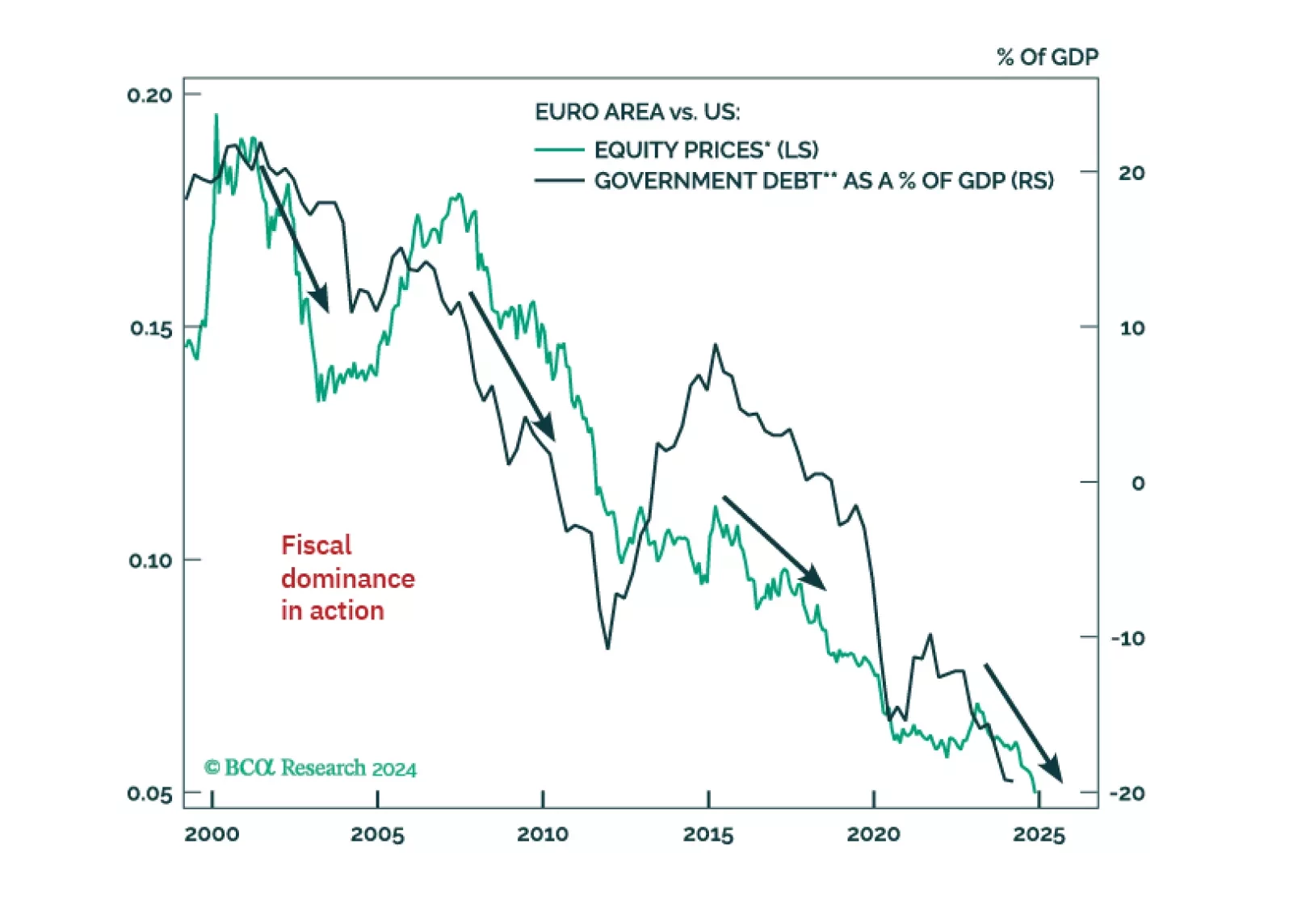
Investors have given up on European assets, which now suffer exceptional discounts to US ones. However, tighter US fiscal policy, the end of Europe’s austerity and deleveraging, the LNG Tsunami about to hit European shores, and the global capex fueled by the Impossible Geopolitical Trinity mean that Europe’s time to shine will soon come back.

Investors have given up on European assets, which now suffer exceptional discounts to US ones. However, tighter US fiscal policy, the end of Europe’s austerity and deleveraging, the LNG Tsunami about to hit European shores, and the global capex fueled by the Impossible Geopolitical Trinity mean that Europe’s time to shine will soon come back.

The European Commission voted to impose tariffs of up to 45% on imports of Chinese electric vehicles (EVs). The announcement follows previous tariffs imposed on Chinese EV imports back in June. This new round of economic sanctions will only have a minor…

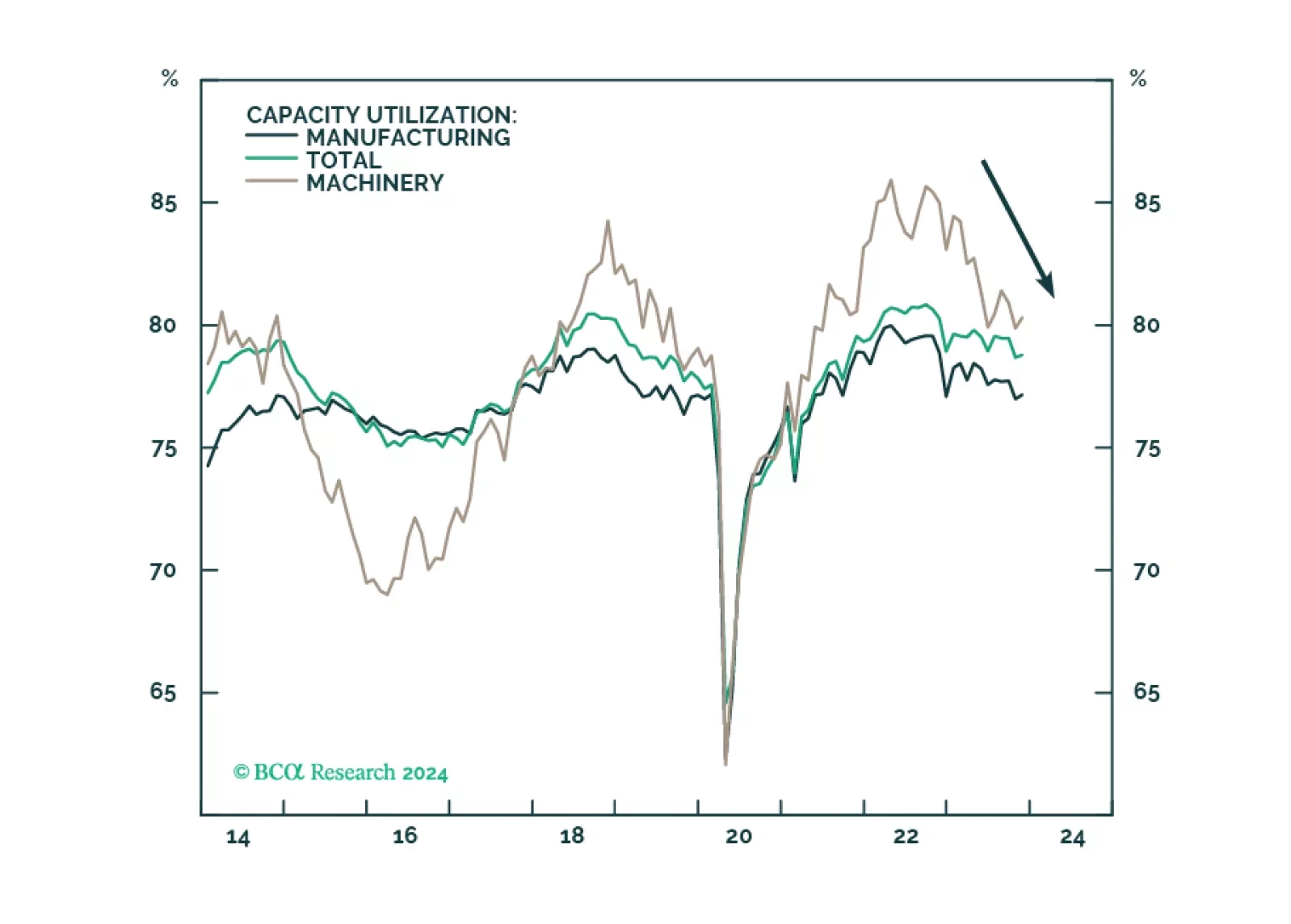
The US manufacturing renaissance, spurred on by reshoring, automation, and government spending, is running its course but progress has slowed on the back of tight monetary conditions and the manufacturing recession. The deceleration of these positive trends weighs on the outlook for the Capital Goods industry group, impeding its performance over the short term. However, we reiterate that positive long-term trends for the industry remain intact. We downgrade Capital Goods to a tactical underweight. It remains a strategic overweight.

What is the outlook for the European housing market amid rising mortgage rates and the energy crisis? Does housing represent a systemic risk? Can households weather the storm? And what are the opportunities, if any?

Executive Summary China Copper Consumption Failed To Revive Post-Pandemic China Copper Consumption Failed To Revive Post-Pandemic China Copper Consumption Failed To Revive Post-Pandemic A greater-than-expected contraction in manufacturing and construction in China – evidenced by the latest PMI and home sales data – will keep pressure on copper prices. Higher inflation will continue to drive the cost of labor, fuels and materials higher. Lower copper prices and higher input costs will weaken margins, leading to reduced capex. This also will put pressure on the rate of spending on projects already sanctioned. Payouts to shareholders – buybacks and dividends – will fall, reducing the appeal of miners’ equities. Debt-service costs will rise as interest rates are pushed higher by central banks. Civil unrest in critically important metals-producing provinces is forcing some miners to suspend production guidance. This will be exacerbated in Chile by changing tax regimes, which likely will reduce capex as well. Bottom Line: As global demand for copper increases with the renewable-energy transition and higher arms spending in Europe, miners’ ability to expand supply is being seriously challenged. Falling prices and rising costs – along with higher tax burdens and civil unrest in key mining provinces – are forcing copper miners to lower production and capex guidance, which will redound to the detriment of supply growth. With demand expected to double by 2030-35, copper prices will have to move higher to keep capex flowing to support supply growth. We remain long the XME ETF as the best way to express our bullish, decade-long view. Feature Just as the world is scrambling to develop additional energy supplies in the wake of Russia’s invasion of Ukraine, copper supplies – the critical element of the renewable-energy buildout – are being squeezed by an unusual convergence of fundamental, financial and social factors. Chart 1China Copper Consumption Failed To Revive Post-Pandemic China Copper Consumption Failed To Revive Post-Pandemic China Copper Consumption Failed To Revive Post-Pandemic Firstly, copper demand is weak, which, all else equal, is suppressing prices. This is largely down to China’s zero-tolerance COVID-19 policy, and uncertainty over whether the EU will be pushed into a massive recession, following the cutoff of its natural gas supplies from Russia. These are two of the three major pillars of the global economy, and their economies are entwined via trade in goods. China’s COVID-19 policy is hammering its critically important property market – sales were down almost 40% y/y in July – and forcing a contraction in manufacturing. Construction represents ~ 30% of total copper demand in China. Manufacturing is contracting, based on China’s official July PMI report, which showed the index fell below 50 to 49.0 for July.1 Related Report  Commodity & Energy StrategyOne Hot Mess: EU Energy Policy China accounts for more than half of global copper demand, and, because of its zero-tolerance COVID-19 policy, was the only major economy to register a year-on-year contractions in copper demand throughout the pandemic up to the present (Chart 1). The EU accounts for ~ 12.5% of global copper demand, which we expect will continue to be supported by the bloc’s renewable-energy and defense buildouts.2 We noted in earlier research the odds of the EU going into recession remain high as the bloc scrambles to prepare for winter, in the wake of its attempts to replace its dependence on Russian natural gas supplies.3 We continue to expect the EU will avoid a major recession, and that it will be able to navigate this transition, leaving it on a better energy footing in subsequent years.4 Lower Copper Prices Will Hurt Capex Chart 2Copper Price Rally Fades Copper Price Rally Fades Copper Price Rally Fades After bottoming in March 2020 at $2.12/lb on the COMEX, copper prices staged a 125% rally that ended in March of this year. This was due to the post-pandemic reopening of most economies ex-China, which was accompanied by massive fiscal and monetary stimulus that super-charged consumer demand. Copper prices have since fallen ~33% from their March highs on the back of a substantial weakening of demand resulting from China’s zero-tolerance COVID policy and a concerted global effort to rein in the inflation caused by governments’ largess (Chart 2). Most year-end 2021 capex expectations for 2022 and into the future among copper miners were drawn up prior to the price collapse in June. After that, fear of central-bank policy mistakes – chiefly over-tightening of monetary policy that pushes the global economy into recession – and weak EM demand took prices from ~ $4.55/lb down to less than $3.20/lb by mid-July. A strong USD also pushed demand lower during this time. Chart 3DRC Offsets Chile, Peru Weakness Copper Capex Under Pressure Copper Capex Under Pressure Following the copper-price rout, miners are re-thinking production goals, dividend policy and capex. Social and governance issues also are contributing to weaker copper output. Rio Tinto, for example, notified markets it would shave $500mm from its $8 billion 2022 capex budget. For 1H22, Rio cut its dividend to $2.67/share from $5.61/share in 1H21. Elsewhere, Glencore said copper output from its Katanga mine in the DRC now is expected to come in 15% lower this year, at 1.06mm MT, owing to geological difficulties. Separately, output guidance for Chinese miner MMG Ltd’s Las Bambas mine in Peru has been suspended, following a 60% drop in production. The company expected it would be producing up to 320k tons this year. Civil unrest at Las Bambas has been ongoing since production started in 2016, according to Reuters. Big producers like Chile and Peru – accounting for ~ 35% of global ore production – along with the DRC face multiple challenges. Chile accounts for ~ 25% of global copper ore production. Its output fell ~ 6% in 2Q22 vs year-earlier output due to falling ore quality, water-supply constraints, and rising input costs (Chart 3). Chile’s government expects copper ore output to decline 3.4% y/y in 2022, with many of the country’s premier mines faltering (Chart 4). Chart 4Chile Expecting Lower Copper Output Copper Capex Under Pressure Copper Capex Under Pressure Chile also is proposing to increase taxes and royalties, to raise money for its budget. However, this may have the effect of driving away investment in the country’s copper mining industry. Fitch notes, “Increased costs will decrease mining cash flows and discourage new mining investments in Chile, favoring the migration of investors to other copper mining districts.”5 BHP Billiton, on que, said it will reconsider further investment in Chile, if the new legislation is approved. Renewables Buildout Will Widen Copper Deficit Markets appear to be trading without regard for the huge increase in copper supply that will be required for the global renewable-energy transition, to say nothing of the upcoming re-arming of the EU and continued military spending by the US and China. In our modeling of supply-demand balances, we move beyond our usual real GDP-based estimates of demand, which estimates the cyclical copper demand, and include assumptions for the demand the green-energy transition will contribute. Hence, this additional copper demand for green energy needs to be added to the copper demand forecast generated by the model. Using projections for global supply taken from the Resource and Energy Quarterly published by the Australian Government’s Department of Industry, Science and Resources, we estimate there will be a physical refined copper deficit of 224k tons in 2022 and 135K tons next year (Chart 5). Among other things, we are assuming refined copper demand will double by 2030 and reach 50mm tons/yr by then. This is a somewhat more aggressive assumption than S&P Global’s estimate of demand doubling by 2035. If we assume refined copper production is 2% lower than the REQ’s estimate, we expect the physical deficit in the refined copper market rise to a ~ 532k-ton deficit in 2022 and ~ 677k-ton deficit in 2023. These results including renewables demand highlight the need to not only account for cyclical demand but also the new demand that will be apparent as the EU, the US and China kick their renewables investments into high gear. Importantly, this kick-off is occurring with global commodity-exchange inventories still more than ~ 35% below year-ago levels (Chart 6). Chart 5Coppers Deficit Will Narrow On Lower Demand Coppers Deficit Will Narrow On Lower Demand Coppers Deficit Will Narrow On Lower Demand ​​​​​​ Chart 6Exchange Inventories Remain Exceptionally Low Exchange Inventories Remain Exceptionally Low Exchange Inventories Remain Exceptionally Low ​​​​​​ Investment Implications Copper prices will have to move higher to keep capex flowing to support supply growth normal cyclical demand and renewable-energy demand will require over coming decades. Falling prices and rising costs – along with higher tax burdens and civil unrest in key mining provinces – are forcing copper miners to lower production and capex guidance, which will redound to the detriment of supply growth. This situation cannot persist unless governments call off their renewable-energy transition, and, in the case of the EU, their efforts to re-arm Europe’s militaries following the invasion of Ukraine by Russia. We remain bullish base metals, particularly copper. We remain long the XME ETF as the best way to express this decade-long view. Commodities Round-Up Energy: Bullish OPEC 2.0 agreed a token increase in oil production Wednesday of 100k b/d, partly as a sop to the US following President Biden’s visit to the Kingdom last month. KSA will be producing close to 11mm b/d in 2H22. We have argued this is about all KSA will be willing to put on the market, in order to maintain some spare capacity in the event of another exogenous shock. OPEC 2.0 spare capacity likely falls close to 1.5mm b/d in 2023 vs. an average of 3mm b/d this year, which will limit the capacity of core OPEC 2.0 – KSA and the UAE – to backstop unforeseen production losses. Separately, the US EIA reported total US stocks of crude oil and refined products rose 3.5mm barrels (ex SPR inventory). Demand for refined products in the US was down 28mm barrels in the week ended 29 July, or 4mm b/d. We continue to expect prices to average $110/bbl this year and $117/bbl next year (Chart 7). Base Metals: Bullish China flipped from a net importer of refined zinc in 2021 to a net exporter for the first half of 2022, despite a high export tax on the metal. This is indicative of the premium Western zinc prices are commanding over the domestic price. Chinese zinc demand has fallen, following reduced manufacturing activity and an ailing property sector. Thursday’s Politburo meeting did little to encourage markets of a Chinese rebound later this year. A subdued Chinese recovery, along with European zinc smelters operating at reduced capacity, if at all, could see this reversal in trade flow perpetuate for the rest of the year. Precious Metals: Bullish As BCA’s Geopolitical Strategy highlighted, US House Speaker Nancy Pelosi’s visit to Taiwan will increase tensions between the US and China but will not lead to war. For now. Increased uncertainty normally is good for gold and its rival, the USD. While geopolitical uncertainty from Russia’s invasion of Ukraine initially buoyed the yellow metal, gold has since dropped below the USD 1800/oz level. The greenback was the main beneficiary from the war (Chart 8). It is yet to be seen how this round of geopolitical risk will impact gold and USD, with the backdrop of increasing odds of a US recession and a hawkish Fed. Chart 7 Brent Backwardation Will Steepen Brent Backwardation Will Steepen Chart 8 Gold Prices Going Down Along With USD Gold Prices Going Down Along With USD   Robert P. Ryan Chief Commodity & Energy Strategist rryan@bcaresearch.com Ashwin Shyam Research Analyst Commodity & Energy Strategy ashwin.shyam@bcaresearch.com Paula Struk Research Associate Commodity & Energy Strategy paula.struk@bcaresearch.com   Footnotes 1      Please see China’s factory activity contracts unexpectedly in July as Covid flares up published by cnbc.com on July 31, 2022. The PMI summary noted contractions in oil, coal and metals smelting industries led the index’s decline. 2     Please see One Hot Mess: EU Energy Policy, which we published on May 26, 2022, for additional discussion. 3     Please see Copper Prices Decouple From Fundamentals, which we published on July 7, 2022. It is available at ces.bcaresearch.com. 4     Please see Energy Security Rolls Over EU's ESG Agenda published on July 28, 2022. It is available at ces.bcaresearch.com. 5     Please see Proposed Tax Reform Weakens Cost Positions for Chilean Miners (fitchratings.com), published by Fitch Ratings on July 7, 2022.   Investment Views and Themes Strategic Recommendations Trades Closed in 2022
Executive Summary Copper Demand Follows GDP Copper Demand Follows GDP Copper Demand Follows GDP European copper demand will increase on the back of still-accommodative monetary policy, coupled with a loosening of COVID-19-related gathering and mobility restrictions as the virus becomes endemic. Copper demand will be supported by the EU's need to diversify natural gas supplies in favor of increased LNG import capacity over the next 10 years, which will require incremental infrastructure investment. Increasing policy stimulus in China and government measures to increase lending to metals-intensive sectors – e.g., construction and grid infrastructure – will boost global copper demand. In the US, the Biden administration is backing a $550 billion bill to fund its renewable-energy buildout, which will result in higher demand for metals and steel over the next decade. Global copper supply growth will be restrained by local politics going forward, particularly in the Americas. Bottom Line: Copper prices have been grinding higher even as China maintains its zero-tolerance COVID-19 public health policy, and markets wait out the Russia-Ukraine standoff.  We are maintaining our forecast for COMEX copper to trade to $5.00/lb this year and $6.00/lb next year.  We remain long commodity-index exposure (S&P GSCI and the COMT ETF), along with equity exposure to miners and traders via the XME and PICK ETFs. Feature Ever since it hit its record high in May 2021, copper prices have been range-bound, despite tight market fundamentals and record low inventories in 3Q21, which, as it happens, have not significantly rebuilt since then (Chart 1, panel 1). This can be explained by weak global macro conditions since prices peaked, which have not been especially conducive to higher copper prices, particularly in Europe and China. Activity in these two markets accounting for ~ 60% and 11% of global refined copper demand, respectively, has had a stop-start aspect that has hindered full recovery to now. Chart 1Global Copper Inventories Remain Tight Global Copper Inventories Remain Tight Global Copper Inventories Remain Tight Chart 2Copper Demand Follows GDP Copper Demand Follows GDP Copper Demand Follows GDP As GDP in these regions rises, demand for copper will rise, as Chart 2 shows. Per our modelling, refined copper demand in China, the EU and the world are highly cointegrated with Nominal GDP estimates provided by the IMF. The coefficient associated with nominal GDP in all three instances is positive. Further, running Granger Causality tests indicate that past and present values of nominal GDP explain present refined copper demand values for all three entities. These results indicate that economic growth and refined copper demand have a positive long-run relationship. China’s zero-COVID tolerance policy and the property-market crisis there have restricted economic growth, activity and hence demand for the metal used heavily in construction and manufacturing. In Europe, lockdowns due to the Omicron variant restricted activity causing supply chain disruptions, which contributed to inflation. Now, Europe is relying on immunity among large shares of its population to keep economies open, as COVID-19 becomes endemic. Germany is loosening restrictions at a slower rate than its neighbors, as COVID still has not reached endemicity (Chart 3). Europe’s top manufacturer reportedly is expected to ease restrictions and increase economic activity by March-end. Chart 3New EU COVID-19 Cases Collapse Copper Will Grind Higher Copper Will Grind Higher Natural Gas Remains Critical To Europe Apart from COVID, elevated natural gas prices have and will continue to affect economic activity in Europe. These prices will only get more volatile as fears of a Russian invasion of Ukraine increase. In the short term, we do not expect Russia to cut off all gas supplies to the EU in case of an invasion.1 However, supplies going through Ukraine likely would be cut. Coupled with the region’s precariously low natgas inventory levels, this could fuel a gas price spike (Chart 4). Higher gas prices could lead to demand destruction, if, as occurred this winter, higher power-generating costs arising from higher natgas costs makes electricity too expensive to keep industrial processes like aluminum smelters up and running. In addition, another regional bidding war could incentivize more re-routing of LNG to Europe instead of Asia. This would reduce European prices, but could force Asian markets to raise their bids. Chart 4EU's Natgas Inventories Remain Critical Copper Will Grind Higher Copper Will Grind Higher Assuming gas prices do not remain significantly higher for the rest of the year, Europe will start seeing economic activity improve, and as our European Investment Strategy notes, PMIs will bottom out by the second quarter of this year. High immunity levels are allowing European nations to relax restrictions as it becomes apparent that COVID in the continent – at least in Western Europe – appears to be reaching endemicity. Importantly for base metals generally, and copper in particular, lower natgas prices will allow smelters and refining units to remain in service as electricity prices stabilize or even fall in the EU. During the pandemic, households – primarily in DM economies – built up significant levels of excess savings, particularly in Europe. The IMF reported that households in Europe have amassed nearly 1 trillion euros more in savings vs. normal levels over the last two years than if the pandemic had never occurred.2 While the entirety of excess savings will not be released as spending, even a portion of it will spur economic activity, once supply-chain issues are ironed out when the global economy reopens. China's Copper Demand Will Revive China’s property sector crisis last year was a major drag on economic growth. The Chinese government’s efforts to stabilize this sector seem to be paying off. China’s National Bureau of Statistics reported that for January housing prices in China’s first-tier cities reversed a month-on-month decline from December. The number of cities that saw home prices fall in January also was lower compared to December. Continued improvements in the property sector in China will be bullish for copper. Once macro hurdles related to COVID and high gas prices dissipate, and China’s property market stabilizes, economic activity will increase and copper demand will rebound (Chart 5). However, a timeline for this is difficult to handicap, given China's insistence – at least for now – on maintaining a zero-covid public-health policy. The zero-covid policy has resulted in sharply lower infection rates than the rest of the world, but, because it has not been accompanied by wide distribution of mRNA vaccines, immunity in the population is low. As global macro factors become conducive for copper, investors’ focus will switch to tight fundamentals in the copper market (Chart 6). Unlike the first half of 2021, copper’s high prices will be more sustained, given COVID’s current trajectory towards endemicity globally, and relatively higher immunity rates. Chart 5China's Demand Will Rebound Copper Will Grind Higher Copper Will Grind Higher Chart 6Coppers Tight Fundamentals Will Come Into Focus Again Coppers Tight Fundamentals Will Come Into Focus Again Coppers Tight Fundamentals Will Come Into Focus Again In addition, markets will have to factor in additional demand from the US that heretofore did not exist: The Biden administration is backing a $550 billion bill to fund renewable-energy development. More such funding can be expected in coming years as the US leans into decarbonization, and competes with the likes of the EU and China for limited base metals supplies. Supply Side Difficulties Mount Local governance is becoming increasingly critical to the supply side of base metals, no moreso than in the Americas – chiefly in Chile, Peru and, of late, the US., where the Biden administration recently shut down a Minnesota mining proposal in a major win for environmental groups.3 A number of these critical commodity-producing states in the Americas have elected – or are leaning toward – left-of-center candidates, some of whom are proposing fundamental changes in the laws and regulations governing resource extraction. Gabriel Boric, Chile’s new president, takes office in March. He has largely focused his campaign on the environment, human rights, and closer ties with other Latin American countries. Boric promotes a “turquoise” foreign policy, which includes “green” policies to combat climate change, and “blue” ones to protect oceans. He is likely to commit Chile, which accounts for ~ 30% of global copper mining, to participation in the Escazú Agreement, is being positioned to span the region.4 Of greatest import to the global metals and mining markets, Boric will push for a constitutional re-write affecting taxes on copper mining, decarbonization, Chile's water crisis and the nationalization of lithium mining. Chile's new constitution is expected to be put up for a vote by the end of 2022. In Peru, which accounts for ~ 10% of global copper output, President Pedro Castillo announced at the UN General Assembly that Peru would declare a "climate emergency," and promised to reach net-zero in Peru by 2050. Civil unrest in Peru directed at mining operations is becoming more widespread, as citizens become increasingly frustrated with pollution and poverty.5 Colombia is not a major metals producer, but it is a resource-based economy leaning left. In May it will hold its general elections to Congress and Presidency. The future president will have pressure on the ratification of the Escazú Agreement, fight against illegal mining, and work on the Amazon deforestation. Presently, a left-of-center candidate, Gustavo Petro, leads the polling, according to the latest December survey by the National Consulting Center.6 Petro is promising to stop approving oil exploration contracts to restructure Colombia's economy away from hydrocarbons, and plans to accelerate the transition towards renewable energy.7 In addition, Petro is trying to gather ideological allies across Latin America and the world to fight against climate change. He hopes Chile’s president-elect Gabriel Boric will be joining this alliance.8 Caution: Downside Risks Remain Apart from the Russia-Ukraine crisis discussed above, there are more headwinds to the bullish copper view. China’s zero-covid policy will lead to reduced activity in the world’s largest producer and consumer of refined copper. This will disrupt global supply chains and, along with high energy prices, spur global inflation, prolonging slow economic growth and activity. Central bank tightening globally – led by the Federal Reserve – will increase borrowing costs, reduce manufacturing, and act as a downside risk to copper, particularly if the Fed miscalculates and lifts rates too high too soon and sparks a USD rally. Finally, while DM economies have high vaccination rates, EM states do not have the same level of immunity (Chart 7). Europe exhibits this dichotomy in immunization rates between advanced and developing countries well. While most of Western Europe appears to be nearing endemicity and reopening, Omicron is spreading quickly into Eastern Europe, where immunity is low. As long as a majority of the global population is not vaccinated, COVID-19 mutations into more virulent and transmissive variants remain a major risk. Chart 7COVID-19 Remains A Risk Copper Will Grind Higher Copper Will Grind Higher Investment Implications Copper prices have been grinding higher even as China maintains its zero-tolerance COVID-19 public-health policy, and markets wait out the Russia-Ukraine standoff (Chart 8). As large economies continue to emerge from COVID-19-related disruptions demand for base metals can be expected to increase, particularly for copper. We are maintaining our forecast for COMEX copper to trade to $5.00/lb this year and $6.00/lb next year. We remain long commodity-index exposure (S&P GSCI and the COMT ETF), along with equity exposure to miners and traders via the XME and PICK ETFs. Chart 8Copper Continues To Grid Higher Copper Continues To Grid Higher Copper Continues To Grid Higher   Ashwin Shyam Research Associate Commodity & Energy Strategy ashwin.shyam@bcaresearch.com Paula Struk Research Associate Commodity & Energy Strategy paula.struk@bcaresearch.com Robert P. Ryan Chief Commodity & Energy Strategist rryan@bcaresearch.com   Commodities Round-Up Energy: Bullish The US will expand its leading position as the EU-27's and UK's top liquified natural gas (LNG) supplier this year, in our view, although Qatar will provide stiff competition (Chart 9). In January, the EIA reported half of the Europe's LNG originated in the US. For all of 2021, 26% of Europe's LNG came from the US, while 24% came from Qatar and 20% came from Russia. We expect the Russia-Ukraine military standoff, which has the potential to become a kinetic engagement, will prompt Europe to diversify its natural gas supplies away from Russia to reduce its exposure to military and geopolitical pressure on its energy supplies. This also would apply, in our estimation, to pipeline supplies of natural gas from Russia, which shipped 10.7 Bcf/d to Europe in 2021 (vs. 11.8 Bcf and 14.8 Bcf/d in 2020 and 2019, respectively. Norway supplied 10.4 Bcf/d in 2019 and 2020, rising to 11.1 Bcf/d in 2021. We also would expect additional North Sea supplies to be developed to supply Europe in the wake of the current Russia-Ukraine tensions. Base Metals: Bullish Russia’s recognition of the two breakaway states of Donetsk and Luhansk People’s Republics (DPR and LPR), elicited US sanctions targeting Russian sovereign debt and its banking sector. The possibility of sanctions on Russian nickel and aluminum exports sent both metals to multi-year highs in LME trading. Russia constitutes around 6% and 9% of global primary aluminum and nickel ore supply, respectively. Precariously low inventory levels for both nickel and aluminum are inducing high price volatility. Year-over-year, global January LME aluminum and nickel stocks are 45% and 64% lower respectively. Precious Metals: Bullish Geopolitical uncertainty due to the Russia-Ukraine crisis and Western sanctions levied on Russia has pushed gold prices to levels not seen since its last bull run last year. While gold has risen, Bitcoin – once considered to be a safe-haven asset – has fallen on this uncertainty. Over the last two years, Bitcoin has been moving more in tandem with equity markets than with other safe-haven assets, as cryptocurrency has become more popular and central banks began large asset purchase programs in response to the pandemic (Chart 10). From beginning 2018 to end-2019 the coefficient measuring daily Bitcoin prices’ correlation with the S&P 500 index was ~0.31. From beginning 2020 to present day, this value has increased to ~ 0.86. Chart 9 Copper Will Grind Higher Copper Will Grind Higher Chart 10 Bitcoin Price Aligns With Gold Price And S&P 500 INDEX Bitcoin Price Aligns With Gold Price And S&P 500 INDEX     Footnotes 1     Please see our report from February 3, 2022 entitled Long-Term EU Gas Volatility Will Increase.  It is available as ces.bcaresearch.com. 2     Please see Europe’s Consumers are Sitting on 1 Trillion Euros in Pandemic Savings published by the International Monetary Fund on February 10, 2022. 3    Please see our report from on November 25, 2021 entitled Add Local Politics To Copper Supply Risks, and Biden administration kills Antofagasta's Minnesota copper project published by reuters.com on January 26, 2022. 4    Please see Chile Turns Left: The Foreign Policy Agenda of President Gabriel Boric, published by Australian Institute of Mining Affairs on January 28, 2022. 5    Please see China's MMG faces Peru whack-a-mole as mining protests splinter, published by reuters.com on February 16, 2022. 6    Please see Six Challenges Facing Colombia in 2022, published by Global Americas on January 6, 2022. 7     Please see Gustavo Petro, who leads polls in Colombia, seeks to create an anti-oil front published by Bloomberg on January 14, 2022. 8    Please see Colombia Presidential Favorite Gustavo Petro Wants to Form a Global Anti-Oil Bloc, published by Time on January 14, 2022. Investment Views and Themes Strategic Recommendations Trades Closed in 2021 Image
Highlights The Biden Administration's $2.25 trillion infrastructure plan rolled out yesterday will, at the margin, boost global demand for energy and base metals more than expected later this year and next.  Global GDP growth estimates – and the boost supplied by US stimulus – once again will have to be adjusted higher (Chart of the Week). Energy and metals fundamentals continue to tighten. OPEC 2.0's so-far-successful production management strategy will keep the level of supply just below demand, which will keep Brent crude oil on either side of $60/bbl. Base-metals output will struggle to meet higher demand from the ongoing buildout of renewables infrastructure and growing electric-vehicle sales. Of late, concerns that speculative positioning suggests prices will head lower – or, at other times, higher – are entirely misplaced: Spec positioning conveys no information on price levels or direction.  Energy and metals prices, on the other hand, do convey useful information on spec positioning, demonstrating specs do not lead the news or prices, they follow them. Short-term headwinds caused by halting recoveries and renewed lockdowns – particularly in the EU – will fade in 2H21 as vaccines roll out, if the experience of the UK and US are any guide.  Continued USD strength, however, would remain a headwind. Feature If the Biden administration is successful in getting its $2.25 trillion infrastructure-spending bill through Congress, the US will join the rest of the world in the race to re-build – in some cases, build anew – its long-neglected bridges, roads, schools, communications and high-speed transportation networks, and, critically, its electric-power grid.  There's a lot of game left to play on this, but our Geopolitical Strategy group is giving this bill an 80% of passage later this year, after all the wrangling and log-rolling in Congress is done. In and of itself, the infrastructure-directed spending coming out of Biden's plan will be a catalyst for higher US industrial commodity demand – energy, metals and bulks.  In addition, it will support the lift in the demand boost coming out of higher GDP growth globally, which will be pushed higher by US fiscal spending, as the Chart of the Week shows.  Of note is the extremely robust growth expected in India, China and the US, which are among the largest consumers of industrial commodities globally.  Overall growth in the G20 and globally will be expansive in 2022 as well. Chart of the WeekBiden's $2.25 Trillion Infrastructure Bill Will Boost Global Commodity Demand Fundamentals Support Oil, Bulks, And Metals Fundamentals Support Oil, Bulks, And Metals Higher GDP growth translates directly into higher demand for commodities, all else equal, as can be seen in the relationship between EM and DM GDP, supply and inventories and Brent crude oil prices in Chart 2.  While we have reduced our Brent forecast for this year to $60/bbl on the back of renewed demand-side weakness in the EU due to problems in acquiring and distributing COVID-19 vaccines, we expect this to be reversed next year and into 2025, with prices trading between $60-$80/bbl (Chart 3).  OPEC 2.0, the oil-producer coalition led by the Kingdom of Saudi Arabia (KSA) and Russia, has done an excellent job of keeping the level of oil supply below demand over the course of the pandemic, which we expect to continue to the end of 2025.1 Chart 2Higher GDP Growth Presages Higher Commodity Demand Higher GDP Growth Presages Higher Commodity Demand Higher GDP Growth Presages Higher Commodity Demand Chart 3Brent Crude Oil Prices Will Average - / bbl to 2025 Brent Crude Oil Prices Will Average $60 - $80 / bbl to 2025 Brent Crude Oil Prices Will Average $60 - $80 / bbl to 2025 As the Biden plan makes its way through Congress, markets will get a better idea of how much diesel fuel, copper, steel, iron ore, etc., will be required in the US alone.  What is important to note here that the US is just moving to the starting line, whereas other economies like China and the EU already have begun their investment cycles in renewables and EVs.  At present, key markets already are tight, particularly copper (Chart 4) and aluminum (Chart 5).  In both markets, we expect physical deficits this year and next, which inclines us to believe the metals leg of this renewables buildout is just beginning – higher prices will be required to incentivize the development of new supply.2  Chart 4Copper Will Post Physical Deficit... Copper Will Post Physical Deficit... Copper Will Post Physical Deficit... Chart 5...As Will Aluminum ...As Will Aluminum ...As Will Aluminum This is particularly important in copper, where growth in mining output of ore has been flat for the past two years.  Copper is the one metal that spans all renewables technologies, and is a bellwether commodity for global growth.  We expect copper to trade to $4.50/lb (up ~ $0.50/lb vs spot) on the COMEX in 4Q21 on the back of increasing demand and tight supplies – i.e., falling mining supply and refined copper output growth (Chart 6). Worth noting also is steel rebar and hot-rolled coil prices traded at record highs this week on Chinese futures markets.  Stronger steel markets continue to support iron ore prices, although the latter is trading off its recent highs and likely will move lower toward the end of the year as Brazilian supply returns to the market.3  We use steel prices as a leading indicator for copper prices – steel leads copper prices by ~ 9 months.  This makes sense when one considers steel is consumed early in infrastructure and construction projects, while copper consumption occurs later as airports and houses are fitted with copper for electric, plumbing and communications applications. Chart 6Copper Ore Output Flat Copper Ore Output Flat Copper Ore Output Flat   Does Speculative Positioning Matter? Of late, media pundits and analysts have cited an unwinding of speculative positions in oil and metals markets following sharp run-ups in net long positions as a harbinger of weaker prices in the near future (Chart 7).4  At other times, speculation has been invoked as a reason for price surges – e.g., when oil rocketed  toward $150/bbl in mid-2008, which was followed by a price collapse at the start of the Global Financial Crisis (GFC).5 Brunetti et al note, "The role of speculators in financial markets has been the source of considerable interest and controversy in recent years. Concern about speculative trading also finds support in theory where noise traders, speculative bubbles, and herding can drive prices away from fundamental values and destabilize markets." (p. 1545) Chart 7Speculative Positioning Lower In Brent Than WTI Speculatives Positioning Lower in Brent Than WTI Speculatives Positioning Lower in Brent Than WTI We recently re-tested earlier findings in our research, which found that knowledge of how specs are positioned – either on the long or the short side of the market – conveys no information on the level of prices or the change that should be expected given that knowledge.  However, knowledge of the price level does convey useful information on how speculators are positioned in futures markets.6 In cointegrating regressions of speculative positions in crude oil, natural gas and copper futures on price levels for these commodities, we find the level of prices to be a statistically significant determinant of spec positions. We find no such relationship using spec positions as an explanatory variable for prices.7 On the other hand, Chart 2 above is an example of statistically significant relationships for Brent and WTI price as a function of supply-demand fundamentals displaying coefficients of determination (r-squares) of close to 90% in the post-GFC period (2010 to now).  This supports our earlier findings regarding spec behavior: They follow prices, they don't lead them.8 We are not dismissive of speculation.  It plays a critical role in markets, by providing the liquidity that enables commodity producers and consumers to hedge their price exposures, and to investors seeking to diversify their portfolios with commodity exposures that are uncorrelated to their equity and bond holdings.  Short-Term Headwinds Likely Dissipate COVID-19 remains the largest risk to markets generally, commodities in particular.  The mishandling of vaccine rollouts in the EU has pushed back our assumption for demand recovery deeper into 2H21, but it has not derailed it.  We expect COVID-related deaths and hospitalizations to fall in the EU as they have in the UK and the US following the widespread distribution of vaccines, which should occur in the near future as Brussels organizes its pandemic response (Chart 8).  Making vaccines available for other states in dire straits will follow, which will allow the global re-opening to progress as lockdowns are lifted (Chart 9). Chart 8EU Vaccination Rollouts Will Boost Global Economic Recovery Fundamentals Support Oil, Bulks, And Metals Fundamentals Support Oil, Bulks, And Metals Chart 9Global Re-Opening Has Slowed, But Will Resume In 2H21 Fundamentals Support Oil, Bulks, And Metals Fundamentals Support Oil, Bulks, And Metals The other big risk we see to commodities is persistent USD strength (Chart 10).  The dollar has rallied for the better part of 2021, largely on the back of improving US economic prospects relative to other states, and success in its vaccination efforts.  The resumption of the USD's bear market may have to wait until the rest of the world catches up with America's public-health response to the pandemic, and the global economy ex-US and -China enters a stronger expansionary mode. Bottom Line: We remain bullish industrial commodities expecting demand to improve as the EU rolls out vaccines and begins to make progress in arresting the pandemic and removing lockdowns.  Global fiscal and monetary policy, which likely will be bolstered by a massive round of US infrastructure spending beginning in 4Q21 will catalyze demand growth for oil and base metals.  This will prompt another round of GDP revisions to the upside.  The dollar remains a headwind for now, but we expect it to return to a bear market in 2H21. Chart 10The USD's Evolution Remains Important The USD's Evolution Remains Important The USD's Evolution Remains Important   Robert P. Ryan Chief Commodity & Energy Strategist rryan@bcaresearch.com Ashwin Shyam Research Associate Commodity & Energy Strategy ashwin.shyam@bcaresearch.com   Commodities Round-Up Energy: Bullish Going into the April 1 meeting of OPEC 2.0 today, we are not expecting any increase in production.  OPEC earlier this week noted demand had softened, mostly due to the slow recovery from the COVID-19 pandemic in the EU, which, based on their previous policy decisions, suggests the producer coalition will not be increasing production.  The coalition led by KSA and Russia will have to address Iran's return as a major exporter to China this year, which appears to have been importing ~ 1mm b/d of Iranian crude this month (Chart 11).  This puts Iran in direct competition with KSA as a major exporter to China, in defiance of the US re-imposition of sanctions against Iranian exports.  China and Iran over the weekend signed a 25-year trade pact that also could include military provisions, which could, over time, alter the balance of power in the Persian Gulf if Chinese military assets – naval and land warfare – deploy to Iran under their agreement.  Details of the deal are sparse, as The Guardian noted in its recent coverage.  Among other things, government officials in Tehran have come under withering criticism for entering the deal, which they contend was signed with a "politically bankrupt regime."  The Guardian also noted US President Joe Biden " is prepared to make a new offer to Iran this week whereby he will lift some sanctions in return for Iran taking specific limited steps to come back into compliance with the nuclear agreement, including reducing the level to which it enriches uranium," in the wake of the signing of this deal. Base Metals: Bullish Copper fell this week, initially on an inventory build, and has now settled right under the $4/lb mark, as investors await details on the US infrastructure bill unveiled in Pittsburgh, PA, on Wednesday.  According to mining.com, a major chunk of the proposed bill will be devoted to investments in infrastructure, which will be metals-intensive.  Precious Metals: Bullish Gold fell further this week, as US treasury yields rose, buoyed by the increased US vaccine efforts and President Biden’s proposed spending plans (Chart 12). USD strength also worked against the yellow metal, which has been steadily declining since the beginning of this year.  COMEX gold fell below the $1,700/oz mark for the third time this month and settled at $1,683.90/oz on Tuesday. Chart 11 Sporadic Producers Will Be Accomodated Sporadic Producers Will Be Accomodated Chart 12 Gold Trading Lower On The Back of A Strong Dollar Gold Trading Lower On The Back of A Strong Dollar     Footnotes 1     Please see Five-Year Brent Forecast Update: Expect Price Range of $60 - $80/bbl, which we published 25 March 2021.  It is available at ces.bcaresearch.com. 2     Please see Industrial Commodities Super-Cycle Or Bull Market?, which we published 4 March 2021 for additional discussion, particularly regarding the need for additional capex in energy and metals markets. 3    Please see UPDATE 1-Strong industrial activity, profit lift China steel futures, published by reuters.com 29 March 2021. 4    See, e.g., Column: Frothy oil market deflates as virus fears return published 23 March 2021. 5    Brunetti, Celso, Bahattin Büyüksahin, and Jeffrey H. Harris (2016), " Speculators, Prices, and Market Volatility," Journal of Financial and Quantitative Analysis, 51:5, pp. 1545-74, for further discussion. 6    Please see Specs Back Up The Truck For Oil, which we published 26 April 2018, and Feedback Loop: Spec Positioning & Oil Price Volatility published 10 May 2018.  Both are available at ces.bcaresearch.com. 7     We group money managers (registered commodity trading advisors, commodity pool operators and unregistered funds) and swap dealers (banks and trading companies providing liquidity to hedgers and speculators) together to test these relationships. 8    In our earlier research, we also noted our results generally were supported in the academic literature.  See, e.g., Fattouh, Bassam, Lutz Kilian and Lavan Mahadeva (2012), "The Role of Speculation in Oil Markets: What Have We Learned So Far?" published by The Oxford Institute For Energy Studies.   Investment Views and Themes Strategic Recommendations Commodity Prices and Plays Reference Table Summary of Closed Trades Higher Inflation On The Way Higher Inflation On The Way
No Change In The Electrical Components & Equipment Industry No Change In The Electrical Components & Equipment Industry Underweight This week’s Eaton Corporation weak earnings release was good news for our underweight S&P electrical components & equipment (EC&E) position. More specifically, ETN reported contracting revenues and trimmed 2019 profit guidance. None of this comes as a surprise given the sector’s high exposure to international markets and sensitivity to the U.S. dollar (top panel). Further, ever since the GFC the ISM manufacturing survey’s export subcomponent has been a good predictor of relative share prices. PMI new export orders currently disagree with the recent tick up in relative share price momentum and warn of further losses in the latter in the coming months (bottom panel). On the domestic front, there are also no clear signs of improvement as the industry’s new orders-to-inventories ratio remains in the downtrend, while relative investment spending is flat. Bottom Line: We reiterate our underweight call on the S&P EC&E index. The ticker symbols for the stocks in this index are: BLBG: S5ELCO – AME, EMR, ETN, ROK. ​​​​​​​
Short Circuited Short Circuited Underweight BCA U.S. Equity Strategy’s electrical components & equipment (EC&E) three-factor earnings model did an excellent job in anticipating the recent breakdown in the S&P EC&E index (top & bottom panels). First, the trade-weighted dollar has broken out to fresh cyclical highs. Historically, relative share prices and the greenback are tightly inversely correlated and the current weak global growth message that the U.S. dollar is emitting is bearish for the S&P EC&E index (U.S. dollar shown inverted, second panel). This global growth soft patch is not only negative for new orders owing to deficient foreign demand, but the appreciating currency also makes EC&E exports less competitive in the global market place (U.S. dollar shown inverted, third panel). For details on the other two driver’s behind our bearish S&P EC&E index stance, please refer to our most recent Weekly Report. Bottom Line: We reiterate our underweight recommendation for the S&P EC&E index. The ticker symbols for the stocks in the index are: BLBG: S5ELCO – AME, EMR, ETN, ROK.   ​​​​​​​