Sorry, you need to enable JavaScript to visit this website.
Skip to main content

Developed Countries

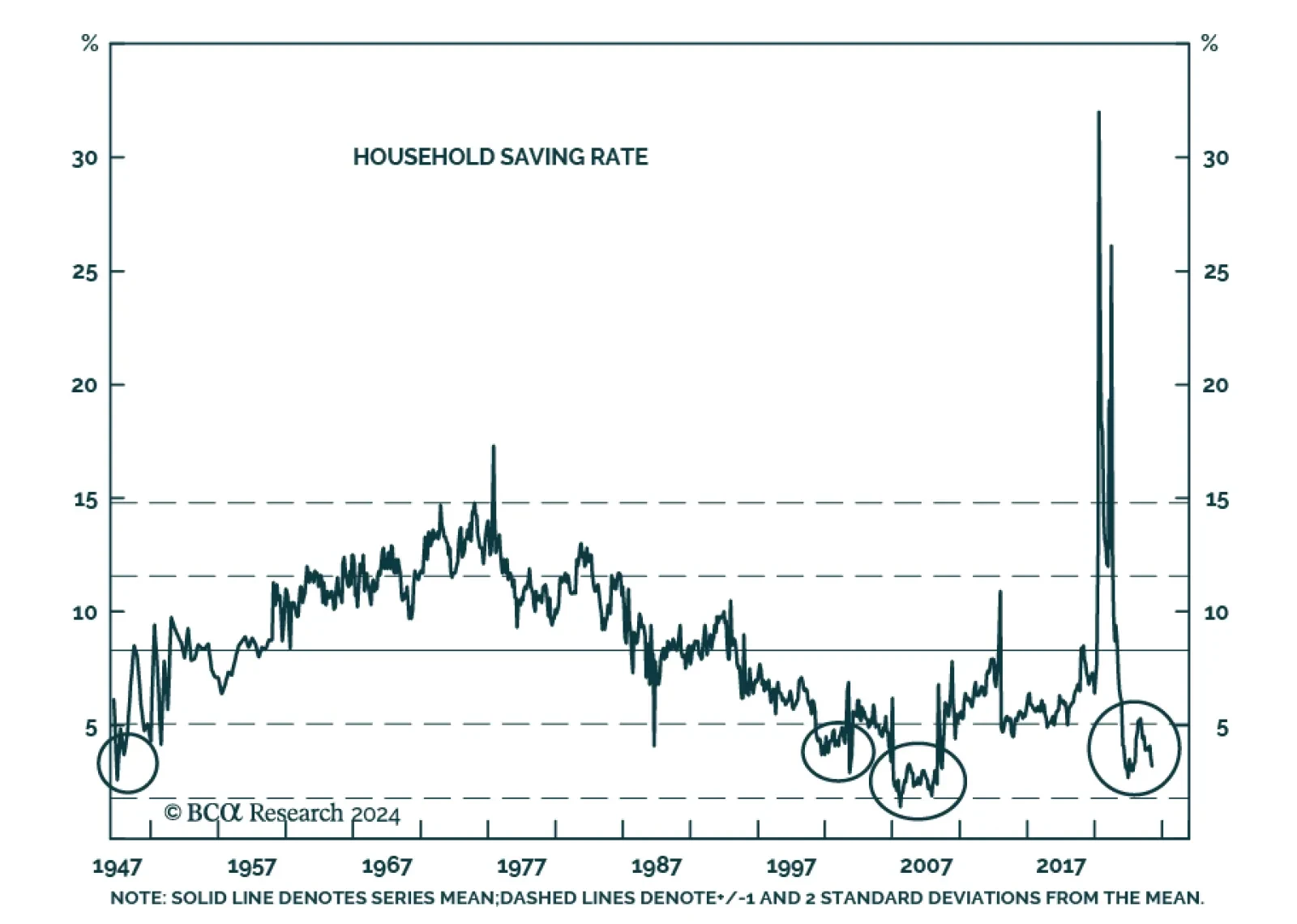
Our US Investment strategists have used the savings rate as a proxy for households’ willingness to spend. Its persistent decline suggests that consumers have been spending their pandemic-era excess savings and our colleagues would consider a normalization…
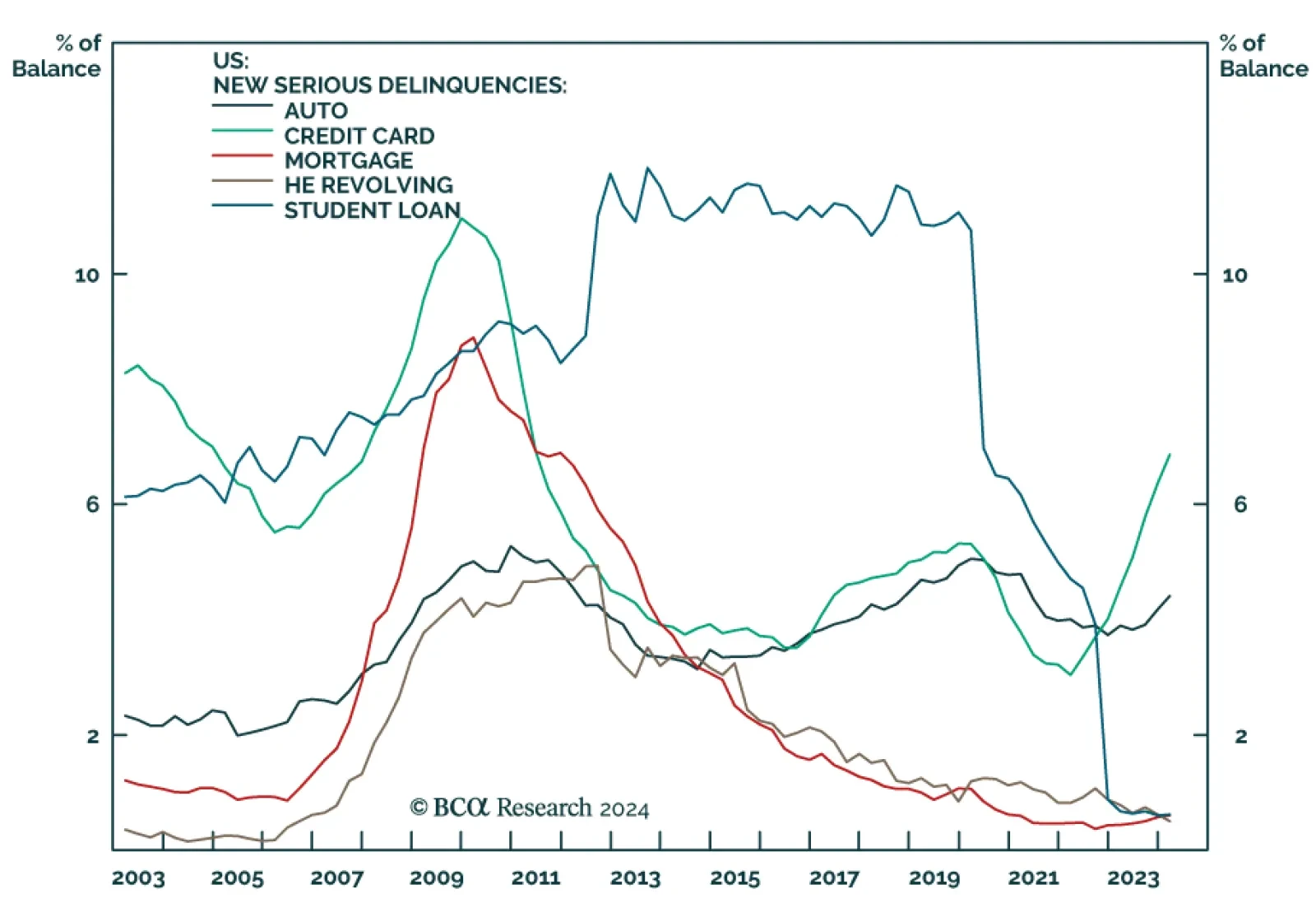
The New York Fed Quarterly Report on Household Debt and Credit indicates that US household debt rose 1.1% q/q in Q1 to $17.7 trillion. Higher mortgage, home equity loan and auto loan balances drove the bulk of the Q1 increase, while credit card balances…
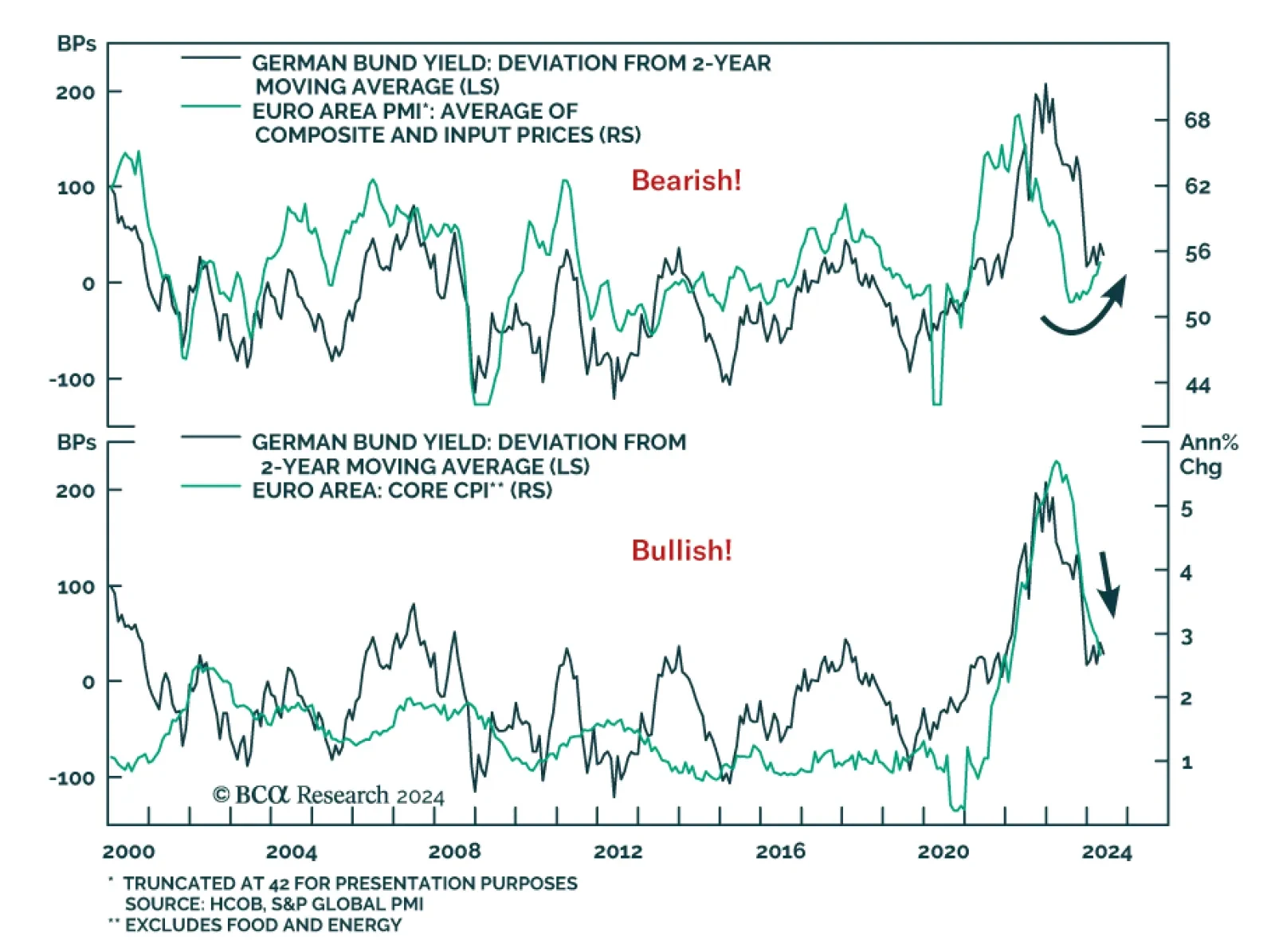
According to BCA Research’s European Investment Strategy service, the domestic picture indicates that Bund yields will stay rangebound over the next few months due to the tug-of-war between bond bullish and bond bearish forces in Europe. For now, the…

The death of the Iranian president reinforces our base case view of Middle Eastern instability and at least minor oil supply shocks. Rapid geopolitical developments in recent weeks are pointing to a new bout of global instability. The US is hobbled by its election. Conflicts with Russia, China, and Iran are all now escalating at the same time, at least marginally. Investors should reduce risk and shift to more defensive assets, markets, and sectors.
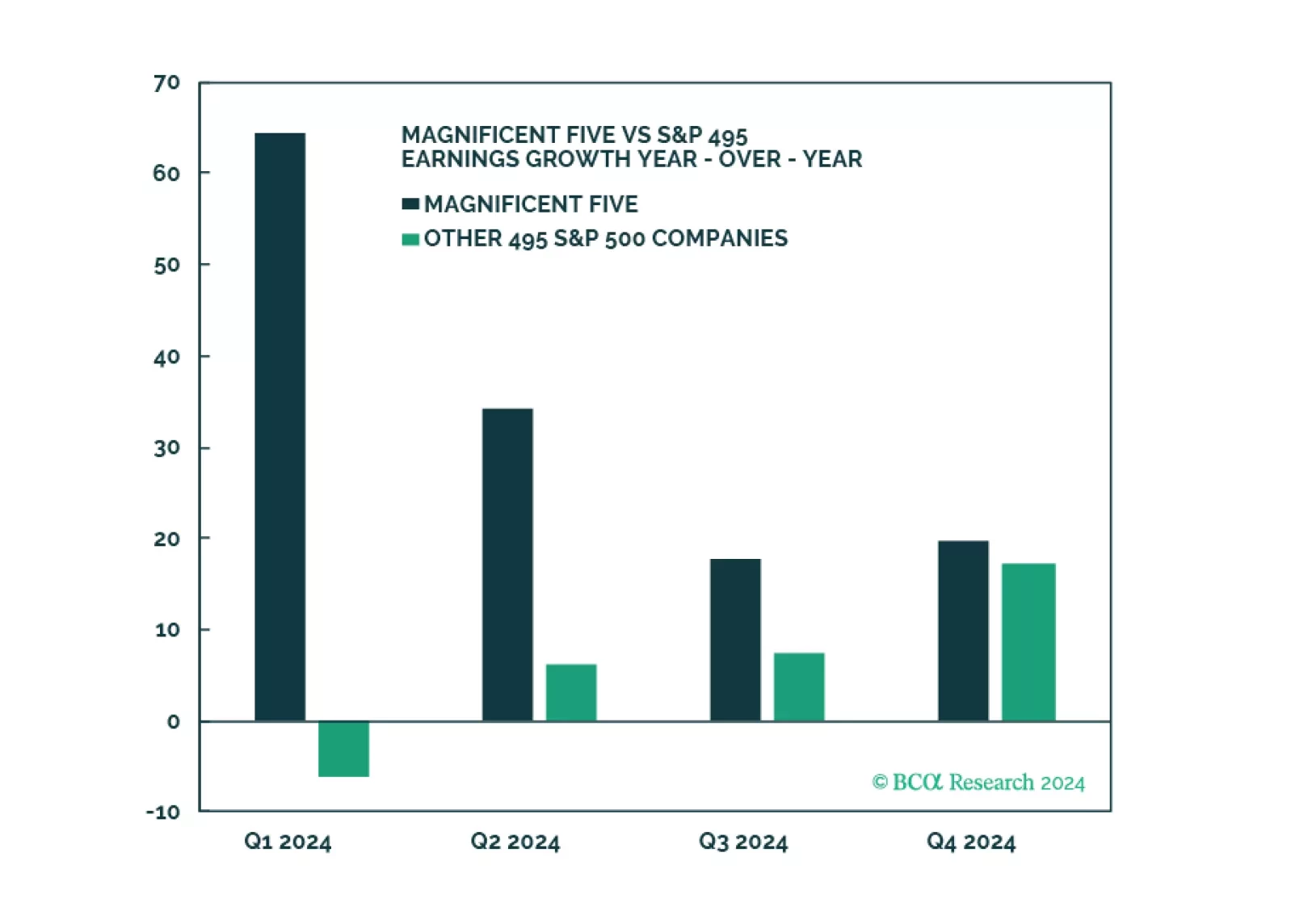
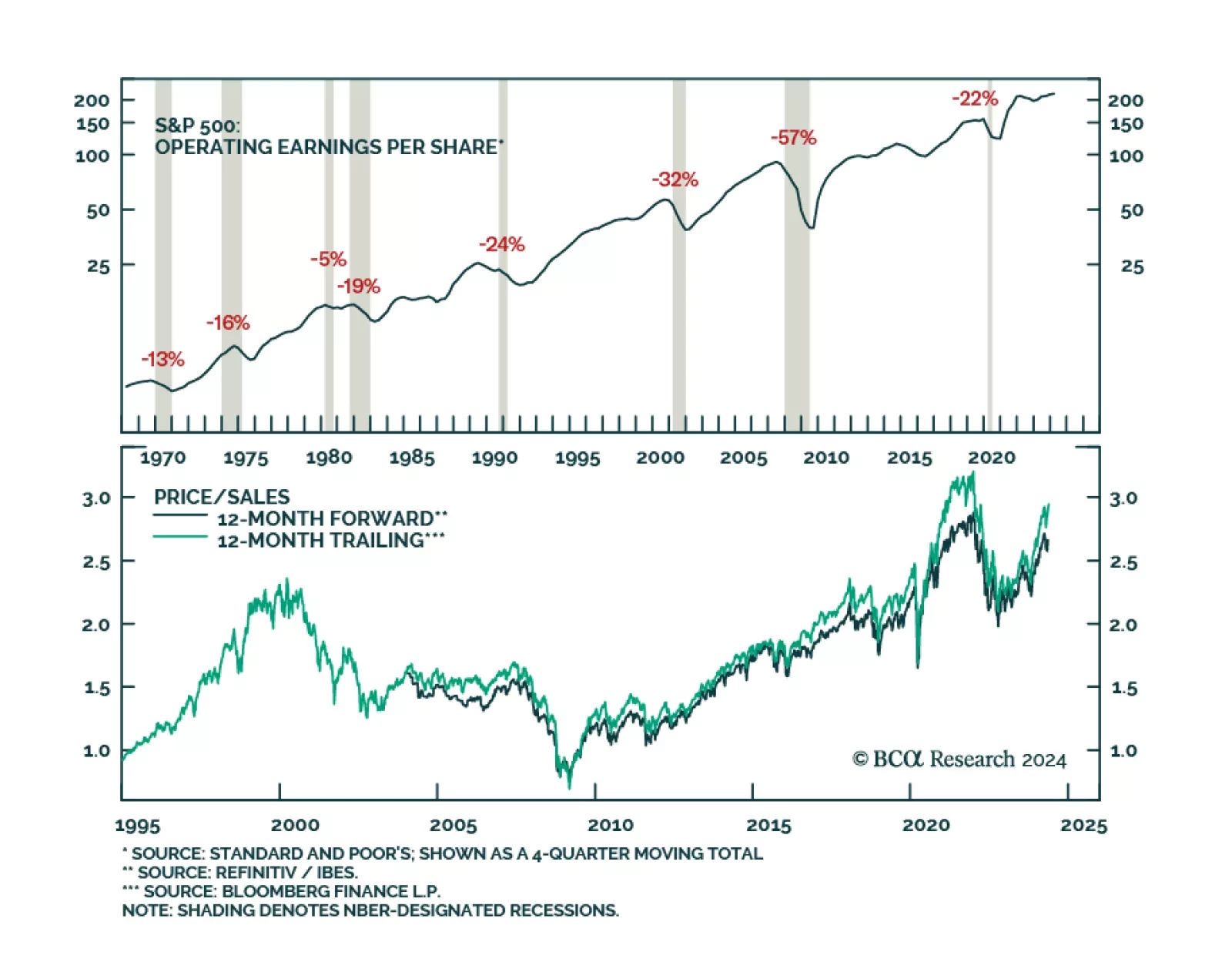
Q1 Earnings and sales growth were strong, but the devil is in the details: Without the Magnificent Five, earnings growth for the index would have been negative. On a positive note, margins have stabilized, and earnings growth is expected to broaden into yearend. Companies are optimistic about the economy. Development of AI applications is in full swing, but few companies are monetizing them yet. Consumer spending is strong but is slowing. We reiterate our underweight of consumer sectors, and overweight of Software and Services as the “don’t fight AI” adage holds.
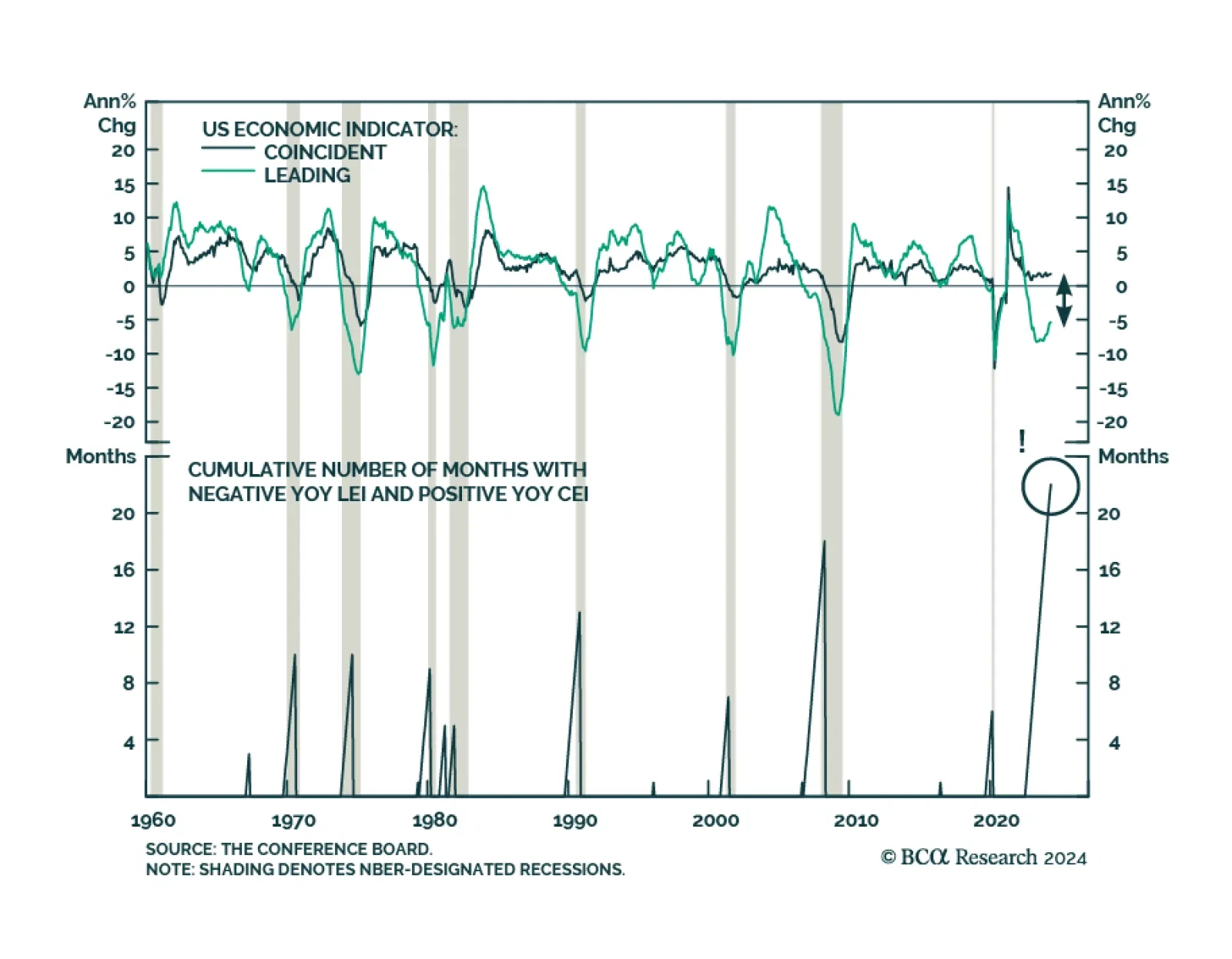
The Conference Board US Leading Economic Index (LEI) declined by a larger-than-expected 0.6% m/m in April from 0.3% m/m. Deteriorating consumer sentiment and manufacturing new orders led the overall decline. Contractions in the year-on-year changes in this…
An adverse shock is not a recession prerequisite. The empirical record shows that the US economy regularly evolves its way into a contraction with little fanfare. If current cooling trends continue, we project a recession will begin in late 2024/early 2025. …
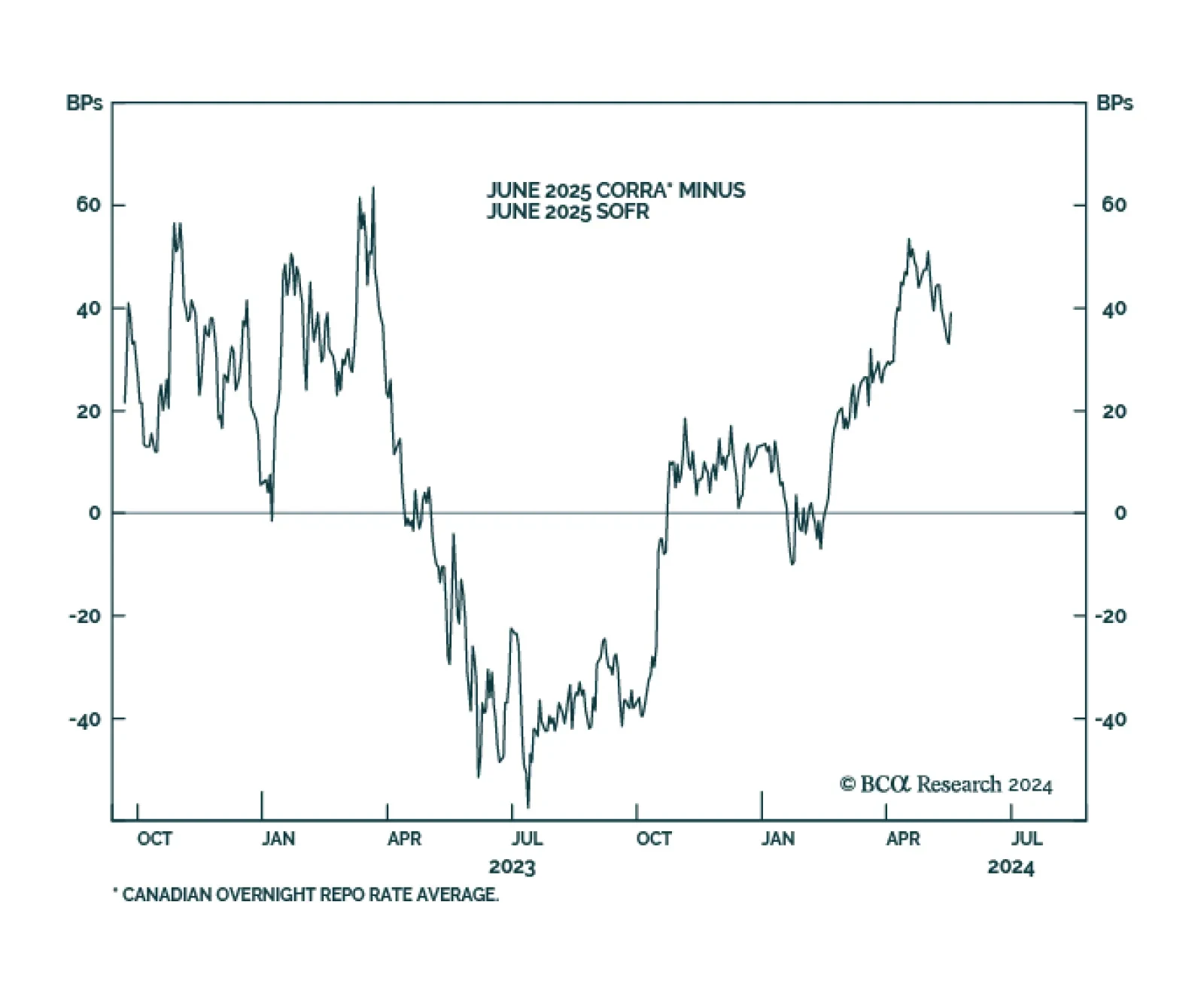
According to BCA Research’s Global Investment Strategy service, the BoC should have sufficient evidence of Canadian disinflation to cut rates this summer. The market is pricing in a similar amount of rate cuts for the BoC and the Fed over the next 12 months.…

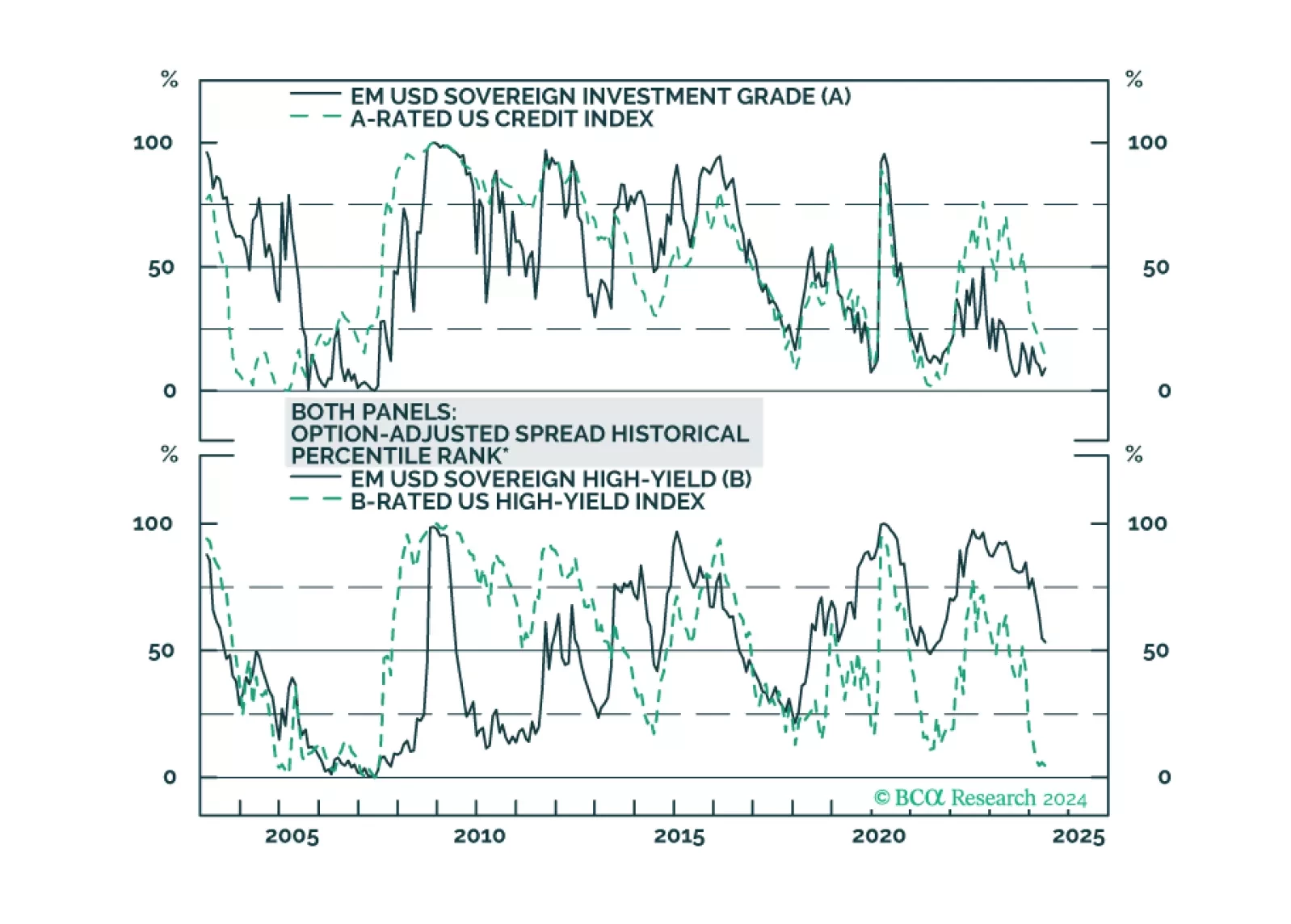
We dig into the USD-denominated Emerging Market Sovereign Index to see which credit tiers and countries offer value relative to US Credit.
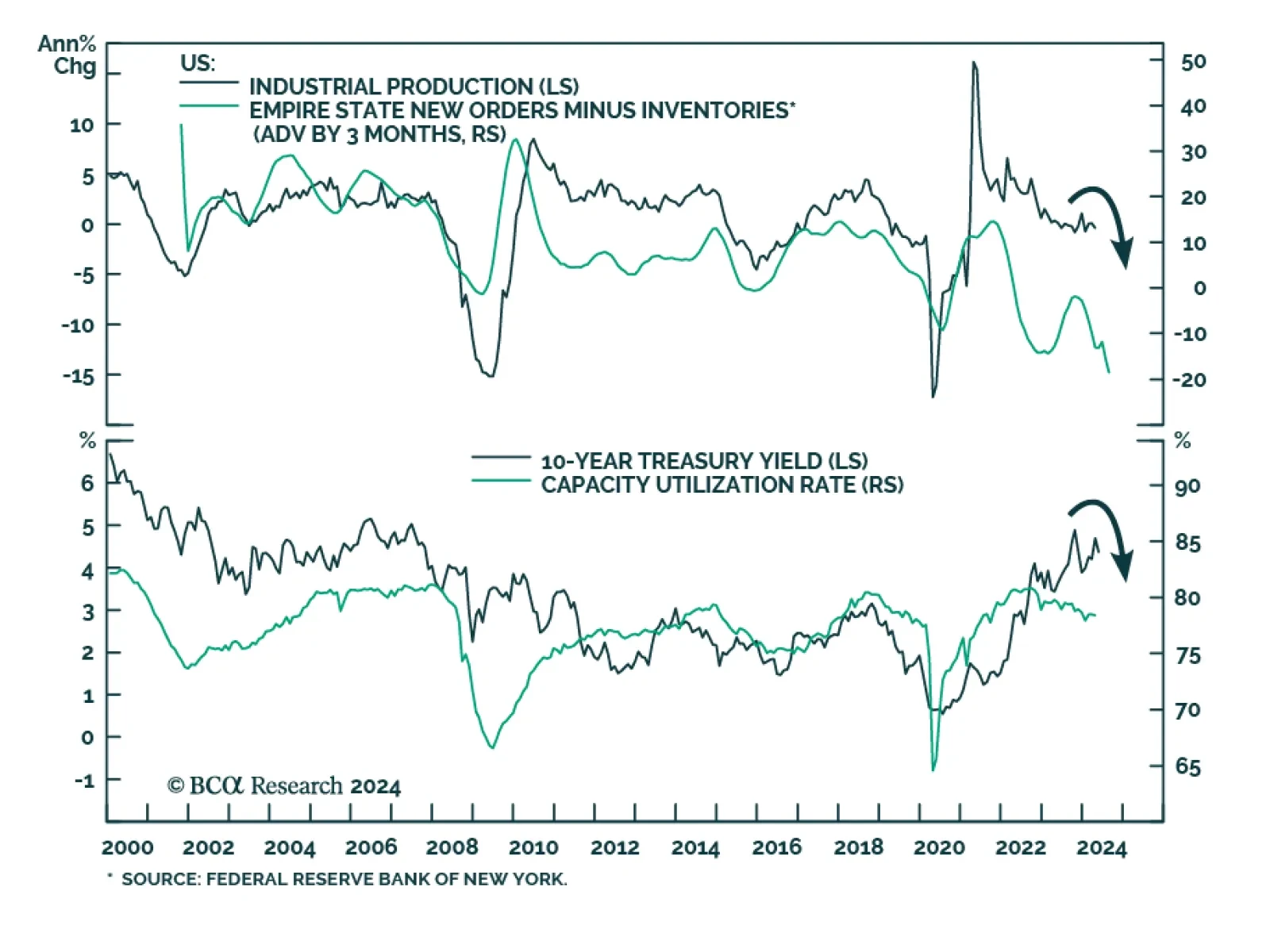
US industrial production stalled in April against expectations of a moderate pace of growth (0.1% m/m) and March’s growth rate was revised lower from 0.4% m/m to 0.1% m/m. Notably, pro-cyclical manufacturing production unexpectedly contracted 0.3% m/m from a…