Developed Countries
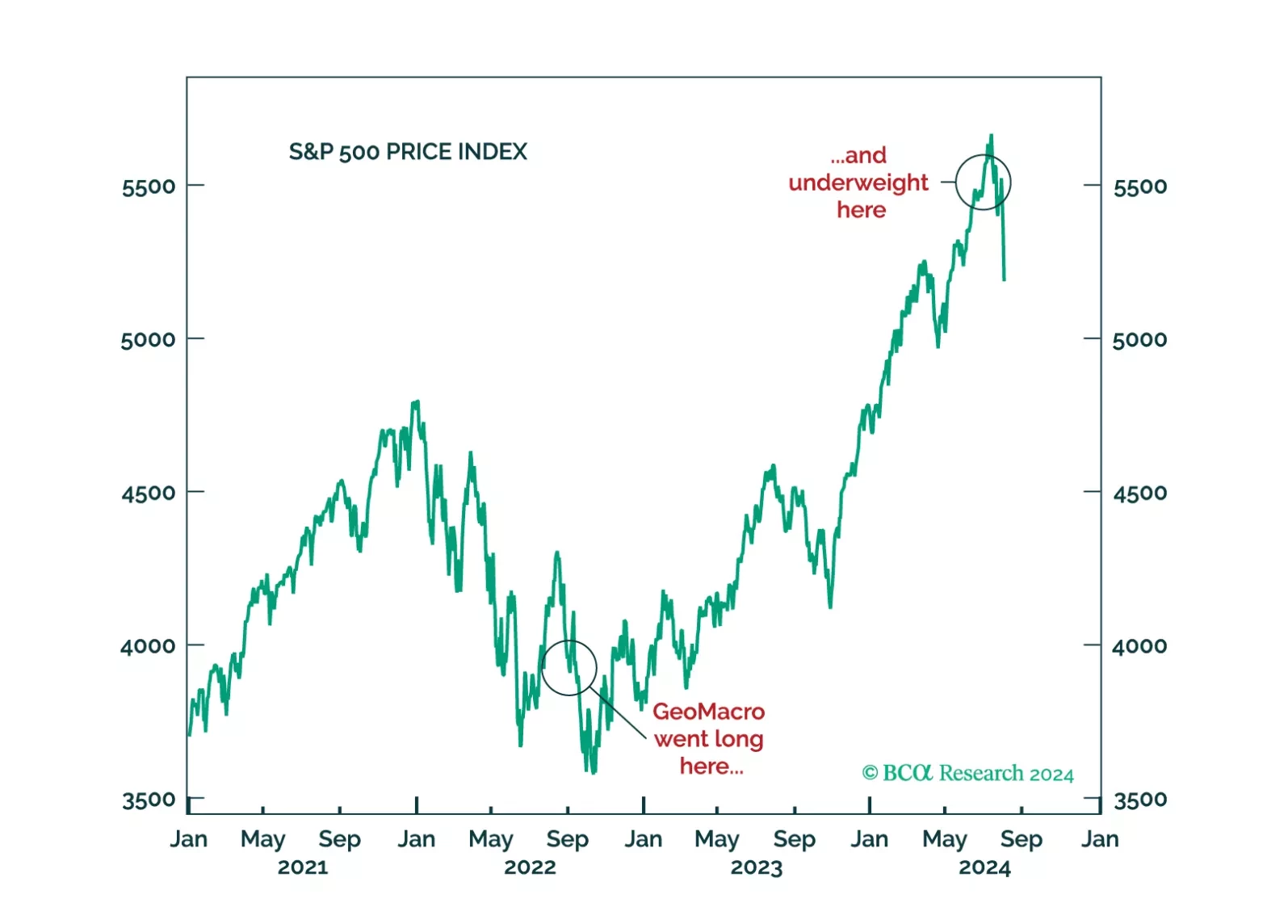
The decision by GeoMacro team on July 2 to short USDJPY and underweight equities has proven to be prescient. We still do not like the market setup from here on out. A recession would, obviously, be negative for risk assets. But even if investors avoid that scenario, the transition from cash- to leverage-driven growth is unlikely without a significant Fed rate-cutting cycle.

US economic news has stolen the spotlight in the past several days but economic developments in the rest of the world have also been uninspiring. The JPM Global Manufacturing PMI dipped into contraction territory in July, deteriorating from 50.8 to 49.7…
The risk-off mood that dominated markets on Thursday, Friday and the early stages of Monday’s trading amid dismal payrolls, tech earnings and manufacturing PMIs seems to have dissipated for the time being. The positive signal from July’s ISM services PMI (see…
The ISM services PMI surprised positively in July. The headline index expanded 2.6 ppts to 51.4, reversing May’s fastest pace of contraction in four years. Notably, the business activity subcomponent increased 4.9 ppts to 54.5, new orders and new export…
Lending standards continued to tighten for most loan categories in Q2, according to the Senior Loan Officer Survey (SLOOS). US banks reported tightening lending standards to businesses and all CRE categories. They kept standards mostly unchanged compared…
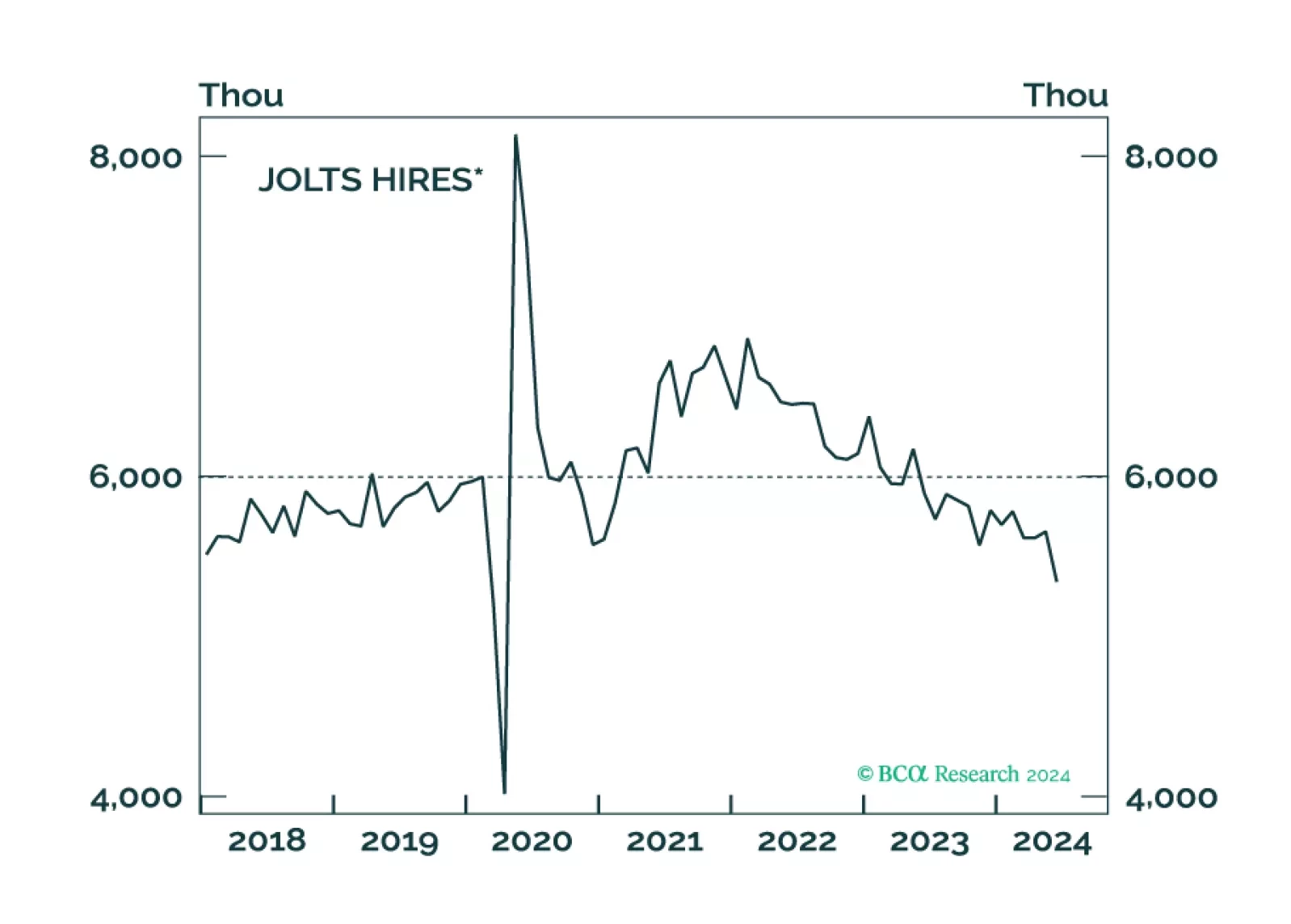
According to BCA Research’s US Bond Strategy service, Friday’s employment report caused financial markets to price-in some recession risk for the first time in months. The Treasury curve bull-steepened in July, a move that accelerated after Friday’s negative…
We have previously highlighted that an upside surprise in China’s fiscal stimulus as well as an AI-triggered jump in US productivity could potentially prolong the expansion, and constitute two key risks to our recession view. Recently announced government…
The latest Conference Board measure of consumer confidence suggested that consumers were increasingly downbeat about current economic conditions. Notably, their fading optimism about labor market conditions drove the jobs-plentiful-minus-hard-to-get measure…
August’s selloff has featured a rotation out of Big Tech. The Nasdaq shed 8% across Thursday, Friday, and Monday, led by concentrated selling among several Mega caps. Nvidia, Tesla, Microsoft and Amazon shed 14%, 14%, 6% and 14% over the last three sessions,…