Sorry, you need to enable JavaScript to visit this website.
Skip to main content

Diversified Financial Services

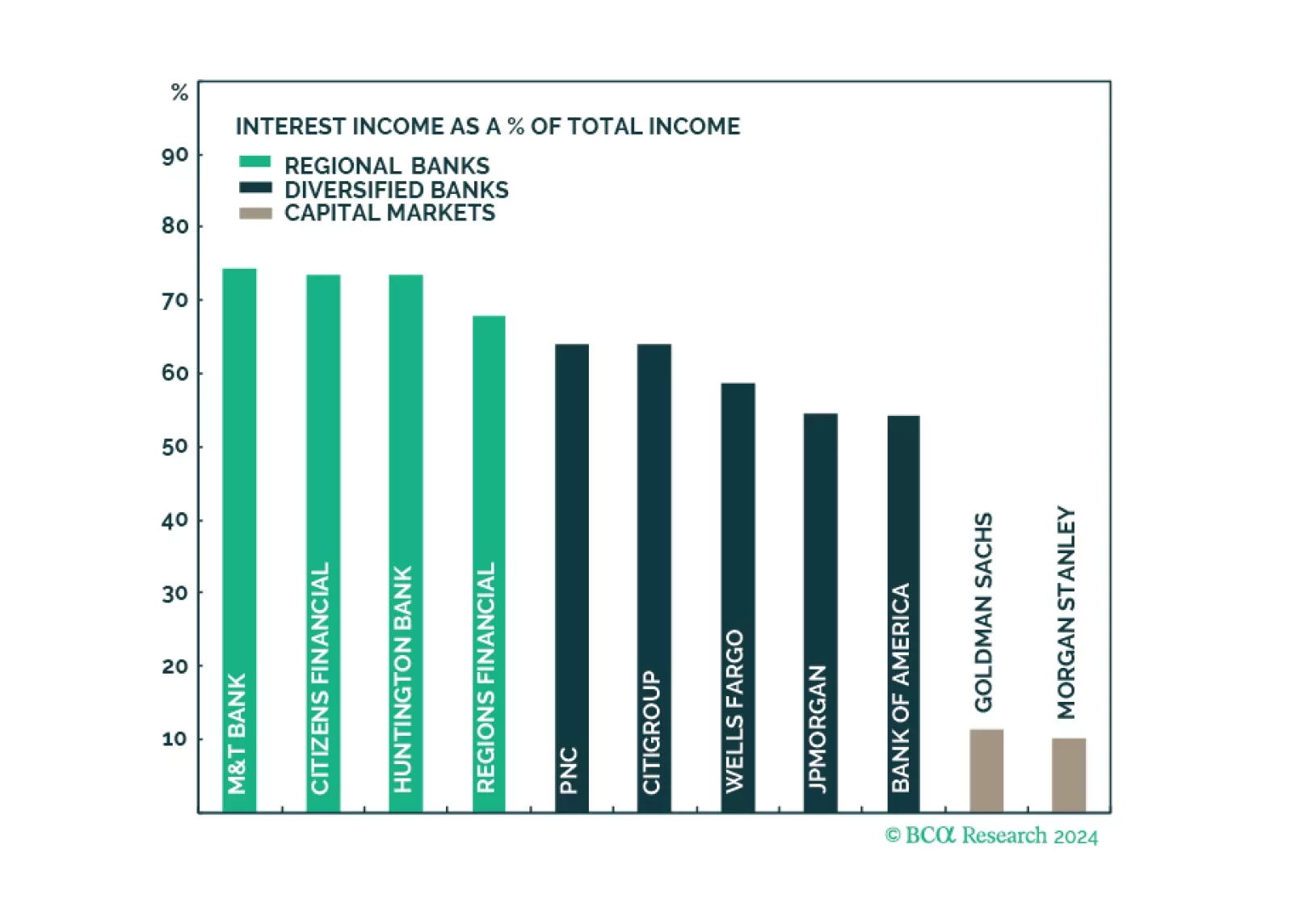
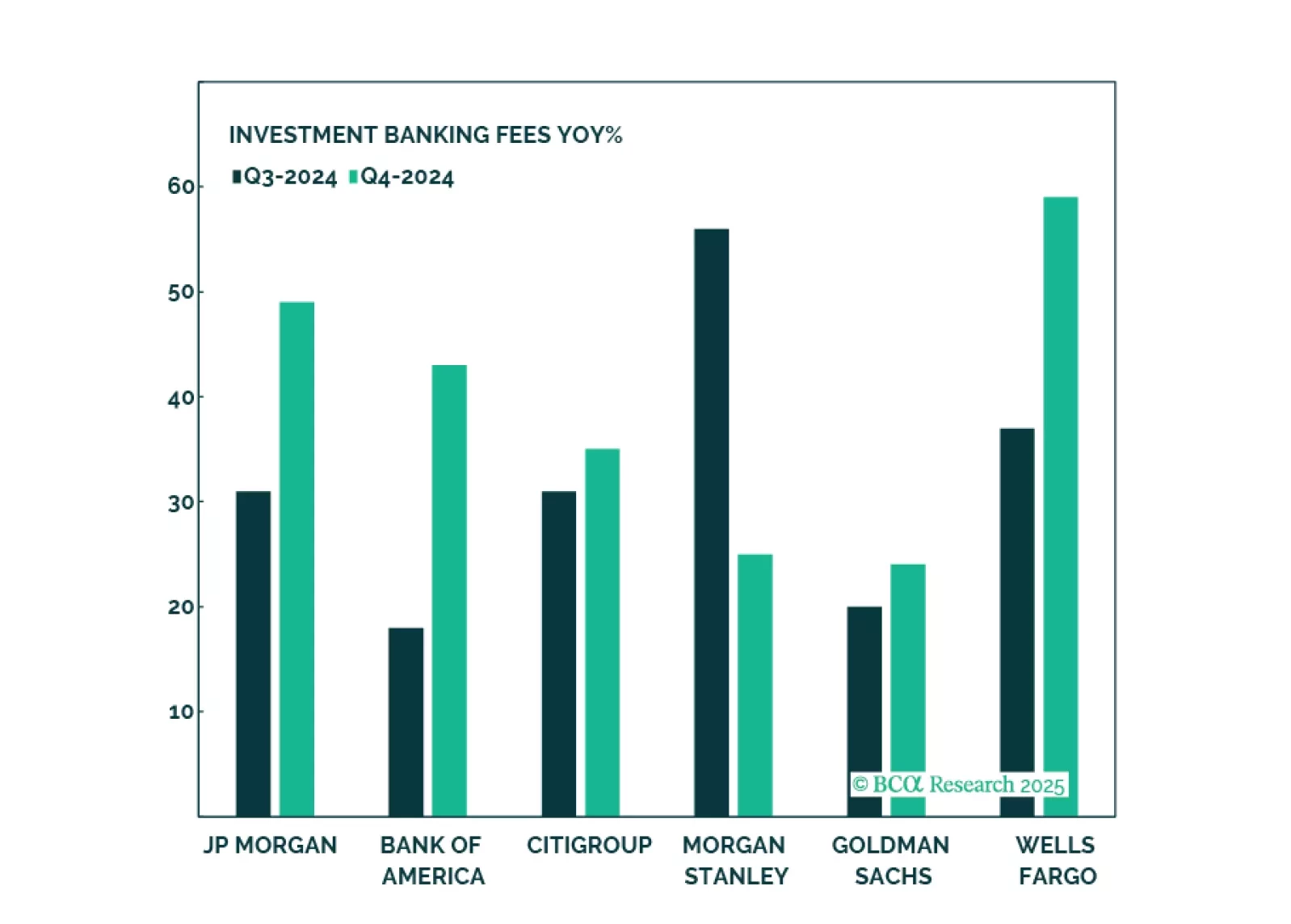
Banks have had an amazing run, and while such strong performance is unlikely to repeat, there is still oomph left in the trade thanks to a more favorable regulatory environment, stronger demand for loans, a steeper yield curve, and a strong pipeline of capital market activity. Key risks are further tightening of monetary policy and an increase in bad loans. We reiterate our overweight on Capital Markets, Diversified Banks, and Regional Banks. 

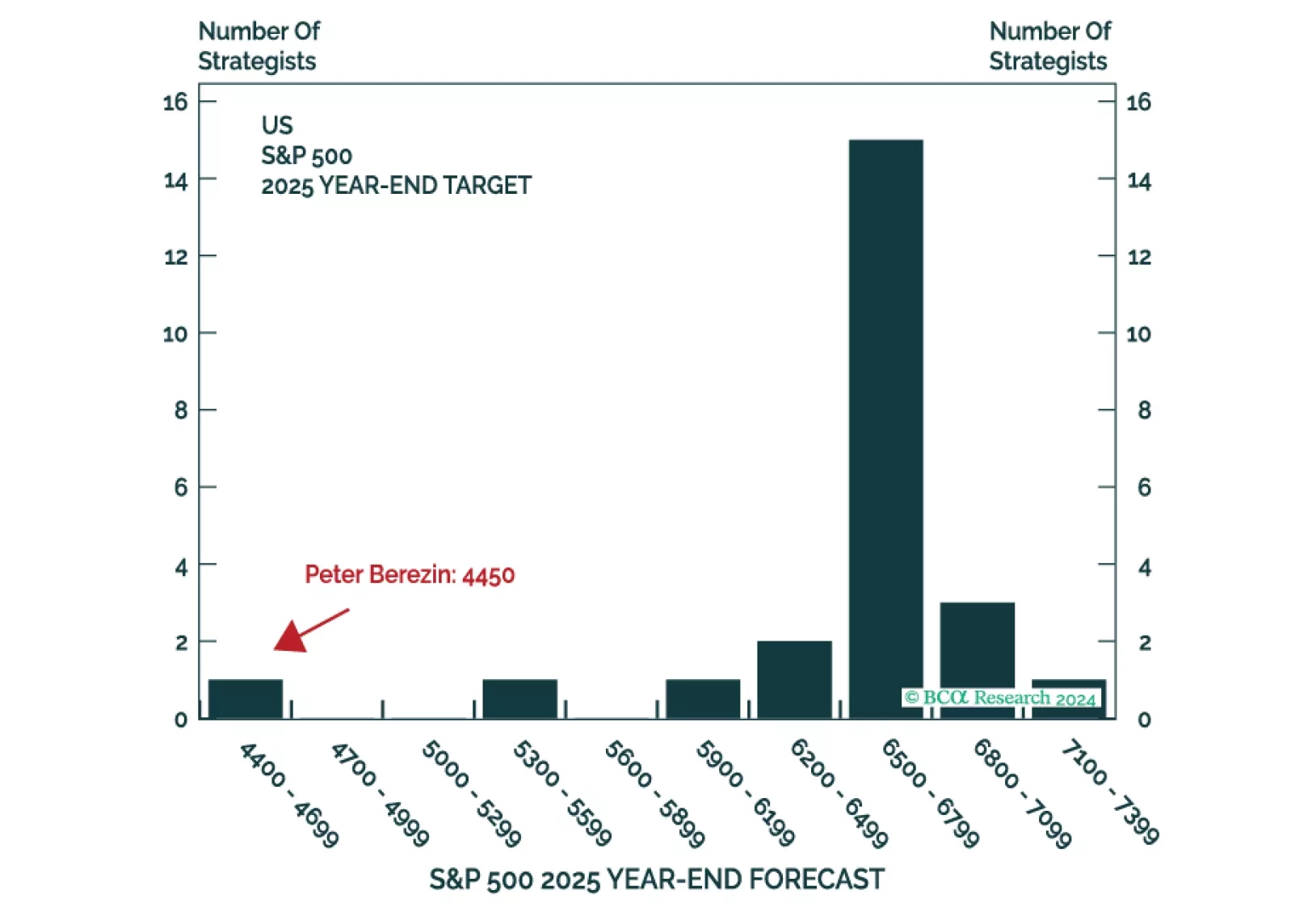
This is the time of the year when strategists are busy sending out their annual outlooks. Here on the Global Investment Strategy team, we decided to go one step further. Rather than pontificating about what could happen in 2025, we decided to harness the power of the multiverse to tell you what did happen (in at least one highly representative timeline).

Next week, please join me for a Webcast on Tuesday, December 17 at 10:30 AM EST (3:30 PM GMT, 4:30 PM CET) to discuss the economy and financial markets.

And with that, I will sign off for the year. I wish you and your loved ones a very happy and healthy 2025. We will be back in the first week of January with our MacroQuant Model Update.

Second quarter earnings season began for US public companies on Friday as JPMorgan (JPM), Citigroup (C) and Wells Fargo (WFC) reported their results before the open. (BAC, the other commercial bank SIFI (systemically important financial institution), reports…

Q1 earnings results of the largest US banks have demonstrated that the engine of recent growth in profitability, NII, has faltered as funding costs are rising fast. However, the resurgence in non-NII thanks to a revival in corporate activity has been a saving grace. Earnings growth appears to have bottomed, while valuations are attractive. To play up portfolio exposure to an upcoming surge in capital markets activity, and minimize exposure to declining profitability in traditional banking services, overweight Diversified Banks and Capital Markets, and underweight Regional Banks.

Positive economic surprises have delayed the onset of recession in the United States. But tighter monetary and fiscal policy, slowing global growth, and a looming rebound in policy uncertainty and geopolitical risk suggest that investors should buy insurance while it is cheap.

Banks face many challenges from a slower economy and tighter financial conditions, which offset benefits from rising rates and higher net interest income. It is likely that things will get worse, a sentiment supported by many banking executives. However, negative expectations have already been priced in. We will maintain our overweight for now but will fade this position after a bounce in the next bear market rally. The long-term outlook is negative. We prefer Regional Banks to Diversified Banks.

Highlights Asset Management Regulation (AMR) represents a critical and successful structural reform that is defusing risks in the most hazardous parts of China’s credit system. This bodes well for long-term sustainability of the nation’s financial system and, hence, its long-term economic outlook. That said, the sheer size of risky products and shadow banking makes it impossible to reduce systemic risk without hampering overall credit origination. AMR will dampen bank and shadow banking credit growth further and the credit impulse will be negative by year-end. As a result, China's growth will decelerate. The risk-reward profile of Chinese stocks remains poor. Favor Chinese local currency government bonds as yields will drop further. Feature Chart 1China’s Growth Is Set To Decelerate China's Growth Is Set To Decelerate China's Growth Is Set To Decelerate China’s broad credit and money growth have relapsed substantially. Given that they have historically been reliable leading indicators of business cycles (Chart 1), the question is: how far will credit growth decelerate. When gauging the magnitude of a money/credit slowdown, one should not only look at borrowing costs but also at the willingness and capacity of creditors to extend credit. In this context, it is essential to examine the impact of Asset Management Regulation (AMR) in China on both bank and non-bank credit growth. Please refer to Box 1 below for a more detailed discussion on AMR.     BOX 1 What Is AMR? AMR (Asset Management Regulation) was introduced in 2018 to mitigate financial system risks, increase transparency of financial products, and, hence, enhance investor protection. Financial institutions (banks and non-banks) were originally obliged to meet AMR requirements by the end of 2020. However, after the pandemic broke out, this term was extended to the end of 2021. The main objectives of AMR are: To restrict financial institutions from dodging financial regulations and prevent them from engaging in regulatory arbitrage. To prohibit financial institutions from providing other financial organizations with “channels” for evading regulatory requirements. To preclude banks from investing in high-risk assets. To forbid financial institutions from providing explicit or implicit guarantees for the principal and return on asset management products. AMR non-compliant products need to be either terminated or revamped to become AMR compliant before December 31, 2021. Assessing the value of outstanding AMR non-compliant products will help to gauge the actual impact of AMR on credit growth over the course of this year. A portion of banks’ wealth management products (WMP) and single fund trust products are AMR non-compliant and will need to be terminated or revamped. Commercial banks’ WMPs represent fund investment and management plans developed, designed and sold by commercial banks to individuals or institutions. In China, individual investors are the main customers for banks’ WMPs. In 2020, individual investors accounted for more than 99% in number of investors and 87% in investment amounts.1 The outstanding amount of WMPs is presently RMB 25 trillion. Single fund trusts have one investor – usually a bank or another financial institution. Given the disclosure regulation for single fund trusts is much looser than other fund trusts, it was prevalently used by financial institutions, including banks, to channel funds into investments to achieve regulatory arbitrage. Chart 2China Has Not Yet Deleveraged China Has Not Yet Deleveraged China Has Not Yet Deleveraged AMR represents regulatory tightening and will negatively affect bank and non-bank credit growth over the course of this year. In this report we examine what its impact will be on broad credit growth as banks and shadow banking attempt to comply with AMR by end of December this year. Authorities in China have been conducting well-thought-out surgical reforms – AMR being the cornerstone of these – to curb and restructure the risky elements of the credit system. By doing so, they have already dramatically reduced systemic risk in the financial system. Regardless of how deft and precise these reforms have been, they will continue to weigh on bank and shadow banking credit growth. The basis is that the sheer size of risky products and shadow banking makes it impossible to reduce systemic risk without hampering overall credit origination. It should also be noted that China has not yet deleveraged (Chart 2). How Large Are AMR Non-Compliant Assets? We reckon that AMR’s effect on broad credit is mainly through its impact on commercial banks’ Wealth Management Products (WMP) and single fund trusts. S&P Global2 estimates that by the end of 2020, banks will still have RMB 8.5 trillion in off-balance sheet WMP to restructure.  Single fund trusts’ assets stood at RMB 7.7 trillion in March 2021. However, to avoid double counting, flows from banks to trust funds (“bank-trust cooperation”) should be deducted from this value. The basis is that channeling funds by banks via trust companies is already captured in banks’ WMP statistics. Overall, non-compliant AMR assets that need to be revamped by year-end are as follows: Banks’ non-compliant WPM          8.5 trillion Single fund trust assets excluding “bank-trust cooperation”                   1.2 trillion Total                                          RMB 9.7 trillion This RMB 9.7 trillion represents 3.6% of total social financing (TSF) excluding equity issuance and 4.2% of private credit. The latter is defined as TSF excluding equity and central and local government bond issuance as well as special bonds.  Chart 3China: Various Borrowing Costs China: Various Borrowing Costs China: Various Borrowing Costs SP Global2 estimates that around RMB 5 trillion WMP will be revamped and made AMR compliant during this year. To put this figure into perspective, banks revamped RMB 4.8 trillion in 2020 and RMB 5.7 trillion in 2019. This will leave RMB 3.5 trillion of non-compliant WMP that banks are likely to take on their balance sheet before year-end. Even in the case of revamped WMP and single fund trusts, there will be unintended consequences for borrowers. In particular, the cost of borrowing could rise and/or the maturity of loans could be shortened. Both will weigh down on economic activity in general, and investment in the real economy in particular.   With full transparency and no implicit guarantee from banks, investors will require higher interest rates to invest in these products (Chart 3). In addition, investors will opt for shorter maturities of these products. Impact On Bank Credit… Chart 4China: Bank Loan Approvals And Bank Credit Impulse China: Bank Loans Approvals And Bank Credit Impulse China: Bank Loans Approvals And Bank Credit Impulse As banks take these AMR non-compliant WMP onto their balance sheets, their assets will automatically expand even though they will not originate new loans/provide financing to the real economy. The estimated RMB 3.5 trillion of WMP is equivalent to 1.5% of commercial bank broad credit and 1.2% of their assets. Hence, AMR will reinforce the deceleration in new credit origination. Both bank assets and broad bank credit will slow and their impulses will contract further (Chart 4).   Importantly, bringing these assets onto their balance sheet will require banks to both (1) allocate more capital to support these new assets and (2) increase provisions for the portion of these assets that are non-performing. The non-performing share of these AMR-non-compliant assets could be significant given that funds from off-balance sheet WMP were often invested in high-risk, high-return projects. These often represent claims on risky businesses, including property developers and local government financing vehicles (LGFV). In brief, there were reasons why banks did not initially put these assets on their balance sheets and doing so now will not be inconsequential. Overall, this move will hinder commercial banks’ ability and willingness to originate new credit, i.e., to provide new funding to the real economy (Chart 4). …And Shadow Banking Chart 5 demonstrates that shadow banking credit – comprised of trust loans, entrust loans, and unrealized banker acceptance bills – has been contracting. Outstanding shadow banking credit at RMB 23.9 trillion makes up 9% of TSF excluding equity issuance. Single fund trust loans – please refer to Box 1 above for more information – are the most vulnerable part of shadow banking to AMR. Despite their having contracted since 2017, single fund trust assets excluding “bank-trust cooperation” still amount to RMB 1.2 trillion or 0.5% of TSF, excluding equity issuance (Chart 6). Chart 5China’s Shadow Banking Continues To Shrink China's Shadow Banking Continues To Shrink China's Shadow Banking Continues To Shrink Chart 6Single Fund Trusts Are The Most Vulnerable To AMR Regulation Single Fund Trusts Are The Most Vulnerable To AMR Regulation Single Fund Trusts Are The Most Vulnerable To AMR Regulation     This type of financing will continue to shrink, weighing on aggregate credit flow. Although investors in these products might reinvest their funds in AMR-compliant funds, they will demand higher interest rates to offset higher credit risk. The basis is that full transparency will inform them that the trust companies and banks can neither guarantee principal nor interest on their investments. Higher interest rates demanded by investors in trust funds or their reduced financing will affect borrowers that rely on funding from this source. Specifically, trust funds investment in property developers and LGFV has been and will continue to shrink (Chart 7).      Impact On Property Developers And LGFV Property developers and LGFV are among the most vulnerable segments to reduced financing because of AMR. Trust companies have meaningful exposure to both real estate developers and LGFV. RMB 2.3 trillion in trust funds are invested in real estate and RMB 1.2 trillion in government projects, mostly representing claims on LGFV. Trust companies’ claims to both segments have been and will continue contracting (Chart 7). Property developers and LGFV are not only vulnerable to curtailed funding due to AMR but also from authorities’ campaign to limit their debt. Three Red Lines policy for property developers imposes caps on their debt. In addition, bank regulators have imposed limits on banks’ claims on property developers as well as residential mortgages (Chart 8, top panel). Loans are capped at 40% for the largest state-owned lenders, while banks’ mortgage lending should be no more than 32.5% of large banks’ outstanding credit. The regulations are even more rigorous for smaller banks. For smaller banks, caps on loans to real estate and mortgage loans are 27.5% and 20%, respectively.3 Banks’ credit to property developers and household mortgages are growing at a historically low pace and will likely decelerate further (Chart 8, bottom panel). To sum up, banks and shadow banking will curtail their exposure to property developers and LGFV. Consequently, these credit-intensive sectors will have to shrink their capital spending and construction activity. The latter will have ramifications for raw materials and industrial sectors exposed to traditional infrastructure and construction. Chart 7Trust Funds’ Exposure To Property Developers And LGFVs Trust Funds' Exposure To Property Developers And LGFVs Trust Funds' Exposure To Property Developers And LGFVs Chart 8Banks’ Exposure To Property Developers And Residential Mortgages Banks' Exposure To Property Developers And Residential Mortgages Banks' Exposure To Property Developers And Residential Mortgages   Investment Conclusions On the positive side, AMR represents critical and successful structural reform that is defusing risks in the most hazardous parts of China’s credit system. This bodes well for long-term sustainability of the nation’s financial system and, hence, its long-term economic outlook. Nevertheless, this regulatory tightening along with clampdown on the property market and local government debt will weigh on the Chinese business cycle over the next six-to-nine months: Private credit growth will continue downshifting and its impulse will turn negative, weighing on credit-exposed sectors (Chart 9). Although the private credit impulse is unlikely to reach -10% of GDP like it did in 2018, it will likely turn negative by year-end. Our guess it might be negative 3-4 % of GDP later this year. Chart 9China: Private Credit Impulse Will Turn Negative By Year-End China: Private Credit Impulse Will Turn Negative By Year-End China: Private Credit Impulse Will Turn Negative By Year-End Chart 10China: Fiscal Spending Impulse Will Be Modestly Positive In 2021 China: Fiscal Spending Impulse Will Be Modestly Positive In 2021 China: Fiscal Spending Impulse Will Be Modestly Positive In 2021   Public sector credit – measured as borrowing by central and local government, including special-purpose bonds – will continue decelerating according to bond quotas for this year. Still, higher government revenue will offset the slump in government borrowing so that government spending will grow in 2021 from a year ago. In aggregate, the fiscal spending impulse for all of 2021 will be positive at 1.6% of GDP (Chart 10). Overall, the fiscal spending impulse of 1.6% of GDP in 2021 will not offset the private credit impulse that we reckon to be about negative 3-4% of GDP. The upshot will be a modestly negative aggregate credit and fiscal spending impulse. The latter will be slightly worse than the readings of this indicator during the 2011 and 2014-15 slowdowns but more positive than in 2018 (please refer to Chart 1 above). This heralds a non-trivial business cycle slowdown. The latter will be concentrated in areas that usually benefit from credit and fiscal stimulus. Construction activity and traditional infrastructure spending are the most vulnerable areas. This entails that Chinese demand for raw materials will disappoint and base metals prices are vulnerable. With regard to investment strategy, investors should continue favoring Chinese local currency government bonds over stocks. As the economy decelerates, bond yields will drift lower. Share prices remain vulnerable. Chart 11 illustrates that net EPS revisions for the MSCI China A-share index has rolled over but has not yet dropped to their previous lows. Our hunch that EPS slowdown is not yet fully priced into the Chinese onshore equity market. Concerning MSCI China Investable non-TMT stocks, they have rolled over at their previous high (Chart 12). Given the negative corporate profit outlook, the risk-reward is unattractive both in absolute terms and relative to global equities. Chart 11Chinese Stocks: EPS Growth Expectations Will Downshift Further Chinese Sotkcs: EPS Growth Expectations Will Downshift Further Chinese Sotkcs: EPS Growth Expectations Will Downshift Further Chart 12An Intermediate-Term Top In Chinese Non-TMT Stocks? An Intermediate-Term Top In Chinese Non-TMT Stocks? An Intermediate-Term Top In Chinese Non-TMT Stocks?   In the long run, however, the de-risking of the credit system is bullish for Chinese share prices. Declining systemic financial risks entail a lower equity risk premium. Consequently, equity valuations will ultimately be re-rated. Arthur Budaghyan Chief Emerging Markets Strategist arthurb@bcaresearch.com Qingyun Xu Associate Editor Qingyun@bcaresearch.com   Footnotes 1 2020 Bank’s Wealth Management Product Report 2 Source: SP Global "China Banks May Still Have RMB3 Trillion In Shadow Assets By Year-End Deadline." 3 https://www.cbirc.gov.cn/cn/view/pages/ItemDetail.html?docId=955074&ite…   Cyclical Investment Stance Equity Sector Recommendations
Highlights Portfolio Strategy The hardening insurance market on the back of firming demand for insurance services especially in residential real estate and automobile markets compel us to lift insurers to a benchmark allocation. A resurgent stock-to-bond ratio, the reopening of the economy and receding fiscal policy, election and COVID-19 uncertainties which will further suppress the equity risk premium, all boost the allure of the S&P asset management & custody bank index. Stay overweight.  Recent Changes Upgrade the S&P insurance index to neutral and lock in relative gains of 38%, today. This move also augments the S&P financials sector weighting to a modest overweight stance. Table 1 Inoculated Inoculated Feature News of a vaccine last Monday turbocharged equities to new intraday all-time highs, following up from a stellar performance the week of the election as odds of a “Blue Wave” collapsed. One of the implications is that the Trump corporate tax cuts will remain in place and investors breathed a sigh of relief (tax policy uncertainty shown inverted, Chart 1). While a smaller fiscal package owing to a split government postponed the rotation trade, the PFE vaccine efficacy news brought it back with a vengeance. This set up caused equities to discount all the good news in a heartbeat as typically happens when uncertainty is sky high and investors stampede into stocks. As we have argued here a VIX with a 40 handle was overdone and thus we crystalized our gains and closed our long VIX December futures trade prior to the election. We have been preparing our portfolio for such a looming rotation and this has been most evident in our long “Back To Work”/short “Covid-19 Winners” equity baskets. Last Monday they went in polar opposite directions and compelled us to put a trailing stop at the 10% return mark in order to protect profits (top three panels, Chart 2). Chart 1Tax Policy Uncertainty Relief Tax Policy Uncertainty Relief Tax Policy Uncertainty Relief Our recent preference of small caps at the expense of large caps that we first recommended a week before the election also depicts the ongoing equity market rotation out of overvalued tech stocks and into beaten down laggard cyclicals (bottom panel, Chart 2). Importantly, the economic reopening trade is still in the early innings, and we remain cyclically bullish on the prospects of the S&P 500 with a fresh end-2021 target of 4,000 that we updated last Monday in a Special Report before news of a vaccine hit the wires. Nevertheless, the recent parabolic rise in equities raises the obvious question: have stocks run too far too fast? Chart 2“Back To Work” Recovery “Back To Work” Recovery “Back To Work” Recovery First, there is no doubt that equities are overextended in the near-term as the collapse in the equity put/call (EPC) ratio highlights. Over the past year, the EPC ratio has formed a clearly defined range and a reading below 0.4 suggests overbought conditions (EPC ratio shown inverted, Chart 3). Second, while the violent rotation has pushed the SPX higher despite the deflating tech sector, we doubt that in the coming weeks the SPX will continue to gallop higher without the heavyweight tech sector partially participating in the rally. As a reminder, adding FANG (FB, AMZN, NFLX & GOOGL) weights to the GICS1 tech sector’s weighting results in a roughly 40% market cap weight of tech-related stocks in the S&P 500 (Chart 4). Chart 3No More Hedging No More Hedging No More Hedging Chart 4Tech Is 40% Of The Market   Tech Is 40% Of The Market Tech Is 40% Of The Market Third, according to the American Association of Individual investors (AAII), bulls are back in droves and the AAII bull/bear ratio has slingshot to the highest level since January 2018. This is cause for near-term concern as it has historically served as a reliable contrary signal (Chart 5). Fourth, the knee-jerk equity market reaction on the back of the positive vaccine news has also pushed the percentage of SPX stocks trading above their 200-day moving average to a zenith, warning that the SPX will most likely move laterally (Chart 6). Chart 5Bull Stampede Bull Stampede Bull Stampede Chart 6Too Far Too Fast? Too Far Too Fast? Too Far Too Fast? Finally, following a rough September and choppy October, seasonality is now in favor of owing stocks and given diminishing odds of year-end tax loss selling, equities should grind higher as 2020 draws to a close. Netting it all out, in the short-term our going assumption is that, barring exponential moves in the reopening trade similar to what we witnessed last week, the SPX will likely move sideways in order to digest the recent up move and work off overbought conditions. This is especially true if a selloff in the bond market continues to weigh on the tech sector’s still lofty valuation footprint. This week we make a sub-surface financials sector tweak that pushes this early cyclical sector to a modest above benchmark allocation. Time To Lock In Gains On Insurance The shifting macro landscape signals that it no longer pays to be bearish insurance stocks; thus we are upgrading the S&P insurance index to a neutral weighting today, crystalizing relative gains of 38% since inception. This cyclical underweight exposure in insurance stocks – as part of our barbell portfolio strategy within the financials universe – has cushioned the blow from our positive bank exposure and served its hedging purpose. Now that the election uncertainty is waning and given the recent positive PFE news on the effectiveness of their COVID-19 vaccine, insurance stocks will at least catch a bid. The economic reopening underscores that home and auto sales will continue to climb as nonfarm payrolls make a run for the pre-recession highs likely sometime in 2021. Keep in mind that consumers’ plans to buy a new car and a home are recovering smartly according to the most recent Conference Board survey (third panel, Chart 7). This upbeat demand backdrop for these key insurance end-markets should boost industry profits (bottom panel, Chart 7). Already a hardening insurance market (second panel, Chart 8) owing to pent-up residential real estate and automobile demand is a boon for underwriting results. Chart 7Insuring Gains Insuring Gains Insuring Gains Chart 8Hardening Market Hardening Market Hardening Market Importantly, the latest national account data corroborates firming final demand for insurance services: consumer outlays on insurance are galloping higher. The upshot is that the insurance valuation de-rating will transition to a rerating phase (bottom panel, Chart 8). Our Insurance Indicator does an excellent job in encapsulating all these moving parts and heralds rosier days ahead for relative share prices (second panel, Chart 9). However, there is a caveat that prevents us from swinging all the way to an overweight stance. Insurance CEOs have been anything but disciplined. Headcount is surging and industry wages are also accelerating. While executives may be preparing for a durable rebound in the coming months, a spiking wage bill will eat into insurance margins (third & bottom panels, Chart 9). Netting it all out, a hardening insurance market on the back of firming demand for insurance services especially in residential real estate and automobile markets compel us to lift insurers to a benchmark allocation. Bottom Line: Upgrade the S&P insurance index to neutral today, cementing relative profits of 38% since inception. This upgrade bumps the broad S&P financials sector to a modest overweight stance. The ticker symbols for the stocks in the S&P insurance index are: BLBG: S5INSU - AIG, CB, MET, MMC, PRU, TRV, AFL, AON, ALL, PGR, WLTW, HIG, PFG, L, CINF, LNC, AJG, UNM, AIZ, RE, GL, WRB. Chart 9One Positive And One Risk One Positive And One Risk One Positive And One Risk Stick With Asset Management & Custody Banks While we have moved to the sidelines on the S&P banks and S&P investment banks & brokers groups, we have maintained bank-related exposure via the S&P asset management & custody banks (AMCB) index and today we reiterate our overweight stance in this early cyclical group. Recent news of industry M&A activity has propped up stocks in this index. Any reduction of supply is great news not only because investors have fewer constituents available to deploy capital to, but also because of oligopolistic power with positive industry pricing power knock-on effects. Tack on the recent selloff in the bond market and factors are falling into place for a durable outperformance phase in the S&P AMCB index (top panel, Chart 10). In fact, the stock-to-bond ratio has caught on fire of late forecasting a pickup in momentum in relative share prices (middle panel, Chart 10). Fund flows are also emitting a bullish signal. Historically, increasing bond and equity fund flows have been positively correlated with the relative share price ratio and the current message is positive (bottom panel, Chart 10). Our view remains that the economy will continue to reopen in 2021 and news of the PFE vaccine reiterates our thesis. Thus, as economic uncertainty lifts, it should lead to multiple expansion in this beaten down early cyclical industry (middle panel, Chart 11). More broadly speaking, receding fiscal and election uncertainties should push down the still high equity risk premium and boost the allure of the S&P AMCB index (bottom panel, Chart 11). Chart 10Increasing Flows Are  A Boon Increasing Flows Are A Boon Increasing Flows Are A Boon Chart 11A Play On The Economic Reopening A Play On The Economic Reopening A Play On The Economic Reopening Securities lending is another source of income for the industry. Oscillating margin debt balances are an excellent demand gauge for such income producing services. Recently, margin debt has made a run for all-time highs in level terms, expanding at a near 20%/annum clip, underscoring that an earnings led advance is in the offing (bottom panel, Chart 12). With regard to earnings, there is broad-based skepticism on the industry’s profit growth recovery prospects both on a cyclical and structural time horizon. The middle panel of Chart 13 highlights that over the past two decades every time sell-side extreme pessimism reigned supreme, it was a good contrary signal. More precisely, when relative 12-month profit growth expectations sink to negative double digits, a reflex rebound typically ensues. We doubt this time will prove different. Chart 12Follow The Margin Debt Follow The Margin Debt Follow The Margin Debt In sum, a resurgent stock-to-bond ratio, the reopening of the economy and receding fiscal and election uncertainties which will further suppress the equity risk premium, all boost the allure of the S&P AMCB index. Chart 13Lean Against Extreme Analyst Pessimism Lean Against Extreme Analyst Pessimism Lean Against Extreme Analyst Pessimism Bottom Line: We continue to recommend an above benchmark allocation in the S&P AMCB index. The ticker symbols for the stocks in this index are: BLBG: S5AMGT – BK, BLK, STT, AMP, NTRS, TROW, BEN, IVZ.     Anastasios Avgeriou US Equity Strategist anastasios@bcaresearch.com   Current Recommendations Current Trades Strategic (10-Year) Trade Recommendations Drilling Deeper Into Earnings Drilling Deeper Into Earnings Size And Style Views October 26, 2020 Favor small over large caps July 27, 2020 Overweight cyclicals over defensives June 11, 2018 Long the BCA Millennial basket  The ticker symbols are: (AAPL, AMZN, UBER, HD, LEN, MSFT, NFLX, SPOT, TSLA, V). January 22, 2018 Favor value over growth
Investment Banks: Value Trap Or Opportunity? Investment Banks: Value Trap Or Opportunity? Following our recent downgrade in the S&P banks index, we were also compelled to downgrade the S&P investment banks & brokerage (IBB) index to a benchmark allocation as it has a similar investment profile. The COVID-19 accelerated recession has not only mothballed potential industry M&A deals that were in the works, but also a number of previously announced deals have been canceled (second panel), which will weigh on the sector’s profit prospects. While “Robinhood” (retail investor) trading stories abound, margin debt remains moribund and continues to contract, despite the V-shaped recovery in all major US stock markets since the March 23 lows (third panel), spelling trouble for commission-related revenues. As a result we deem the collapse in the relative price-to-book ratio to represent a value trap rather than a value opportunity (bottom panel). Bottom Line: We are neutral the S&P IBB index. Please refer to the following Weekly Report for more details. The ticker symbols for the stocks in the index are: BLBG: S5INBK – GS, MS, SCHW, ETFC, RJF. ​​​​​​​
Dear Client, There will be no US Equity Insights from July 1-3 inclusive, as the US Equity team will be on vacation for the week. Our regular publication schedule will resume on Monday July 13, 2020 with our Weekly Report. Happy Independence Day.  Kind Regards, Anastasios Highlights Portfolio Strategy Odds are high that stocks will move laterally in Q3, digesting the massive gains since the March 23 lows. Beyond that, on a cyclical 9-12 month time horizon we remain constructive on the return prospects of the broad market. On all three key profit fronts – price of credit, loan growth and credit quality – banks are starting to show signs of stress. Tack on the potential dividend cuts/suspensions and we were compelled to downgrade exposure to neutral. A dearth of M&A deals, a steep fall in margin debt and declining equity flows into mutual funds and exchange traded funds and potential dividend cuts/suspensions enticed us to trim exposure in the S&P investment banks & brokers index to neutral. Recent Changes Last Tuesday we downgraded the S&P banks and S&P investment banks & brokers indexes to neutral. These two moves also pushed the S&P financials sector weighting to neutral.1 Feature The SPX remains in churning mode, consolidating the massive gains since the March 23 lows. Easy fiscal and monetary policies are still the dominant macro themes underpinning markets, and thus any letdown in either loose policies poses a threat to the 1000 point three-month SPX run-up (bottom panel, Chart 1). Importantly, correlations have gone vertical of late with the CBOE’s implied correlation index – gauging the S&P 500 constituents’ pairwise correlations – surging to 70% (implied correlation index shown inverted, second panel, Chart 1). This is cause for concern as it has historically been a precursor to SPX pullbacks. Typically, stocks move in tandem, especially during risk off phases when everything becomes one big macro trade. Similarly, two Fridays ago we highlighted that the VIX and the S&P 500 were becoming positively correlated.2 The 20-day moving correlation between these two assets is shooting higher, approaching positive territory. Since late-2017 every time this correlation has hit the inflection point near the zero line, stocks has subsequently suffered a sizable setback (Chart 2). Chart 1Short-Term Downdraft Risks Are Rising Short-Term Downdraft Risks Are Rising Short-Term Downdraft Risks Are Rising Chart 2Watch SPX/VIX Correlation Watch SPX/VIX Correlation Watch SPX/VIX Correlation Tack on the public’s renewed interest in COVID-19 according to Google trends search results, and the odds are high that stocks will be range bound this summer (top panel, Chart 1). Beyond that, on a cyclical 9-12 month time horizon we remain constructive on the return prospects of the broad market. Turning over to profits on the eve of earnings season, our four-factor macro EPS growth model for the SPX has tentatively troughed at an extremely depressed level (Chart 3). Our SPX EPS estimate for next calendar year remains near $162/share which we consider trend EPS and was last hit both in 2018 and 2019.3 Chart 3Our EPS Growth Model Has Troughed Our EPS Growth Model Has Troughed Our EPS Growth Model Has Troughed Moreover, drilling beneath the surface, this week Table 1 updates the sector and subgroup EPS growth expectations. First we rank the GICS1 sectors and then within each sector we rank the subsectors, both times by absolute 12-month forward EPS growth using I/B/E/S/ data (see second columns, Table 1). The third columns in Table 1 show the sector growth rate relative to the SPX. Table 1Identifying S&P 500 Sector EPS Growth Leaders And Laggards Drilling Deeper Into Earnings Drilling Deeper Into Earnings The final columns highlight the trend in relative growth. In more detail, they compare the current relative growth rate to that of three months ago: a positive sign indicates an upgrade in analysts’ relative estimates and a negative sign a downgrade in analysts’ relative estimates. Tech, health care and communication services occupy the top ranks with positive EPS growth expectations, while financials, real estate and energy are forecast to contract in the coming 12 months and have fallen at the bottom of the table. Table 2Sector EPS And Market Cap Weights Drilling Deeper Into Earnings Drilling Deeper Into Earnings Given that the tech sector has the highest profit weight in the SPX roughly 23% projected for next year (Table 2) it has really helped the broad market’s profit growth recovery (Chart 4). As a reminder, we continue to employ a barbell portfolio approach and prefer defensive (software and services) to aggressive tech (hardware and equipment). On the flip side, financials have the third largest profit weight roughly 16% in the S&P 500, trailing tech and health care, and pose a big threat to overall SPX profits next year, especially if there are any hiccups with the reopening of the economy (Table 2). Worrisomely, investors are not voting with their feet and are doubting that financials profits will deliver as the market cap weight relative to the profit weight stands at negative 540bps.  Last Tuesday we downgraded the S&P financials sector to a benchmark allocation via trimming the S&P banks and S&P investment banks & brokers indexes to neutral and this week we delve into more details on these two early cyclical subgroups. Chart 4Earnings Finding Their Footing Earnings Finding Their Footing Earnings Finding Their Footing Downgrade Banks To Neutral… We were compelled to downgrade the S&P banks index to neutral last Tuesday in advance of the Fed’s stress test results. There are high odds that a number of banks will cut/suspend dividend payments in coming quarters in line with the Fed’s guidance in the latest round of stress test, especially if profits take a big hit as we expect. As a reminder, dividends are paid out below-the-line. Beyond the Fed’s stress tests and rising political risks,4 yellow flags are waving on all three key bank profit drivers, namely the price of credit, loan growth and credit quality. First, it is disconcerting that bank relative performance has really not taken the yield curve’s steepening cue and has negatively diverged as we showed last week.5 The year-to-date plummeting 10-year yield is weighing heavily on relative share prices (top panel, Chart 5). The transmission mechanism to bank profits of this lower price of credit is via the net interest margin (NIM) avenue (third panel, Chart 5). NIMs will remain under downward pressure as long at the 10-year Treasury yield stays suppressed owing to the Fed’s immense b/s expansion. The rising likelihood of yield curve control could keep interest rates on the long end of the curve depressed for a number of years similar to what happened between 1942 and 1951. Second, on the credit growth front news is equally worrisome. The widening in the junk spread signals loan growth blues in the quarters ahead (second panel, Chart 6). Despite the initial knee jerk reaction, primarily by corporations, of tapping existing C&I credit lines and causing a surge in bank credit growth, bankers are not willing to extend credit according to the latest Fed Senior Loan Officer survey (third panel, Chart 6). The same survey revealed that banks are reporting lower demand for credit across the board, warning that future loan growth will be anemic at best, especially given the collapse in our economic impulse indicator (bottom panel, Chart 6). Chart 5Bank Yellow Flags Waving Bank Yellow Flags Waving Bank Yellow Flags Waving Chart 6Loan Growth Will Suffer Loan Growth Will Suffer Loan Growth Will Suffer Finally, with regard to credit quality, delinquency and charge-off rates are all but certain to spike in the coming months. The third panel of Chart 7 highlights that historically all these credit quality gauges are lagging. However, the near vertical climb in the unemployment rate recently and persistently high continuing unemployment benefit claims near 20mn signal that non-performing loans (NPLs) are slated to soar in the back half of 2020 (bottom panel, Chart 7). True, the recent $2tn+ fiscal package is acting as a Band-Aid solution by putting money in unemployed consumers’ pockets, but when the money runs out on July 31, the going will get tough especially if Congress does not pass a new fiscal package. In addition, there are “extend and pretend” clauses in the existing relief package especially on the residential mortgage front that aim to help homeowners make ends meet. But, the longer workers stay out of the labor force the higher the chances that their skills atrophy making it difficult for them to return to work. As a result, foreclosure risk is on the rise. While residential real estate loans are no longer the largest category in bank loan books they still comprise a respectable 21% of total loans or $2.3tn, a souring housing market could spell trouble for banks (Chart 8). Chart 7Deteriorating Credit Quality Will Sink Profits Deteriorating Credit Quality Will Sink Profits Deteriorating Credit Quality Will Sink Profits Chart 8Housing Arrears Are A Risk Housing Arrears Are A Risk Housing Arrears Are A Risk Already, residential mortgage delinquencies are rising and in May surged to the highest level since November 2011 according to Bloomberg. 4.3mn residential real estate borrowers are in arrears (this delinquency count includes borrowers with forbearance agreements who missed payments) and “more than 8% of all US mortgages were past due or in foreclosure” according to Black Night Inc., a property information service. Tack on the shattering consumer confidence and the consumer loan category (credit card, auto and student debt) is also under risk of severe credit quality deterioration (fourth panel, Chart 7). The commercial real estate (CRE) side of loan books is also likely to bleed. Anecdotes where landlords are demanding past due rent payment from tenants are mushrooming, at a time when the same landlords refuse to service their loan obligations. According to TREPP, CMBS delinquencies are skyrocketing across different REIT lines of business. Importantly, CRE loans add up to $2.4tn on commercial bank balance sheets or roughly 22% of total loans. Encouragingly, in Q1 banks started to aggressively provision for steep credit losses with commercial bank loan loss reserves now climbing just shy of $180bn according to the latest FDIC Quarterly Banking Profile (second panel, Chart 7). This figure is almost twice as high as noncurrent loans and represents a healthy reserve coverage ratio. However, our fear is that if history at least rhymes NPLs will sling shot higher (bottom panel, Chart 7) rendering loan loss reserves insufficient. Putting this provisioning number in context, according to the Fed’s most adverse stress test scenarios banks’ losses could spring to $700bn: “In aggregate, loan losses for the 34 banks ranged from $560bn to $700bn”.6 As a result, banks will have to further provision for futures losses and thus take an additional hit to profitability. Our bank earnings growth model does an excellent job in capturing all these moving parts and warns of a contraction in profit in the back half of the year (bottom panel, Chart 9). Nevertheless, before getting too bearish on banks, there two key offsetting factors. Relative valuations are bombed out, signaling that most of the bad news is likely reflected in prices (bottom panel, Chart 5). Finally, technicals are also extremely oversold. The second panel of Chart 5 shows that relative momentum is as bad as it gets. Netting it all out, on all three key profit fronts – price of credit, loan growth and credit quality – banks are starting to show signs of stress and compel us to downgrade exposure to neutral. Chart 9Dividend Cuts Are Looming Dividend Cuts Are Looming Dividend Cuts Are Looming …And Move To The Sidelines On Investment Banks & Brokers The S&P investment banks & brokers (IBB) group has a similar investment profile to the S&P banks index. But, given its more cyclical nature it typically oscillates violently around banks’ relative performance. Thus last Tuesday, we were also compelled to move to the sidelines on this higher beta financials subgroup.7 The COVID-19 accelerated recession has not only mothballed potential M&A deals that were in the works, but also a number of previously announced deals have been canceled. In addition, the outlook for M&A is grim, at least until the dust really settles from the coronavirus pandemic (second panel, Chart 10), weighing heavily on the sector’s profit prospects. While “Robinhood” (retail investor) trading stories abound, margin debt remains moribund and continues to contract, despite the V-shaped recovery in all major US stock markets since the March 23 lows (third panel, Chart 10). This coincident indicator speaks volumes in the near term direction of the broad market and any sustained contraction in trading related debt uptake will likely dent IBB profitability. According to the American Association of Individual Investors bullish retail investors have been absent from this quarter’s massive stock market rally and equity mutual fund and exchange traded fund flows corroborate this message (fourth panel, Chart 10). With regard to cyclicality, IBB are extremely quick to prune labor in times of duress and aggressively add to headcount during expansions. Recent trimming of IBB input costs signal that this industry is retrenching as it is trying to adjust cost structures to lower revenue run rates (bottom panel, Chart 10). Chart 10Diminishing Activities Are Profit Sapping Diminishing Activities Are Profit Sapping Diminishing Activities Are Profit Sapping Related to the cyclical nature of the IBB industry, an accelerating stock-to-bond ratio has been synonymous with relative share outperformance and vice versa. In early June we turned cautious on the broad market’s near-term return prospects primarily on the back of rising (geo)political risks. The implication is that a lateral move in the broad market would push down the S/B ratio and weigh on relative share prices (Chart 11). However, there are some offsets that prevent us from turning outright bearish on this niche early-cyclical group. First relative valuations are extremely alluring. On a price-to-book basis IBB traded recently at 0.8x in absolute terms and at a steep 68% discount to the broad market (bottom panel, Chart 12). Chart 11Move To The Sidelines On This Highly Cyclical Industry Move To The Sidelines On This Highly Cyclical Industry Move To The Sidelines On This Highly Cyclical Industry Chart 12Some Positive Offsets Some Positive Offsets Some Positive Offsets Second, volatility has gone haywire since late-February and it remains elevated with a VIX reading still north of 30. This is a fertile environment for IBB trading desks and should translate into higher profits (second panel, Chart 12). Third, equity trading volumes have exploded. True, volumes spike on downdrafts, but they have remained at an historically high level recently underscoring that IBB trading desk should be minting money (third panel, Chart 12). Adding it all up, a dearth of M&A deals, a steep fall in margin debt and declining equity flows into mutual funds and exchange traded funds and potential dividend cuts/suspensions compelled us to trim exposure in the S&P investment banks & brokers index to neutral. Bottom Line: Downgrade the S&P banks index to neutral for a loss of 32.4% since inception. Trim the S&P investment banks & brokers index to neutral for a loss of 24% since inception. These moves also push the S&P financials sector to a benchmark allocation. The ticker symbols for the stocks in these indexes are: BLBG S5BANKX – JPM, BAC, C, WFC, USB, TFC, PNC, FRC, FITB, MTB, KEY, SIVB, RF, CFG, HBAN, ZION, CMA, PBCT, and BLBG S5INBK – GS, MS, SCHW, ETFC, RJF, respectively.   Anastasios Avgeriou US Equity Strategist anastasios@bcaresearch.com     Footnotes 1    Please see BCA US Equity Strategy Insight Report, “Unresponsive” dated June 23, 2020, available at uses.bcaresearch.com. 2    Please see BCA US Equity Strategy Insight Report, “Tales Of The Tape” dated June 19, 2020, available at uses.bcaresearch.com. 3    Please see BCA US Equity Strategy Weekly Report, “Gauging Fair Value ” dated April 27, 2020, and BCA US Equity Strategy Special Report, “Debunking Earnings” dated May 19, 2020, both available at uses.bcaresearch.com. 4    Please see BCA US Equity Strategy Insight Report, “Unresponsive” dated June 23, 2020, available at uses.bcaresearch.com. 5    Ibid. 6    https://www.federalreserve.gov/newsevents/pressreleases/bcreg20200625c.htm 7    Please see BCA US Equity Strategy Insight Report, “Unresponsive” dated June 23, 2020, available at uses.bcaresearch.com.   Current Recommendations Current Trades Strategic (10-Year) Trade Recommendations Drilling Deeper Into Earnings Drilling Deeper Into Earnings Size And Style Views June 3, 2019 Stay neutral cyclicals over defensives (downgrade alert)  January 22, 2018 Favor value over growth April 28, 2020  Stay neutral large over small caps  June 11, 2018 Long the BCA Millennial basket  The ticker symbols are: (AAPL, AMZN, UBER, HD, LEN, MSFT, NFLX, SPOT, TSLA, V).