Economic Growth
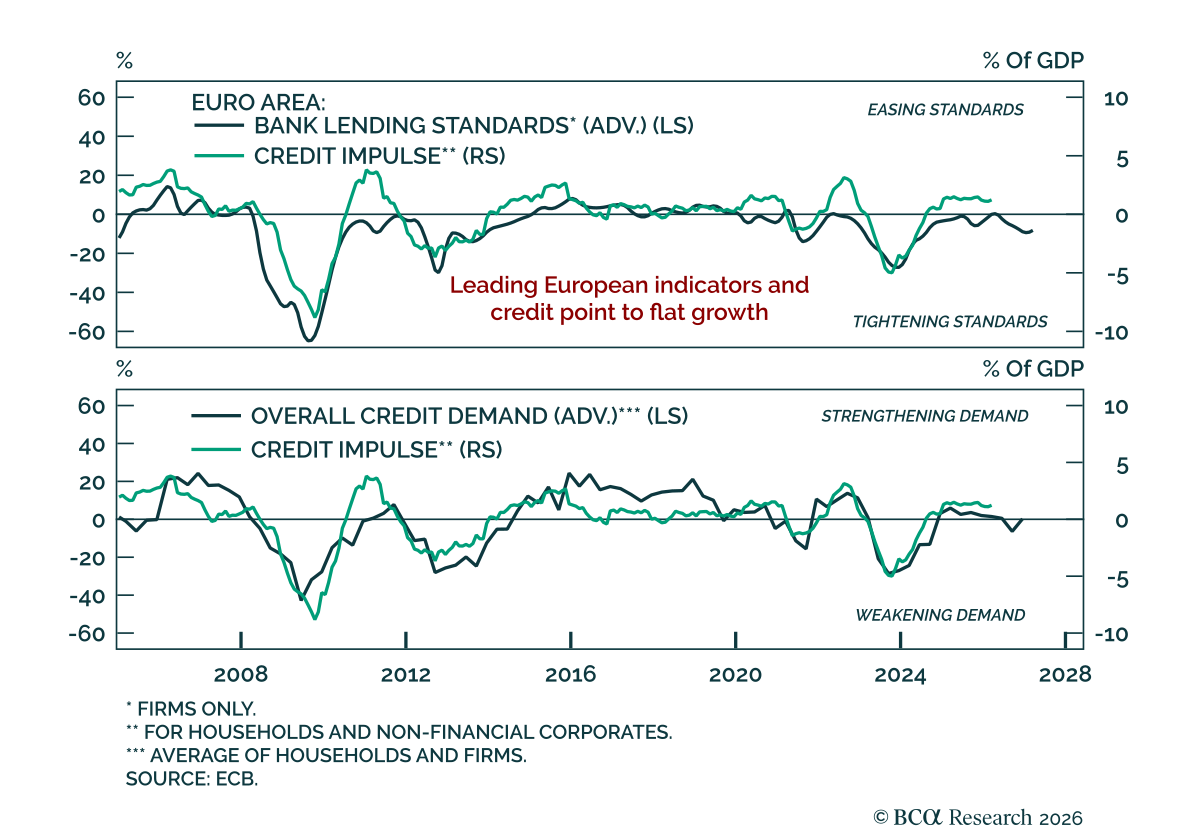
Leading European indicators continue to point to flat growth despite recent data beating expectations. Energy volatility and supply-chain uncertainty are weighing on the outlook and will continue to do so despite this week’s de-escalation in the Middle East,…
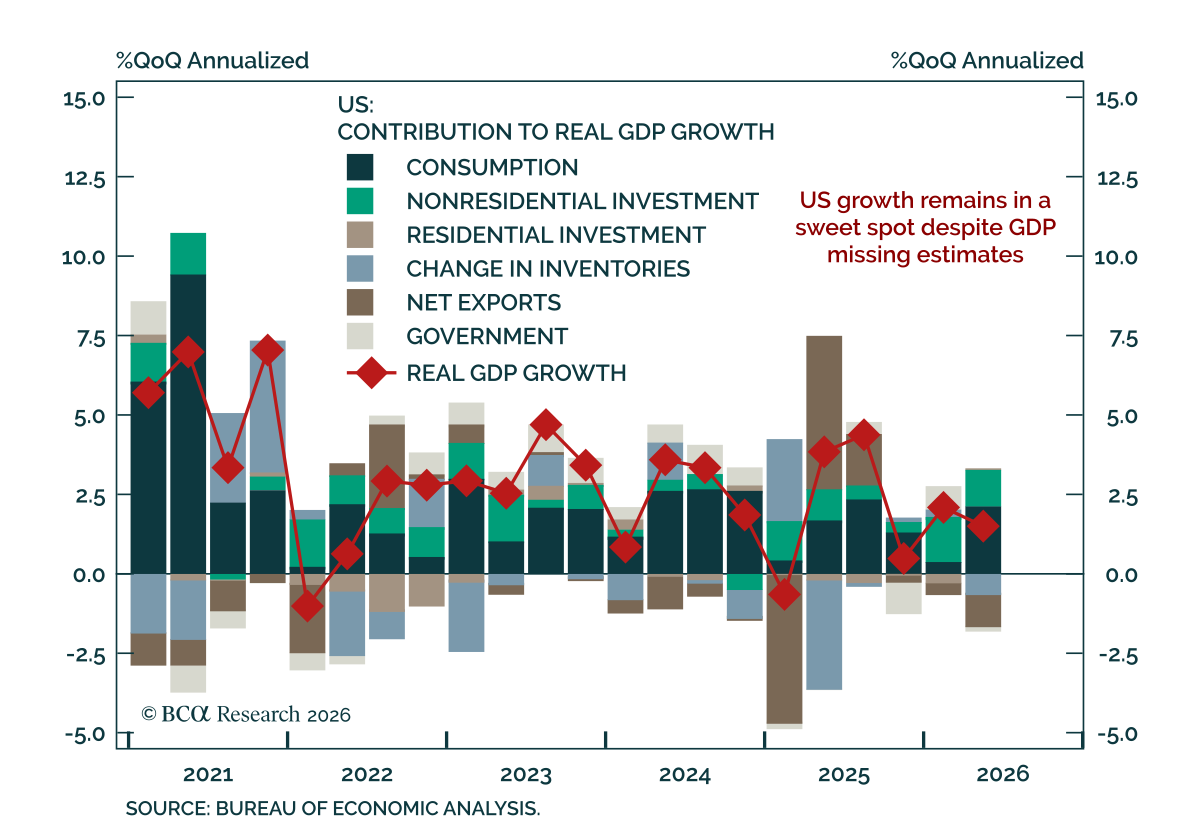
US hard data continue to show strength without overheating, supporting a tactical overweight on equities relative to bonds. Q2 advance GDP came in below consensus, with real growth slowing to 1.5% q/q annualized from 2.1% in Q1. Consumption was the main…
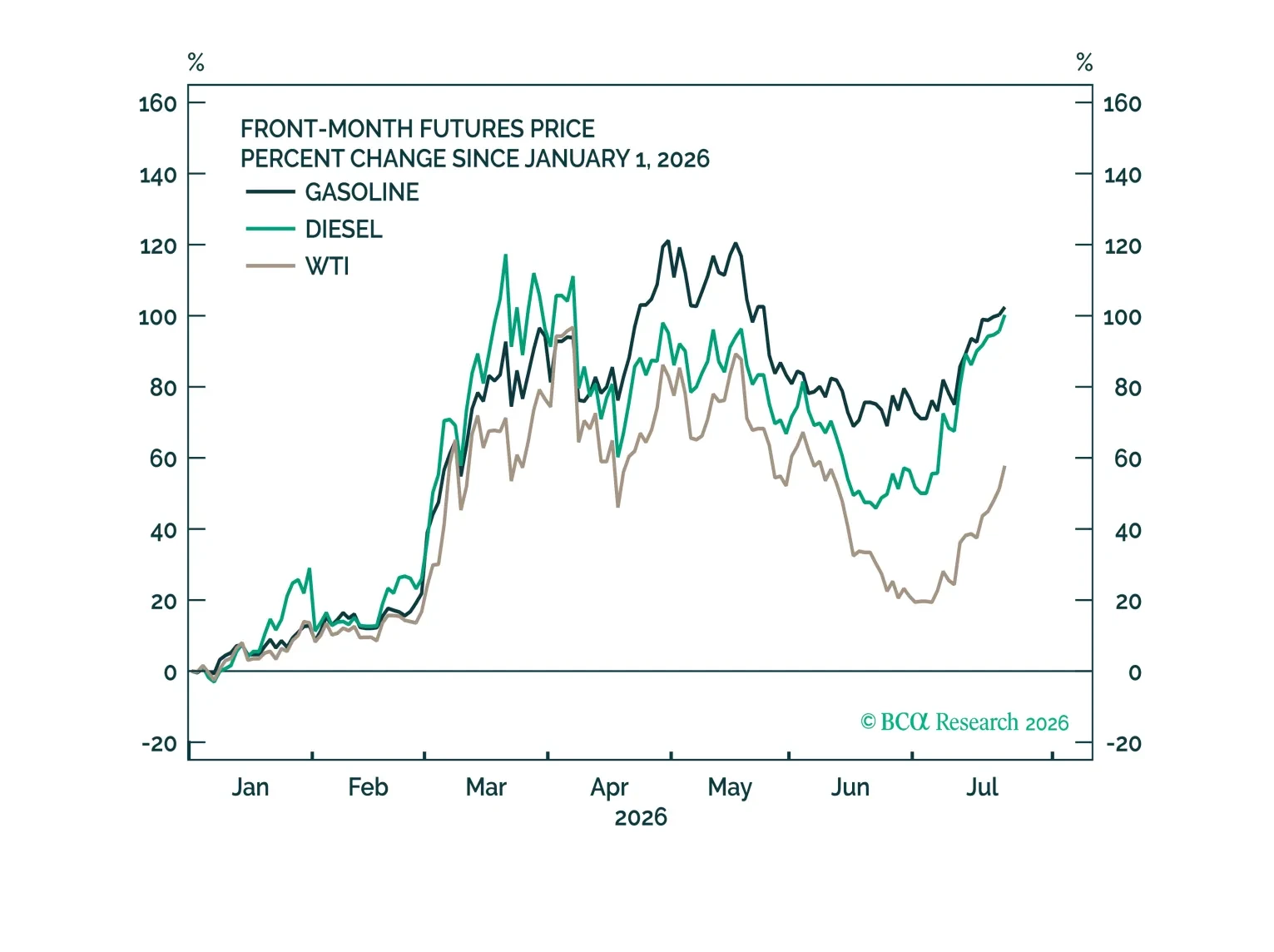
As long as the AI boom keeps booming, all other investment considerations will remain on the back burner. However, if the AI trade fizzles, this would expose deep-seated problems within the global economy, which could very well lead to an economic downturn as early as next year.
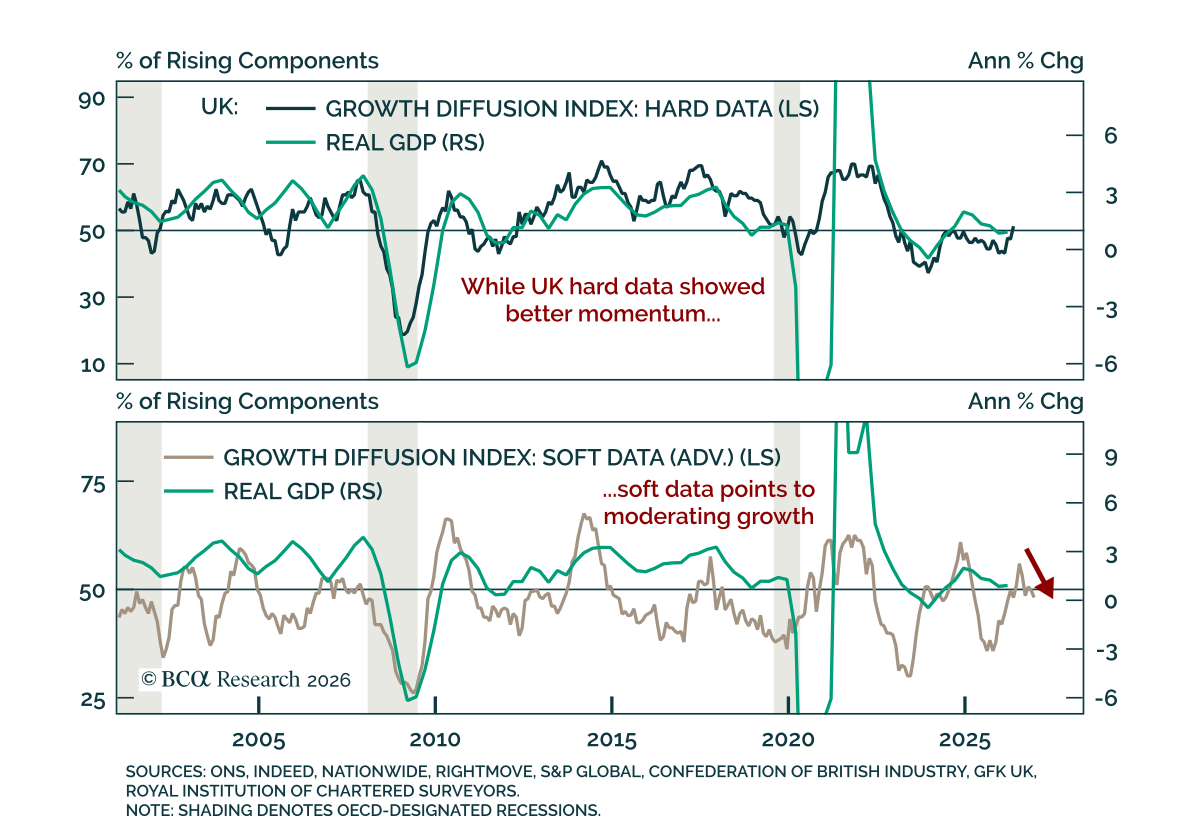
UK May hard data surprised to the upside, but still pointed to weak growth and limited scope for further BoE tightening. Hard data refers to directly measurable activity such as production, employment, and spending. Monthly GDP rose 0.1% m/m after contracting…
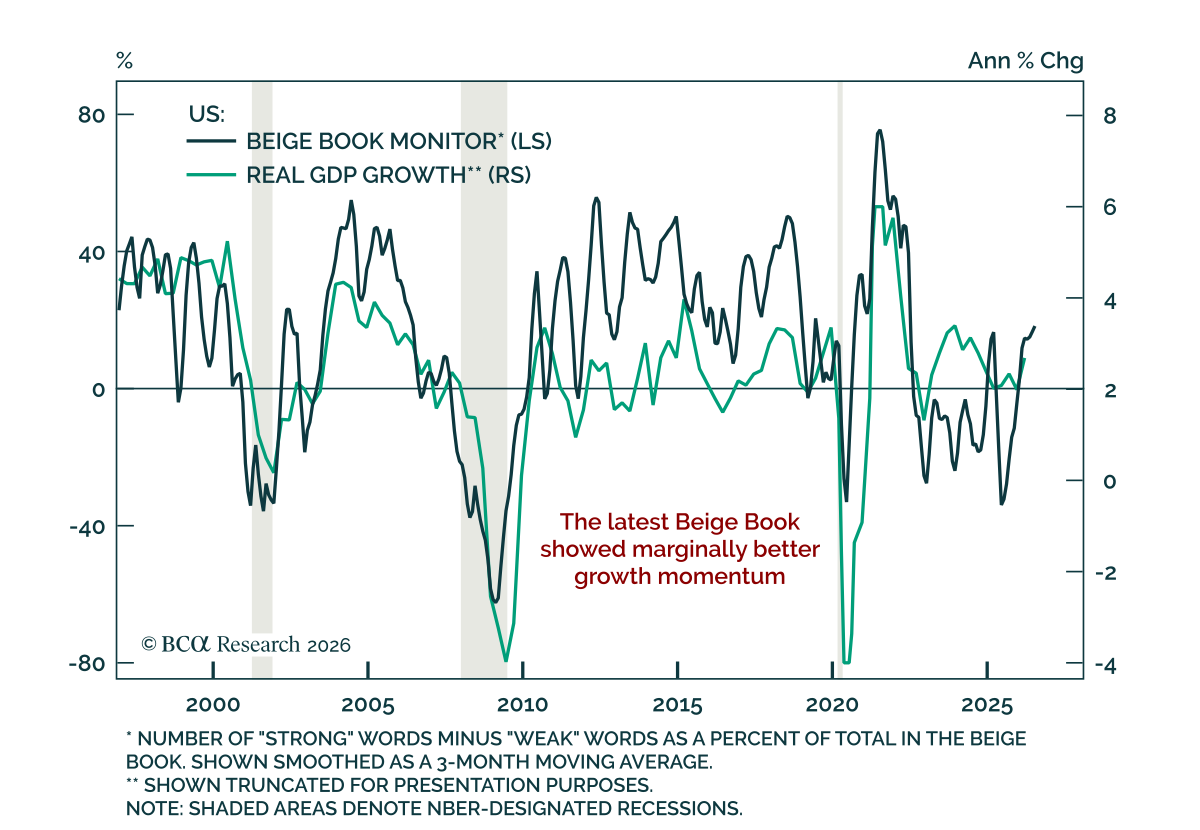
The Fed’s Beige Book pointed to slightly better growth momentum, while confirming that wage growth is normalizing and AI’s inflationary effects remain demand-driven for now. An increasing share of Fed districts reported growth at a slight-to-modest pace,…
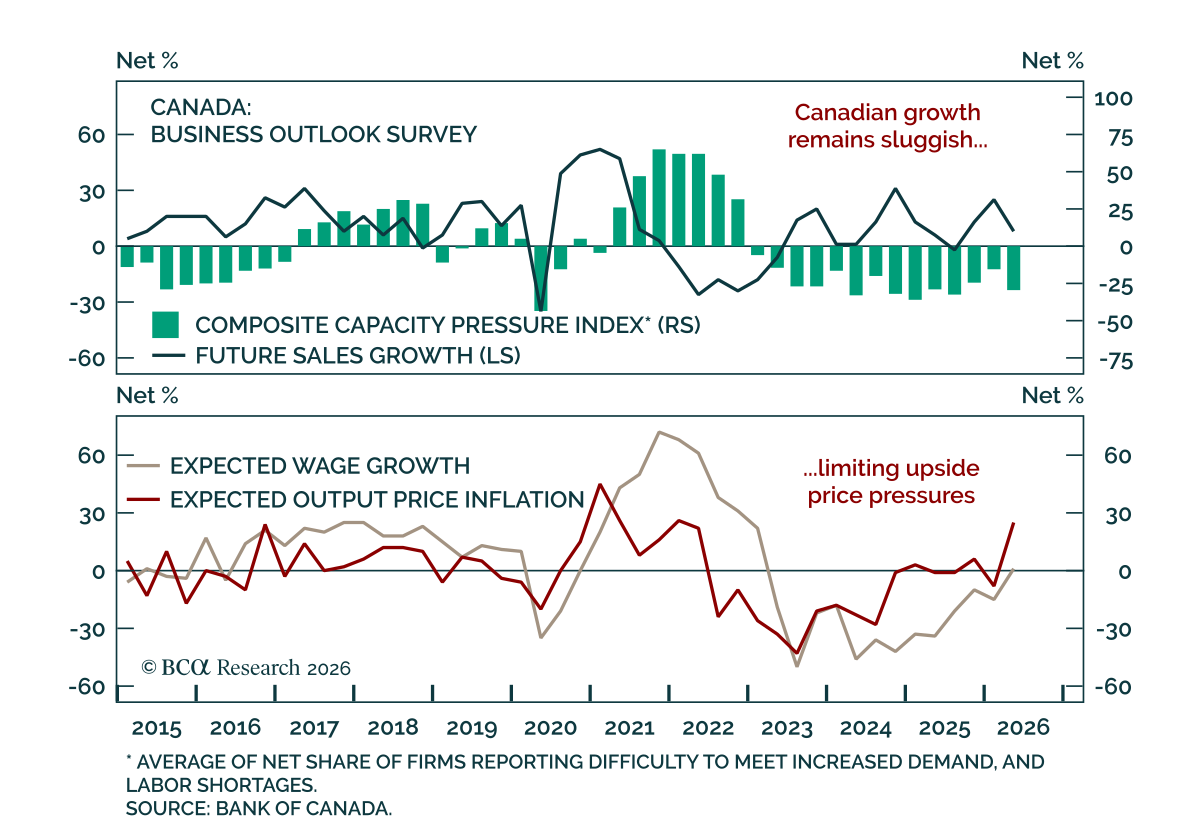
The Bank of Canada’s Q2 Business Outlook Survey pointed to a fragile economy, supporting the case for fading hikes priced into the CORRA curve. While the BOS indicator was roughly unchanged at -0.4, the report’s underlying details showed broad deterioration…
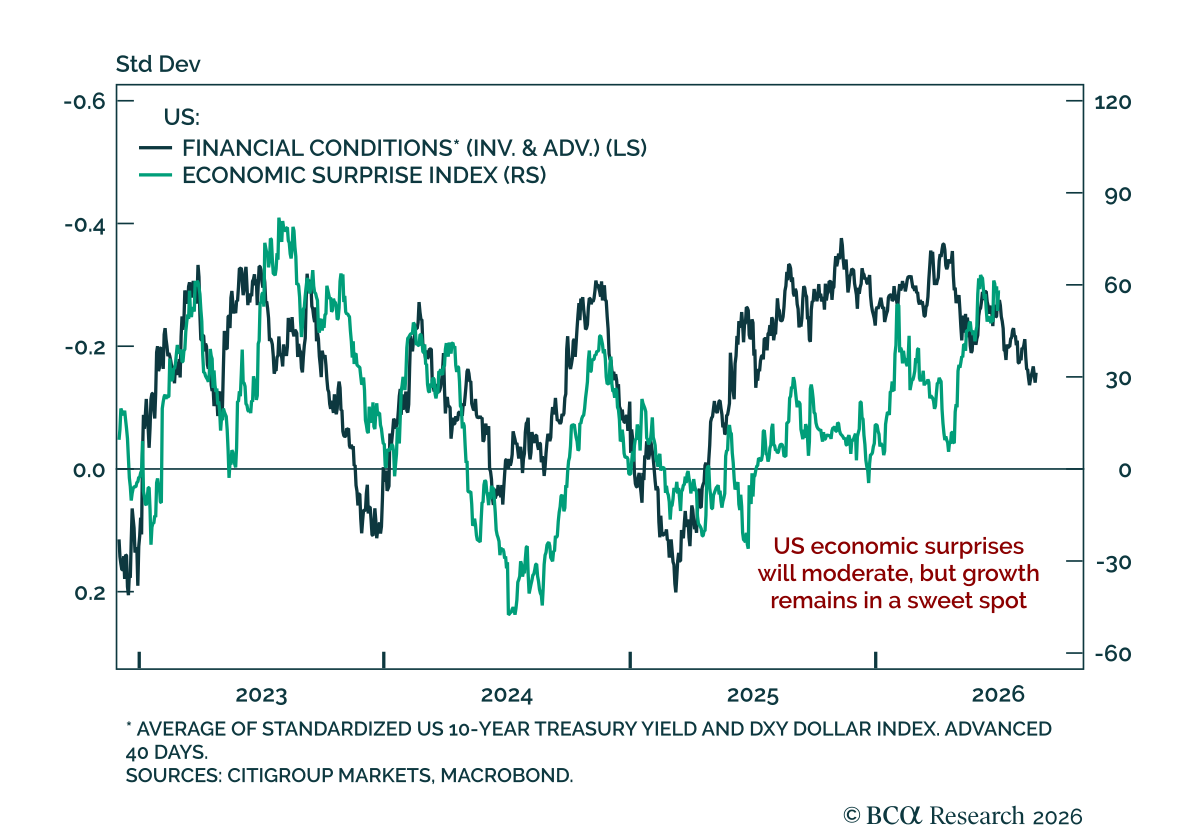
Marginally tighter US financial conditions point to some moderation in economic surprises. Despite a disappointing employment report, US economic data remains positive. But while the US economy has so far beaten forecasts this year, the Iran war has tightened…
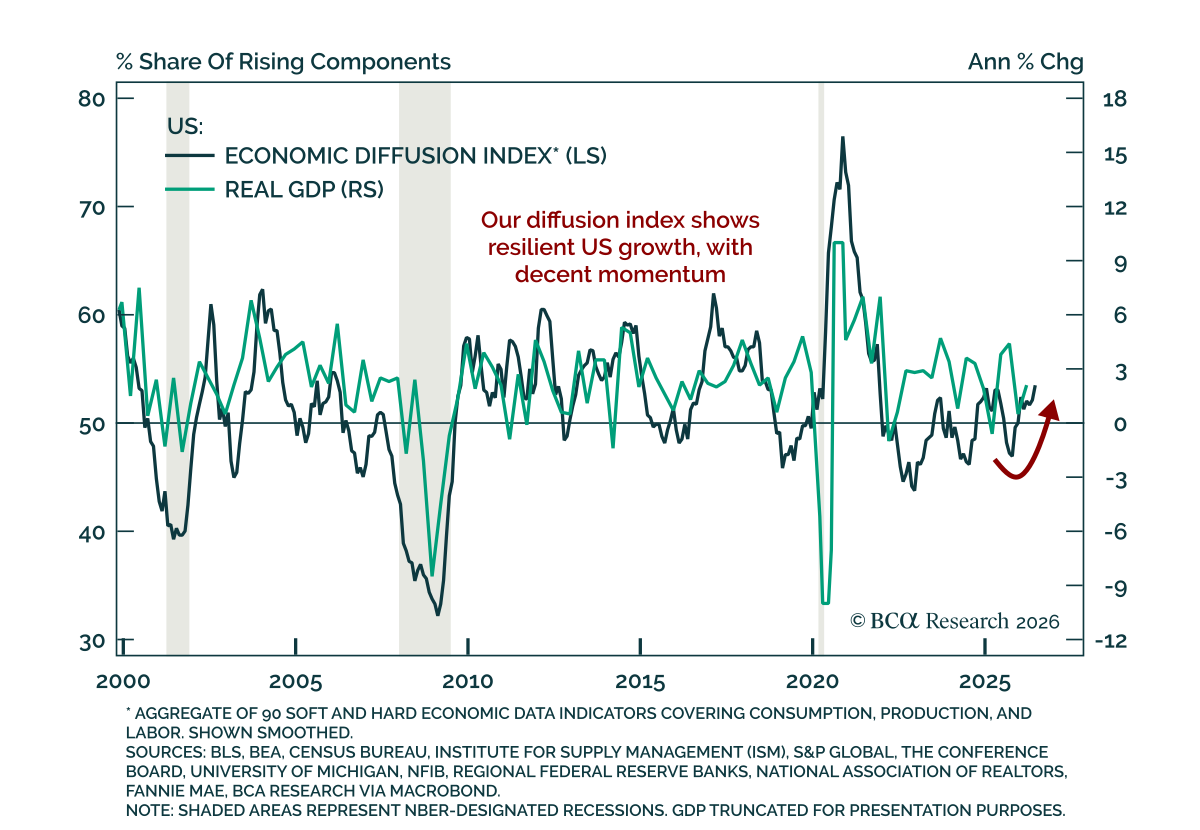
The US economy has remained resilient this year despite slowdown fears tied to geopolitical tensions. US economic data has surprised positively since the start of the year. The Iran war has weighed on business and consumer confidence, but has had little…
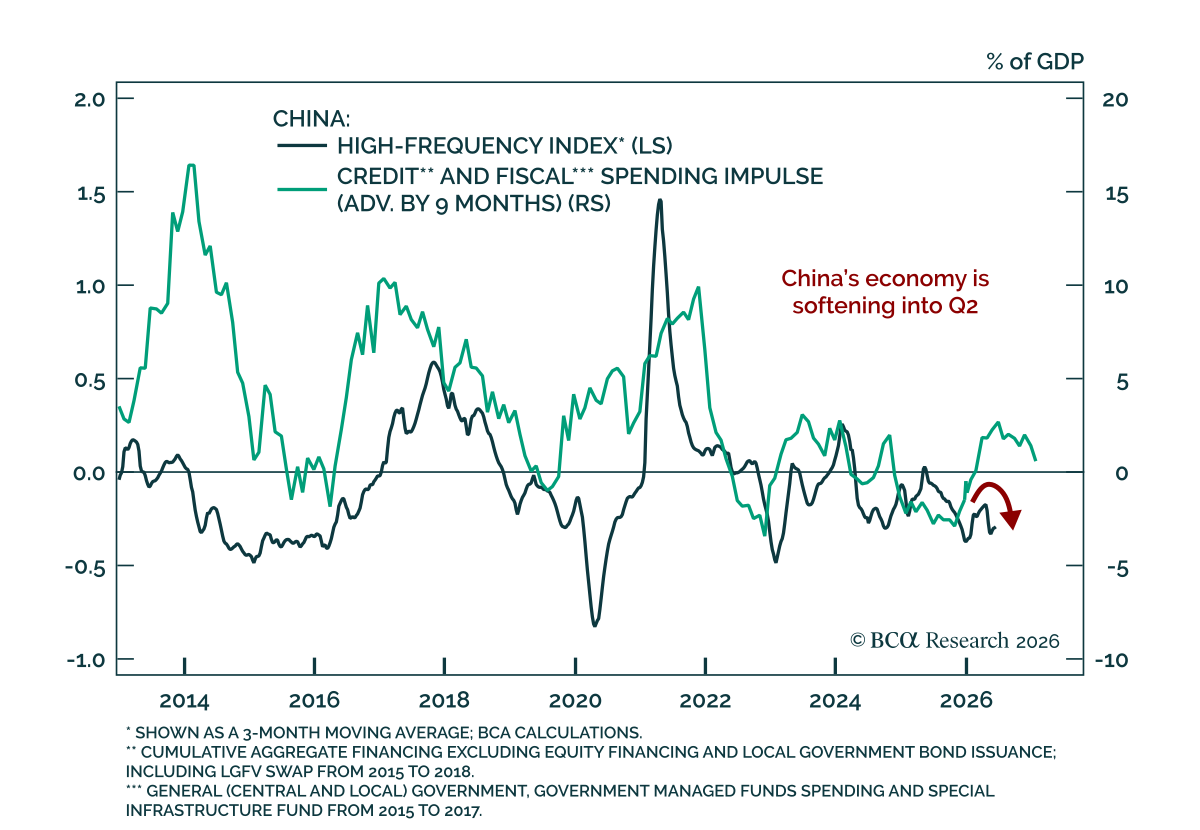
China’s weakening economy is likely to bring more fiscal support in H2, but the benefits will be concentrated and equity volatility is set to rise. Our Chart Of The Week comes from Jing Sima, Chief China Strategist. Jing looks at China’s outlook for the rest…
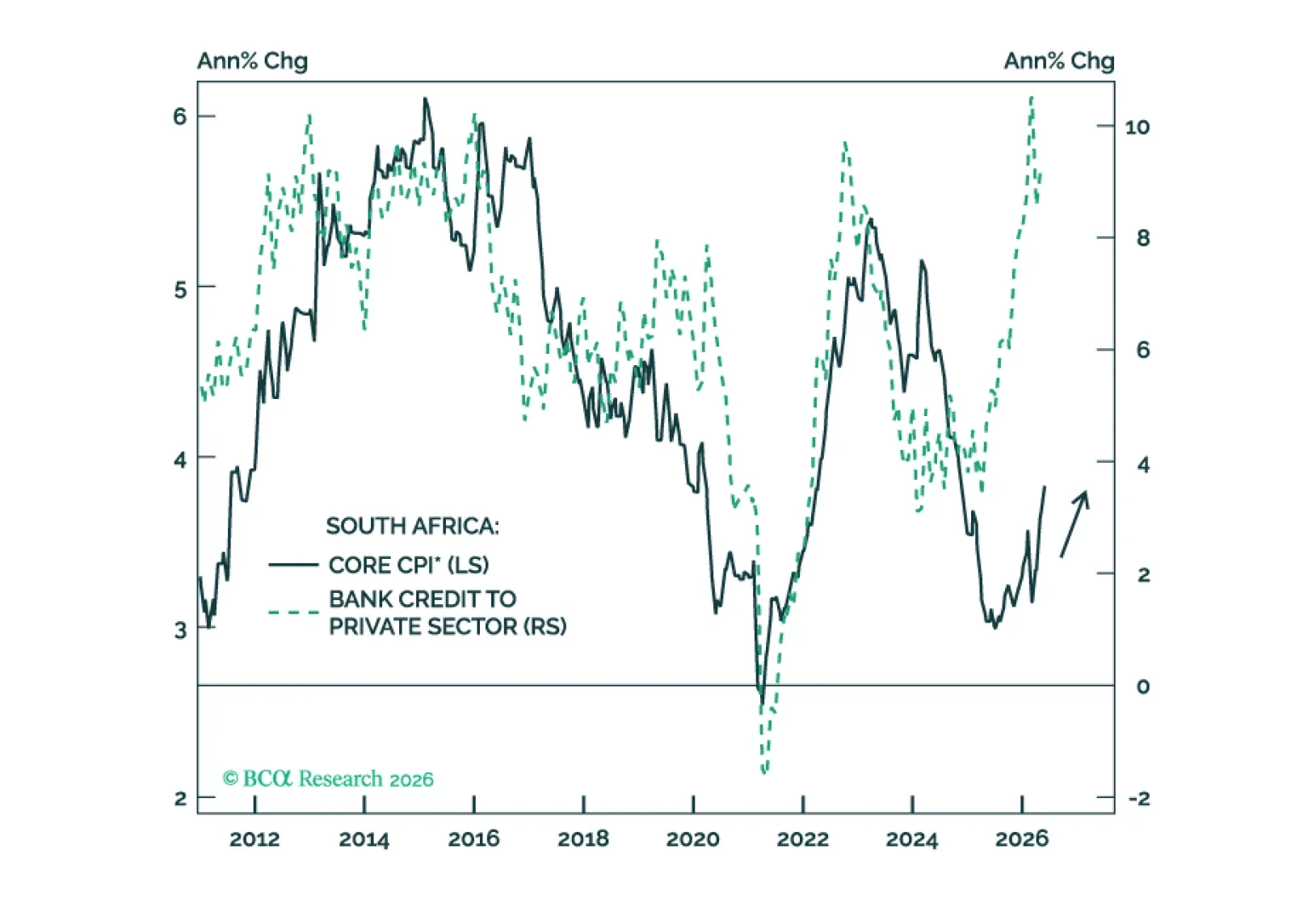
South Africa’s ambitious reform agenda will take time to bear fruit. Meanwhile, the country faces a stagflationary squeeze as inflation rises while growth slows. South African stocks, bonds, and currency are all vulnerable.