Emerging Markets

Highlights The Beirut blast calls attention to instability in the Shia Crescent. A turbulent push for political change will now ensue in Lebanon. Hezbollah’s and Iran’s political capital in Lebanon will suffer significantly. Lebanon is a red herring, but Iraq is a Black Swan. It is at risk of social unrest contagion. Iran’s financial troubles are weighing on its ability to maintain its sphere of influence. It is adopting a strategy of measured sabotage and deterrence against US interests in Iraq. The double whammy of low oil prices and pandemic is weighing on Saudi Arabia’s finances. Nevertheless it is prioritizing a cooperative relationship with Iraq. Iran could stage a major attack or President Trump’s poor election prospects could force him to “wag the dog.” Massive excess oil capacity will mute the oil market impact of a supply shortfall in Iraq. However, the risk becomes more relevant as demand recovers and markets rebalance in the second half of the year. Stay long Brent crude oil and gold. Feature The August 4 explosion at the Port of Beirut was devastating. It killed more than 220, wounded over 6000, left 300,000 homeless, and damaged buildings as far away as 9km from the site of the explosion. The blast added insult to injury to the country’s already troubled finances. Estimates for the cost of repair range anywhere between $5 billion and $15 billion. Global investors can largely write off the incident as an idiosyncratic shock. Even though emigration is likely to pick up, Lebanon’s population is only a third of Syria’s prior to its civil war. Assuming that a third of Lebanese become displaced abroad – a generous assumption more suitable to Syrian-style civil war than Lebanon’s situation – about 2 million Lebanese will be displaced, half of which will make their way to Europe or elsewhere outside the Middle East. As long as an antagonistic Turkey upholds its agreement with the EU, a mass exodus from Lebanon does not risk an unmanageable migrant crisis for Europe (Chart 1). Political tensions will rise and potentially lead to a populist backlash, given Europe’s battered economy. But Lebanon alone is not enough. The risk is broader Middle Eastern instability, which is a credible risk. Chart 1Middle Eastern Instability Could Fuel European Populism
Middle Eastern Instability Could Fuel European Populism
Middle Eastern Instability Could Fuel European Populism
Thus Lebanon in itself is a red herring, but it is a bellwether for further unrest in the Middle East in countries that are not red herrings (Map 1). Map 1Lebanon Is A Red Herring; Iraq And Saudi Arabia Are Relevant
From The Arab Spring To The Shia Crackup
From The Arab Spring To The Shia Crackup
A major conflict in Iraq is an underrated risk to global oil supply. The catastrophe calls attention to instability the Shia Crescent – a region in a tug of war between rival sectarian and geopolitical interests. Whereas the 2008 crisis led to the largely Sunni Arab states in the so-called Arab Spring, the 2020 crisis is piling pressure onto already unstable Shia states and regions: Iran, Iraq, Lebanon, Syria, and possibly eastern Saudi Arabia. Of particular significance is the fate of Iraq. Popular grievances are eerily similar to Lebanon’s. Baghdad is on shaky ground, yet the ramp up in US-Iran tensions going into the November US elections makes the threat of instability in Iraq more acute. As OPEC’s second ranked oil producer, a major conflict in Iraq poses an underrated risk to global oil supply. Supply losses are a tailwind to oil prices when market conditions are tight. However OPEC 2.0’s 8.3mm b/d of voluntary cuts means massive spare capacity is available globally to offset potential losses in Iraq, reducing the potential upside to oil prices. Nevertheless, this risk becomes more relevant as markets tighten on the back of a demand-side recovery, i.e. as balance is restored to the oil market and as excess spare capacity is eliminated. With oil markets likely rebalancing in 3Q20, unrest in Iraq poses an upside risk to our Commodity & Energy Strategy service’s expectation that 2H20 Brent prices will average $44/bbl and 2021 prices will average $65/bbl (Chart 2). Even though gold has already rallied 30% since mid-March, geopolitical risks including US-Iran tensions suggest any near-term selloff is a buying opportunity (Chart 3). The bullish gold narrative – geopolitical risks, falling dollar, and low real interest rates for the foreseeable future – remain intact even as the downturn gives way to a cyclical recovery. We continue to recommend gold on a strategic time horizon. Chart 2Oil Price Rally Remains Intact
Oil Price Rally Remains Intact
Oil Price Rally Remains Intact
Chart 3Gold Is Due For A Breather
Gold Is Due For A Breather
Gold Is Due For A Breather
Lebanon’s economic collapse highlights risks to other regional economies tied to the oil dependent Arab economies of the Persian Gulf. As the latter grapple with record low oil prices, production cuts, and the pandemic-induced recession, second-order effects will reverberate throughout the region, hitting economies such as Egypt and Jordan whose economic as well as political structures are intimately intertwined with Gulf Cooperation Council finances and policies. Lebanon’s Collapse Was Inevitable Lebanon was already going through an economic and financial meltdown before the explosion (Chart 4). Aside from the humanitarian loss, the economic impact is also profound. The country – highly dependent on imports of basic goods and suffering from food insecurity – must now contend with the loss of its main port and most of its grain reserves, destroyed in the explosion. As the dust settles, grief is morphing into anger on the streets. Regardless of whether the blast was due to happenstance or malice, the immediate cause was 2,750 tons of ammonium nitrate in storage for six years. The government was warned about the risks of the explosive chemicals at least four times this year – with the latest being on the day of the blast. Chart 4Beirut Port Explosion Accelerated Lebanon’s Collapse
From The Arab Spring To The Shia Crackup
From The Arab Spring To The Shia Crackup
Mass protests are already taking place, calling on the government to be held accountable for criminal negligence. A controversial petition to return Lebanon to French mandate has gained more than 60,000 signatures. Prime Minister Hassan Diab’s seven-month-old cabinet has resigned. (It was put in place last year amid an earlier bout of unrest.) Official incompetence and neglect are in fact the best-case explanations for the explosion. Many questions remain unanswered. For instance, what triggered the fire? Israel swiftly denied any connection and offered humanitarian aid, while Hezbollah’s leader Hassan Nasrallah claimed to know more about the Port of Haifa than about Beirut Port. Early parliamentary elections and the cabinet’s resignation will not appease the protesters. Photos of Nasrallah, President Aoun, Speaker of Parliament Nabih Berri, and former Prime Minister Saad Hariri were among those hung by protesters in gallows in Martyrs’ Square over the weekend. Berri and Gebran Bassil are known to be the source of the cabinet’s decision-making power.1 They have veto over all decisions, large and small. During the mass protests in October 2019, Nasrallah stated that Hezbollah has two red lines: Aoun must finish his term, which expires in 2022; No early elections will be held, i.e. the speaker of the house will not be changed. While early elections have now been promised, these red lines highlight that corruption runs deep in Lebanon and opposition groups face an uphill battle against the establishment. A turbulent push for political change will now ensue. Hezbollah’s and Iran’s political capital in Lebanon will suffer significantly. Another Israeli confrontation with Hezbollah is not the base case but it could occur. Bottom Line: Lebanon is a failed state. As with the Arab Spring, the question is whether popular anger will prove contagious and spread to more market-relevant neighboring countries. The rally in the Israeli shekel in trade weighted terms since mid-March has already started to fizzle and may be tested further as turmoil in Lebanon raises the risk of confrontation. Contagion? In order for a geopolitical event in the Middle East to warrant investors’ attention, it must affect at least two of the following factors : (1) global oil supply, (2) geography of existential significance to a regional power, or (3) sectarian conflict which could lead to contagion. In this context, Lebanon is a red herring, but Iraq is not – therefore investors should watch to see if anything causes destabilization in Iraq. A decline in Iranian funds will weaken Tehran’s sphere of influence. Like Lebanon, Iraq is dominated by a highly corrupt sectarian system that has been plundering the wealth; people are suffering from rising rates of unemployment; and the regime is in the crosshairs of competing foreign agendas (Chart 5). Chart 5Iraqis And Lebanese Suffer Similar Grievances
From The Arab Spring To The Shia Crackup
From The Arab Spring To The Shia Crackup
Iraq is in Iran’s sights because it aspires to establish a land bridge to the Mediterranean through a friendly “Shia Crescent” (Map 2). Iran’s modus operandi is to establish a presence in its neighbors’ domestic politics through Iran-backed factions. Map 2Iraq Essential To Iran’s Aspirational ‘Land Bridge’ To The Mediterranean
From The Arab Spring To The Shia Crackup
From The Arab Spring To The Shia Crackup
Given the current state of Iran’s economy, it is not far-fetched to envision a significant drop in the funding of its foreign proxies (Chart 6). Historically these funds have followed the ebbs and flows of oil prices. For instance, in 2009, when faced with declining oil prices and US sanctions Iran’s funds to Hezbollah were estimated to have fallen by 40%. This happened again in 2014-16 and is not too different from today. Thus Iraq is at risk of contagion. Iran’s financial troubles are weighing on its ability to maintain its sphere of influence. Syrian fighters have reported paychecks being slashed, Iranian projects in Syria have stalled, and Hezbollah employees report to have missed paychecks and lost other benefits. Tehran’s finances are essential for Hezbollah’s survival.2 Iran’s proxies in Iraq are facing a similar fate.3 Chart 6Iran Suffering Under "Maximum Pressure"
Iran Suffering Under "Maximum Pressure"
Iran Suffering Under "Maximum Pressure"
Bottom Line: Iraq faces an uptick in social unrest due to the poor living conditions and possible contagion from Lebanon. Meanwhile, Iran-backed groups there face a decline in funds from Tehran, which will send them searching for replacement funds. If Lebanon falters the world can usually ignore it but if Iraq falters the world will have to take notice. Saudi Arabia Prioritizes Revenue Over Growth Beirut’s foreign policy stances in recent years have been seen as appeasing Iran at the expense of Gulf Arab states.4 This trend coincides with a decline in Gulf Cooperation Council financing to Lebanon. Now the collapse in oil prices and pandemic have weighed on Saudi Arabia’s budget, which still depends on the energy sector for most of its revenues despite efforts to diversify. State revenues were down 49% year-on-year in Q2 pulling the budget deficit down to $29 billion (Chart 7). Riyadh is reassessing its priorities. Opting for revenue at the expense of growth, Riyadh has tightened the screws on its citizens. The government has had to pare back some of the benefits Saudis have long been accustomed to. The value-added-tax rate tripled from 5% to 15%, and a bonus cost-of-living allowance of $266 for public sector employees ended. The kingdom also announced plans to reduce spending on major projects by $26 billion – including some of those associated with Crown Prince Mohammed bin Salman’s reform agenda, Vision 2030. Chart 7Saudi Arabia Under Pressure From Double Whammy
Saudi Arabia Under Pressure From Double Whammy
Saudi Arabia Under Pressure From Double Whammy
Severe economic turmoil poses a risk to the Saudi social contract in which citizens pledge allegiance to the ruling class in exchange for financial and social guarantees. The risk now is that the fiscal challenges dent Saudi citizens’ pocketbooks and thus impact social and political stability. However, oil prices are recovering to levels consistent with the kingdom’s fiscal breakeven oil price next year. The global economic recovery will begin to support the kingdom’s economy in the second half of this year (Chart 8). This will ease pressure on the budget and hence households. Moreover the slowdown is likely to hit foreign workers hardest and thus hasten the Saudization process. Foreign workers are the lowest hanging fruit and will be the first to find themselves jobless. In that sense the crisis is expediting some of Riyadh’s long-term reform targets. That said, there is still some risk of internal instability or even a palace coup. Tehran could incite sectarian tensions in the kingdom’s Eastern Province where an estimated 30-50% of the population is believed to be Shia. This is relevant given that nearly all Saudi oil production is located there. Chart 8KSA Benefits From EM GDP Growth ...
KSA Benefits From EM GDP Growth ...
KSA Benefits From EM GDP Growth ...
Regarding the possibility of a palace coup, Crown Prince Mohammed bin Salman has spent this year cracking down on potential dissidents. Former Crown Prince Mohammed bin Nayef and King Salman’s only surviving full-brother Prince Ahmed bin Abdulaziz – both influential and well-liked – were among those detained in March. The kingdom’s contradictory policies – reform through repression – may eventually culminate in an overt political crisis. Though such a crisis may not occur until the time of royal succession. These economic and political challenges may force Saudi Arabia to adopt an inward stance. Its foreign interventions to date have been costly and come with little benefit – judging by the war in Yemen. It is also possible that Saudi Arabia, which is already the third largest defense spender globally, will try to strengthen its position vis-à-vis Iran. Crown Prince Mohammed bin Salman has already stated that the kingdom will pursue a nuclear program if Iran develops a nuclear bomb. This is relevant in today’s context with Iran no longer complying with restrictions to its nuclear program (Table 1). Saudi Arabia, like Iran, claims its nuclear program is for peaceful purposes – in order to generate nuclear power as part of efforts to diversify its economy.5 Table 1Iran No Longer Complying With 2015 Nuclear Deal
From The Arab Spring To The Shia Crackup
From The Arab Spring To The Shia Crackup
Still, low oil prices tend to discourage petro states from engaging in conflict (Chart 9). Arab petro states may show restraint, at least until oil markets recover. Chart 9Low Oil Prices Discourage Petro States From Engaging In Conflict
From The Arab Spring To The Shia Crackup
From The Arab Spring To The Shia Crackup
Overall weakness in oil-producing economies will hurt various countries that rely on remittances (Chart 10). The downturn will also hurt countries dependent on remittances from petro states in the region such as Egypt and Jordan. Bottom Line: The collapse in oil prices is forcing Saudi Arabia to reconsider its priorities and is expediting some long-term reforms. For now, it is adopting a pro-revenue rather than a pro-growth stance. This is likely to result in a focus inward for the kingdom. The implication is that countries that are leveraged to the petro-economies of the Gulf for remittances, bilateral aid, and capital flows will take a hit. These include Lebanon, Egypt, and Jordan. Chart 10Egypt And Jordan Also Vulnerable To Petro State Weakness
Egypt And Jordan Also Vulnerable To Petro State Weakness
Egypt And Jordan Also Vulnerable To Petro State Weakness
Iraq Is The Prize Not unlike Lebanon, Iraq’s political class has been suffering a legitimacy crisis since protests erupted there last October resulting in the resignation of then-Prime Minister Adel Abdul Mahdi. However unlike Lebanon, Iraq is a significant geography for global investors. It is a major OPEC producer – second only to Saudi Arabia – accounting for 16% of the cartel’s production last year. The Iraqi oil minister’s first foreign trip was to the Saudi capital. This is not surprising. Iraq not only seeks Saudi leniency in OPEC 2.0 cuts, but also needs financial assistance to develop a natural gas field that will allow it to reduce dependence on Iran. Saudi Arabia also hopes to reduce Iraq’s dependence on Iranian natural gas and coax it into its sphere of influence. When it comes to crude oil, the additional 1mm b/d of voluntary cuts in June announced unilaterally by Saudi Arabia beyond its agreed OPEC 2.0 commitments are also a sign of Saudi willingness to accommodate Iraq and its non-compliance (Chart 11).6 Saudi Arabia does not want to see Iraq’s newly elected government failing on the back of budgetary strain. In fact, al-Kadhimi is an opportunity for the Saudis. Formerly the director the National Intelligence Service with warm ties to the US, he is a champion of Iraqi sovereignty. Even though Iraq is being forced to compensate for past overproduction of oil in August and September, it was cajoled by the promise of a $500 million “bridging” loan from Saudi Arabia, to be repaid when oil markets recover. While financial assistance shows the kingdom’s commitment to Iraq, more significantly it reflects Riyadh’s desperation to revive oil markets and bring prices closer to its fiscal breakeven oil price amid the still uncertain demand outlook. Chart 11Saudi Arabia Willing To Accommodate Iraq
From The Arab Spring To The Shia Crackup
From The Arab Spring To The Shia Crackup
Neither Saudi Arabia’s nor al-Kadhimi’s efforts are guaranteed to succeed in pulling Iraq out of Iran’s sphere. The prime minister received a rude awakening upon his arrest of 14 Kata’ib Hezbollah fighters in June on grounds of a plan to launch a rocket attack on US interest in Baghdad. They were swiftly released, and the case against them dropped. It is hard to curb Iranian influence. For its part, Iran stood behind al-Kadhimi’s nomination despite him being perceived as pro-Western. Tehran needed to avoid an anti-Iranian backlash on the streets of Baghdad if it had stood against him. Instead, Iran’s calculus was that it is in its best interest to swallow the pill and work with the new government at a time when Iraqi anger was targeted against US involvement rather than at Iranian interference. Prior to the US assassination of Qassem al-Suleimani and Abu Mahdi al-Muhandis on Iraqi soil, Iraqis were rebelling against Iran’s influence. That being said, Iran will maintain pressure on Iraq through continued attacks on US interests there (Table A1 in Appendix). This is also reflected in the July assassination of top Iraqi security expert Hisham al-Hashimi, who had previously advised the government on how to curb Iranian control. Iran was looking to make it to the US election in November without an escalation in tensions, hoping the US elections will result in a more dovish Democratic Party leadership averse to conflict with Iran. However, recent cyber-attacks on key Iranian infrastructure raise the likelihood that tensions will escalate ahead of the elections. The US is also threatening to maintain maximum sanctions even if the United Nations Security Council disagrees. As always, Iraq will find itself in the crossfire of any deterioration in relations. Bottom Line: Maintaining a cooperative relationship with Iraq aligns with both of Saudi Arabia’s interests there: limiting Iranian interference and supporting global oil markets through supply-side discipline. Iran will maintain pressure on Iraq’s new government through continued attacks on US interests. However, these attacks are supposed to fall short of killing US citizens and giving President Trump a reason to launch air strikes that could give him a patriotic boost in opinion polls. Nevertheless, tensions in the Gulf could escalate if Iran stages a major attack or if President Trump’s poor election prospects force him to “wag the dog.” In that case Iraqi oil supply would be disrupted. Investment Implications The Shia Crescent remains at heightened risk of instability on the back of Iran’s economic deterioration. Massive excess oil capacity will mute the oil market impact of a supply shortfall in Iraq. However, the risk becomes more relevant as demand recovers and markets rebalance in the second half of the year. Given that the Saudi loan will ensure Iraq’s commitment to compensatory production cuts in August and September, supply-side risks are a tailwind to oil prices in H2. The elevated risk of an escalation in US-Iran tensions also favors holding gold. President Trump’s polling has bottomed, yet he remains the underdog in the election – we maintain his odds of winning reelection are 35%. This raises the risk that he adopts a “war president” posture. Iran could become a target as the financial price of confronting Iran is negligible for Trump, whereas a major China confrontation could sink the stock market. The collapse in oil prices and pandemic have weighed on Saudi Arabia’s budget. It has adopted a revenue over growth posture. While this could be a risk to domestic stability, our base case is that it accelerates the kingdom’s long-term reforms. The oil market rout and economic downturn will hurt other countries in the region that are leveraged to Arab petro states – chiefly Egypt and Jordan. Investors should monitor risks to state stability in the coming years. Lebanon’s crisis will incentivize emigration, but given the relatively small size of its population, the major risk to Europe comes from any broader state failures and Middle Eastern instability rather than from Lebanon’s failure alone. If the Democratic Party wins the US election, as expected, then the US-Iran strategic détente will resume and Iran will get a lifeline. But the immediate transition will still be rocky given the Israeli and Saudi desire to exploit Iran’s extreme vulnerability and build leverage with Washington. The COVID-19 crisis heralds another round of Middle Eastern crisis, much as the 2008 crisis led to the Arab Spring. Stay strategically long Brent crude oil and gold. Also, in the wake of yesterday’s 15% pullback in silver, go strategically long silver (XAGUSD), which will continue benefiting from the same structural trends favoring gold but also outperform gold as the global economy recovers, given its greater industrial utility. Roukaya Ibrahim Editor/Strategist Geopolitical Strategy RoukayaI@bcaresearch.com Appendix Table A1Iran Adopting Deterrence Strategy In Iraq
From The Arab Spring To The Shia Crackup
From The Arab Spring To The Shia Crackup
Footnotes 1 Berri is of the Hezbollah-allied Amal Movement and has been parliamentary speaker since 1992, while Bassil is President Aoun’s son-in-law and president of the Free Patriotic Movement, which has the most seats in parliament. 2 Hezbollah gains legitimacy at home through its charity work that plugs the gap in services normally provided for by the government. 3 According to a commander of an Iran-backed paramilitary group in Iraq, Iran slashed its monthly funding to the top four militias by nearly half this year. Please see “Coronavirus and sanctions hit Iran’s support of proxies in Iraq,” Reuters, July 2, 2020. 4 Hezbollah has gained control over the foreign policy and Lebanon has recently taken stances that are seen as bowing to Iranian pressure. Lebanon did not attend a March 22, 2018 extraordinary Arab League meeting discussing violations committed by Iran. Prior to that, Beirut did not condemn Iranian attacks on a Saudi diplomatic mission in Tehran. 5 However an undisclosed facility for processing uranium ore in the northeast of the kingdom has recently appeared. 6 This is not unlike the US’s decision to extend sanction waivers by four months, allowing Baghdad to import Iranian energy in order to ensure that the new government of Prime Minister Mustafa al-Kadhimi can stand on its own and is not overly dependent on Iran.
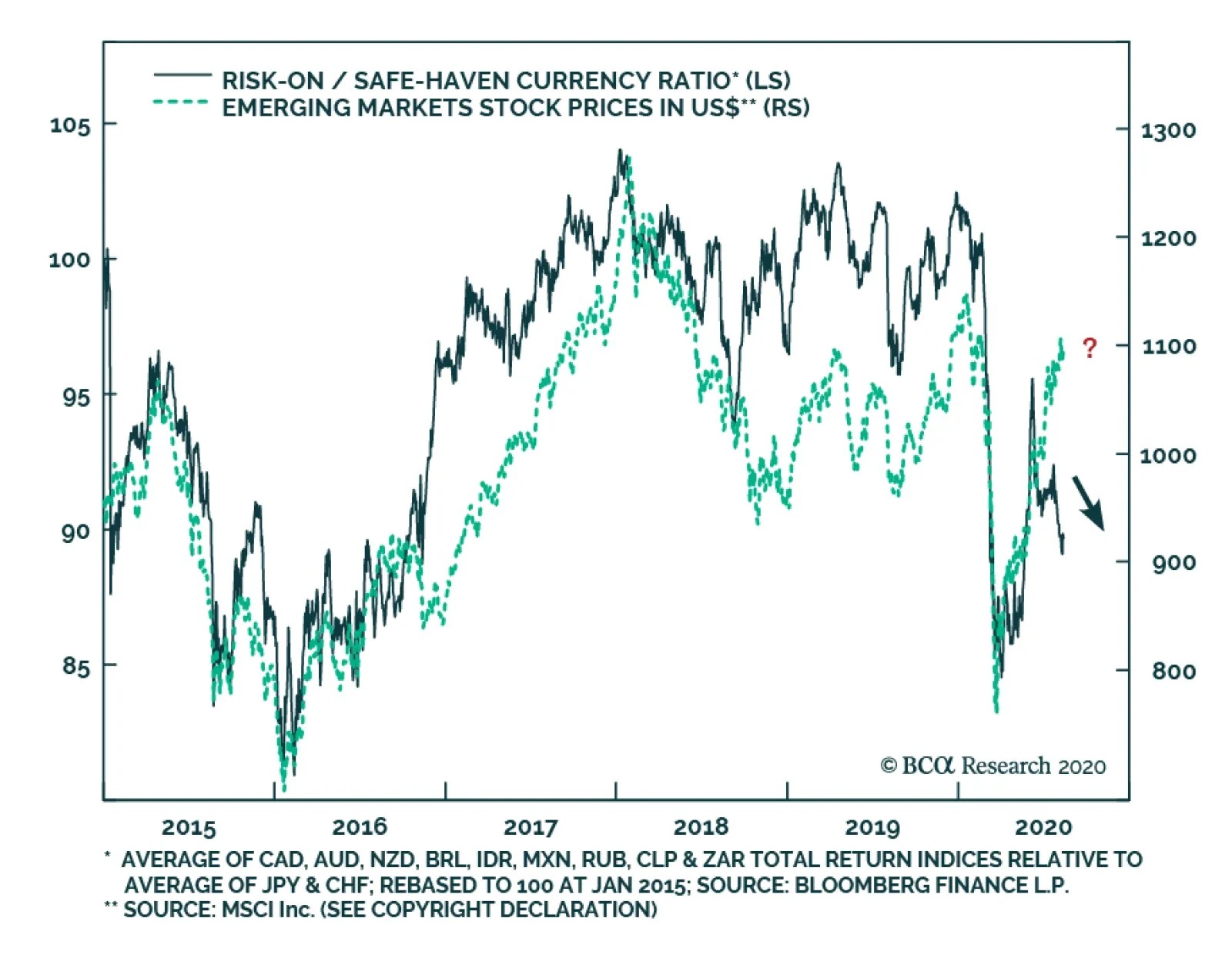
One of the key indicators that BCA Research's Emerging Markets Strategy service follows – the Risk-On/Risk-Off (Safe-Haven) Currency indicator – has been dropping, but EM share prices have been advancing. These two have historically had very high…
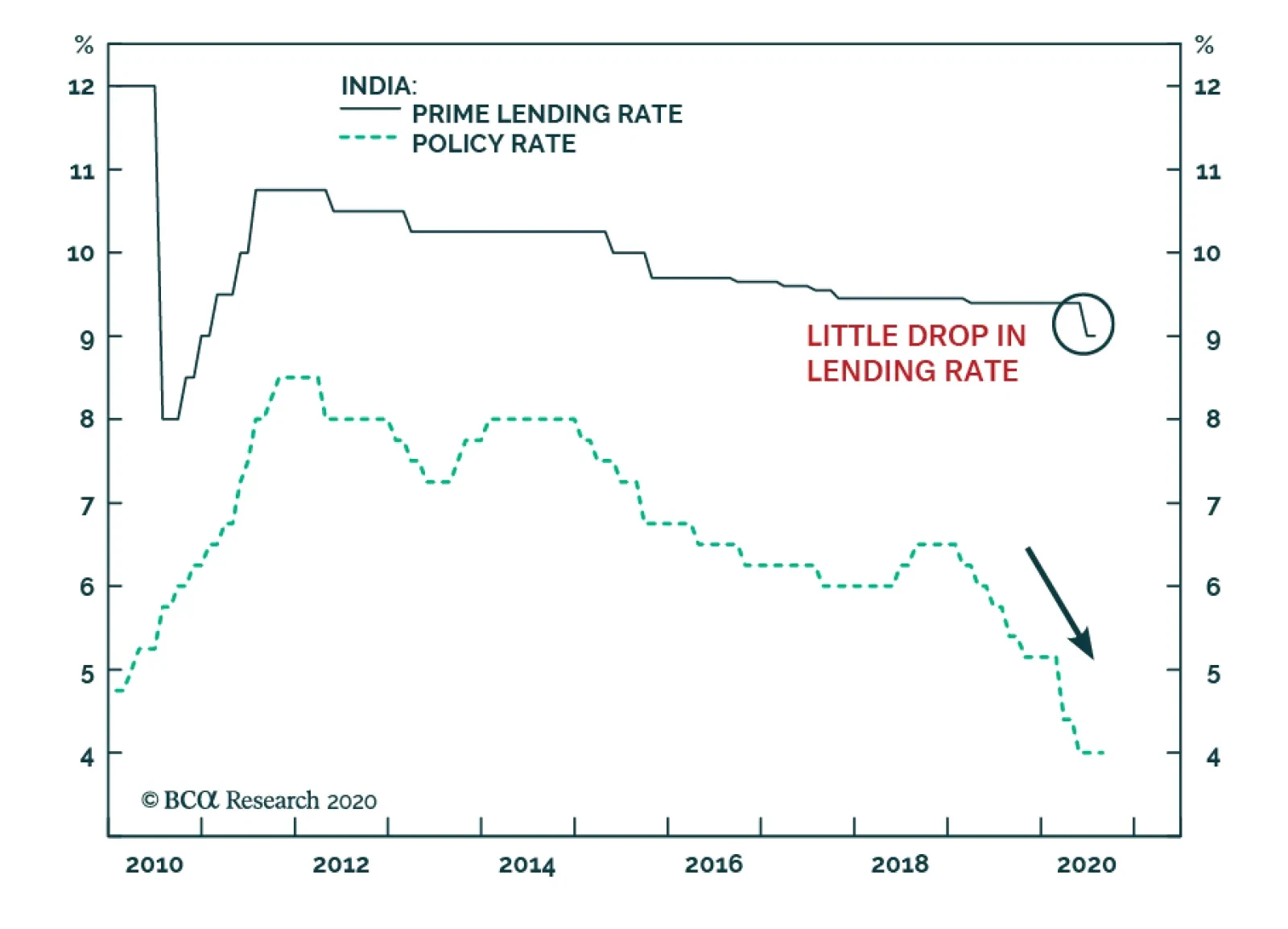
BCA Research's Emerging Markets Strategy team in the newly published report on India argued that limited fiscal stimulus and a broken monetary transmission mechanism herald a lackluster economic recovery. The monetary policy transmission mechanism was…

BCA Research's Commodity & Energy Strategy and Geopolitical Strategy services conclude that the Beirut blast calls attention to instability in the Shia Crescent. The August 4 explosion at the Port of Beirut was devastating. It killed more than 220,…
BCA Research's China Investment Strategy service is sticking to its strategic and cyclical overweight view on Chinese equities despite President Trump's opening a new front in the Sino-US tech war by banning China-based apps like TikTok. The impact on both…
Dear Client, In lieu of our regular report next week, we are sending you a Special Report from my colleague Chester Ntonifor, Foreign Exchange Strategist. Chester will share his outlook on the Hong Kong Dollar. I hope you will find his report insightful. Please note that next week’s report will be published on Friday, August 21. Best regards, Jing Sima, China Strategist Highlights President Trump's ban of China-based apps marks a new front in the Sino-US tech war. There is no change in our strategic views. The impact on both China’s aggregate economic growth outlook and the financial markets should be limited on a cyclical basis. Consider overweight Chinese offshore ex-TMT stocks and onshore semiconductor stocks within a global equity portfolio, against a backdrop of escalating hostilities in the tech sphere. Feature Chart 1Five Chinese Companies Are Mentioned In The New "Clean Network" Initiative
Five Chinese Companies Are Mentioned In The New "Clean Network" Initiative
Five Chinese Companies Are Mentioned In The New "Clean Network" Initiative
Geopolitical risks again stirred up volatility last week in China’s equity markets. President Trump issued two executive orders to take effect in 45 days, banning US transactions with the Chinese-owned social media apps TikTok and WeChat. Shares in Tencent, the China-based Internet giant that owns WeChat, have plummeted by 11% in China’s offshore market following the ban announcement (Chart 1). The event underscores that technology is at the root of a power struggle between the US and China. The struggle will likely be exploited by Trump as the US presidential election nears and Trump’s polling numbers lag. However, we remain constructive on Chinese stocks over the next 6 to 12 months. Although the latest development remains highly fluid, the tensions should not have a material impact on the cyclical outlook for China’s aggregate economy or financial markets. This will be the case as long as the situation does not degenerate into an outright tariff increase on Chinese export goods or other strategic actions with the potential to cause major economic damage. Given rising downside risks to Chinese tech company stocks in the near term, we recommend investors hold a neutral position on Chinese tech giant company equities versus their global peers. Instead, investors should overweight Chinese “old economy” stocks as well as sectors that are greatly benefited from policy support. We initiate two trades today: long MSCI China ex-TMT versus MSCI Global ex-TMT;1 and long domestic semiconductor stocks versus global semiconductor benchmark. A New Front In Tech War It is likely that the US will implement the ordered bans in some way. Banning TikTok wasn’t a surprise because the US had amply signaled its displeasure with the app in preceding months. The social media company has rapidly gained US market share and hence access to American users’ data. Its parent company ByteDance is based in Beijing and therefore subject to China’s cybersecurity laws, a major source of bilateral tensions. The company originated in a Chinese acquisition of an American company, another irritant for the Trump administration. The US is now pressuring TikTok’s US operations to sell the app to an American-based company such as Microsoft. Regarding Trump’s executive order on WeChat and Tencent, it is not clear what “transactions” with Tencent will be disallowed from the US market.2 Additionally, US officials later appeared to backpedal and limit the scope of the executive order on Tencent to only the WeChat app. We have a few preliminary observations on the evolving situation: It is unknown how far the executive action will go regarding Tencent. The Internet titan gets less than 5% of its revenues from outside China, according to its 2019 financial statement. However, Tencent has many prominent investments in the US gaming and music industries. The US Commerce Department has 45 days to interpret and enforce the directive. The vague language in the executive order provides the US with enough legal space to deprive Tencent of US technologies in those sectors, and would severely curtail Tencent’s online gaming business, which is its main engine of growth. The bans underscore the US administration’s intention to extend tech hostilities with China by denying Chinese tech companies the access to compete and expand globally. Last week, Secretary of State Mike Pompeo announced a five-pronged “Clean Network” initiative that would scrub Chinese companies from US telecommunications networks entirely.3 China, for its part, has been progressively banning US social media giants since 2009. China has not announced any retaliatory actions since the executive orders were issued. Top Chinese policymakers seem to have shifted gears from a tit-for-tat retaliation to a carefully calibrated diplomatic reaction that does not ramp up tensions further. Moreover, there is a sizeable contingent of top Chinese policymakers pushing for reconciliation with the US. We think that China’s senior leaders prefer to dial down the current conflict and take a wait-and-see approach until after the US presidential election in November. Nevertheless, the next two to three months will be unpredictable as the election nears and Trump’s polling numbers lag behind his rival Joe Biden. Bottom Line: China’s leading Internet and tech companies are embroiled in a US-China feud. Pressures will likely intensify with other tech companies potentially also targeted. For now, stay neutral on leading Chinese tech company stocks within a global equity portfolio. Stick With The Knowns Chinese tech company stock prices will likely be extremely volatile in the short run. Nevertheless, we are staying the course with our constructive cyclical view on overall Chinese stocks and we do not recommend any one-way bets on the market during the next two to three months. China’s financial markets have been shaken by negative surprises relating to frictions with the US. However, investors cheer on even the slightest easing of tensions between the two countries. Last Friday’s volatile trading was a good example: initial confusion over the ban’s scope in Trump’s order led to a more than 10% plunge in Tencent stock during morning trading in the Hong Kong market, but the losses were cut in half after the US indicated the ban only affected the WeChat app. Chart 2Chinese Tech Company Stocks Rallied Through Most Of The Trade War
Chinese Tech Company Stocks Rallied Through Most Of The Trade War
Chinese Tech Company Stocks Rallied Through Most Of The Trade War
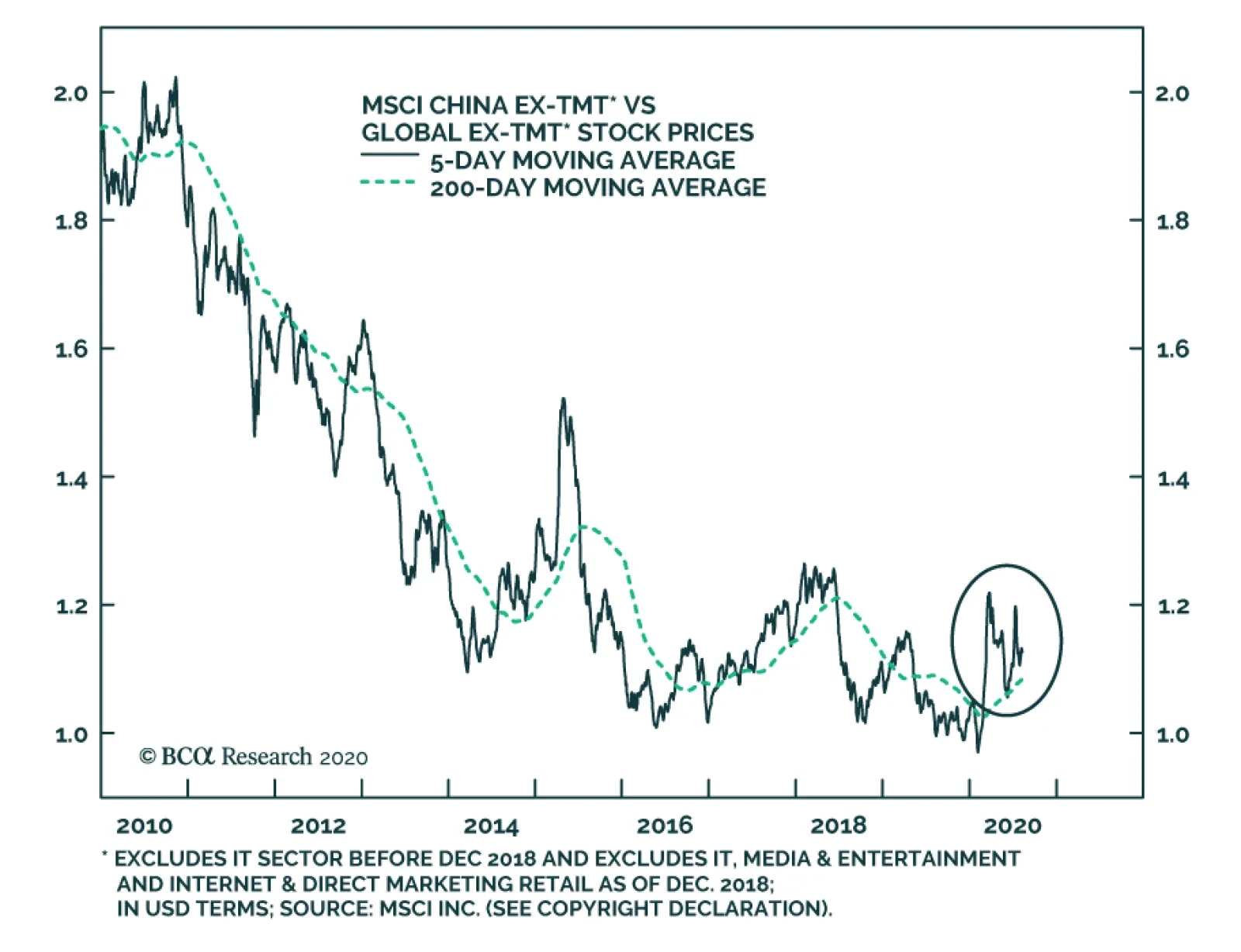
Economic policy support from the Chinese government and “national team” can also distort the short-term price trend in tech equities. These stocks have risen by more than 20% in both the onshore and offshore markets since the beginning of 2018, despite the deteriorating US-China relationship (Chart 2). While we are neutral on tech company stocks, we recommend overweight Chinese “old economy” stocks and remain constructive on domestic sectors that are beneficiaries of government policy support. We are initiating two trades: long MSCI China ex-TMT versus MSCI Global ex-TMT; and long domestic semiconductor stocks versus global semiconductor benchmark. The reflationary efforts since early this year facilitated a strong rebound in China’s industrial sector activities and profits (Chart 3). In turn, China’s ex-tech "old economy" stocks have outperformed relative to their global peers. Even though the handful of tech titans account for roughly 35% of the investable market capitalizations, MSCI China stock prices excluding tech titans have decisively broken out of their 200-day moving average, which suggests there is still sufficient support to our constructive view on the overall investable index (Chart 4). Chart 3Investors Have Been Focusing On China's Stimulus And Economic Recovery
Investors Have Been Focusing On China's Stimulus And Economic Recovery
Investors Have Been Focusing On China's Stimulus And Economic Recovery
Chart 4Chinese "Old Economy" Stocks Have Prevailed Of Late
Chinese "Old Economy" Stocks Have Prevailed Of Late
Chinese "Old Economy" Stocks Have Prevailed Of Late
Our cyclical overweight view on China’s domestic stocks also remains unchanged. The domestic market is much more sensitive to the trend in monetary conditions, credit growth and economic cycles than the investable market. As we pointed out in last week’s report,4 monetary conditions are accommodative and credit and economic growth remain in an uptrend. This underscores that China’s domestic stocks have more upside potential than investable stocks, even in an escalating geopolitical risk environment. Chart 5Chinese Semis Are On Fire
Chinese Semis Are On Fire
Chinese Semis Are On Fire
Lastly, more pressure from the US and the West to curb the advancement of Chinese technology will only encourage the leadership to double down on supporting state-led technology programs. This argues for a more bullish view on Chinese tech companies that focus on the domestic market, at least on a cyclical basis (Chart 5). Last week the State Council updated its policy, supporting two strategically important sectors: integrated circuits and software. The central government has had policies in place to support these two sectors since 2000 and updates its support policies every decade or so. Last week's updated version will allow chip companies to enjoy even more tax exemptions and favorable financing than the first set of support policies. China has clearly stepped up its promotion of self-sufficiency and redoubled its efforts to thwart any pressures meant to restrain its technological progress. As pointed out by our Geopolitical Strategy team,5 the U.S. and its allies control 95% of the global semiconductor market (Chart 6). Nonetheless, China is the world’s largest importer, accounting for about one-third of global semiconductor sales, making it the largest consumer of semiconductors (Chart 7). Chart 6China’s Chip Makers Are Still Small Fry
Sticking With Chinese “Old Economy” Stocks In A Widening Tech War
Sticking With Chinese “Old Economy” Stocks In A Widening Tech War
Chart 7China Accounts For 60% Of Global Semiconductor Demand
Sticking With Chinese “Old Economy” Stocks In A Widening Tech War
Sticking With Chinese “Old Economy” Stocks In A Widening Tech War
Chart 8Made In China 2025 Targets
Sticking With Chinese “Old Economy” Stocks In A Widening Tech War
Sticking With Chinese “Old Economy” Stocks In A Widening Tech War
In brief, China relies a lot on imported semiconductors and is working to mitigate this dangerous vulnerability. The Made in China 2025 program estimates that China will produce 70% of its demand for integrated circuits by 2030 (Chart 8). Bottom Line: China’s domestic industrial sector will continue to recover in the next 6 to 12 months. The nation’s semiconductor industry will get a boost from recently shored-up government policy supports. Overweight these sectors in the face of expanding tensions from the US tech war against China. Jing Sima China Strategist jings@bcaresearch.com Footnotes 1TMT stocks include information technology prior to December 2018, and include media & entertainment and internet & direct marketing retail sectors after December 2018. 2Please see the orders: https://www.whitehouse.gov/presidential-actions/executive-order-addressing-threat-posed-tiktok/ and https://www.whitehouse.gov/presidential-actions/executive-order-addressing-threat-posed-wechat/ 3https://www.state.gov/announcing-the-expansion-of-the-clean-network-to-safeguard-americas-assets/ 4Please see China Investment Strategy Weekly Report "China Macro And Market Review," dated August 5, 2020, available at cis.bcaresearch.com 5Please see China Investment Strategy Special Report "U.S.-China: The Tech War And Reform Agenda," dated December 12, 2018, available at cis.bcaresearch.com Cyclical Investment Stance Equity Sector Recommendations
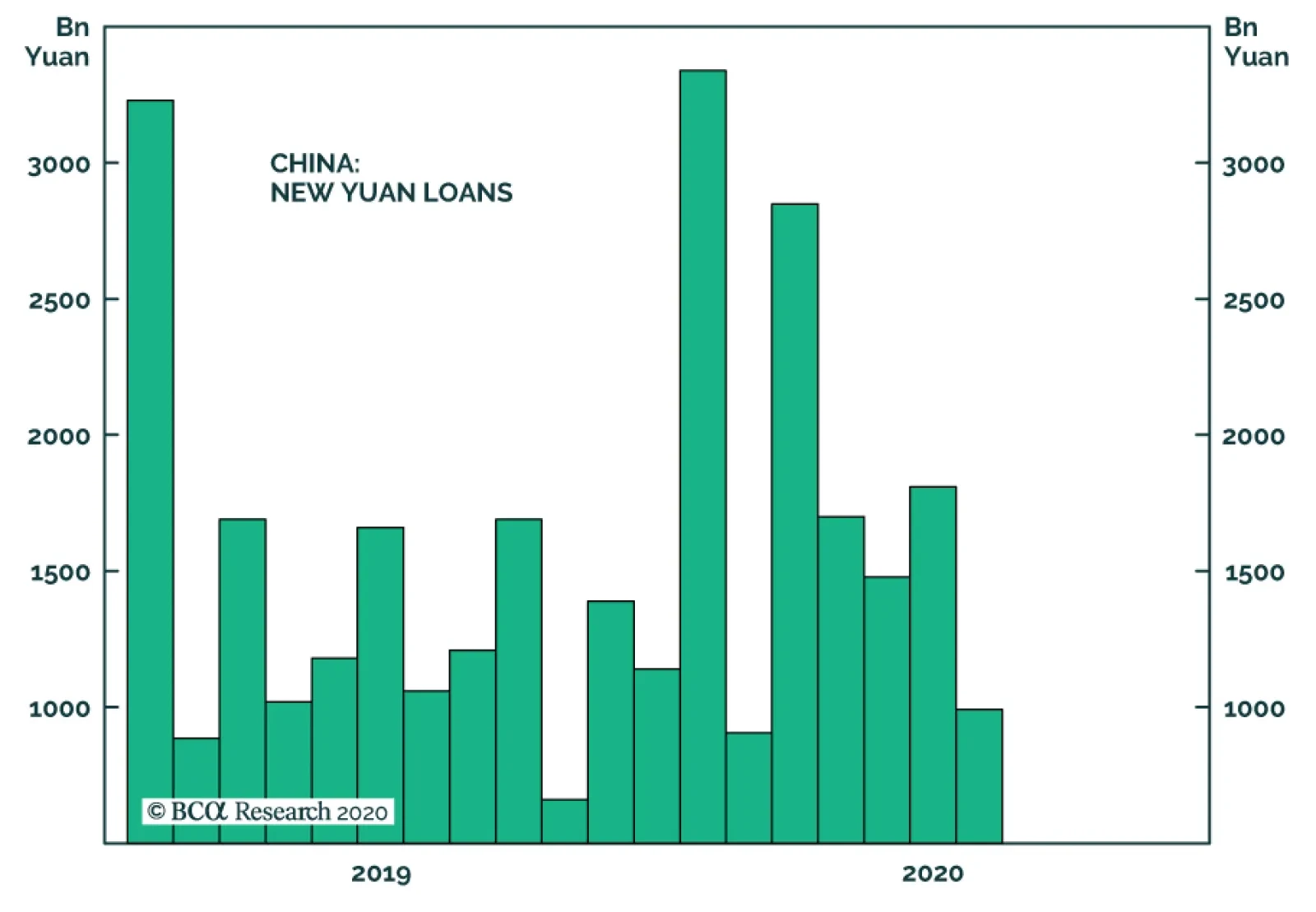
New Yuan loans in China came in at only CNY 992.7 billion in July, well below levels seen since policymakers opened the stimulus floodgates in March. However, it would be premature to suggest that this dip in lending signals a shift toward a more…
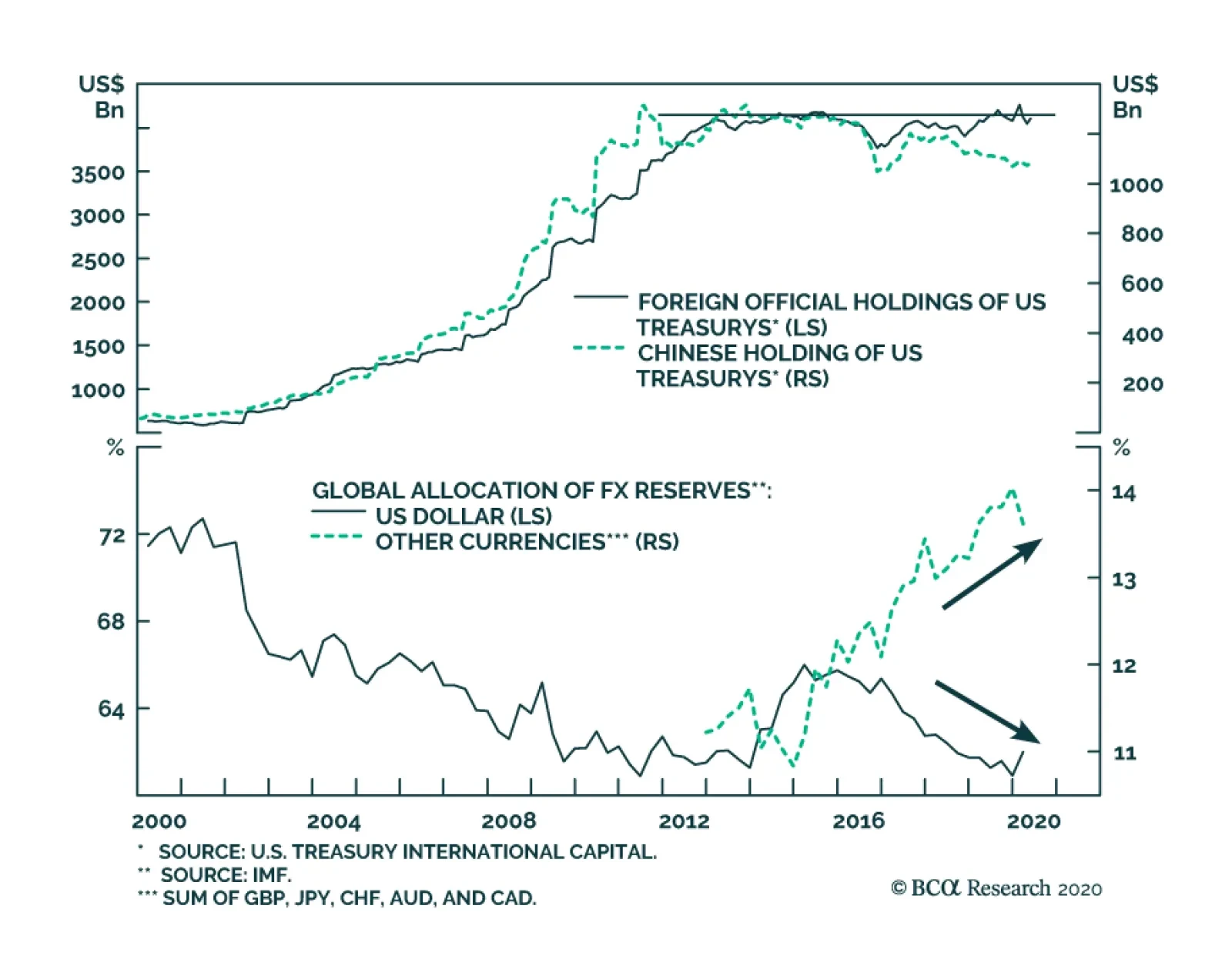
The biggest developments overnight Sunday were geopolitical. President Donald Trump signed an executive order to provide more relief to Americans. Then China fired a new salvo in the geopolitical war with the US. In a nutshell, both parties are aggressively…
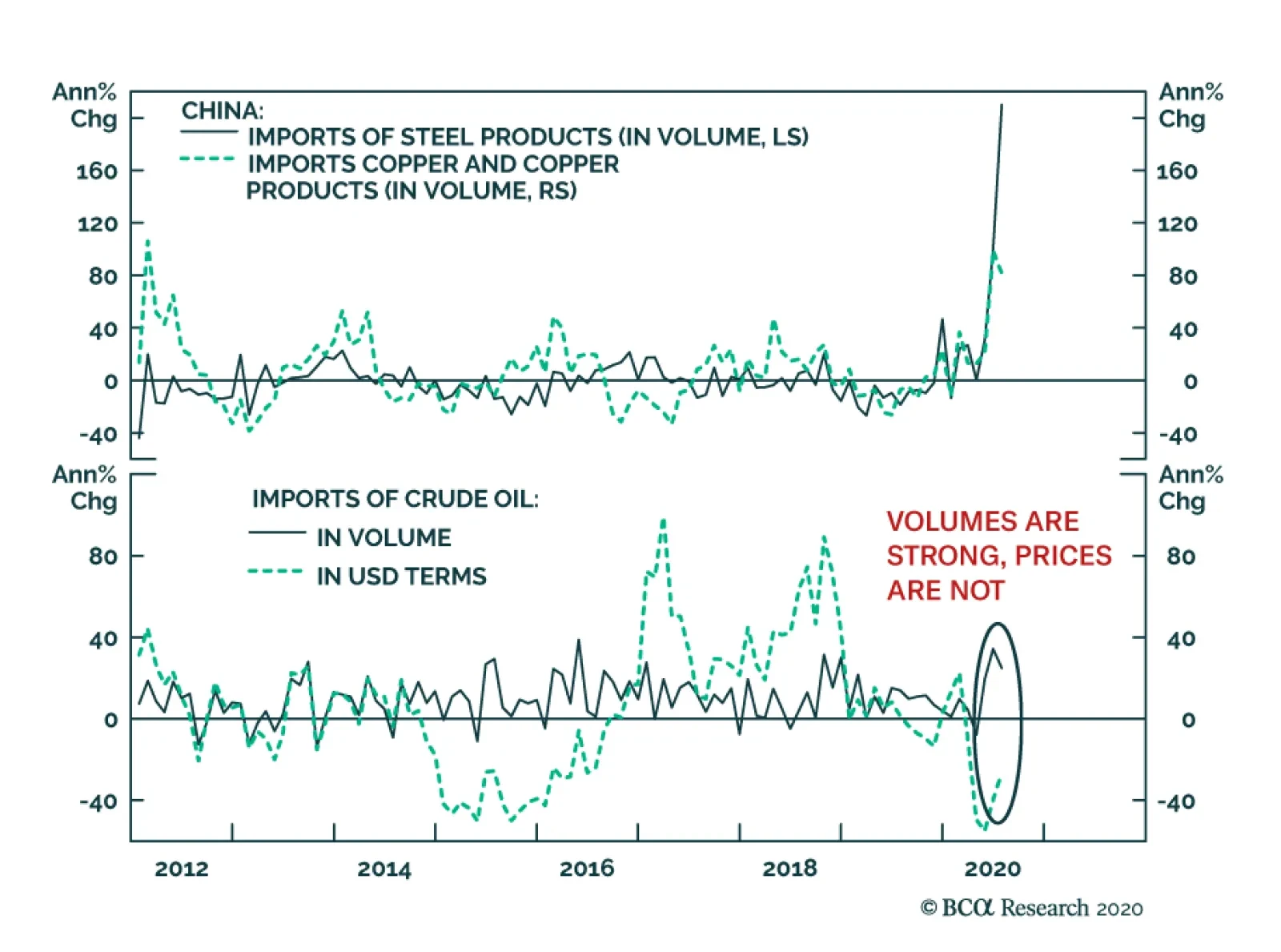
China’s trade data for July released last Friday was mixed. On the positive front, export growth in USD terms accelerated to 7.2% from 0.5% as economic re-opening among trade partners continues to boost the demand from Chinese goods. Exports to the US,…
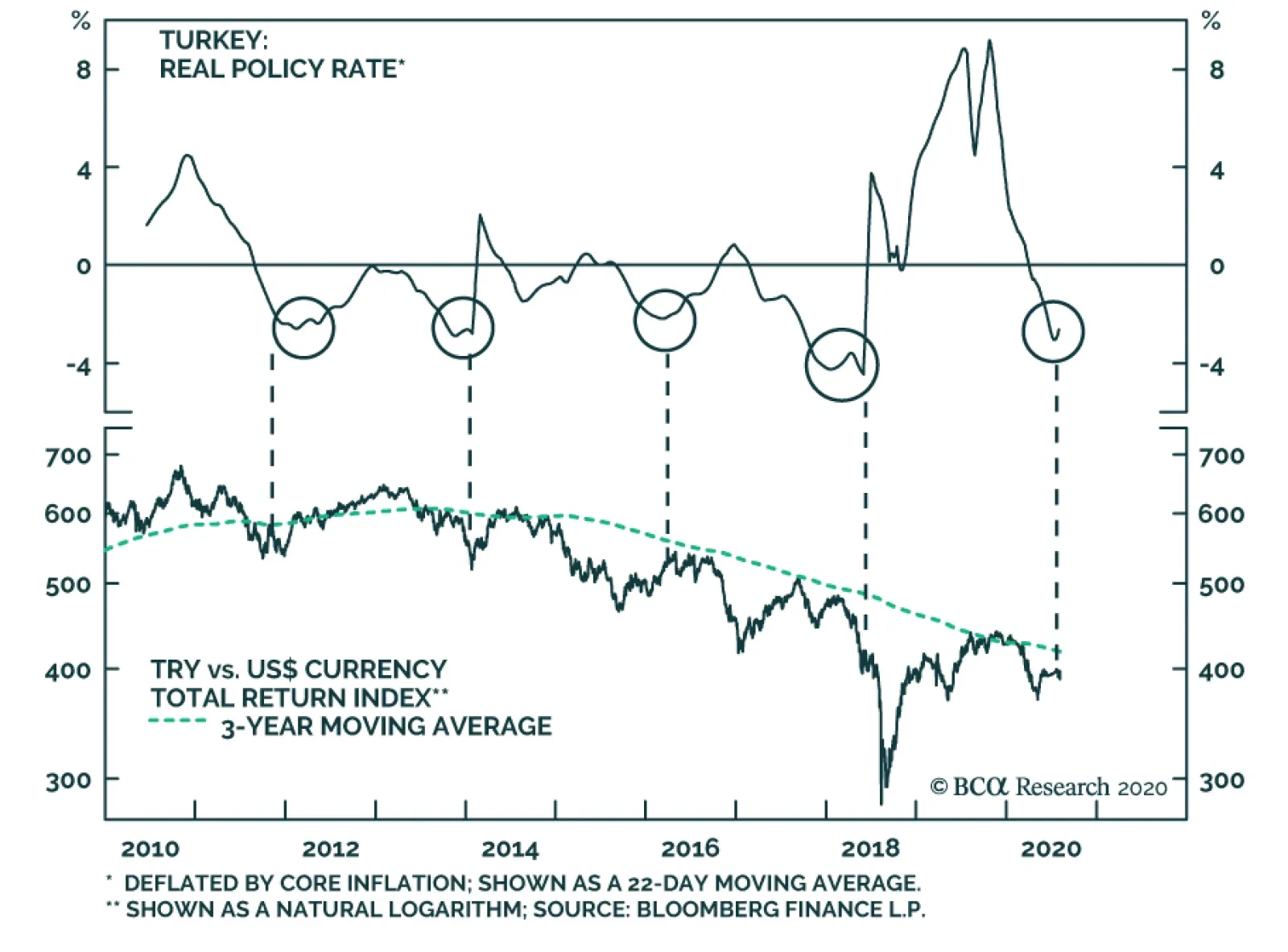
Even after the recent selloff in the TRY, BCA Research's Emerging Markets Strategy service remains negative on Turkish stocks, local currency bonds and credit markets relative to their EM counterparts. Turkey is facing another currency turmoil. At the core…