Europe
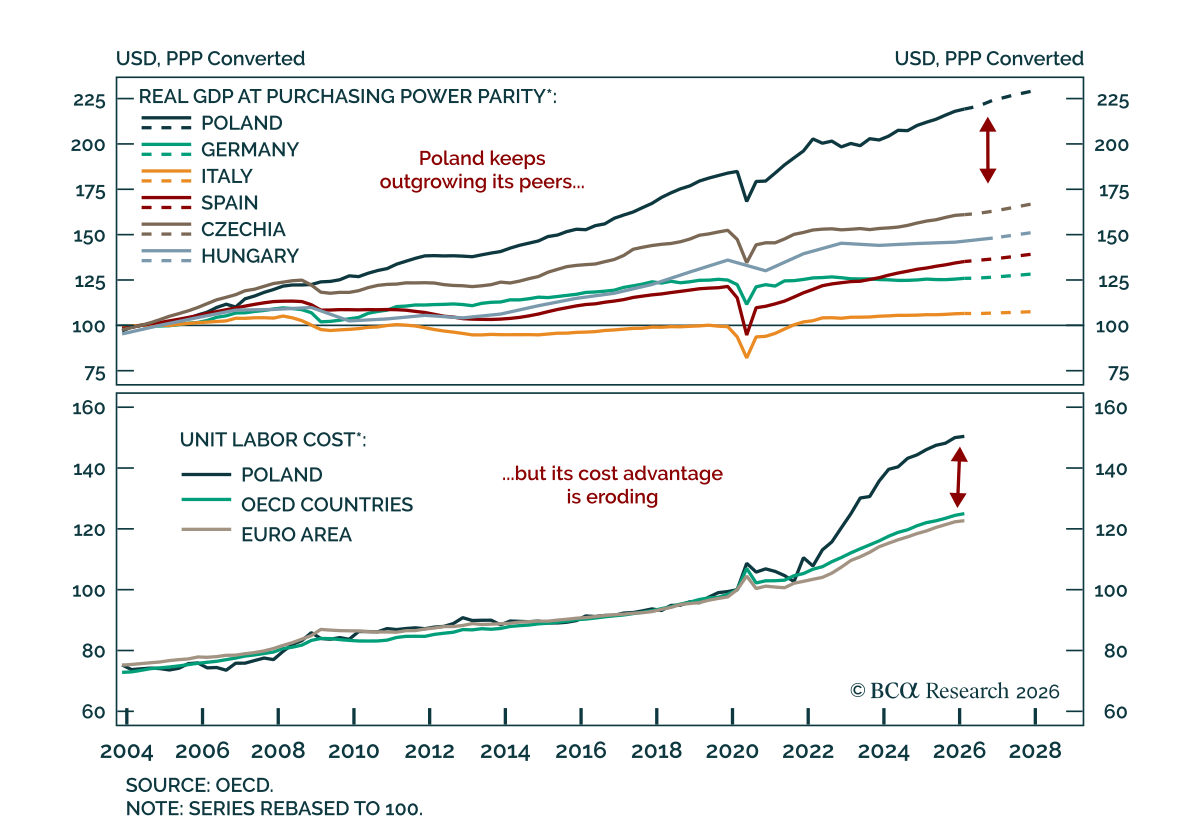
Our European investment strategists see Poland's near-term growth story as still compelling, with accelerating EU investment supporting equity outperformance. Real GDP has more than doubled since accession in 2004, helped by export integration, EU…
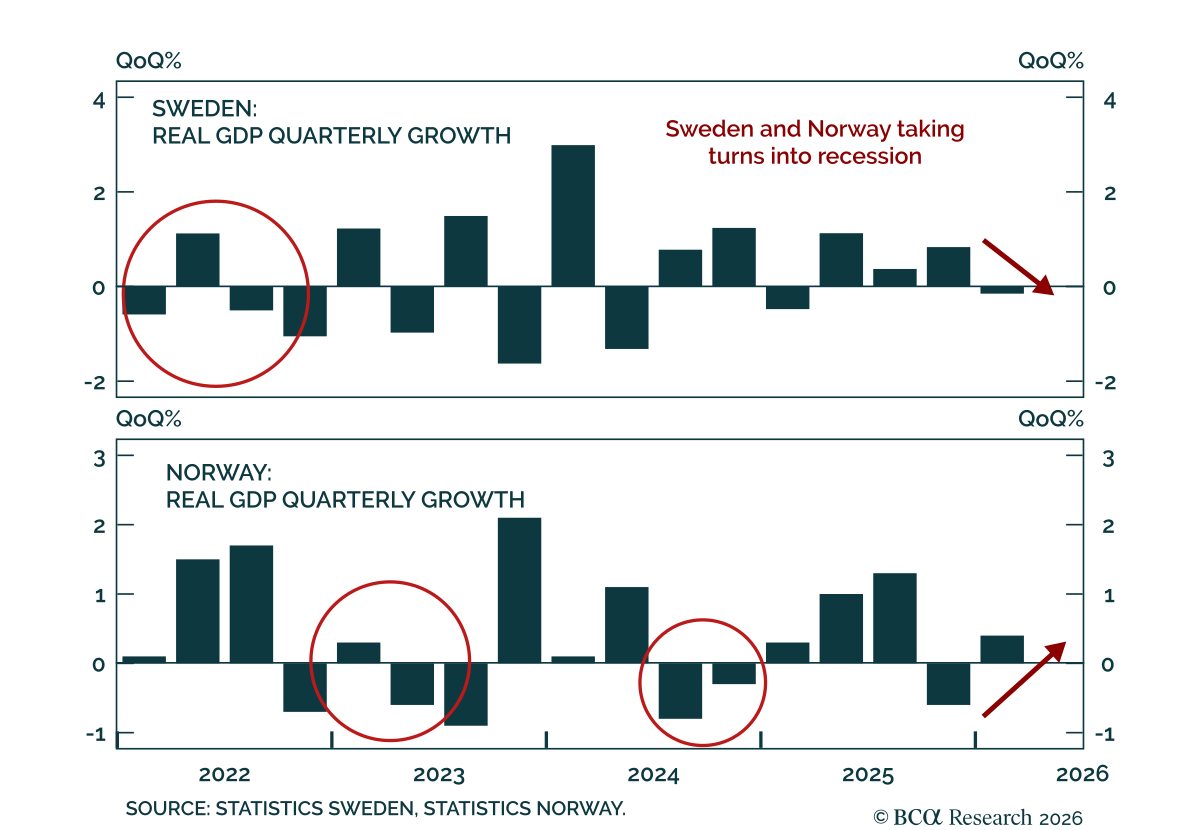
Our European and FX strategists see the Iranian war and resulting energy shock reversing Nordic fortunes, and favor Norway over Sweden. Sweden's recovery is stalling while Norway reaps a windfall from the same shock. Our colleagues note that Sweden's exposure…

After Hormuz, Germany faces another shipping chokepoint, at home this time. Water level at the Rhine's river’s most critical chokepoint, Kaub, has fallen to just 11cm, the lowest reading since the 1970s. Forecasters warn it could take weeks of sustained rain…
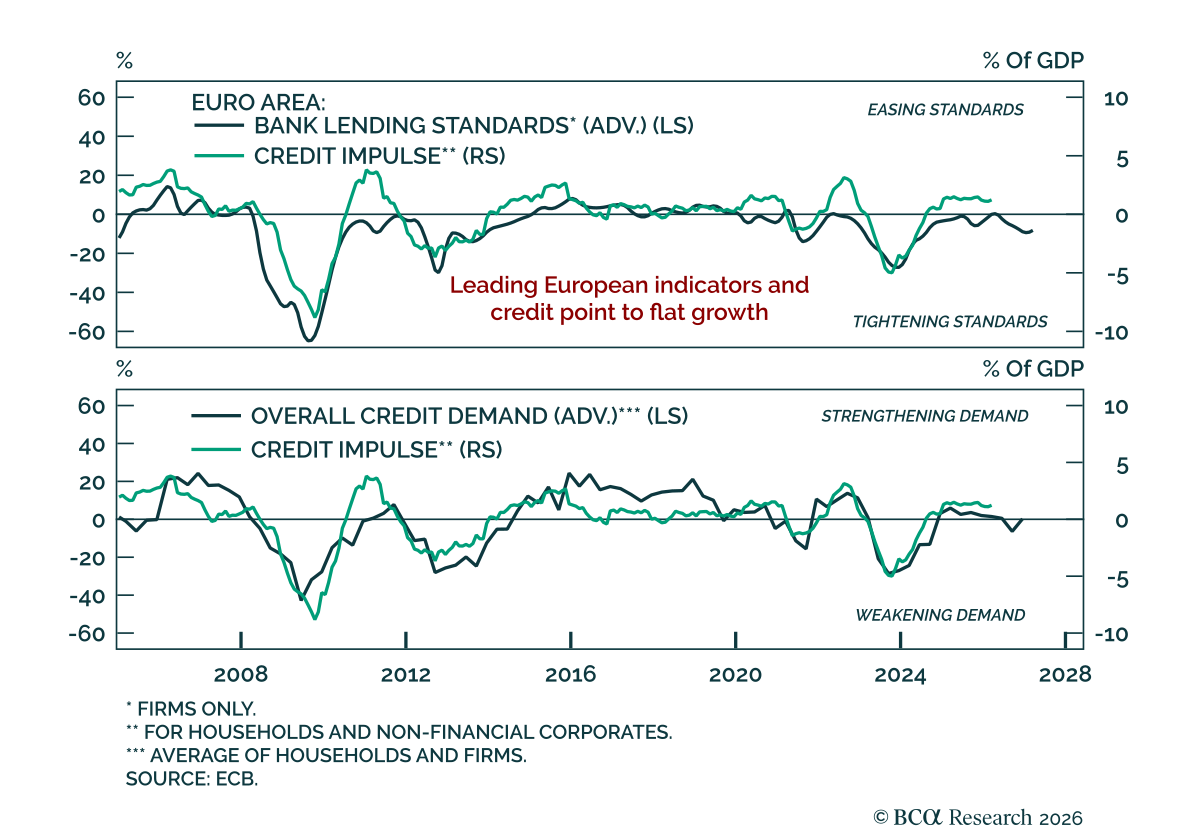
Leading European indicators continue to point to flat growth despite recent data beating expectations. Energy volatility and supply-chain uncertainty are weighing on the outlook and will continue to do so despite this week’s de-escalation in the Middle East,…
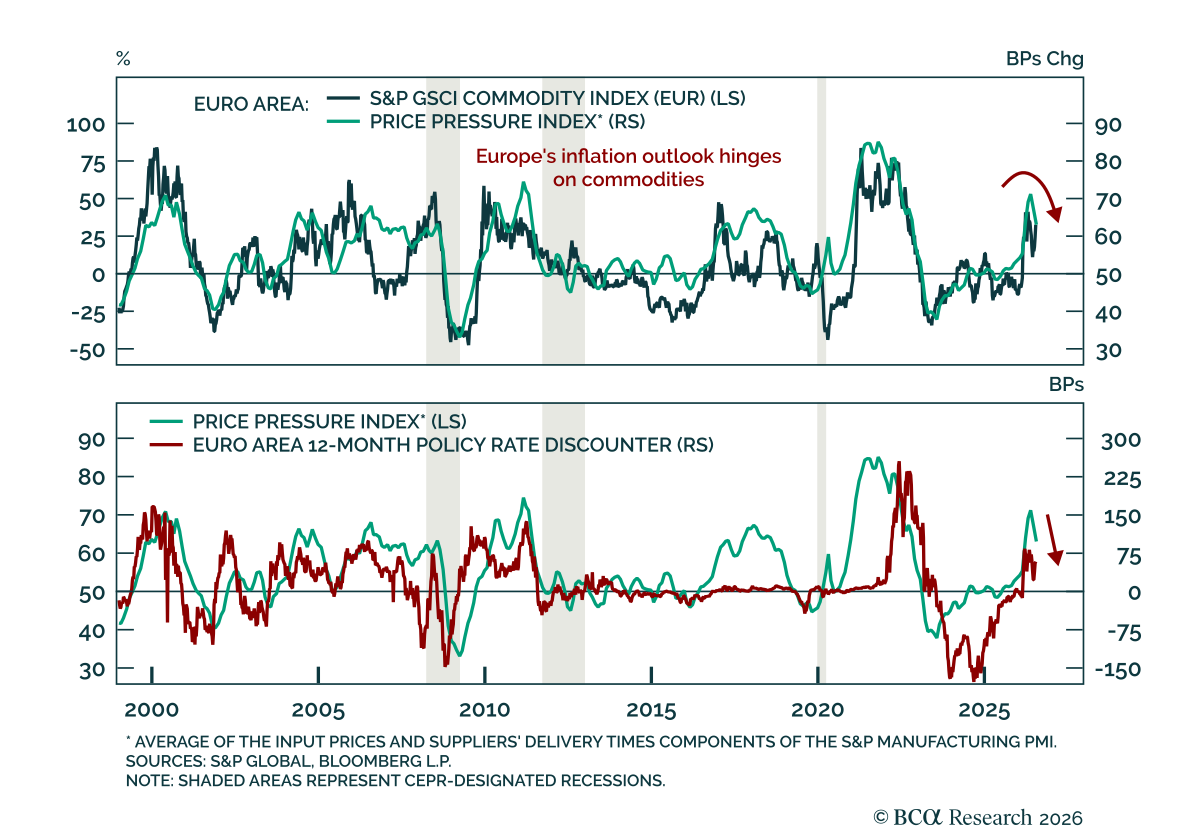
Euro area inflation accelerated in July, but it is too early to conclude that energy pressures are spreading across the broader price basket. Headline HICP rose to 2.9% y/y from 2.8% in June, while core inflation increased to 2.5% from 2.4%. Services…
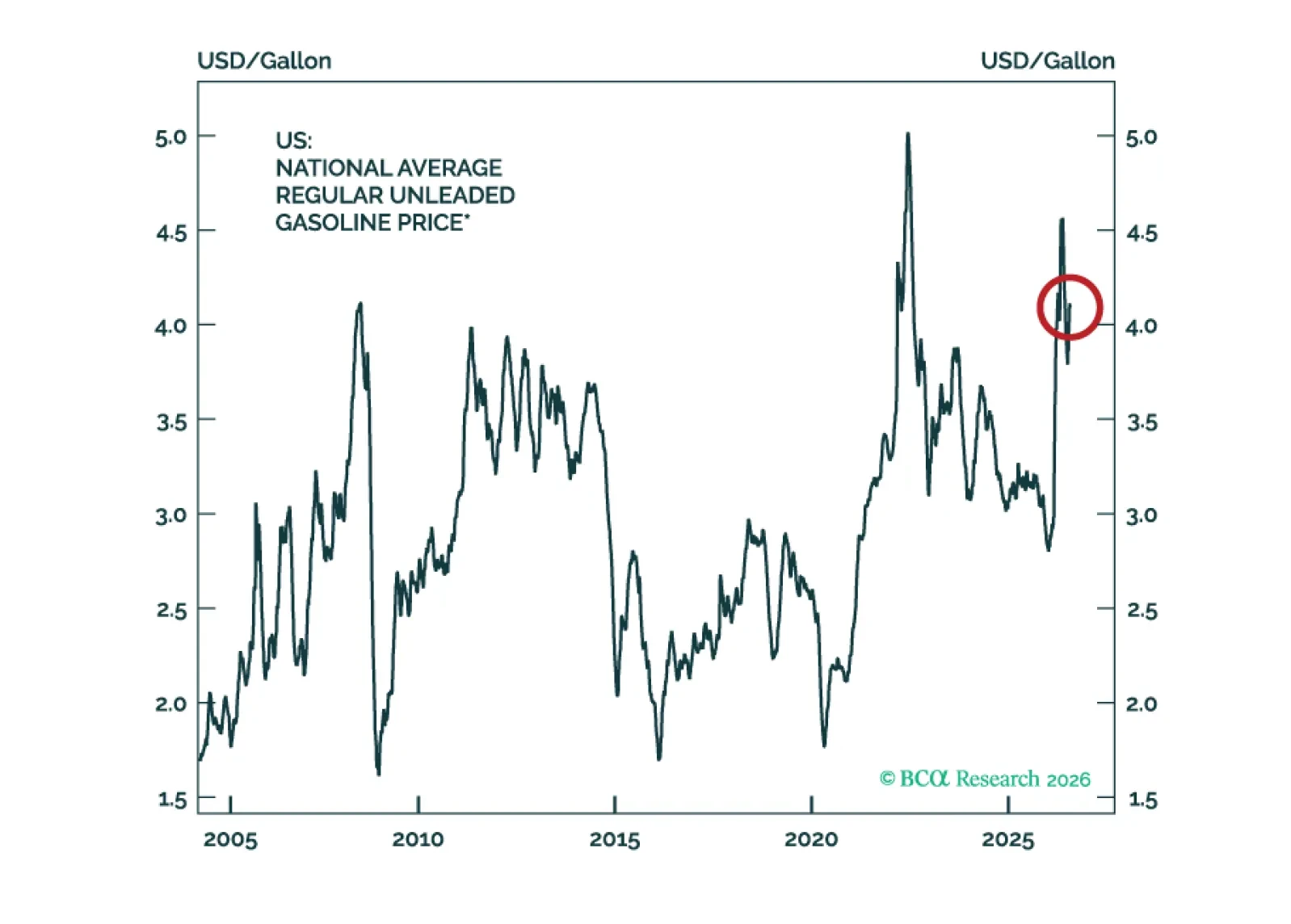
Section I outlines BCA’s views on the US-Iran conflict, Europe’s near-term outlook, the currency and bond selloffs in Japan and the early days of the Warsh Fed. In Section II, Roukaya, Matt, and Artem argue that the worst of gold's downturn is likely behind us. Real rates and the dollar — which have reasserted themselves as gold's primary drivers — are set to shift from headwinds to tailwinds for the metal.
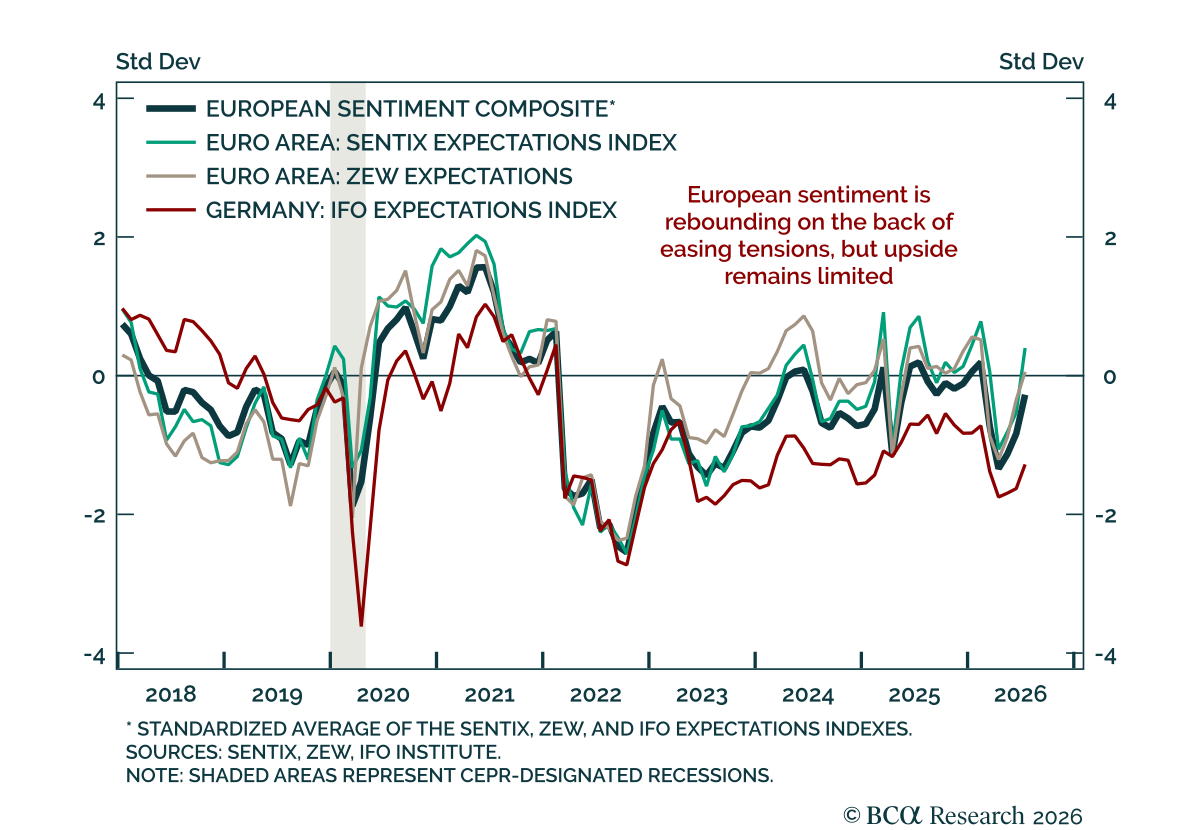
The July German IFO beat estimates, but the improvement was driven by expectations while current conditions weakened. The headline index rose on a jump in expectations, even as the current conditions index missed estimates and declined. The report is…
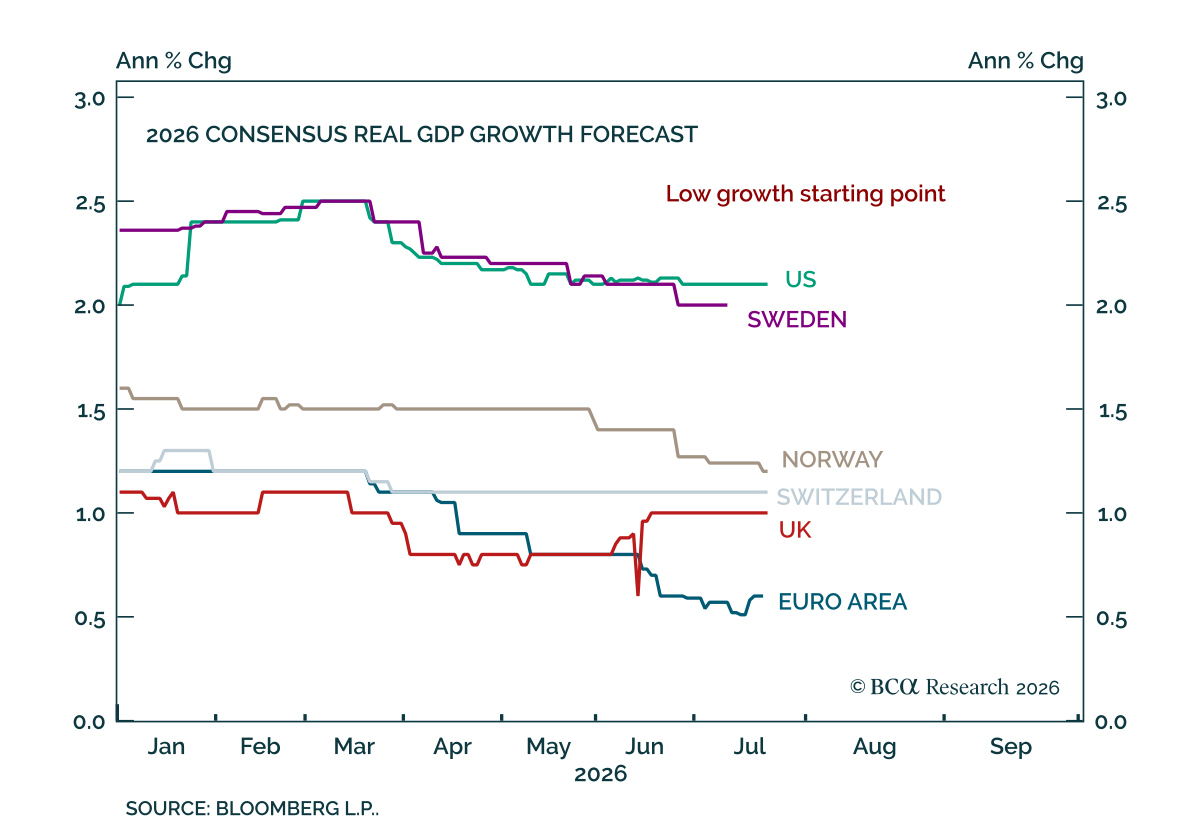
Our European and FICC strategists remain tactically constructive on Europe while urging investors to prepare portfolios for a more challenging medium-term environment. Rather than issue a single house forecast, our colleagues present two credible but…
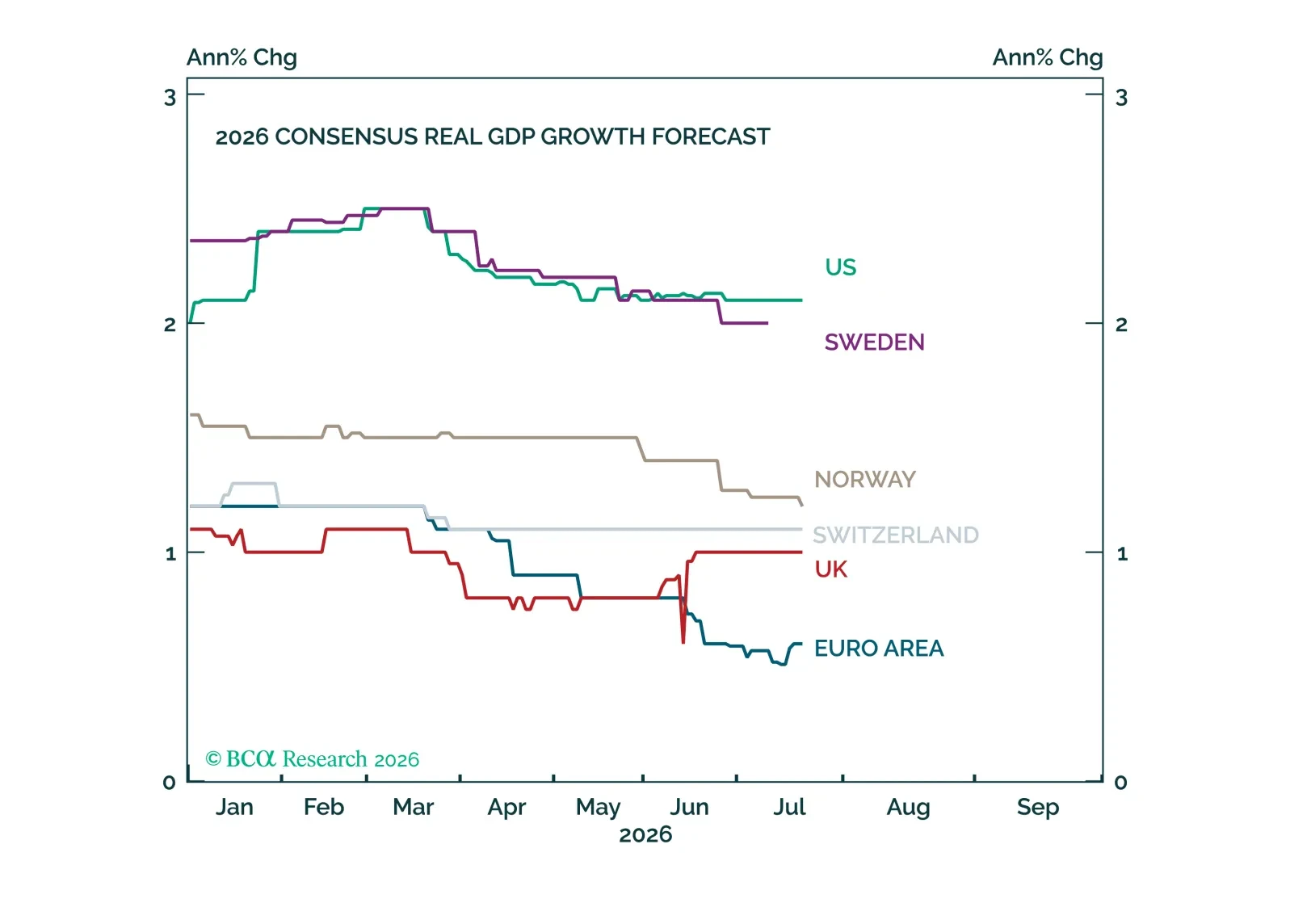
Europe faces a difficult macro backdrop, but whether it slips into recession remains finely balanced. We present two perspectives before translating them into investment implications.
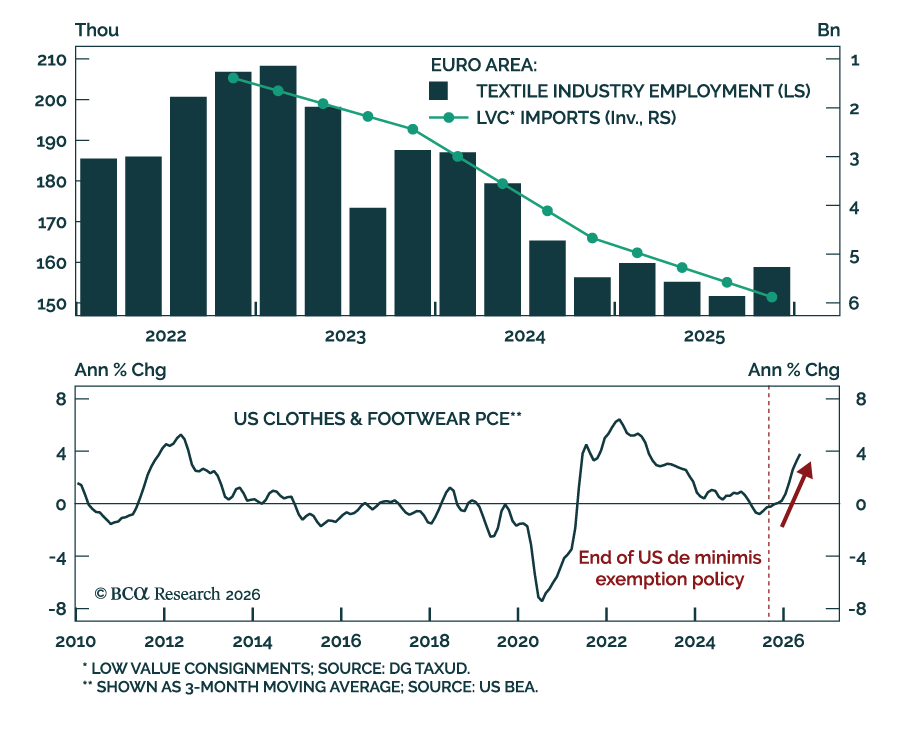
July marked the end of de minimis exemptions in Europe, pointing to the inflationary consequences of the retreat from globalization. Starting July 1st, the European Union imposed a flat €3 customs duty on all parcels valued under €150, ending a duty-free…