Europe
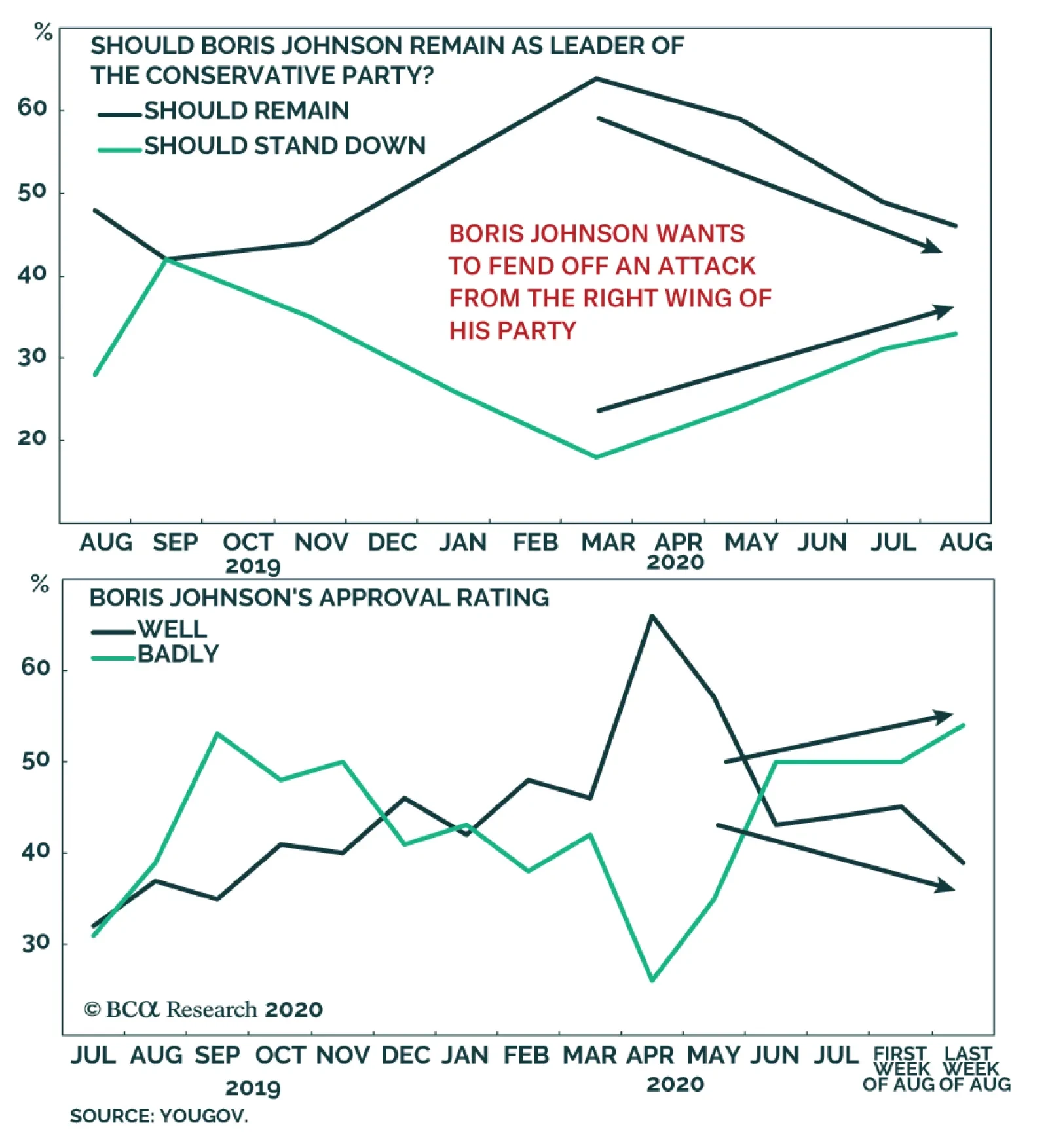
The UK is once again playing hardball with the EU. The proposed Internal Market Bill would violate the terms of the post-Brexit deal already agreed with the EU. If implemented, the UK seriously risks being treated as a trading partner of the EU without a…

Highlights We remain bearish on the US dollar over the next 12 months. The best vehicle to express this view continues to be the Scandinavian currencies (NOK and SEK). Precious metals remain a buy so long as the dollar faces downside. However, we remain more bullish on silver than gold. Go short the gold/silver ratio (GSR) again at 75. At the crosses, our favorite trade is short NZD against other cyclical currency pairs. These include the CAD, AUD, and SEK. Sterling is selling off as we anticipated, but our timing was offside. That said, the pound is cheap. We will go long cable if it falls below 1.25. Short EUR/GBP at current levels. The Swiss franc will continue to appreciate versus the USD, but will lag behind the euro. EUR/CHF will touch 1.15. We prefer the JPY to the CHF as a currency portfolio hedge. We argued last week that Prime Minster Shinzo Abe’s resignation does not change the yen’s outlook. Feature Our trade basket this year has been centered on a dollar-bearish theme. Since the top in the DXY index on March 19th, we have been expressing this view via various vehicles, most of which have been very profitable. Our favorites have been the Scandinavian currencies, silver, and the AUD, either at the crosses or against the US dollar. So far, these are among the best-performing trades in the G10 currency world (Chart I-1). Chart I-1A Currency Report Card
Revisiting Our High-Conviction Trades
Revisiting Our High-Conviction Trades
Going into the final leg of 2020, the key question is which currency pairs will provide the most upside. In this report, we revisit the rationale behind our high-conviction trades. The Case For Scandinavian Currencies A review of Q2 GDP across the G10 reveals which countries have been doing relatively better during the pandemic. Norway emerges as the economy that had the best quarter-on-quarter annualized growth (Chart I-2). Swedish growth held up very well in Q1 and even the drop in Q2 still puts it well ahead of the US, the euro area, and the UK. As small, open economies which are very sensitive to global growth conditions, this is a very impressive feat for Sweden and Norway. Part of the reason for this is that over the years, the drop in their currencies, both against the US dollar and euro, has made them very competitive. Chart I-2A Currency Report Card
A Currency Report Card
A Currency Report Card
Norway benefited from a few things during the pandemic. First, as a major oil exporter, the sharp fall in the NOK helped cushion the domestic economy against the crash in crude prices. Second, the handling of the pandemic was swift and rigorous, and this has almost completely purged the number of new infections in Norway. Third, aggressive monetary and fiscal stimulus (zero rates, quantitative easing, and the first budget deficit in 40 years) has set the economy on a recovery path. As a result, consumption is rebounding smartly and the Norges Bank expects mainland GDP to touch pre-crisis levels by 2023. Already, real retail sales have exploded higher (Chart I-3). Should global growth continue to rebound, a reversal in pessimism towards energy stocks (and value stocks in general) could see investors reprice the Norwegian stock market (and krone) sharply higher (Chart I-4). Chart I-3Norwegian Consumption Has##br##Recovered
Norwegian Consumption Has Recovered
Norwegian Consumption Has Recovered
Chart I-4A Bounce In Oil & Gas Stocks Will Help The Krone
A Bounce In Oil & Gas Stocks Will Help The Krone
A Bounce In Oil & Gas Stocks Will Help The Krone
In the case of Sweden, the sharp rebound in the manufacturing PMI also suggests the industrial base is recovering. This will also coincide with a solid bounce in exports, cementing Sweden’s rise in relative competitiveness and its exit from the pandemic-induced recession (Chart I-5). The Riksbank’s resource utilization indicator has stabilized, suggesting deflationary pressures are abating. Meanwhile, home prices are on the cusp of a recovery, which should help boost consumer confidence and support consumption. With our models showing the Swedish krona as undervalued by 19% versus the USD, there is much room for currency appreciation before financial conditions tighten significantly. Should global growth continue to rebound, a reversal in pessimism towards energy stocks could see investors reprice the Norwegian stock market (and krone) sharply higher. The bottom line is that both Norway and Sweden are well poised to benefit from a global economic recovery, with much undervalued currencies that will bolster their basic balances. We expect both the SEK and NOK to be the best performers versus the USD in the coming year (Chart I-6). Chart I-5The Swedish Economy Is On The Mend
The Swedish Economy Is On The Mend
The Swedish Economy Is On The Mend
Chart I-6The Scandinavian Currencies Remain Cheap
The Scandinavian Currencies Remain Cheap
The Scandinavian Currencies Remain Cheap
Stay Long Precious Metals, Especially Silver In a world of ample liquidity and a falling US dollar, gold and precious metals are bound to benefit. This is especially the case on the back of a central bank that is trying to asymmetrically generate inflation. Gold has a long-standing relationship with negative interest rates, though the correlation has shifted over time. The intuition behind falling real rates and rising gold prices is that low rates reduce the opportunity cost of holding non-income-generating assets such as gold. But more importantly, the correlation is between the rise in gold prices and the level of real interest rates, meaning as long as the latter stays negative, it is sufficient to sustain the gold bull market (Chart I-7). Gold tends to be a “Giffen good,” meaning demand increases as prices rise. This can be seen in the tight correlation between our financial demand indicator (proxied by open futures interest on the Comex and ETF holdings, Chart I-8) and gold prices. The conclusion is that, just like the US dollar, gold tends to be a momentum asset, where higher prices beget more demand – at least until the catalyst of easy money and negative rates vanishes Chart I-7Gold Prices And Real Yields
Gold Prices And Real Yields
Gold Prices And Real Yields
Chart I-8Gold Is A Giffen Good
Gold Is A Giffen Good
Gold Is A Giffen Good
There is reason to believe that the bull market in gold might be sustained for longer this time around. The reason is that central banks have become important (and price-insensitive) buyers. Foreign central banks have been amassing almost all of the gold annual output in recent years. It is remarkable that for most of the dollar bull market this past decade, the world’s major central banks (and biggest holders of US Treasurys) have seen rather stable exchange rates relative to the gold price (Chart I-9). This suggests that gold price risks could be asymmetric to the upside. A fall in prices encourages accumulation by EM central banks as a way to diversify out of their dollar reserves, while a rise in prices encourages financial demand and boosts the value of gold foreign exchange reserves. While we like gold, more value can be found in silver (and even platinum) prices, which have lagged the run up in gold. While we like gold, more value can be found in silver (and even platinum) prices, which have lagged the run up in gold. During precious metals bull markets, prices tend to move in sequence, starting with gold, then silver. Meanwhile, the gold/silver ratio (GSR) tends to track the US dollar (Chart I-10), since silver tends to rise and fall more explosively than gold. Part of the reason is that the silver market is thinner and more volatile. Silver’s rising industrial use has also led to competition with investment demand in recent years. Chart I-9Central Banks Will Put A Floor Under Gold Prices
Central Banks Will Put A Floor Under Gold Prices
Central Banks Will Put A Floor Under Gold Prices
Chart I-10Silver Should Outperform Gold As The Dollar Falls
Silver Should Outperform Gold As The Dollar Falls
Silver Should Outperform Gold As The Dollar Falls
The next important technical level for silver will be the 2012 highs near $35/oz. After this, silver could take out its 2011 highs that were close to $50/oz, just as gold did. Globally, the world produces much more gold than silver, with a supply ratio that is 7:1. Meanwhile, the price ratio between gold and silver is near 70:1. Back in the 1800s, Isaac Newton concluded that the appropriate ratio was 15.5:1. We initially shorted the GSR at 100 and eventually took 25% profits when our rolling stop was triggered. We recommend putting a limit sell at 75. More speculative investors can buy silver outright. Stay Short NZD At The Crosses, Especially Versus The CAD Chart I-11Stay Long CAD/NZD
Stay Long CAD/NZD
Stay Long CAD/NZD
In our currency portfolio, trades at the crosses are equally important as versus the USD in terms of adding alpha. Over the past year, we have successfully been playing the short side of the kiwi trade. We closed our long SEK/NZD trade for a profit of 7.8% on March 20, and our long AUD/NZD trade for a profit of 5.2% on June 26. Today, we remain bullish on the CAD/NZD as an exploitable trading opportunity. First, the New Zealand stock market is the most defensive in the G10, while Canadian bourses are heavy in cyclical stocks. Should value start to outperform growth, this will favor the CAD/NZD cross. Second, immigration was an important source of labor for New Zealand, and COVID-19 has eaten into this dividend for the economy. As such, the neutral rate of interest is bound to head lower. And finally, in the commodity space, our bias is that energy will fare better than agriculture, boosting Canada’s relative terms of trade. At the Bank of Canada’s meeting this past Wednesday, the tone was slightly optimistic as it kept rates on hold. Recent data has been rather strong in Canada, especially in housing and goods consumption. This allows for the possibility of the BoC tapering asset purchases faster than the market expects, as argued by my colleague Mathieu Savary. This arbitrage is already being reflected in real interest rates, where they offer a premium of 180 basis points in Canada relative to New Zealand (Chart I-11). What To Do About Sterling? Trade negotiations between the UK and EU are once again hitting a brick wall. The key issue is around Northern Ireland. Ireland wants to remain bound to the EU’s customs and trade regime. The UK is seeking an amendment to be able to intervene, if there is “inconsistency or incompatibility with international or domestic law.” In short, it allows for UK discretion in the movement of goods to and from Northern Ireland, as well as state aid to Northern Ireland. The EU argues this is a clear breach of the treaty agreed to last year. We remain bullish on the CAD/NZD as an exploitable trading opportunity. As negotiations go on, our base case is that a deal will eventually be reached. This is because neither side wants the worst-case scenario, namely, a no-deal Brexit. Should no deal be reached, the sharp rise in the trade-weighted euro will be exacerbated by a drop in the pound. This is deflationary for the euro area. And while the drop in the pound could be beneficial to the UK in the longer term, it will be very destabilizing since the UK is highly dependent on capital flows. Our roadmap for sterling is as follows: Historically, odds of a “hard” Brexit have usually been associated with cable near 1.20. This occurred after the UK referendum in 2016 and after Prime Minister Boris Johnson was elected with a mandate to take the UK out of the EU (Chart I-12). Intuitively, this suggests that maximum pessimism on the pound, driven by Brexit fears, pins cable at around 1.20. A “weak” deal cobbled together at the eleventh hour will still benefit cable. Depending on the details, 1.35-1.40 for cable will be within striking distance. In the case where both the UK and EU come to a “perfect” agreement, the pound could be 20%-25% higher. The real effective exchange rate for the pound is now lower than where it was after the UK exited the ERM in 1992, with a drawdown that has been similar in size. A good deal should cause the pound to overshoot the mid-point of its historical real effective exchange rate range (Chart I-13). Chart I-12GBP Has Historically Bottomed At 1.20
GBP Has Historically Bottomed At 1.20
GBP Has Historically Bottomed At 1.20
Chart I-13The Pound Is Cheap
The Pound Is Cheap
The Pound Is Cheap
The pound is also cheap versus the euro, and we expect the EUR/GBP to start facing significant headwinds near 0.92. It is remarkable that UK data continues to outperform both the US and euro area (Chart I-14). As such, cable should be bought on weakness. Tactically, we would be buyers of the pound in the 1.24-1.25 zone, and our limit sell on EUR/GBP was triggered yesterday at 0.92. Chart I-14The UK Economy Is Improving
The UK Economy Is Improving
The UK Economy Is Improving
Thoughts On The ECB The main takeaways from the European Central Bank (ECB) conference were threefold. First, data in the euro area was better than the ECB expected. Second, the ECB did not give any hints on its policy review or extend forward guidance. Keeping policy easy until inflation is up to, but still below, 2% appears more hawkish than the Federal Reserve, which is now trying to asymmetrically generate inflation. And finally, the ECB said they are monitoring the exchange rate, but fell short of providing any hints that they will actively lean against the currency. The euro took off, both against the dollar and other European currencies. We outlined in last week’s report why we do not believe the euro can fall much from current levels. These include the common currency being cheap and having a large share of exports in the eurozone. A Few Words On The CHF Finally, a few clients have asked what happens to the Swiss franc in an environment where the euro is rising (and the dollar is falling). Our bias is that the Swiss National Bank lets a rising EUR/CHF ease financial conditions in Switzerland, and even leans into it. The Swiss National Bank has been stepping up its pace of intervention since EUR/CHF touched 1.05 this year and will continue to do so (Chart I-15). Unfortunately, there is not much it can do about a falling USD/CHF. This suggests the franc will fall against the euro, but not so much against the dollar. In a world where global yields eventually converge to zero, holding the Swiss franc is an attractive hedge. Chart I-15USD Weakness Will Be A Headache For The SNB
USD Weakness Will Be A Headache For The SNB
USD Weakness Will Be A Headache For The SNB
Chester Ntonifor Foreign Exchange Strategist chestern@bcaresearch.com Currencies U.S. Dollar Chart II-1USD Technicals 1
USD Technicals 1
USD Technicals 1
Chart II-2USD Technicals 2
USD Technicals 2
USD Technicals 2
Recent data from the US have been positive: On the labor market front, nonfarm payrolls fell to 1371K from 1734K in August. The average hourly earnings increased by 4.7% year-on-year. The unemployment rate declined from 10.2% to 8.4%. Initial jobless claims increased by 884K for the week ending on September 4th. Finally, the NFIB business optimism index increased from 98.8 to 100.2 in August. The DXY index initially rose to a 4-week high of 93.6 earlier this week with positive data releases, then fell back to 93. Our bias is that while the dollar has been rebounding since the beginning of the month, the rally could prove to be a healthy counter-trend move in the long-term dollar bear market. Report Links: Addressing Client Questions - September 4, 2020 A Simple Framework For Currencies - July 17, 2020 DXY: False Breakdown Or Cyclical Bear Market? - June 5, 2020 The Euro Chart II-3EUR Technicals 1
EUR Technicals 1
EUR Technicals 1
Chart II-4EUR Technicals 2
EUR Technicals 2
EUR Technicals 2
Recent data from the euro area have been mixed: The Sentix investor confidence increased from -13.4 to -8 in September. GDP plunged by 11.8% quarter-on-quarter in Q1, or 14.7% year-on-year. The euro declined by 0.5% against the US dollar this week. The ECB decided to keep its interest rate and PEPP program unchanged on this Thursday. President Christine Lagarde sounded quite hawkish in the press conference, saying that incoming data since the last monetary policy meeting suggest “a strong rebound in activity broadly in line with previous expectations.” We continue to favor the euro against the US dollar. Report Links: Addressing Client Questions - September 4, 2020 On The DXY Breakout, Euro, And Swiss Franc - February 21, 2020 Updating Our Balance Of Payments Monitor - November 29, 2019 Japanese Yen Chart II-5JPY Technicals 1
JPY Technicals 1
JPY Technicals 1
Chart II-6JPY Technicals 2
JPY Technicals 2
JPY Technicals 2
Recent data from Japan have been mixed: The coincident index increased from 74.4 to 76.2 in July. The leading economic index also climbed up from 83.8 to 86.9 in July. The current account balance widened from ¥167 billion to ¥1,468 billion in July. GDP plunged by 7.9% quarter-on-quarter in Q2, or 28.1% on an annualized basis. Preliminary machine tool orders continued to fall by 23.3% year-on-year in August. Overall household spending contracted by 7.6% year-on-year in July. The Japanese yen appreciated by 0.2% against the US dollar this week. The expansion in Japan’s current account balance is mainly driven by the decline in domestic demand. Exports fell by 19.2% year-on-year in July while imports slumped at a faster pace by 22.3%. This suggests that deflationary forces are returning to Japan, which will boost real rates and buffet the yen. Report Links: The Near-Term Bull Case For The Dollar - February 28, 2020 Building A Protector Currency Portfolio - February 7, 2020 Currency Market Signals From Gold, Equities And Flows - January 31, 2020 British Pound Chart II-7GBP Technicals 1
GBP Technicals 1
GBP Technicals 1
Chart II-8GBP Technicals 2
GBP Technicals 2
GBP Technicals 2
Recent data from the UK have been mostly positive: Retail sales continued to increase, rising by 4.7% year-on-year in August, following a 4.3% increase the previous month. Halifax house prices increased by 5.2% year-on-year for the 3 months to August. The Markit construction PMI declined from 58.1 to 54.6 in August. The British pound extended its sell-off this week, depreciating by 2.5% against the US dollar, making it the worst-performing G10 currency. Under ongoing trade negotiations, the possibility of a no-deal Brexit is now putting more downward pressure on the pound after the summer rally. Report Links: Updating Our Balance Of Payments Monitor - November 29, 2019 A Few Trade Ideas - Sept. 27, 2019 United Kingdom: Cyclical Slowdown Or Structural Malaise? - Sept. 20, 2019 Australian Dollar Chart II-9AUD Technicals 1
AUD Technicals 1
AUD Technicals 1
Chart II-10AUD Technicals 2
AUD Technicals 2
AUD Technicals 2
Recent data from Australia have been mixed: The AiG services performance index fell from 44 to 42.5 in August. The NAB business confidence increased from -14 to -8 in August while the business conditions index fell from 0 to -6. The Australian dollar appreciated by 0.4% against the US dollar this week. Spending fell sharply during the pandemic, pushing Australia’s savings rate to 19.8% from 6%. Until consumer spending returns in earnest, the RBA is unlikely to raise rates, which puts a cap on how far the AUD can rise. The good news is that household balance sheets are being mended, which reduces macroeconomic risk. Report Links: On AUD And CNY - January 17, 2020 Updating Our Balance Of Payments Monitor - November 29, 2019 A Contrarian View On The Australian Dollar - May 24, 2019 New Zealand Dollar Chart II-11NZD Technicals 1
NZD Technicals 1
NZD Technicals 1
Chart II-12NZD Technicals 2
NZD Technicals 2
NZD Technicals 2
Recent data from New Zealand have been mixed: Manufacturing sales plunged by 12.2% quarter-on-quarter in Q2. The preliminary ANZ business confidence index increased from -41.8% to -26% in September. The ANZ activity outlook index also ticked up from -17.5% to -9.9%. The New Zealand dollar fell initially against the US dollar, then recovered, returning flat this week. The ANZ New Zealand Business Outlook shows that most activity indicators have increased to the highest levels since the beginning of the pandemic but are still well below pre-COVID-19 levels. We like the New Zealand dollar against the US dollar but believe that it will underperform against other pro-cyclical currencies including the Australian dollar and the Canadian dollar. Report Links: Currencies And The Value-Versus-Growth Debate - July 10, 2020 Updating Our Balance Of Payments Monitor - November 29, 2019 Place A Limit Sell On DXY At 100 - November 15, 2019 Canadian Dollar Chart II-13CAD Technicals 1
CAD Technicals 1
CAD Technicals 1
Chart II-14CAD Technicals 2
CAD Technicals 2
CAD Technicals 2
Recent data from Canada have been positive: On the labor market front, the unemployment rate declined from 10.9% to 10.2% in August. The participation rate increased from 64.3% to 64.6%. Average hourly wages surged by 6% year-on-year in August. Housing starts increased by 6.9% month-on-month to 262.4K in August, the highest reading since 2007. The Canadian dollar depreciated by 0.3% against the US dollar this week. The Bank of Canada maintained its target rate at 0.25% on Wednesday. It is also continuing large-scale asset purchases of at least C$5 billion per week of government bonds. Moreover, the Bank suggested that the bounce-back in activity in Q3 was better than expected, which bodes well for the loonie. Report Links: Currencies And The Value-Versus-Growth Debate - July 10, 2020 More On Competitive Devaluations, The CAD And The SEK - May 1, 2020 A New Paradigm For Petrocurrencies - April 10, 2020 Swiss Franc Chart II-15CHF Technicals 1
CHF Technicals 1
CHF Technicals 1
Chart II-16CHF Technicals 2
CHF Technicals 2
CHF Technicals 2
Recent data from Switzerland have been mixed: FX reserves continued to increase from CHF 847 billion to CHF 848 billion in August. The unemployment rate remained unchanged at 3.4% in August. The Swiss franc appreciated by 1% against the US dollar this week. The SNB Chairman Thomas Jordan said that “stronger currency market interventions relieve over-valuation pressure on the Swiss franc and protect the Swiss economy”. Recent dollar weakness could be another headache for the SNB, accelerating SNB’s currency intervention. While we like the franc as a safe-haven hedge with high real rates, the upside potential is likely to be more gradual as the SNB leans against it. Report Links: On The DXY Breakout, Euro, And Swiss Franc - February 21, 2020 Currency Market Signals From Gold, Equities And Flows - January 31, 2020 Portfolio Tweaks Before The Chinese New Year - January 24, 2020 Norwegian Krone Chart II-17NOK Technicals 1
NOK Technicals 1
NOK Technicals 1
Chart II-18NOK Technicals 2
NOK Technicals 2
NOK Technicals 2
Recent data from Norway have been positive: Manufacturing output increased by 1.8% month-on-month in July. Headline consumer price inflation ticked up from 1.3% to 1.7% year-on-year in August. Core inflation continued rising to 3.7% year-on-year from 3.5% the previous month. The Norwegian krone depreciated by 0.5% against the US dollar this week. The increase in headline inflation was mainly driven by furnishings and household equipment (10%), communications (4.9%) and food (3.7%). However, the Norwegian krone is still tremendously undervalued against the US dollar according to our models. Report Links: A New Paradigm For Petrocurrencies - April 10, 2020 Building A Protector Currency Portfolio - February 7, 2020 On Oil, Growth And The Dollar - January 10, 2020 Swedish Krona Chart II-19SEK Technicals 1
SEK Technicals 1
SEK Technicals 1
Chart II-20SEK Technicals 2
SEK Technicals 2
SEK Technicals 2
Recent data from Sweden have been mostly positive: The current account surplus fell to SEK 63.2 billion in Q2 from SEK 75.5 billion in Q1. However, this compares favorably to a surplus of SEK 34.7 billion the same quarter last year. Manufacturing new orders continued to fall by 6.4% year-on-year in July. This is an improvement compared to the 13.1% contraction the previous month. Headline consumer prices inflation increased from 0.5% to 0.8% year-on-year in August. Core inflation also climbed up from 0.5% to 0.7% year-on-year. The Swedish krona appreciated by 0.5% against the US dollar this week. We continue to favor the Swedish krona amid global economy recovery. Moreover, our PPP model shows that the krona is still undervalued by 19% against the US dollar. Report Links: Updating Our Balance Of Payments Monitor - November 29, 2019 Where To Next For The US Dollar? - June 7, 2019 Balance Of Payments Across The G10 - February 15, 2019 Trades & Forecasts Forecast Summary Core Portfolio Tactical Trades Limit Orders Closed Trades
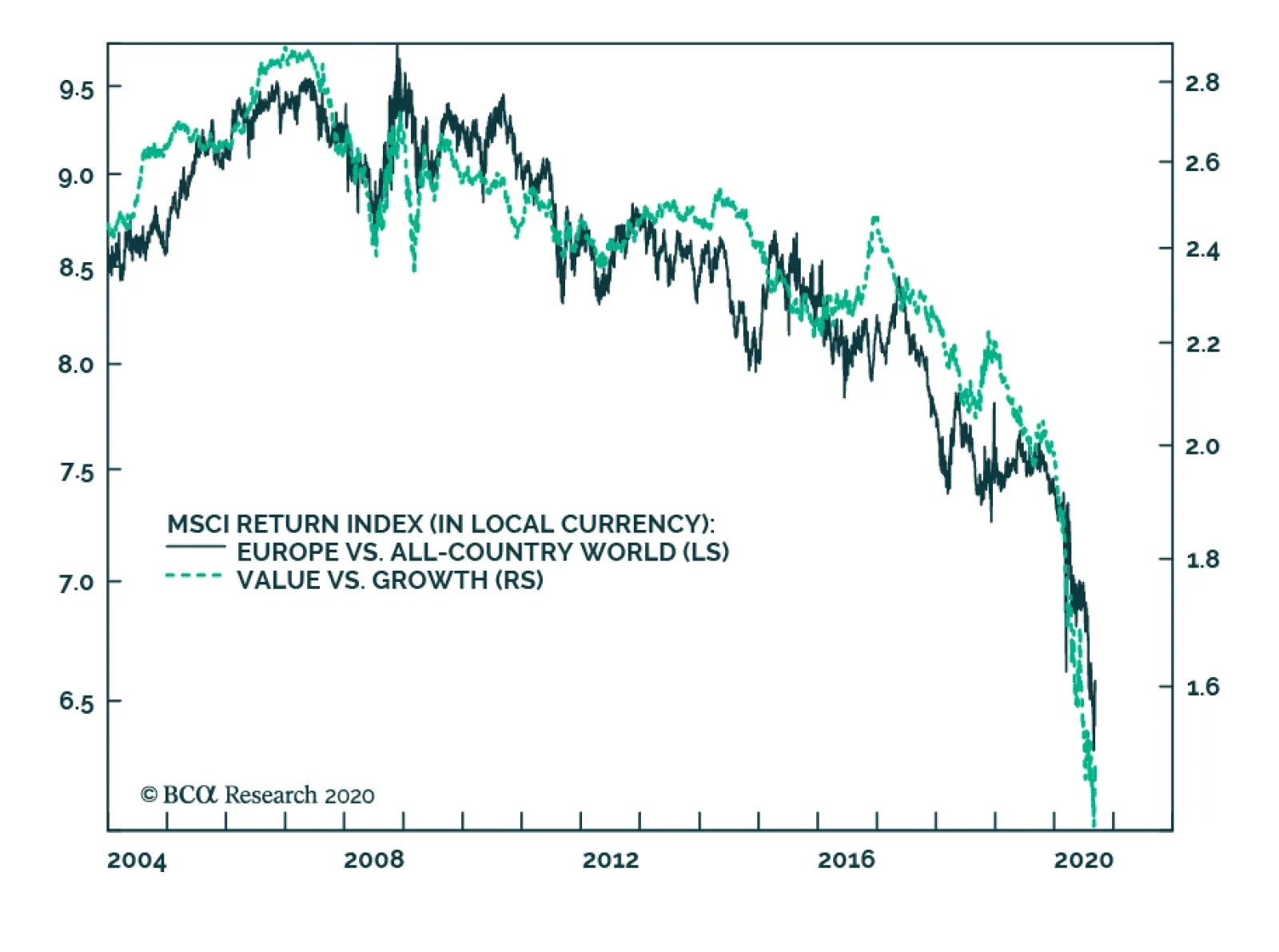
BCA Research's European Investment Strategy service believes that the tactical correction in growth stocks is healthy. This service also recommends that long-term equity investors still favor growth over value, which diverges from the BCA House View. …
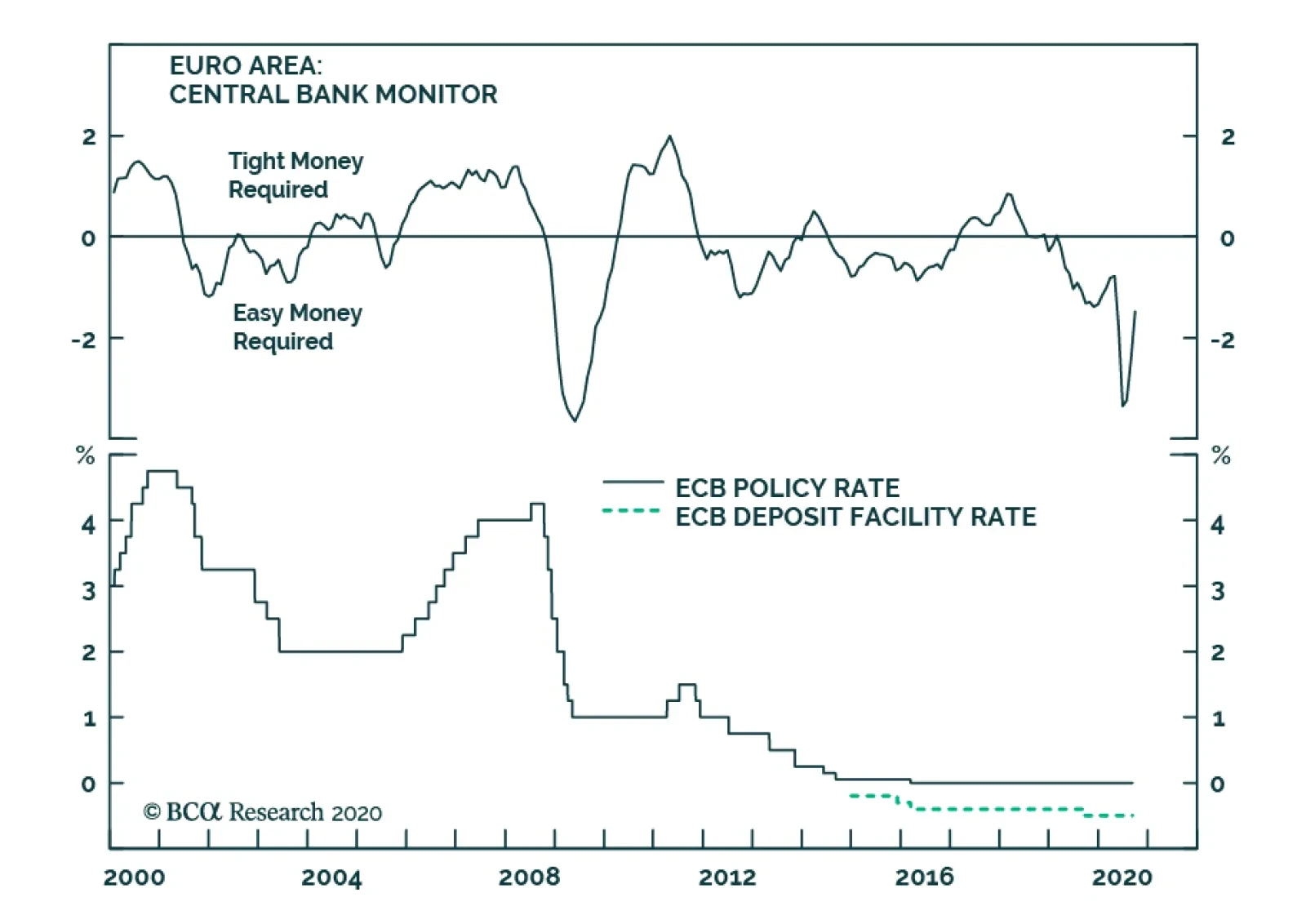
Yesterday, the European Central Bank left policy unchanged and the tone of the press conference that followed the meeting indicated that the ECB is comfortable with the evolution of the economic recovery in Europe. The upgrade of the staff forecasts confirms…
To all clients, Next week, in lieu of publishing a regular report, I will be hosting a webcast on September 15th at 10 am EDT, discussing our latest views on global fixed income markets. Sign up details for the Webcast will arrive in your inboxes later this week. Best regards, Robert Robis, Chief Fixed Income Strategist Feature Much of the global rebound in economic activity, and recovery in equity and credit markets, seen since the COVID-19 shock earlier this year can be attributed to historic levels of monetary and fiscal stimulus. However, the effective transmission of various monetary policy measures such as liquidity injections and refinancing operations, and by extension a sustained global recovery, is dependent on the continued smooth flow of credit from lenders to borrowers. As such, the tightening in bank lending standards seen across developed markets in the second quarter of 2020 could imperil the recovery if banks remain cautious with borrowers (Chart 1). Chart 1Credit Standards Across Developed Markets
Introducing The GFIS Global Credit Conditions Chartbook
Introducing The GFIS Global Credit Conditions Chartbook
This week, we are introducing the BCA Research Global Fixed Income Strategy (GFIS) Global Credit Conditions Chartbook—a review of central bank surveys of bank lending standards and loan demand. We will be publishing this chartbook on an occasional basis going forward to help inform our fixed income investment recommendations. Where it is relevant to our analysis, we will also make special note of the one-off questions asked in some of these surveys that are germane to the economic situation at hand. Where To Find The Bank Lending Surveys A number of central banks publish regular surveys of bank lending conditions in their domestic economies. The surveys, and the details on how they are conducted, can be found on the websites of the central banks: US Federal Reserve: https://www.federalreserve.gov/data/sloos.htm European Central Bank: https://www.ecb.europa.eu/stats/ecb_surveys/bank_lending_survey/html/index.en.html Bank of England: https://www.bankofengland.co.uk/credit-conditions-survey/ Bank of Japan: https://www.boj.or.jp/en/statistics/dl/loan/loos/index.htm/ Bank of Canada: https://www.bankofcanada.ca/publications/slos/ Reserve Bank of New Zealand: https://www.rbnz.govt.nz/statistics/c60-credit-conditions-survey US Chart 2US Credit Conditions
US Credit Conditions
US Credit Conditions
Overall credit standards for US businesses, measured as an average of standards faced by small, medium and large firms, tightened dramatically in Q2/2020 (Chart 2). Unsurprisingly, gloomier economic outlooks, reduced risk tolerance, and worsening industry-specific problems were the top reasons cited by US banks for tightening standards. US banks reported that commercial and industrial (C&I) loan demand from all firms also weakened in Q2, owing to a decrease in customers’ inventory financing and fixed investment needs. This suggests that the surge in actual C&I loan growth data during the spring was fueled by companies drawing down credit lines to survive the lack of cash flow during the COVID-19 lockdowns and should soon peak. Standards for consumer loans tightened significantly in Q2, as well. A continuation of this trend would pose a major risk to the US economic recovery, given the still fragile state of US consumer confidence. Business lending standards typically lead US high-yield corporate bond default rates by about one year, suggesting that defaults will continue to climb over the next few quarters (Chart 2, top panel). Tightening US junk bond spreads have ignored the rising trend in defaults and now provide no compensation for the likely amount of future default losses, suggesting poor value in the overall US high-yield market (Chart 3). Turning to the real estate market, lending standards have tightened significantly for both commercial and residential mortgage loans (Chart 4). In a special question asked in the Q2 survey, US banks indicated that lending standards for both those categories are at the tighter end of the range that has prevailed since 2005. Business lending standards typically lead US high-yield corporate bond default rates by about one year, suggesting that defaults will continue to climb over the next few quarters. Chart 3US Junk Spreads Do Not Compensate For Default Risk
US Junk Spreads Do Not Compensate For Default Risk
US Junk Spreads Do Not Compensate For Default Risk
Chart 4The White Picket Fence Is Looking Out Of Reach
The White Picket Fence Is Looking Out Of Reach
The White Picket Fence Is Looking Out Of Reach
Euro Area Italy is seeing the greater benefit from ECB support, however, with loan growth now at a new cyclical high. Chart 5Euro Area Credit Conditions
Euro Area Credit Conditions
Euro Area Credit Conditions
In contrast to the US, credit standards actually eased slightly in the euro area in Q2/2020 (Chart 5). Banks reported increased perceptions of overall risk from a worsening economic outlook, but that was more than offset by the massive liquidity and loan guarantee programs that were part of the policy response to the COVID-19 recession. Going forward, banks expect lending standards to tighten as the maximum impact of those policies begins to fade. Credit demand from firms rose in Q2, driven by acute liquidity needs during the COVID-19 lockdowns. At the same time, demand for longer-term financing for capital expenditure was very depressed. Banks expect credit demand to normalize in Q3, as easing lockdown restrictions dampen the immediate need for liquidity. Credit demand from euro area households plummeted in Q2. Banks reported that plunging consumer confidence was the leading cause of decline in credit demand, followed closely by reduced spending on durable goods. Consumer confidence has already rebounded and banks expect demand to follow suit, as economies re-open and spending opportunities return. Chart 6HY Spreads In The Euro Area Are Unattractive
HY Spreads In The Euro Area Are Unattractive
HY Spreads In The Euro Area Are Unattractive
As with the US, we expect that tighter credit standards to firms will drive up euro area high-yield default rates. Current euro area high-yield spreads offer little compensation for the coming increase in default losses, suggesting a similar poor valuation backdrop to US junk bonds (Chart 6). Looking at the four major euro area economies, credit standards eased across the board in Q2, with the largest moves seen in Italy and Spain (Chart 7). The ECB’s liquidity operations have helped support lending in those countries, each with a take-up from long-term refinancing operations (LTROs) equal to around 14% of total bank lending (Chart 8). Italy is seeing the greater benefit from ECB support, however, with loan growth now at a new cyclical high and Spanish banks projecting a much sharper tightening of lending standards in Q3 relative to Italian banks. Chart 7Loan Growth Accelerating Across Most Of The Euro Area
Loan Growth Accelerating Across Most Of The Euro Area
Loan Growth Accelerating Across Most Of The Euro Area
Chart 8Italy & Spain Taking Full Advantage Of LTROs
Italy & Spain Taking Full Advantage Of LTROs
Italy & Spain Taking Full Advantage Of LTROs
UK For consumers, UK banks are projecting loan demand to improve in Q3, although that will require a sharper rebound in consumer confidence than has been seen to date. Chart 9UK Credit Conditions
UK Credit Conditions
UK Credit Conditions
In the UK, corporate credit standards eased significantly in Q2 2020 thanks to the massive liquidity support programs provided by the UK government (Chart 9). Lenders reported a larger proportion of loan application approvals from all business sizes, with the greatest improvements seen in small businesses and medium-sized private non-financial corporations (PNFCs). However, lenders indicated that average credit quality on new PNFC borrowing facilities had actually declined, with default rates increasing, for all sizes of borrowers. This divergence between increased lending and declining borrower creditworthiness attests to the impact of the UK’s substantial liquidity provisions in response to the COVID-19 shock. The credit demand side mirrors the supply story with a massive spike in Q2 2020. In contrast to euro area counterparts, UK businesses reportedly borrowed primarily to facilitate balance sheet restructuring. However, as with the euro area, the story for Q3 is much more bearish. Banks are projecting credit standards to turn more restrictive as stimulus programs run out and borrowers rein in credit demand. Going forward, decreasing risk appetite of UK banks will likely contribute to a tightening in lending standards. For consumers, UK banks are projecting loan demand to improve in Q3, although that will require a sharper rebound in consumer confidence than has been seen to date. UK banks surprisingly reported that the average credit quality of new consumer loans improved in Q2, suggesting that consumer loan demand could rebound strongly in Q3 as lockdown restrictions fade. Japan Perversely, the latest improvement in Japanese business optimism could translate to lower business loan demand going forward. Chart 10Japan Credit Conditions
Japan Credit Conditions
Japan Credit Conditions
Before the pandemic hit, credit standards in Japan were in a structural tightening trend for both firms and households (Chart 10). Fiscal authorities have taken a number of measures to ease conditions for businesses, including low interest rate loan programs and guarantees for large businesses as well as small and medium-sized enterprises, which has translated into the easiest credit standards for Japanese firms since 2005. The correlation between business loan demand and business conditions is not as clear-cut in Japan compared to other countries. Japanese firms tend to borrow more when the economic outlook is poor, indicating that loans are being used to meet emergency funding or restructuring needs rather than being put towards capital expenditure or inventory financing. Perversely, the latest improvement in Japanese business optimism could translate to lower business loan demand going forward. However, the consumer picture is a bit more conventional—consumer loan demand and confidence tend to track quite closely. While consumer confidence has yet to stage a convincing rebound, it has clearly bottomed. The more positive projections for consumer loan demand from the Japan bank lending survey seem to confirm this message. Canada And New Zealand In Canada, business lending standards tightened in Q2/2020 as loan growth slowed (Chart 11). Although loan growth is far from contracting on a year-on-year basis, further tightening in conditions could pose an obstacle to Canadian recovery. On the mortgage side, the Canadian government has been active in easing pressures for lenders by relaxing loan-to-value requirements for mortgage insurance, making it easier for them to collateralize and sell their assets to the Canadian Mortgage and Housing Corporation (CMHC). Although this has yet to translate to the standards faced by borrowers, residential mortgage growth remains buoyant. In New Zealand, credit standards for firms (including both corporates and SMEs) tightened significantly in Q2 (Chart 12). Many banks expect to apply tighter lending standards to borrowers in industries most impacted by the pandemic, such as tourism, accommodation, and construction. Demand for credit from firms was driven by working capital needs while capital expenditure funding demands fell drastically. Chart 11Canada Credit Conditions
Canada Credit Conditions
Canada Credit Conditions
Chart 12New Zealand Credit Conditions
New Zealand Credit Conditions
New Zealand Credit Conditions
On the consumer side, residential mortgage standards increased somewhat, and banks expect to perform more due diligence on income and job security. The hit to credit demand was broad-based across credit card, secured, and unsecured lending and coincided with a sharp fall in loan demand. Shakti Sharma Research Associate ShaktiS@bcaresearch.com Robert Robis, CFA Chief Fixed Income Strategist rrobis@bcaresearch.com Recommendations The GFIS Recommended Portfolio Vs. The Custom Benchmark Index
Introducing The GFIS Global Credit Conditions Chartbook
Introducing The GFIS Global Credit Conditions Chartbook
Duration Regional Allocation Spread Product Tactical Trades Yields & Returns Global Bond Yields Historical Returns
Highlights The dollar has entered a structural bear market but is at risk of a countertrend bounce. The catalyst for such a bounce will be the underperformance of G10 economies, specifically the euro area relative to the US. The immediate trigger is a renewed surge in infections in the euro area. Eventually, in a post-COVID-19 world, the structural growth rate of the euro area should improve relative to the US. The Federal Reserve’s resolve to allow for an inflation overshoot will amplify the global supply of dollars. This will lead to a self-reinforcing spiral of better global growth, and a weaker dollar. Emerging market currencies have underperformed the drop in the dollar but will play catch up. We continue to recommend a three-pronged strategy for playing dollar shorts: Hold Scandinavian currencies, precious metals (especially silver and platinum), and the Japanese yen as insurance. We were stopped out of our tactical short GBP position. Stand aside for now. Our FX model remains dollar bearish and is recommending shorting the DXY for the month of September. Feature August is seasonally a strong month for the dollar (and other safe-haven currencies, for that matter), but this year bucked that trend. Despite the DXY index punching below key support levels since the March highs and becoming very oversold, the downtrend continued in August unabated. Technically, it suggests that the forces against the US dollar are quite powerful. Our trade basket has benefitted tremendously from the drop in the dollar this year, and we continue to advocate short dollar positions over a 12-month horizon. That said, we had tried playing a tactical bounce in the DXY via a short GBP position last month and got stopped out. September remains a seasonally weak month for the pound, but the dollar also tends to be weak against most other procyclical currencies (Chart I-1). As such, our bias is that while the dollar is due for a countertrend bounce, it might not be a playable one. Technical indicators also suggest that the dollar is likely to consolidate losses in the weeks ahead. Technical indicators also suggest that the dollar is likely to consolidate losses in the weeks ahead. Our intermediate-term indicator is oversold, and speculators are quite short the cross (Chart I-2). However, any bounce should be used as an opportunity to establish fresh short positions, as the DXY is likely to punch below 90 by year end. Chart I-1September Is A Good Month For Dollar Shorts
Addressing Client Questions
Addressing Client Questions
Chart I-2Rising Number Of ##br##Dollar Bears
Rising Number Of Dollar Bears
Rising Number Of Dollar Bears
What Are The Catalysts For A Countertrend Bounce? While the dollar has entered a structural bear market, two catalysts are lining up which could trigger a countertrend bounce: The Eurozone, which was well into its reopening phase, has been hit hard by a second wave of COVID-19. Meanwhile, new infections in the US have started to flatten out (Chart I-3). As a result, economic momentum, which was higher outside the US, has rolled over. Improving relative economic performance between the US and other G10 countries could be a key catalyst behind dollar strength (Chart I-4). It is true that the number of new deaths in both France and Spain remain low compared to the surge in the number of new cases. But, while it might ease draconian government lockdowns, citizens are likely to have concerns and may pay heed to the potential of being infected (and dying). This could slow economic activity. Chart I-3US Cases Are ##br##Flattening
US Cases Are Flattening
US Cases Are Flattening
Chart I-4Economic Momentum Rolling Over Outside The US
Economic Momentum Rolling Over Outside The US
Economic Momentum Rolling Over Outside The US
The US stock market is overstretched and is at risk of a more significant correction in the near term, which could introduce some volatility in global bourses and buffet the dollar. The fall in the DXY has been a mirror image of the rise in the S&P 500 (Chart I-5). Renewed geopolitical tensions between China and the US as well as the upcoming US presidential election are sources of risk, and a catalyst to hedge short positions. Historically, the dollar has tended to rise with both increasing equity and geopolitical risk premia. This is the benefit of being a reserve currency. Chart I-5The Dollar & S&P 500
The Dollar & S&P 500
The Dollar & S&P 500
In a nutshell, the US economy had been relatively weak compared to the rest of the world. Tentative August data is showing that this trend may now be reversing. While one cannot use one data point to extrapolate a trend, it is worth monitoring. What Does The Federal Reserve Shift Mean For The Dollar? Beyond a countertrend rally, the balance of forces are still stacked against the US dollar. The Fed’s pivot to target average inflation will only accentuate these forces. In a special report this week, our fixed income strategists outlined the major takeaways from the Fed’s policy shift.1 In a nutshell, the Fed will now allow for an inflation overshoot on a going-forward basis. Part of the reason the US dollar outperformed from 2011 on was because economic growth was relatively better, which allowed interest rates to be higher. With economic growth in the US held hostage by the pandemic, the Fed has been forced to drop rates to zero, effectively wiping out the nominal US interest rate advantage (Chart I-6). The fall in the DXY has been a mirror image of the rise in the S&P 500. Going forward, we know two things. First, the Fed (or any other central bank for that matter) will not raise rates anytime soon. But more importantly, the Fed has telegraphed that they will allow for an inflation overshoot. This means that real rates in the US are bound to become even more negative. It is impressive that countries like Switzerland and Japan, with negative policy rates, have much higher real rates than the US today (Chart I-7). This does not bode well for the dollar. Chart I-6Interest Rates In The US Have Collapsed
Interest Rates In The US Have Collapsed
Interest Rates In The US Have Collapsed
Chart I-7Real Yields Could Be Lowest In The US
Addressing Client Questions
Addressing Client Questions
Has The Euro Rallied Too Fast? The rise in the euro has certainly stirred discussion among policymakers and investors, with some commentators pointing to some measures of the trade-weighted currency being near record highs. While the euro certainly has scope to correct towards the 1.15-1.16 level, this should be used to accumulate long positions. In our view, there is little indication that currency strength is becoming a headwind for the economy. Indeed: The euro area continues to sport a very healthy trade and current account surplus, a sign that the euro remains very competitive among its trading partners (Chart I-8). This is remarkable in a world of slowing global trade. Correspondingly, the euro still remains 12% undervalued against our fair value purchasing power parity (PPP) models (Chart I-9) Chart I-8Is This An Expensive Currency?
Is This An Expensive Currency?
Is This An Expensive Currency?
Chart I-9The Euro Is Cheap
Addressing Client Questions
Addressing Client Questions
Much ink is being spilled over the fact that headline inflation in the euro area fell below zero for the first time since 2016. Quickly forgotten is that a fall in inflation actually increases the fair value of the currency in a PPP framework. It also makes European goods more competitive. In the long term, that could be the difference between whether foreigners buy Cadillacs or BMWs. The structural appreciation in the trade-weighted Swiss franc is a case in point. As intra-European trade represents a large share of cross-border transactions, currency considerations become more of a moot point. In 2019, most member states had a share of intra-EU exports of between 50% and 75% (Chart I-10). Chart I-10Europe Exports A Lot To Europe
Addressing Client Questions
Addressing Client Questions
Going forward, an agreement on the mutualization of European debt means we can begin to expect more synchronized business cycles as fiscal stabilizers kick in.2 The reality is much more complicated, of course, but the biggest roadblock to mutualized debt (which is that it could never happen) has been toppled. This will allow the neutral rate of interest in the euro area to head higher (Chart I-11). The reason is that both fiscal and monetary policy can now be synchronized across member states: Chart I-11Can Euro Area Growth Accelerate?
Can Euro Area Growth Accelerate?
Can Euro Area Growth Accelerate?
The European Central Bank and European Commission have successfully lowered the cost of capital in the euro area, probably well below the return on capital. With Italian and Spanish bond yields now collapsing towards those in the core, liquidity is flowing to where it is most needed, significantly curtailing euro break-up risk. Social distancing might remain in place for a while, meaning services will suffer more than manufacturing. More importantly, a huge proportion of the service sectors in the euro area is tied to tourism (Chart I-12), while it remains domestic in places like the US. So, as the tourism season wanes and we get into the winter months where social distancing is all the more important, the underlying trend growth in manufacturing could be higher. A more drawn-out services recovery raises the prospect that countries geared more towards manufacturing such as Europe, Japan and China, could experience better growth (Chart I-13). Chart I-12Tourism Is Important For Europe
Addressing Client Questions
Addressing Client Questions
Chart I-13Higher Service Share In The US
Addressing Client Questions
Addressing Client Questions
This will occur at a time when European equities, especially those in the periphery, are very cheap. Part of the reason is that most Eurozone bourses are heavy in cyclical stocks that are well into a 10-year relative bear market.3 A re-rating of cyclical stocks, especially banks and energy, relative to defensives could be the catalyst that carries the next leg of the euro rally. This could push the EUR/USD towards 1.25. Does Abe’s Resignation Change The Yen’s Outlook? Chart I-14More Jobs, More Savings
More Jobs, More Savings
More Jobs, More Savings
Japanese Prime Minister Shinzo Abe’s health has pushed him to resign from office. The front runner from the Liberal Democratic Party (LDP), Yoshihide Suga, is likely to be his successor. Suga-san has publicly said he would like to continue with “Abenomics” and even enhance it. As such, the status-quo is more likely than a draconian policy change, as argued by our geopolitical colleagues.4 That said, there is a narrative floating around that he could be more of a fiscal hawk. Our belief is that economic forces are usually more powerful than political ones over the long term. And the economic force holding Japan hostage right now is the real threat of a deflationary spiral, which will send the yen higher and lead into a negative self-reinforcing feedback loop. Japanese companies certainly do not appreciate an excessively stronger yen, due to negative translation effects on profits. And neither does the Japanese government, since it is deflationary, and high government debt levels cannot be inflated away. With Japan having one of the highest real rates in the G10 right now, Suga-san’s more moderate fiscal stance might be overcome by a powerful deflationary wave in Japan. It is remarkable that while Japan had been able to keep a lid on the pandemic, it did see a short resurgence of new cases. That has since subsided, but it remains a clear reminder to the public that going out to spend money is risky business. As a result, the worker’s saving ratio continues to surge as unemployment rises and consumer confidence drops (Chart I-14). This is a trend any politician will find very difficult to ignore. As Suga-san stumbles to establish his stance, the yen could rise. Emerging market (EM) currencies such as the BRL, ZAR, INR, or even until recently the CNY, have lagged behind the drop in the DXY index. As we outlined in our weekly report in June, we remain yen bulls.5 This view rests on three pillars. First, Japan has one of the highest real rates in the G10, meaning outflows from Japanese fixed income investors will fall. Second, the yen is very cheap relative to the US dollar. And finally, during dollar bear markets, the yen more often than not outperforms the USD. This suggests holding a long yen position is a “heads I win, tails I do not lose much” proposition. EM Currencies Have Underperformed, Why? A lot of skepticism on the dollar rally has centered on the fact that emerging market (EM) currencies such as the BRL, ZAR, INR, or even until recently the CNY, have lagged behind the drop in the DXY index (Chart I-15). While this has been a historically rare event, so has the pandemic. As a result, we have witnessed a few economic shifts: Chart I-15EM Currencies Are Lagging
EM Currencies Are Lagging
EM Currencies Are Lagging
Since 2014-2015, central banks have been aggressively trying to diversify out of dollar reserves. Unfortunately for most currencies, their alternative has been other safe-haven assets such as gold and the yen. IMF reserve data show that both the yen and gold have borne the brunt of dollar diversification. This trend has been supercharged in 2020, with the addition of the euro (Chart I-16). To put this in perspective, Russia now over 24% of its FX reserves in gold versus under 3% in 2008. Russia has very little dollar reserves. China has risen from less than half a percentage point of gold reserves in 2008 to over 3%. Imagine if China were to shift half of its gargantuan Treasury holdings into alternative assets? The perfect “robust” portfolio in simple terms has been a 60/40 one: 60% in equities, 40% in bonds. This has delivered low volatility and exceptional returns. But with government fixed income rates near zero, managers are now looking for alternatives. Gold and precious metals look like a perfect candidate in a world where central banks want to asymmetrically generate inflation (Chart I-17). Chart I-16Diversification Out Of Dollars Into Gold
Diversification Out Of Dollars Into Gold
Diversification Out Of Dollars Into Gold
Chart I-17Would You Bet On US Bonds Or Gold At Zero Rates?
Would You Bet On US Bonds Or Gold At Zero Rates?
Would You Bet On US Bonds Or Gold At Zero Rates?
The pandemic raged in a lot of EM countries while it was falling in DM. This has weakened EM fundamentals relative to their developed-market peers. The EM Markit PMI index has been falling sharply relative to that in the US, a sea-change from what we saw earlier this year (Chart I-18). As a result, many EM central banks have aggressively cut rates, narrowing interest rate differentials with the US. In their latest report, our emerging market colleagues contend that EM fundamentals remain poor, but could improve Chart I-18EM Relative Growth Relapsing
EM Relative Growth Relapsing
EM Relative Growth Relapsing
EM currencies have a lot going for them. First, some are extremely cheap by historical standards. This should greatly help ease financial conditions. Second, our technical indicator shows that the dollar decline is becoming a lot more broad-based at the margin (Chart I-19). The percentage of countries with rising exchange rates versus the dollar has surged. Within EM, we continue to favor precious metal producers (in line with our BCA Research bullish precious metals view) and oil producers, versus a basket of oil consumers. Chart I-19Dollar Drawdown More Widespread
Dollar Drawdown More Widespread
Dollar Drawdown More Widespread
The Message From Our Trading Model Our FX trading model remains bearish on the US dollar for the month of September. It has upgraded Australia and Norway, while downgrading New Zealand (Chart I-20). The white paper for the model can be found here. Chart I-20AModel Recommendations For September
Model Recommendations For September
Model Recommendations For September
Chart I-20BModel Recommendations For September
Model Recommendations For September
Model Recommendations For September
Our bias, however, is that the dollar is due for a tactical bounce. We tried to implement this via a short GBP position but were thrown offside. So far, the UK PMI continues to outperform both that of the US and the euro area, suggesting the UK economy has been relatively more resilient to the pandemic. As such, we prefer to tighten stops on our profitable trades as a way to manage risk. Chester Ntonifor Foreign Exchange Strategist chestern@bcaresearch.com Footnotes 1 Please see US Bond Strategy and Global Fixed Income Strategy Special Report, "A New Dawn For US Monetary Policy", dated September 1, 2020. 2 Please see Foreign Exchange Strategy Weekly Report, "EUR/USD And The Neutral Rate Of Interest", dated June 14, 2019. 3 Please see Foreign Exchange Strategy Special Report, "Currencies And The Value-Vs Growth Debate", dated July 10, 2020. 4 Please see Geopolitical Strategy Weekly Report, "Abenomics Will Smell As Sweet By Any Other Name", dated September 4, 2020. 5 Please see Foreign Exchange Strategy Weekly Report, "An Update On The Yen", dated June 12, 2020. Currencies U.S. Dollar Chart II-1USD Technicals 1
USD Technicals 1
USD Technicals 1
Chart II-2USD Technicals 2
USD Technicals 2
USD Technicals 2
Recent data in the US has been solid: The Markit manufacturing PMI rose from 50.9 to 53.1 in August. The ISM manufacturing PMI also climbed from 54.2 to 56, expanding for a fourth straight month. Notably, the ISM new orders index soared from 61.5 to 67.6. The goods trade deficit widened to $79.32 billion from $70.99 billion in July. Initial jobless claims decreased to 881K for the week ending August 28th. The DXY index recovered by 1% this week, supported by promising PMI releases. In the long run however, our bias is that the USD might be on the verge of a long bear market. Diminished advantage of interest rate differentials, higher twin deficits and negative sentiment all point to a lower dollar going forward. Report Links: A Simple Framework For Currencies - July 17, 2020 DXY: False Breakdown Or Cyclical Bear Market? - June 5, 2020 Cycles And The US Dollar - May 15, 2020 The Euro Chart II-3EUR Technicals 1
EUR Technicals 1
EUR Technicals 1
Chart II-4EUR Technicals 2
EUR Technicals 2
EUR Technicals 2
Recent data in the euro area have been negative: The Markit manufacturing PMI remained flat at 51.7 in August while the services PMI fell from 54 to 50.5. Headline consumer price inflation fell from 0.4% to -0.2% year-on-year in August. Headline inflation sank from 1.2% to 0.4%. Moreover, producer prices decreased by 3.3% year-on-year in July. The unemployment rate ticked up from 7.7% to 7.9% in July. The euro fell by 1.2% against the US dollar this week. The negative inflation rate raises questions about ECB’s baseline inflation scenario and inflation forecasts, putting more pressure on the ECB to adopt a more dovish stance ahead of the monetary policy meeting next week. Report Links: On The DXY Breakout, Euro, And Swiss Franc - February 21, 2020 Updating Our Balance Of Payments Monitor - November 29, 2019 On Money Velocity, EUR/USD And Silver - October 11, 2019 Japanese Yen Chart II-5JPY Technicals 1
JPY Technicals 1
JPY Technicals 1
Chart II-6JPY Technicals 2
JPY Technicals 2
JPY Technicals 2
Recent data in Japan have been mostly negative: The manufacturing PMI increased from 45.2 to 47.2 in August, while the services PMI slipped to 45 from 45.4. Retail trade fell by 2.8% year-on-year in July, following a 1.3% decline the previous month. Moreover, industrial production plunged by 16.1% year-on-year in July after an 18.2% decrease in June. Construction orders fell by 22.9% year-on-year in July. Housing starts also plunged by 11.4%. The jobs-to-applicants ratio fell from 1.11 to 1.08 in July. The unemployment rate increased from 2.8% to 2.9%. The Japanese yen remained flat against the US dollar this week. We continue to favor the Japanese yen as fears grow for a second wave of COVID-19. Moreover, Japan now sports the second highest real interest rates in the G10 universe. Report Links: The Near-Term Bull Case For The Dollar - February 28, 2020 Building A Protector Currency Portfolio - February 7, 2020 Currency Market Signals From Gold, Equities And Flows - January 31, 2020 British Pound Chart II-7GBP Technicals 1
GBP Technicals 1
GBP Technicals 1
Chart II-8GBP Technicals 2
GBP Technicals 2
GBP Technicals 2
Recent data in the UK have been positive: The manufacturing PMI rose to a 30-month high of 55.2 in August from 53.3 in July. The services PMI also increased to 58.8 from 56.5 the previous month. Mortgage approvals increased by 66.3K in July, up from 39.9K in June. Housing prices grew by 3.7% year-on-year in August. The British pound appreciated by 0.9% against the US dollar this week. While the latest PMI release showed fast expansion in the manufacturing sector for the month of August, the employment outlook remained unfavorable. Moreover, COVID-19 and Brexit uncertainties remain headwinds for the British pound. Report Links: Updating Our Balance Of Payments Monitor - November 29, 2019 A Few Trade Ideas - Sept. 27, 2019 United Kingdom: Cyclical Slowdown Or Structural Malaise? - Sept. 20, 2019 Australian Dollar Chart II-9AUD Technicals 1
AUD Technicals 1
AUD Technicals 1
Chart II-10AUD Technicals 2
AUD Technicals 2
AUD Technicals 2
Recent data in Australia have been mostly negative: GDP slumped by 7% quarter-on-quarter in Q2, the worst figure on record, confirming the nation’s first recession in almost 30 years. The commonwealth manufacturing PMI increased from 48.8 to 49.4 in August. Exports tumbled by 4% month-on-month while imports surged by 7% monthly in July. The trade surplus shrank by A$3.6 billion to A$4.6 billion. Building permits increased by 6.3% year-on-year in July, following a 15.8% contraction the previous month. AUD/USD fell by 1.6% this week. The RBA left its interest rate unchanged at 0.25% on Tuesday. However, it has increased the size of the term funding facility and extended the banks’ access to low-cost funding through the end of June 2021. Report Links: On AUD And CNY - January 17, 2020 Updating Our Balance Of Payments Monitor - November 29, 2019 A Contrarian View On The Australian Dollar - May 24, 2019 New Zealand Dollar Chart II-11NZD Technicals 1
NZD Technicals 1
NZD Technicals 1
Chart II-12NZD Technicals 2
NZD Technicals 2
NZD Technicals 2
Recent data in New Zealand has been mixed: The ANZ business confidence index increased marginally from -42.4 to -41.8 in August, while the activity outlook index slipped from -17 to -17.5. Building permits fell by 4.5% month-on-month in July. The goods terms of trade index rose by 2.5% quarter-on-quarter in Q2. The New Zealand dollar depreciated by 0.7% against the US dollar this week. In the Wellington speech this Wednesday, RBNZ Governor Adrian Orr said that “We strongly believe that the best contribution we can make to our monetary and financial stability mandates is ensuring we head off unnecessarily low inflation or deflation, and high and persistent unemployment”, suggesting a more dovish stance in the coming monetary policy reviews. Report Links: Currencies And The Value-Versus-Growth Debate - July 10, 2020 Updating Our Balance Of Payments Monitor - November 29, 2019 Place A Limit Sell On DXY At 100 - November 15, 2019 Canadian Dollar Chart II-13CAD Technicals 1
CAD Technicals 1
CAD Technicals 1
Chart II-14CAD Technicals 2
CAD Technicals 2
CAD Technicals 2
Recent data in Canada has been mostly negative: Annualized GDP slumped by 38.7% quarter-on-quarter in Q2. The manufacturing PMI rose to 55.1 in August from 52.9 the previous month. Building permits fell by 3% month-on-month in July. Exports rose to C$45.4 billion from C$40.9 billion in July. Imports also increased to C$47.9 billion from C$42.5 billion. The trade deficit widened by C$0.9 billion to C$2.5 billion. The Canadian dollar depreciated by 0.6% against the US dollar this week. The contraction in Q2 GDP is more than twice as bad as the lowest point reached during the GFC. On the positive side, the June monthly GDP increase of 6.5%, compared with the previous month, is showing signs of recovery with the easing of COVID-19 restrictions at the end of Q2. Report Links: Currencies And The Value-Versus-Growth Debate - July 10, 2020 More On Competitive Devaluations, The CAD And The SEK - May 1, 2020 A New Paradigm For Petrocurrencies - April 10, 2020 Swiss Franc Chart II-15CHF Technicals 1
CHF Technicals 1
CHF Technicals 1
Chart II-16CHF Technicals 2
CHF Technicals 2
CHF Technicals 2
Recent data in Switzerland have been mixed: The KOF leading indicator surged from 86 to 110.2 in August. Real retail sales increased by 4.1% year-on-year in July. The manufacturing PMI increased from 49.2 to 51.8 in August. Headline consumer prices remained in deflation territory at -0.9% year-on-year in August. The Swiss franc remained flat against the US dollar this week. The SNB Governing Board Member Andrea Maechler said on Tuesday that negative interest rates are “extremely important” for Switzerland. Being deeply in deflation for seven consecutive months, Switzerland now sports the highest real rate in G10. Report Links: On The DXY Breakout, Euro, And Swiss Franc - February 21, 2020 Currency Market Signals From Gold, Equities And Flows - January 31, 2020 Portfolio Tweaks Before The Chinese New Year - January 24, 2020 Norwegian Krone Chart II-17NOK Technicals 1
NOK Technicals 1
NOK Technicals 1
Chart II-18NOK Technicals 2
NOK Technicals 2
NOK Technicals 2
Recent data in Norway have been negative: The current account surplus narrowed to NOK 20.5 billion in Q2 from NOK 27 billion in the same quarter last year, the smallest surplus since the fourth quarter of 2017. The Norwegian krone depreciated by 2.2% against the US dollar this week, making it the worst-performing G10 currency. That said, we remain positive on the Norwegian krone. Our FX model indicator for the NOK increased from 1 to 2 for the month of September, signaling a strong buy for the currency and pushing the sentiment component up from neutral to long. Report Links: A New Paradigm For Petrocurrencies - April 10, 2020 Building A Protector Currency Portfolio - February 7, 2020 On Oil, Growth And The Dollar - January 10, 2020 Swedish Krona Chart II-19SEK Technicals 1
SEK Technicals 1
SEK Technicals 1
Chart II-20SEK Technicals 2
SEK Technicals 2
SEK Technicals 2
Recent data in Sweden have been mixed: GDP fell by 7.7% year-on-year in Q2, or 8.3% quarter-on-quarter, the steepest contraction on record. The manufacturing PMI increased from 51.4 to 53.4 in August, the fourth consecutive month of manufacturing expansion. The new orders index surged from 52.2 to 56. The Swedish krona fell by 1.1% against the US dollar this week. As one of the most pro-cyclical currencies, the Swedish krona will benefit the most from the global business cycle recovery. Moreover, the SEK is still trading at a tremendous discount against its fair value, as compared to the US dollar. We continue to overweight the Nordic basket to both USD and EUR but are tightening the stop loss this week amidst potential market volatilities. Report Links: Updating Our Balance Of Payments Monitor - November 29, 2019 Where To Next For The US Dollar? - June 7, 2019 Balance Of Payments Across The G10 - February 15, 2019 Trades & Forecasts Forecast Summary Core Portfolio Tactical Trades Limit Orders Closed Trades
Highlights Achieving 2 percent inflation, whether as a point-target or as an average over time, will continue to be a mission impossible. As central banks continue to push the monetary policy pedal to the metal, it will underpin the valuation of equities and other risk-assets. So long as bond yields do not spike, stock market sell offs will be short-lived rather than an outright bear market. Within bonds, steer towards those where the monetary policy toolbox is not fully depleted, namely US T-bonds. Within currencies, steer towards those where the monetary policy toolbox is already depleted, namely the Swiss franc and the yen. Inflationary fiscal policy, by spiking bond yields, risks collapsing the valuation underpinning of $450 trillion of global risk-assets and catalysing a deflationary bear market. Fractal trade: Euro strength is vulnerable. Feature Chart of the WeekUltra-Low Bond Yields Do Not Create Consumer Price Inflation, They Create Asset Price Inflation
Ultra-Low Bond Yields Do Not Create Consumer Price Inflation, They Create Asset Price Inflation
Ultra-Low Bond Yields Do Not Create Consumer Price Inflation, They Create Asset Price Inflation
Five years ago, we published a Special Report, Mission Impossible: 2% Inflation. We predicted that 2 percent inflation would remain elusive. Or that in the rare economies that it did appear, it would be runaway, rather than a sedate 2 percent. Either way, the 2 percent inflation point-target that had become a quasi-religious commandment for the world’s central banks would be a ‘mission impossible’.1 Our August 2015 report was heterodox and provocative. Some people pushed back, arguing that the all-powerful central banks could pick and hit whatever inflation target they desired. Yet five years on, we have been vindicated. Last week, the Federal Reserve finally threw in the towel on the 2 percent inflation point-target (Chart I-2). Chart I-2"Forecasts For 2 Percent Inflation Were Never Realised On A Sustained Basis"
"Forecasts For 2 Percent Inflation Were Never Realised On A Sustained Basis"
"Forecasts For 2 Percent Inflation Were Never Realised On A Sustained Basis"
“Over the years, forecasts from FOMC participants and private-sector analysts routinely showed a return to 2 percent inflation, but these forecasts were never realised on a sustained basis… (hence) our new statement indicates that we will seek to achieve inflation that averages 2 percent over time…”2 We suspect that, just like the Fed, European central banks will soon move their goal posts. Nevertheless, today we are doubling down on our August 2015 prediction. Achieving 2 percent inflation, whether as a point-target or as an average over time, will continue to be a mission impossible (Chart I-3). Chart I-3Mission Impossible: 2 Percent Inflation
Mission Impossible: 2 Percent Inflation
Mission Impossible: 2 Percent Inflation
Price Stability Is A State, Not A Number The current school of central bankers have misunderstood price stability. They have defined it as an over-precise inflation rate: two point zero. Yet most people feel price stability imprecisely and intuitively. A recent IFO paper points out that households’ inflation perceptions are “more in line with the imperfect information view prevailing in social psychology than with the rational actor view assumed in mainstream economics.”3 The human brain cannot distinguish between very low rates of inflation or deflation, a range we just perceive as ‘price stability’. In Real-Feel Inflation: Quantitative Estimation of Inflation Perceptions, Michael Ashton confirms that “it would be challenging for a consumer to distinguish 1 percent inflation from 2 percent inflation – that fine of a gradation in perception would be extremely unusual to find.”4 The human brain cannot distinguish between very low rates of inflation or deflation. As the entire range of ultra-low inflation just feels like one state of price stability, it is impossible for central banks to fine-tune our inflation expectations within that range. Therefore, our behaviour in terms of wage demands and willingness to borrow also stays unchanged. And if our behaviour is unchanged, what is the transmission mechanism to 2 percent inflation – or for that matter, any arbitrarily chosen inflation rate? Hence, inflation targeting can ‘phase-shift’ an economy between the states of price instability and price stability. Most notably, its inception in the 1990s ultimately phase-shifted many advanced economies into the state of price stability (Chart I-4). But once in either state, inflation targeting cannot fine-tune inflation to a desired number such as 2 percent, 4 percent, or 10 percent. Chart I-4Inflation Targeting Phase-Shifted Advanced Economies Into Price Stability
Inflation Targeting Phase-Shifted Advanced Economies Into Price Stability
Inflation Targeting Phase-Shifted Advanced Economies Into Price Stability
A recent NBER paper Inflation Expectations As A Policy Tool? points out that in advanced economies, “the inattention of households and firms to inflation is likely a reflection of policy-makers’ success in stabilizing inflation around a low level for decades. This price stability has reduced the benefit to being informed about aggregate inflation, leading many to rely on readily available price signals.”5 The ultimate proof is that even market-based inflation expectations just track realised inflation. Central Banks Have Gone Backwards In his must-read What’s Wrong With The 2 Percent Inflation Target, the late and great Paul Volcker argued that price stability is “that state in which expected changes in the general price level do not effectively alter business or household decisions. It is ill-advised to define that state with a point target, such as 2 percent, as false precision can lead to dangerous policies.”6 The irony, and tragedy, is that both the Fed and the ECB have gone backwards. Their original definitions of price stability were more correct than their more recent iterations. False precision can lead to dangerous policies. At the Federal Reserve’s July 1996 policy meeting, Chairman Alan Greenspan argued that if the aim of inflation targeting was a truly stable price level, it entailed an inflation target of 0-1 percent. But one of the persons present was not so sure. The dissenter was a Fed governor called Janet L. Yellen. She countered that if inflation ended up at 0-1 percent, the zero-bound of interest rates would prevent “real interest rates becoming negative on the rare occasions when required to counter a recession”, an argument that Jay Powell repeated last week. “Expected inflation feeds directly into the general level of interest rates… so if inflation expectations fall below our 2 percent objective, interest rates would decline in tandem. In turn, we would have less scope to cut interest rates to boost employment during an economic downturn.” Meanwhile in Europe, the ECB’s original inflation target of below 2 percent was close to Greenspan’s proposal of 0-1 percent. But in 2003 the ECB changed its inflation target to its current “below but close to 2 percent.” The reason, according to Mario Draghi: “The founding fathers of the ECB thought about the rebalancing of the different members. To rebalance these disequilibria, since the countries do not have the exchange rate, they must readjust their prices. This readjustment is much harder if you have zero inflation than if you have 2 percent.” Hence, the Fed, ECB and other central banks are targeting inflation at an arbitrary 2 percent to always allow some leeway for negative real rates. The central bank argument can be summarised as: we desperately need you to expect 2 percent inflation. Because otherwise, we won’t be able to help you by cutting real interest rates in a downturn. Yet this argument is facile, as it takes no account of the true science of inflation expectation formation (Chart I-5 and Chart I-6). And it is dangerous, as it takes no account of the financial and economic risks of pushing the monetary policy pedal to the metal. Chart I-5Inflation Expectations Just Track Realised Inflation
Inflation Expectations Just Track Realised Inflation
Inflation Expectations Just Track Realised Inflation
Chart I-6Inflation Expectations Just Track Realised Inflation
Inflation Expectations Just Track Realised Inflation
Inflation Expectations Just Track Realised Inflation
Beware The Twists In The Inflation Story Now we come to a couple of twists in the story. When bond yields become ultra-low, their impact on consumer price inflation breaks down – because the economy is already in the state of price stability – but the impact on stock market inflation increases exponentially (Chart of the Week). We refer readers to previous reports in which we have detailed this dynamic.7 The good twist is that as central banks continue to push the monetary policy pedal to the metal, it will underpin the valuation of equities and other risk-assets. So long as bond yields do not spike, stock market sell offs will be short-lived rather than an outright bear market. Remarkably, this has held true even this year in the worst economic downturn since the Depression. The current school of central bankers have misunderstood price stability. Within bonds, steer towards those where the monetary policy toolbox is not fully depleted, namely US T-bonds (Chart I-7 and Chart I-8). Conversely, within currencies, steer towards those where the monetary policy toolbox is already depleted, namely the Swiss franc and the yen. Chart I-7Steer Towards Bonds Where Monetary Policy Is Not Fully Depleted...
Steer Towards Bonds Where Monetary Policy Is Not Fully Depleted...
Steer Towards Bonds Where Monetary Policy Is Not Fully Depleted...
Chart I-8...Namely US ##br##T-Bonds
...Namely US T-Bonds
...Namely US T-Bonds
Finally, given that any economy can ultimately phase-shift to price instability, when should we worry about inflation in advanced economies? Not yet. To expand the broad money supply, somebody must borrow and spend money. If policymakers really want to create rampant inflation, that somebody is the government. It must borrow and spend money at will, with the central bank creating the money. In other words, the central bank loses its independence and government spending goes vertical. So far, we are not remotely close to this situation because government spending has barely replaced the lost incomes and livelihoods of the pandemic. Indeed, things could get worse once the current income replacement schemes end. Yet, in theory at least, government spending could ultimately go vertical. This would lead to the final bad twist. As bond yields spiked in response, the entire valuation support of global risk-assets would collapse, catalysing a devastating bear market. Given that the $450 trillion worth of global risk-assets (including real estate) is five times the size of the $90 trillion global economy, we reach an important conclusion. The road to inflation, if ever taken, goes via deflation. Fractal Trading System* This week we note that the recent strength in EUR/USD is vulnerable to a countertrend pullback. However, as we are already exposed to this via the correlated position in long USD/PLN, there is no new trade. The rolling 1-year win ratio now stands at 59 percent. Chart I-9EUR/USD
EUR/USD
EUR/USD
When the fractal dimension approaches the lower limit after an investment has been in an established trend it is a potential trigger for a liquidity-triggered trend reversal. Therefore, open a countertrend position. The profit target is a one-third reversal of the preceding 13-week move. Apply a symmetrical stop-loss. Close the position at the profit target or stop-loss. Otherwise close the position after 13 weeks. * For more details please see the European Investment Strategy Special Report “Fractals, Liquidity & A Trading Model,” dated December 11, 2014, available at eis.bcaresearch.com. Dhaval Joshi Chief European Investment Strategist dhaval@bcaresearch.com Footnotes 1 Please see the European Investment Strategy Special Report ‘Mission Impossible: 2% Inflation’, dated August 20, 2015, available at eis.bcaresearch.com. 2 Please see New Economic Challenges and the Fed's Monetary Policy Review, August 27, 2020 available at https://www.federalreserve.gov/newsevents/speech/powell20200827a.htm 3 Please see Households’ Inflation Perceptions and Expectations: Survey Evidence from New Zealand, IFO Working Paper, February 2018 available at https://www.ifo.de/DocDL/wp-2018-255-hayo-neumeier-inflation-perceptions-expectations.pdf 4 Please see Real-Feel Inflation: Quantitative Estimation of Inflation Perceptions by Michael Ashton, National Association for Business Economics available at https://link.springer.com/content/pdf/10.1057/be.2011.35.pdf 5 Please see Inflation Expectations As A Policy Tool? NBER, May 28th, 2018 available at http://conference.nber.org/conf_papers/f117592.pdf 6 Please see https://www.bloomberg.com/opinion/articles/2018-10-24/what-s-wrong-with-the-2-percent-inflation-target 7 Please see the European Investment Strategy Weekly Report ‘Risk: The Great Misunderstanding Of Finance’, dated October 25, 2018, available at eis.bcaresearch.com. Fractal Trading System Cyclical Recommendations Structural Recommendations Closed Fractal Trades Trades Closed Trades Asset Performance Currency & Bond Equity Sector Country Equity Indicators Bond Yields Chart II-1Indicators To Watch - Bond Yields
Indicators To Watch - Bond Yields
Indicators To Watch - Bond Yields
Chart II-2Indicators To Watch - Bond Yields
Indicators To Watch - Bond Yields
Indicators To Watch - Bond Yields
Chart II-3Indicators To Watch - Bond Yields
Indicators To Watch - Bond Yields
Indicators To Watch - Bond Yields
Chart II-4Indicators To Watch - Bond Yields
Indicators To Watch - Bond Yields
Indicators To Watch - Bond Yields
Interest Rate Chart II-5Indicators To Watch - Interest Rate Expectations
Indicators To Watch - Interest Rate Expectations
Indicators To Watch - Interest Rate Expectations
Chart II-6Indicators To Watch - Interest Rate Expectations
Indicators To Watch - Interest Rate Expectations
Indicators To Watch - Interest Rate Expectations
Chart II-7Indicators To Watch - Interest Rate Expectations
Indicators To Watch - Interest Rate Expectations
Indicators To Watch - Interest Rate Expectations
Chart II-8Indicators To Watch - Interest Rate Expectations
Indicators To Watch - Interest Rate Expectations
Indicators To Watch - Interest Rate Expectations
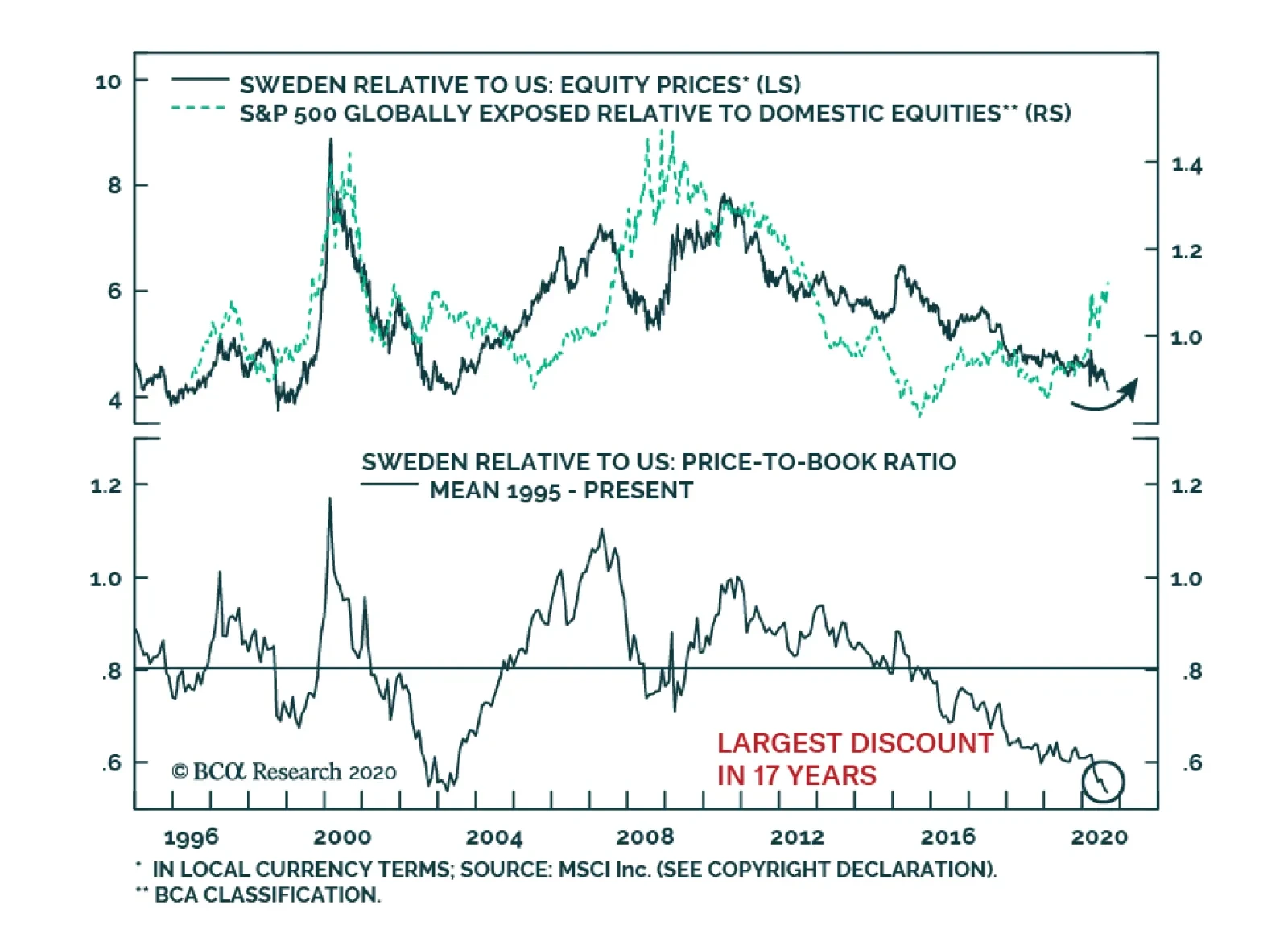
The 10-year underperformance of Swedish equities relative to US ones is advanced and the Swedish stock market should generate a strong outperformance over the coming years. Swedish equities are extremely pro-cyclical, and the global business cycle recovery…
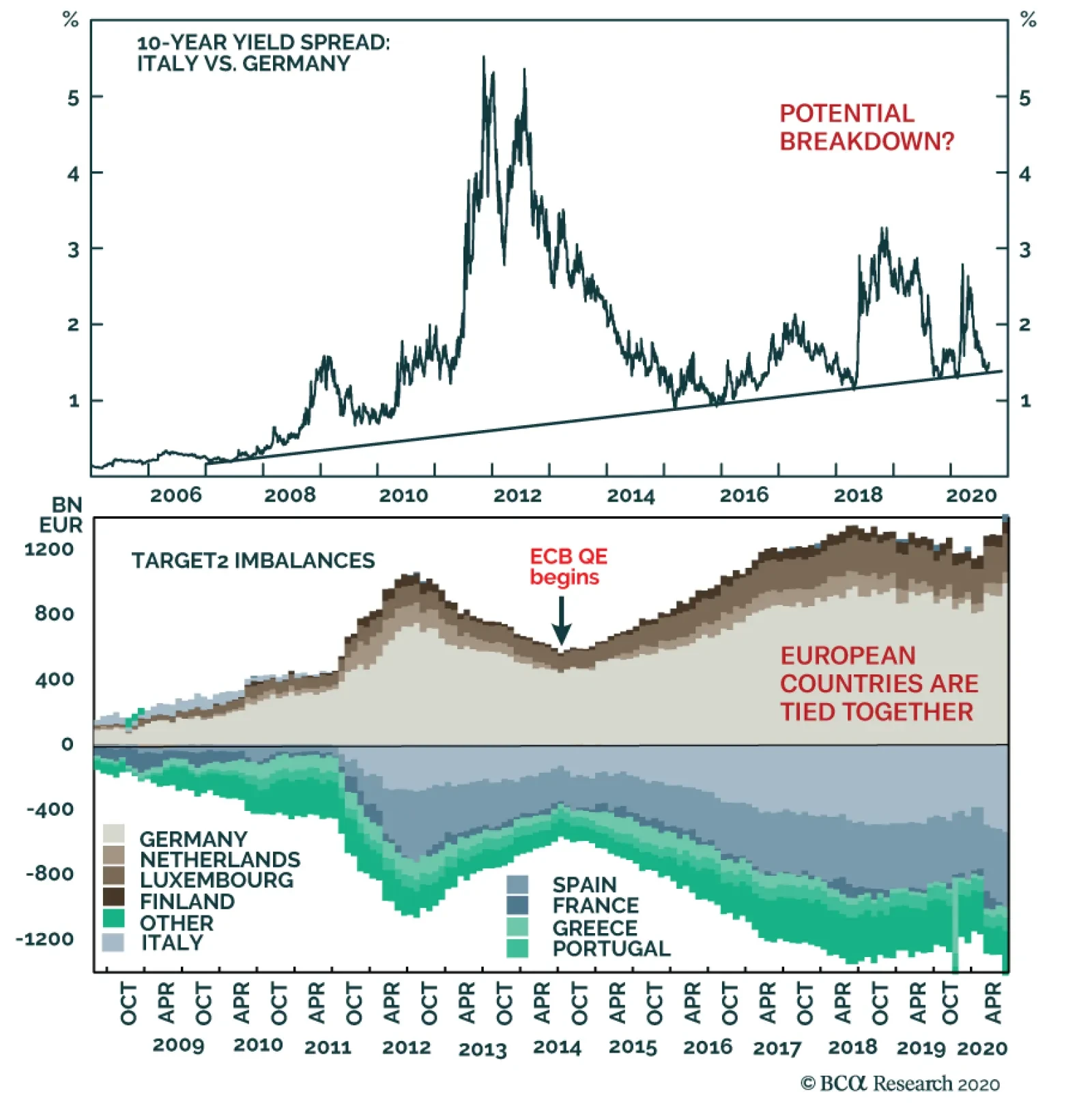
The European Central Bank has little scope to push German, French or Dutch yields much lower from current levels, especially as markets are already convinced that the ECB will not be able to raise interest rates for many years. However, this does not mean…
Highlights ‘Value’ sector profits are in terminal decline. Bank profits are in terminal decline, because private sector credit is now ‘maxed out’, and the intermediation between borrowers and savers can be done more cost-effectively by the blockchain. Oil and gas profits are in terminal decline, because we now rely less on the energy stored in ‘chemical bonds’ of portable fossil fuels, and rely more on the energy of ‘moving electrons’ generated from unportable alternative energy sources. Basic resources profits are in terminal decline, because we now rely less on the ‘physical stuff’ that requires basic resources. As such, structurally overweighting the value-heavy European market versus the growth-heavy US market is a ‘widow maker’ trade. The caveat is that a vicious snapback out of growth into value is possible when a universally accepted treatment for Covid-19 is found. Or if bond yields spike. This would create a burst of outperformance from Europe, but any such snapback would be a brief interruption to the mega downtrend. Fractal trade: Long RUB/CZK. Feature Chart of the WeekValue' Has Underperformed For 12 Years... But The Mega Downtrend Isn't Over
Value' Has Underperformed For 12 Years... But The Mega Downtrend Isn't Over
Value' Has Underperformed For 12 Years... But The Mega Downtrend Isn't Over
I have just returned from a summer holiday, on which I took a clean break from the financial markets. A clean break that is highly recommended for anybody who looks at the markets day in, day out. Nevertheless, I made two market-relevant observations. First, that having to wear a face mask on an aeroplane was an unpleasant experience. Tolerable for a short-haul flight lasting a couple of hours, but something that would be unbearable for the duration of a long-haul flight. Second, that even the most popular bars and restaurants in the most popular places were operating at half capacity. They were fully booked, yet the requirements of physical distancing at the bar, and between tables, meant that their operating capacity and revenues had collapsed. Worse, the owners feared a further hit in the winter when eating and drinking in their outdoors spaces became impossible. The use of face masks and physical distancing cripples any economic activity that requires you to have your (uncovered) mouth and nose in proximity to others. These first-hand experiences simply confirm the message in An Economy Without Mouths Or Noses Will Lose 10 Percent Of Jobs.1 The use of face masks and physical distancing cripples any economic activity that requires you to have your (uncovered) mouth and nose in proximity to others – like flying, or drinking and eating out. Hence, if governments remove the financial incentives for employers to retain workers while the pandemic is still rampant, expect structural unemployment to rise sharply. In which case, expect bond yields to remain ultra-low, and where possible, go even lower. And expect ‘growth’ sectors to continue outperforming ‘value’ sectors. Explaining Recent Market Action Returning to the financial markets after a break, several things stood out. Apple has become America’s first $2 trillion company, while HSBC’s share price is within a whisker of its 2008 crisis low. This vignette encapsulates that growth sectors – broadly defined as tech and healthcare – have been roaring ahead, while value sectors – broadly defined as banks, oil and gas, and basic resources – have been struggling. Hence, the growth-heavy S&P500 has reached a new all-time high, while the value-heavy FTSE100 and other European indexes are still deeply in the red for 2020 and have recently drifted lower (Chart I-2). The combined effect is that the strong recovery in global stocks has taken a breather. Chart I-2US Market At All-Time High, But European Markets Still Deeply In The Red
US Market At All-Time High, But European Markets Still Deeply In The Red
US Market At All-Time High, But European Markets Still Deeply In The Red
In turn, the breather in the stock market explains the recent support to the dollar. Significantly, the 2020 evolution of the dollar is a perfect mirror-image of the stock market. Nothing more, nothing less. If the stock market gives back some of its gains, expect the countertrend strengthening in the dollar to continue (Chart I-3). Chart I-3The Dollar Is A Mirror-Image Of The Stock Market
The Dollar Is A Mirror-Image Of The Stock Market
The Dollar Is A Mirror-Image Of The Stock Market
Yet the best performing major asset-class in 2020 is not growth equities, nor is it gold. Instead, it is the US 30-year T-bond, which has returned a spectacular 32 percent (Chart I-4). Chart I-4The Best Performing Major Asset-Class Is The 30-Year T-Bond
The Best Performing Major Asset-Class Is The 30-Year T-Bond
The Best Performing Major Asset-Class Is The 30-Year T-Bond
Suddenly, everything becomes crystal clear. If the ultra-long bond has surged, then other ultra-long duration investments must also surge. Within equities, this means that growth sectors, whose profits are skewed to the very distant future, must receive a huge boost to their valuations. Whereas value sectors whose profits are not growing will receive a smaller (or no) valuation boost. In fact, the value sectors have a much bigger structural problem. Not only are their profits not growing. Their profits are in terminal decline. Since 2008, Overweighting Value Has Been A ‘Widow Maker’ In the 34 years through 1975-2008, value trebled relative to growth.2 Albeit, with the occasional vicious countertrend move, such as the dot com bubble. But through 2009-2020, the tables turned. For the past 12 years, value has structurally underperformed growth and given back around half of its 1975-2008 outperformance (Chart of the Week). This means that for the past 12 years ‘proxy’ value versus growth positions have also structurally underperformed. The best example of such a proxy position is overweighting the value-heavy European market or Emerging Markets versus the growth-heavy US market. Since 2008, underweighting the US market has been a ‘widow maker’ trade. A widow maker trade is when you are on the wrong side of a megatrend. A widow maker trade is when you are on the wrong side of a megatrend. It is a widow maker because it can kill your career, or your finances, or both. The big danger is that a widow maker trade can last for decades. As the uptrend in value versus growth lasted more than three decades, there is no reason to suppose that the downtrend cannot also last a very long time. What drove value’s outperformance for 34 years, and what is driving its underperformance for the past 12 years? The simple answer is the structural trend in profits. Until 2008, the profits of banks, oil and gas, and basic resources kept up with, or even beat, the profits of technology and healthcare. This, combined with the higher yield on these value sectors, resulted in the multi-decade 200 percent outperformance of value versus growth. But since 2008, while the profits of technology and healthcare have continued their strong uptrends, the profits of banks, oil and gas, and basic resources have entered major structural downtrends. It is our high conviction view that these declines are terminal, and the reasons are nothing to do with the pandemic (Chart I-5). Chart I-5Value Sector Profits Are In A Major Structural Downtrend
Value Sector Profits Are In A Major Structural Downtrend
Value Sector Profits Are In A Major Structural Downtrend
Sector Profit Outlooks In One Sentence Each When a sector’s profits flip from a multi-decade uptrend to a multi-decade downtrend, it is almost unheard of for them to reflip into a new uptrend. Essentially, the sector has entered a terminal decline. As strong believers in brevity, we can summarise the reason for the terminal declines in one sentence per sector, as follows: When a sector’s profits flip from a multi-decade uptrend to a multi-decade downtrend, it is almost unheard of for them to reflip into a new uptrend. Bank profits are in terminal decline, because private sector credit is now ‘maxed out’, and the intermediation between borrowers and savers can be done more cost-effectively by the blockchain (Chart I-6). Chart I-6Bank Profits In Terminal Decline
Bank Profits In Terminal Decline
Bank Profits In Terminal Decline
Oil and gas profits are in terminal decline, because we now rely less on the energy stored in ‘chemical bonds’ of portable fossil fuels, and rely more on the energy of ‘moving electrons’ generated from unportable alternative energy sources (Chart I-7). Chart I-7Oil And Gas Profits In Terminal Decline
Oil And Gas Profits In Terminal Decline
Oil And Gas Profits In Terminal Decline
Basic resources profits are in terminal decline, because we now rely less on the ‘physical stuff’ that requires basic resources (Chart I-8). Chart I-8Basic Resources Profits In Terminal Decline
Basic Resources Profits In Terminal Decline
Basic Resources Profits In Terminal Decline
Conversely: Technology profits can grow, because we now rely more on information, ideas, and advice, and over half of the world’s population is still not connected to the internet (Chart I-9). Chart I-9Technology Profits Continue To Grow
Technology Profits Continue To Grow
Technology Profits Continue To Grow
Healthcare profits can grow, because as economies (and people) mature, they spend a much greater proportion of their income on healthcare to improve the quality and quantity of life (Chart I-10). Chart I-10Healthcare Profits Continue To Grow
Healthcare Profits Continue To Grow
Healthcare Profits Continue To Grow
Nevertheless, a vicious snapback out of growth into value is possible. Indeed, it is to be expected when a universally accepted treatment for Covid-19 is found. Or if bond yields spike. But any such snapback, even if vicious, will be a brief countertrend rally in a terminal decline. This is because the megatrends driving down value sector profits were already in place long before the pandemic hit. The pandemic just gave the megatrends an extra nudge. This is our high conviction view. Fractal Trading System* This week’s recommended trade is long RUB/CZK, with the profit target and symmetrical stop-loss set at 5 percent. In other trades, the explosive rallies in precious metals reached exhaustion as anticipated by their fragile fractal structures. This has taken our short gold versus lead position into profit. However, short silver was stopped out before its rally eventually ended. The rolling 1 year win ratio now stands at 60 percent. Chart I-11RUB/CZK
RUB/CZK
RUB/CZK
When the fractal dimension approaches the lower limit after an investment has been in an established trend it is a potential trigger for a liquidity-triggered trend reversal. Therefore, open a countertrend position. The profit target is a one-third reversal of the preceding 13-week move. Apply a symmetrical stop-loss. Close the position at the profit target or stop-loss. Otherwise close the position after 13 weeks. * For more details please see the European Investment Strategy Special Report “Fractals, Liquidity & A Trading Model,” dated December 11, 2014, available at eis.bcaresearch.com. Dhaval Joshi Chief European Investment Strategist dhaval@bcaresearch.com Footnotes 1 Please see the European Investment Strategy Weekly Report "An Economy Without Mouths Or Noses Will Lose 10 Percent Of Jobs", dated July 30, 2020 available at eis.bcaresearch.com. 2 In total return terms. Fractal Trading System Cyclical Recommendations Structural Recommendations Closed Fractal Trades Trades Closed Trades Asset Performance Currency & Bond Equity Sector Country Equity Indicators Bond Yields Chart II-1Indicators To Watch - Bond Yields
Indicators To Watch - Bond Yields
Indicators To Watch - Bond Yields
Chart II-2Indicators To Watch - Bond Yields
Indicators To Watch - Bond Yields
Indicators To Watch - Bond Yields
Chart II-3Indicators To Watch - Bond Yields
Indicators To Watch - Bond Yields
Indicators To Watch - Bond Yields
Chart II-4Indicators To Watch - Bond Yields
Indicators To Watch - Bond Yields
Indicators To Watch - Bond Yields
Interest Rate Chart II-5Indicators To Watch - Interest Rate Expectations
Indicators To Watch - Interest Rate Expectations
Indicators To Watch - Interest Rate Expectations
Chart II-6Indicators To Watch - Interest Rate Expectations
Indicators To Watch - Interest Rate Expectations
Indicators To Watch - Interest Rate Expectations
Chart II-7Indicators To Watch - Interest Rate Expectations
Indicators To Watch - Interest Rate Expectations
Indicators To Watch - Interest Rate Expectations
Chart II-8Indicators To Watch - Interest Rate Expectations
Indicators To Watch - Interest Rate Expectations
Indicators To Watch - Interest Rate Expectations