Europe

Highlights Since 2004, Sweden’s private sector leverage trend can be explained using a simple Taylor rule approach. The approach clearly highlights three distinct monetary policy phases, and underscores the singular role of inflation (not systemic risk from rising indebtedness) as a driving factor for Riksbank policy. Since 2015, the Riksbank has maintained interest rates well below what a Taylor rule approach would suggest, owing to the desire to raise inflation expectations and Sweden’s high trade exposure to the euro area. This highlights strong similarities between the experience of Sweden and Canada: both countries are in the orbit of a major neighboring central bank, which has created serious distortions in both economies. Given the extent of the spread of the SARS-CoV-2 virus, especially in Europe, our assessment of the Riksbank’s reaction function suggests the odds appear to be high that the repo rate will move back into negative territory at some point this year (despite their reluctance to do so). Over the near-term, Swedish policy easing suggests that investors should avoid the krona versus both the US dollar and euro. Over a medium-term time horizon, one implication of a return to negative interest rates is that Swedish house price appreciation is likely to trend higher once the economic impact of the COVID-19 pandemic ends, potentially to the benefit of Swedish consumer durable and apparel stocks. Finally, over the long-term, Sweden is very likely to face a period of domestic economic stagnation stemming from the extraordinary rise in private sector debt that has built up over the past two decades. The co-ordinated global response to the pandemic suggests that this is not the end of Sweden’s debt supercycle, but timing the transition from reflation to stagnation will be of crucial importance for investors exposed to the domestic Swedish economy over the coming few years. Feature One of the worrying legacies of the global financial crisis has been a substantial buildup in private sector debt in many economies around the world. This has most famously occurred in China, but private indebtedness is also very high in many developed economies. Among advanced countries, Sweden stands out as being particularly exposed to elevated private sector debt. Chart I-1 highlights that Sweden’s private sector debt-to-GDP ratio has ballooned to a massive 250% of GDP over the past 15 years, from a starting point of roughly average indebtedness. Chart I-1Sweden's Extremely Indebted Private Sector
Sweden's Extremely Indebted Private Sector
Sweden's Extremely Indebted Private Sector
In this report we explore why Sweden has seen an explosion in private sector debt-to-GDP, and highlight that Sweden’s experience can be compared closely with that of Canada – both countries are in the orbit of a major neighboring central bank, which has created distortions in each economy. We also summarize what this implies for Riksbank policy, and what investment recommendations can be drawn from our analysis. We conclude that while the Riksbank is clearly reluctant to cut the repo rate after having just existed its negative interest rate position last year, it appears likely that they will forced to do so unless the negative economic impact from the COVID-19 pandemic abates very soon. Over the short-term, this suggests that investors should avoid the Swedish krona, versus either the US dollar or the euro. Why has Sweden seen such an explosion in private-sector debt? Over the medium-term, easy Riksbank policy and the probable absence of any additional macroprudential measures is likely to spur a renewed increase in Swedish house prices and household debt, which will likely benefit consumer durables and apparel stocks relative to the broad Swedish equity market. But this will reinforce Sweden’s existing credit bubble, and similar to Canada will set the stage for domestic economic stagnation over the very long-term. Riksbank Policy and Sweden’s Private Sector Debt: A Tale Of Three Phases Much of the investor attention on Sweden's extremely high private sector debt load has occurred following the global financial crisis. But Chart I-1 clearly highlights that the process of private sector leveraging began in 2004, arguing that the Riksbank’s easy monetary policy stance following the global financial crisis is not the only cause of Sweden’s extremely elevated private debt-to-GDP ratio. In a previous Special Report for our Global Investment Strategy service,1 we investigated a similar experience in Canada and used a simple Taylor rule approach to show that the Bank of Canada’s decision to maintain interest rates below equilibrium levels for nearly two decades has contributed to a substantial buildup in private sector leverage. A similar approach for Sweden highlights similar conclusions, albeit with some complications: Chart I-2 shows our Taylor rule estimate for Sweden alongside the policy rate, and shows the deviation from the rule in the second panel. Chart I-2Since 2000, Sweden Has Had Three Distinct Monetary Policy Phases
Since 2000, Sweden Has Had Three Distinct Monetary Policy Phases
Since 2000, Sweden Has Had Three Distinct Monetary Policy Phases
Compared with Canada’s experience, which has maintained too-low interest rates consistently for the past 20 years, Chart I-2 shows that the stance of Sweden’s monetary policy since 2000 falls into three distinct phases: Persistently easy policy from 2000 to 2008 A period of less easy and then relatively tight policy from 2009 to early-2014 A period of extremely easy policy from 2015 until today. The first phase noted above closely resembles the experience of Canada: policymakers in both countries simply kept interest rates too low during the last global economic expansion. In the second phase, the stance of monetary policy in Sweden became progressively less easy: the Taylor rule collapsed in 2009/2010, and trended lower again during the euro area sovereign debt crisis as well as its aftermath. In fact, Chart I-2 suggests that Sweden’s monetary policy stance was outrightly tight from 2012-2014, and in early-2014 the Taylor rule recommended negative policy rates while the actual policy rate was above 1%. In the third phase, the Riksbank appears to have overcompensated for the second phase of relatively less easy and eventually tight monetary policy. The Riksbank pushed policy rates into negative territory in late-2014, as had been recommended by the Taylor rule a year before, at a time when the rule was rising sharply. Roughly 2/3rds of the rise in the rule from early-2014 to late-2018 occurred due to the significant rise in Swedish inflation, with the rest due to a rise in Sweden’s output gap – which turned positive in late-2016 according to the OECD (Chart I-3). It is this third phase, featuring a massive and glaring gap between Swedish policy rates and a monetary policy rule that correctly recommended easy policy from 2010 – 2014, that has attracted global investor attention over the past few years. But Chart I-4 presents Sweden’s Taylor rule gap alongside its private sector debt-to-GDP ratio, and highlights that over 80% of the rise in the latter since 2000 actually occurred in the first phase described above – a period of persistently easy monetary policy as defined by our Taylor rule approach. The behavior of Sweden’s private sector debt-to-GDP ratio in the second and third phases also seems to validate our approach, as gearing essentially stopped during the second phase and restarted in the third phase. Chart I-3Since 2014, Sweden’s Rising Taylor Rule Has Been Driven Mostly By Inflation
Since 2014, Sweden's Rising Taylor Rule Has Been Driven Mostly By Inflation
Since 2014, Sweden's Rising Taylor Rule Has Been Driven Mostly By Inflation
Chart I-4Sweden’s Monetary Policy Phases Explain Its Private Sector Leveraging
Sweden's Monetary Policy Phases Explain Its Private Sector Leveraging
Sweden's Monetary Policy Phases Explain Its Private Sector Leveraging
The Riksbank: “Talk To Us About Inflation, Not Debt” Chart I-5During Phase 2, Households Clearly Took Advantage Of Low Mortgage Rates
During Phase 2, Households Clearly Took Advantage Of Low Mortgage Rates
During Phase 2, Households Clearly Took Advantage Of Low Mortgage Rates
It is crucial to understand the motivations of Sweden’s central bank during each of these phases in order to be able to forecast the likelihood of a return to negative interest rates this year, as well as the Riksbank’s likely policy response once the COVID-19 pandemic subsides. In the first monetary policy phase that we have described, Sweden was not the only country to maintain persistently easy monetary policy. Given the relative scarcity of private sector deleveraging events in the post-war era, most policy makers, academic economists, and market participants were regrettably unconcerned about rising private sector indebtedness during this period, and only came to understand the consequences during the crisis and its aftermath. Most advanced economies leveraged during the first of Sweden’s monetary policy phases, and Sweden really only stands out as a major outlier from 2007 – 2009 when nearly 60% of the country’s total 2000-2019 private sector leveraging occurred (most of which, in turn, occurred before the collapse of Lehman Brothers in September 2008). In essence, by the time that Swedish policymakers were given a vivid and painful demonstration of the dangers of elevated private sector debt, it was too late to prevent most of the increase in debt-to-GDP that is facing the country today. In the second phase of Sweden's modern monetary policy, our Taylor rule framework highlights that the Riksbank largely acted as appropriate. One complication, however, is the difference in the leverage trend between Sweden's nonfinancial corporate and household sectors. Chart I-5 clearly highlights that Sweden's household sector took advantage of low interest rates during the country’s second monetary policy phase. Household sector leveraging began to rise again starting in late-2011, whereas it was completely absent for the corporate sector during the period. A crucial reason why the Riksbank ignored this renewed household sector leveraging is also part of the reason that it has maintained extremely low policy rates in the third phase noted above. The Riksbank’s monetary policy strategy, which is published in every monetary policy report, includes the following: “According to the Sveriges Riksbank Act, the Riksbank’s tasks also include promoting a safe and efficient payment system. Risks linked to developments in the financial markets are taken into account in the monetary decisions. With regard to preventing an unbalanced development of asset prices and indebtedness however, well-functioning regulation and effective supervision play a central role. Monetary policy only acts as a compliment to these.” In other words, the Riksbank has been very clear that preventing excessive leveraging is not its responsibility, and that the job ultimately falls to the Swedish government. But if the Taylor rule was recommending meaningfully higher interest rates during phase 3, then why did the Riksbank continue to lower interest rates into negative territory until last year? In our view, their behavior can be explained by the confluence of three factors: 1. Sweden’s deflation scare in 2014: Sweden’s underlying inflation rate had been trending lower for four years by the time that it dipped briefly into negative territory in March 2014. By this point, the Riksbank appears to have become increasingly concerned about inflation expectations rather than the trend in actual inflation. Chart I-6 presents Sweden’s underlying inflation rate and an adaptive-expectations based estimate of inflation expectations alongside the repo rate, and shows that inflection points in the repo rate match inflection points in expectations. Specifically, the repo rate continued to fall until inflation expectations stabilized in early-2016, and the Riksbank did not raise the repo rate until expectations crossed above 1.5%, a level that was reasonably close to the central bank’s 2% target. Chart I-6During Phase 3, The Riksbank Focused On Low Inflation Expectations
During Phase 3, The Riksbank Focused On Low Inflation Expectations
During Phase 3, The Riksbank Focused On Low Inflation Expectations
2. Sweden’s high trade sensitivity: Chart I-7 highlights that Sweden’s economy, like Canada and other Scandinavian countries, is highly exposed to exports to top trading partners. The euro area accounts for a large portion of Sweden’s exports, and Chart I-8 highlights that nominal euro area imports from Sweden remained very weak from 2012-2016. In addition, Sweden’s import sensitivity is also very high, with total imports of goods and services accounting for over 40% of Sweden’s GDP. By our calculations, roughly 2/3rds of Swedish imports are for domestic consumption,2 and Chart I-9 highlights how closely (inversely) correlated imported consumer and capital goods prices are to Sweden’s trade-weighted currency index. By pushing the repo rate into negative territory, the Riksbank reinforced rising inflation expectations by supporting exports and importing inflation from its trading partners via a weaker krona. Chart I-7Sweden, Like Other Small DM Countries, Are Highly Exposed To Trade
Sweden, Like Other Small DM Countries, Are Highly Exposed To Trade
Sweden, Like Other Small DM Countries, Are Highly Exposed To Trade
Chart I-8Euro Area Demand For Swedish Goods Remained Weak For Several Years
Euro Area Demand For Swedish Goods Remained Weak For Several Years
Euro Area Demand For Swedish Goods Remained Weak For Several Years
Chart I-9To 'Import' Inflation, The Riksbank Had To Weaken The Krona
To 'Import' Inflation, The Riksbank Had To Weaken The Krona
To 'Import' Inflation, The Riksbank Had To Weaken The Krona
3. The euro area’s persistently weak inflation and extremely easy monetary policy: While this is related to Sweden's overall trade sensitivity, the fact that the euro area had to combat persistently weak inflation with negative interest rates and asset purchases from late-2014 to late-2018 has had a particularly strong impact on Riksbank policy given the latter’s goal of boosting Swedish inflation via higher import prices. Chart I-10 highlights the strong link between the SEK-EUR exchange rate and the real interest rate differential between the two countries, and in particular shows that the Riksbank had to lower the differential into negative territory in order to bring the krona below “normal” levels (defined here as the average of the past global economic expansion). When faced with a real euro area policy rate of roughly -1.5% during the period (Chart I-11), the only way to achieve a negative real rate differential was to maintain the repo rate at an extremely low level as Swedish inflation rose. Chart I-10To Weaken The ##br##Krona...
To Weaken The Krona...
To Weaken The Krona...
Chart I-11…Deeply Negative Real Policy Rates Were Required
...Deeply Negative Real Policy Rates Were Required
...Deeply Negative Real Policy Rates Were Required
Where Next For The Repo Rate? In February 2019 the Riksbank was forecasting that the repo rate would return into positive territory by the end of this year, and would rise as high as 80 basis points by mid-2022. They downgraded this assessment in April, and again in October, highlighting that they expected a 0% repo rate for essentially the entire three-year forecast period. In other words, the Riksbank had been moving in a dovish direction even before the COVID-19 pandemic began. Prior to the outbreak, we would have been inclined to argue that the Riksbank’s forecast of a 0% repo rate beyond 2020 was suspect, given the budding recovery in global growth. Chart I-12 highlights that the global PMI had been improving for several months prior to the outbreak, and the Swedish PMI and consumer confidence index had recently rebounded sharply. A negative repo rate was essential to “import” inflation. But, given the extent of the spread of the SARS-CoV-2 virus, especially in Europe, and our description of the Riksbank mandate and reaction function, the odds appear to be high that the repo rate will move back into negative territory at some point this year. Besides the very negative direct impact to global trade from the pandemic, Chart I-13 highlights that Swedish inflation is now falling, and that our measure of inflation expectations has now peaked. Chart I-12Swedish Economic Momentum Was Building Prior To The Pandemic...
Swedish Economic Momentum Was Building Prior To The Pandemic...
Swedish Economic Momentum Was Building Prior To The Pandemic...
Char I-13...But Inflation Is Falling And The Unemployment Rate Is Rising
...But Inflation Is Falling And The Unemployment Rate Is Rising
...But Inflation Is Falling And The Unemployment Rate Is Rising
In addition, the Swedish unemployment rate has been trending higher since early-2018 (Chart I-13, second panel), in response to several factors: a shock to household wealth in late-2015/early-2016 due to sharply falling equity prices, a meaningful decline in house prices driven by newly introduced macroprudential policies, and a sharp albeit seemingly one-off decline in the contribution to Swedish economic growth from government expenditure (Chart I-14). These trends would have likely reversed at some point this year given the building economic momentum that was evident in January and early-February, but it is now clear that the pandemic will more than offset the budding improvement in economic activity. Chart I-14Swedish Policymakers Will Have To Reverse The Factors That Caused The Pre-Pandemic Slowdow
Swedish Policymakers Will Have To Reverse The Factors That Caused The Pre-Pandemic Slowdow
Swedish Policymakers Will Have To Reverse The Factors That Caused The Pre-Pandemic Slowdow
Over the past week the Riksbank has announced two policies: it will provide cheap loans to the country’s banks (500 billion SEK) to bolster credit supply to Swedish small & medium-sized enterprises, and it will increase its asset purchase program by 300 billion SEK. The Riksbank is clearly reluctant to cut the repo rate after having just existed its negative interest rate position last year, and has argued that strong liquidity support and stepped up asset purchases are more likely to be effective measures in the current environment. However, Charts I-10 & I-11 underscored the link between real interest rate differentials and the currency, and the Riksbank will risk having the krona appreciate versus the euro and other currencies if inflation continues to fall and the policy rate is kept unchanged. Chart I-15 shows that market participants have already begun to price in cuts to the repo rate, and our sense is that the Riksbank will be forced to act in a way that is consistent with the market’s view. Chart I-15The Market Expects The Riksbank To Return To Negative Interest Rates. We Agree.
The Market Expects The Riksbank To Return To Negative Interest Rates. We Agree.
The Market Expects The Riksbank To Return To Negative Interest Rates. We Agree.
Investment Conclusions Over a cyclical (i.e. 6-12 month) time horizon, the Swedish krona is the asset with the clearest link to our discussion of Riksbank policy, and investors should recognize that the krona call is now a binary one based on the evolution of the COVID-19 pandemic. It is one of the cheapest currencies in the G10 space, but foreign exchange markets have recently ignored fundamentals such as interest rate differentials and valuation. This is particularly true in the face of a spike in US dollar cross-currency basis swaps, which have started to send the dollar higher even against the safe haven currencies. In such an a environment, selling pressure could continue to push SEK lower, especially if the Riksbank is pushed to reduce the repo rate sooner rather than later. The SEK is one of the most procyclical currencies in the FX space, suggesting that investors should stand aside until markets stabilize (Chart I-16). Right now, the Swedish krona is the clearest play on Riksbank policy. As for the EUR/SEK cross, any renewed ECB stimulus suggests that Sweden will act accordingly to prevent the SEK from appreciating too far, too fast. EUR/SEK will top out after global growth is in an eventual upswing, and the Riskbank has eased policy further. Over the medium-term time horizon, one implication of a return to negative interest rates is that Swedish house price appreciation is likely to trend higher once the economic impact of the COVID-19 pandemic ends. House prices will likely decelerate in the near term given the shock to household wealth from falling equity prices, but we showed in Chart I-5 that Sweden’s household sector ultimately took advantage of low interest rates during Sweden’s second monetary policy phase. We expect a similar dynamic to unfold beyond the coming 6-9 months, and Chart I-17 highlights that overweighting Swedish consumer durable and apparel stocks within the overall Swedish equity market is likely the best way to eventually play a resumption of household leveraging and rising house prices. Chart I-16Avoid Krona Exposure ##br##For Now
Avoid Krona Exposure For Now
Avoid Krona Exposure For Now
Chart I-17Swedish Consumer Durables & Apparel Stocks Linked To Domestic, Not Global, Demand
Swedish Consumer Durables & Apparel Stocks Linked To Domestic, Not Global, Demand
Swedish Consumer Durables & Apparel Stocks Linked To Domestic, Not Global, Demand
With the exception of a selloff in 2013, the relative performance of the industry group has closely correlated with house price appreciation, and is now deeply oversold. The companies included the industry group earn a significant portion of their revenue from global sales, but the close correlation of relative performance with Swedish house prices and limited correlation with the global PMI suggests that domestic economic performance matter in driving returns for these stocks (Chart I-17, bottom panel). We are not yet prepared to recommend a long relative position favoring this industry group, but we are likely to view signs of policy traction and a relative performance breakout as a good entry point. Finally, the key long-term implication of our research is that Sweden will at some point likely face a period of stagnation stemming from the extraordinary rise in private sector debt that has built up over the past two decades. While regulators had begun to combat excessive debt with macroprudential measures, further measures to restrict household sector debt are extremely unlikely to occur until after another substantial reacceleration in Swedish house prices and another nontrivial rise in household sector leverage. This will be cyclically positive for Sweden coming out of the pandemic, but will ultimately make Sweden’s underlying debt problem meaningfully worse. Macroprudential control of rising nonfinancial corporate debt has not and is not likely to occur, and no regulatory control measure will be able to significantly ease the existing debt burden facing the private sector. Chart I-18 highlights that while Sweden’s private sector debt service ratio (DSR) is not the highest in the world, is it extremely elevated compared to other important DM countries such as the US, UK, Japan, and core euro area. Several other countries with higher private sector DSRs, such as Canada and Hong Kong, are also at serious risk of long-term stagnation. Chart I-18Swedish Domestic Economic Stagnation Is A 'When', Not An 'If'
Swedish Domestic Economic Stagnation Is A 'When', Not An 'If'
Swedish Domestic Economic Stagnation Is A 'When', Not An 'If'
We have not yet identified a specific list of assets that will be negatively impacted by Swedish domestic economic stagnation over the longer term. Our European Investment Strategy service recently argued that Swedish stocks are attractive over the very long term versus Swedish bonds, based on valuations and the fact that the Swedish equity market as a whole is heavily driven by the global business cycle. We plan on revisiting the question of which equity sectors are most vulnerable to domestic stagnation in a future report, as the onset of stagnation draws nearer. As we noted in our report on Canada,3 it is difficult to identify precisely when Sweden’s high debt load will meaningfully and sustainably impact Swedish economic activity and related equity sectors. The acute shock to global activity from the COVID-19 pandemic is an obvious potential trigger, but the fact that policymakers around the world are responding forcefully to the pandemic suggests that this is not the end of Sweden’s debt supercycle. In this regard, the prospect of globally co-ordinated fiscal spending is especially significant. Our best guess is that Sweden’s true reckoning will come once US and global activity contracts for conventional reasons, instigated by tight monetary policy to control rising and above-target inflation. This may mean that Sweden will avoid a balance sheet recession for some time, but investors exposed to domestically-linked Swedish financial assets should take heed that the eventual consequences of such an event are likely to grow in magnitude the longer it takes to arrive. In short, beyond the acute nearer-term impact of the pandemic, Sweden is likely to experience short-term gain for long-term pain. The short- to medium-term focus of investors should be on the former, but with full recognition that the latter will eventually occur. Timing the transition between these two states will be of crucial importance for investors exposed to the domestic Swedish economy over the coming few years. Stay tuned! Jonathan LaBerge, CFA, Vice President Special Reports jonathanl@bcaresearch.com Footnotes 1 Please see Global Investment Strategy Special Report "Canada: A (Probably) Happy Moment In An Otherwise Sad Story," dated July 14, 2017, available at uses.bcaresearch.com 2 We assume that all services imports are consumed domestically. Among goods exports, we assume domestic consumption of all imports of food & live animals, beverages & tobacco, mineral fuels, lubricants, and related materials, miscellaneous manufactured articles, road vehicles, and other goods. 3 Please see Global Investment Strategy Special Report "Canada: A (Probably) Happy Moment In An Otherwise Sad Story," dated July 14, 2017, available at uses.bcaresearch.com
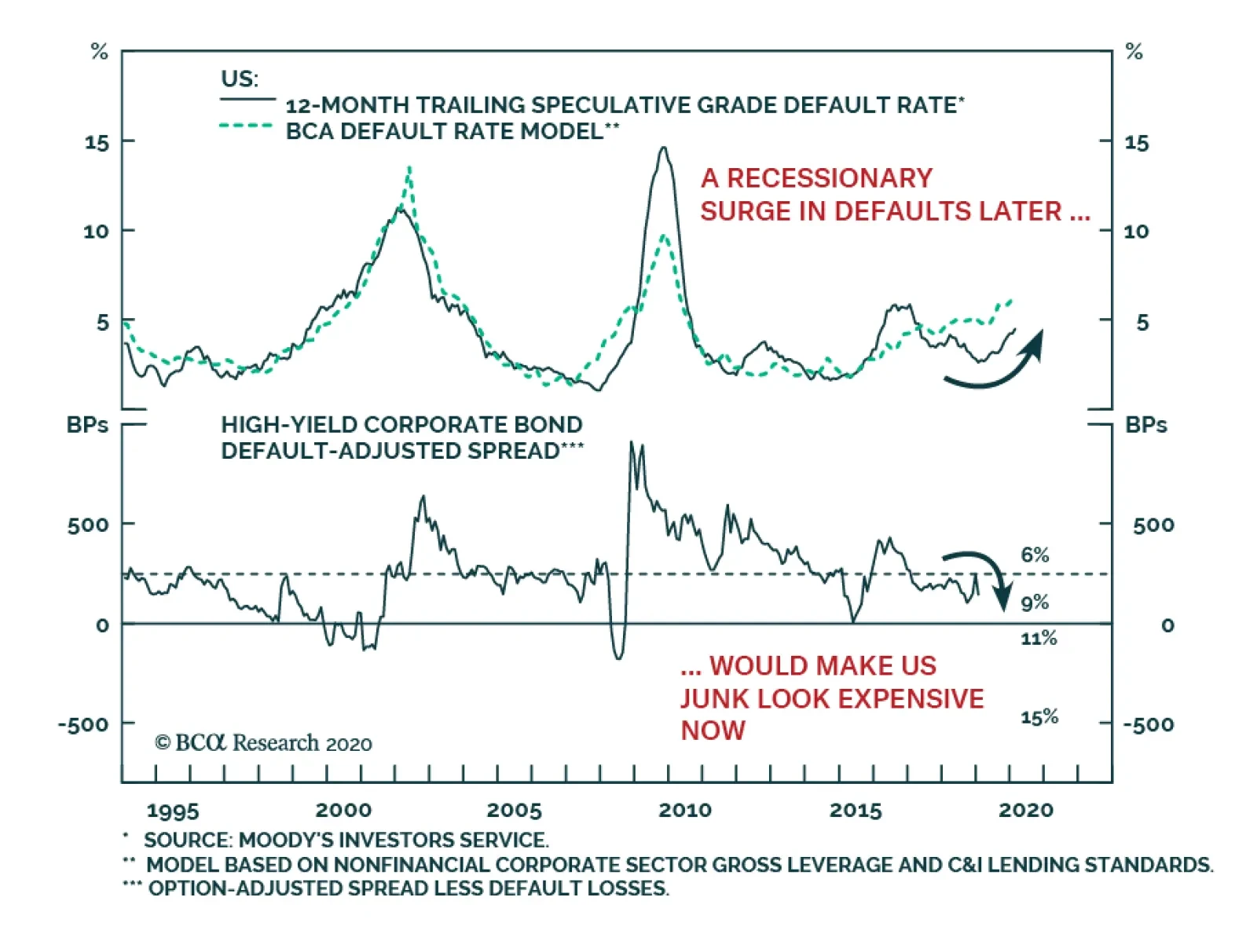
Yesterday, BCA Research's Global Fixed Income Strategy service urged investors to stay tactically defensive on corporate credit. The COVID-19 global market rout has generated levels of market volatility not seen since the 2008 Global Financial Crisis.…
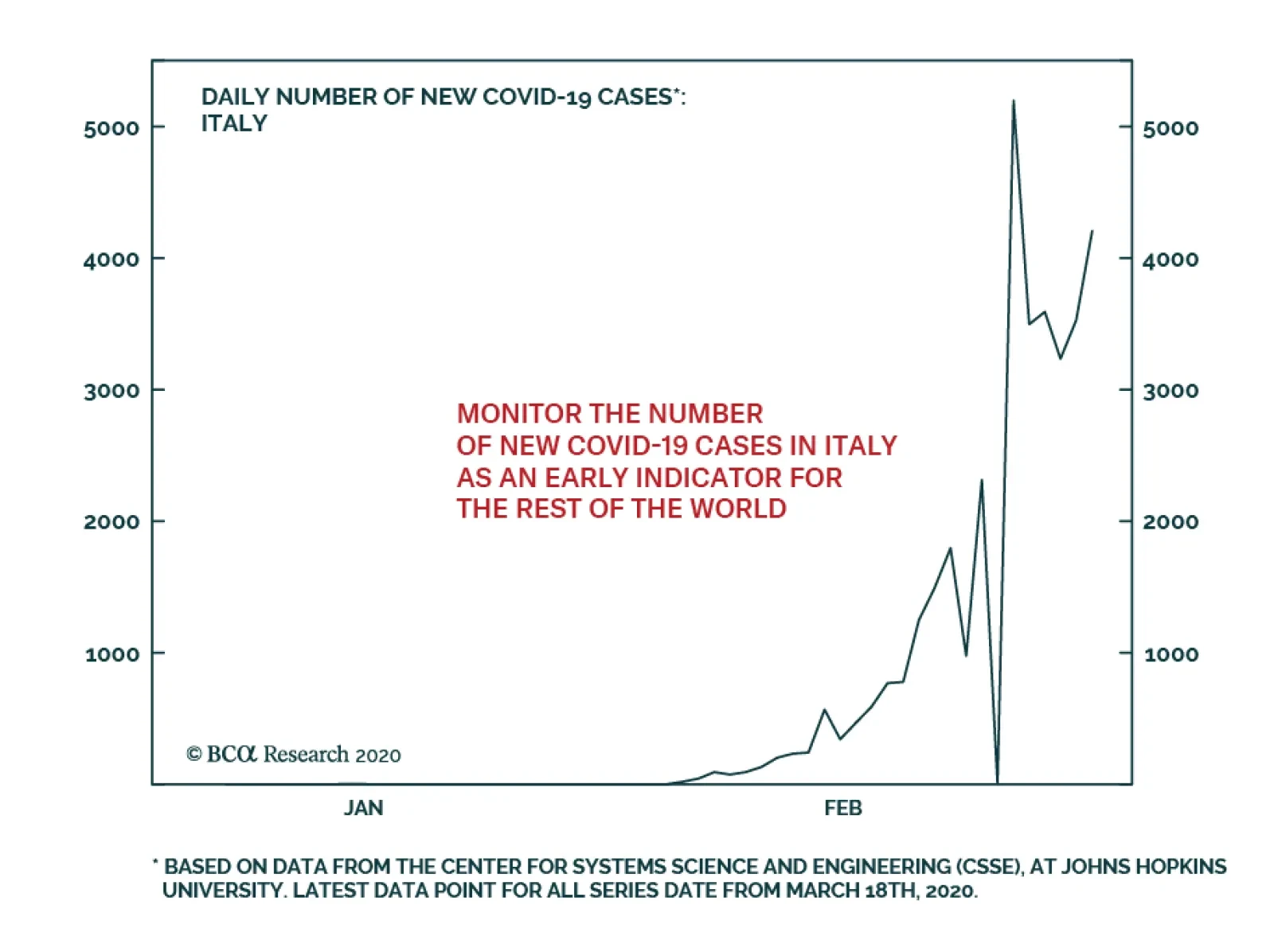
We recommend investors closely follow the number of new COVID-19 cases in Italy. At 4,207, as of March 18th, this number remains lower than it was on March 13th. However, new cases have nonetheless trended up over that past three days. Italy is…
Highlights Policy Responses: The COVID-19 pandemic has become a full-blown global crisis and recession. Governments and central bankers worldwide are now responding with aggressive monetary easing and fiscal stimulus. Markets will not respond positively to such stimulus, however, until there is some visibility on the true depth, and duration, of the economic downturn. Fixed Income Strategy: With a global recession now a certainty, bond yields will remain under downward pressure and credit spreads should widen further. Given how far yields have already fallen, we recommend emphasizing country and credit allocation in global bond portfolios, while keeping overall duration exposure around benchmark levels. Model Portfolio Changes: Following up on our tactical changes last week, we continue to recommend overweighting government debt versus spread product. Specifically, overweighting US & Canadian government bonds versus Japan and core Europe, and underweighting US high-yield and all euro area and EM credit. Feature In stunning fashion, the sudden stop in the global economy due to the COVID-19 pandemic has triggered a rapid return to crisis-era monetary and fiscal policies. The battle has now shifted to trying to fill the massive hole in global private sector demand left by efforts to contain the spread of the virus. It is unlikely that lower interest rates and more quantitative easing can mitigate the negative growth effects from travel bans, closing of bars and restaurants, and full scale lockdowns of cities. Fiscal policy, combined with efforts to boost market liquidity and ease the coming collapse of cash flows for the majority of global businesses, are the only plausible options remaining. It is unlikely that lower interest rates and more quantitative easing can mitigate the negative growth effects from travel bans, closing of bars and restaurants, and full scale lockdowns of cities. While the speed of these dramatic policy moves is unprecedented, the reason for them is obvious. Plunging equities and surging corporate bond credit spreads are signaling a global recession, but one of uncertain depth and duration given the uncertainties surrounding the spread of COVID-19 (Chart of the Week). Chart of the WeekCan Crisis-Era Monetary Policies Be Effective During A Pandemic?
Can Crisis-Era Monetary Policies Be Effective During A Pandemic?
Can Crisis-Era Monetary Policies Be Effective During A Pandemic?
Chart 2Risk Assets Will Not Bottom Until New COVID-19 Cases Ex-China Peak
Risk Assets Will Not Bottom Until New COVID-19 Cases Ex-China Peak
Risk Assets Will Not Bottom Until New COVID-19 Cases Ex-China Peak
The ability for policymakers to calibrate stimulus measures is pure guesswork at this point. The same thing goes for investors who see zero visibility on global growth, with the full extent of the virus yet to be felt in large economies like the United States and Germany – even as new cases in China, where the epidemic began, approach zero. The response from central bankers has been swift and bold – rapid rate cuts, increased liquidity programs for bank funding and increased asset purchases. The fact that global financial markets have remained volatile, even after what is a clear coordinated effort from policymakers, highlights how the unique threats to growth from the COVID-19 pandemic may be beyond fighting with traditional demand-side stimulus measures. We continue to recommend a cautious near-term investment stance, particular with regards to corporate bond exposure, until there is clear evidence that the growth rate of new COVID-19 cases outside China has peaked (Chart 2). Policymakers Throw The Kitchen Sink At The Problem The market moves and policy announcements have come fast and furious this past week, from virtually all major economies. We summarize some of the moves below: United States The Fed cut rates by -100bps in a Sunday night emergency move, taking the funds rate back to the effective lower bound of 0% - 0.25%. Importantly, Fed Chair Powell made it clear at his press conference that negative rates are not on the table, suggesting that we may have seen the last of the rate cuts for this cycle. A new round of quantitative easing (QE) was also announced, with purchases of $500 billion of Treasury securities and $200 billion of agency MBS that will occur in the “coming months”; Powell hinted that those amounts could be increased, if necessary (Chart 3). The MBS purchases are a clear effort to help bring down mortgage rates, which have not declined anywhere near as rapidly as US Treasury yields during the market rout (bottom panel). The Fed also cut the discount window rate – the rate at which banks can borrow from the Fed for periods of up to 90 days – by -150bps, bringing it down to 0.25%. The Fed said it is “encouraging banks to use their capital and liquidity buffers” – essentially telling banks to hold less cash for regulatory purposes. The Fed also reduced the rate on its US dollar swap lines with other central banks. The new rate is OIS +25bps. Coming on top of the massive increase in existing repo lines last week, the Fed is attempting to ensure that banks, both in the US and globally, that need USD funding have more liquidity available to support lending. Already, there are signs of worsening liquidity in the bank funding markets, like widening FRA-OIS spreads, but also evidence of illiquidity in financial markets like wide bid-ask spreads on longer-maturity US Treasuries and the growing basis between high-yield bonds and equivalent credit default swaps (Chart 4). Chart 3A Return To Fed QE
A Return To Fed QE
A Return To Fed QE
Chart 4Market Liquidity Issues Forced The Fed's Hand
Market Liquidity Issues Forced The Fed's Hand
Market Liquidity Issues Forced The Fed's Hand
Turning to fiscal policy, the full response of the Trump administration is still being formed, but a major $850bn spending package has been proposed that would provide tax relief for American households and businesses while also including a $50bn bailout of the US airline industry. This comes on top of previously announced plans to offer free testing for the virus, paid sick leave, business tax credits and a temporary suspension of student loan interest payments. Chart 5The ECB Has Limited Policy Options
The ECB Has Limited Policy Options
The ECB Has Limited Policy Options
Euro Area The European Central Bank (ECB) unexpectedly made no changes to policy interest rates last week. It opted instead to increase asset purchases by €120bn until the end of 2020 (both for government bonds and investment grade corporates), while introducing more long-term refinancing operations (LTROs) to “provide a bridge” to the targeted LTRO (TLTRO-3) that is set to begin in June. The terms of TLTRO-3 were improved, as well; banks that accessed the liquidity to maintain existing lending could do so at a rate up to -25bps below the current ECB deposit rate of -0.5%, for up to 50% of the existing stock of bank loans. The ECB obviously had to do something, given the coordinated nature of the global monetary policy response to COVID-19. Yet the decisions taken show that the ECB is much more limited in its ability to ease policy further, with interest rates already negative, asset purchases approaching self-imposed country limits and, most worryingly, inflation expectations falling to fresh lows (Chart 5). The bigger responses to date have come on the fiscal front, with stimulus packages proposed by France (€45bn), Italy (€25bn), Spain (€3bn) and the European Commission (€37bn). The biggest news, however, came from Germany which has offered affected businesses tax breaks and cheap loans through the state development bank, KfW – the latter with an planned upper limit of €550bn (and with the German government assuming a greater share of risk on those new KfW loans). The German government has also vaguely promised to temporarily suspend its so-called “debt brake” to allow deficit financing of virus-related stimulus programs, if necessary. Other Countries The Bank of England cut interest rates by -50bps last week, while also lowering capital requirements for UK banks by allowing use of counter-cyclical buffers for lending. On the fiscal side, a £30bn package was introduced last week that included a tax cut for retailers, cash grants to small business, sick pay for those with COVID-19 and extended unemployment benefits. The Bank of Japan held an emergency meeting this past Sunday night, announcing no changes in policy rates but doubling the size of its ETF purchase program to $56 billion a year to $112 billion, while also increasing purchases of corporate bonds and commercial paper. The central bank also announced a new program of 0% interest loans to increase lending to businesses hurt by the virus. The Bank of Canada delivered an emergency -50bps cut in its policy rate last Friday, coming soon after the -50bp reduction from the previous week. The central bank also introduced operations to boost the liquidity of Canadian financial markets. The Canadian government also announced a fiscal package of up to C$20bn, including increased money for the state business funding agencies. The Reserve Bank of Australia did not cut its Cash Rate last week, which was already at a record-low 0.5%. It did, however, signal that it would begin a quantitative easing program for the first time, and introduce Fed-like repo operations, to provide more liquidity to the economy and local financial markets. The Australian government has also announced A$17bn of fiscal stimulus. Fiscal packages have also been introduced in New Zealand (where the Reserve Bank of New Zealand just cut its policy rate by -75bps), Sweden, Switzerland, Norway, and South Korea. To date, China has leaned more on monetary and liquidity measures – lowering interest rates and cutting reserve requirements – rather than a big fiscal stimulus package. Will all these policy measures be enough to offset the hit to global growth from COVID-19 and help stabilize financial markets? It is certainly a good start, particularly in countries with low government and deficit levels that have the fiscal space for even more stimulus, like Germany, Australia and Canada (Chart 6). Given these competing forces of global recession and monetary policy exhaustion on one side, but with increasingly more expansive fiscal policy on the other, we recommend a neutral (at benchmark) stance on overall global duration exposure on both a tactical and strategic basis. The ability to calibrate the necessary policy response is impossible to assess without knowing the full impact of COVID-19 pandemic on the global economy – including the size of related job losses and corporate defaults/bankruptcies. Policymakers are likely to listen to the combined message of financial markets – equity prices, credit spreads and government bond yields. The low level of yields and flat yield curves, despite near-0% policy rates across the developed world (Chart 7), suggests that investors see monetary policy as “tapped out”, leaving fiscal stimulus as the only way to fight the economic war against COVID-19. Chart 6At Global ZIRP, The Policy Focus Shifts To Fiscal
At Global ZIRP, The Policy Focus Shifts To Fiscal
At Global ZIRP, The Policy Focus Shifts To Fiscal
Chart 7Are Bond Yields Discounting A Global Liquidity Trap?
Are Bond Yields Discounting A Global Liquidity Trap?
Are Bond Yields Discounting A Global Liquidity Trap?
Given these competing forces of global recession and monetary policy exhaustion on one side, but with increasingly more expansive fiscal policy on the other, we recommend a neutral (at benchmark) stance on overall global duration exposure on both a tactical and strategic basis. Bottom Line: The COVID-19 pandemic has become a full-blown global crisis and recession. Governments and central bankers worldwide are now responding with aggressive monetary easing and fiscal stimulus. Markets will not respond positively to such stimulus, however, until there is some visibility on the true depth, and duration, of the economic downturn. Corporate Bonds In The US & Europe – Stay Tactically Defensive Chart 8This Crisis Is Different Than 2008
This Crisis Is Different Than 2008
This Crisis Is Different Than 2008
The COVID-19 global market rout has generated levels of market volatility not seen since the 2008 Global Financial Crisis. The US VIX index of option-implied equity volatility spiked to a high of 84, while the equivalent German VDAX measure reached a shocking high of 93. Equity valuations in both the US and Europe remain much higher on a forward price/earnings ratio basis compared to the troughs seen in 2008, even after the COVID-19 bear market. Yet even though volatility has returned to crisis-era extremes, and corporate credit has sold off hard in both the US and Europe, credit spreads remain well below the 2008 highs (Chart 8). Nonetheless, the credit selloff seen over the past few weeks has still been intense. Both investment grade and high-yield spreads have blown out, and across all credit tiers in both the US (Chart 9) and euro area (Chart 10). Even the highest-rated segments of the corporate bond universe have seen spreads explode, with AAA-rated investment grade spreads having doubled in both the US and Europe. Chart 9Broad-Based Spread Widening For Both Investment Grade...
Broad-Based Spread Widening For Both Investment Grade...
Broad-Based Spread Widening For Both Investment Grade...
Chart 10...And High-Yield
...And High-Yield
...And High-Yield
With the COVID-19 pandemic tipping the global economy into recession, it is not clear that the spread widening seen to date has been enough to compensate for the typical surge in downgrades and defaults seen during recessions – even though spreads do look wide on a duration-adjusted basis. With the COVID-19 pandemic tipping the global economy into recession, it is not clear that the spread widening seen to date has been enough to compensate for the typical surge in downgrades and defaults seen during recessions – even though spreads do look wide on a duration-adjusted basis. One of our favorite metrics to value corporate bonds is to look at option-adjusted spreads, adjusted for interest rate duration risk. We call this the 12-month breakeven spread, as it measures the amount of spread widening over one year that would leave corporate bond returns equal to those of duration-matched US Treasuries. We then look at the percentile rankings of those breakeven spreads versus their history as one indicator of corporate bond value. Chart 11US Corporates Look Cheaper On A Duration-Adjusted Basis
US Corporates Look Cheaper On A Duration-Adjusted Basis
US Corporates Look Cheaper On A Duration-Adjusted Basis
For the US, the 12-month breakeven spreads for the overall Bloomberg Barclays investment grade and high-yield indices are in the 82nd and 97th percentiles, respectively (Chart 11). This suggests that the latest credit selloff has made corporate debt quite cheap, although only looking through the prism of spread risk rather than potential default losses. Another of our preferred valuation metrics for high-yield debt is the duration-adjusted spread, or the high-yield index option-adjusted spread minus default losses. We then look at that default-adjusted spread versus its long-run average (+250bps) as a measure of high-yield value. To assess the current level of spreads, we use a one-year ahead forecast of the expected default rate using our own macro model. Over the past 12 months, the high-yield default rate was 4.5% and our macro model is currently calling for a rise to 6.2%. That estimate, however, does not yet include the certain hit to corporate profits from the COVID-19 recession. By way of comparison, the default rate peaked at 11.2% during the 2001/02 default cycle and at 14.6% during the 2008 financial crisis. In Chart 12, we show the historical default rate, our macro model for the default rate, and the history of the default-adjusted spread. We also show what the default-adjusted spread would look like in four different scenarios for the default rate over the next 12 months: 6%, 9%, 11% and 15%. The placement of these numbers in the bottom panel of Chart 12 indicates where the Default-Adjusted Spread will be if each scenario is realized. Chart 12US High-Yield Is Not Cheap On A Default-Adjusted Basis
US High-Yield Is Not Cheap On A Default-Adjusted Basis
US High-Yield Is Not Cheap On A Default-Adjusted Basis
Right now, our expectation is that there will be a virus driven US recession, but it will be shorter in magnitude than past recessions; this suggests a peak default rate closer to 9%. Such a scenario would still be consistent with a positive default-adjusted spread and likely positive excess returns for US high-yield relative to US Treasuries on a 12-month horizon. However, if a default rate similar to that seen during past recessions (11% or 15%) is realized, that would lead to a negative default-adjusted spread. Adding up both pieces of our valuation framework suggests that, while US high-yield spreads offer value on a duration-adjusted basis, spreads do not compensate enough for potential default losses if the US recession lasts longer than we expect. Thus, we recommend a tactical underweight position in US high-yield until we see better visibility on the severity, and duration, of the US recession. Adding up both pieces of our valuation framework suggests that, while US high-yield spreads offer value on a duration-adjusted basis, spreads do not compensate enough for potential default losses if the US recession lasts longer than we expect. As for euro area corporates, spreads for both investment grade and high-yield do look relatively wide on a breakeven spread basis, although less so than US credit (Chart 13). However, with the World Health Organization declaring Europe as the new epicenter of the COVID-19 pandemic, the harsh containment measures seen in Italy, Germany, France and elsewhere – coming from a starting point of weak overall economic growth – suggest that euro area spreads need to be wider to fully reflect downgrade and default risks. Chart 13Euro Area Corporates Look A Bit Cheaper On A Duration-Adjusted Basis
Euro Area Corporates Look A Bit Cheaper On A Duration-Adjusted Basis
Euro Area Corporates Look A Bit Cheaper On A Duration-Adjusted Basis
We recommend a tactical underweight allocation to both euro area corporate debt and Italian sovereign debt, as spreads have room to reprice wider to reflect a deeper recession (Chart 14). Chart 14Stay Underweight Euro Area Spread Product
Stay Underweight Euro Area Spread Product
Stay Underweight Euro Area Spread Product
Bottom Line: Corporate bond spreads on both sides of the Atlantic discount a sharp economic slowdown, but the odds of a deeper recession – and more spread widening - are greater in Europe relative to the US. A Quick Note On Recent Changes To Our Model Bond Portfolio In last week’s report, we made several adjustments to our model bond portfolio recommended allocations on a tactical (0-6 months) basis.1 Specifically, we downgraded our overall recommended exposure to global spread product to underweight, while increasing the overall allocation to government debt to overweight. The specific changes made to the model bond portfolio are presented in tables on pages 14 & 15. Within the country allocation of the government bond side of the portfolio, we upgraded US and Canada (markets more sensitive to changes in global bond yields, and with central banks that still had room to ease policy) to overweight, while downgrading core Europe to underweight and Japan to maximum underweight (both markets less sensitive to global yields and with no room to cut rates). On the credit side of the portfolio, we downgraded US high-yield to underweight (with a 0% allocation to Caa-rated debt), while also downgrading euro area investment grade and high-yield debt to underweight. We also lowered allocations to emerging market USD denominated debt, both sovereign and corporate, to underweight. We left the allocation to US investment grade debt at neutral, as the other reductions left our overall spread product allocation at the desired level (35% versus the 43% spread product weighting in our custom benchmark portfolio index). In terms of the specific weightings, the portfolio is now +11% overweight US fixed income versus the benchmark, coming most through US Treasury exposure. The portfolio is now -7% underweight euro area versus the benchmark, equally thorough government bond and corporate debt exposure. The portfolio is now also has a -7% weight in Japan versus the benchmark, entirely from government bonds. Note that these weightings represent a tactical allocation only, as we are recommending a defensive stance on spread product exposure given the near-term uncertainties over COVID-19 and global growth. On a strategic (6-12 months) horizon, however, we are neutral overall spread product exposure versus government bonds. Corporate bond spreads already discount a sharp economic slowdown and some increase in defaults. However, the rapid shift to aggressive monetary and fiscal easing by global policymakers to combat the virus will likely limit the duration and, potentially, the severity of the global slowdown currently discounted in wide credit spreads. Robert Robis, CFA Chief Fixed Income Strategist rrobis@bcaresearch.com Footnotes 1 Please see BCA Global Fixed Income Strategy Weekly Report, "The Train Is Empty", dated March 10, 2020, available at gfis.bcarsearch.com. Recommendations The GFIS Recommended Portfolio Vs. The Custom Benchmark Index
Panicked Policymakers Move To A Wartime Footing
Panicked Policymakers Move To A Wartime Footing
Duration Regional Allocation Spread Product Tactical Trades Yields & Returns Global Bond Yields Historical Returns
Highlights The path of least resistance for the DXY remains up. The internal dynamics of financial markets remain constructive for the DXY. We explore more key indicators to complement the analysis in our February 28 report. Our limit buy on NOK/SEK was triggered at parity. We were also stopped out of our long petrocurrency basket trade, which we will re-establish in the coming weeks. Feature Riot points in capital markets usually elicit a swathe of differing views. But more often than not, the internal dynamics of financial markets usually hold the key to a sober view. Given market action over the past few weeks, we are reviewing a few of the key indicators we look at for guidance on buying opportunities as well as false positives. In short, it is a story of standing aside on the DXY for now, while taking advantage of a few opportunities at the crosses. Currency Market Indicators Chart I-1The Dollar Has Scope To Rise Further
The Dollar Has Scope To Rise Further
The Dollar Has Scope To Rise Further
Many currency market signals continue to point to a higher DXY index for the time being. One of our favorite risk-on/risk-off pairs is the AUD/JPY cross. Not surprisingly, it tends to correlate very strongly with the dollar, which is a counter-cyclical currency. The AUD/JPY cross has consistently bottomed at the key support zone of 70-72 since the financial crisis. This defensive line held notably during the European debt crisis, China’s industrial recession, and more recently, the global trade war. The latest market moves have nudged it decisively lower (Chart I-1). This pins the next level of support in the 55-57 zone, at par with the recessions of 2001 and 2008. The yen appears headed towards 100. A rising yen is usually accompanied by a dollar rally against other procyclical currencies. Outside of the Fukushima crisis, this was a key indicator that the investment environment was becoming precarious (Chart I-2). We laid out our conviction last week as to why we thought 100 is the resting spot for the yen.1 That said, in our trades, our 104 profit target for short USD/JPY was hit this week. We are reinstating this trade with a target of 100, but tightening the stop to 105.4. Chart I-2The Yen Rally Usually Stalls At 100
THe Yen Rally Usuallyy Stalls At 100
THe Yen Rally Usuallyy Stalls At 100
The recent drop in the dollar is perplexing to most, but it fits the profile of most recessions we have had in recent history. As the world’s reserve bank, the Federal Reserve tends to be the most proactive during a crisis. This means US interest rates drop faster than in the rest of the world, which tends to pressure the dollar lower. Eventually, as imbalances in the economic system come home to roost, the dollar rallies (Chart I-3). 62% of global reserves are still in dollars, suggesting it remains the currency of choice in a crisis. Currencies such as the Norwegian krone and Swedish krona that were already quite cheap are still selling off indiscriminately. Granted, the Norwegian krone has been hit especially hard due to the fallout of the OPEC cartel. But the Swedish krona and Australian dollar that were equally cheap are selling off as well. This suggests the currency market is making a binary switch from fundamentals to sentiment, as we highlighted last week. Chart I-3The Dollar And ##br##Recessions
The Dollar And Recessions
The Dollar And Recessions
Chart I-4Carry Trades: Long-Term Bullish, Short-Term Cautious
Carry Trades: Long-Term Bullish, Short-Term Cautious
Carry Trades: Long-Term Bullish, Short-Term Cautious
Correspondingly, high-beta currencies such as the RUB/USD, ZAR/USD and BRL/USD are plunging into uncharted territory. These currencies are usually good at sniffing out a change in the investment landscape, specifically one becoming precarious for carry trades. The message so far is that the drop in US bond yields may not have been sufficient to make these currencies attractive again (Chart I-4). On a similar note, it is interesting that the USD/CNY is still holding near the 7-defense line. We suggested in a previous report that this represented a handshake agreement between President Xi and President Trump during the trade negotiations. Should USD/CNY break decisively above 7.15 (for example, if Trump’s reelection chances dwindle), it will send Asian currencies into the abyss. The velocity of asset price moves is both surprising and destabilizing. At this rate, previously solvent countries can rapidly step into illiquid territory, especially those with already huge levels of external debt. Granted, this is more a problem for emerging markets than for G10 currencies. So far, it is encouraging that cross-currency basis swaps for the dollar (a measure of currency hedging costs) remain muted (Chart I-5). Chart I-5Hedging Costs Remain Contained
Hedging Costs Remain Contained
Hedging Costs Remain Contained
In a nutshell, the message from currency markets warns against shorting the DXY for now. Bottom Line: Our profit target on short USD/JPY was hit at 104 this week. We are reinstating this trade with a new target of 100 and a stop-loss at 105.4. Currency market dynamics suggest the DXY is headed higher in the near term. The Message From Equity And Commodity Markets Equity and commodity market indicators continue to suggest the path of least resistance for the DXY remains up over the next few weeks. Since the 2009 lows, the S&P 500 has respected a well-defined upward-sloped trend line, characterized by a series of higher highs and lows. Given this defense line has been tested (and broken), it could pin the S&P 500 around 2200-2400 (Chart I-6). A further drop of this magnitude is likely to unravel financial markets as stop losses are triggered and reinforced selling is supercharged. Non-US equity markets have a much higher concentration of cyclical stocks in their bourses. Thus, whenever cyclical sectors are underperforming defensives at the same time as non-US markets are underperforming US ones, it is a clear sign that the marginal dollar is rotating towards the US (in this case fixed income). During the latest downdraft, what has been clear is that cyclical (and non-US) markets have been underperforming from already oversold levels (Chart I-7A and Chart I-7B). As contrarian investors, we tend to view this development positively, but catching a falling knife before eventual capitulation can also be quite painful. Chart I-6A Break Below The Defense Line Is Bearish
A Break Below The Defense Line Is Bearish
A Break Below The Defense Line Is Bearish
Chart I-7ANot A Bullish Configuration For Cyclical Currencies
Not A Bullish Configuration For Cyclical Currencies
Not A Bullish Configuration For Cyclical Currencies
Chart I-7BNot A Bullish Configuration For Cyclical Currencies
Not A Bullish Configuration For Cyclical Currencies
Not A Bullish Configuration For Cyclical Currencies
The 2015-2016 roadmap was instructive on when such a capitulation might occur. Even as the market was selling off, certain cyclical sectors such as industrials started to outperform defensives ones (Chart I-8). So far, it appears that selling pressure in cyclical markets have not yet been exhausted. Chart I-8Equity Market Internals Are Worrisome
Equity Market Internals Are Worrisome
Equity Market Internals Are Worrisome
In commodity markets, the copper-to-gold and oil-to-gold ratios continue to head lower from oversold levels. Together with the fall in government bond yields, it signifies that the liquidity-to-growth transmission mechanism is impaired (Chart I-9). The speed and magnitude of the latest drop could signify capitulation, but since the European debt crisis there has been ample time to catch the upswings, since they tend to be powerful and durable. Earnings revisions continue to head lower across all markets. Bottom-up analysts are usually spot on about the direction or earnings. Not surprisingly, the downgrades have been driven by emerging markets, meaning that return on capital will be lower in cyclical bourses. Chart I-9Commodity Market Internals Are Worrisome
Commodity Market Internals Are Worrisome
Commodity Market Internals Are Worrisome
A selloff in equity markets has tended to occur in cycles. The speed and intensity of the first selloff usually wipes out stale longs, especially those that bought close to the recent market peak. It is fair to assume with yesterday’s selloff that the process is near complete. The next wave comes from medium-term investors, making a judgment call on whether they are at the cusp of a recession. Unfortunately, this phase usually involves a cascading selloff with capitulation only evident a few weeks or months later. The fact that cheap and deeply oversold currencies like the Norwegian krone and Australian dollar are still falling suggests we are stepping into the second wave of selloffs. What remains peculiar about the dollar is that it continues to be whipsawed between relative fundamentals and sentiment. Bottom LIne: Equity market internals continue to suggest we have not yet hit a capitulation phase for pro-cyclical currencies. Stand aside on the DXY for now. On Interest Rates, The Euro, And Petrocurrencies Chart I-10The Bear Case For The US Dollar
The Bear Case For The US Dollar
The Bear Case For The US Dollar
What remains peculiar about the dollar is that it continues to be whipsawed between relative fundamentals and sentiment. For example, interest rate differentials across much of the developed world have risen versus the dollar, in stark contrast with the drop in their exchange rates (Chart I-10). The risk is that as a momentum currency, a surge in the dollar triggers a negative feedback loop that tightens global financial conditions, reinforcing the same negative feedback loop. A few questions we have fielded this week have been in surprise to the rise in the euro. What has been remarkable is that the drop in Treasury yields has wiped out the carry from being long the dollar for a number of countries. For example, the German bund-US Treasury spread continues to collapse. The message is that at least initially, room for policy maneuvering remains higher at the Fed, which corroborates the market view of a disappointing European Central Bank meeting this week. A drop in oil prices is also a huge dividend on the European economy, which partly explains recent strength in the euro. Within this sphere of multiple moving parts, one key question is what to do with oil plays. Usually recessions are triggered by rising oil prices that impose a tax on the domestic economy. But rather, oil prices have fallen dramatically in recent weeks as the pseudo-alliance between Russia and OPEC appears to have broken down. Our commodity and geopolitical strategists believe that while some sort of resolution will ultimately be reached, the path of least resistance for oil prices in the interim is down, as market share wars are re-engaged.2 Risks to oil demand are now also firmly tilted to the downside. Oil demand tends to follow the ebb and flows of the business cycle. Transport constitutes the largest share of global petroleum demand, and the rising bans on travel will go a long way in curbing consumption (Chart I-11). Balance-of-payment dynamics also tend to deteriorate during oil bear markets. Altogether, these forces combine to become powerful headwinds for petrocurrencies. A fall in oil prices tends to be bullish for the US dollar. This is because falling oil prices reduce government spending in oil-producing countries, which depresses aggregate demand and leads to easier monetary policy. Meanwhile, a fall in oil prices also implies falling terms of trade, which further reduces the fair value of the exchange rate. Balance-of-payment dynamics also tend to deteriorate during oil bear markets. Altogether, these forces combine to become powerful headwinds for petrocurrencies. Chart I-11Oil Demand Will Collapse Further
Oil Demand Will Collapse Further
Oil Demand Will Collapse Further
Chart I-12Resell CAD/NOK NOK Will Outperform CAD
Resell CAD/NOK NOK Will Outperform CAD
Resell CAD/NOK NOK Will Outperform CAD
We were stopped out of our long petrocurrency basket trade for a small loss of 0.9% (on the back of a positive carry). We are standing aside on this trade for now. We were also stopped out of our short CAD/NOK trade which we are reinstating this week. Further improvement in Canadian energy product sales will require not only rising oil prices, but an improvement in pipeline capacity and a smaller gap between Western Canadian Select (WCS) and Brent crude oil prices. With the US shale revolution grabbing production market share from both OPEC and non-OPEC producing countries, the divergence between the WCS (and WTI) price of oil versus Brent is likely to remain wide (Chart I-12). Rebuy NOK/SEK Our limit buy on long NOK/SEK was triggered at parity this week. Relative fundamentals, especially from an interest rate perspective, still favor the cross. The cross has approached an important technical level, with our intermediate-term indicator signaling oversold conditions. Should the NOK/SEK pattern of higher lows and higher highs in place since the 2015 bottom persist, we should be on the cusp of a reversal (Chart I-13). Interest rate differentials continue to favor the NOK over the SEK (Chart I-14). Meanwhile, Norway mainland GDP growth continues to outpace that of Sweden. Chart I-13Rebuy NOK/SEK Rebuy NOK/SEK
Rebuy NOK/SEK Rebuy NOK/SEK
Rebuy NOK/SEK Rebuy NOK/SEK
Chart I-14A Yield Cushion
A Yield Cushion
A Yield Cushion
The risk to this trade is that we have not yet seen a capitulation in oil prices. This will largely be driven by geopolitics. But given that the cross is already trading near the 2016 lows in oil prices, this has already largely been priced in. We are placing a tight stop at 0.94 to account for volatility in the coming weeks. Housekeeping Our short CHF/NZD trade briefly hit our stop loss of 1.75. We are reinstating this trade today, with a new entry level of 1.74 and a stop-loss of 1.76. We were also stopped out of our short USD/NOK trade, and we will look to rebuy the krone in the near future. Chester Ntonifor Foreign Exchange Strategist chestern@bcaresearch.com Footnotes 1 Please see Foreign Exchange Strategy Weekly Report, titled “Are Competitive Devaluations Next?”, dated March 6, 2020, available at fes.bcaresearch.com. 2 Please see Commodity & Energy Strategy Special Report, titled “Russia Regrets Market-Share War?”, dated March 12, 2020, available at ces.bcaresearch.com. Currencies U.S. Dollar Chart II-1USD Technicals 1
USD Technicals 1
USD Technicals 1
Chart II-2USD Technicals 2
USD Technicals 2
USD Technicals 2
Recent data in the US have been positive: Nonfarm payrolls increased by 275 thousand and average hourly earnings grew by 3% year-on-year in February. The NFIB business optimism index ticked up to 104.5 in February. Core CPI grew by 2.4% year-on-year from 2.3% in February. The DXY index appreciated by 0.8% this week. Core inflation has consistently printed at or above 2% for the last two years, but with inflation expectations plunging to new lows, the February print is likely to mark an intermediate-term high in CPI. As a counter-cyclical currency, the DXY is likely to continue getting a bid in the near term, even if we get more aggressive stimulus from the Fed. Report Links: Are Competitive Devaluations Next? - March 6, 2020 The Near-Term Bull Case For The Dollar - February 28, 2020 On The DXY Breakout, Euro, And Swiss Franc - February 21, 2020 The Euro Chart II-3EUR Technicals 1
EUR Technicals 1
EUR Technicals 1
Chart II-4EUR Technicals 2
EUR Technicals 2
EUR Technicals 2
Recent data in the euro area have been mixed: GDP grew by 1% year-on-year in Q4 2019, from 0.9% in Q3. The Sentix investor confidence index plummeted to -17.1 from 5.2 in March. Industrial production grew by 2.3% month-on-month in January from a contraction of 1.8% in December. The euro appreciated by 0.5% against the US dollar this week. The European Central Bank (ECB) kept rates unchanged at its Thursday meeting but implemented measures that support bank lending to small and medium-sized enterprises and injected liquidity through longer-term refinancing operations. The ECB also introduced additional net asset purchases of EUR 120 billion until the end of the year. This will help ease financial conditions in the euro area, but until global demand picks up, the exodus of capital from cyclical European stocks could continue. Report Links: On The DXY Breakout, Euro, And Swiss Franc - February 21, 2020 Updating Our Balance Of Payments Monitor - November 29, 2019 On Money Velocity, EUR/USD And Silver - October 11, 2019 Japanese Yen Chart II-5JPY Technicals 1
JPY Technicals 1
JPY Technicals 1
Chart II-6JPY Technicals 2
JPY Technicals 2
JPY Technicals 2
Recent data in Japan have been negative: The current account surplus increased to JPY 612.3 billion from JPY 524 billion while the trade balance went into a deficit of JPY 985.1 billion from a surplus of JPY 120.7 billion in January. Machine tool orders contracted by 30.1% year-on-year in February. The outlook component of the Eco Watchers survey plummeted to 24.6 from 41.8. The Japanese yen appreciated by 2.2% against the US dollar this week. An increase in foreign investments boosted the current account surplus, helping offset the deficit in goods trade. The government announced a package totaling JPY 430.8 billion to support financing for small businesses squeezed by the virus. The sharp rally in the yen could begin to garner discussions from both the MoF and BoJ on further actions. Report Links: The Near-Term Bull Case For The Dollar - February 28, 2020 Building A Protector Currency Portfolio - February 7, 2020 Currency Market Signals From Gold, Equities And Flows - January 31, 2020 British Pound Chart II-7GBP Technicals 1
GBP Technicals 1
GBP Technicals 1
Chart II-8GBP Technicals 2
GBP Technicals 2
GBP Technicals 2
Recent data in the UK have been negative: GDP growth was flat month-on-month in January. Industrial production contracted by 2.9% year-on-year in January, from a contraction of 1.8% the previous month. The total trade balance shrank to GBP 4.2 billion from GBP 6.3 billion in January. The British pound depreciated by 2.2% against the US dollar this week. The Bank of England (BoE) responded to the Covid-19 shock with an emergency rate cut of 50 basis points. This dovetailed with the government’s announcement of a GBP 30 billion stimulus package financed largely by additional borrowing. With the policy rate at 0.25%, the BoE has ruled out negative rates so further easing will likely come in the form of QE if rates go to zero. Report Links: Updating Our Balance Of Payments Monitor - November 29, 2019 A Few Trade Ideas - Sept. 27, 2019 United Kingdom: Cyclical Slowdown Or Structural Malaise? - Sept. 20, 2019 Australian Dollar Chart II-9AUD Technicals 1
AUD Technicals 1
AUD Technicals 1
Chart II-10AUD Technicals 2
AUD Technicals 2
AUD Technicals 2
Recent data in Australia have been negative: The Westpac consumer confidence index fell to 91.9 from 95.9 in February, a five-year low. National Australia Bank business confidence decreased to -4 from -1 while business conditions fell to 0 from 2 in February. Home loans grew by 3.1% month-on-month in January, from 3.6% the previous month. The Australian dollar depreciated by 3.9% against the US dollar this week. The Australian government joined other economies in announcing a stimulus package worth more than $15 billion that includes an extension of asset write-offs and measures to protect apprenticeships across the country. Reserve Bank of Australia Deputy Governor Debelle confirmed that the bank would consider quantitative easing if necessary. Report Links: On AUD And CNY - January 17, 2020 Updating Our Balance Of Payments Monitor - November 29, 2019 A Contrarian View On The Australian Dollar - May 24, 2019 New Zealand Dollar Chart II-11NZD Technicals 1
NZD Technicals 1
NZD Technicals 1
Chart II-12NZD Technicals 2
NZD Technicals 2
NZD Technicals 2
Recent data in New Zealand have been negative: Manufacturing sales grew by 2.7% quarter-on-quarter in Q4 2019. The preliminary ANZ business confidence numbers plummeted to -53.3 from -19.4 in March. Export intentions, at -21.5, hit an all-time low in March. Electronic card retail sales grew by 8.6% year-on-year in February, picking up from 4.2% in January. The New Zealand dollar depreciated by 1.9% against the US dollar this week. The government is planning a business continuity package that will be ready in coming weeks. Reserve Bank of New Zealand Governor Orr stated that the bank would consider unconventional policy such as negative rates, interest rate swaps, and large scale asset purchases only if policy rates hit the effective zero bound. Report Links: Updating Our Balance Of Payments Monitor - November 29, 2019 Place A Limit Sell On DXY At 100 - November 15, 2019 USD/CNY And Market Turbulence - August 9, 2019 Canadian Dollar Chart II-13CAD Technicals 1
CAD Technicals 1
CAD Technicals 1
Chart II-14CAD Technicals 2
CAD Technicals 2
CAD Technicals 2
Recent data in Canada have been mixed: Average hourly earnings grew by 4.3% year-on-year and 30.3 thousand new jobs were added to the Canadian economy in February. Imports fell to CAD 49.6 billion, exports fell to CAD 48.1 billion, and the deficit in international merchandise trade swelled to CAD 1.47 billion in February. The Ivey PMI decreased to 54.1 from 57.3 on a seasonally-adjusted basis in February. The Canadian dollar depreciated by 3% against the US dollar this week. The petrocurrency sold off as oil plunged in its biggest decline since the Gulf War in 1991. Exports of motor vehicles and energy products were down, contributing to the widening deficit. Supply and demand factors are bearish for oil, which will put a floor under our long EUR/CAD trade. Report Links: The Loonie: Upside Versus The Dollar, But Downside At The Crosses Updating Our Balance Of Payments Monitor - November 29, 2019 Making Money With Petrocurrencies - November 8, 2019 Swiss Franc Chart II-15CHF Technicals 1
CHF Technicals 1
CHF Technicals 1
Chart II-16CHF Technicals 2
CHF Technicals 2
CHF Technicals 2
There were scant data out of Switzerland this week: The unemployment rate remained flat at 2.3% in February. Foreign currency reserves increased to CHF 769 billion from CHF 764 billion in February while total sight deposits ticked up to CHF 598.5 billion from CHF 503.6 billion in the week ended March 6. The Swiss franc appreciated by 0.7% against the US dollar this week. The franc was driven by safe-haven flows at the beginning of the week but sold off as the market posted a tentative rally. Sight deposit and reserve data suggest the Swiss National Bank (SNB) intervened to keep EUR/CHF above the key 1.06 level. The ECB’s decision to hold rates will take some pressure off the SNB. Report Links: On The DXY Breakout, Euro, And Swiss Franc - February 21, 2020 Currency Market Signals From Gold, Equities And Flows - January 31, 2020 Portfolio Tweaks Before The Chinese New Year - January 24, 2020 Norwegian Krone Chart II-17NOK Technicals 1
NOK Technicals 1
NOK Technicals 1
Chart II-18NOK Technicals 2
NOK Technicals 2
NOK Technicals 2
Recent data in Norway have been negative: Headline CPI grew by 0.9% from 1.8% while the core figure grew by 2.1%, slowing from 2.9%, in February. Manufacturing output contracted by 1.4% month-on-month in January. The PPI contracted by 7.4% year-on-year in February, deepening the contraction of 3.9% the previous month. The Norwegian krone depreciated by 8.2% against the US dollar this week. As expected, the currency was hit hard by tumbling oil prices. The government is set to present emergency measures which will target bankruptcies and layoffs in sectors hit hard by Covid-19, such as airlines, hotels, and parts of the manufacturing industry. There may also be scope for the government to directly stimulate demand in the oil industry. Report Links: Building A Protector Currency Portfolio - February 7, 2020 On Oil, Growth And The Dollar - January 10, 2020 Updating Our Balance Of Payments Monitor - November 29, 2019 Swedish Krona Chart II-19SEK Technicals 1
SEK Technicals 1
SEK Technicals 1
Chart II-20SEK Technicals 2
SEK Technicals 2
SEK Technicals 2
There were scant data out of Switzerland this week: The current account surplus shrank to SEK 39 billion from SEK 65 billion in Q4 2019. The Swedish krona depreciated by 3% against the US dollar this week. The Swedish government announced a SEK 3 billion supplementary budget bill to combat the shock from Covid-19, in addition to preexisting tax credits and an extra SEK 5 billion promised to local authorities in the upcoming spring mini-budget. Riksbank Governor Ingves emphasized the need to maintain liquidity via more generous terms for loans to banks or direct purchases of securities. A rate cut, however, does not seem to be on the table. Report Links: Updating Our Balance Of Payments Monitor - November 29, 2019 Where To Next For The US Dollar? - June 7, 2019 Balance Of Payments Across The G10 - February 15, 2019 Trades & Forecasts Forecast Summary Core Portfolio Tactical Trades Limit Orders Closed Trades
Highlights China is moving from virus containment to normalization and economic stimulus. The full weight of the virus panic is only now hitting the US public and has not yet peaked. The US – and western democracies in general – have the raw capabilities to manage the virus outbreak. The profile of global political risk is shifting as a result of the economic shock stemming from the virus. This implies that while equity markets are close to their bottom, they face more volatility. Feature Chart 1No Peak In New Cases Outside China
Can Democracies Manage The Virus?
Can Democracies Manage The Virus?
China’s President Xi Jinping visited Wuhan, the epicenter of the coronavirus breakout that has triggered a global bear market, on March 10. While he did not declare outright victory over the virus, his symbolic visit reinforced the fact that China has drastically reduced the number of new daily cases both within and without Hubei province. Meanwhile the virus is spreading rapidly across the rest of the world (Chart 1). It is not clear if the outbreak and emergency response in the United States will follow the Italian or South Korean trajectory. The initial US response is not encouraging, but the US has latent institutional strengths. Either way the US is facing a tsunami of new cases in the very near term. Hence the panic among the American population can still escalate from here (Chart 2). Panic among households translates to a drop in economic activity that will ensure financial markets remain volatile, even if US equities are close to their bottom. Chart 2US Public Panic Has Not Peaked Yet
Can Democracies Manage The Virus?
Can Democracies Manage The Virus?
Can Democracies Manage The Crisis? Chart 3Developed Economies Have Better Health
Can Democracies Manage The Virus?
Can Democracies Manage The Virus?
The question has become salient because of the poorly managed cordon sanitaire in Italy and the slow and halting initial reaction of the United States. Moreover, to distract from China’s domestic crisis, the Communist Party has turned up the volume of its propaganda organs, advertising the success of China’s draconian containment measures and warning that the virus cannot be contained if the rest of the world does not follow suit. However, it is not the case that the pandemic can only be managed through absolutist policies. To date, developed economies and democracies – including westernized countries like Japan – have the best record in the world of improving public health and reducing mortality from infectious diseases. This is apparent simply by looking at life expectancy for those aged 60. Europe and Japan have the longest lives beyond 60, including extension of life when dealing with late-life health problems, while other regions lag, including Asia. The United States is on the low end of the developed countries but still considerably better than emerging market economies at prolonging life, even for unhealthy elderly folks (Chart 3). Chart 4US Has Reduced Flu/Pneumonia Deaths Dramatically
Can Democracies Manage The Virus?
Can Democracies Manage The Virus?
The United States, like other countries, has done battle with a range of infectious diseases over the course of its history – in which it was the leader in economic, scientific, and technological advancement. These include cholera and viral epidemics like smallpox, Yellow Fever, the Spanish Flu, and SARS. The death rate for influenza and pneumonia has generally declined since the 1950s, although a counter-trend increase is conceivable given what occurred in the 1980s-90s (Chart 4). The strategy that the US and developed economies have used, embodied in documents like the World Health Organization’s interim protocol for rapid operations to contain pandemics, is one of creating a containment zone with movement restrictions and a closely watched buffer zone in which a combination of anti-viral treatment and non-pharmaceutical treatment (e.g. social distancing) is employed. “Containment and isolation” strategies are generally successful even though they often fail to establish an impenetrable geographic cordon sanitaire, must rely on voluntary behavior, and will never receive total compliance. The survival instinct and social pressure are powerful enough to convince most individuals and households to keep their distance from others once they are informed of the risks. Targeted government measures by credible regimes with a monopoly on the use of force – in cases where strong restrictions are necessary – are effective. And in democracies they are kept in place only as long as necessary (the incubation period of the virus plus a few more weeks). Developed economies and democracies have the best record of improving public health and reducing mortality from infectious diseases. The overall effect is to “flatten the curve,” e.g. to slow the spread of the virus, and delay and reduce the peak intensity of the number of cases and burden on hospitals and doctors.1 Of course, nations need institutional capacity and leadership to deal with a pandemic and the indirect impacts on their economies, trade, and supply chains. When businesses grind to a halt, will households be able to get what they need? If not, civic order could break down. Supply security is a fundamental national interest and governments that cannot provide it risk a loss of legitimacy and control. Major nations devote extensive resources to building and maintaining internal lines of communication so that neither natural nor man-made disasters can stop them from ensuring security and essential goods and services. Europe and North America will ultimately deal with the crisis successfully. A look at some basic indicators and indexes of national capabilities shows which nations are best and worst positioned to meet the logistical and supply challenges of the virus’s economic shock: The US ranks close to Japan in logistical capabilities, while Italy ranks between these two and Iran, which is woefully lacking (Chart 5). Chart 5Italy Suffers From Logistic Weaknesses
Can Democracies Manage The Virus?
Can Democracies Manage The Virus?
Italy resembles China in having significant supply chain vulnerabilities (Chart 6), including quality of infrastructure (Chart 7). Obviously China has made leaps and bounds, but interior regions are still underserviced. Clearly China has benefited from greater government authority and capacity relative to Italy. Chart 6US Supply Chains Are Resilient
Can Democracies Manage The Virus?
Can Democracies Manage The Virus?
Chart 7US Infrastructure Is High-Quality
Can Democracies Manage The Virus?
Can Democracies Manage The Virus?
Even when it comes to basic food security, Italy and China are more vulnerable than others (Chart 8). Yet China has kept food shortages to a minimum throughout the crisis. The US is large enough that different regions will have greater vulnerabilities when it comes to the health crisis. The National Health Security Preparedness Index shows California, Florida, Georgia, Texas, and Michigan are below the national average in the ability to execute countermeasures to health crises (Chart 9). Chart 8Food Security Risks Under Control In China
Can Democracies Manage The Virus?
Can Democracies Manage The Virus?
Chart 9US: Regional Differences In Health Preparedness
Can Democracies Manage The Virus?
Can Democracies Manage The Virus?
These institutional factors suggest that Europe and North America will ultimately deal with the crisis successfully, although in the near term the consequences are unpredictable. Italy’s experience has made it apparent to all nations that if the reproduction rate is not suppressed through containment and isolation, then the health system will be overwhelmed and the death rate will go up. But clearly this has nothing to do with Italy’s being a democracy, as neither Japan nor South Korea have had the same experience. Investment Conclusions The United States is moving more aggressively to mitigate the problem, beginning with President Trump’s ban on travel with continental Europe and declaration of a national emergency. With a bear market having occurred, and a recession likely, President Trump is losing the primary pillar of his reelection campaign. He will continue to make reflationary efforts to salvage the economy. He has announced $50 billion in emergency spending and a waiver on student debt loan payments worth as much as $85 billion. But he has also become a “crisis president.” This means that he may take dramatic, surprise actions that are market-negative in the short term in order to delay the spread of the virus. Emergency powers are extensive and he will utilize them not only to combat the pandemic but also to double down on the narrative that got him elected: closing off America’s borders and reducing its exposure to the risks of globalization. This can include the movement of people, from places other than China and continental Europe (already halted), and even capital flows. This is another reason to expect greater volatility in the near term despite the huge discounts on offer. We are not bottom-feeding yet. The profile of global political risk is shifting as a result of the virus and its economic shock. If Trump is seen as having mishandled the health and wellbeing of the nation, then he loses the election regardless of whether stimulus measures help the economy rebound by November. Whereas if he takes drastic, economically painful measures now to control the virus, and ultimately the virus subsides, there is still a slim chance he can win election. His approval rating, at an average of 45%, has lost its upward momentum but has not yet collapsed. Regardless of the election, the financial bloodbath should not obfuscate for investors the fact that the US is the world’s most advanced economy and longest continuously running constitutional republic. It has survived a total Civil War, two World Wars, a Great Depression, and countless outbreaks of disease. It has the ability to take emergency action and mitigate pandemics. This means that a great buying opportunity is just around the corner. The profile of global political risk is shifting as a result of the virus and its economic shock. The above should make it clear that the US and Italy face the most immediate ramifications – both are much more likely to see changes in ruling party over the next year than they were. Policy, however, will remain counter-cyclical (reflationary) regardless. Rogue regimes like Iran, Venezuela, and North Korea face renewed risks of regime failure and/or military confrontation with the US and its allies beginning in the immediate term, especially if President Trump becomes a clear “lame duck” in the coming months. Down the line, the Japanese, German, and French elections will be affected by the economic fallout of the virus scare. China and Russia face medium-term risks due to new difficulties in improving their populations’ quality of life. Their leaders and ruling parties have an authoritarian grip, but political risk will increase as a result of slower growth. China retains the ability to stimulate aggressively – which it is doing – but that will slow the reform and rebalancing process. Russia, meanwhile, faces another wave of internal devaluation if it does not call off its emerging market-share war with Saudi Arabia. Presidents Vladimir Putin and Xi Jinping are likely to re-consolidate power by 2022, but they face much greater risks of domestic instability than they did before this year’s turmoil. Matt Gertken Vice President Geopolitical Strategist mattg@bcaresearch.com Footnotes 1 Martin S. Cetron, “Quarantine, Isolation and Community Mitigation: Battling 21st Century Pandemics with a 14th Century Toolbox,” September 20, 2006, available at nationalacademies.org.
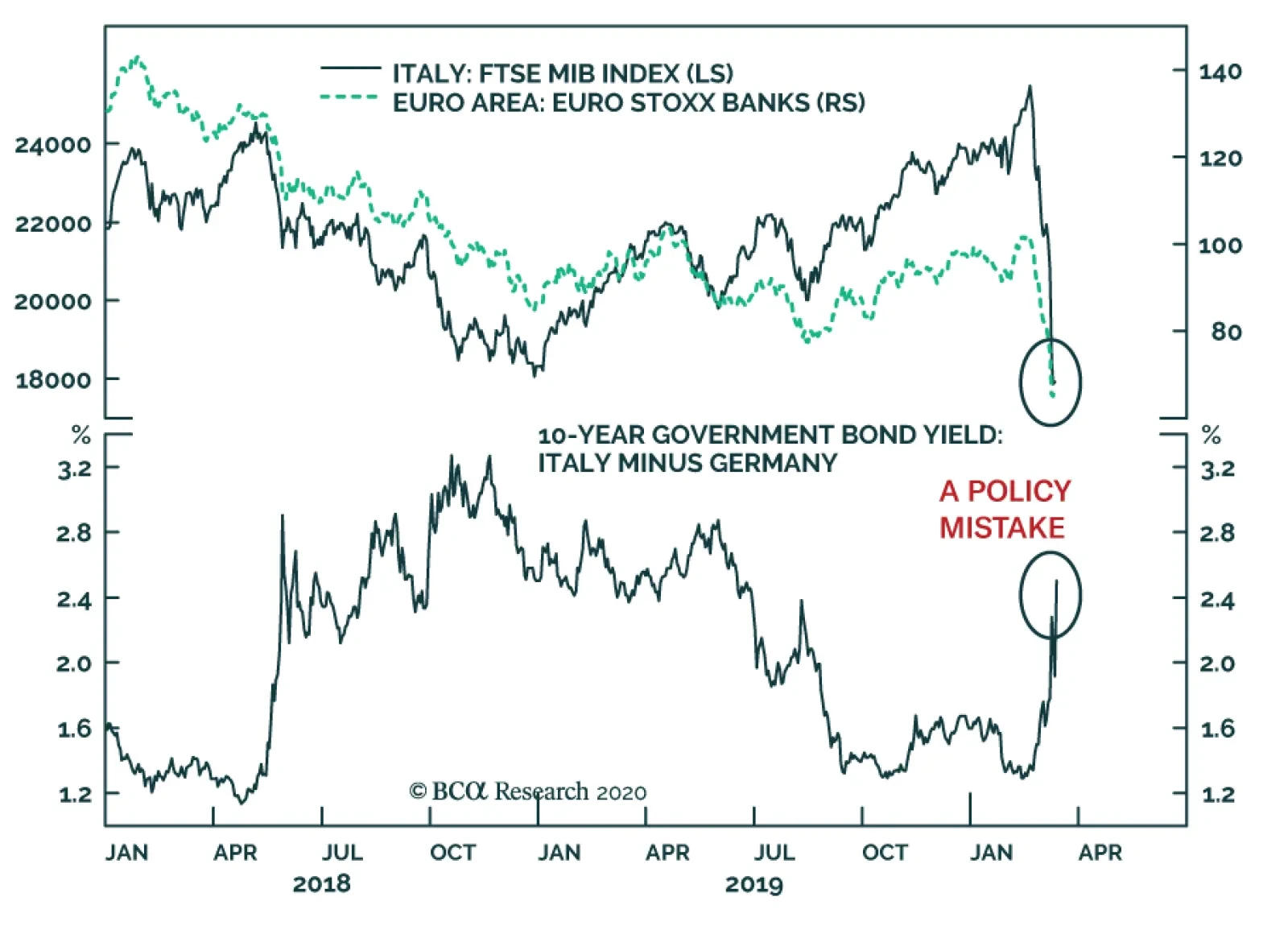
Yesterday, the ECB did not cut rates. This can be forgiven, pushing rates further into negative territory will only hurt banks and barely help economic activity. The ECB also eased the terms of the TLTRO-III programs, both in terms of rates (25bps below the…
On a happy personal note, I will be away on paternity leave for a short time, reacquainting myself with nappies. As such, there will be no Weekly Reports for the next two weeks, but you will receive two excellent Special Reports penned by my colleagues. Given the ongoing turbulence in the financial markets I will also send out short Alerts as and when necessary. Highlights After the worst three-day rout for stocks versus bonds in living memory, six-month investors have fully capitulated, and the markets are now priced for a technical recession. If the recession can be limited to two quarters, stocks are more likely to outperform long-dated bonds by 12 percent than to underperform by a further 12 percent. Tactical trade: overweight S&P500 versus German 30-year bund, currency hedged, setting a 12 percent profit target with symmetrical stop-loss. The closer that a bond yield gets to the -1 percent lower bound, the more limited becomes the possibility for a further yield decline. Overweight positive yielding bonds versus negative yielding bonds, currency hedged. The most attractive structural pair is overweight the US 30-year T-bond versus the German 30-year bund. Feature Chart of the WeekWidow Makers: Shorting Bonds In Japan, Switzerland... And Now The US
Widow Makers: Shorting Bonds In Japan, Switzerland... And Now The US
Widow Makers: Shorting Bonds In Japan, Switzerland... And Now The US
A Recession Is Now Fully Priced Financial markets have fully priced a downturn when the time horizon of investors that have fully capitulated = the length of the downturn. A week can be a long time in the financial markets. Seven days ago, the markets were not priced for a global recession. Then came the worst three-day rout for stocks versus bonds in living memory, in which stocks underperformed long-dated bonds by 25 percent (Chart I-2).1 Chart I-2The Worst 3-Day Rout: Stocks Underperformed Bonds By 25 Percent
The Worst 3-Day Rout: Stocks Underperformed Bonds By 25 Percent
The Worst 3-Day Rout: Stocks Underperformed Bonds By 25 Percent
The upshot is that investors with six-month horizons have now fully capitulated, meaning the markets are now fully priced for a technical recession (Chart I-3) – defined as a downturn lasting two straight quarters. But the markets are not priced for a more prolonged downturn lasting longer than two quarters. Raising the question: can the downturn be limited to the first half of the year? Chart I-3Six-Month Investors Have Capitulated, Meaning A Recession Is Fully Priced
Six-Month Investors Have Capitulated, Meaning A Recession Is Fully Priced
Six-Month Investors Have Capitulated, Meaning A Recession Is Fully Priced
The pessimistic case is that the coronavirus can neither be contained nor normalised by the summer. Or that even if its direct impact ebbs, there might be second-round effects. A major credit default from, say, a distressed airline or other travel-dependent company could trigger aftershocks in the financial system. Moreover, the recent collapse in the oil price injects new uncertainty into the energy patch as well as into geopolitics. The optimistic case is that large segments of the economy are set to receive a 2009 type triple-boost: from a sharp deceleration in bond yields; from a sharp deceleration in the oil price; and from government spending and/or tax cuts – creating a potent cocktail of stimulants for the second half of this year. Investors with six-month horizons have now fully capitulated. Balancing the pessimistic and optimistic cases, we assess that the downturn can be limited to two quarters – albeit this cannot be our highest conviction view, as we are not experts in epidemiology or immunology. Nevertheless, if this assumption holds, there is now a higher probability that stocks outperform long-dated bonds by 12 percent than that they underperform by a further 12 percent. This three-month tactical trade has a slight twist. It is best expressed as: overweight US stocks versus European bonds (currency hedged). This is because core European bond yields are close to their lower limit, meaning that core European bond prices are close to their mathematical upper limit. All of which brings us to a much higher conviction recommendation. The ‘Widow Maker’ Is Back First the widow maker came to Japan, next to Switzerland, then to the rest of Northern Europe. Now the widow maker has come to America. In the financial lexicon, ‘widow maker’ refers to the fatal strategy of shorting high-quality government bonds in an era when yields have been grinding inexorably lower. Any investment manager who has dared to bet that government bond yields would rise, whether starting from 3 percent, 2 percent, or even 1 percent, and whether in Japan, Switzerland, or even the US – has ended up being carried out of their job in a box, feet first (Chart of the Week). Except that in Switzerland over the past year, the widow maker trade has not been as fatal as it used to be. While the 5-year yield in the US has collapsed by 200 bps, in Switzerland it has edged down by just 20 bps (Chart I-4). Put another way, shorting the US 5-year T-bond has cost 11 percent, but shorting the Swiss 5-year bond has been relatively painless (Chart I-5). Chart I-4Swiss Bond Yields Cannot Fall Much...
Swiss Bond Yields Cannot Fall Much...
Swiss Bond Yields Cannot Fall Much...
Chart I-5...Meaning Swiss Bond Prices Cannot Rise
...Meaning Swiss Bond Prices Cannot Rise
...Meaning Swiss Bond Prices Cannot Rise
The simple reason is that Swiss government bond yields are now very close to their lower bound. The Lower Bound To Bond Yields Is Around -1 Percent The practical lower bound to the policy interest rate is -1 percent, because -1 percent counterbalances the storage cost of holding physical cash and/or other stores of value.2 Imagine the policy rate fell to well below -1 percent. If banks passed this deeply negative rate to their depositors, it would be logical for the bank depositors to flee wholesale into cheaper-to-hold physical cash. This deposit flight would kill the banking system. But if the banks didn’t pass the deeply negative policy rate to their depositors, it would wipe out the banks’ net interest margin – the gap between rates on loans and deposits. This inability to make profits would also kill the banking system. At deeply negative interest rates, bank deposits would flee. Could policymakers just abolish physical cash, forcing us all into ‘digital cash’ with unlimited negative interest rates? No, because that would just push us into other stores of value: for example, gold, or ‘decentralised’ cryptocurrencies. The common objections to cryptocurrencies are that their susceptibility to volatility and fraud makes them a poor store of value. But both objections are also true for gold. Yet who has ever argued that gold cannot be a store of value just because it is volatile and can be stolen (Chart I-6)! Chart I-6Gold Is A Store Of Value Despite Its Volatility
Gold Is A Store Of Value Despite Its Volatility
Gold Is A Store Of Value Despite Its Volatility
The lower bound to the policy rate at around -1 percent also sets the lower bound of the bond yield, because a bond yield is just the expected average policy rate over the bond’s lifetime. For completeness, we should mention one technical exception. If bond investors price in the possibility of being repaid in a different and more valuable currency, the bond yield will carry a further redenomination discount as an offset for the potential currency gain. This is relevant to euro area bonds because there remains the remote possibility of euro disintegration. Therefore, bonds which carry the small possibility of a currency redenomination gain – notably, German bunds – possess a small additional discount on their yields. But in jurisdictions where no currency redenomination is possible, such as Switzerland or Sweden, the practical lower bound to bond yields is around -1 percent. Overweight Positive Yielding Bonds Versus Negative Yielding Bonds Switzerland teaches us that the closer that a bond yield gets to the -1 percent lower bound, the more limited becomes the possibility for a further yield decline (price gain), whereas the possibility for a yield increase (price loss) stays unlimited. Making such bonds a ‘lose-lose’ proposition. The convergence in bond yields has much further to go. Therefore, our high conviction recommendation is to short negative yielding bonds in relative terms. In other words, overweight positive yielding bonds versus negative yielding bonds. And currency hedge the position – as, right now, the cost of currency hedging is low. The recommendation is applicable for both tactical (3-month) and structural (2-year plus) investment horizons, and it is applicable for all bond maturities: 5-year, 10-year, and 30-year. Given where yields now stand, the most attractive structural pair is overweight the US 30-year T-bond versus the German 30-year bund (Chart I-7 and Chart I-8). Chart I-7Expect Yields To Converge At 10-Year Maturities...
Expect Yields To Converge At 10-Year Maturities...
Expect Yields To Converge At 10-Year Maturities...
Chart I-8...And At Ultra-Long ##br##Maturities
...And At Ultra-Long Maturities
...And At Ultra-Long Maturities
Our structural overweight to a 50:50 combination of U.S. T-bonds and Italian BTPs versus a 50:50 combination of German Bunds and Spanish Bonos at 30-year bond maturities is up by 7 percent in just nine months. But the convergence in yields has much further to go (Chart I-9). Chart I-9Overweight Positive Yielding Bonds Versus Negative Yielding Bonds
Overweight Positive Yielding Bonds Versus Negative Yielding Bonds
Overweight Positive Yielding Bonds Versus Negative Yielding Bonds
Fractal Trading System* As discussed, this week’s recommended trade is to overweight stocks versus long-dated bonds expressed as overweight S&P500 versus German 30-year bund. The profit target is 12 percent with a symmetrical stop-loss. In a turbulent week for financial markets, overweight Poland versus Portugal achieved its profit target, short US utilities versus oil and gas and short EUR/CHF hit their stop-losses, and short palladium versus nickel moved comfortably into profit. The rolling 1-year win ratio now stands at 62 percent. Chart I-10Poland Vs. Portugal
Poland Vs. Portugal
Poland Vs. Portugal
When the fractal dimension approaches the lower limit after an investment has been in an established trend it is a potential trigger for a liquidity-triggered trend reversal. Therefore, open a countertrend position. The profit target is a one-third reversal of the preceding 13-week move. Apply a symmetrical stop-loss. Close the position at the profit target or stop-loss. Otherwise close the position after 13 weeks. * For more details please see the European Investment Strategy Special Report “Fractals, Liquidity & A Trading Model,” dated December 11, 2014, available at eis.bcaresearch.com. Dhaval Joshi Chief European Investment Strategist dhaval@bcaresearch.com Footnotes 1 MSCI All-Country World Index (in dollars) versus US 30-year T-bond. 2 The cost of holding physical cash or gold is the cost of its safe storage. Fractal Trading Model
The Widow Maker Is Back... And A Recession Is Fully Priced
The Widow Maker Is Back... And A Recession Is Fully Priced
The Widow Maker Is Back... And A Recession Is Fully Priced
The Widow Maker Is Back... And A Recession Is Fully Priced
Cyclical Recommendations Structural Recommendations
The Widow Maker Is Back... And A Recession Is Fully Priced
The Widow Maker Is Back... And A Recession Is Fully Priced
The Widow Maker Is Back... And A Recession Is Fully Priced
The Widow Maker Is Back... And A Recession Is Fully Priced
The Widow Maker Is Back... And A Recession Is Fully Priced
The Widow Maker Is Back... And A Recession Is Fully Priced
The Widow Maker Is Back... And A Recession Is Fully Priced
The Widow Maker Is Back... And A Recession Is Fully Priced
Trades Closed Trades Asset Performance Currency & Bond Equity Sector Country Equity Indicators Bond Yields Chart II-1Indicators To Watch - Bond Yields
Indicators To Watch - Bond Yields
Indicators To Watch - Bond Yields
Chart II-2Indicators To Watch - Bond Yields
Indicators To Watch - Bond Yields
Indicators To Watch - Bond Yields
Chart II-3Indicators To Watch - Bond Yields
Indicators To Watch - Bond Yields
Indicators To Watch - Bond Yields
Chart II-4Indicators To Watch - Bond Yields
Indicators To Watch - Bond Yields
Indicators To Watch - Bond Yields
Interest Rate Chart II-5Indicators To Watch - Interest Rate Expectations
Indicators To Watch - Interest Rate Expectations
Indicators To Watch - Interest Rate Expectations
Chart II-6Indicators To Watch - Interest Rate Expectations
Indicators To Watch - Interest Rate Expectations
Indicators To Watch - Interest Rate Expectations
Chart II-7Indicators To Watch - Interest Rate Expectations
Indicators To Watch - Interest Rate Expectations
Indicators To Watch - Interest Rate Expectations
Chart II-8Indicators To Watch - Interest Rate Expectations
Indicators To Watch - Interest Rate Expectations
Indicators To Watch - Interest Rate Expectations
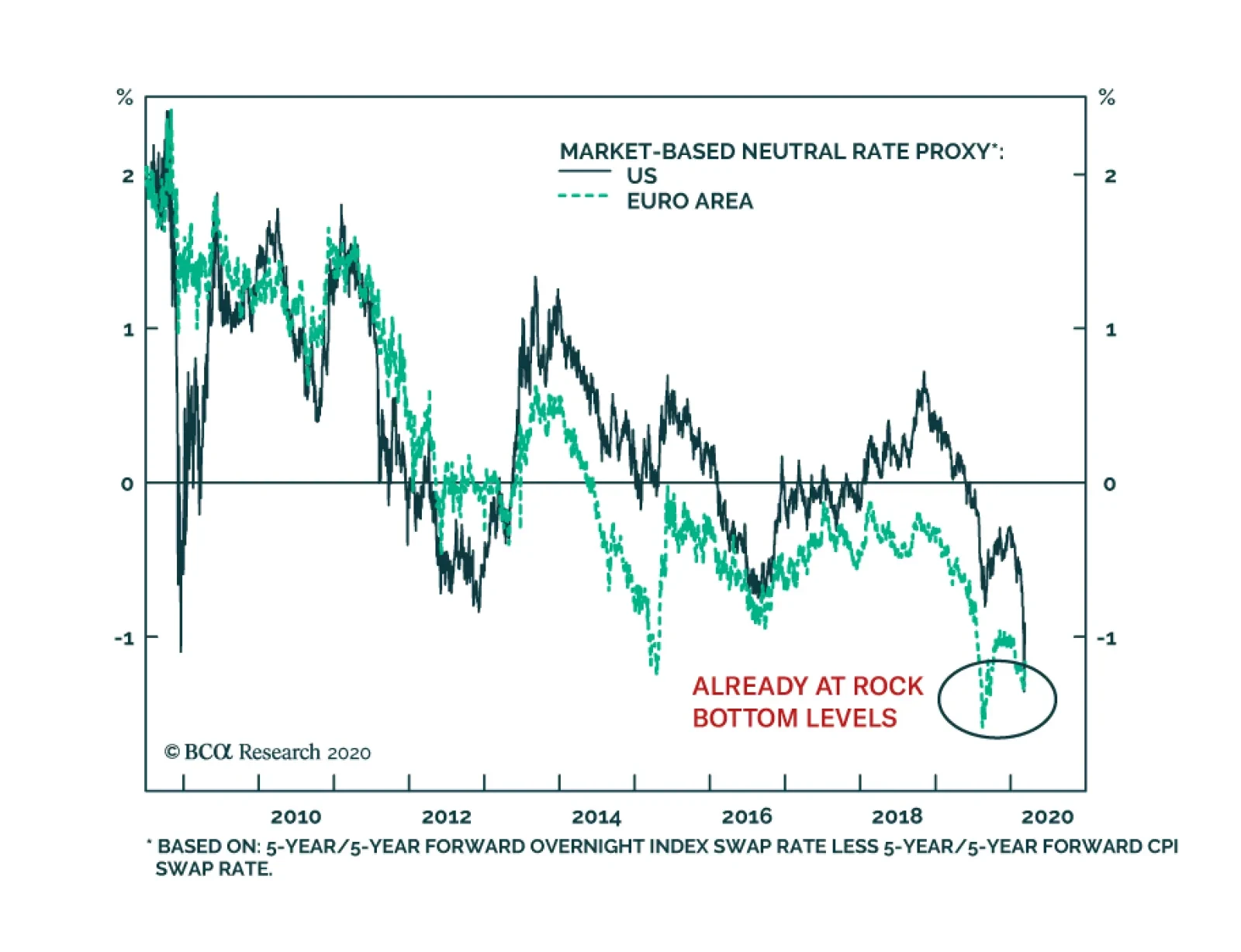
The Bank of England followed on the path of the Fed and executed a 50bps inter-meeting interest rate cut. Markets did not feel relieved. Instead, they sold off, a move that continued after the WHO declared COVID-19 a pandemic. As we have written before,…
Highlights Uncertainty & Yields: Global bond yields, driven to all-time lows as investors seek safety amid rioting markets, now discount a multi-year period of very weak global growth and inflation. Bond Portfolio Strategy: Maintain overall neutral portfolio duration exposure with so much bad news already priced into yields. Downgrade overall global spread product exposure to underweight versus governments on a tactical (0-3 months) basis given intense uncertainties on COVID-19 and oil markets. Model Bond Portfolio Changes – Governments: Upgrade countries that are more responsive to changes in the level of overall global bond yields and with room to cut interest rates (the US & Canada) to overweight, while downgrading sovereign debt with a lower “global yield beta” and less policy flexibility (Germany, France, Japan) to underweight. Model Bond Portfolio Changes – Credit: Downgrade US high-yield, euro area corporates and emerging market USD sovereigns & corporates to underweight. Feature Chart of the WeekOn The Verge Of Global ZIRP
On The Verge Of Global ZIRP
On The Verge Of Global ZIRP
The title of this report is a quote from a worried BCA client this morning, discussing his daily commute into Manhattan from the New York suburbs. We can think of no better analogy for the mood of investors in the current market panic. After having enjoyed a decade of riding the gravy train of recession-free growth and robust returns on risk assets, all underwritten by accommodative monetary policies, worries about a deflationary bust following the boom have intensified. The global spread of COVID-19, the ebbs and flows of the US presidential election and, now, a stunning collapse in oil prices – markets have simply been unable to process the investment implications of these unpredictable events all at once. At times of such stress, the obvious thing to do is to stand aside and hedge portfolios while awaiting better visibility on the uncertainties. At times of such stress, the obvious thing to do is to stand aside and hedge portfolios while awaiting better visibility on the uncertainties. It is clear that global government bonds have been a preferred hedge, with yields collapsing to record lows worldwide. While most of the market attention has been on the breathtaking fall in US yields that has pushed the entire Treasury curve below 1% as the market has moved to discount a swift move to a 0% fed funds rate. New lows were also hit yesterday in countries that had been lagging the Treasury rally: the 10-year German bund reached -0.85% yesterday, while the 10-year UK Gilt fell to an intraday all-time low of 0.08% with some shorter-maturity Gilt yields actually dipping into negative territory (Chart of the Week). The common driver of yesterday’s yield declines was the 25% plunge in global oil prices after the weekend collapse of the OPEC 2.0 alliance between Russia and Saudi Arabia. The inflation expectations component of global bond yields fell accordingly, continuing the correlation with energy prices seen over the past decade. Yet the real component of global bond yields has also been falling, with markets increasingly pricing in an extended period of weak growth and negative real interest rates – especially in the US. Collapsing US Treasury Yields Discount A Recession, Not A Financial Crisis Chart 2Re-opening Old Wounds
Re-opening Old Wounds
Re-opening Old Wounds
While this latest plunge in US equity markets has been both rapid and powerful, the damage only takes us back to levels on the S&P 500 last seen as recently as January 2019 (Chart 2). The turmoil, however, has reopened old wounds in markets that had suffered their own crises over the past decade, with European bank stocks hitting new all-time lows and credit spreads on US high-yield Energy bonds and Italian sovereign debt (versus Germany) sharply blowing out. The backdrop remains treacherous and global equity markets will likely remain under pressure until the number of new COVID-19 cases peaks outside of China (especially in the US). If there is one silver lining amidst the market carnage, it is that there appears to be few signs of 2008-style systemic financial stress. If there is one silver lining amidst the market carnage, it is that there appears to be few signs of 2008-style systemic financial stress. Bank funding indicators like Libor-OIS spreads and bank debt spreads have widened a bit over the past week but remain at very subdued levels (Chart 3). This is in sharp contrast to classic risk aversion indicators like the price of gold and the value of the Japanese yen versus the Australian dollar, which are closing in on the highs seen during the 2008 global financial crisis and 2012 European debt crisis. Chart 3A Growth Downturn, Not A Systemic Crisis
A Growth Downturn, Not A Systemic Crisis
A Growth Downturn, Not A Systemic Crisis
We interpret this as investors being far more worried about a deep global recession than another major financial crisis. That is also confirmed in the pricing of US Treasury yields, especially when looking at the real yield. Chart 4Does The UST Market Think R* Is Negative?
Does The UST Market Think R* Is Negative?
Does The UST Market Think R* Is Negative?
Chart 5Another Convexity-Fueled Bond Rally
Another Convexity-Fueled Bond Rally
Another Convexity-Fueled Bond Rally
The entire TIPS yield curve is now negative for the first time, even with the real fed funds rate below the Fed’s estimate of the “r*” neutral real rate (Chart 4). The combination of low and falling inflation expectations, and plunging real yields, indicates that the Treasury market now believes that the neutral real funds rate is not 0.8%, as suggested by the Fed’s estimate of r*, but is somewhere well below 0%. With the fed funds rate now down to 0.75% after last week’s intermeeting 50bps cut, the Treasury market is not only pricing the Fed quickly returning to the zero lower bound on the funds rate, but staying trapped at zero for a very long time. The Treasury market is not only pricing the Fed quickly returning to the zero lower bound on the funds rate, but staying trapped at zero for a very long time. Yet that may be too literal an interpretation of the incredible collapse of US Treasury yields. The power of negative convexity is also at work, driving intense demand for long-duration bonds that puts additional downward pressure on yields. Large owners of US mortgage backed securities (MBS) like the big commercial banks have seen the duration of their MBS holdings collapse as yields have fallen. The result is that banks are forced to buy huge amounts of Treasuries (or receive US dollar interest rate swaps) to hedge their duration exposure of negative convexity MBS, hyper-charging the fall in Treasury yields – perhaps over $1 trillion worth of buying, by some estimates.1 This is a similar dynamic to what occurred last summer in Europe, when sharply falling bond yields triggered convexity-related demand for duration from large asset-liability managers like pension funds, further fueling the decline in bond yields (Chart 5). Yet even allowing that some of the Treasury yield decline has been driven by a mechanical demand for duration, a 10-year US Treasury yield of 0.56% clearly discounts expectations of a US recession, as well – which appears justified by the recent performance of some critical US economic data. In Charts 6 & 7, we show a “cycle-on-cycle” analysis of some key US financial and indicators and how they behave before and after the start of the past five US recessions. The charts are set up so the vertical line represents the start of the recession, and we line up the data for the current business cycle as if the latest data point represents the start of a recession. Done this way, we can see if the current data is evolving in a similar fashion to past US economic downturns. Chart 6The US Business Cycle Looks Toppy
The US Business Cycle Looks Toppy
The US Business Cycle Looks Toppy
Chart 7COVID-19 Will Likely Trigger A Confidence-Driven US Recession
COVID-19 Will Likely Trigger A Confidence-Driven US Recession
COVID-19 Will Likely Trigger A Confidence-Driven US Recession
The charts show that the current flat 10-year/3-month US Treasury curve and steady decline in corporate profit growth are both accurately following the path entering past US recessions. Other indicators like the NFIB Small Business confidence survey, the Conference Board’s leading economic indicator and consumer confidence series typically peak between 12-18 months prior to the start of a recession, but appear to be only be peaking now. The same argument goes for initial jobless claims, which are usually rising for several months heading into a recession but remain surprisingly steady of late – a condition that seems unlikely to continue as more companies suffer virus-related hits to their sales and profits and begin to shed labor. Net-net, these reliable cyclical US data suggest that the Treasury market is right to be pricing in elevated recession risk – especially with US cases of COVID-19 starting to increase more rapidly and US financial conditions having tightened sharply in the latest market rout. Bottom Line: Global bond yields, driven to all-time lows as investors seek safety amid rioting markets, now discount a multi-year period of very weak global growth and inflation – most notably in the US. Allocation Changes To Our Model Bond Portfolio The stunning fall in global bond yields has already gone a long way. Yet it is very difficult to forecast a bottom in yields, even with central banks easing monetary policy to try and boost confidence, before there is evidence that the global COVID-19 outbreak is being contained (i.e. a decreasing total number of confirmed cases). By the same token, corporate bonds (and equities) will continue to be under selling pressure until the worst of the viral outbreak has passed. We raised our recommended overall global duration stance to neutral last week – a move that was more tactical in nature as a near-term hedge to our strategic overweight corporate bond allocations in our Model Bond Portfolio amid growing market volatility. Yet with the new stresses coming from the collapse in oil prices and increasing spread of COVID-19 in the US and Europe, we are moving to a much more cautious near-term stance on global credit. Yet with the new stresses coming from the collapse in oil prices and increasing spread of COVID-19 in the US and Europe, we are moving to a much more cautious near-term stance on global credit. This week, we are making the following additional changes to our model bond portfolio to reflect the growing odds of a global recession: Downgrade global corporates to underweight versus global governments Maintain a neutral overall portfolio duration, but favor countries within the government bond allocation that are more highly correlated to changes in to the overall level of global bond yields. Chart 8Favor Higher-Beta Bond Markets With Room To Cut Rates
Favor Higher-Beta Bond Markets With Room To Cut Rates
Favor Higher-Beta Bond Markets With Room To Cut Rates
Given how far yields have declined already, we think raising allocations to “high yield beta” countries that can still cut interest rates, at the expense of reduced weightings toward low beta countries that have limited scope to ease policy, offers a better risk/reward profile than simply raising duration exposure across the board. Such a nuanced argument is less applicable to global corporates, where elevated market volatility, poor investor risk appetite and deteriorating global growth momentum all argue for continued near-term underperformance of corporates versus government bonds. Specifically, we are making the following changes to our recommended allocations, presented with a brief rationale for each move: Upgrade US Treasuries and Canadian government bonds to overweight: Both Treasuries and Canadian bonds are higher beta markets, as we define by a regression of monthly yield changes to changes in the yield of the overall Bloomberg Barclays Global Treasury index (Chart 8). The Fed cut 50bps last week as an emergency measure and has 75bps to go before reaching the zero bound, which the market now expects by mid-year. Additional bond bullish moves after reaching the zero bound, like aggressive forward guidance, restarting quantitative easing and even anchoring Treasury yields in a BoJ-like form of yield curve control, are all possible if the US enters a recession. Meanwhile, the Bank of Canada (BoC) followed the Fed’s cut with a 50bp easing the next day and signaled that additional rate cuts are likely to prevent a plunge in Canadian consumer confidence. The collapsing oil price likely seals the deal for additional rate cuts by the BoC in the next few months. Downgrade Japanese government bonds to maximum underweight: Japanese government bonds (JGBs) are the most defensive low-beta market in model bond portfolio universe, thanks to the Bank of Japan’s Yield Curve Control policy that anchors the 10yr JGB yield around 0%. This makes JGBs the best candidate for a maximum underweight stance when global bond yields are not expected to rise in the near term, as we expect. Downgrade Germany and France to Underweight: The ECB meets this week and will be under pressure to ease policy given recent moves by other major central banks. A -10bps rate cut is expected, which may happen to counteract the recent increase in the euro versus the US dollar, but there is also possibility that ECB will increase and/or extend the size and scope of its current Asset Purchase Program. Given the ECB’s lack of overall monetary policy flexibility, and low level of inflation expectations, we see limited scope for the lower-beta German and French government bonds to outperform their global peers. Remain overweight UK and Australia: While both Australian government bonds and UK Gilts have a “median” yield beta in our model bond portfolio universe, both deserve moderate overweights as there is still the potential for rate cuts in both countries. The Reserve Bank of Australia (RBA) cut the Cash Rate by -25bps last week and they are still open to cut further to boost a sluggish economy hurt by wildfires and weak export demand from China. The RBA will stay more dovish for longer until we will see clear signs of a rebound of the Chinese economy from the COVID-19 outbreak. The Bank of England (BoE) will likely cut its policy rate later this month, or even before the next scheduled policy meeting, as COVID-19 is starting to spread through the UK. Downgrade US High-Yield To Underweight: US junk bonds had already taken a hit during the global market selloff in recent weeks, but the collapse in oil prices pummeled the market given the high weighting of US shale producers in the index (Chart 9). With additional weakness in oil prices likely as Russia and Saudi Arabia are now in a full-fledged price war, US high-yield will come under additional spread widening pressure focused on the weaker Caa-rated segment that contains most of the energy names. We recommend a zero weight in the Caa-rated US junk bonds, within an overall underweight allocation to the entire asset class. Downgrade euro area investment grade and high-yield corporates to underweight: COVID-19 is now spreading faster in Germany and France, after leaving Italy in a full-blown national crisis. The export-oriented economies of the euro area were already vulnerable to a global growth slowdown, but now domestic growth weakness raises the odds of a full-blown recession – not a good environment to own corporate bonds, especially with the euro now appreciating. Downgrade emerging market (EM) USD-denominated sovereigns and corporates to underweight: EM debt remains a levered play on global growth, so the increased odds of a global recession are a problem for the asset class – even with sharply lower interest rates and early signs of a softening in the US dollar (Chart 10). Chart 9Downgrade US Junk Bonds To Underweight
Downgrade US Junk Bonds To Underweight
Downgrade US Junk Bonds To Underweight
Chart 10Still Not Much Broad-Based Weakness In The USD
Still Not Much Broad-Based Weakness In The USD
Still Not Much Broad-Based Weakness In The USD
We will present the new specific model bond portfolio weightings, along with a discussion of the risk management implications of these changes, in next week’s report. Bottom Line: Maintain overall neutral portfolio duration exposure with so much bad news already priced into yields. Downgrade overall global spread product exposure to underweight versus governments on a tactical (0-3 months) basis given intense uncertainties on COVID-19 and oil markets. Upgrade high-beta countries with room to cut interest rates (the US & Canada) to overweight, while downgrading lower-beta countries with less policy flexibility (Germany, France, Japan) to underweight. Downgrade US high-yield, euro area corporates and emerging market USD sovereigns & corporates to underweight. Robert Robis, CFA Chief Fixed Income Strategist rrobis@bcaresearch.com Ray Park, CFA Research Analyst ray@bcaresearch.com Footnotes 1https://www.wsj.com/articles/fear-isnt-the-only-driver-of-the-treasury-rally-banks-need-to-hedge-their-mortgages-1158347080 Recommendations Regional Allocation Spread Product Tactical Trades Yields & Returns Global Bond Yields Historical Returns