
Sorry, you need to enable JavaScript to visit this website.
Skip to main content

Europe

We assign high odds that the US will tip into a recession by year-end or early 2025. Given it has been the largest driver of global demand in this cycle, a US recession will morph into a global downturn. The procyclical Eurozone economy is particularly…
UK’s CPI growth stands right on the Bank of England’s (BoE) 2% target. However, services inflation remains sticky, growing at a constant 5.7% y/y in June. Moreover, the deceleration in wage growth remains insufficient to temper inflationary pressures in the…
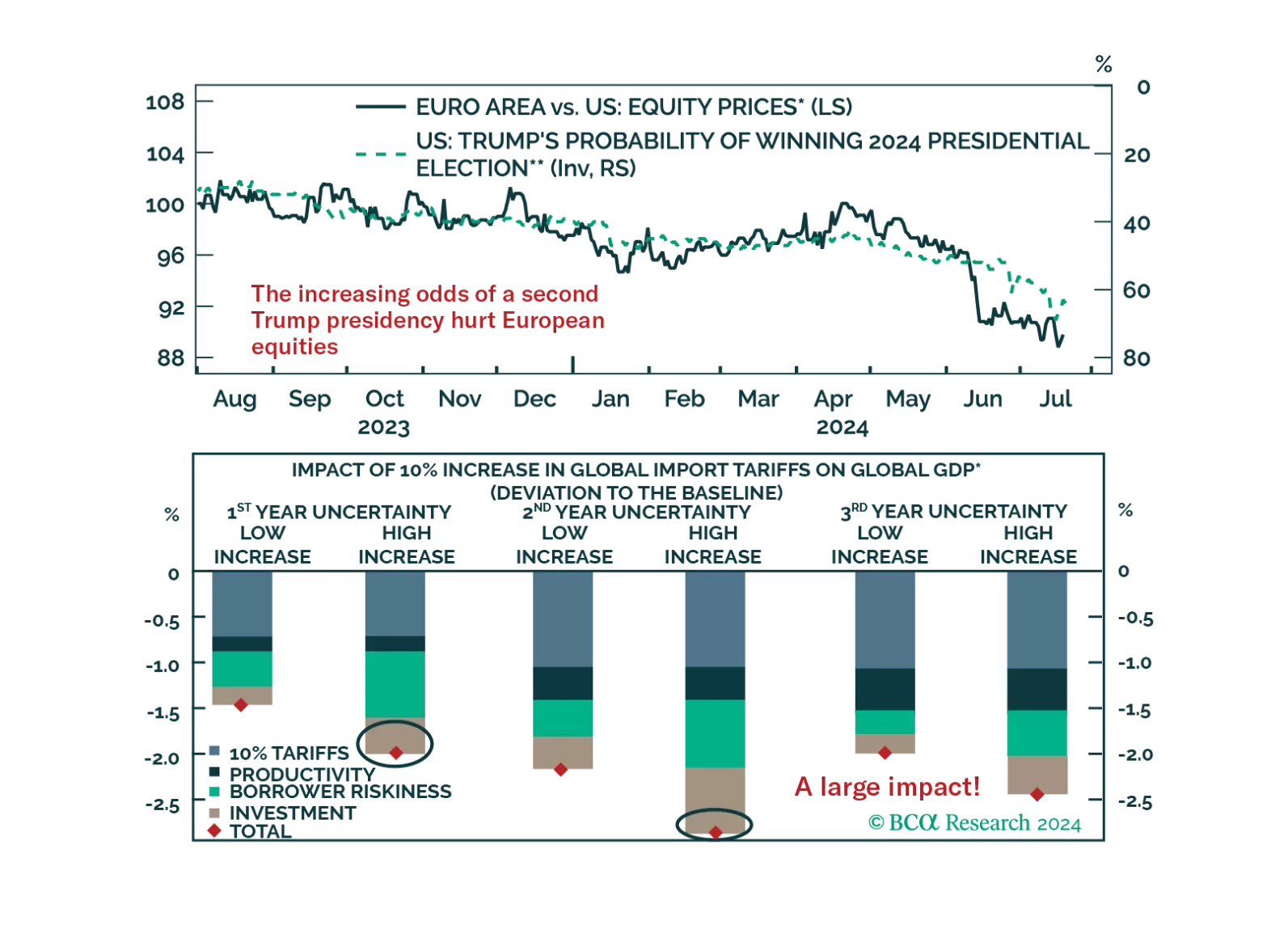
According to BCA Research’s European Investment Strategy service, the impact on global trade from another round of tariffs under a potential Trump administration is an emerging risk to Europe. The underperformance of European equities relative to US ones…

As Trump’s victory odds rise, the underperformance of European equities deepens. How negative would a global trade war be for European assets?
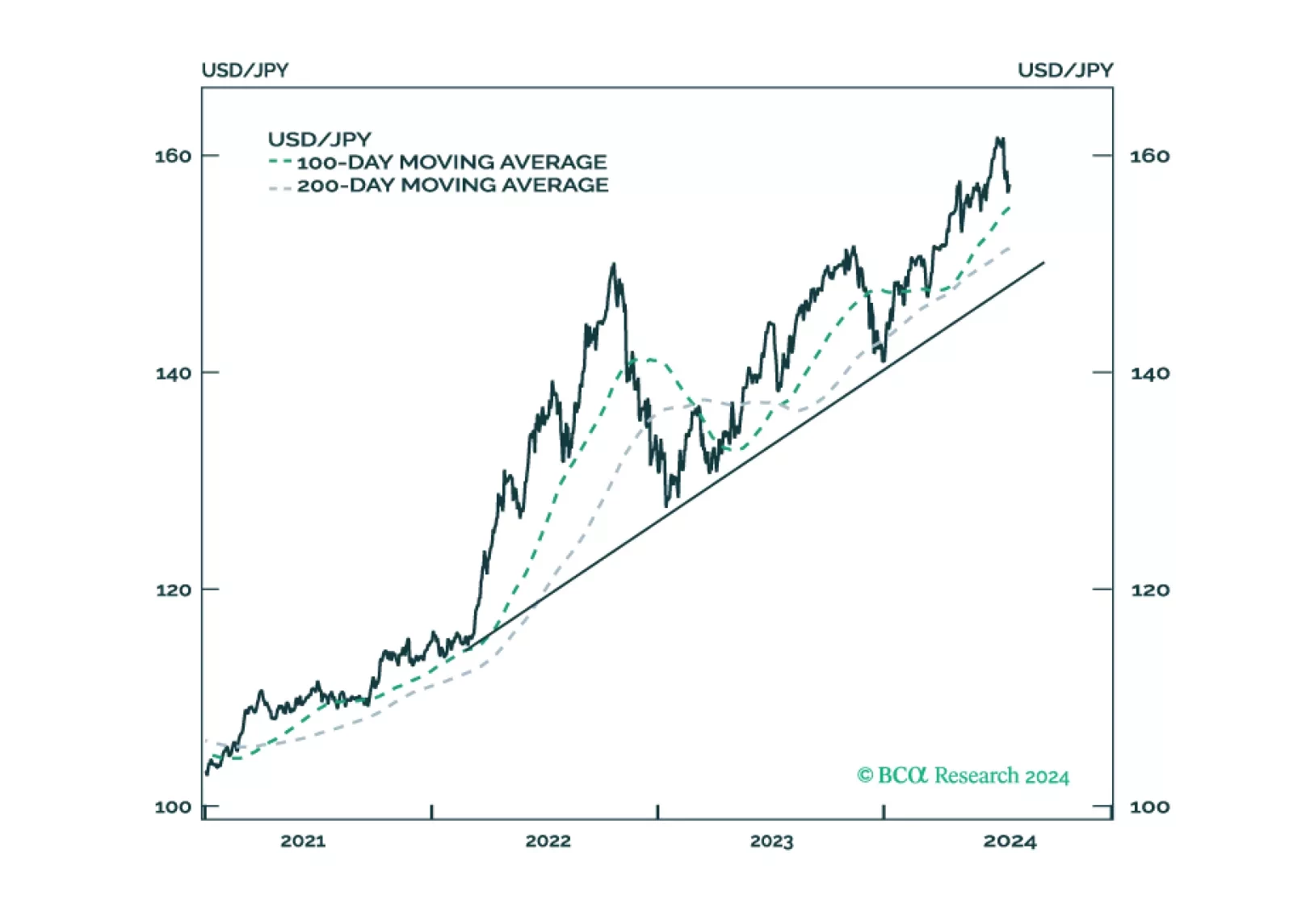
We review some of the key data releases this week that we find have an impact on our currency strategy. Long yen positions make sense today. Long sterling and the euro bets are more of a judgment call, and we will fade any strength in these currencies. This report delves into these nuances, and suggests a few trade ideas.
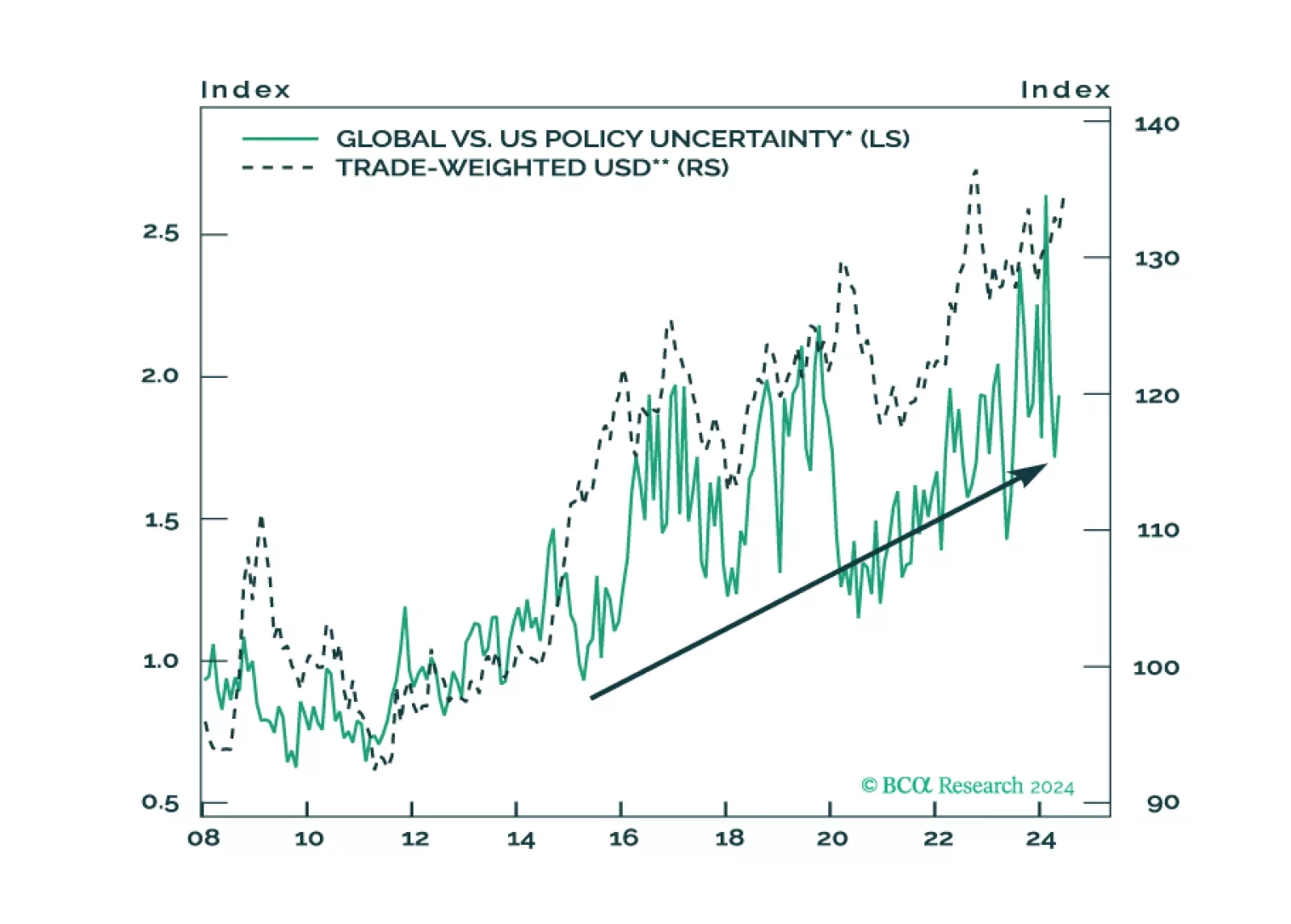
Investors should overweight US assets and de-risk their portfolios in anticipation of a major increase in policy uncertainty and geopolitical risk surrounding the US election and its global ramifications.
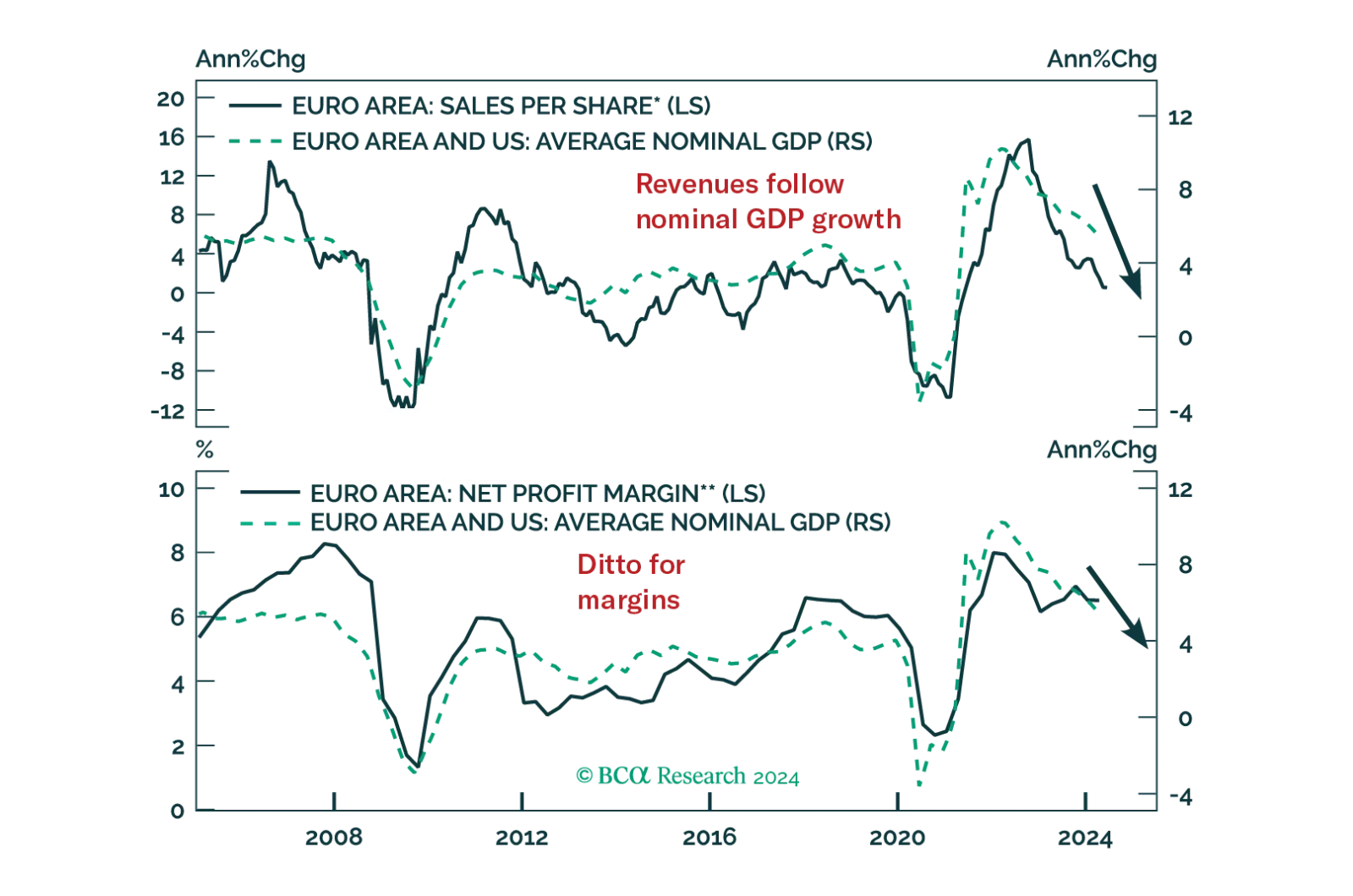
According to BCA Research’s European Investment Strategy service, the threat to European equities stems from growth, not French politics. After the dissolution of the French parliament on June 9th, investors sold European assets, anxious that the far left…

The real threat to European equities is growth, not political risk. How low will Eurozone earnings fall during the coming recession and how much will equities decline in response?

Investors in European sovereign bonds should find solace that continental voters are not turning away from support for EU integration. As such, populist parties are not really that “far” left or right. And as long as they want to maintain popular support, they will have to abide by the fiscal rules imposed by Brussels. No such supranational constraint exists in the U.S., the real risk for global bond operators.

France’s snap election is over and, according to BCA Research’s European Investment Strategy service, President Emmanuel Macron’s gamble paid off in some ways: neither the far right nor the far left can form a government, while his centrist alliance has…