Sorry, you need to enable JavaScript to visit this website.
Skip to main content

Europe

The Web 2.0 bubble is bursting, with far-reaching consequences for US stock market behaviour, sector allocation, and global asset allocation.
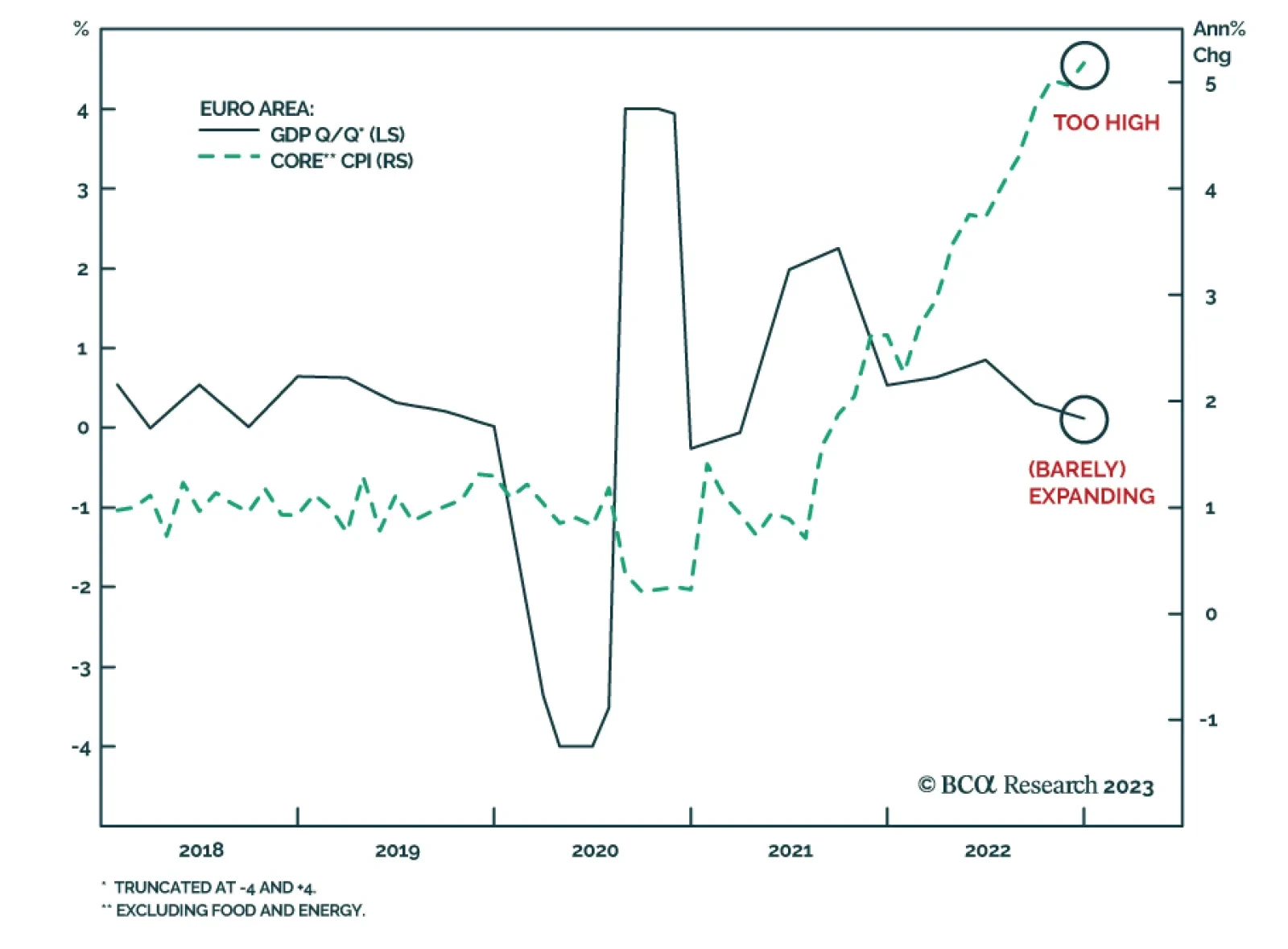
The preliminary GDP estimate suggests that the Euro Area economy expanded by 0.1% q/q in Q4 2022, beating expectations of a 0.1% q/q contraction. The improving energy situation due to milder-than-anticipated weather, as well as generous fiscal support…
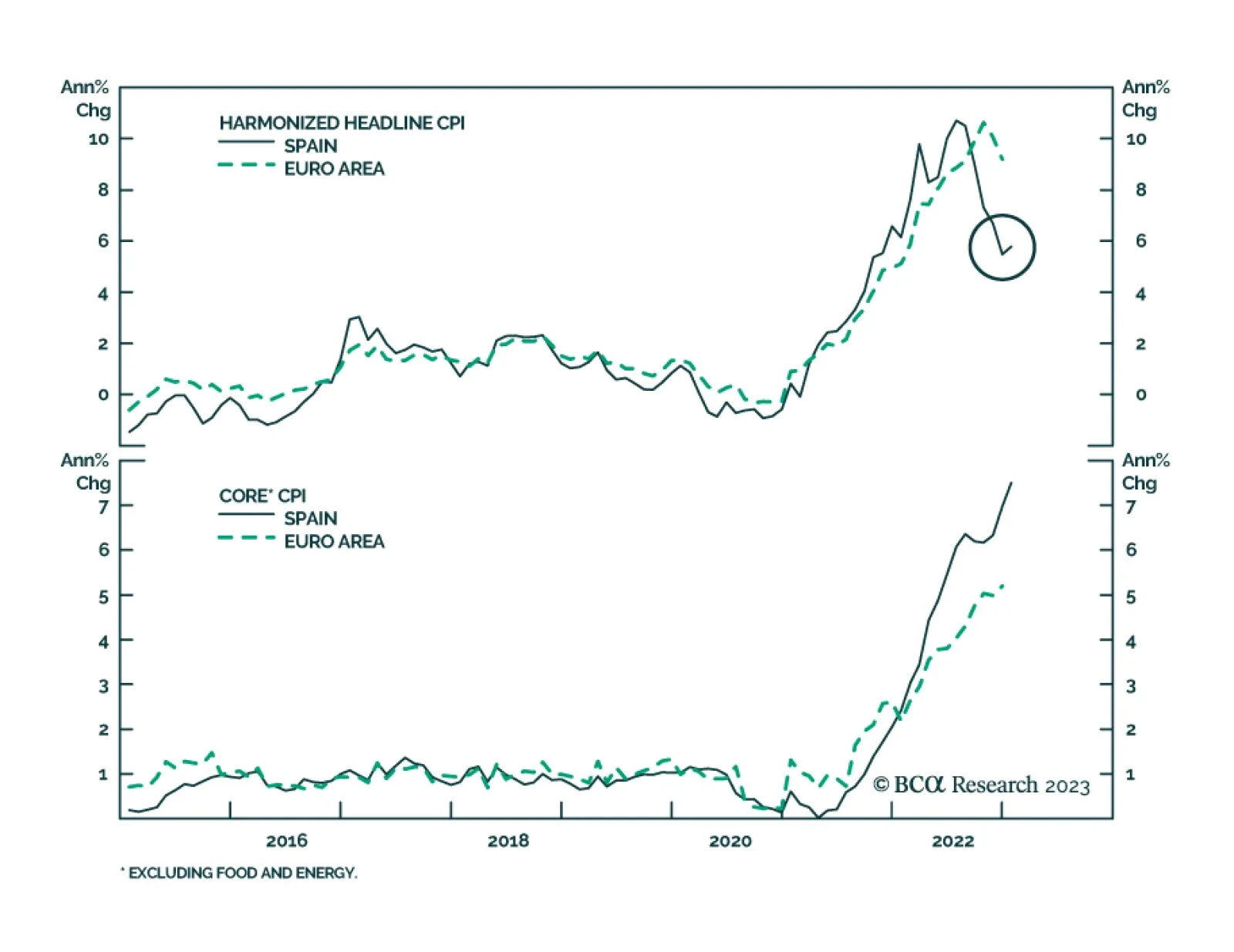
Preliminary estimates suggest that Spanish headline harmonized CPI inflation (HICP) accelerated to 5.8% y/y in January, from 5.5% y/y, largely surpassing expectations for a moderation to 4.8% y/y. A reacceleration of fuel prices compared to January 2022, as…
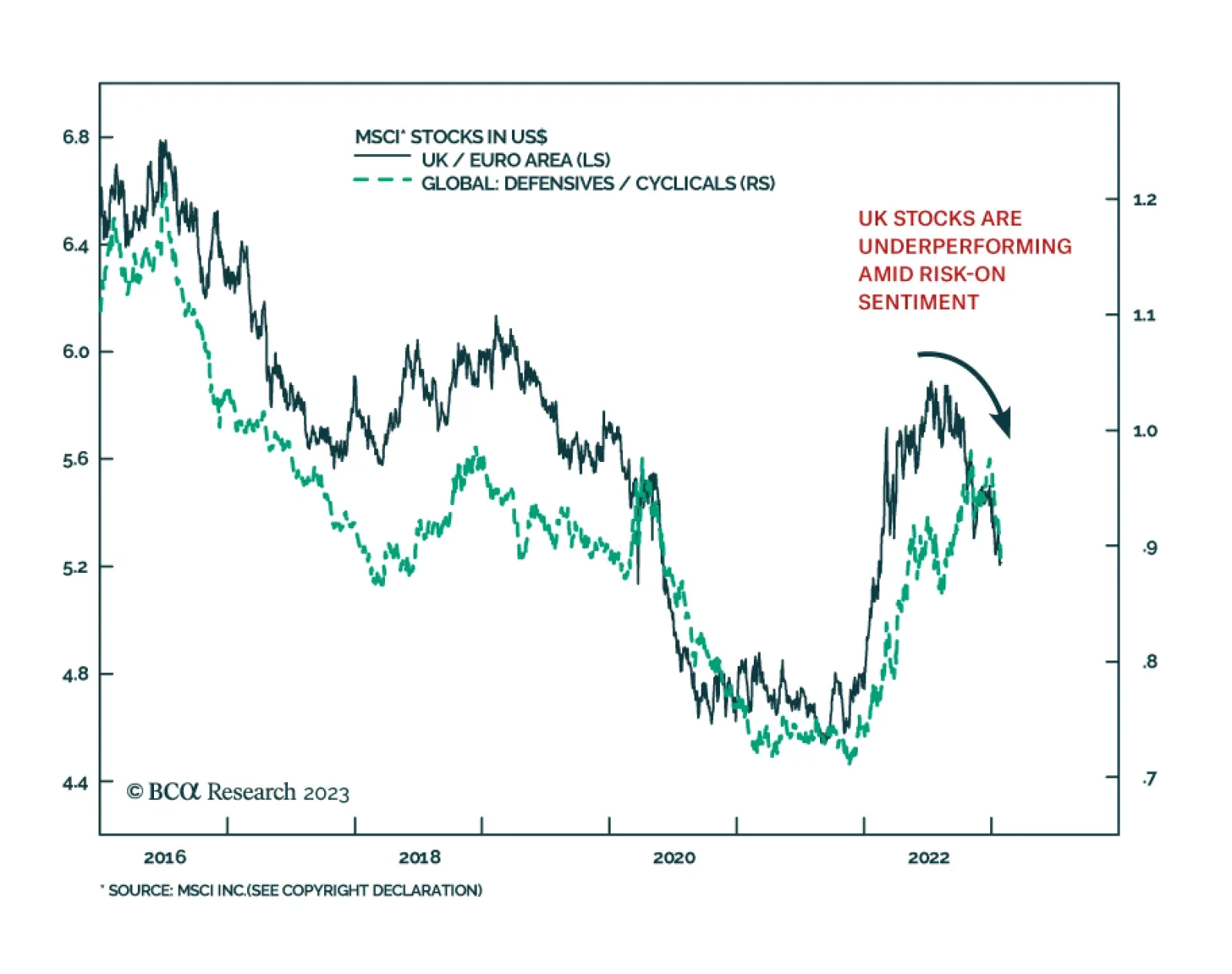
UK stocks have been underperforming their Eurozone peers recently. The MSCI Euro Area index’s 39% gain in the four months since its trough dwarfs the UK benchmark’s 27% increase since its September 27 bottom. Notably, this comes after a period of comparative…
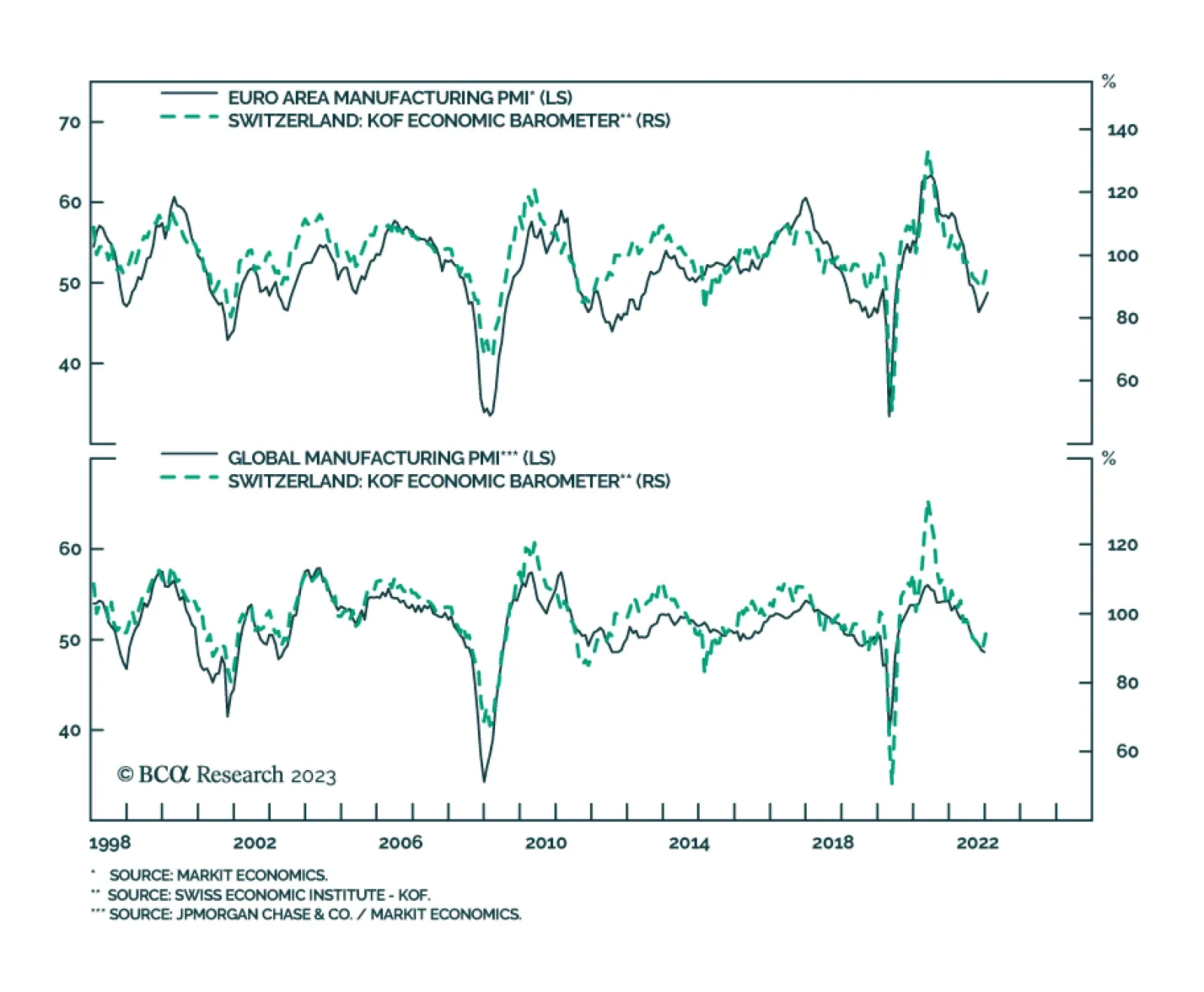
The Swiss KOF Barometer jumped 5.7 points to 97.2 in January, marking the second consecutive monthly increase, pushing the index to the highest level since June 2022. Importantly, the January increase reflects improvements across all of the KOF barometer’s…
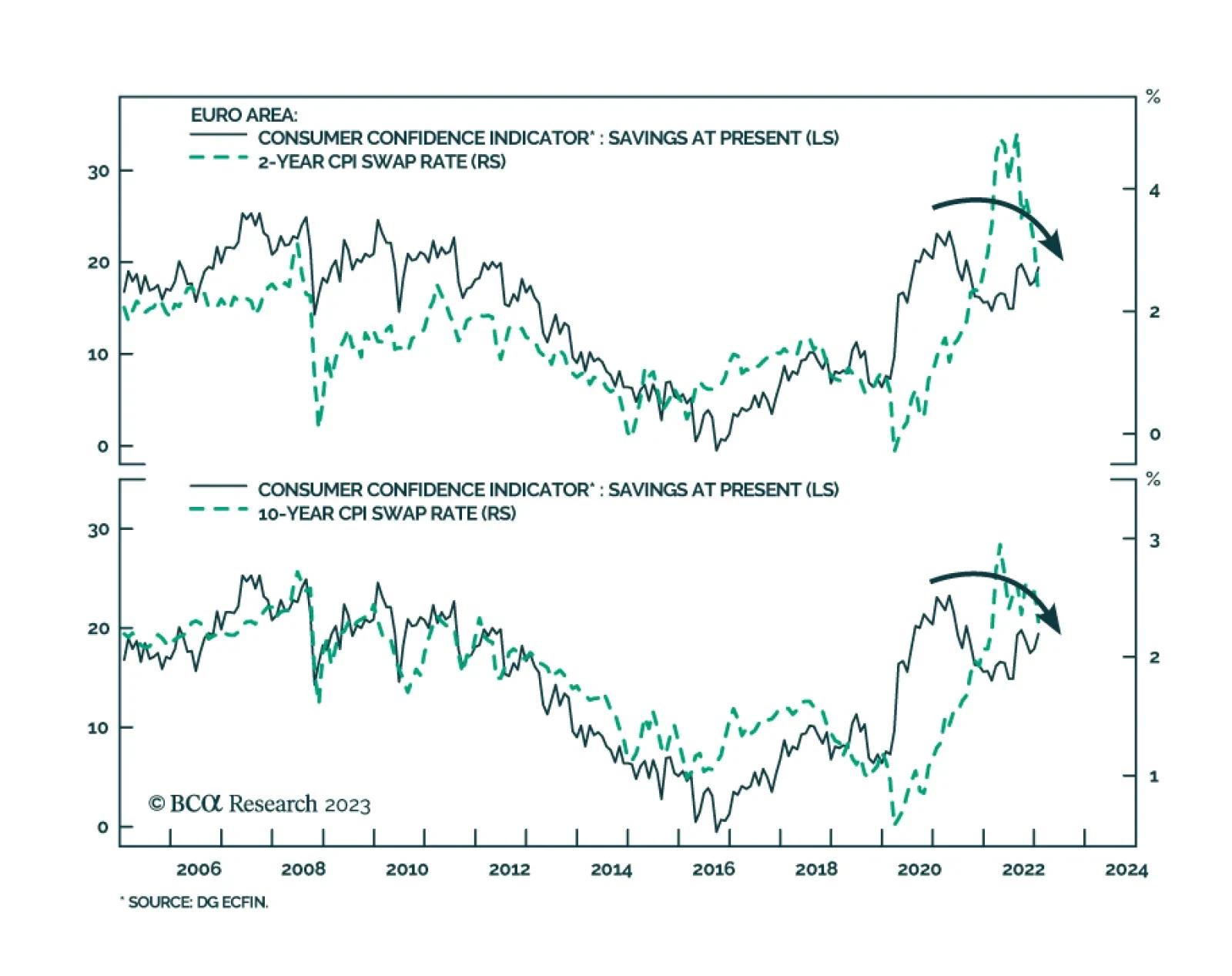
According to BCA Research’s European Investment Strategy service, Eurozone domestic demand is likely to be firm in 2023. Declining inflation will have a positive impact on consumption because it will lift real wages, which are currently contracting at 7%…

This week’s Special Report goes over the structural problems facing the UK economy and our outlook for UK gilts and the sterling following turbulent moves in 2022.

Europe’s domestic economy continues to surprise to the upside, can small-cap stocks do the same?

Remain cautious and defensive overall. Stay long DM Europe over EM Europe. Look for EM opportunities in Southeast Asia and Latin America over Greater China.

In Section I, we explain why we do not see the deceleration in US inflation, the likely near-term pickup in European growth, and the end of China’s dynamic zero-COVID policy as signs of a sustainable rebound in global economic activity over the coming 6-12 months. The key question is not whether inflation will fall back to central bank targets, but rather how quickly this will occur. For now, our indicators point to slower but still elevated inflation this year. In Section II, we explore what it will take for the Fed to cut interest rates, and note that nonrecessionary rate cuts are possible but not especially likely.