Germany
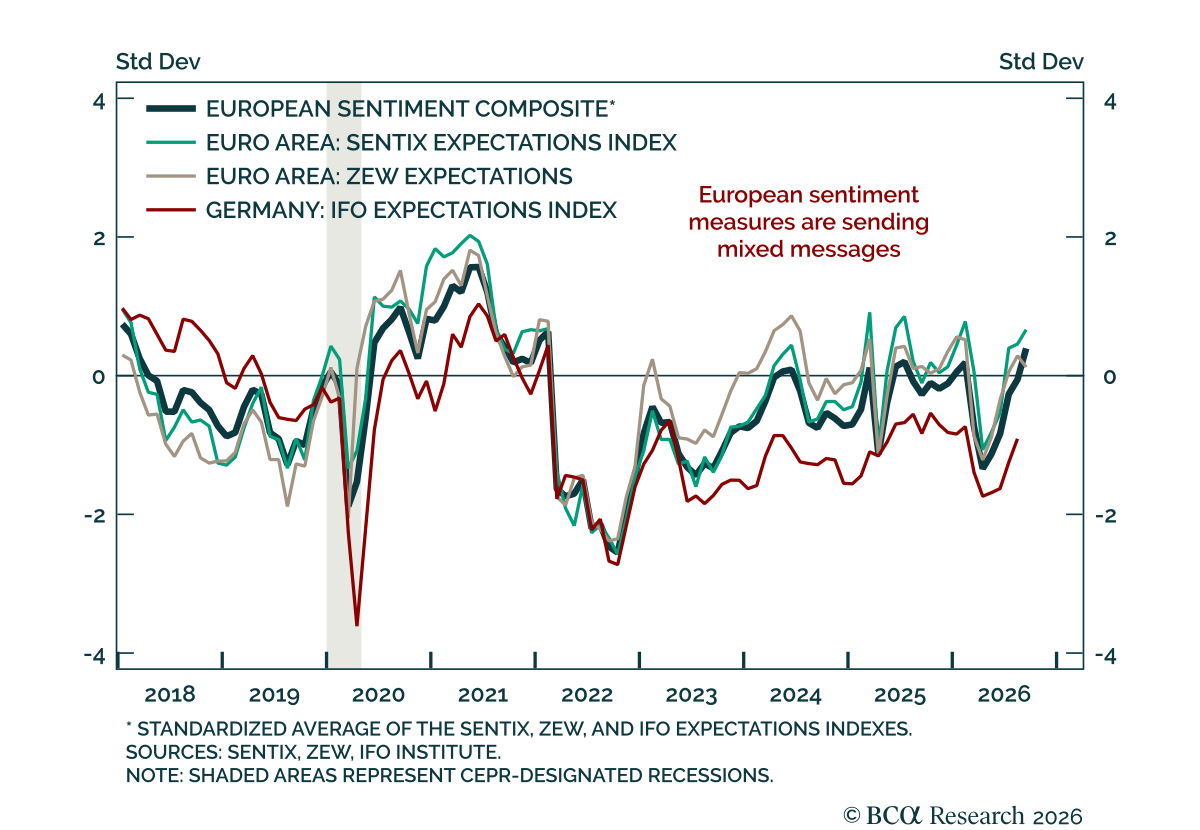
The September ZEW survey sent mixed signals, reinforcing our view that European growth momentum is unlikely to accelerate materially and supporting an overweight on Bunds. Euro area expectations fell to 25.8 from 31.4. In Germany, expectations missed…
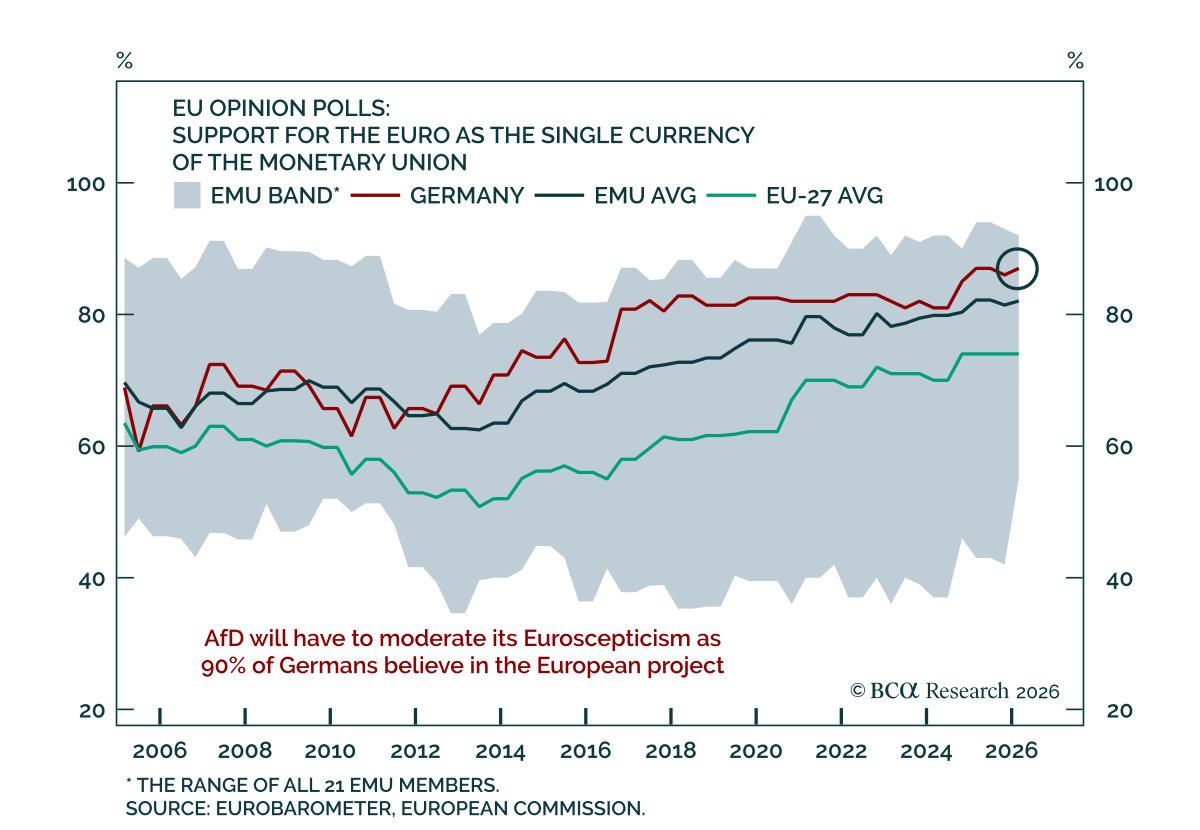
Our GeoMacro strategists think the AfD’s historic victory in Saxony-Anhalt is being overinterpreted, with national leadership still far away. The party fell short of a majority and will face constraints even at the state level. While the AfD has national…
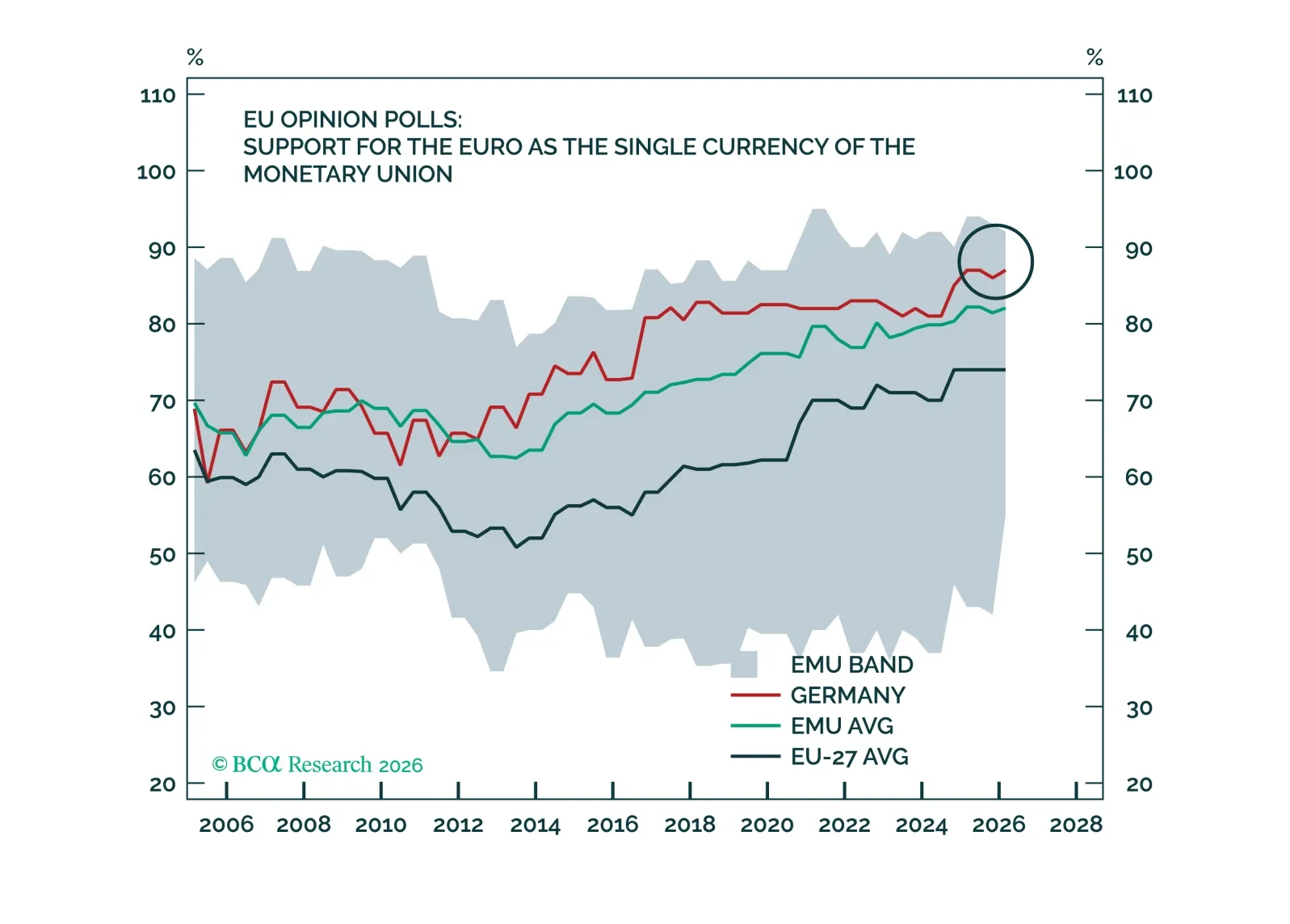
Alternative for Germany’s election win in the state of Saxony-Anhalt is overrated.
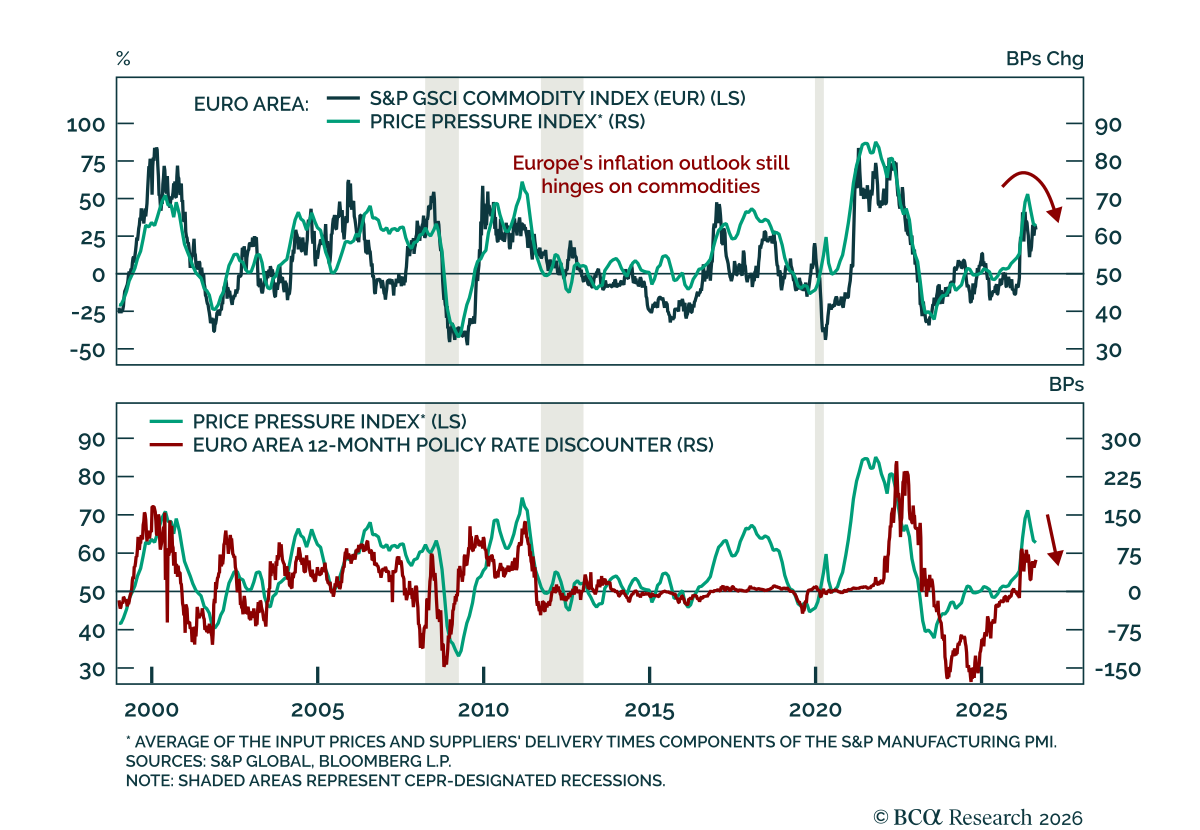
German inflation was cooler than expected in August, with little evidence that the energy shock is generating broader second-round effects. CPI rose 0.2% m/m, down from 0.8% in July, while annual inflation edged up to 2.9% from 2.8%. The headline acceleration…
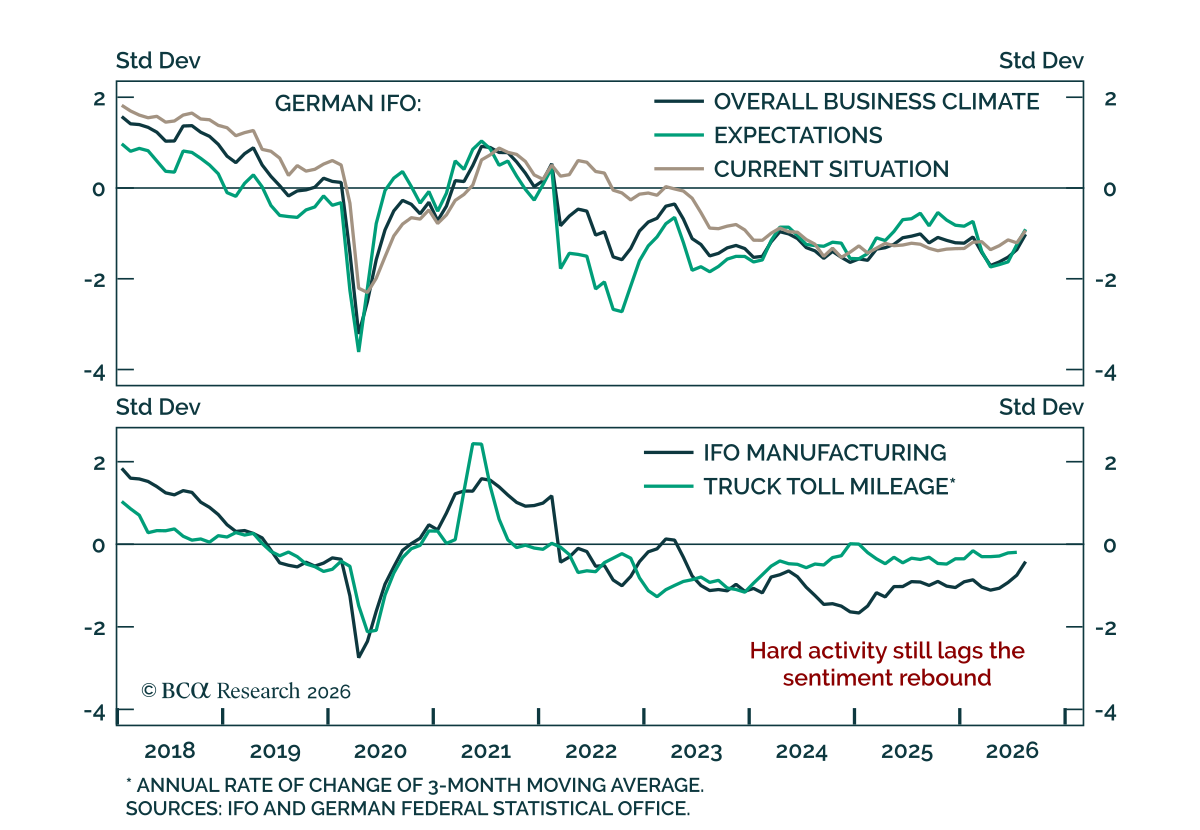
The August Ifo beat makes Germany’s recovery more credible, but hard activity is still stabilizing rather than accelerating. The Ifo Business Climate Index rose to 88.8 from 86.7, well above consensus, with both expectations and current conditions improving.…

After Hormuz, Germany faces another shipping chokepoint, at home this time. Water level at the Rhine's river’s most critical chokepoint, Kaub, has fallen to just 11cm, the lowest reading since the 1970s. Forecasters warn it could take weeks of sustained rain…
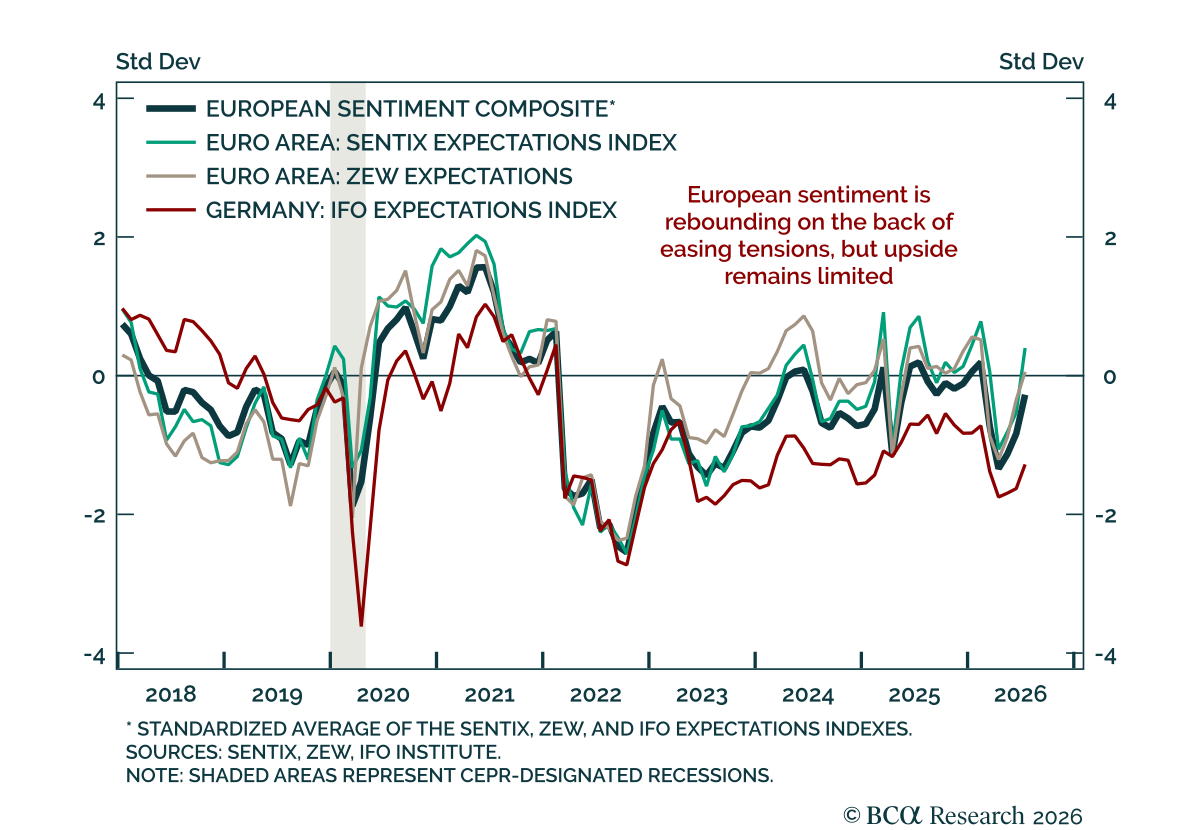
The July German IFO beat estimates, but the improvement was driven by expectations while current conditions weakened. The headline index rose on a jump in expectations, even as the current conditions index missed estimates and declined. The report is…
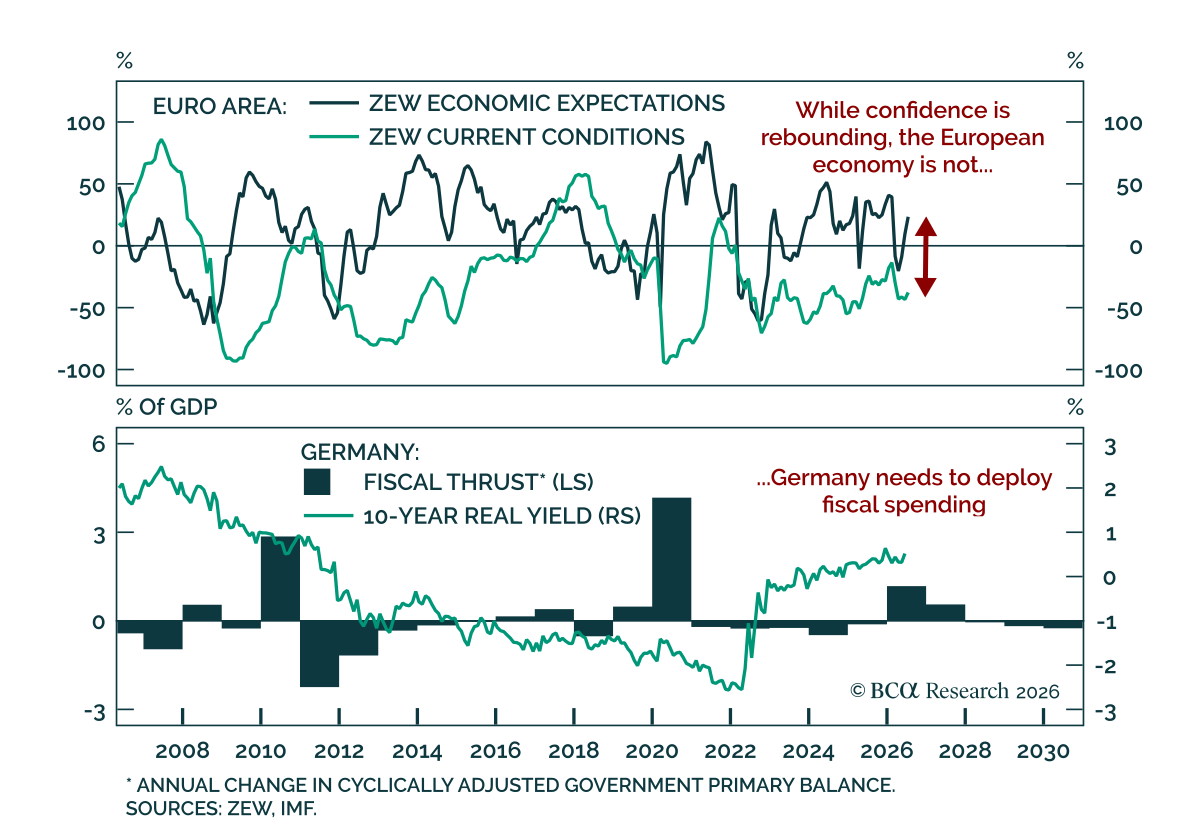
The Euro Area’s July ZEW survey pointed to a sharp improvement in sentiment alongside a lagging economy. The Euro Area expectations index rose to 23.4 from 9.5 in June, while Germany's beat estimates, climbing to 26.3 from 10.5. However, current conditions…
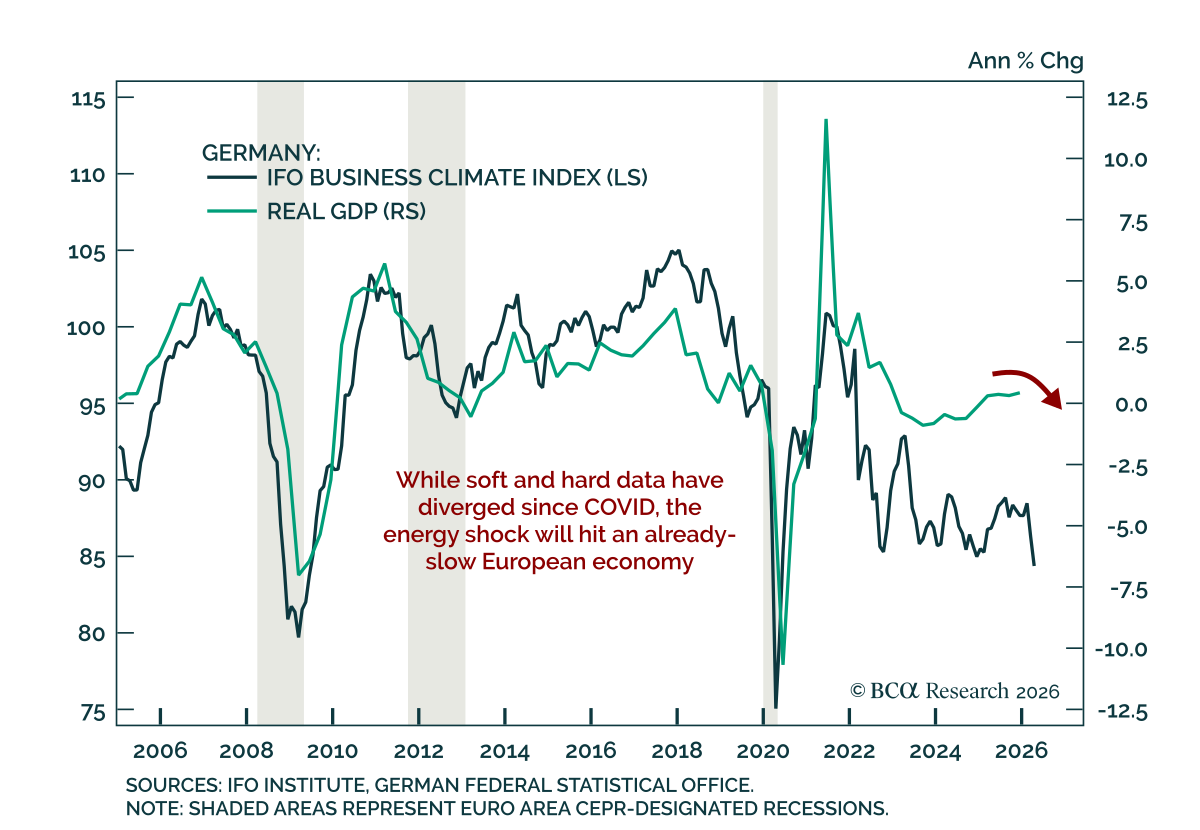
German data continue to deteriorate, reinforcing Europe’s vulnerability to a prolonged energy shock. The May GfK German Consumer Climate indicator fell to -33.3 from -28.1, a level not seen since the 2022 energy shock and near all-time lows for the series.…
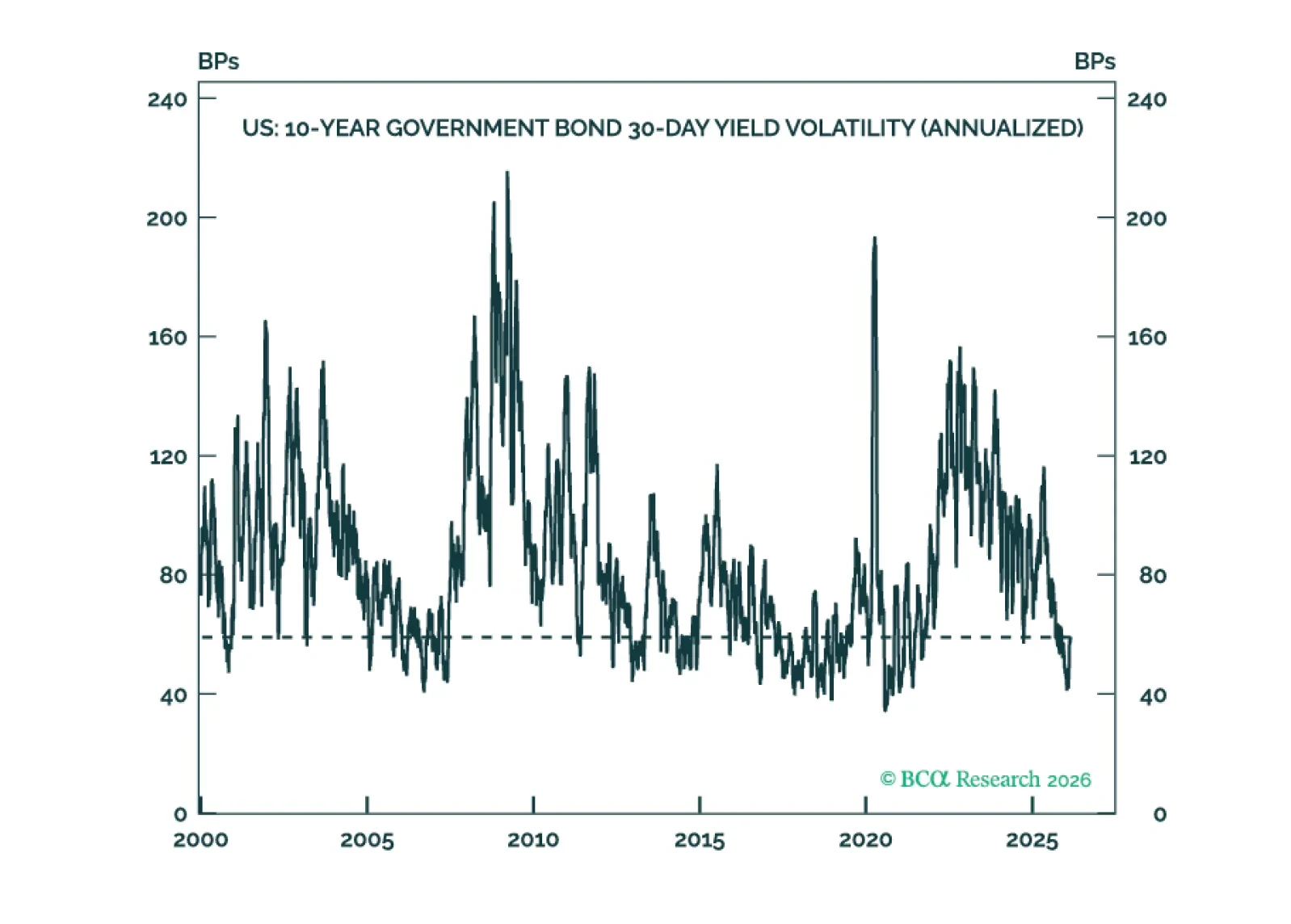
Interest rate volatility is very low across developed market fixed income. Investors should maximize the carry in their portfolios to outperform in a low rate vol environment.