Home Improvement Retail
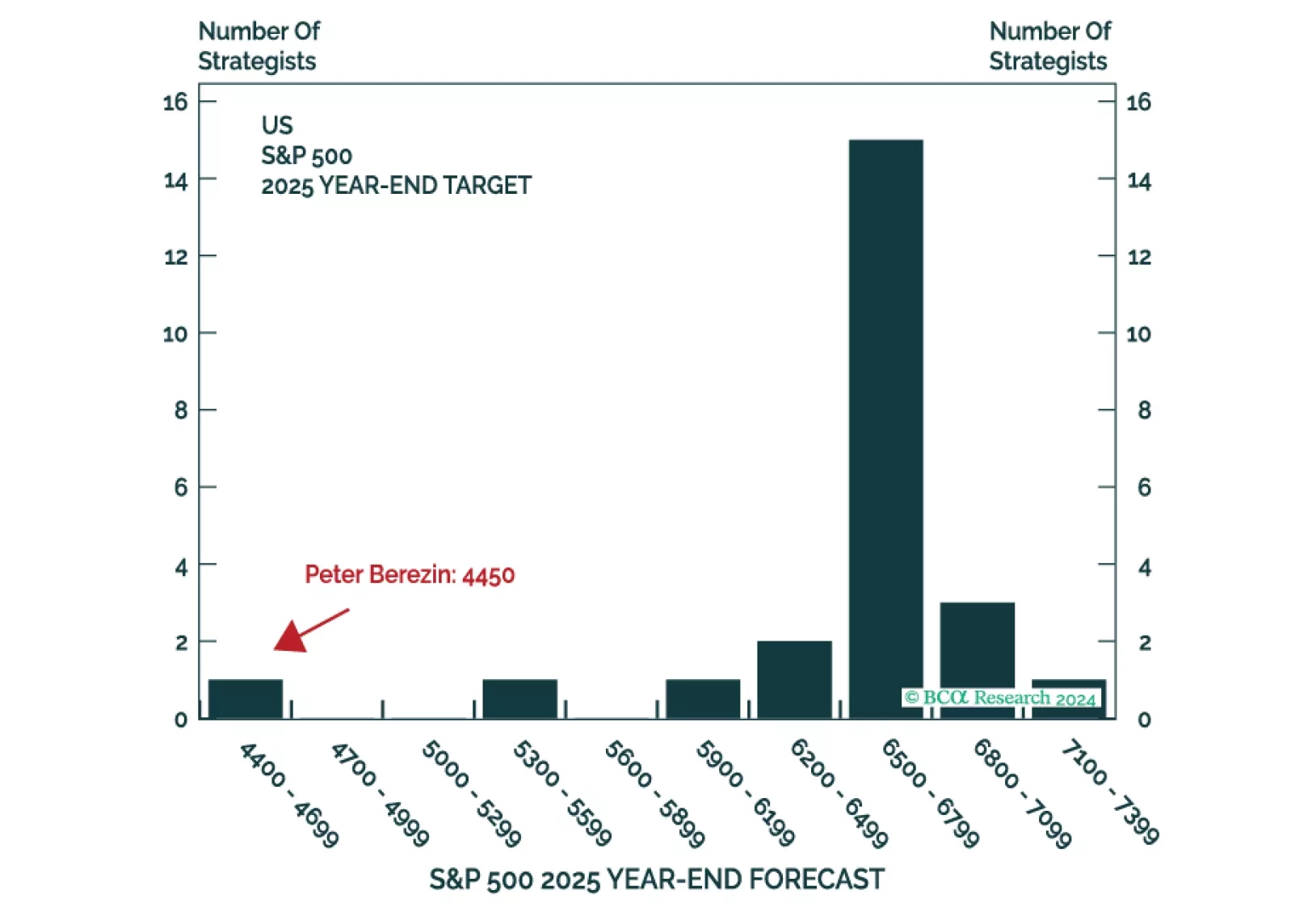
This is the time of the year when strategists are busy sending out their annual outlooks. Here on the Global Investment Strategy team, we decided to go one step further. Rather than pontificating about what could happen in 2025, we decided to harness the power of the multiverse to tell you what did happen (in at least one highly representative timeline).
Next week, please join me for a Webcast on Tuesday, December 17 at 10:30 AM EST (3:30 PM GMT, 4:30 PM CET) to discuss the economy and financial markets.
And with that, I will sign off for the year. I wish you and your loved ones a very happy and healthy 2025. We will be back in the first week of January with our MacroQuant Model Update.

Neutral Home improvement retailers (HIR) were among the lucky ones that were allowed to keep their doors open during the pandemic. As a result, these big box retailers benefitted from the lockdown as people used their stimulus checks and newly available free time, thanks to the work from home trend, to remodel their homes. Now that other retailers are opening their doors, the allure of being outright bullish the S&P HIR index has diminished (bottom panel). Add to this the fact that a great deal of future demand was pulled forward for HIR stores, and there is likely little upside left in the S&P HIR index. In addition, rates are moving higher at the margin, and energy costs are also breaking out. Taken together they form our consumer drag indicator and the implication is that the path of least resistance is lower for relative profit growth estimates (middle panel). While the sector faces some headwinds, we remain neutral this consumer discretionary sub-industry and are not ready just yet to downgrade exposure. One offsetting factor is soaring lumber prices that are buttressing profits given that HIR make a set margin on lumber-related sales (not shown). Bottom Line: Stay neutral the S&P home improvement retail index, but stay tuned. The ticker symbols for the stocks in this index are: BLBG: S5HOMI – HD, LOW.
Highlights Portfolio Strategy We opt to stay patient and refrain from deploying fresh capital especially in the tech sector in the near-term; a better entry point will likely materialize between now and the end of the year. The softening demand backdrop that is weighing on selling prices, the rekindling of the US/China tech-related trade war and the risk of a reflex rebound in the US dollar, all warn to shy away from semi cap stocks. A balanced outlook keeps us on the sidelines in the S&P home improvement retail (HIR) index. Recent Changes There are no changes to the portfolio this week. Table 1 Feature Equities tried to regain their footing last week, but risks still lingering on the (geo)political front should sustain the tug of war between bulls and bears and rekindle volatility. While monetary and fiscal policies will remain loose, the intensity of easing is waning as both the Fed’s impulse (i.e. second derivative) of asset purchases has ground to a halt and Congress has hit a stalemate over the next round of stimulus. Crudely put, the thrust of monetary and fiscal policies is at heightened risk of shifting from stimulative to contractive (Chart 1). As a result, we remain patient with fresh capital and will wait to deploy it when the dust settles hopefully by the end of the year. Turning to equity market internals and other high frequency financial market data is instructive in order to get a clearer picture of the direction of the broad equity market. The value line arithmetic and geometric indexes and small cap stocks that led the March 23 SPX trough are emitting a distress signal (Chart 2). Chart 1Running Out Of Thrust Chart 2Market Internals... Drilling deeper on a sector basis, hypersensitive chip stocks, energy shares, and discretionary versus staples equities will likely weigh on the prospects of the broad equity market (Chart 3). The VIX index, the vol curve and the yield curve, all excellent leading indicators of the S&P 500, have crested and warn that the shakeout phase has yet to run its course (VIX shown inverted ,Chart 4). Chart 3...Say It Is Prudent... Chart 4...To Remain On The Sidelines Trying to quantify the SPX drawdown, we turn to CBOE’s equity put/call (EPC) ratio. The EPC ratio is nowhere near recent extreme readings. SPX pullbacks since the early-2018 “Volmageddon” have corresponded to significantly higher EPC ratio readings. In the past 10 such iterations, the median EPC ratio has been 0.86, the mean 0.93, with a range of 0.77 to 1.28 (Table 2). Currently, the EPC ratio is hovering near 0.58 suggesting that downside risks persist (EPC ratio shown inverted, Chart 5). Chart 5Downside Risks Persist Table 2Equity Put/Call (EPC) Ratio During Pullbacks Since 2018 Finally, the commodity complex is also firing warnings shots. Lumber has collapsed nearly $300/tbf from the recent peak, oil is trailing gold bullion and silver is also cresting versus the yellow metal, iron ore is petering out and the Baltic dry index is wobbling. True, copper and materials stocks are holding their own, but overwhelmingly commodity market internals are waving a yellow flag (Chart 6). Chart 6Commodity Yellow Flags Netting it all out, we opt to stay patient and refrain from deploying fresh capital especially in the tech space in the near-term; a better entry point will likely materialize between now and the end of the year. This week we reiterate our underweight stance in a niche technology index and shed more light on our recent downgrade to neutral of a key consumer discretionary subgroup. Chip Equipment Update: Tangled Up In The Trade War We remain committed to our intra-tech strategy of preferring defensive software and services tech names to aggressive hardware and equipment tech stocks. In that light, we reiterate our underweight stance in the niche S&P semi equipment index. Recent news of the Trump administration’s potential tightening of the noose on Chinese chip company SMIC (the country’s largest foundry) was a net negative for US semi cap names, similar to export restrictions of American technology to Huawei was a net negative for US semi cap names. As a reminder, these manufacturers count China as one of their largest export market alongside Taiwan and South Korea. Thus, this flare up in the US/Sino trade war bodes ill for semi cap companies’ future sales and profit growth projections (Chart 7). There are high odds that relative share prices have plateaued earlier this month and a fresh down cycle has commenced. Under such a backdrop, this hyper-sensitive manufacturing group will likely overshoot to the down side as is evident in the historical tight correlation with the ISM manufacturing survey: these violent oscillations are warning that a cooling off in the ISM will be severely felt in this niche manufacturing intense index (Chart 8). Chart 7Lofty Expectations Chart 8Violent Oscillations On the global demand front, there is an element that COVID-19 is stealing sales from the future and bringing demand forward. Already global semi sales are rolling over, and a couple of industry pricing power proxies are deflating at an accelerating pace: Asian DRAM prices are topping out in the contraction zone and Taiwanese export prices are sinking like a stone, warning that a deficient demand down cycle will squeeze semi cap profit margins (Chart 9). Importantly, Taiwanese tech capex, which TSMC dominates, has crested, warning that all the euphoria behind 5G deployment and uptake is likely baked in the relative share price ratio. The implication is that semi cap names remain vulnerable to any global 5G-related hiccups (top panel, Chart 10). Chart 9Waning Selling Price Backdrop Chart 10Cresting Finally, the tight positive correlation between Bitcoin prices and the relative share price ratio remains intact. Were a knee-jerk rebound in the US dollar to knock down Bitcoin, at least temporarily, it would serve as a catalyst to shed chip equipment stocks (bottom panel, Chart 10). Moreover, 90% of the industry’s sales originate abroad, thus a rise in the greenback would eat into their P&L via FX translation losses. Adding it all up, a softening demand backdrop that is weighing on selling prices, the rekindling of the US/China tech-related trade war and a reflex rebound in the US dollar, all warn to shy away from semi cap stocks. Bottom Line: Stay underweight the S&P semiconductor equipment index. The ticker symbols for the stocks in this index are: BLBG S5SEEQ – AMAT, KLAC, LRCX. Home Improvement Retailers: Stay On The Sidelines Two weeks ago our trailing stop was triggered in the S&P home improvement retail index (HIR) and we monetized gains of 15% since the mid-April inception and moved to the sidelines. Today we reiterate our benchmark allocation in this consumer discretionary sub group. Clearly, HIR was a major beneficiary of the lockdown as the US and Canadian governments deemed these retailers “essential” and allowed them to stay open during the peak of the pandemic. These Big Box retailers saw their sales soar as the fiscal easing package replenished consumers’ wallets, and coupled with the lockdown, caused a surge in DIY remodeling activity. Our portfolio also greatly benefited from the stellar performance of the S&P HIR index, as existing home sales staged a significant comeback and inventories of homes for sale receded substantially thus further tightening the residential real estate market (top & middle panels, Chart 11). As reminder, historically a vibrant housing market is synonymous with handsome returns in relative share prices and vice versa. But now a number of stiff headwinds, which our HIR model encapsulates, signal that a lateral digestive move is in store in the coming months (Chart 12). Chart 11Unsustainable Front Running Chart 12Stiff Headwinds First, a repeat of the spike in demand for home improvement projects is highly unlikely, especially given that demand was brought forward. Also during the autumn and winter months there is a natural slowdown in the take-up of remodeling projects until the spring home selling season arrives. Second, the industry’s sales-to-inventories (S/I) ratio is literally off the charts (bottom panel, Chart 11). An inventory build-up and easing in demand will bring back the S/I ratio back to a more reasonable level. Lastly, lumber prices have taken a beating of late collapsing from over $900/tbf to below $600/tbf. This drubbing of this economically hypersensitive commodity directly cuts into HIR earnings. These Big Box retailers make a set margin on lumber sales so as prices fall they take a big bite out of profits (bottom panel, Chart 13). Nevertheless, a few offsets prevent us from turning outright bearish in this early cyclical retailers. Namely, the industry’s profit growth bar is on a par with the broad market and thus does not pose a large hurdle to overcome. Importantly, given that HIR earnings have kept pace with the massive run-up in stock prices (second panel, Chart 14), they have kept relative valuations at bay. While, the S&P HIR 12-month forward P/E trades at a market multiple, the relative forward P/E changes hands at a 20% discount to the historical mean. Thus, HIR enjoy a significant valuation cushion (bottom panel, Chart 14). Chart 13Timber! Chart 14But There Are Powerful Offsets Finally, the Fed just explicitly committed to stay on the zero interest rate line until 2023! This easy monetary policy as far as the eye can see is a powerful tonic to early cyclical and interest rate-sensitive home improvement retailers (fed funds rate shown inverted, top panel, Chart 14). Netting it all out, a balanced outlook keeps us on the sidelines in the S&P HIR index. Bottom Line: Stick with a benchmark allocation in the S&P home improvement retail index. The ticker symbols for the stocks in this index are: BLBG S5HOMI – HD, LOW. Anastasios Avgeriou US Equity Strategist anastasios@bcaresearch.com Current Recommendations Current Trades Strategic (10-Year) Trade Recommendations Size And Style Views July 27, 2020 Overweight cyclicals over defensives April 28, 2020 Stay neutral large over small caps June 11, 2018 Long the BCA Millennial basket The ticker symbols are: (AAPL, AMZN, UBER, HD, LEN, MSFT, NFLX, SPOT, TSLA, V). January 22, 2018 Favor value over growth
Neutral In mid-April we went overweight the S&P home improvement retail (HIR) index on the back of demand-stimulating zero interest rate monetary policy, loose fiscal policy as well as rising lumber prices. As a reminder, HIR companies make a set margin on lumber sales, hence higher lumber prices are a tonic to the industry’s top and bottom lines. However, in mid-June we highlighted weakness in our HIR macro model, a hook down in existing home sales and tick up in inventories. Together, those factors compelled us to institute a stop at the 10% relative return mark, which we subsequently increased further to 15%. Last week our stop was triggered, and we booked 15% in relative gains and moved to the sidelines in home improvement retailers. Bottom Line: Downgrade the S&P HIR index to neutral and book 15% in relative gains since the mid-April inception. The ticker symbols for the stocks in this index are: BLBG: S5HOMI – HD, LOW.
Overweight Our S&P home improvement retail overweight continues posting healthy gains: the position is up 23%, in relative terms, since the mid-April inception. Such handsome returns compel us to move our trailing stop from 10% to the 15% relative return mark in order to protect gains. Nevertheless, we still expect to harvest more gains – a view that HD’s earnings release reiterated yesterday. Remote working has created an opportunity for homeowners to undertake remodeling projects that drove extra traffic to home improvement retail stores. Specifically, HD comparable-store sales grew by 25% year-over-year, which translated into a sizable EPS beat. The bottom panel of the chart corroborates that HIR sales are on fire. Bottom Line: We remain overweight the S&P home improvement retail index, but today we move our trailing stop from 10% to 15%. The ticker symbols for the stocks in this index are: BLBG: S5HOMI – HD, LOW.
Overweight (Downgrade Alert) In mid-April we boosted the S&P consumer discretionary index to overweight via assigning an above benchmark allocation to both internet and home improvement retailers (HIR). Our thesis to overweight consumer discretionary stocks during the recession remains intact, however, weakness in our HIR macro model (see chart), a hook down in existing home sales and tick up in inventories compelled us to institute an HIR stop at the 10% relative return mark. Bottom Line: While we remain overweight the S&P HIR index it is now on downgrade alert. We also set a stop at the 10% return mark in order to protect profits for our portfolio. Stay tuned. For additional details please refer to our June 15 Weekly Report. The ticker symbols for the stocks in this index are: BLBG: S5HOMI – HD, LOW.
Dear client, It was my pleasure to join Dhaval Joshi, BCA’s Chief European Investment Strategist, this past Friday June 12, 2020 on a webcast he hosted titled: “Sectors To Own, And Sectors To Avoid In The Post-Covid World”. You can access the replay of the lively webcast here, where Dhaval and I debate how investors should be positioned in different time horizons. I hope you will find it both insightful and informative. Kind Regards, Anastasios Highlights Portfolio Strategy While we cannot time the exact equity market top, our sense is that we are more than fairly valued at the current juncture and the equity market has entered a speculative phase; thus the risk/reward tradeoff is poor in the near-term. We are compelled to put the S&P home improvement retailers index (HIR) on our downgrade watch list and institute a stop at the 10% return mark in order to reflect softness in our HIR macro model, a hook down in existing home sales and a high profit growth bar that sell-side analysts have set for the coming year. Recent Changes Our rolling 10% stop got hit last Tuesday and we monetized 32% gains since the reinstatement of the long S&P oil & gas exploration & production / short global gold miners pair trade.1 Feature Equities briefly erased all losses for the year early last week, but the Fed’s June meeting lacked any additional easing measures and served as a catalyst for a much needed breather – the fifth 5.3-7.3% pullback since the March 23 bottom – as the week drew to a close. While extremely easy monetary and fiscal policies remain the key macro drivers for the SPX, any hiccups in passing a new fiscal spending bill once the money runs out on July 31, carry enough risk to short circuit the equity market’s momentum and result in a shakeout phase. Importantly, given the recent speculative overshoot in equities, the cyclical return potential has diminished, and that is cause for concern. The ongoing COVID-19 catalyzed recession that the NBER last week confirmed commenced in February, the “second wave” risk, a flare up in the US/Sino trade war and more recently, civil unrest have dominated the news flow. However in all this chaos, the November election has slowly moved into the background, especially the SPX return implications during the 4th year of a Presidency. Chart 1 shows the profile of the S&P 500 during Presidential Election calendar years, going back to the 1950s. The solid green line shows the historical mean, and shaded areas denote the 10th and 90th percentiles of SPX performance. If history rhymes, the average profile of these 17 iterations suggests that more cyclical gains are in store for the S&P 500. Chart 1Do Not Ignore… Nevertheless, before getting carried away, a word of caution is in order. As we highlighted last week, a Biden win represents a risk to the SPX’s euphoric rise from the March lows, and could serve as a catalyst for a much needed pullback (Chart 2).2 Thus, according to our analysis if the 90th percentile proves accurate, then the SPX could trace this lower bound and fall 640 points or 20% (Chart 1). This is a key tail risk to our cyclically sanguine equity market view. Chart 2…(Geo)Political Risks Turning over to the reopening of the economy, while the SPX has now discounted a near fully functioning economy for the rest of the year and beyond (bottom panel, Chart 3), fixed income investors are not in total agreement. In fact, the missing ingredient in giving the green light for equities is a selloff in the bond market, which financials/banks are currently sniffing out on the back of the reopening of the economy. Until fixed income investors get on the same page as equity investors, the SPX will remain on shaky ground (top panel, Chart 3). We first turned positive on the cyclical prospects of the equity market in mid-March3 and cemented our conviction in our March 23 report presenting 20 reasons to buy stocks.4 Since then, the SPX has rocketed higher by 1000 points and overshot our 3,000 SPX target that we recently derived from three methods.5 While we cannot time the exact top and equities may have a bit more upside, our sense is that today, stocks are more than fairly valued and they have entered a speculative phase (Chart 4). Thus the risk/reward tradeoff in the near-term has shifted to the downside. Once these (geo)political risks get appropriately repriced via a higher risk premium, then the broad equity market will resume its cyclical upside march. Chart 3Bond Market Is Not Buying Stock Market’s Euphoria Chart 4Lots Of Good News Is Priced In This week we update one consumer discretionary subgroup and put it on our downgrade watch list. Put Home Improvement Retailers On Downgrade Alert We are putting the S&P home improvement retailers index (HIR) on downgrade alert and setting a stop at the 10% return mark in order to protect handsome gains for our portfolio since the mid-April overweight inception. HIR have catapulted to all-time highs both in absolute terms and relative to the broad market. Granted, this has been an earnings-led propulsion (top panel, Chart 5), however, we are uneasy that HD is a top ten holding in the S&P growth index (middle panel, Chart 5).6 Importantly, the first print in the real GDP release for Q1/2020 in late-April made for grim reading, with one notable exception: real residential investment. Business capex took it to the chin, but housing related outlays spiked over 20% on a quarter-over-quarter annualized basis, and signal that DIY same-store retail sales will likely prove resilient this summer (bottom panel, Chart 6). Chart 5An Earnings-Led Advance… Chart 6…Buttressed By Resilient Residential Investment… As a reminder, these Big Box retailers are highly levered to the ebbs and flows of residential investment and the latest GDP print should sustain the recent bid under S&P HIR prices (top & middle panels, Chart 6). Tack on the roughly $75/tbf jump in lumber prices since the early-April trough (not shown), and profits benefit from a dual lift: rising volumes and firming selling prices. The DIY avalanche is real and not likely to dissipate any time soon as a consequence of the coronavirus-induced working from home pervasiveness. Yet, HIR has run too far too fast and is due for a consolidation phase. One yellow flag is the recent fall in existing home sales, despite the all-time lows in mortgage rates brought back by the Fed’s ZIRP. The middle panel of Chart 7 shows that if the home sales decline continues in the summer months, then HIR sales will face stiff headwinds as remodeling activity suffers a setback. In addition, in previous recessions the inventory of homes for sale has surged, but at the current juncture only a small jump in inventories is visible (inventories shown inverted, top panel, Chart 7). Were that trend to gain steam, it could put downward pressure to high-flying HIR equities. Chart 7…But Soft Home Sales Are An Issue… Chart 8…And The Tick Down In Our HIR Model Is A Yellow Flag The industry’s net earnings revision ratio has climbed to multi-year highs and warns that analyst optimism is excessive, which is contrarily negative (bottom panel, Chart 7). Our macro driven HIR model does an excellent job in encapsulating all the moving parts and its recent tick down is worrisome (Chart 8). Nevertheless, given that this has been a profit-led advance, HIR have a large valuation cushion. The relative forward P/E is trading near a market multiple and below the historical mean (bottom panel, Chart 5). Netting it all out, we are compelled to put the S&P HIR index on our downgrade watch list and institute a stop at the 10% return mark in order to reflect softness in our HIR macro model, a hook down in existing home sales and a high profit growth bar that sell-side analysts have set for the coming year (middle panel, Chart 5). Bottom Line: While we remain overweight the S&P HIR index it is now on downgrade alert. We also set a stop at the 10% return mark in order to protect profits for our portfolio. Stay tuned. The ticker symbols for the stocks in this index are: BLBG: S5HOMI – HD, LOW. Anastasios Avgeriou US Equity Strategist anastasios@bcaresearch.com Footnotes 1 Please see BCA US Equity Strategy Insight Report, “Pocketing Gains In Oil/Gold Pair Trade” dated June 10, 2020, available at uses.bcaresearch.com. 2 Please see BCA US Equity Strategy Weekly Report, “Don’t Turn A Blind Eye To Geopolitical Risks” dated June 8, 2020, available at uses.bcaresearch.com. 3 Please see BCA US Equity Strategy Weekly Report, “Inflection Point” dated March 16, 2020, available at uses.bcaresearch.com. 4 Please see BCA US Equity Strategy Weekly Report, “The Darkest Hour Is Just Before The Dawn” dated March 23, 2020, available at uses.bcaresearch.com 5 Please see BCA US Equity Strategy Weekly Report, “New SPX Target” dated April 20, 2020, and “Gauging Fair Value” dated April 27, 2020, available at uses.bcaresearch.com. 6 https://us.spindices.com/indices/equity/sp-500-growth#data-constituents Current Recommendations Current Trades Strategic (10-Year) Trade Recommendations Size And Style Views June 3, 2019 Stay neutral cyclicals over defensives (downgrade alert) January 22, 2018 Favor value over growth April 28, 2020 Stay neutral large over small caps June 11, 2018 Long the BCA Millennial basket The ticker symbols are: (AAPL, AMZN, UBER, HD, LEN, MSFT, NFLX, SPOT, TSLA, V).
We reiterate our mid-April upgrade of the early-cyclical S&P home improvement retail (HIR) index to overweight that is off to a flying start.1 Our three-pronged thesis was predicated upon: the rising gap between house price inflation and mortgage rates, the looming increase in residential investment’s contribution to GDP growth and firming industry operating metrics. Last week’s real GDP release made for grim reading, with one notable exception: real residential investment. While business capex took it to the chin, housing related outlays spiked over 20% on a quarter-over-quarter annualized basis, and signal that DIY same store retail sales will prove resilient this spring season (bottom panel). As a reminder, these Big Box retailers are highly levered to the ebbs and flows of residential investment and the latest GDP print will sustain the recent bid under S&P HIR prices (top and middle panels). Tack on the roughly $100/tbf jump in lumber prices since the early-April trough and a profit driven outperformance phase looms. Bottom Line: We reiterate our recent upgrade to overweight in the S&P HIR index. 1 Please see BCA US Equity Strategy Weekly Report, “Fight Central Banks At Your Own Peril” dated April 14, 2020, available at uses.bcaresearch.com.
Overweight Home improvement retailers (HIR) were the first consumer discretionary stocks to sniff out the end of the Great Recession, troughing even prior to the China-sensitive materials and industrials equities. As such we believe these economically hyper-sensitive stocks will once again showcase their early cyclical status. We recommend augmenting exposure to above benchmark (please see the most recent Weekly Report for additional details). ZIRP along with the rising gap between house price inflation and mortgage refinancing rates are a tonic for home improvement retailers (fed funds rate shown inverted, top panel). While the residential real estate market will remain in the doldrums for a few months (we recently monetized impressive gains in our underweight stance in the S&P homebuilding index and lifted to neutral), mortgage holders that retain their jobs will be quick to benefit from lower refinancing rates, and boost their savings. Some of these savings will likely flow into home renovation activities courtesy of the recent quarantine rules. Bottom Line: Boost the S&P HIR index to overweight. The ticker symbols for the stocks in this index are: BLBG: S5HOMI – HD, LOW.
Highlights Portfolio Strategy The Fed’s QE and ZIRP, the collapse in gasoline prices and extremely depressed breadth readings that are contrarily positive, all signal that it no longer pays to be bearish consumer discretionary stocks. A boost in demand for e-commerce, the high-growth profile of internet retailers along with neutral valuations and technicals, all compel us to trigger our upgrade alert and lift the S&P internet retail index to overweight. The rising gap between house price inflation and mortgage rates, the looming increase in residential investment’s contribution to GDP growth and firming industry operating metrics, all argue for an above benchmark allocation in the S&P home improvement retail index. Recent Changes Boost the S&P consumer discretionary sector to overweight today. Execute the upgrade alert and lift the S&P internet retail index to overweight today. Augment exposure to the S&P home improvement retail index to above benchmark today. Table 1 Feature The SPX oscillated violently last week, and a glimmer of good news on the coronavirus fight front, the Fed’s newly announced bazooka and a tick down in unemployment insurance claims all signaled that the bulls have the upper hand. We first showed the Google Trends’ worldwide searches for “coronavirus” series in our early-March Weekly Report,1 when stocks were unhinged and we were still bearish. Now, the most recent update of this indicator suggests that the recessionary lows are likely in for the SPX – this search term peaked a week prior to the overall stock market’s bottom (Google Trends shown inverted, Chart 1) – and we therefore reiterate our cyclically sanguine equity market view.2 Moreover, two weeks ago we highlighted that market internals were confirming the SPX recessionary lows.3 Not only did the SOX versus NDX and small caps versus large caps bottom in advance of the S&P 500, but also transports along with the Value Line Geometric and Arithmetic Indexes relative ratios all led the broad market’s trough.4 Chart 1Joined At The Hip Chart 2Dr. Copper... Importantly, Dr. Copper is also sending a bullish signal for the broad equity market. Economically sensitive copper tends to trough prior to the SPX especially in recessions. Copper collapsed below $2/lb recently leading the SPX by a few days (Chart 2). Similarly, in the recent late-2015/early-2016 manufacturing recession, the 2007/09 and 2001 recessions, copper sniffed out the bottom before the overall equity market troughed (Chart 3). Turning over to the macro backdrop, keep in mind that the Fed first cut rates this year on March 3, 2020, a mere nine trading days following the SPX peak when it fell just below the 10% correction mark. Then, on Sunday March 15, 2020 the Fed cut rates to zero, as the SPX had fallen another 10% into a bear market. Chart 3...Tends To Lead Just to put these moves into perspective, the last time the SPX fell roughly 20% from its peak was on Christmas Eve 2018, and it took the Fed seven months to cut interest rates. While a retest of the 2174 ES futures lows is possible, we would rather not fight the Fed. Instead, we continue to recommend investors deploy cyclically oriented capital in the broad equity market with a 9-12 month time horizon. Chart 4 shows that the Fed is on track to balloon its balance sheet over $11tn in the coming year, i.e. almost trebling it, and soaring to over 50% of GDP. Chart 4Follow The… Beyond the Fed’s QE5 liquidity injection and skyrocketing bank credit, in response to firms tapping existing credit lines, money seems to be growing on trees. M2 money supply growth spiked to 14.8% of late, the highest rate since WWII! This breakneck pace of M2 growth translates into $2tn created versus last year. In the past two weeks alone, M2 grew by $805bn. Deposits and money market funds’ assets are surging, driving the money supply to unprecedented levels. While we have sympathy to some investors’ view that very little of this money and credit will flow to the real economy, such flush liquidity is likely to spillover from the banking system. Asset prices will be the primary beneficiaries of that flood, albeit with a slight lag (Chart 5). Chart 5…Money Trail Meanwhile, we have heeded our research of how to prepare a portfolio from the SPX peak to the recessionary trough highlighted in the Special Report penned in May 2018, and we have been overweight health care and consumer staples (please refer to Table 5 in that Special Report).5 We are now building on the research from that report. Table 2 shows the (unweighted) average relative sector performance six, twelve and eighteen months out from the SPX recessionary troughs, using market cycles since the 1960s. Table 2Sector Winners From Recessionary Recoveries Early cyclicals financials and consumer discretionary along with tech are clear winners in all three periods we analyzed. This empirical evidence confirms the theoretical backdrop that early cyclicals are the first to sniff out a recovery during a recession. At the opposite end of the spectrum, defensive utilities, consumer staples and telecom services fare poorly in the three time frames we examined. Impressively, health care (we are overweight), which is the defensive sector with the largest market cap weight, manages to eke out modest relative gains. Charts 6 & 7 depict these time series profiles for the ten GICS1 sectors (we use telecom services instead of communication services due to lack of historical data). Chart 6Early Cyclicals Rise To The Occasion... Chart 7...But Defensives Lag We are already overweight financials, hence, this week we heed this empirical evidence and are upgrading the S&P consumer discretionary sector to overweight via executing the upgrade alert on the S&P internet retail index and also via augmenting the S&P home improvement retail (HIR) index to an above benchmark allocation. Boost Consumer Discretionary To Overweight… While we may be a bit early, we recommend investors augment exposure to the S&P consumer discretionary index to overweight, today. The Fed really cares about household net worth (HNW). It is a key pillar of consumer spending, which powers over 70% of the US economy. Greenspan in the late 1990s eloquently described this relationship between HNW and the economy. In Q1/2020 HNW will take a beating, but the Fed is making sure it recovers in Q2, and is doing everything in its power to keep the stock and residential real estate markets afloat (roughly 50% of HNW). Granted employment and income are also currently of paramount importance, and the Main Street Fed programs along with the massive fiscal easing package should partially cushion the blow from the looming surge in the unemployment rate. We are therefore comfortable with lifting consumer discretionary to an above benchmark allocation. Chart 8 highlights the inverse correlation between consumer discretionary relative performance and the fed funds rate dating back to the 1980s. Now that the Fed has returned to ZIRP and is on track to expand its balance sheet to over $11tn, the risk/reward tradeoff favors consumer discretionary stocks. Keep in mind household balance sheets have been repaired since the Great Recession with both debt/income and debt/GDP ratios plumbing multi-year lows as the GFC hit the consumer (and financial sector) hardest (bottom panel, Chart 8). Chart 8Buy Consumer Discretionary Stocks Our consumer drag indicator comprising interest rates and oil prices also signals that the path of least resistance for this early cyclical sector is higher (Chart 9). Not only will consumers eventually take advantage of ultra-low interest rates to buy big ticket items on credit, but also a wave of mortgage refinancing at lower rates translates into more cash in consumers’ wallets. Keep in mind that $20/bbl oil also saves US consumers money as retail gas at the pump has now plunged to $1.8/gallon from a recent high of $2.8/gallon. If we are correct and the US economy avoids a Great Depression/Recession, then the swift economic collapse will likely prove transitory as the authorities will have to slowly reopen the economy in early May, and the US consumer will come roaring back in the back half of the year. Finally, sentiment is bombed out toward consumer discretionary equities. Earnings breadth is as bad as it gets, technicals are washed out and a lot of damage has already been done to these interest rate-hypersensitive stocks (Chart 10). True, valuations are a bit extended, but were our thesis to pan out, these early cyclical stocks will grow into their expensive valuations. Chart 9Tailwinds Netting it all out, the Fed’s QE and ZIRP, the collapse in gasoline prices and extremely depressed breadth readings that are contrarily positive, all signal that it no longer pays to be bearish consumer discretionary stocks. Chart 10As Bad As It Gets Bottom Line: Boost the S&P consumer discretionary sector to overweight today from previously underweight, for a modest loss of 1.4% since inception. …Via Executing The Upgrade Alert On Internet Retail To Overweight… E-commerce has been garnering a rising market share of total retail sales uninterruptedly for over two decades. In fact, this juggernaut accelerates during recessions not only because overall retail sales level off, but also internet sales prove resilient during downturns. We are thus compelled to boost the bellwether S&P internet retail index to overweight by executing our upgrade alert to take advantage of the ongoing explosion of internet sales in the face of the coronavirus pandemic (Chart 11). AMZN dominates the internet retail space and by extension the broad consumer discretionary index, especially ever since the media complex migrated to the newly formed S&P communications services index in October 2018. Therefore, as AMZN goes so goes the rest of the consumer discretionary sector. Chart 11Market Share Gains As Far As The Eye Can See AMZN is a retail category killer and the “amazonification” of the economy is not something new as evidenced by the shopping mall evisceration and the dampening of retail sales price inflation. Nearly every segment AMZN has entered it has dominated. The Whole Foods acquisition has also positioned this internet retail behemoth to benefit from an online push for groceries. All of these forces were ongoing prior to the current recession. Now we deem they will accelerate and disproportionately benefit internet retailers at the expense of bricks and mortar retailers: the howling out of the latter is best evidenced by the recent double demotion of Macy’s from the big leagues to the S&P 600 small cap index. Related to the inevitable rise in demand for e-commerce owing to social distancing, growth is a highly sought after attribute that this index enjoys. Time and again we have stressed that when growth is scarce investors flock to industries that exemplify growth (Chart 12). AMZN’s cloud business, AWS, represents another aspect of significant growth, that will remain on an exponential trajectory as more and more businesses move to the SaaS model catalyzed by the current recession. While at first sight this index appears expensive, versus its own history it has worked off previously extreme valuation readings. In more detail, our relative Valuation Indicator has fallen from three standard deviations above the mean back to the historical average. Similarly, despite the recent run-up in prices, relative technicals are only back up to the neutral zone (Chart 13). Chart 12Seek Out Growth… Chart 13...At A Reasonable Price Adding it all up, a boost in demand for e-commerce, the high-growth profile of internet retailers along with neutral valuations and technicals, all compel us to trigger our upgrade alert and lift the S&P internet retail index to overweight. Bottom Line: Execute the upgrade alert and boost the S&P internet retail index to overweight, today. The ticker symbols for the stocks in this index are: BLBG: S5INRE - AMZN, BKNG, EBAY, EXPE. …And Upgrading Home Improvement Retailers To Overweight Home improvement retailers (HIR) were the first consumer discretionary stocks to sniff out the end of the Great Recession, troughing even prior to the China-sensitive materials and industrials equities (Chart 14). As such we believe these economically hyper-sensitive stocks will once again showcase their early cyclical status, and we recommend augmenting exposure to above benchmark. ZIRP along with the rising gap between house price inflation and mortgage refinancing rates are a tonic for home improvement retailers (fed funds rate shown inverted, Chart 14). While the residential real estate market will remain in the doldrums for a few months (we recently monetized impressive gains in our underweight stance in the S&P homebuilding index and lifted to neutral), mortgage holders that retain their jobs will be quick to benefit from lower refinancing rates, and boost their savings. Some of these savings will likely flow into home improvement activities courtesy of the recent quarantine rules. One big assumption is that these retailers remain open during the coronavirus induced lockdown. Chart 14Overweight Home Improvement Retailers… If our thesis pans out, then given the looming drubbing in Q2 GDP, residential investment/GDP should jump and provide a relative boost to the S&P HIR index (second panel, Chart 15). None of this positive news is priced in relative forward sales or profits that are flirting with the zero line (third panel, Chart 15). Importantly, relative valuations have dropped below par and are 30% below the historical mean, offering a compelling entry point for fresh capital with a 12-18 month time horizon (bottom panel, Chart 15). Turning over to industry operating metrics, there is a budding recovery in a number of the indicators we track. Chart 15...As A Play On A Relative Rise In Fixed Residential Investment Chart 16Firming Operating Metrics While it is not very visible in Chart 16, lumber prices have bounced from $275/tbf to over $338/tbf of late, signaling gains for industry relative profits. As a reminder, HIR make a set margin on lumber sales, thus earnings tend to move with the ebb and flow of lumber prices. Moreover, the Fed is resolute to keep the residential real estate market afloat, as we aforementioned, owing to the HNW effect and all these new and old Fed QE policies should underpin the US residential market and by extension lumber prices (Chart 16). Meanwhile, the HIR price deflator has made an effort to exit deflation recently and should also contribute to the sector’s profitability in the coming quarters (Chart 16). Tack on the V-shaped recovery in the HIR sales-to-inventories ratio, albeit from depressed levels, and factors are falling into place for an earnings-led rebound in relative share prices (Chart 16). In sum, the Fed’s ZIRP and QE5, the rising gap between house price inflation and mortgage rates, the looming increase in residential investment’s contribution to GDP growth and firming industry operating metrics, all argue for an above benchmark allocation in the S&P home improvement retail index. Bottom Line: Lift the S&P HIR index to overweight, today. The ticker symbols for the stocks in this index are: BLBG: S5HOMI – HD, LOW. Anastasios Avgeriou US Equity Strategist anastasios@bcaresearch.com Footnotes 1 Please see BCA US Equity Strategy Weekly Report, “From "Stairway To Heaven" To "Highway To Hell"?” dated March 2, 2020, available at uses.bcaresearch.com. 2 Please see BCA US Equity Strategy Weekly Report, ““The Darkest Hour Is Just Before The Dawn”” dated March 23, 2020, available at uses.bcaresearch.com. 3 Please see BCA US Equity Strategy Weekly Report, “What Is Priced In?” dated March 30, 2020, available at uses.bcaresearch.com. 4 Please see BCA US Equity Strategy Daily Report, “Watch The Value Line Geometric Index” dated April 1, 2020, available at uses.bcaresearch.com. 5 Please see BCA US Equity Strategy Special Report, “Portfolio Positioning For A Late Cycle Surge” dated May 22, 2018, available at uses.bcaresearch.com. Current Recommendations Current Trades Strategic (10-Year) Trade Recommendations Size And Style Views June 3, 2019 Stay neutral cyclicals over defensives (downgrade alert) January 22, 2018 Favor value over growth May 10, 2018 Favor large over small caps (Stop 10%) June 11, 2018 Long the BCA Millennial basket The ticker symbols are: (AAPL, AMZN, UBER, HD, LEN, MSFT, NFLX, SPOT, TSLA, V).