Sorry, you need to enable JavaScript to visit this website.
Skip to main content

India

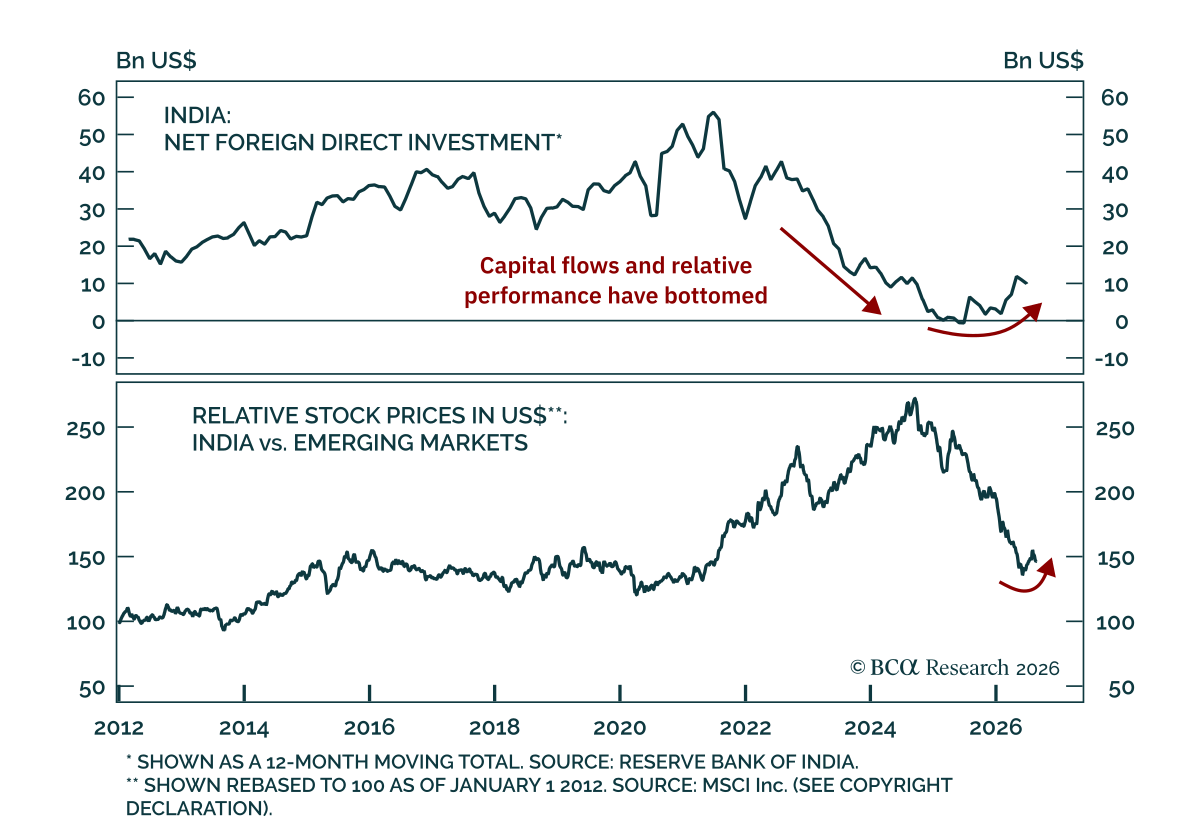
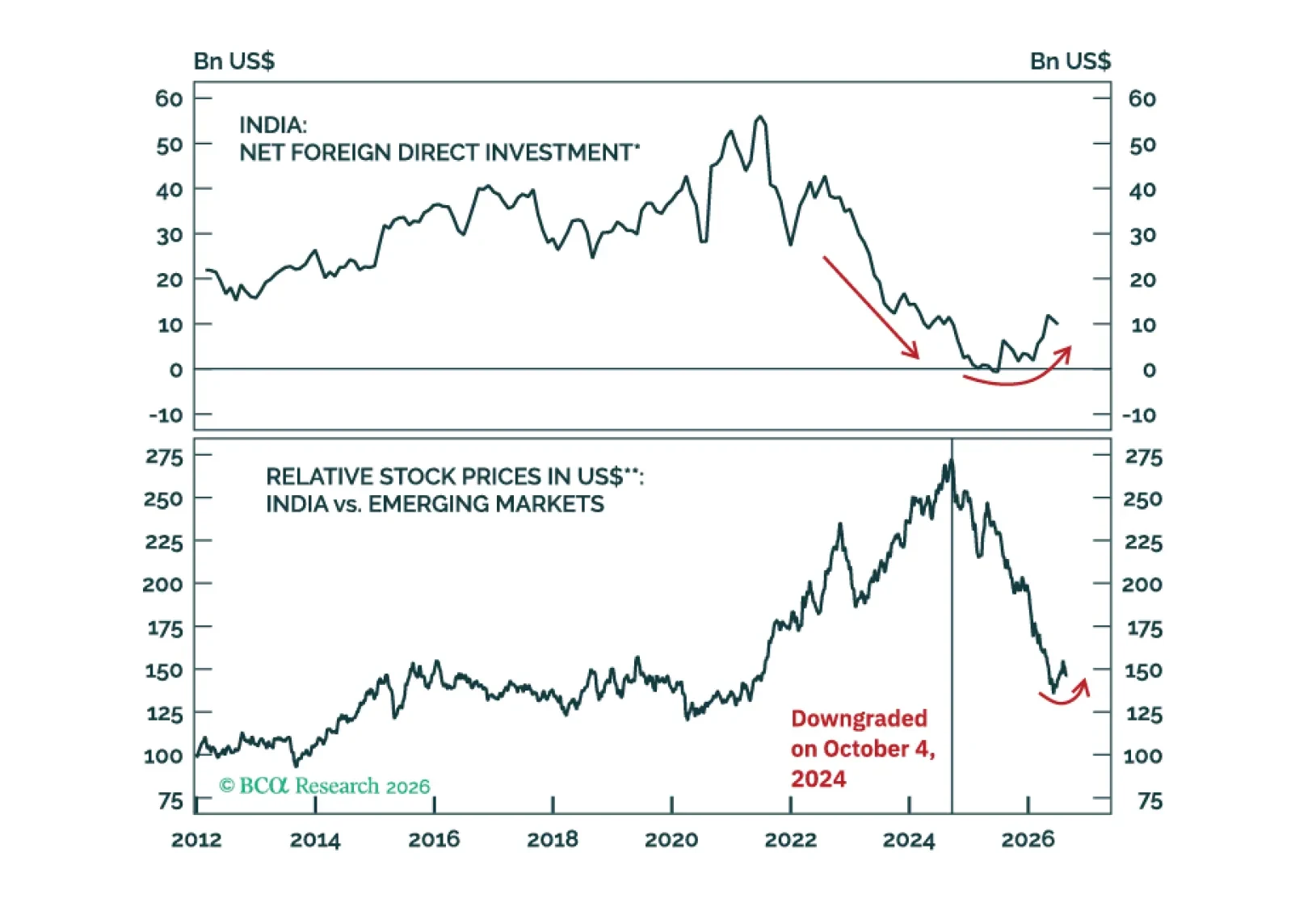
Our EM strategists recommend that absolute-return investors avoid Indian equities and that dedicated EM equity portfolios maintain only a neutral allocation. India faces an unprecedented capital exodus, which has forced the Reserve Bank of India to intervene…

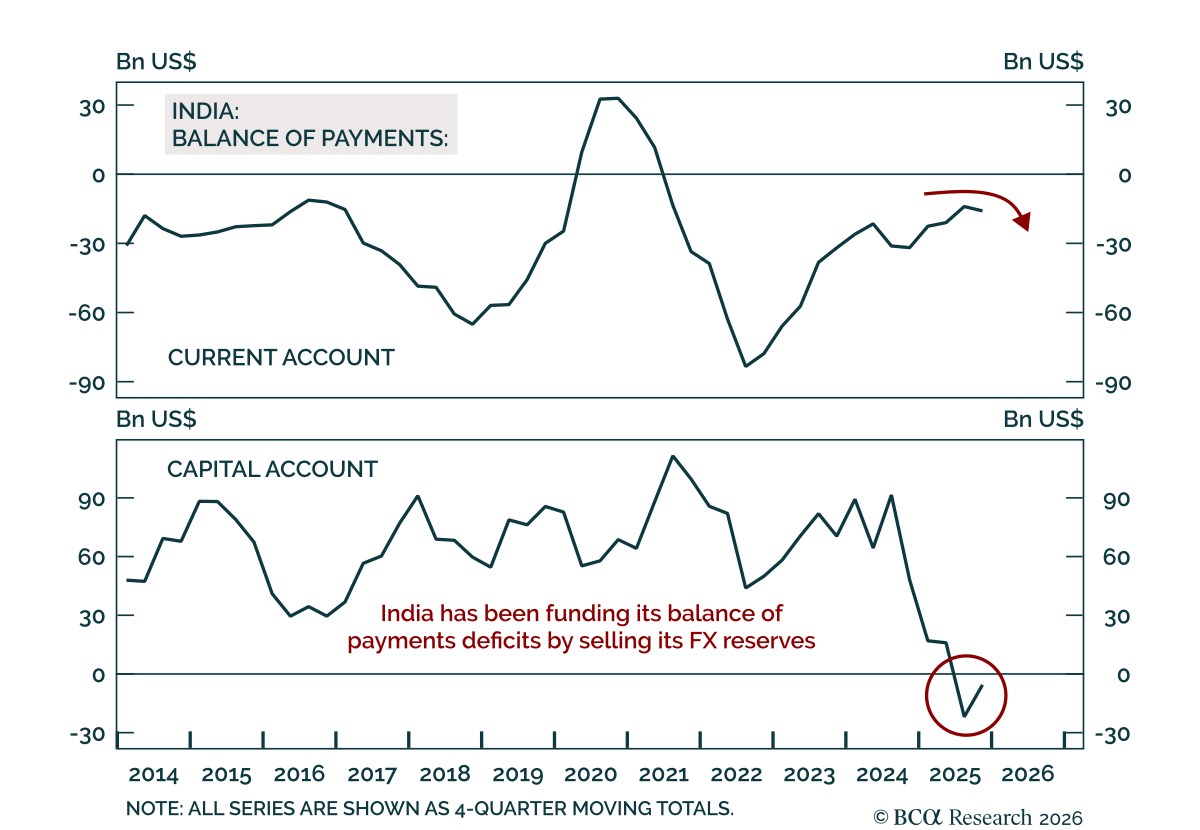
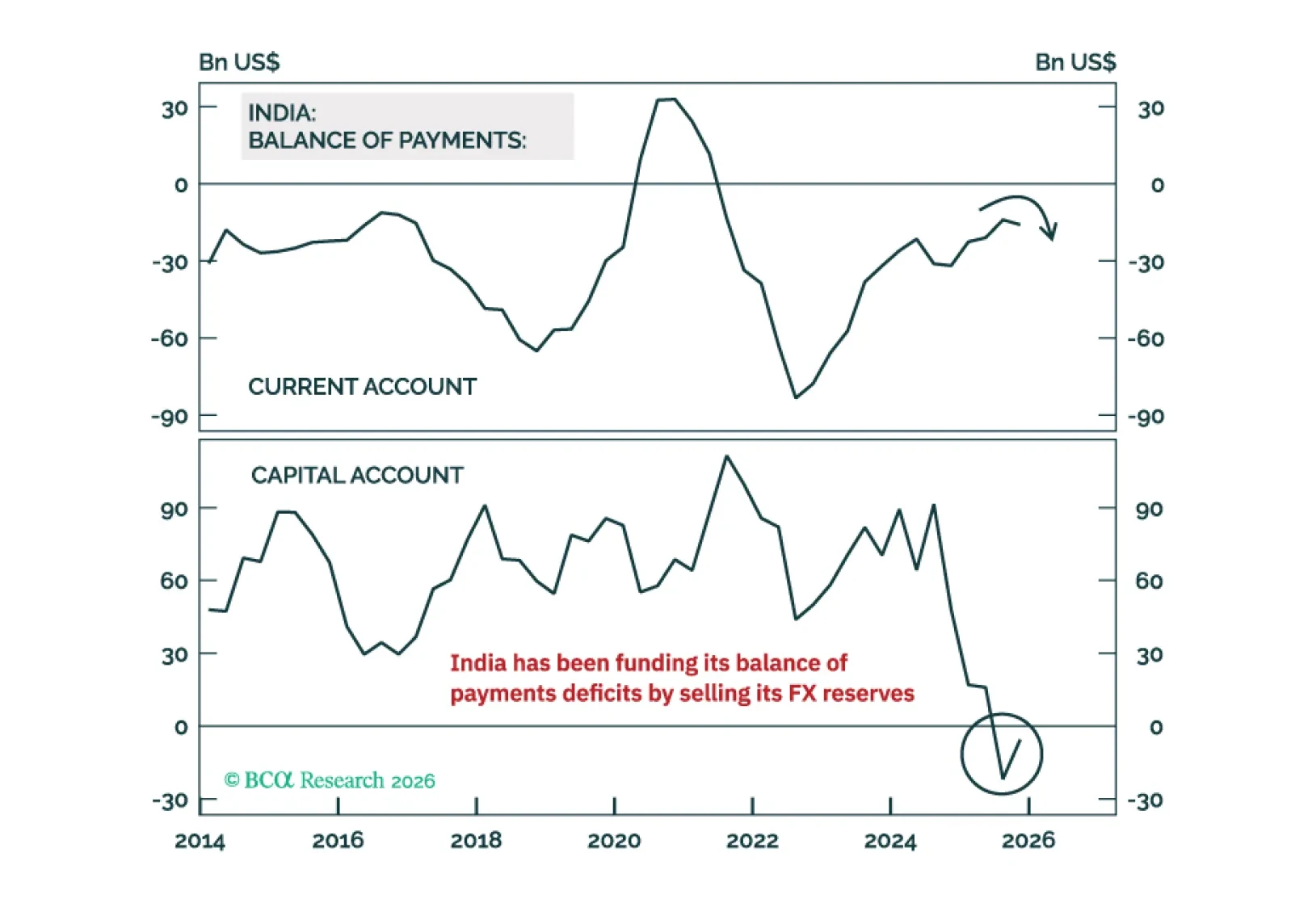
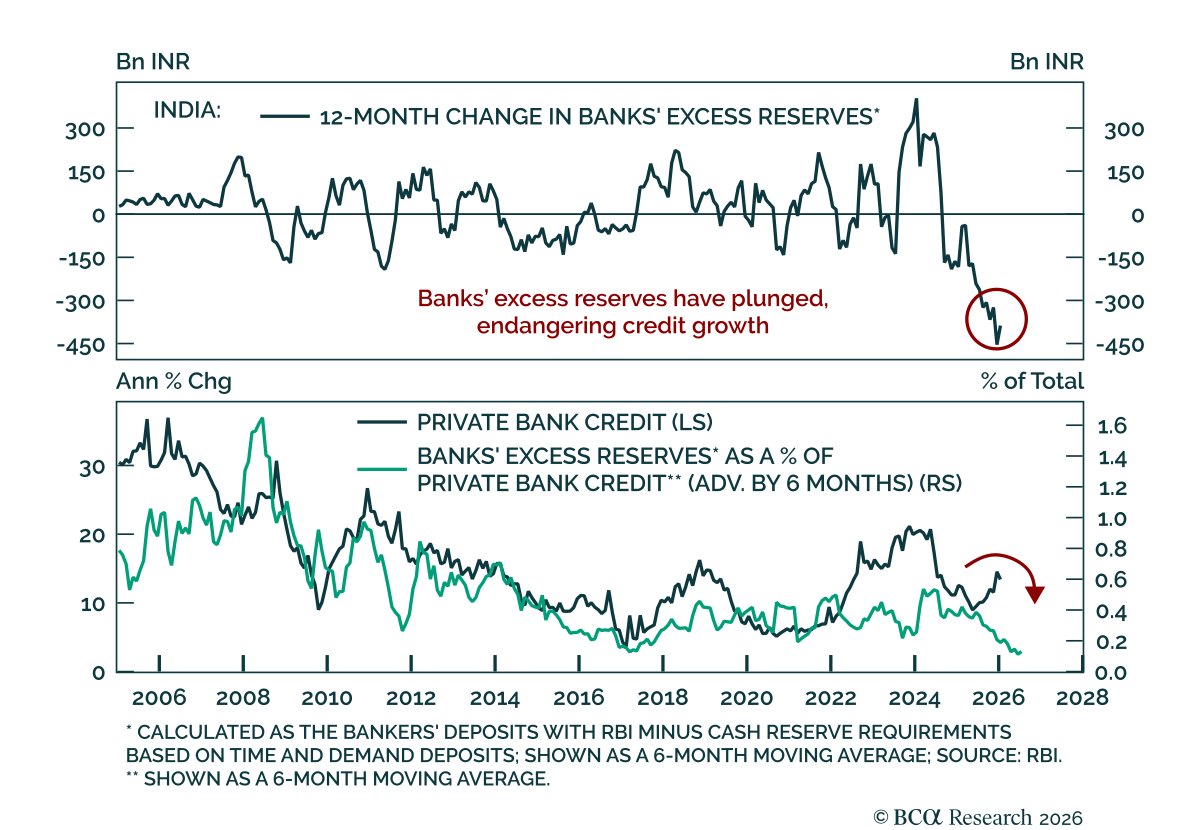
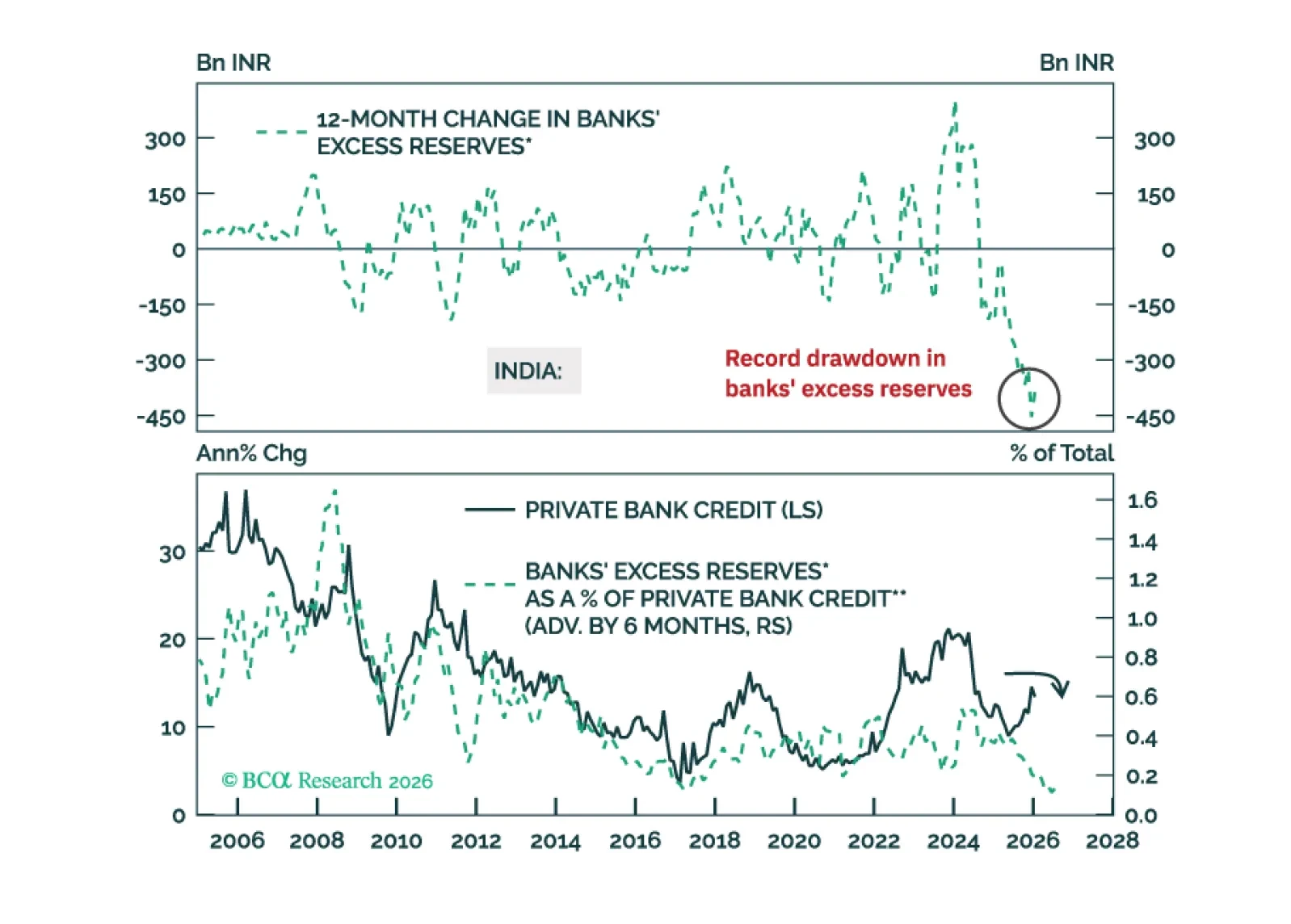
India is seeing net capital outflows for the first time in a generation. The central bank is selling foreign reserves to defend the rupee, which is draining banking system liquidity. The latter risks derailing the nascent credit revival. Indian stock prices remain vulnerable.
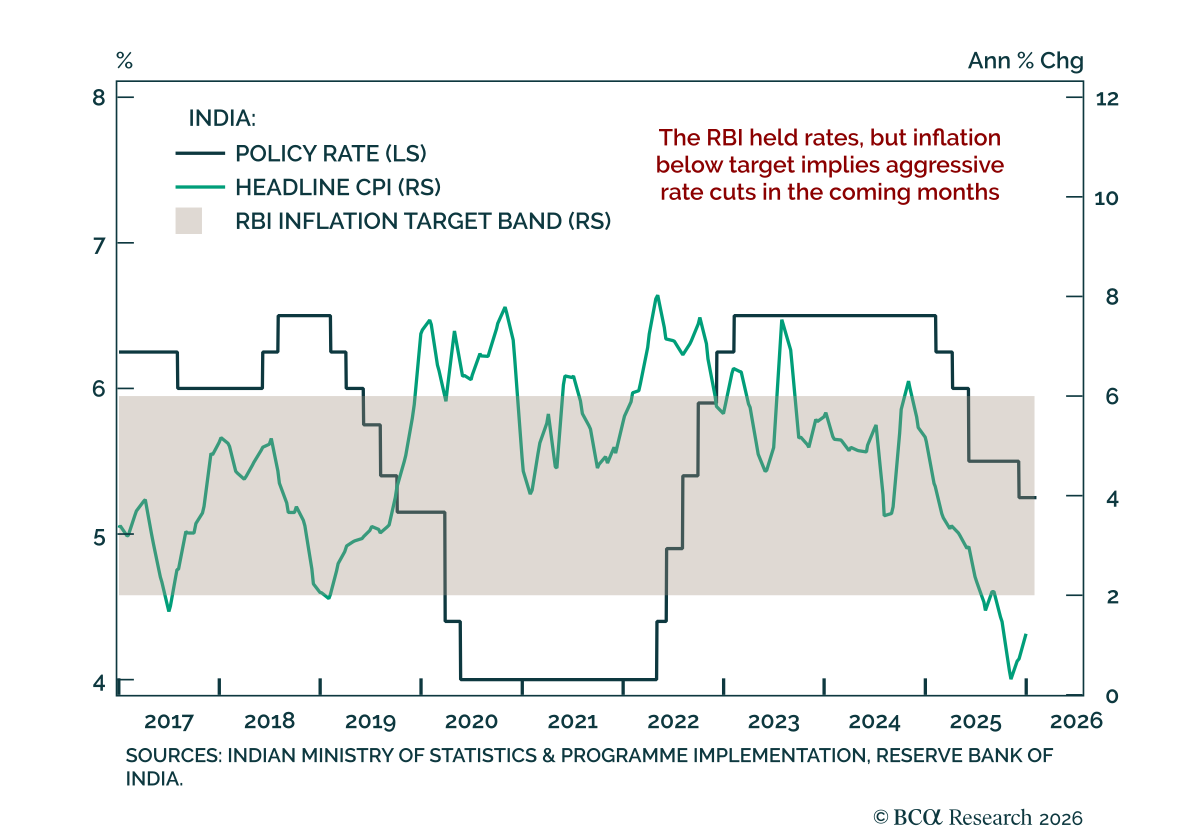
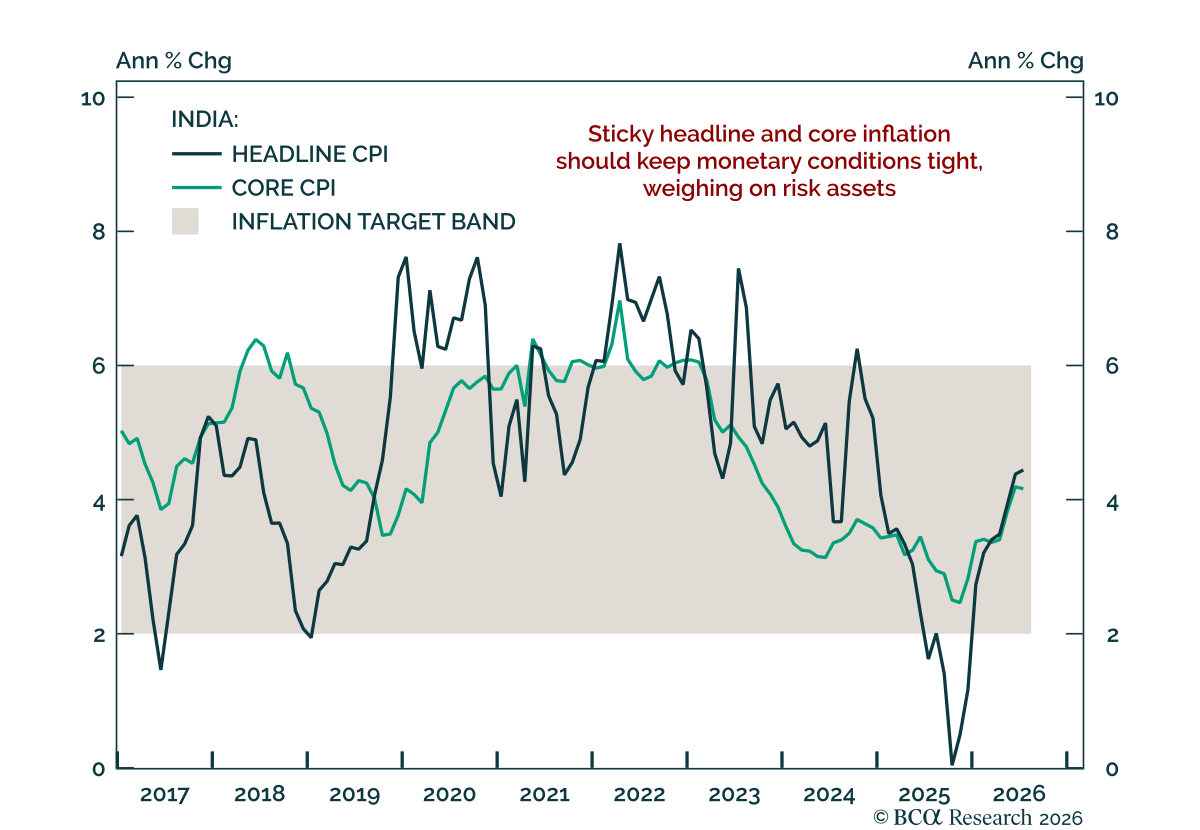
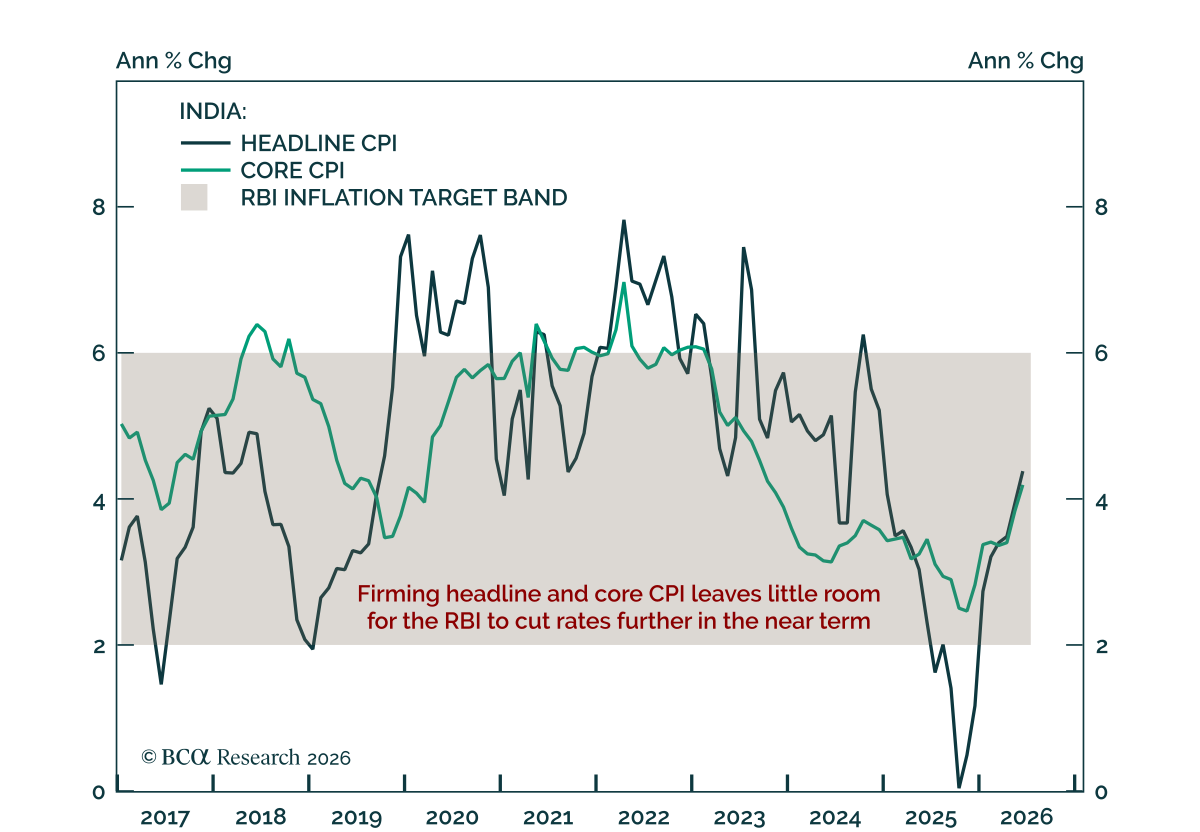
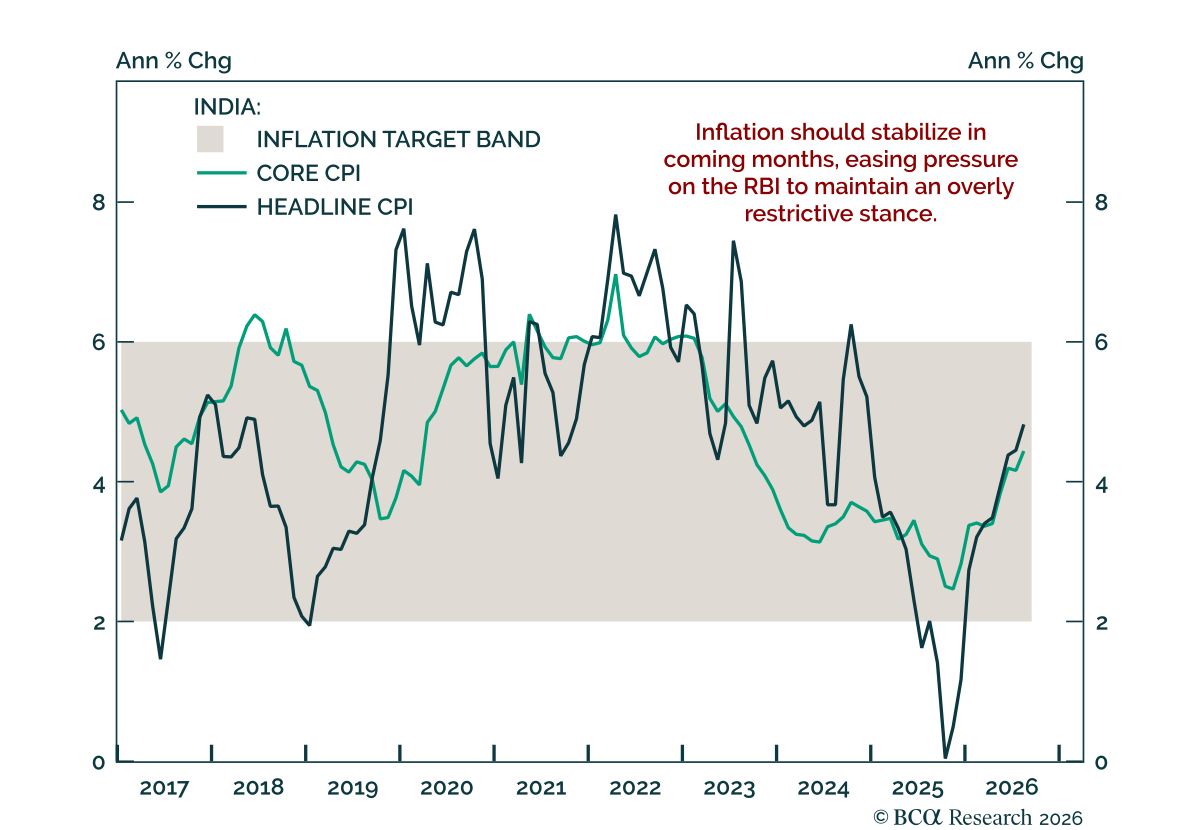
The Reserve Bank of India kept its policy rate unchanged at 5.25%, as expected. Our Emerging Markets strategists expect rate cuts to resume in the coming months, as borrowing costs remain elevated and continue to weigh on the economy. Headline CPI, which the…
Easing, liquidity support, and subdued inflation favor India within an EM local currency bond portfolio. The RBI cut its key policy rate by 25 bps to 5.25% and signaled further easing, citing weakness in select economic indicators. The move aligns with our…
Our EM strategists advise absolute-return investors to avoid Indian equities, while dedicated EM and Emerging Asia portfolios should shift to a neutral allocation by closing their underweight. India’s growth outlook is deteriorating as global trade contracts…

Indian stocks have further downside in absolute terms as profits disappoint. Their underperformance versus the EM equity benchmark, however, is late, which warrants a shift from underweight to neutral allocation.

Investors should not count on buoyant growth in the ASEAN and Indian economies because of manufacturing relocation away from China in the next couple of years.

For the next few months at least, inflation risk trumps recession risk for both US markets and world markets. This because, correctly gauged, the US jobs market is still supply-constrained with ‘jobs looking for a worker’ exceeding ‘workers looking for a job’ by 0.4 percent. A still supply-constrained US jobs market cannot enter a demand-driven recession until it flips back to demand-constrained, so bond investors should underweight duration. Plus: a new tactical trade is overweight India (INDA).

Our Emerging Markets and Foreign Exchange strategists recommend staying neutral-to-underweight on the Indian rupee versus EM Asia peers, as macro and policy pressures mount. US tariffs and possible sanctions on Russian oil imports threaten India’s export…

The Indian rupee remains vulnerable to further depreciation amid slowing growth, tight domestic policy, and fragile capital flows. Trade risks and a weakening external balance will likely keep INR underperforming EM Asia peers.