Sorry, you need to enable JavaScript to visit this website.
Skip to main content

Industrial Conglomerates
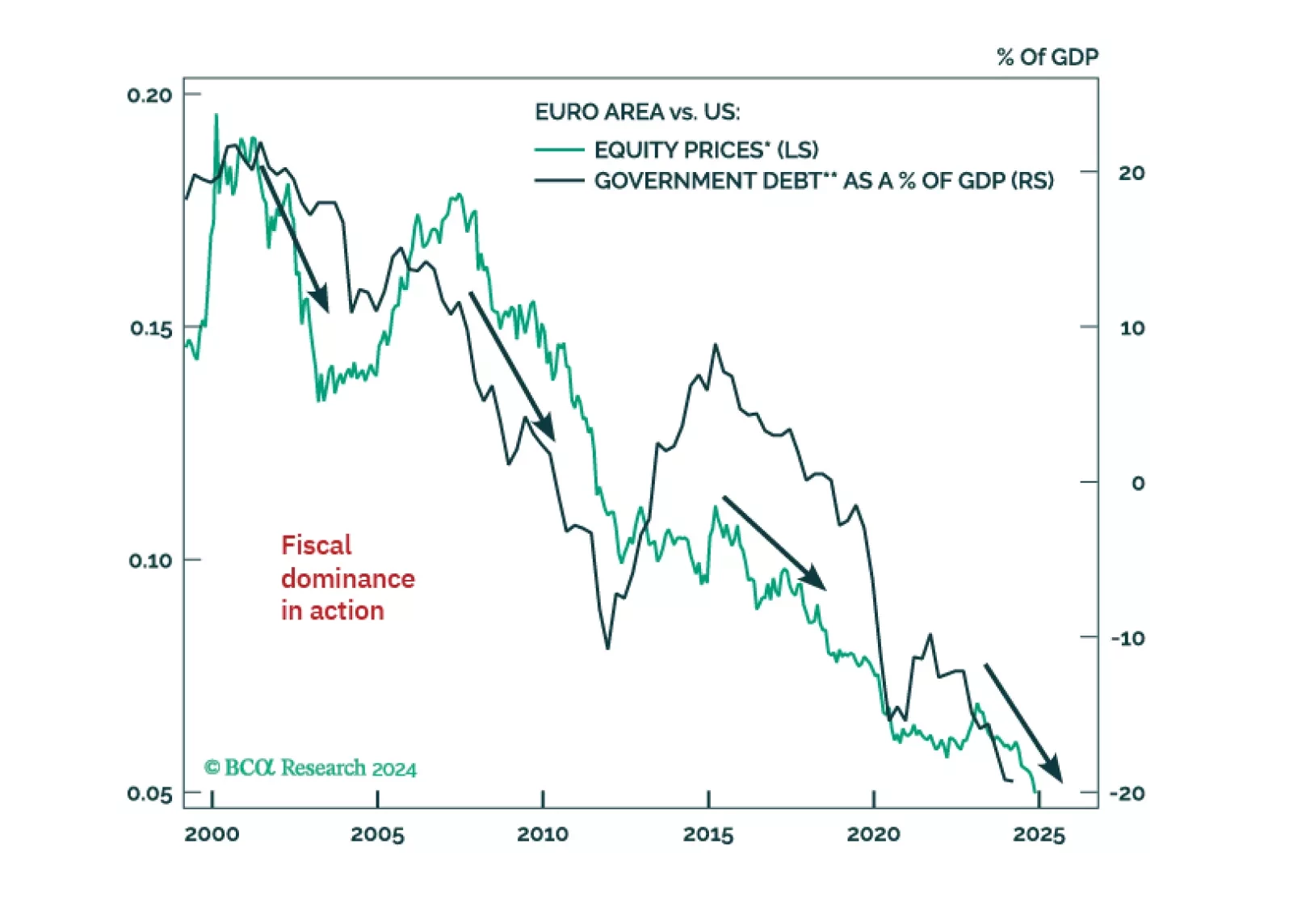
Investors have given up on European assets, which now suffer exceptional discounts to US ones. However, tighter US fiscal policy, the end of Europe’s austerity and deleveraging, the LNG Tsunami about to hit European shores, and the global capex fueled by the Impossible Geopolitical Trinity mean that Europe’s time to shine will soon come back.
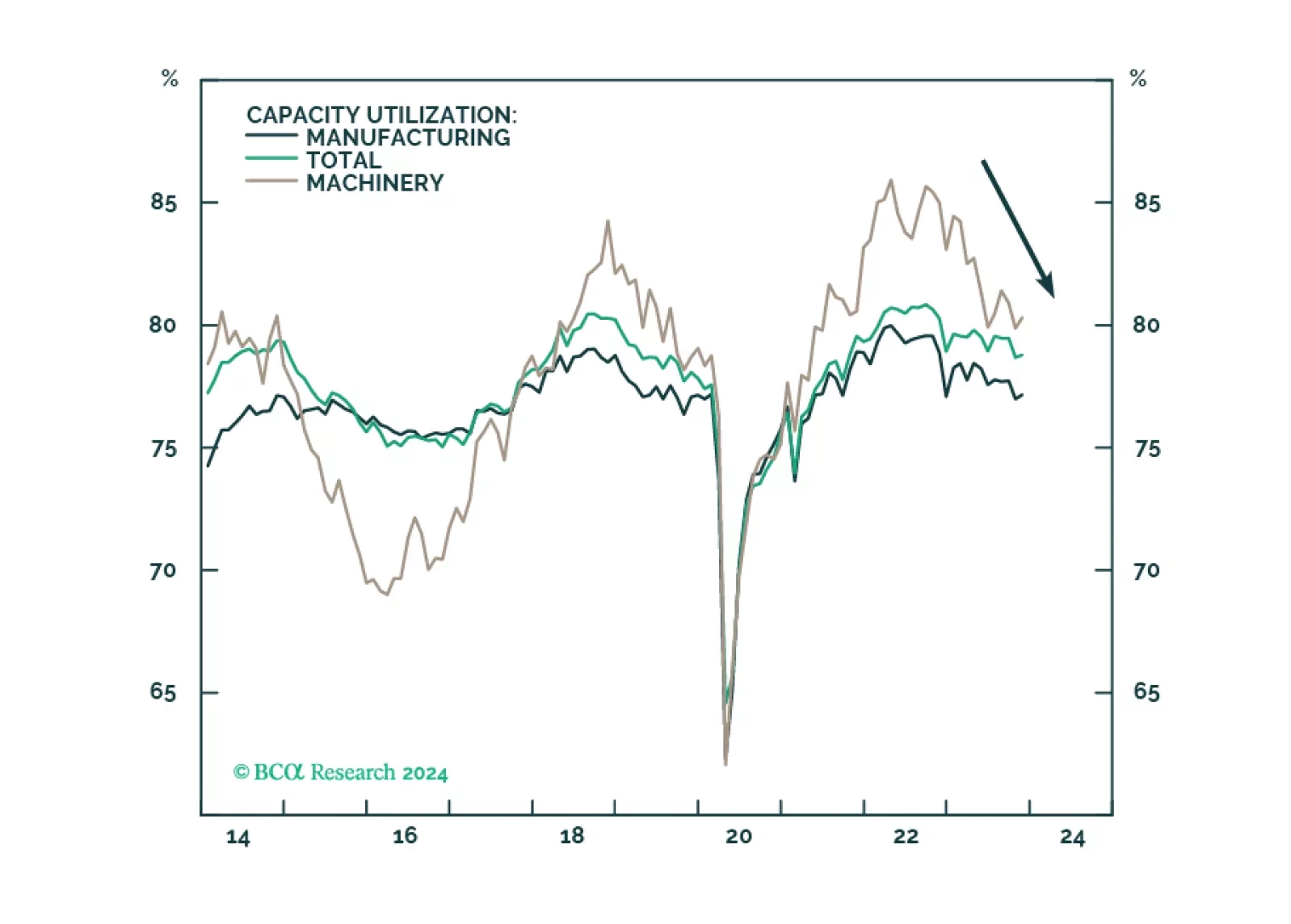
Investors have given up on European assets, which now suffer exceptional discounts to US ones. However, tighter US fiscal policy, the end of Europe’s austerity and deleveraging, the LNG Tsunami about to hit European shores, and the global capex fueled by the Impossible Geopolitical Trinity mean that Europe’s time to shine will soon come back.

The US manufacturing renaissance, spurred on by reshoring, automation, and government spending, is running its course but progress has slowed on the back of tight monetary conditions and the manufacturing recession. The deceleration of these positive trends weighs on the outlook for the Capital Goods industry group, impeding its performance over the short term. However, we reiterate that positive long-term trends for the industry remain intact. We downgrade Capital Goods to a tactical underweight. It remains a strategic overweight.


Conglomerates Have Been Rerating Conglomerates Have Been Rerating Overweight (Downgrade Alert) Last fall we felt all of the shoes had dropped in the S&P industrial conglomerates index: industrial conglomerate stalwart GE had cut their dividend to a token to $0.01 per share following awful guidance and the other key constituent members, MMM and HON, noted tariffs and trade wars factoring heavily in their own respective guidance cuts. The market had moved to a deeply negative position with valuations at post-GFC lows which we took as a contrarily positive signal that sentiment had moved too far and we upgraded the index to overweight based on valuations. Our call was somewhat early; GE took another month to reach a 20-yr low. However, since then the index has been smartly outperforming the broad market as GE has surged nearly 50% from the bottom and our expectation of a rerating has largely panned out (second and bottom panels). Bottom Line: With a valuation rerating underway, our contrarian thesis is weakening and we are compelled to add a downgrade alert. We believe this heavily international index would be a key beneficiary of easing in the U.S./China trade tussle which we anticipate to be the catalyst to execute our downgrade alert. The ticker symbols for the stocks in this index are: BLBG: S5INDCX - GE, MMM, HON, ROP.  
The S&P industrial conglomerates index has been surging on the back of Q4 results that, while not reflecting particular operating strength, are better than the beaten down sector valuations would indicate. Importantly, MMM mildly lowered their 2019…
  Overweight The S&P industrial conglomerates index has been surging on the back of Q4 results that, while not reflecting particular operating strength, are better than the beaten down sector valuations would indicate. Importantly, MMM only mildly lowering their 2019 guidance saw the stock rally while GE gave virtually no guidance with their Q4 earnings that missed estimates and the stock posted its best day in nine years. We view these as a powerful gauge that bearishness has gone too far for conglomerates, which was the fundamental reason behind our upgrade to overweight.1 While a clear recovery in valuation has started to take hold (second panel), still-washed out technicals (bottom panel) suggest that the subsiding pessimism has room to run. Further, these very international firms have particularly intense torque to the trade war with China; we think relief in the trade war could be a significant positive rerating catalyst. Bottom Line: Stay overweight the S&P industrial conglomerates index. The ticker symbols for the stocks in this index are: BLBG: S5INDCX - GE, MMM, HON, ROP.   1 Please see BCA U.S. Equity Strategy Insight Report, “A Rout For Conglomerates Opens A Buying Opportunity,” dated October 31, 2018, available at uses.bcaresearch.com. Industrial Conglomerate Bears Are In Retreat Industrial Conglomerate Bears Are In Retreat  
Overweight Though it may be hard to see in the top panel of our chart amidst a spectacular long-term fall from grace, the S&P industrial conglomerates index has been outperforming for the past week. At first glance, much of the credit for this bounce can be given to GE which has seen even the longest term sell-side bears throwing in the towel and turning positive. However, GE is no longer the dominant name in industrial conglomerates; at only 21.5% of the market cap weight of the S&P industrial conglomerates index, it ranks below both MMM and HON which together account for more than two-thirds. As such, any outperformance would have to be broad based, as it has been since the beginning of December. Considering how valuations have contracted, this is of little wonder. The S&P industrial conglomerates index is a full standard deviation below fair value according to our Valuation Indicator (second panel) while our Technical Indicator (bottom panel) shows the index to still be exceptionally oversold. Bottom Line: The pessimism baked in to the S&P industrial conglomerates index is out of proportion. We reiterate our valuation-driven overweight recommendation. The ticker symbols for the stocks in this index are: BLBG: S5INDCX - GE, MMM, HON, ROP. Plumbing The Bottom Plumbing The Bottom ​​​​​​​
Overweight General Electric, the former heavyweight of the S&P industrial conglomerates index, found some reprieve Tuesday on the news that they had agreed to divest part of their investment in Baker Hughes as part of an overall asset sale effort to shore up the company's weak balance sheet. Credit crunch fears had been weighing heavily on the stock in the week prior, taking the industrial conglomerates index down, despite strength from the other constituent members (top panel). We have previously focused heavily on GE with respect to our positioning on the S&P industrial conglomerates index. However, as shown in the second and third panels of the chart, such focus is no longer warranted as the stock represents a very much diminished share of both the S&P industrial conglomerates index and the greater S&P industrials index. We recently upgraded the S&P industrial conglomerates index to overweight on the basis that valuations had become enticing as most of the GE negativity had been priced in (bottom panel). Tack on GE's vastly lower share of the S&P industrial conglomerates index and the discounted valuation is even more compelling; we reiterate our overweight recommendation. The ticker symbols for the stocks in this index are: BLBG: S5INDCX - GE, MMM, HON, ROP. Breaking Up Is Hard To Do Breaking Up Is Hard To Do
Overweight 2018 has been a tough year for the S&P industrial conglomerates index as all of the key constituent members (GE, MMM and HON) have progressively either disappointed on earnings or lowered forward guidance. Further, industrial dividend stalwart GE yesterday took their dividend down to $0.01 per share, effectively suspending the dividend while the company refocuses its businesses and deleverages. The market’s reaction to the forgoing has been brutal, taking the sector down to relative levels lower than the deepest depths of the financial crisis (recall that GE was, at the time, one of the largest lenders in the U.S.). We think this is an overreaction; our Valuation Indicator is now more than one standard deviation below fair value while our Technical Indicator is extraordinarily oversold, a position that has heralded mean reversions in the past. Bottom Line: In the absence of any confirming data supporting such draconian valuation moves on already record-low EPS growth estimates, we believe a window for solid value at exceptional prices has opened. Accordingly, today we are lifting our recommendation on the S&P industrial conglomerates index to overweight from neutral. This move preserves our overweight recommendation on the GICS 1 S&P industrials index, given our downgrade of the S&P railroads index earlier this week.1 The ticker symbols for the stocks in this index are: BLBG: S5INDCX - GE, MMM, HON, ROP. 1 Please see BCA U.S. Equity Strategy Weekly Report, “Critical Reset,” dated October 29, 2018, available at uses.bcaresearch.com. A Rout For Conglomerates Opens A Buying Opportunity A Rout For Conglomerates Opens A Buying Opportunity
Neutral In our recent initiation of coverage on the S&P industrial conglomerates sector,1 our neutral investment thesis was that the globally synchronous capital goods upcycle should mostly keep sales and profits buoyant in this industrials subsector. However, we expected this to be offset by weakness in GE (the index giant) and their core aerospace, health care and utilities industries. To date, that thesis has been correct as the industrial conglomerates excluding GE have soared (top panel) while GE's share of S&P industrials has collapsed from nearly 50% in 2000 to approximately 5% now (second panel). Recent speculation that Berkshire Hathaway may be interested in investing in the company has provided a lift to GE's struggling share price. Such an investment would likely hasten divestitures in the company and would represent a strong positive in our view. Given that GE still represents 30% of the industrial conglomerates sector (bottom panel), a more positive outlook on GE would extend to the index as a whole; stay tuned. The ticker symbols for the stocks in this index are: BLBG: S5INDCX - GE, MMM, HON, ROP. Will The Oracle Of Omaha Save GE? Will The Oracle Of Omaha Save GE? 1 Please see BCA U.S. Equity Strategy Special Report, "Industrial Conglomerates: Rebooting" dated October 30, 2017, available at uses.bcaresearch.com.