Sorry, you need to enable JavaScript to visit this website.
Skip to main content

Iraq

Our clients see political pressure and market reactions as key factors that could push the US toward exiting the Iran conflict. LinkedIn and X respondents instead point to rising oil prices and inflation as the main constraints on continued US military…

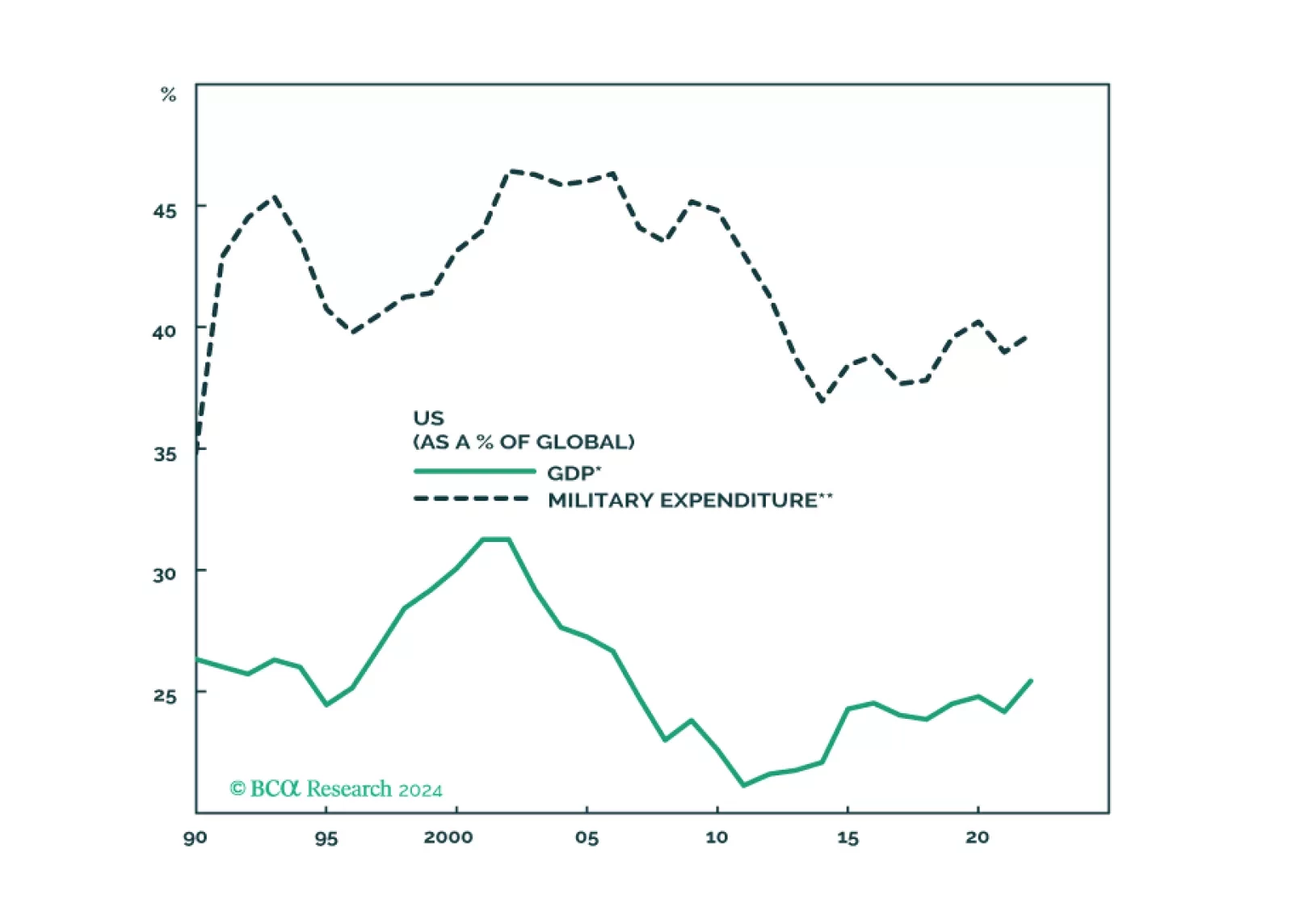
The market’s pricing of a soft landing means that geopolitical risks are becoming more, not less, relevant in 2024. US domestic divisions will invite challenges as foreign powers rightly fear that US policy will turn more hawkish after the election.

Prefer government bonds over stocks, defensive sectors over cyclicals, and large caps over small caps. Favor North America over other markets. Favor emerging markets like Southeast Asia and Latin America over Greater China, Turkey, and emerging Europe. Stick with aerospace/defense stocks.

Prefer government bonds over stocks, defensive sectors over cyclicals, and large caps over small caps. Favor North America over other markets. Favor emerging markets like Southeast Asia and Latin America over Greater China, Turkey, and emerging Europe. Stick with aerospace/defense stocks.

Highlights The Kingdom of Saudi Arabia (KSA), Iraq, the UAE and Kuwait – the OPEC 2.0 states capable of increasing production this year – will have to step up for coalition members unable to lift output, including Russia. US shale-oil output also will have to increase to cover demand. The COVID-19 omicron variant has proven to be less severe than anticipated, which likely will translate into a faster recovery in oil demand than was expected in December. One risk looms large: China's zero-COVID policy greatly reduced virus transmission in the country; however, this also reduced natural antibody protection in its population. This is exacerbated by a lack of mRNA vaccine availability. Faltering supply and strong demand will keep inventories tight, reducing buffers to supply shocks – e.g., the Kirkuk–Ceyhan Oil Pipeline explosion this week. We are returning our Brent forecast for 2022 to $80/bbl; for 2023, we continue to expect $81/bbl (Chart of the week). Our forecast assumes OPEC 2.0 will increase supply so as to keep Brent prices below $90/bbl. US shale-oil output also is expected to rise. We continue to see oil-price risk skewed to the upside. Still, demand-destruction from high prices or widespread omicron-induced lockdowns remain clear risks to our outlook. Feature Given the relatively mild symptoms associated with the COVID-19 omicron variant, global oil demand likely will continue to recover lost ground and return to trend sooner than expected. Faltering supply from OPEC 2.0 member states means prices will remain elevated, and perhaps push higher. On the back of these fundamentals, we are restoring our Brent price forecast to $80/bbl for this year, and $81/bbl for 2023. This is the consensus view, and we find ourselves in the uncomfortable position of sharing it. Chart 1 Presently, the oil market is bulled up, expecting high prices this year and next, with Brent forecasts clustering in the $80-$85/bbl range out to 2025.1 Some headline-grabbing forecasts call for $100-plus prices, as top OPEC 2.0 producers – e.g. Russia, Angola and Nigeria– continue to strain in their efforts to restore production, and demand remains buoyant (Chart 2). Chart 2 A consensus usually emerges after most market participants have adjusted their positioning to reflect a commonly held view. This usually is a temporary equilibrium. The market typically finds the highest-pain price trajectory required to shatter the consensus view – e.g., selling off because widely held demand expectations are too high or supply expectations are too low, and vice versa. Ultimately, a fundamental shock destabilizes the consensus, and prices move higher or lower to reflect the new reality. The biggest risks to our price forecast are demand destruction from high prices or widespread omicron-induced lockdowns.2 To keep prices from finding a new equilibrium above $90/bbl, a policy response from OPEC 2.0 to increase production will be required. In addition, US shale-oil output will have to increase. This is not to say we are dismissing above-consensus price realizations: Inventories will continue to draw hard as long as the level of supply remains below demand. This will leave little in the way of buffer stocks to even out price spikes, as the Ceyhan pipeline explosion demonstrated earlier this week.3 Geopolitical tensions are high in eastern Europe as Russia and the West square off, and in the Persian Gulf as Iran squares off against GCC states and the US.4 These structural and geopolitical risks leave markets exposed to volatile price spikes. OPEC 2.0 Falters Chart 3 Chart 4 Our forecast is contingent on the core OPEC 2.0 member states ex-Russia – KSA, Iraq, the UAE and Kuwait – increasing production by an average of ~ 3.34mmb/d in 2022 and 2.76 mmb/d in 2023 relative to 2021. Most of the increases comes from KSA, Iraq and UAE (Chart 3). In addition, we expect US shale-oil producers to increase their average output by 0.6mm b/d this year, and 1.07mm b/d in 2023 relative to 2021 (Chart 4). In 2022, US crude oil supply reaches 11.7mm b/d, and in 2023 it goes to 12.13mm b/d in our estimates. The slower increase in US output this year largely is a function of the delay we expect in assembling rigs and crews to significantly lift production from current levels. These production increases are needed to make up for ongoing downgrades of OPEC 2.0 member states' ability to increase output, including Russia, where we expect crude oil production to remain flat at a little over 10mm b/d this year on average (Table 1). Table 1BCA Global Oil Supply - Demand Balances (MMb/d, Base Case Balances) To Dec23 Higher Output Needed To Constrain Oil Prices Higher Output Needed To Constrain Oil Prices Back in July 2021, the coalition agreed to restore 400k b/d of production taken off the market in the wake of COVID-19 demand destruction. Thus far, the coalition has only managed to restore ~ 1.86mm b/d of the 2mm b/d pledged for August to December 2021, according to the Oxford Institute for Energy Studies (OIES). For this year, the OIES notes OPEC 2.0 "will struggle to return more than 2 mb/d of withheld supplies in 2022, compared to the headline target of 3.76 mb/d."5 Our view rests on a policy call at the end of the day: We believe OPEC 2.0 – KSA in particular – is well aware of the demand-destruction potential high nominal prices and a strong USD pose, particularly as the US Fed is embarking on a rate-hike program to accompany the quantitative-tightening measures recently adopted. Absent a concerted effort to raise production by the core OPEC 2.0 states ex-Russia and the US shale producers, prices could move above $86/bbl as supply tightens and demand continues to rise. This can be seen in The Chart of the Week (the dashed brown curve depicting our estimate for prices without higher production). Importantly, even if such a concerted effort emerges, a failure to resolve the Iran nuclear talks with the US and its allies this year would keep more than 1mm b/d of production from returning to the market. This would push average Brent prices this year and next to or above $90/bbl. Oil Demand Recovery To Continue Provided we do not see widespread lockdowns resulting from the rapid transmission of the omicron variant, we expect global demand to grow close to 4.8mm b/d this year and 1.6mm b/d in 2023 (Chart 5). This reflects our view that – baring too-high prices or another full-scale COVID-induced lockdown in a key market like China – demand resumes its return to trend. It is important to point out that the increase in oil demand we expect is being driven by economic growth, which means consumers likely can withstand high prices, just as long as they do not become excessive – i.e., entrenched above $90/bbl in our view. Chart 5Global Oil Demand Forecast Remains Steady Global Oil Demand Forecast Remains Steady Global Oil Demand Forecast Remains Steady Chart 6OPEC 2.0 Production Policy Kept Supply Below Demand OPEC 2.0 Production Policy Kept Supply Below Demand OPEC 2.0 Production Policy Kept Supply Below Demand In our base case model, we continue to see markets remaining balanced (Chart 6) – assuming we get the policy calls right – and OECD oil inventories falling (Chart 7). Even with an uptick in inventories, which presently are 31.5mm barrels above the 2010-14 average, days-forward-cover for the OECD will remain low (Chart 8). Chart 7Crude Inventories Continue To Draw Crude Inventories Continue To Draw Crude Inventories Continue To Draw Chart 8 Investment Implications The consensus view calls for oil prices to remain at current elevated levels, and to perhaps push higher. We share that view – and have maintained it for some time – which gives us pause. A consensus not only reflects a shared view. It likely reflects broad similarities in the way market participants are positioned in their capex, investment and trading outlooks. This is inherently unstable. We expect oil prices to remain elevated, and have returned our 2022 Brent forecast to $80/bbl on average. Our 2023 forecast for Brent remains $81/bbl. We continue to recommend positions that benefit from tightening markets in which forward curves are backwardated and likely to remain so. Even if we see production increasing – from the OPEC 2.0 core producers ex-Russia and the US shales – we still expect forward Brent and WTI curves to remain backwardated (prompt-delivery prices exceed deferred-delivery prices). We remain long the S&P GSCI and the COMT ETF to express this view. If we fail to see production increase to keep prices from breaching and sustaining levels above $90/bbl, long index exposure will post higher gains. The risk to our view is two-fold: 1) High prices leading to demand-destruction, which is made more acute when the USD is strong; and 2) widespread omicron-induced lockdowns, which could once again reduce consumption and lead to global supply-chain gridlock. High prices leading to demand destruction, or another round of lockdowns would force us to reconsider our positioning.   Robert P. Ryan Chief Commodity & Energy Strategist rryan@bcaresearch.com Ashwin Shyam Research Associate Commodity & Energy Strategy ashwin.shyam@bcaresearch.com Paula Struk Research Associate Commodity & Energy Strategy paula.struk@bcaresearch.com Commodities Round-Up Energy: Bullish It's very early days, but EU experts are reviewing a draft plan leaked to the media earlier this month, which could result in gas- and nuclear-powered generation being included among sustainable energy sources, and suitable to bridge the global energy transition to renewable power. The draft of the common classification system for EU funding of sustainable economic activities, or taxonomy, apparently states gas plants can earn a “transitional” label if they meet several criteria, including an emissions limit of 270g of CO2e/kWh, or if their annual emissions average 550kg CO2e/kW or less over 20 years. This criterion would be applied to judging environmental performance of a gas plant over 20 years, but offers no guarantee that its emissions would drop over time. The chair of the expert panel said draft rules for nukes raised questions over "whether a plant can guarantee its green credentials today, if its obligation to manage nuclear waste – one of the main environmental concerns about the fuel – does not kick in until as late as 2050," according to euractiv.com, which broke the story earlier this month. Base Metals: Bullish Indonesia has become more restrictive with exports of raw commodities in order to attract more downstream investments and to play a bigger role in producing finished goods. Of these commodities, Indonesia’s supply of nickel, relative to the world is the highest, constituting ~ 38% of total global nickel supply. In 2020, the nation banned nickel ore exports, and is now considering a progressive export tax on low nickel content products such as ferronickel and nickel pig iron. This tax could reduce foreign investment in Indonesia’s nickel mines and global supply, which would, all else equal, support prices. These developments arrive on the back of low nickel inventories, which helped prices of the key battery metal reach a 10-year high last week (Chart 9).   Precious Metals: Bullish In 2021, gold ETFs were hit by outflows of ~ $9 billion, the main reason the yellow metal was unable to reach its 2020 high above the $2,000/oz mark (Chart 10). For this year, we expect a supportive gold market, as real interest rates will remain weak despite the Fed’s hawkish tilt to lift nominal interest rates higher. In line with BCA’s Foreign Exchange Strategy service, we expect the USD to fall over the 12-18 month horizon, which will also bolster gold. Chart 9 Tighter Nickel Balances Going Forward Will Push Prices Higher Tighter Nickel Balances Going Forward Will Push Prices Higher Chart 10       Footnotes 1     Please see Column: Oil prices expected to rise with big variation in projections: Kemp, published by reuters.com on January 19, 2022. 2     High nominal oil prices and a strong USD compound the former demand-destruction risk.  The latter risk of wide-spread omicron-induced lockdowns is elevated in China at present.  Its success in shutting down the transmission of earlier COVID-19 mutations has reduced the amount of antibodies to the virus in the population.  This is compounded by a lack of mRNA vaccine production and distribution, which leaves the country at risk to wide-spread omicron transmission.  In states with large shares of the population carrying COVID-19 antibodies – e.g., the UK – omicron is less of a risk and is on course to becoming endemic.  Please see 2022 Key Views: Past As Prelude For Commodities and Endemic COVID-19 Will Spur Commodities' Next Leg Higher which we published on December 16, 2021 and January 13, 2022 for discussions. 3    Oil flows are expected to return to normal in short order.  Please see Halted Iraq-Turkey flows to resume within hour: Botas, published by argusmedia.com on January 19, 2022. 4    Please see Russia/Ukraine: Implications From Kazakhstan and Geopolitical Charts For The New Year published by BCA Research's Geopolitical Strategy service on January 7 and 14, 2022, respectively, for discussions. 5    Please see Key Themes for the Global Energy Economy in 2022 published by the Oxford Institute for Energy Studies on January 18, 2022.   Investment Views and Themes Strategic Recommendations Trades Closed in 2021 Image
Highlights US crude oil output will continue its sharp recovery before leveling off by mid-2022, in our latest forecast (Chart of the Week). The recovery in US production is led by higher Permian shale-oil production, which is quietly pushing toward pre-COVID-19 highs while other basins languish. Permian output in July was ~ 143k b/d below the basin's peak in Mar20, and likely will surpass its all-time high output in 4Q21. Overall US shale-oil output remains ~ 1.1mm b/d below Nov19's peak of 9.04mm b/d, but we expect it to end the year at 7.90mm b/d and to average 8.10mm b/d for 2022. We do not expect US crude oil production to surpass its all-time high of 12.9mm b/d of Jan20 by the end of 2023. Instead, exploration & production (E&P) companies will continue to prioritize shareholders' interests. This means larger shares of free cashflow will go to shareholders, and not to drilling for the sake of increasing output. While our overall balances estimates remain largely unchanged from last month, we have taken down our expectation for demand growth this year by close to 360k b/d and moved it into 2022, due to continuing difficulties containing the COVID-19 Delta variant. Our Brent crude oil forecasts for 2H21, 2022 and 2023 remain largely unchanged at $70, $73 (down $1) and $80/bbl. WTI will trade $2-$3/bbl lower. Feature Chart 1US Crude Recovery Continues US Crude Recovery Continues US Crude Recovery Continues Global crude oil markets are at a transition point. The dominant producer – OPEC 2.0 – begins retuning 400k b/d every month to the market from the massive 5.8mm b/d of spare capacity accumulated during the COVID-19 pandemic. For modeling purposes, it is not unreasonable to assume this will be a monthly increment returned to the market until the accumulated reserves are fully restored. This would take the program into 2H22, per OPEC's 18 July 2021 communique issued following the meeting that produced this return of supply. Thereafter, the core group of the coalition able to increase and sustain higher production – Kuwait, the UAE, Iraq, KSA and Russia – is expected to meet higher demand from their capacity.1 There is room for maneuver in the OPEC 2.0 agreement up and down. We continue to expect the coalition to make supply available as demand dictates – a data-dependent strategy, not unlike that of central banks navigating through the pandemic. This could stretch the return of that 5.8mm b/d of accumulated spare capacity further into 2H22 than we now expect. The pace largely depends on how quickly effective vaccines are distributed globally, particularly to EM economies over the course of this year and next. US Shale Recovery Led By Permian Output While OPEC 2.0 continues to manage member-state output – keeping the level of supply below that of demand to reduce global inventories – US crude oil output is quietly recovering. We expect this to continue into 1H22 (Chart 2). Chart 2Permian Output Recovers Strongly Permian Output Approaches Pre-Covid Peak Permian Output Approaches Pre-Covid Peak The higher American output in the Lower 48 states primarily is due to the continued growth of tight-oil shale production in the low-cost Permian Basin (Chart 3). This has been aided in no small part by the completion of drilled-but-uncompleted (DUC) wells in the Permian and elsewhere. Chart 3E&Ps Favor Permian Assets Permian Output Approaches Pre-Covid Peak Permian Output Approaches Pre-Covid Peak Since last year’s slump, the rig count has increased; however, compared to pre-pandemic levels, the number of rigs presently deployed are not sufficient to sustain current production. The finishing of DUC wells means that, despite the low rig count during the pandemic, shale oil supply has not dipped by a commensurate amount. This is a major feat, considering shale wells’ high decline rates. Chart 4US Producers Remain Focused On Shareholder Priorities US Producers Remain Focused On Shareholder Priorities US Producers Remain Focused On Shareholder Priorities DUCS have played a large role in sustaining overall US crude oil production. According to the EIA, since its peak in June 2020, DUCs in the shale basins have fallen by approximately 33%. As hedges well below the current market price for shale producers roll off, and DUC inventories are further depleted, we expect to see more drilling activity and the return of more rigs to oil fields. We do not expect US crude oil output to surpass its all-time high of 12.9mm b/ of Jan20 by the end of 2023. Instead, exploration & production (E&P) companies will continue to prioritize shareholders' interests. This means only profitable drilling supporting the free cashflow that allows E&Ps to return capital to shareholders will receive funding. US oil and gas companies have a long road back before they regain investors' trust (Chart 4).   Demand Growth To Slow We expect global demand to increase 5.04mm b/d y/y in 2021, down from last month's growth estimate of 5.4mm b/d. We have taken down our expectation for demand growth this year by ~ 360k b/d and moved it into 2022, because of reduced mobility and local lockdowns due to continuing difficulties in containing the COVID-19 Delta variant, particularly in Asia (Chart 5).2 We continue to expect the global rollout of vaccines to increase, which will allow mobility restrictions to ease, and will support demand. This has been the case in the US, EU and is expected to continue as Latin America and other EM economies receive more efficacious vaccines. Thus, as DM growth slows, EM oil demand should pick up (Chart 6). Chart 5COVID-19 Delta Variant's Spread Remains Public Health Challenge Permian Output Approaches Pre-Covid Peak Permian Output Approaches Pre-Covid Peak Chart 6EM Demand Growth Will Offset DM Slowdown EM Demand Growth Will Offset DM Slowdown EM Demand Growth Will Offset DM Slowdown Net, we continue to expect demand for crude oil and refined products to grind higher, and to be maintained into 2023, as mobility rises, and economic growth continues to be supported by accommodative monetary policy and fiscal support. If anything, the rapid spread of the Delta variant likely will predispose central banks to continue to slow-walk normalizing monetary policy and interest rates. Global Balances Mostly Unchanged Chart 7Oil Markets To Remain Balanced Oil Markets To Remain Balanced Oil Markets To Remain Balanced Although we have shifted part of the demand recovery into next year, at more than 5mm b/d of growth, our 2021 expectation is still strong. This is expected to continue next year and into 2023 although not at 2021-22 rates. Continued production restraint by OPEC 2.0 and the price-taking cohort outside the coalition will keep the market balanced (Chart 7). We expect OPEC 2.0's core group of producers – Kuwait, the UAE, Iraq, KSA and Russia – will continue to abide by the reference production levels laid out in 18 July 2021 OPEC communique. Capital markets can be expected to continue constraining the price-taking cohort's misallocation of resources. These factors underpin our call for balanced markets (Table 1), and our view inventories will continue to draw (Chart 8). Table 1BCA Global Oil Supply - Demand Balances (MMb/d, Base Case Balances) To Dec23 Permian Output Approaches Pre-Covid Peak Permian Output Approaches Pre-Covid Peak Our balances assessment leaves our price expectations unchanged from last month, with Brent's price trajectory to end-2023 intact (Chart 9). We expect Brent crude oil to average $70, $73 and $80/bbl in 2H21, 2022 and 2023, respectively. WTI is expected to trade $2-$3/bbl lower over this interval. Chart 8Inventories Will Continue To Draw Inventories Will Continue To Draw Inventories Will Continue To Draw Chart 9Brent Prices Trajectory Intact Brent Prices Trajectory Intact Brent Prices Trajectory Intact   Investment Implications Balanced oil markets and continued inventory draws support our view Brent and refined-product forward curves will continue to backwardate, even if the evolution of this process is volatile. As a result, we remain long the S&P GSCI and the COMT ETF, which is optimized for backwardation. We continue to wait for a sell-off to get long the SPDR S&P Oil & Gas Exploration & Production ETF (XOP ETF).   Robert P. Ryan Chief Commodity & Energy Strategist rryan@bcaresearch.com Ashwin Shyam Research Associate Commodity & Energy Strategy ashwin.shyam@bcaresearch.com Commodities Round-Up Energy: Bullish The US EIA expects natural gas inventories at the end of the storage-injection season in October to be 4% below the 2016-2020 five-year average, at 3.6 TCF. At end-July, inventories were 6% below the five-year average (Chart 10). Colder-than-normal weather this past winter – particularly through the US Midwest and Texas natural gas fields – affected production and drove consumption higher this past winter, which forced inventories lower. Continued strength in LNG exports also are keeping gas prices well bid, as Asian and European markets buy fuel for power generation and to accumulate inventories ahead of the coming winter. Base Metals: Bullish The main worker’s union at Chile's Escondida mine, the largest in the world, and BHP reached an agreement on Friday to avoid a strike. The mine is expected to constitute 5% of total mined global copper supply for 2021. China's refined copper imports have been falling for the last three months (Chart 11). Weak economic data – China reported slower than expected growth in retail sales and manufacturing output for July – contributed to lower import levels.  Precious Metals: Bullish Gold has been correcting following its recent decline, ending most days higher since the ‘flash crash’ last Monday, facilitated by a drop in real interest rates. The Jackson Hole Symposium next week will provide insights to market participants regarding the Fed’s future course of action and if it is in fact nearing an agreement to taper asset purchases. According to the Wall Street Journal, some officials believe the program could end by mid-2022 on the back of strong hiring reports. This was corroborated by minutes of the FOMC meeting which took place in July, which suggested a possibility to begin tapering the program by year-end. While the Fed stressed there was no mechanical relationship between the tapering and interest rate hikes, this could be bearish for gold, as real interest rates and the bullion move inversely. On the other hand, political uncertainty and a potential economic slowdown in China will support gold prices. Ags/Softs: Neutral Grain and bean crops are in slightly worse shape this year vs the same period in 2020, according to the USDA. The Department reported 62% of the US corn crop was in good to excellent condition for the week ended 15 August 2021, compared to 69% for the same period last year. 57% of the soybean crop was in good-to-excellent shape for the week ending on the 15th vs 72% a year ago. Chart 10 US WORKING NATGAS IN STORAGE GOING DOWN US WORKING NATGAS IN STORAGE GOING DOWN Chart 11 Permian Output Approaches Pre-Covid Peak Permian Output Approaches Pre-Covid Peak Footnotes 1 Please see our report of 22 July 2021, OPEC 2.0's Forward Guidance In New Baselines, which discusses the longer-term implications of this meeting and the subsequent communique containing the OPEC 2.0 core group's higher reference production levels. It is available at ces.bcareserch.com. 2 S&P Global Platts notes China's most recent mobility restrictions throughout the country will show up in oil demand figures in the near future. We expect similar reduced mobility as public health officials scramble to get more vaccines distributed. Please see Asia crude oil: Key market indicators for Aug 16-20 published 16 August 2021 by spglobal.com. Investment Views and Themes Strategic Recommendations Commodity Prices and Plays Reference Table Trades Closed In 2021 Summary of Closed Trades
Dear Client, We will be presenting our quarterly webcast next week, and, as a result, will not be publishing on 29 July 2021.  We will cover our major calls for the quarter and provide a look-ahead.  I look forward to the Q+A, and am hopeful you will tune in. Bob Ryan Chief Commodity & Energy Strategist   Highlights Chart Of The WeekOPEC 2.0's Hand Strengthened By Production Agreement OPEC 2.0s Hand Strengthened By Production Agreement OPEC 2.0s Hand Strengthened By Production Agreement The deal crafted by OPEC 2.0 over the weekend to add 400k b/d of oil every month from August preserves the coalition, and sends a credible signal of its ability to raise output after its 5.8mm b/d of spare capacity is returned to market next year.1 KSA and Russia will remain primi inter pares, but the position of OPEC 2.0's core producers – not just the UAE, which negotiated an immediate baseline increase – was enhanced for future negotiations. This deal explicitly recognizes they are the only ones capable of increasing output over an extended period. We assume the revised production baselines for core OPEC 2.0 effective May 2022 reflect the coalition's demand expectations from 2H22 onward. Our modeling indicates core OPEC 2.0's output will almost converge on the revised baseline production of 34.3mm b/d by 2H23, when we expect these producers to be at ~ 33.4mm b/d. Holding our demand estimates constant from last week, our revised supply expectations prompt us to move our forecast closer to our June forecast. We expect Brent to average $70/bbl in 2H21, with 2022 and 2023 averaging $74 and $80/bbl (Chart of the Week). Feature The deal concluded by OPEC 2.0 over the weekend will do more than add 400k b/d of spare capacity to the market every month beginning next month. It also does more than preserve the producer coalition's successful production-management strategy.  The big take-away from the deal is the clear message being sent by the coalition's core members – KSA, Russia, Iraq, UAE and Kuwait – that they are able to significantly increase output after their 5.8mm b/d of spare capacity has been returned to the market over the next year or so. It does so by raising the baselines of the core producers starting in May 2022, clearly indicating the capacity and willingness to raise output and keep it there (Table 1). Table 1Baseline Increases For Core OPEC 2.0 OPEC 2.0's Forward Guidance In New Baselines OPEC 2.0's Forward Guidance In New Baselines What OPEC 2.0's Deal Signals Internally, the deal is meant to recognize the investment made by the UAE in particular, which was not being accounted for in its current baseline. Externally – i.e., to competitors outside the coalition – the deal signals OPEC 2.0's successful production management strategy will continue, by raising the likelihood the coalition will remain intact. This has kept the level of supply below demand over the course of the COVID-19 pandemic (Chart 2), and is responsible for the global decline in inventories (Chart 3). Chart 2OPEC 2.0 Durability Increases OPEC 2.0 Durability Increases OPEC 2.0 Durability Increases Chart 3Inventories Will Remain Under Control Inventories Will Remain Under Control Inventories Will Remain Under Control Specifically, the massive spare capacity still to be returned to the market between now and 2H22 can be accomplished with minimal risk of a market-share war breaking out among the core OPEC 2.0 members seeking to monetize their off-the-market production before the other members of the coalition. Most importantly, the revised benchmark production levels that becomes effective May 2022 signal the coalition members with the capacity to increase production can do so. Longer-Term Forward Guidance We assume the revised production baselines for core OPEC 2.0 effective May 2022 reflect the coalition's demand expectations from 2H22 onward. Our modeling indicates core OPEC 2.0's output will approach the revised baseline reference levels of 34.3mm b/d, hitting 33.4mm b/d for crude and liquids output by 2H23 (Table 2).  Table 2BCA Global Oil Supply - Demand Balances (MMb/d, Base Case Balances) To Dec23 OPEC 2.0's Forward Guidance In New Baselines OPEC 2.0's Forward Guidance In New Baselines This implies the core group expects to be able to cover production declines within the coalition and to meet demand increases going forward. The estimates are far enough into the future to prepare ahead of time to increase production. Our estimates for core OPEC 2.0 production reflects our assumption the revised baseline levels do reflect demand expectations of the coalition. In estimating the coalition's production, we rely on historical data from the US EIA, which allows us to estimate future production using regressors we consider reliable (e.g., GDP estimates from the IMF and World Bank).  Non-OPEC 2.0 Production We use EIA historical data for non-OPEC 2.0 production as well. In last week’s balances, we substituted the EIA's estimates for non-OPEC 2.0 producers ex-US for our estimates, which resulted in lower supply numbers throughout our forecast sample.  This threw off our balances estimates in particular, as we did not balance the decrease in supply from this group using the new data set with an increase from another group. We corrected this oversight this week: We will continue to use EIA estimates for non-OPEC 2.0 ex-US countries, but will balance the decrease in oil production from this cohort with increased supply from other countries. Chart 4US Shales Are The Marginal Barrel US Shales Are The Marginal Barrel US Shales Are The Marginal Barrel For US oil production, we will continue to estimate it as a function of WTI price levels, the forward curve and financial variables – chiefly high-yield rates, which serve as a good proxy for borrowing costs for the marginal US shale producer, which we view as the quintessential marginal producer in the global price-taking cohort (Chart 4). Our research indicates US shale producers – like all producers, for that matter – are prioritizing shareholder interests first and foremost. This means they will focus on profitability and margins. While we have observed this tendency for some time, it appears it is gaining speed, as oil and gas producers are now considering whether they want to retain their existing exposure to their hydrocarbon assets.2   There appears to be a reluctance among resource producers generally – this is true in copper, as we have noted – to substantially increase capex. This could be the result of covid uncertainty, demand uncertainty, monetary-policy uncertainty or a real attempt to provide competitive returns. We think it is a combination of all of these, but the picture is clouded by the difficulty in separating all of these uncertainties. Income Drives Oil Demand Chart 5Income Drives Oil Demand Income Drives Oil Demand Income Drives Oil Demand Our demand estimates will continue to be driven by estimates of GDP from the IMF and the World Bank. We have found the level of oil consumption is highly correlated with GDP, particularly for EM states (Chart 5). Holding our demand estimates constant from last week, our revised supply expectations prompt us to move our forecast closer to our June forecast.  This week, we also will adjust our inventory calculations, which will rely less on EIA estimates of OECD stocks. In the recent past, these estimates played a sizeable role in our forecasts. From this month on, they will play a smaller part. This is why, even though our supply estimates have risen from last week, there is not a significant change to our inventory levels. Investment Implications Holding our demand estimates constant from last week, our revised supply expectations prompt us to move our forecast closer to our June forecast. We expect Brent to average $70/bbl in 2H21, with 2022 and 2023 averaging $74 and $80/bbl. We remain bullish commodities in general, given the continued tightness in these markets. We expect this to persist, as capex remains elusive in oil, gas and metals markets. This underpins our long S&P GSCI and COMT ETF commodity recommendations, and our long MSCI Global Metals & Mining Producers ETF (PICK) recommendation.   Robert P. Ryan  Chief Commodity & Energy Strategist rryan@bcaresearch.com Ashwin Shyam Research Associate Commodity & Energy Strategy ashwin.shyam@bcaresearch.com   Commodities Round-Up Energy: Bullish US natural gas exports via pipeline to Mexico averaged just under 7 bcf/d in June, according to the EIA. Exports hit a record high of 7.4 bcf/d on 24 June 2021. The record high for the month was 7.4 Bcf/d on June 24. The EIA attributes the higher exports to increases in industrial and power demand, and high temperatures, which are driving air-conditioning demand south of the US border. Close to 5 bcf/d of the imported gas is used to generate power, according to the EIA. This was up close to 20% y/y. Increases in gas-pipeline infrastructure are allowing more gas to flow to Mexico from the US. Base Metals: Bullish China reportedly will be selling additional copper from its strategic stockpiles later this month, in an effort to cool the market. According to reuters.com, market participants expect China to auction 20k MT of Copper on 29 July 2021. This will bring total sales via auction to 50k MT, as the government earlier this month sold 30k MT at $10,500/MT (~ $4.76/lb). Prior to and since that first auction, copper has been trading on either side of $4.30/lb (Chart 6). Market participants expected a higher volume than the numbers being discussed as we went to press. In addition to auctioning copper, the government reportedly will auction other base metals. Precious Metals: Bullish Interest rates on 10-year inflation-linked bonds remain below -1%, as U.S. CPI inflation rises. US 10-year treasury yields have rebounded since sinking to a five-month low at the beginning of this week. The positive effect of negative real interest rates on gold is being balanced by a rising USD (Chart 7). Safe-haven demand for the greenback is being supported by uncertainty caused by COVID-19’s Delta variant. Gold prices are still volatile after the Fed’s ‘dot shock’ in mid-June.3 This volatility is reducing safe-haven demand for the yellow metal despite rising economic and policy uncertainty. Ags/Softs: Neutral Hot, dry weather is expected over most of the grain-growing regions of the US for the balance of July, which will continue to support prices, according to Farm Futures. Chart 6Copper Prices Going Down Copper Prices Going Down Copper Prices Going Down Chart 7Weaker USD Supports Gold Weaker USD Supports Gold Weaker USD Supports Gold   Footnotes 1Please see 19th "OPEC and non-OPEC Ministerial Meeting concludes" published by OPEC 18 July 2021. 2Please see "BHP said to seek an exit from its petroleum business" published by worldoil.com July 20, 2021.  3Please refer to ‘“Dot Shock” Continues To Roil Gold; Oil…Not So Much’, which we published on  July 1, 2021 for additional discussion. It is available at ces.bcaresearch.com. Investment Views and Themes Strategic Recommendations Tactical Trades Commodity Prices and Plays Reference Table Trades Closed In 2021 Summary of Trades Closed OPEC 2.0's Forward Guidance In New Baselines OPEC 2.0's Forward Guidance In New Baselines
Highlights The Beirut blast calls attention to instability in the Shia Crescent. A turbulent push for political change will now ensue in Lebanon. Hezbollah’s and Iran’s political capital in Lebanon will suffer significantly. Lebanon is a red herring, but Iraq is a Black Swan. It is at risk of social unrest contagion. Iran’s financial troubles are weighing on its ability to maintain its sphere of influence. It is adopting a strategy of measured sabotage and deterrence against US interests in Iraq. The double whammy of low oil prices and pandemic is weighing on Saudi Arabia’s finances. Nevertheless it is prioritizing a cooperative relationship with Iraq. Iran could stage a major attack or President Trump’s poor election prospects could force him to “wag the dog.” Massive excess oil capacity will mute the oil market impact of a supply shortfall in Iraq. However, the risk becomes more relevant as demand recovers and markets rebalance in the second half of the year. Stay long Brent crude oil and gold. Feature The August 4 explosion at the Port of Beirut was devastating. It killed more than 220, wounded over 6000, left 300,000 homeless, and damaged buildings as far away as 9km from the site of the explosion. The blast added insult to injury to the country’s already troubled finances. Estimates for the cost of repair range anywhere between $5 billion and $15 billion. Global investors can largely write off the incident as an idiosyncratic shock. Even though emigration is likely to pick up, Lebanon’s population is only a third of Syria’s prior to its civil war. Assuming that a third of Lebanese become displaced abroad – a generous assumption more suitable to Syrian-style civil war than Lebanon’s situation – about 2 million Lebanese will be displaced, half of which will make their way to Europe or elsewhere outside the Middle East. As long as an antagonistic Turkey upholds its agreement with the EU, a mass exodus from Lebanon does not risk an unmanageable migrant crisis for Europe (Chart 1). Political tensions will rise and potentially lead to a populist backlash, given Europe’s battered economy. But Lebanon alone is not enough. The risk is broader Middle Eastern instability, which is a credible risk. Chart 1Middle Eastern Instability Could Fuel European Populism Middle Eastern Instability Could Fuel European Populism Middle Eastern Instability Could Fuel European Populism Thus Lebanon in itself is a red herring, but it is a bellwether for further unrest in the Middle East in countries that are not red herrings (Map 1). Map 1Lebanon Is A Red Herring; Iraq And Saudi Arabia Are Relevant From The Arab Spring To The Shia Crackup From The Arab Spring To The Shia Crackup A major conflict in Iraq is an underrated risk to global oil supply. The catastrophe calls attention to instability the Shia Crescent – a region in a tug of war between rival sectarian and geopolitical interests. Whereas the 2008 crisis led to the largely Sunni Arab states in the so-called Arab Spring, the 2020 crisis is piling pressure onto already unstable Shia states and regions: Iran, Iraq, Lebanon, Syria, and possibly eastern Saudi Arabia. Of particular significance is the fate of Iraq. Popular grievances are eerily similar to Lebanon’s. Baghdad is on shaky ground, yet the ramp up in US-Iran tensions going into the November US elections makes the threat of instability in Iraq more acute. As OPEC’s second ranked oil producer, a major conflict in Iraq poses an underrated risk to global oil supply. Supply losses are a tailwind to oil prices when market conditions are tight. However OPEC 2.0’s 8.3mm b/d of voluntary cuts means massive spare capacity is available globally to offset potential losses in Iraq, reducing the potential upside to oil prices. Nevertheless, this risk becomes more relevant as markets tighten on the back of a demand-side recovery, i.e. as balance is restored to the oil market and as excess spare capacity is eliminated. With oil markets likely rebalancing in 3Q20, unrest in Iraq poses an upside risk to our Commodity & Energy Strategy service’s expectation that 2H20 Brent prices will average $44/bbl and 2021 prices will average $65/bbl (Chart 2). Even though gold has already rallied 30% since mid-March, geopolitical risks including US-Iran tensions suggest any near-term selloff is a buying opportunity (Chart 3). The bullish gold narrative – geopolitical risks, falling dollar, and low real interest rates for the foreseeable future – remain intact even as the downturn gives way to a cyclical recovery. We continue to recommend gold on a strategic time horizon. Chart 2Oil Price Rally Remains Intact Oil Price Rally Remains Intact Oil Price Rally Remains Intact Chart 3Gold Is Due For A Breather Gold Is Due For A Breather Gold Is Due For A Breather Lebanon’s economic collapse highlights risks to other regional economies tied to the oil dependent Arab economies of the Persian Gulf. As the latter grapple with record low oil prices, production cuts, and the pandemic-induced recession, second-order effects will reverberate throughout the region, hitting economies such as Egypt and Jordan whose economic as well as political structures are intimately intertwined with Gulf Cooperation Council finances and policies. Lebanon’s Collapse Was Inevitable Lebanon was already going through an economic and financial meltdown before the explosion (Chart 4). Aside from the humanitarian loss, the economic impact is also profound. The country – highly dependent on imports of basic goods and suffering from food insecurity – must now contend with the loss of its main port and most of its grain reserves, destroyed in the explosion. As the dust settles, grief is morphing into anger on the streets. Regardless of whether the blast was due to happenstance or malice, the immediate cause was 2,750 tons of ammonium nitrate in storage for six years. The government was warned about the risks of the explosive chemicals at least four times this year – with the latest being on the day of the blast. Chart 4Beirut Port Explosion Accelerated Lebanon’s Collapse From The Arab Spring To The Shia Crackup From The Arab Spring To The Shia Crackup Mass protests are already taking place, calling on the government to be held accountable for criminal negligence. A controversial petition to return Lebanon to French mandate has gained more than 60,000 signatures. Prime Minister Hassan Diab’s seven-month-old cabinet has resigned. (It was put in place last year amid an earlier bout of unrest.) Official incompetence and neglect are in fact the best-case explanations for the explosion. Many questions remain unanswered. For instance, what triggered the fire? Israel swiftly denied any connection and offered humanitarian aid, while Hezbollah’s leader Hassan Nasrallah claimed to know more about the Port of Haifa than about Beirut Port. Early parliamentary elections and the cabinet’s resignation will not appease the protesters. Photos of Nasrallah, President Aoun, Speaker of Parliament Nabih Berri, and former Prime Minister Saad Hariri were among those hung by protesters in gallows in Martyrs’ Square over the weekend. Berri and Gebran Bassil are known to be the source of the cabinet’s decision-making power.1 They have veto over all decisions, large and small. During the mass protests in October 2019, Nasrallah stated that Hezbollah has two red lines:     Aoun must finish his term, which expires in 2022;     No early elections will be held, i.e. the speaker of the house will not be changed. While early elections have now been promised, these red lines highlight that corruption runs deep in Lebanon and opposition groups face an uphill battle against the establishment. A turbulent push for political change will now ensue. Hezbollah’s and Iran’s political capital in Lebanon will suffer significantly. Another Israeli confrontation with Hezbollah is not the base case but it could occur. Bottom Line: Lebanon is a failed state. As with the Arab Spring, the question is whether popular anger will prove contagious and spread to more market-relevant neighboring countries. The rally in the Israeli shekel in trade weighted terms since mid-March has already started to fizzle and may be tested further as turmoil in Lebanon raises the risk of confrontation. Contagion? In order for a geopolitical event in the Middle East to warrant investors’ attention, it must affect at least two of the following factors : (1) global oil supply, (2) geography of existential significance to a regional power, or (3) sectarian conflict which could lead to contagion. In this context, Lebanon is a red herring, but Iraq is not – therefore investors should watch to see if anything causes destabilization in Iraq. A decline in Iranian funds will weaken Tehran’s sphere of influence. Like Lebanon, Iraq is dominated by a highly corrupt sectarian system that has been plundering the wealth; people are suffering from rising rates of unemployment; and the regime is in the crosshairs of competing foreign agendas (Chart 5). Chart 5Iraqis And Lebanese Suffer Similar Grievances From The Arab Spring To The Shia Crackup From The Arab Spring To The Shia Crackup Iraq is in Iran’s sights because it aspires to establish a land bridge to the Mediterranean through a friendly “Shia Crescent” (Map 2). Iran’s modus operandi is to establish a presence in its neighbors’ domestic politics through Iran-backed factions. Map 2Iraq Essential To Iran’s Aspirational ‘Land Bridge’ To The Mediterranean From The Arab Spring To The Shia Crackup From The Arab Spring To The Shia Crackup Given the current state of Iran’s economy, it is not far-fetched to envision a significant drop in the funding of its foreign proxies (Chart 6). Historically these funds have followed the ebbs and flows of oil prices. For instance, in 2009, when faced with declining oil prices and US sanctions Iran’s funds to Hezbollah were estimated to have fallen by 40%. This happened again in 2014-16 and is not too different from today. Thus Iraq is at risk of contagion. Iran’s financial troubles are weighing on its ability to maintain its sphere of influence. Syrian fighters have reported paychecks being slashed, Iranian projects in Syria have stalled, and Hezbollah employees report to have missed paychecks and lost other benefits. Tehran’s finances are essential for Hezbollah’s survival.2 Iran’s proxies in Iraq are facing a similar fate.3 Chart 6Iran Suffering Under "Maximum Pressure" Iran Suffering Under "Maximum Pressure" Iran Suffering Under "Maximum Pressure" Bottom Line: Iraq faces an uptick in social unrest due to the poor living conditions and possible contagion from Lebanon. Meanwhile, Iran-backed groups there face a decline in funds from Tehran, which will send them searching for replacement funds. If Lebanon falters the world can usually ignore it but if Iraq falters the world will have to take notice. Saudi Arabia Prioritizes Revenue Over Growth Beirut’s foreign policy stances in recent years have been seen as appeasing Iran at the expense of Gulf Arab states.4 This trend coincides with a decline in Gulf Cooperation Council financing to Lebanon. Now the collapse in oil prices and pandemic have weighed on Saudi Arabia’s budget, which still depends on the energy sector for most of its revenues despite efforts to diversify. State revenues were down 49% year-on-year in Q2 pulling the budget deficit down to $29 billion (Chart 7). Riyadh is reassessing its priorities. Opting for revenue at the expense of growth, Riyadh has tightened the screws on its citizens. The government has had to pare back some of the benefits Saudis have long been accustomed to. The value-added-tax rate tripled from 5% to 15%, and a bonus cost-of-living allowance of $266 for public sector employees ended. The kingdom also announced plans to reduce spending on major projects by $26 billion – including some of those associated with Crown Prince Mohammed bin Salman’s reform agenda, Vision 2030. Chart 7Saudi Arabia Under Pressure From Double Whammy Saudi Arabia Under Pressure From Double Whammy Saudi Arabia Under Pressure From Double Whammy Severe economic turmoil poses a risk to the Saudi social contract in which citizens pledge allegiance to the ruling class in exchange for financial and social guarantees. The risk now is that the fiscal challenges dent Saudi citizens’ pocketbooks and thus impact social and political stability. However, oil prices are recovering to levels consistent with the kingdom’s fiscal breakeven oil price next year. The global economic recovery will begin to support the kingdom’s economy in the second half of this year (Chart 8). This will ease pressure on the budget and hence households. Moreover the slowdown is likely to hit foreign workers hardest and thus hasten the Saudization process. Foreign workers are the lowest hanging fruit and will be the first to find themselves jobless. In that sense the crisis is expediting some of Riyadh’s long-term reform targets. That said, there is still some risk of internal instability or even a palace coup. Tehran could incite sectarian tensions in the kingdom’s Eastern Province where an estimated 30-50% of the population is believed to be Shia. This is relevant given that nearly all Saudi oil production is located there. Chart 8KSA Benefits From EM GDP Growth ... KSA Benefits From EM GDP Growth ... KSA Benefits From EM GDP Growth ... Regarding the possibility of a palace coup, Crown Prince Mohammed bin Salman has spent this year cracking down on potential dissidents. Former Crown Prince Mohammed bin Nayef and King Salman’s only surviving full-brother Prince Ahmed bin Abdulaziz – both influential and well-liked – were among those detained in March. The kingdom’s contradictory policies – reform through repression – may eventually culminate in an overt political crisis. Though such a crisis may not occur until the time of royal succession. These economic and political challenges may force Saudi Arabia to adopt an inward stance. Its foreign interventions to date have been costly and come with little benefit – judging by the war in Yemen. It is also possible that Saudi Arabia, which is already the third largest defense spender globally, will try to strengthen its position vis-à-vis Iran. Crown Prince Mohammed bin Salman has already stated that the kingdom will pursue a nuclear program if Iran develops a nuclear bomb. This is relevant in today’s context with Iran no longer complying with restrictions to its nuclear program (Table 1). Saudi Arabia, like Iran, claims its nuclear program is for peaceful purposes – in order to generate nuclear power as part of efforts to diversify its economy.5 Table 1Iran No Longer Complying With 2015 Nuclear Deal From The Arab Spring To The Shia Crackup From The Arab Spring To The Shia Crackup Still, low oil prices tend to discourage petro states from engaging in conflict (Chart 9). Arab petro states may show restraint, at least until oil markets recover. Chart 9Low Oil Prices Discourage Petro States From Engaging In Conflict From The Arab Spring To The Shia Crackup From The Arab Spring To The Shia Crackup Overall weakness in oil-producing economies will hurt various countries that rely on remittances (Chart 10). The downturn will also hurt countries dependent on remittances from petro states in the region such as Egypt and Jordan. Bottom Line: The collapse in oil prices is forcing Saudi Arabia to reconsider its priorities and is expediting some long-term reforms. For now, it is adopting a pro-revenue rather than a pro-growth stance. This is likely to result in a focus inward for the kingdom. The implication is that countries that are leveraged to the petro-economies of the Gulf for remittances, bilateral aid, and capital flows will take a hit. These include Lebanon, Egypt, and Jordan. Chart 10Egypt And Jordan Also Vulnerable To Petro State Weakness Egypt And Jordan Also Vulnerable To Petro State Weakness Egypt And Jordan Also Vulnerable To Petro State Weakness Iraq Is The Prize Not unlike Lebanon, Iraq’s political class has been suffering a legitimacy crisis since protests erupted there last October resulting in the resignation of then-Prime Minister Adel Abdul Mahdi. However unlike Lebanon, Iraq is a significant geography for global investors. It is a major OPEC producer – second only to Saudi Arabia – accounting for 16% of the cartel’s production last year. The Iraqi oil minister’s first foreign trip was to the Saudi capital. This is not surprising. Iraq not only seeks Saudi leniency in OPEC 2.0 cuts, but also needs financial assistance to develop a natural gas field that will allow it to reduce dependence on Iran. Saudi Arabia also hopes to reduce Iraq’s dependence on Iranian natural gas and coax it into its sphere of influence. When it comes to crude oil, the additional 1mm b/d of voluntary cuts in June announced unilaterally by Saudi Arabia beyond its agreed OPEC 2.0 commitments are also a sign of Saudi willingness to accommodate Iraq and its non-compliance  (Chart 11).6 Saudi Arabia does not want to see Iraq’s newly elected government failing on the back of budgetary strain. In fact, al-Kadhimi is an opportunity for the Saudis. Formerly the director the National Intelligence Service with warm ties to the US, he is a champion of Iraqi sovereignty. Even though Iraq is being forced to compensate for past overproduction of oil in August and September, it was cajoled by the promise of a $500 million “bridging” loan from Saudi Arabia, to be repaid when oil markets recover. While financial assistance shows the kingdom’s commitment to Iraq, more significantly it reflects Riyadh’s desperation to revive oil markets and bring prices closer to its fiscal breakeven oil price amid the still uncertain demand outlook. Chart 11Saudi Arabia Willing To Accommodate Iraq From The Arab Spring To The Shia Crackup From The Arab Spring To The Shia Crackup Neither Saudi Arabia’s nor al-Kadhimi’s efforts are guaranteed to succeed in pulling Iraq out of Iran’s sphere. The prime minister received a rude awakening upon his arrest of 14 Kata’ib Hezbollah fighters in June on grounds of a plan to launch a rocket attack on US interest in Baghdad. They were swiftly released, and the case against them dropped. It is hard to curb Iranian influence. For its part, Iran stood behind al-Kadhimi’s nomination despite him being perceived as pro-Western. Tehran needed to avoid an anti-Iranian backlash on the streets of Baghdad if it had stood against him. Instead, Iran’s calculus was that it is in its best interest to swallow the pill and work with the new government at a time when Iraqi anger was targeted against US involvement rather than at Iranian interference. Prior to the US assassination of Qassem al-Suleimani and Abu Mahdi al-Muhandis on Iraqi soil, Iraqis were rebelling against Iran’s influence. That being said, Iran will maintain pressure on Iraq through continued attacks on US interests there (Table A1 in Appendix). This is also reflected in the July assassination of top Iraqi security expert Hisham al-Hashimi, who had previously advised the government on how to curb Iranian control. Iran was looking to make it to the US election in November without an escalation in tensions, hoping the US elections will result in a more dovish Democratic Party leadership averse to conflict with Iran. However, recent cyber-attacks on key Iranian infrastructure raise the likelihood that tensions will escalate ahead of the elections. The US is also threatening to maintain maximum sanctions even if the United Nations Security Council disagrees. As always, Iraq will find itself in the crossfire of any deterioration in relations. Bottom Line: Maintaining a cooperative relationship with Iraq aligns with both of Saudi Arabia’s interests there: limiting Iranian interference and supporting global oil markets through supply-side discipline. Iran will maintain pressure on Iraq’s new government through continued attacks on US interests. However, these attacks are supposed to fall short of killing US citizens and giving President Trump a reason to launch air strikes that could give him a patriotic boost in opinion polls. Nevertheless, tensions in the Gulf could escalate if Iran stages a major attack or if President Trump’s poor election prospects force him to “wag the dog.” In that case Iraqi oil supply would be disrupted. Investment Implications The Shia Crescent remains at heightened risk of instability on the back of Iran’s economic deterioration. Massive excess oil capacity will mute the oil market impact of a supply shortfall in Iraq. However, the risk becomes more relevant as demand recovers and markets rebalance in the second half of the year. Given that the Saudi loan will ensure Iraq’s commitment to compensatory production cuts in August and September, supply-side risks are a tailwind to oil prices in H2. The elevated risk of an escalation in US-Iran tensions also favors holding gold. President Trump’s polling has bottomed, yet he remains the underdog in the election – we maintain his odds of winning reelection are 35%. This raises the risk that he adopts a “war president” posture. Iran could become a target as the financial price of confronting Iran is negligible for Trump, whereas a major China confrontation could sink the stock market. The collapse in oil prices and pandemic have weighed on Saudi Arabia’s budget. It has adopted a revenue over growth posture. While this could be a risk to domestic stability, our base case is that it accelerates the kingdom’s long-term reforms. The oil market rout and economic downturn will hurt other countries in the region that are leveraged to Arab petro states – chiefly Egypt and Jordan. Investors should monitor risks to state stability in the coming years. Lebanon’s crisis will incentivize emigration, but given the relatively small size of its population, the major risk to Europe comes from any broader state failures and Middle Eastern instability rather than from Lebanon’s failure alone. If the Democratic Party wins the US election, as expected, then the US-Iran strategic détente will resume and Iran will get a lifeline. But the immediate transition will still be rocky given the Israeli and Saudi desire to exploit Iran’s extreme vulnerability and build leverage with Washington. The COVID-19 crisis heralds another round of Middle Eastern crisis, much as the 2008 crisis led to the Arab Spring. Stay strategically long Brent crude oil and gold. Also, in the wake of yesterday’s 15% pullback in silver, go strategically long silver (XAGUSD), which will continue benefiting from the same structural trends favoring gold but also outperform gold as the global economy recovers, given its greater industrial utility.     Roukaya Ibrahim Editor/Strategist Geopolitical Strategy RoukayaI@bcaresearch.com       Appendix Table A1Iran Adopting Deterrence Strategy In Iraq From The Arab Spring To The Shia Crackup From The Arab Spring To The Shia Crackup   Footnotes 1     Berri is of the Hezbollah-allied Amal Movement and has been parliamentary speaker since 1992, while Bassil is President Aoun’s son-in-law and president of the Free Patriotic Movement, which has the most seats in parliament. 2     Hezbollah gains legitimacy at home through its charity work that plugs the gap in services normally provided for by the government. 3    According to a commander of an Iran-backed paramilitary group in Iraq, Iran slashed its monthly funding to the top four militias by nearly half this year. Please see “Coronavirus and sanctions hit Iran’s support of proxies in Iraq,” Reuters, July 2, 2020. 4    Hezbollah has gained control over the foreign policy and Lebanon has recently taken stances that are seen as bowing to Iranian pressure. Lebanon did not attend a March 22, 2018 extraordinary Arab League meeting discussing violations committed by Iran. Prior to that, Beirut did not condemn Iranian attacks on a Saudi diplomatic mission in Tehran. 5    However an undisclosed facility for processing uranium ore in the northeast of the kingdom has recently appeared. 6    This is not unlike the US’s decision to extend sanction waivers by four months, allowing Baghdad to import Iranian energy in order to ensure that the new government of Prime Minister Mustafa al-Kadhimi can stand on its own and is not overly dependent on Iran.
Highlights The US election cycle is an understated risk to US equities – and the risk of a left-wing populist outperforming in the Democratic primary election is frontloaded in February. The US-Iran conflict is unresolved and remains market-relevant. Iraq is at the center of the conflict and oil supply disruption there or elsewhere in the region is a substantial risk. Even if war does not erupt, Iran has the potential to give President Trump’s foreign policy a black eye and thus could marginally impact the election dynamic. Feature Stocks have rallied mightily since our August report on Trump’s “tactical trade retreat,” but new headwinds face the market. In this report we call attention to four hurdles arising from US election uncertainty. Then we focus on the status of Iran and Iraq in the wake of this month’s hostilities, which brought the US and Iran to the brink of outright war. We maintain that the Iran risk is unresolved and will remain market-relevant in advance of the US election. Primarily due to the US Democratic primary election, we urge caution on US equities in the near term, along with our Global Investment Strategy, despite our cyclically bullish House View. Four Hurdles In The US Election Cycle The US election cycle is the chief political risk to the bull market this year – and geopolitical risks largely radiate from it. There are four immediate hurdles that financial markets are underestimating: Risks to Trump's re-election: Global investors have come around to our view since 2018 that Trump is slightly favored to win re-election (Chart 1). Bets on the related question of which party will hold the White House have flipped from Democratic to Republican (Chart 2). Everyone now recognizes that Trump will not be removed from office through impeachment. Chart 1Trump Re-election Odds Add To Risk-On Trump Re-election Odds Add To Risk-On Trump Re-election Odds Add To Risk-On Chart 2Republicans Now Favored For White House Market Hurdles: From Sanders To Iran Market Hurdles: From Sanders To Iran Yet, anecdotally, investors may be becoming complacent about Trump’s chances. He is not a shoo-in. Subjectively we have argued that his odds of victory are 55%. Our quantitative election model shows that Wisconsin has shifted to the Republican camp since November, but it places the odds of winning that state (and Pennsylvania) at less than 52% (Chart 3). This gives Trump 289 electoral votes, only 19 more than necessary. If both of these states tipped in the opposite direction then investors would be facing a major policy reversal in the United States. Chart 3Our US 2020 Election Model Shows Trump Win With 289 Electoral College Votes Market Hurdles: From Sanders To Iran Market Hurdles: From Sanders To Iran Chart 4The US Economy Is Still A Risk To Trump The US Economy Is Still A Risk To Trump The US Economy Is Still A Risk To Trump Trump’s low approval rating remains a liability – and in this sense impeachment is still relevant, in that it can either help or hurt his approval, or prompt him to seek distractions abroad that could deliver negative surprises. Moreover the US manufacturing sector and labor market are not out of the woods yet (Chart 4). In short, the election is still ten months away and a lot can happen between now and then. We see Trump as only slightly favored. Moreover other hurdles are more immediate than the benefits of policy continuity upon a Trump win. 2. Risks to Biden's nomination: Throughout last year we maintained that former Vice President Joe Biden was the frontrunner for the Democratic nomination, albeit with very low conviction. In particular, after Vermont Senator Bernie Sanders’s poor showing in the third debate and subsequent heart attack, we expected Massachusetts Senator Elizabeth Warren to consolidate the progressive vote and trigger a policy-induced selloff in US equities. This never occurred because Biden held firm, Sanders recovered, and Warren fell. The risk to equities from a left-wing populist Democratic nominee is frontloaded in February and March. Now, however, the risk to equities is back. The Democratic Party faces a last-ditch effort from its left or “progressive” wing and anti-establishment voters to oppose Biden. With the primary election now upon us – the Iowa Caucus is February 3 – national opinion polls show that Sanders is pushing up against Biden (Chart 5). It is less clear if Sanders is breaking through in the primary polling state-by-state, where multiple candidates remain competitive (Chart 6). But online gamblers are reasserting Biden over Sanders at just the moment when progressives are set to launch their biggest push (Chart 7). Meanwhile New York Mayor Michael Bloomberg is finally gaining some traction – and he eats away at Biden’s support from centrist voters. Everything is in flux, which warrants caution. Chart 5Biden Is The Frontrunner, But Sanders Is Challenger Market Hurdles: From Sanders To Iran Market Hurdles: From Sanders To Iran Chart 6Biden Not A Shoo-In For Early Democratic Primary States Market Hurdles: From Sanders To Iran Market Hurdles: From Sanders To Iran Biden is still favored to win the nomination, but he has not clinched it. The market faces volatility during the period when Democrats get “cold feet” about nominating another establishment candidate. Moreover the fundamental knock against Sanders – that he is not as “electable” as Biden – is debatable, judging by head-to-head polls against Trump (Chart 8). This means that a shift in momentum – for instance, if Biden lurches from disappointments in early states to underperformance in his bulwark of South Carolina – would have legs. Ultimately a “contested convention” is not impossible. This would be a negative surprise to market participants currently assuming that the world faces the relatively benign choice of two known quantities: an establishment Democrat or a continuation of Trump policies. Chart 7Betting Markets Overlooking Party 'Cold Feet' Over Biden Betting Markets Overlooking Party 'Cold Feet' Over Biden Betting Markets Overlooking Party 'Cold Feet' Over Biden Chart 8Electability Fears May Not Stop Sanders Rally Market Hurdles: From Sanders To Iran Market Hurdles: From Sanders To Iran Risks to the Republican Senate: Assuming Biden clinches the nomination, he has a 45% chance of winning the election – and in that case, his chance of bringing the Senate over to the Democrats is higher than investors realize. This is another risk that the market will awaken to later this year. Chart 9Democrats Underestimated In Senate Market Hurdles: From Sanders To Iran Market Hurdles: From Sanders To Iran The consensus holds that Republicans will hold the Senate, particularly with Republican senators in Maine and Iowa leading their Democratic challengers in polling. The problem is that for Democrats to unseat an incumbent president they will necessarily have generated strong turnout from key demographic groups: young people, suburbanites, women, and minorities. If that is the case, then the election will not be as tight as expected and Republicans will be less likely to hold the Senate. This would require rising unemployment or some other blow that fundamentally damages the Trump administration’s popular support in key swing states. At least until it becomes clear that the manufacturing sector is out of the woods, the Democrats should be seen as far more likely to take the Senate than the Republicans are to retake the House of Representatives – yet this goes against the consensus (Chart 9). Rising odds of a Senate victory would mean that even a “centrist” Democrat like Biden would have fewer political constraints in office – he would pose a greater threat of increasing taxes, minimum wages, and passing legislative regulation than the market currently expects. In short, Biden would be pulled to the left of the political spectrum by his party and expectations of an establishment Democrat posing a minimal threat to corporate profits would be greatly disappointed. Risks of Trump's second term: Finally, assuming the manufacturing sector rebounds and that Trump’s odds of re-election rise above 55%, market complacency becomes an even bigger concern for a long-term investor. For in his second term Trump would become virtually unshackled with regard to economic and financial constraints, since he cannot run for office again. He would still face the senate, the Supreme Court, and other constraints, but these would certainly not preclude a doubling down on trade war (or confrontations with nuclear-aspirants like Iran or North Korea). We have argued that Trump will not instigate a trade war with Europe, at least until the economy has clearly rebounded, and most likely not until his second term. But we fully expect chapter two of the trade war to begin in 2021 – and this could mean China, Europe, or even a two-front war. Re-election could go to Trump’s head and prompt him to overreach on the global stage. Hence we expect the relief rally on Trump’s re-election to be short-lived and would be looking to sell the news. But the S&P 500 faces more immediate hurdles anyway, and that is why we urge caution in the very near term. Iran is still a major geopolitical risk this year. Bottom Line: None of these hurdles are insurmountable, but the US election cycle is now an understated risk to the equity bull market. We agree with our Global Investment Strategy that it is prudent to shift to a neutral position tactically on US equities, especially for the February and March period when uncertainty rises over the Democratic Party primary. This does not change our view that the underlying global economy is improving, largely on China’s rebound, and that the cyclical outlook is positive. Don’t Bet On Regime Collapse In Iran (Yet) The January 8 Iranian attack on US bases in Iraq was intended to serve as a breather for Iranian leaders. It was meant to put on pause the rapid escalation in US-Iran tensions – allowing Iranian leaders to recover from the assassination of top military commander Qassem Suleimani – all the while appeasing the public through a public show of revenge. As fate would have it, however, the Iranian regime was granted no such respite. Days later, domestic unrest descended on the Islamic Republic as protesters returned to the streets across the country, criticizing the regime’s downing of a civilian airliner and re-stating their long-running complaints against the regime. Civil strife is not uncommon in Iran (Table 1). Economic inefficiencies, corruption, and discriminatory policies which serve to reward regime loyalists while suppressing the private sector are only some of the grievances faced by Iranians.1 Table 1Civil Strife Ongoing Problem In Iran Market Hurdles: From Sanders To Iran Market Hurdles: From Sanders To Iran Today’s strife is relevant, however, because it is fueled by US-imposed “maximum pressure” sanctions that have created an even bleaker economic reality. Iranian exports were down 37% in 2019 following an 18% decline the previous year. Oil exports fell to 129 thousand barrels per day in December 2019, down from an average 2.1 million barrels per day in 2017 (Chart 10). Households are facing the brunt, experiencing a 17% unemployment rate and a whopping 36% inflation rate (Chart 11). Chart 10US 'Maximum Pressure' Sanctions On Iranian Oil Exports US 'Maximum Pressure' Sanctions On Iranian Oil Exports US 'Maximum Pressure' Sanctions On Iranian Oil Exports Chart 11Iranian Households Bear Brunt Of Economic Shock Iranian Households Bear Brunt Of Economic Shock Iranian Households Bear Brunt Of Economic Shock The 2020-21 budget, released in December and described as a weapon of “resistance against US sanctions,” intends to plug the deficit using state bonds and state property sales (Chart 12). However Iran’s fiscal condition is shaky. The International Monetary Fund estimates a fiscal breakeven oil price of $194.6 per barrel for Iran, more than 3 times higher than current oil prices. Chart 12Iran’s Fiscal Condition Is Shaky Market Hurdles: From Sanders To Iran Market Hurdles: From Sanders To Iran Chart 13Iran Avoiding Devaluation Under Trump Iran Avoiding Devaluation Under Trump Iran Avoiding Devaluation Under Trump Chart 14Iranians Also Blame Their Government For Malaise Market Hurdles: From Sanders To Iran Market Hurdles: From Sanders To Iran The solution of former President Mahmoud Ahmadinejad, the populist hawk who led the government during the US’s previous round of sanctions, was to devalue the official exchange rate. The weaker rial raised local currency revenues for each barrel of exported oil and encouraged import substitution in other industries. However devaluation came at a steep political cost and sparked riots and protests. So far President Hassan Rouhani has eschewed this strategy, instead maintaining a stable official exchange rate, used as the reference for subsidized basic goods and medicine (Chart 13). Nevertheless, the unofficial market rate has weakened 68% since the beginning of 2018. It is no surprise then that Iranians all over the country are taking to the streets. The latest bout of unrest is significant in size, geographic reach, and in that protesters are calling on Grand Ayatollah Ali Khamenei to step down as supreme leader. Despite US sanctions, Iranian protesters are partially blaming Khamenei and the government for the country’s malaise (Chart 14). Even prior to the US withdrawal from the 2015 nuclear deal, Joint Comprehensive Plan of Action (JCPA), Iranians were angry about economic mismanagement. Nevertheless, according to our checklist for an Iranian revolution, the regime is not yet at risk of collapse (Table 2). Although the street movement is picking up pace, it is not organized or unified. There is no alternative being offered against the all-powerful supreme leader, and the political elite are mostly united in preserving the current system. Table 2Iran Regime Stability Checklist Market Hurdles: From Sanders To Iran Market Hurdles: From Sanders To Iran The regime has two main options going forward: seek immediate economic relief through negotiations with the United States, or hunker down and wait to see whether President Trump is reelected and able to sustain his campaign of maximum pressure, and go from there. We fully expect the latter. Domestic dissent can still be suppressed for the time being. The parliamentary – or Majlis – elections scheduled for February 21 could in theory offer Iranians an opportunity to voice their discontent through the ballot box. However this democratic exercise conceals the known political reality that the supreme leader holds supreme authority, even in the selection of parliament or the president (Diagram 1). Thus the election result will not drive major policy change. Diagram 1Supreme Leader Controls Iran Market Hurdles: From Sanders To Iran Market Hurdles: From Sanders To Iran A case in point was the regime’s 2016 strategy in the parliamentary election. At that time, the conservative-dominated Guardian Council, responsible for screening potential candidates, rejected well-known reformist applicants (Chart 15). As a result, the reformists who were able to win seats were either lesser-known figures or unaligned with liberals in the reformist movement. Thus while the reformist presence in parliament nominally surged, these lawmakers were ineffective, reneging on campaign promises or collaborating with the conservative faction. The 2016 election serves as a blueprint for what to expect in the upcoming elections in February. The Guardian Council ruled that out of around 15,000 candidates, only 60 (relatively unknown) reformist candidates were qualified to run for the election.2 The elections will not change anything, but this means the grievances of the population will fester in the coming years, especially if the US does not change policies. This is where the medium-term risk to regime stability – namely through elite divisions – becomes apparent. The impending leadership succession is a major source of uncertainty. Supreme Leader Khamenei is the main barrier to political change. At 80 years old and reportedly suffering from poor health, a change in leadership is imminent. However, no one has been officially endorsed as his successor. This is an immense source of uncertainty in the coming years. There are several possibilities for the succession.3 A successor is appointed by the Assembly of Experts. Because we exclude Rouhani as a candidate for supreme leader, the potential candidates for Iran’s top position listed below ascribe to Khamanei’s hardline ideology: Hojjat ol-Eslam Ebrahim Raisi, head of judiciary and of the Imam Reza shrine since March 2019. Raisi is reportedly Khamenei’s favorite for succession. He is a hardliner who lost the May 2017 presidential election to Rouhani.4 Ayatollah Sadeq Larijani, the conservative former head of the judiciary and current chairman of the Expediency Discernment Council, which is responsible for resolving disputes among government branches. Larijani is also a member of the Guardian Council.5 Ayatollah Ahmad Khatemi, hardline Tehran Friday prayer leader and senior member of the Assembly of Experts. The Iranian Revolutionary Guard Corps (IRGC) – a military force with immense influence in the regime – may choose to rule itself. We assign a low likelihood of this occurring. The IRGC is more likely to ensure that Khamenei’s successor is someone who supports its hardline ideology and vision for Iran. Some moderate clerics are advocating a change in structure, whereby the position of supreme leader is abolished. This school of thought argues that political leaders should be selected based on popular election rather than appointment.6 We do not assign high odds to this scenario. Until the Assembly of Experts selects the successor, a three-member council made up of the Iranian president, the head of judiciary, and a theologian of the Guardian Council, will assume the functions of supreme leader. Such a “triumvirate” could last longer than expected, or could even be formally decided as an alternative to a new supreme leader. In the context of such extreme uncertainty for the regime’s leadership in the coming decade, it is highly unlikely that the current political leaders will engage in negotiations with President Trump until they are sure of his staying power (Chart 16). First, the Iranians will continue to refuse talks prior to the US election. They will seek to undermine the Trump administration, yet without crossing red lines on the nuclear program (one year till nuclear breakout) or militant activities (killing American citizens). Chart 15Iran’s Guardians Vet Election Candidates Market Hurdles: From Sanders To Iran Market Hurdles: From Sanders To Iran Second, if Trump wins, then the shift to negotiations may or may not come, but the subsequent diplomatic process will be prolonged. Trump will have to gain the full cooperation of Europe, Russia, and China – and any new US-Iran deal is an open question and will involve tensions flaring up more than once. Chart 16Iranians Opposed To Talks With Trump Market Hurdles: From Sanders To Iran Market Hurdles: From Sanders To Iran Third, even if the Democrats win, the regime will play “hard to get” and will not immediately return to status quo ante Trump, although eventually there could be a restoration of the 2015 Joint Comprehensive Plan of Action or something like it. This process could also involve saber-rattling despite the Democrats’ more dovish disposition toward Iran. Bottom Line: The US maximum pressure campaign is not aimed at regime change in Iran, but if it brings any political change it will be a shift in a more hawkish direction as the regime faces immense internal and external pressures and an uncertain succession in the coming years. Iran’s leaders will continue to suppress unrest and can probably succeed in the near term. The confrontation with the US discredits any political actors who advocate negotiations. The path toward reform and improved relations with the West is closed until after the US election at minimum. Since Iran will seek to undermine both President Trump and the US presence in the Middle East in the meantime, US-Iran tensions remain a market-relevant source of risk in 2020. Iraq Still Poses An Oil Supply Risk Chart 17Iraqis Suffering From Poor Governance Market Hurdles: From Sanders To Iran Market Hurdles: From Sanders To Iran Iraq is ground zero for the US-Iran showdown, since the two powers have eschewed direct military confrontation. Iraqis have also been suffering the consequences of an ill-functioning political system (Chart 17). Corruption has prevented the trickle down of oil revenues, resulting in endemic poverty and inequality (Chart 18). Yet unlike its neighbor, Iraq is not ruled by a supreme leader who controls a powerful armed forces to which anger can be directed. Instead, protesters have been blaming the deep seated influence of the Iranian regime, which often results in what Iraqis’ argue to be a prioritization of foreign – i.e. Iranian – objectives over national ones. The demonstrations were successful in forcing the resignation of Prime Minister Adel Abdul Mahdi and the passing of a new electoral law. However Iraq remains in a state of chaos as Iraqis have vowed to remain on the street until all their conditions are met, including the appointment of an acceptable prime minister and early elections. Chart 18Poverty, Inequality, Corruption Plague Iraq Poverty, Inequality, Corruption Plague Iraq Poverty, Inequality, Corruption Plague Iraq This batch of reforms has been challenging for politicians to execute. For one, there is a lack of clarity as to which political group holds the majority of seats in Iraq’s Council of Representatives. Both the Iran-backed al-Binaa bloc as well as the al-Islah coalition led by Muqtada al-Sadr claim this position (Chart 19). A list of candidates for the temporary position of prime minister until early elections are held, proposed by Binaa in December, was rejected by President Barham Salih on grounds that it did not include anyone who would possess the support of the demonstrators. Chart 19Iraqi Parliamentary Control Up For Grabs Market Hurdles: From Sanders To Iran Market Hurdles: From Sanders To Iran Iraqi protesters have consistently reiterated their desire for a sovereign state, free from both American and Iranian interference. However, this nationalistic call has been disrupted and overshadowed by the US-Iran conflict. Importantly, the protest movement has now lost its most influential backer within the Iraqi political system: Sadr of the Islah bloc. This year’s Iran tensions and the parliamentary resolution to eject US troops from Iraq have unified the warring Shia political blocs. Sadr has called on the Mahdi army – a notoriously anti-American force also known as the Peace Brigades – to re-assemble. On January 13, in what can only be interpreted as a rapprochement among the main Shia political factions, Sadr met with paramilitary leaders making up the Popular Mobilization Forces in the Iranian city of Qom. They discussed the creation of a “united resistance” and the need jointly to expel foreign troops. Sadr also called for a “million-man march” against US troops in Iraq.7 Sadr’s pivot to Iran has not gone down well in Iraq’s streets, where protesters are accusing him of putting aside national goals for his own personal aspirations. While the protest movement will keep going, it is now largely headless and competing with the unified priorities of the Shia parties. This state of affairs weakens the odds of a sovereign Iraq that curbs Iranian regional influence. The political class is more likely to turn a blind eye to the repression of protesters, which is likely to increase as the system notches up its crackdown on dissent. A return to the status quo ante in Iraq is also now more likely. A new government may be elected. It may include more technocratic politicians in a nod to the protestors, but the pro-Iranian faction has fortified its position as kingmaker. Meanwhile, Sadr has decided that reform should be postponed for a later day. Iraqis who have been camping out on the streets for nearly four months, risking their lives, are unlikely to be easily put down. Instead their frustrations will manifest in more aggressive forms, such as through violence and the sabotage of infrastructure. Saudi Arabia may or may not seek to interfere in Iraq to maintain the pressure on Iranian interests. If it does so, it risks escalating the situation and provoking retaliation from Iran. Iraqi efforts to force a US troop withdrawal will clash with US interests. President Trump wants to reduce commitments but does not want to risk anything remotely resembling a Saigon-style evacuation during an election year. As such, some form of sanctions against Iraq is possible. The US administration may pass up imposing sanctions on oil sales and instead target USD flows to Iraq’s central bank. Blocking or reducing access to Iraqi accounts at the Federal Reserve Bank in New York – to which all revenues from Iraqi oil sales are directed – would debilitate the economy and amplify the risk to stability and hence oil flows. Washington’s decision whether to renew waivers allowing Iraq to import Iranian gas – set to expire mid-February – will signal whether the events earlier this year changed the US’s calculus. Iraq is extremely dependent on Iranian gas to generate power. A decision not to extend the waivers would cause greater friction between the Iraqi street and the ruling elite.8 Bottom Line: Baghdad is getting dragged deeper into chaos. Alignment with Iran, and delays in government formation and economic reform, will aggravate tensions between the street and the political class. Dissent may take on more violent forms going forward. Middle Eastern oil supply will remain vulnerable to instability and sabotage in Iraq and the broader Persian Gulf. Investment Conclusions In the very near term we expect US equities to encounter headwinds due to the over extension of the rally and immediate risks from the US election cycle. We also see global risk appetite suffering due to US uncertainty, as well as to fears about the new coronavirus. These may reach a crescendo in the wake of Chinese New Year travel season. However, China’s stimulative policy trajectory will ultimately be reinforced due to the economic threat from the outbreak. And China’s economy is showing signs of rebounding. This reinforces our constructive view on the global business cycle overall, on commodities, and on select emerging markets that produce oil or are undertaking structural reforms. The US-Iran conflict is ongoing and we expect it to continue injecting a risk premium into oil markets. The two sides are effectively playing Russian roulette.   Matt Gertken Vice President Geopolitical Strategist mattg@bcaresearch.com   Roukaya Ibrahim Editor/Strategist Geopolitical Strategy RoukayaI@bcaresearch.com Footnotes 1 The IRGC and bonyads – para-governmental organizations that provide funding for groups supporting the Islamic Republic – have access to subsidies, favorable contracts, and cheap loans. Together they run a considerable part of the economy. 2 Questions Loom In Iran As Reformist Factions Lose Hope In Elections," dated January 23, 2020, available at en.radiofarda.com. 3 In an interview with Fars news agency in June 2019, Ayatollah Mohsen Araki, a prominent member of the Assembly of Experts, mentioned that a committee of three members from the Assembly of Experts were working on a list of prospective supreme leaders, which they will present to the full AE when necessary. Please see "Is Iran’s Next Supreme Leader Already Chosen?," dated June 18, 2019, available at en.radiofarda.com. 4 Please see "Ebrahim Raisi: The Cleric Who Could End Iranian Hopes For Change," dated January 5, 2019, available at aljazeera.com. 5 Please see “A Right-Wing Loyalist, Sadeq Larijani, Gains More Power in Iran,” dated January 8, 2019, available at atlanticcouncil.org. 6 Mohsen Kadivar, an unorthodox cleric who was forced to flee Iran due to his political views, and is now an instructor at Duke University is a critic of the system of Velayet-e Faqih, or clerical rule. He claims that since the death of Khomeini, a majority of Iran’s religious scholars hold a “secretive belief” that supreme clerical rule should be abolished as it only leads to despotism. 7 In response to Sadr’s call for a “million man march”, Ayatollah al-Sistani repeated his warning against “those who seek to exploit the protests that call for reforms to achieve certain goals that will hurt the primary interests of the Iraqi people and are not in line with their true values.” 8 The last time Iran reduced electricity exports to Iraq resulted in mass protests in Iraq in July 2018. Thus if the sanction waivers are not renewed the cutoff of gas risks a greater clash between the Iraqi street and government, especially during the hot summer months.
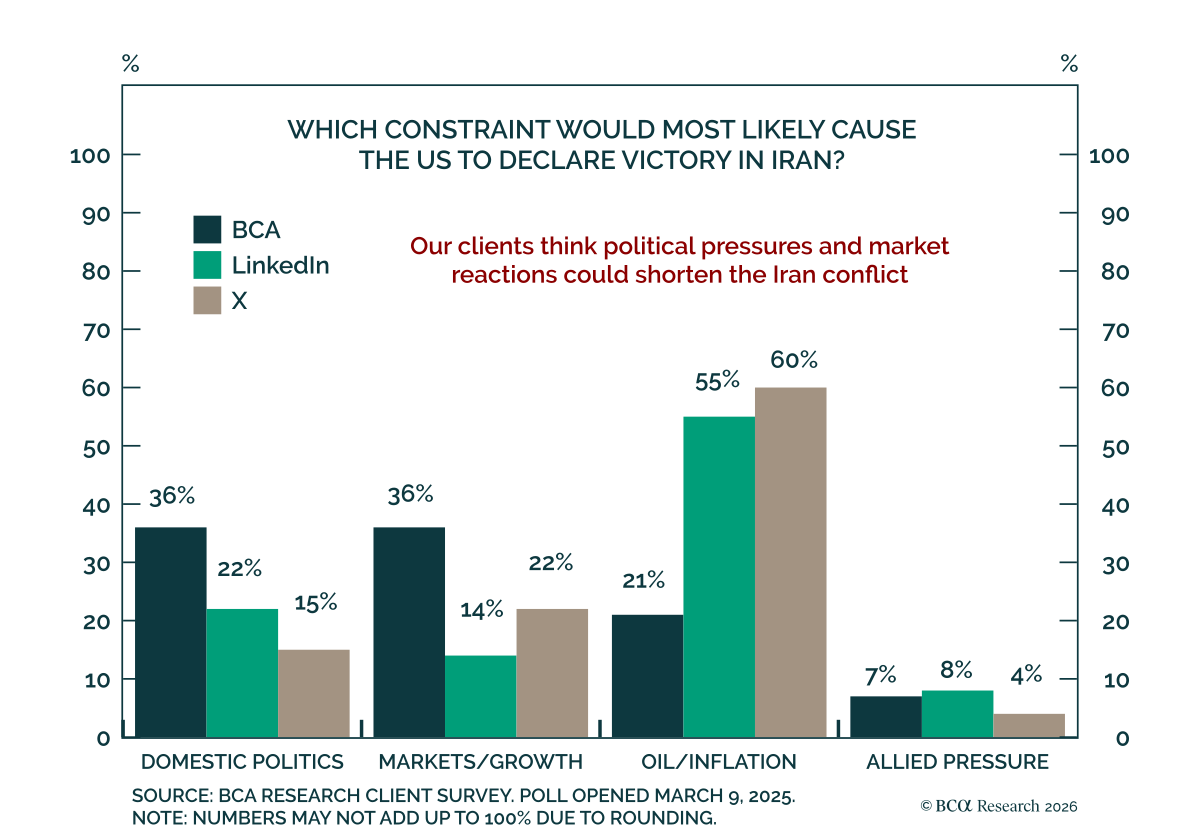
Highlights OPEC 2.0 agreed to cut output by another 500k b/d at its Vienna meeting last week, bringing the total official cuts by the producer coalition to 1.7mm b/d. Saudi Arabia added 400k b/d of additional voluntary cuts, bringing its total cuts to almost 900k b/d vs. its October 2018 production level. We think the market will tighten, as a result, and are getting long 2H20 Brent vs. short 2H21 Brent; this is the backwardation trade that worked well this year, producing an average return of 180%. There was no extension of OPEC 2.0 output cuts beyond end-March, although an extraordinary meeting of the coalition was scheduled for March 5, 2020. Anti-government civil unrest in Iraq and Iran has resulted in the killing of hundreds of protesters in both countries by state security forces. The unrest raises the threat of disruptions to oil supplies from Iraq and to ships transiting the Strait of Hormuz. Clashes between pro-Iranian protesters and Iraqi nationalists in Baghdad prompted a visit to the city by Iran’s top military commander, Qassem Soleimani, over the weekend. Soleimani reportedly is participating in talks to find a new prime minister for Iraq. Soleimani’s visit drew criticism from Grand Ayatollah Ali al-Sistani, the most prominent Shia religious leader in Iraq. Feature OPEC 2.0’s deepening of production cuts to 1.7mm b/d will be largely ceremonial, unless free riders in the producer coalition – led by the Kingdom of Saudi Arabia (KSA) and Russia – fully comply with the new levels agreed last week in Vienna (Chart of the Week).1 Contrary to our expectation, the production cuts were not extended beyond end-March, although an extraordinary meeting of the coalition was scheduled for March 5, 2020, in Vienna to review market conditions prior to the deal’s expiry.2 The market was not expecting anything other than symbolism in the just-concluded discussions among OPEC 2.0 members regarding production cuts. The bulk of the cuts in the coalition’s production are the result of US sanctions against Venezuela and Iran, which have removed ~ 1.8mm b/d from the market and KSA's cuts, which will total ~ 900k b/d following OPEC 2.0's Vienna meeting.  We believe this will lead to a tighter market, and will steepen the backwardation in the Brent forward curve.  We are, therefore, recommending a longer 2H20 Brent position vs. a short 2H21 Brent position. The sanctions-induced cuts are squeezing the economies of both Venezuela and Iran, which, in the case of the latter, is producing a blowback on Iraq. Chart of the WeekOPEC 2.0 Raises Output Cuts To 1.7mm b/d In Vienna Iraq, Iran Violence Raises Gulf Oil Supply Threat Level Iraq, Iran Violence Raises Gulf Oil Supply Threat Level Iran Fights To Maintain Influence In Iraq Following an unexpected increase in gasoline prices last month, violent anti-government protests erupted around Iran, which provoked a deadly crackdown by the state. The ongoing unrest has resulted in the death of hundreds of protesters, which, by the US’s estimate, stand at more than 1,000. This claim was refuted by Iranian officials.3 It is impossible to overstate the importance of maintaining freedom of navigation through the Strait of Hormuz. The unrest that followed the gasoline price hike was the deadliest since that country’s Islamic Revolution in 1979, according to the New York Times. The Times reported that the Islamic Revolutionary Guards Corps opened fire on protestors calling for the removal of leadership, killing scores.4 Protests also erupted in states closely aligned with Iran in the past couple of months – i.e., Lebanon, Iraq.5 For the oil market, Iraq matters most: It is difficult to overstate the importance of keeping Iraq’s 4.7mm b/d of crude oil production flowing to global markets. Likewise, it is impossible to overstate the importance of maintaining freedom of navigation through the Strait of Hormuz, which connects the Persian Gulf with the Arabian Sea and the rest of the world’s oil-consuming markets (Map 1). Map 1The Persian Gulf And Strait of Hormuz Iraq, Iran Violence Raises Gulf Oil Supply Threat Level Iraq, Iran Violence Raises Gulf Oil Supply Threat Level More than 20% of the world’s crude oil and condensates supplies transit the Strait on any given day (Chart 2). The anti-government protests in Iraq and Iran raise the threat level to production in Iraq, and attacks on shipping transiting the Strait of Hormuz by the latter, or a direct confrontation with the US and its Gulf allies. Our colleagues in BCA Research’s Geopolitical Strategy (GPS) are following the evolution of events in Iran and Iraq closely. Following is their assessment of what led to the most recent unrest in Iraq.6 Chart 2Violence Again Threatens Gulf Oil Supply Iraq, Iran Violence Raises Gulf Oil Supply Threat Level Iraq, Iran Violence Raises Gulf Oil Supply Threat Level Chart 3AFertile Ground For Unrest In Iraq Iraq, Iran Violence Raises Gulf Oil Supply Threat Level Iraq, Iran Violence Raises Gulf Oil Supply Threat Level Deadlock In Iraq While both the grievances and demands of the protesters in Lebanon and Iraq are similar, the unrest in Iraq is of much greater consequence from a global investor’s perspective. The trigger was the removal of the highly revered Lieutenant General Abdul-Wahab al-Saadi from his position in the Iraqi army by Prime Minister Adel Abdul-Mahdi.7 The popular general was unceremoniously transferred to an administrative role in the Ministry of Defense. Iraqi protesters are united in their economic grievances, frustrated at a political and economic system that is unwilling to translate economic gains to improved livelihoods for its people. The sacking of al-Saadi – considered a neutral figure – was interpreted as evidence of Iranian influence and the greater sway of the Iran-backed Popular Mobilization Forces (PMF), an umbrella organization of various paramilitary groups. Iraqis all over the country responded by attacking the Iranian consulate in Karbala and offices linked to Iranian-backed militias. Iraqi protesters are united in their economic grievances, frustrated at a political and economic system that is unwilling to translate economic gains to improved livelihoods for its people. The May 2018 parliamentary elections, which ushered in Prime Minster Abdul-Mahdi, failed to generate much improvement. The country continues to be plagued by high unemployment, corruption, and an utter lack of basic services (Charts 3A & 3B). This has ultimately resulted in a lack of confidence in Iraqi leadership who are being increasingly perceived as benefiting from the status quo at the expense of the populace. Chart 3BFertile Ground For Unrest In Iraq Iraq, Iran Violence Raises Gulf Oil Supply Threat Level Iraq, Iran Violence Raises Gulf Oil Supply Threat Level Most importantly, the ruling elite has failed to respond to key trends that emerged in last year’s parliamentary elections. The extremely low voter turnout reveals that Iraqis are disenchanted with the government's ability to meet their needs. Meanwhile the success of Shia cleric Moqtada al-Sadr’s Sairoon coalition – running on a platform stressing non-sectarianism and national unity – in securing the largest number of seats highlights the desire for a reduction of foreign interference (both Iranian as well as US/Saudi) in domestic politics. Neither the US nor Saudi Arabia have an appetite to step in and provide the support necessary to counteract Iran. Moreover, Iran and its proxies in Iraq will not back down easily. Thus, the ongoing protests are to a great extent the result of the new government’s failure to heed the warnings brought about by the 2018 election and protests. They have served to deepen the rift between the rival Shia blocs, particularly those Iraqi nationalists who deeply resent the intrusion of Iran into its political structures. Iraq is in a state of deadlock. That said, Iran is unlikely to stand by idly as its influence wanes. As a result, we are likely to witness greater unrest as the rift between the two Shia blocs intensifies. Neither the US nor Saudi Arabia have an appetite to step in and provide the support necessary to counteract Iran. Moreover, Iran and its proxies in Iraq will not back down easily. At the same time, the geographical spread of the protest movement demonstrates that Iraqis are fed up with the current system.8 This points to greater instability in Iraq as no side is backing down and the only foreign power willing and able to interfere is Iran. US Sanctions Continue To Pressure Iran The Trump administration’s crippling “maximum pressure” sanctions have sent Iran’s Economy reeling. The Trump administration continues to enforce its “maximum pressure” sanctions, which have reduced Iranian oil exports from 1.8 million barrels per day at their recent peak to 100,000 barrels per day in November (Chart 4). These are crippling sanctions that have sent Iran’s economy reeling. Chart 4Iran Remains Under “Maximum Pressure” Iraq, Iran Violence Raises Gulf Oil Supply Threat Level Iraq, Iran Violence Raises Gulf Oil Supply Threat Level Iran’s Supreme Leader Ayatollah Ali Khamenei has ruled out negotiations with Trump. They would be unpopular at home without a major reversal on sanctions from Trump (Chart 5). Chart 5 Major US Reversal Prerequisite For Iran Talks Iraq, Iran Violence Raises Gulf Oil Supply Threat Level Iraq, Iran Violence Raises Gulf Oil Supply Threat Level Trump presumably aims to avoid an oil shock ahead of the election. The US and its allies have visibly shied away from conflict in the wake of Iran’s provocations, including the spectacular attack on eastern Saudi Arabia's oil infrastructure that knocked 5.7 million barrels of oil per day offline in September. However, this does not mean the odds of war are zero. Opinion polls show that the Iranian public primarily blames the government for the collapsing economy. The Americans or the Iranians could miscalculate. Both sides might think they can improve their standing at home by flexing military muscle abroad. Iran is a rational actor and would not normally court American airstrikes or antagonize a potentially lame duck president. Yet it is under extreme pressure due to the sanctions, as the riots and protests following the gasoline price hikes indicate. Iran also faces significant unrest in its sphere of influence, as discussed above. Opinion polls show that the Iranian public primarily blames the government for the collapsing economy, and yet that American sanctions are siphoning off some of this anger (Chart 6). This could tempt Iran’s leaders to continue staging provocations in the Strait of Hormuz or elsewhere in the region, perhaps with attacks on US assets or those of its GCC allies. Chart 6Iranians Blame Tehran, Tehran Blames America Iraq, Iran Violence Raises Gulf Oil Supply Threat Level Iraq, Iran Violence Raises Gulf Oil Supply Threat Level Hardline Iranian military leaders and politicians currently receive the most favor in polling, while the reformist President Rouhani – undercut by the American withdrawal from the 2015 deal – is among the least popular. Elections for the Majlis, or Parliament, in February will likely reverse the reformist turn in Iranian politics that began in 2012. The regime stalwarts are gearing up for the supreme leader’s succession in the coming years. While a Democratic White House could restore the 2015 deal Trump unilaterally abrogated, that ship may have sailed. Trump, under impeachment, could seek to distract the public. This was Bill Clinton’s tactic with Operations Infinite Reach, Desert Fox, and Allied Force in 1998-99. These operations were minor and not comparable to a conflict with Iran. However, Trump may be emboldened. On paper the US Strategic Petroleum Reserve – along with OPEC and other petroleum reserves and spare capacity – could cover most major oil-shock scenarios. A supply outage the size of the Abqaiq attack in September would have to persist for four months to cause enough price pressure to harm the US economy and decrease Trump’s chances of winning re-election. The simulations in Chart 7 overstate the gasoline price impact by assuming that global strategic oil reserves remain untapped, along with spare capacity. Chart 7Desperation Could Force Iran To Take Excessive Risks Iraq, Iran Violence Raises Gulf Oil Supply Threat Level Iraq, Iran Violence Raises Gulf Oil Supply Threat Level Thus while the Iranians may take excessive risks, the Trump administration may not refrain this time from airstrikes. Bottom Line: While the Middle East is always full of risks to oil supply, Iran’s vulnerability and Trump’s status at home make the situation unusually precarious. We continue to believe an historic oil-supply disruption is a fatter tail risk than investors realize, or are pricing in currently. Market Round-Up Energy: Overweight Following the long-awaited OPEC 2.0 meeting held last week, the group “surprised” the market by announcing it will deepen its production cut by ~ 500k b/d, pushing the total cut to 1.7mm b/d. The bulk of the additional adjustments comes from Saudi Arabia (Chart of the Week). Importantly, the group emphasizes the importance of full compliance by every member – this would imply a ~225k b/d reduction from Iraq alone. We remain overweight oil in 2020. Base Metals: Neutral Copper prices rose sharply over the past week, reaching $2.71/lb at Tuesday's close, a level last seen in July 2019. US-China trade optimism last Friday sparked the rally. Copper’s physical market remains tight, inventories are low globally, and demand is set to rebound on the back of major central banks’ accommodative monetary policy. Even so, sentiment and positioning remain weak (Chart 8). We expect this to reverse, further supporting prices over the short term. Precious Metals: Neutral Risk-on sentiment following President Trump’s upbeat comments on US-China trade negotiations pushed gold prices down by $18/oz last Friday – one of the largest single-day declines YTD. Precious metals markets continue to follow the ups and downs of trade-war headlines and global growth-related news. Nonetheless, our fair-value model suggests gold is fairly priced at ~ $1,465/oz (Chart 9). Any significant drop below that level would provide an entry opportunity for investors to add gold as a portfolio hedge in 2020. Ags/Softs: Underweight The USDA released its final crop progress update on Monday. Corn was 8% behind full harvest, with North Dakota remaining the laggard with only 43% of the corn picked. Markets ignored this as March Corn futures slid close to 1.5% on a weekly basis. Chinese purchases of at least five bulk cargo shipments of U.S. soybeans lifted prices above $9/bu on Tuesday in anticipation of the USDA monthly crop production report. Wheat prices were flat on a weekly basis, as traders awaited results of an Egyptian purchase tender on Tuesday. Chart 8Copper Sentiment And Positioning Remain Weak Copper Sentiment And Positioning Remain Weak Copper Sentiment And Positioning Remain Weak Chart 9Gold Fair Value Is ~ 5/oz Gold Fair Value Is ~ $465/oz Gold Fair Value Is ~ $465/oz   Robert P. Ryan Chief Commodity & Energy Strategist rryan@bcaresearch.com     Footnotes 1     Please see On OPEC 2.0’s Agenda In Vienna: More Production Cuts, Longer Deal, published December 5, 2019.  We noted  most of the production cuts that matter to the market already are in place – i.e., Saudi Arabia’s over-compliance of ~ 400k b/d, along with Venezuela’s and Iran’s involuntary production cuts of ~ 1.8mm b/d resulting from US sanctions, as of October 2019.  Under the amended production cuts, KSA agreed to remove close to 170k b/d more, lifting its total official voluntary quota and over-compliance, which brings its total cuts to close to 900k b/d.  The total OPEC 2.0 additional cuts come to just over 500k b/d.  Based on media reports going into the Vienna meeting last week, it would appear Russia prevailed on the producer coalition in its effort to keep the expiry of the production deal at end-March.  However, the March 5 extraordinary meeting of the coalition states indicates KSA was successful in keeping the discussion re extending the deal alive. 2     In our current modeling, we assume the original 1.2mm b/d of cuts will remain in place to year-end 2020.  We will be updating our balances and price forecasts in next week’s Commodity & Energy Strategy. 3    Please see U.S. says Iran may have killed more than 1,000 in recent protests, published by uk.reuters.com December 5, 2019.   Iranian leaders blamed “thugs” aligned with the US and rebels for the violence, and, in a separate report citing an Amnesty International claim that 143 protesters were killed, said “several people, including members of the security forces, were killed and more than 1,000 people arrested.”  Please see Iran says hundreds of banks were torched in 'vast' unrest plot published November 27, 2019, by uk.reuters.com.  The size of the price increase is difficult to ascertain: The government says gasoline costs were increased by 50% with a goal of raising $2.55 billion/year, while other reports claim the hike amounted to as much as 300% in different parts of the country last month. 4    Please see With Brutal Crackdown, Iran Is Convulsed by Worst Unrest in 40 Years, published by the New York Times December 1, 2019. 5    The extent to which these states are entwined with Iran recently came to light via a cache of leaked Iranian diplomatic cables obtained by The Intercept, a not-for-profit news organization established by Pierre Omidyar, a founder of eBay.  The cables were published jointly by The Intercept and the New York Times November 19, 2019.  Please see The Iran Cables: Secret Documents Show How Tehran Wields Power in Iraq, published by the Times.  The article claims “The unprecedented leak exposes Tehran’s vast influence in Iraq, detailing years of painstaking work by Iranian spies to co-opt the country’s leaders, pay Iraqi agents working for the Americans to switch sides and infiltrate every aspect of Iraq’s political, economic and religious life.” 6    This analysis in the remainder of this report is an abridged version of original work published by BCA Research’s GPS service in reports entitled Iraq's Challenge To Iran Is Underrated and 2020 Key Views: The Anarchic Society published November 8 and December 6, 2019.  We believe events over the past week and weekend warrant this in-depth examination of the ongoing unrest and instability in Iraq and Iran.  Both reports are available at gps.bcaresearch.com. 7     Lt. Gen. Abdul-Wahab al-Saadi was recognized and respected among Iraqis for fighting terrorism and his role in ridding the country of the Islamic State. The Iran-backed Popular Mobilization Forces were uneasy with Saadi’s close relationship with the US military. His abrupt removal was likely a result of the Iraqi government’s growing concern over al-Saadi’s popularity and rumors of a potential military coup. 8    Protests are occurring in all regions in Iraq. They are supported by Grand Ayatollah Ali al-Sistani. This is a significant development from the 2018 protests which were mainly concentrated in Iraq’s southern region.   Investment Views and Themes Recommendations Strategic Recommendations Tactical Trades TRADE RECOMMENDATION PERFORMANCE IN 2019 Q3 Iraq, Iran Violence Raises Gulf Oil Supply Threat Level Iraq, Iran Violence Raises Gulf Oil Supply Threat Level Commodity Prices and Plays Reference Table Trades Closed in 2019 Summary of Closed Trades Iraq, Iran Violence Raises Gulf Oil Supply Threat Level Iraq, Iran Violence Raises Gulf Oil Supply Threat Level