Sorry, you need to enable JavaScript to visit this website.
Skip to main content

Labor Market

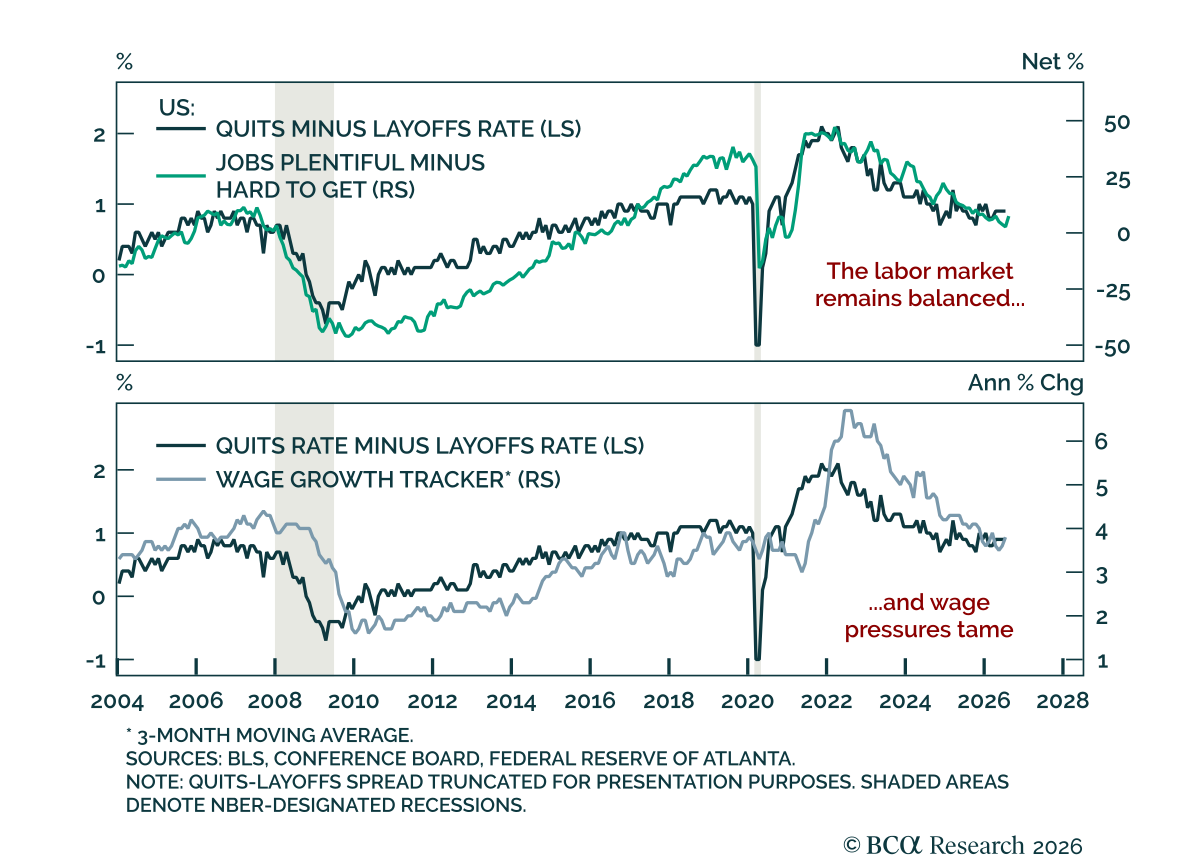
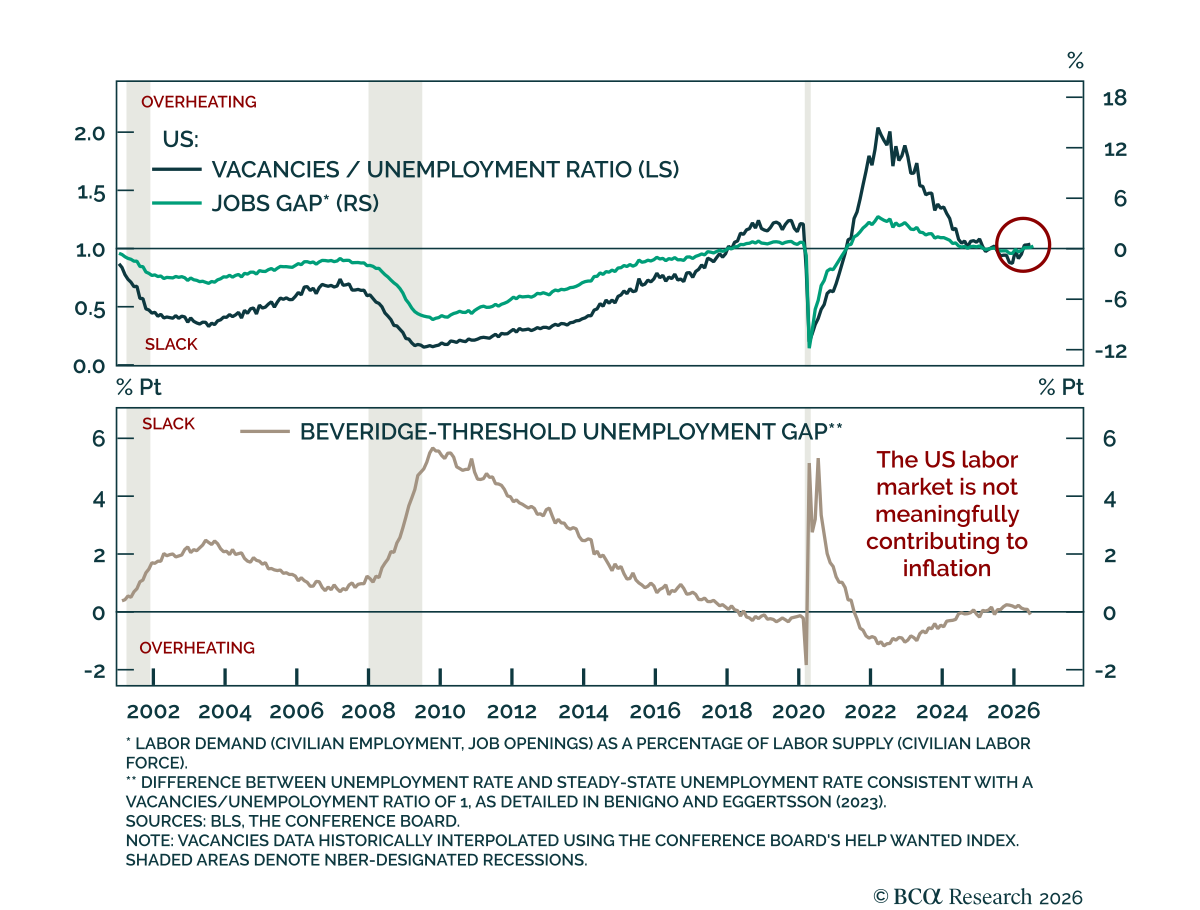
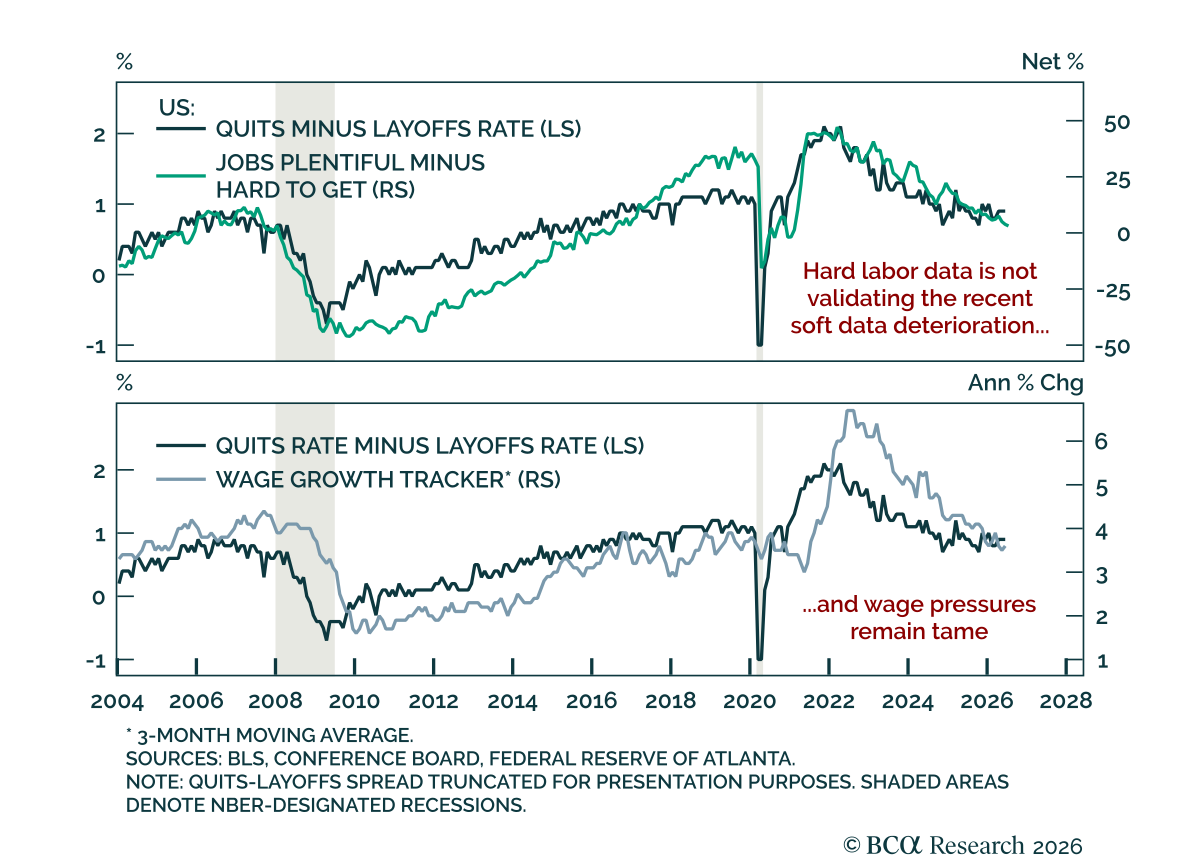
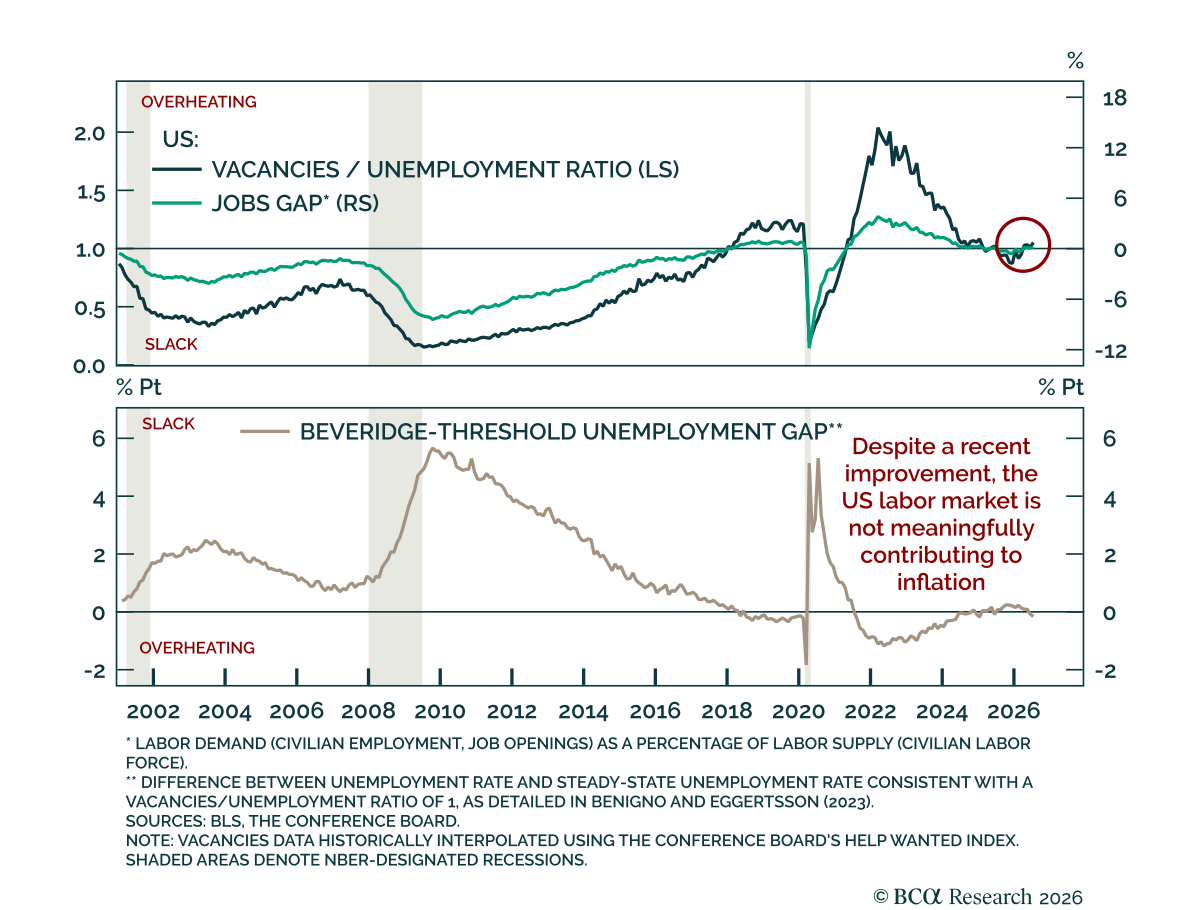
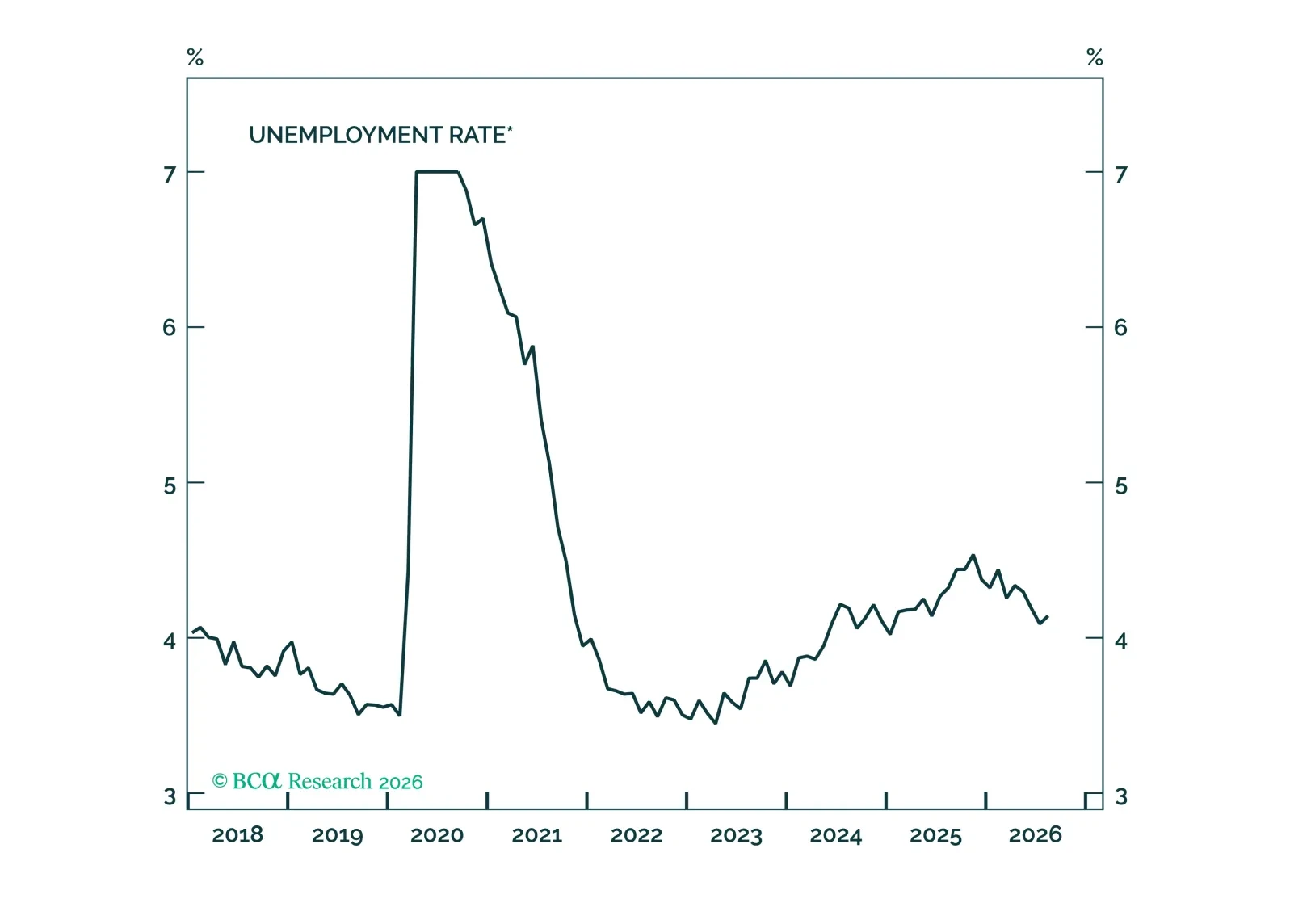
The labor market tightened in January, significantly lowering the odds of a H1 2026 rate cut. Rate cuts driven by lower inflation are still likely in H2 2026.

Our Portfolio Allocation Summary for February 2026.

In Section I, Doug highlights the risks to US consumption if job growth does not soon recover. The US economy has yet to pass its tipping point, however, arguing against defensive positioning for now. In Section II, Jonathan examines whether the AI “scaling laws” are likely to hold. They will over the near term, but cracks are already beginning to form in the narrative of ever-improving AI.

In Section II, Jonathan examines whether the AI “scaling laws” are likely to hold. They will over the near term, but cracks are already beginning to form in the narrative of ever-improving AI.

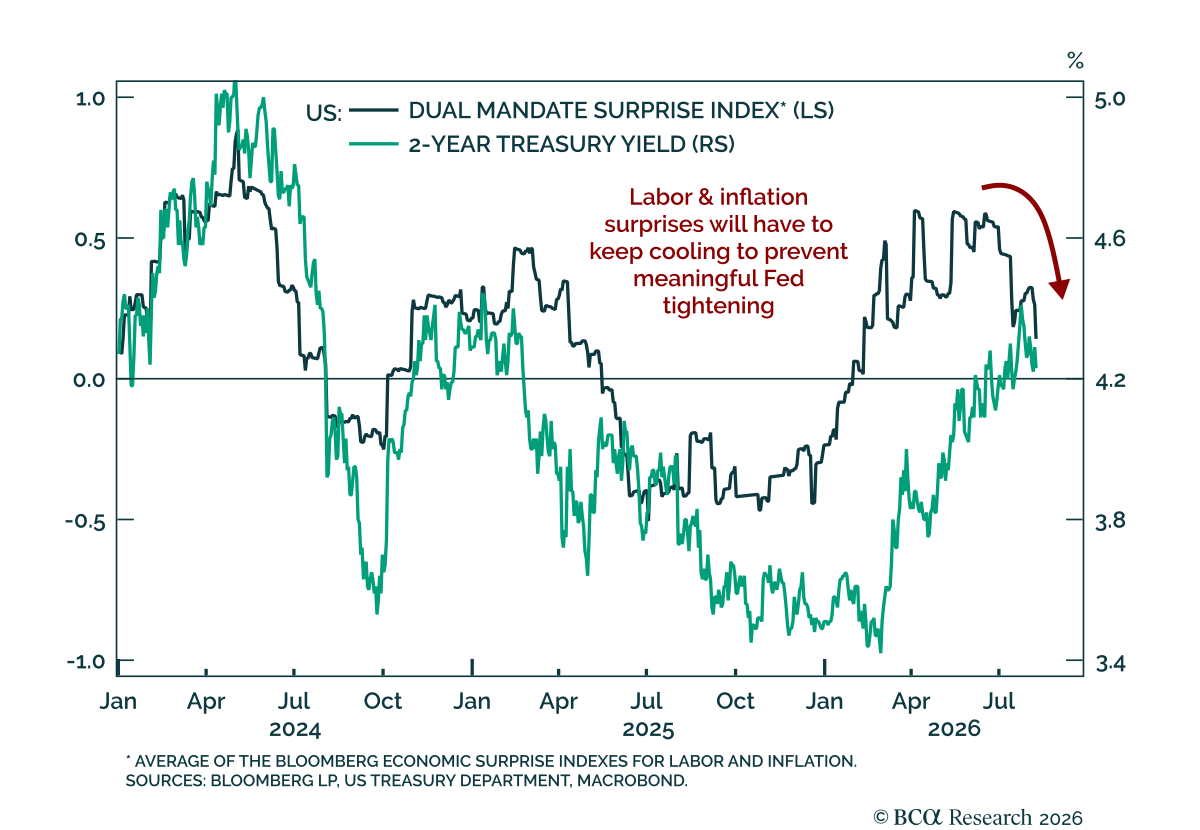
The Fed will keep rates on hold in H1 2026, but dovish policy surprises are likely in the second half of the year.

Measures of labor market utilization improved in December, ruling out a January cut and significantly reducing the odds of a March cut.

To start 2026, we answer what we believe are the most important questions facing investors surrounding the labor market, monetary and fiscal policy, and AI stocks. Overall, we reiterate our overweight views on risk assets and highlight the risks surrounding the upcoming tariff decision. 

We have been surprised that consumption has held up well despite anemic payrolls growth. This brief considers ways that consumption might continue to beat our base-case expectations.

In Section I, Doug underscores that the US labor market remains weak, crimping the outlook for disposable income growth. It is too soon to decisively bet against the bull market, but downside risks remain quite elevated. In Section II, Jonathan updates the BCA Artificial Intelligence Productivity Checklist and concludes that the evidence of an AI-driven productivity boom is not convincing.

In Section II, Jonathan updates the BCA Artificial Intelligence Productivity Checklist and concludes that the evidence of an AI-driven productivity boom is not convincing.