Sorry, you need to enable JavaScript to visit this website.
Skip to main content

  Results of the ECB’s quarterly Bank Lending Survey suggest that the tight monetary policy stance is still weighing on the Eurozone economy.  Banks tightened credit standards for businesses and consumers further in Q4…
  As expected, the Bank of Japan maintained its ultra-easy monetary policy stance at its meeting on Tuesday, making no changes in interest rates or yield curve control. The monetary policy statement highlighted that elevated…
  Ahead of today’s Bank of Canada (BoC) meeting and the Reserve Bank of Australia (RBA) meeting on February 6th, our Global Fixed Income Strategists compared the monetary policy outlooks for both central banks. In Canada,…
In this Strategy Insight, we assess the monetary policy path for Australia and Canada in 2024 and we discuss how to profit from a growing divergence between the two economies.
  The US Conference Board’s Leading Economic Indicator (LEI) sent a mixed signal on Monday. On the one hand, the LEI posted its 22nd consecutive month-over-month decline in December – a negative   sign for the…
  BCA Research’s European Investment Strategy service concludes that investors should go long German curve steepeners. Last week at Davos, European Central Bank (ECB) President Christine Lagarde leaned heavily against the…
The SIFI banks expressed confidence in their credit outlook for 2024 and expect that credit losses will crest soon, given the reserves they’ve already set aside. Their implicit embrace of the soft-landing narrative suggests to us…
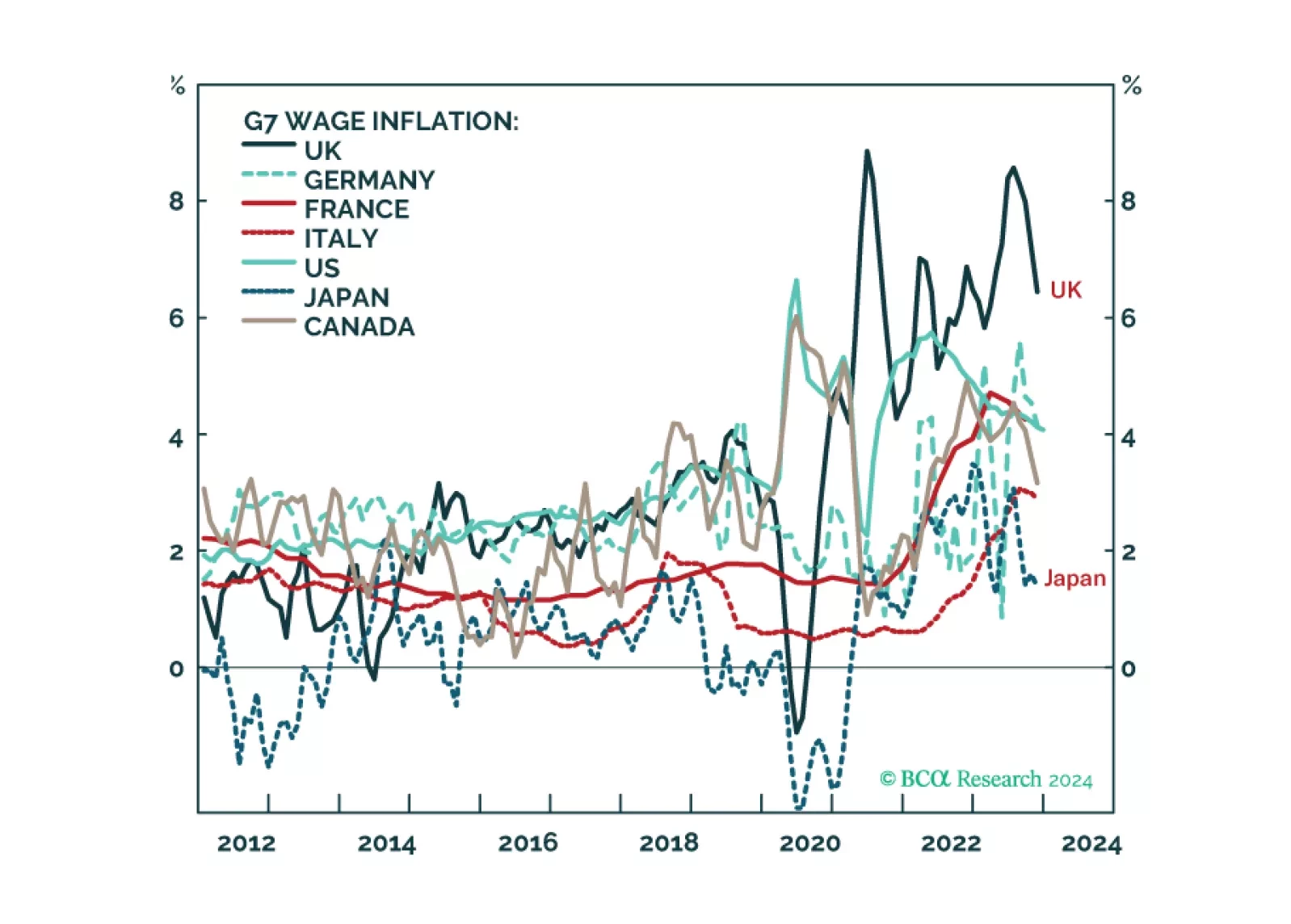
Disinflation coupled with sticky wage growth is likely to result in either a second wave of inflation or layoffs and a recession. In the meantime, market expectations for sales, growth, and margins are overly optimistic and are…
The ECB will begin cutting rates in June, what does this start date imply for the yield curve and European cyclicals?
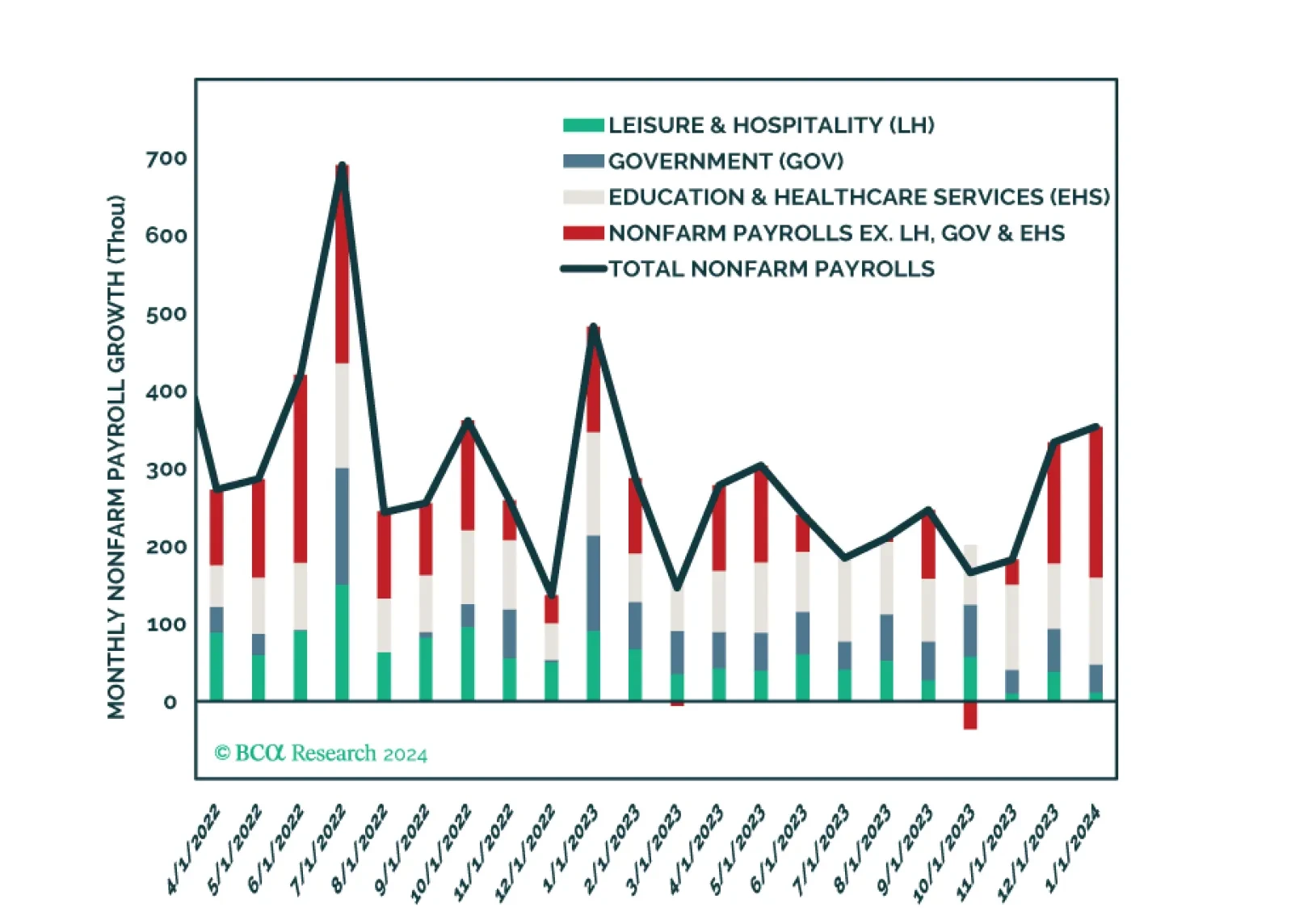
Investors have taken comfort in the fact that unemployment has remained low in the major economies. But underneath the surface, there are clear signs that labor demand is weakening. The clock keeps ticking towards our H2 2024…