Sorry, you need to enable JavaScript to visit this website.
Skip to main content

Oil

Trump, the Fed, the Russo-China bloc, Venezuela, and France are all seeing developments that imply some contrarian tactical views: Long USD, overweight US versus Europe, overweight Europe versus China, and short oil. 

MacroQuant is recommending that equity investors keep their finger near the eject button but avoid pressing it for now. The model is warming up to the dollar again and sees scope for oil prices to rise.

An update on the key themes and views that will shape commodity markets through the remainder of 2025. 

The dollar is breaking down, as capital leaves the US. The important question investors must answer is how much downside is left for the greenback, and whether depreciation will continue in a straight line over the coming months or pause (and even stage a countertrend rally).Tactically, we will be buying the dollar. This is because our technical indicators are telling us that the dollar is much oversold and due for a countertrend bounce.Trade Idea #1: Buy The DXYThe greenback bottomed in 2008, at the depth of the financial crisis and has been in an uptrend since. For the DXY, that trend has been defined by the consistent pattern of higher lows and higher highs since the Great Financial Crisis (Chart 1). Chart 1 The Dollar Is Approaching A Critical Resistance Level The Dollar Is Approaching A Critical Resistance Level Chart 2 The Dollar Is Oversold The Dollar Is Oversold That bull market is now under threat. Year-to-date, the DXY has fallen by circa 10.4%. Given the greenback’s history of moving in very long cycles, the question most investors face today is: Is more weakness forthcoming, or is it time to become a contrarian?From purely technical lens, we will be buying the DXY on Independence Day for three key reasons. The DXY is approaching an important support level. This is defined by the upward sloping trendline, drawn from the 2008 lows, which currently pins support around 96. We will expect at least a tactical bounce at these levels as stale shorts fold their positions.Our comprehensive momentum and positioning indicator shows that the dollar is also very much oversold. Historically, this has led to countertrend bounces in the greenback (Chart 2). This measure is sitting at a standard deviation below the mean. When these levels have been hit in the past, a sharp reversal often ensued. It is remarkable that the higher-frequency momentum component almost hit two standard deviations below the mean.5%-10% rallies in DXY are common within the context of a long-term bear market. This will especially be the case if the world economy enters a recession. The dollar bear market from 2000 to 2008 saw many countertrend rallies, notably in 2005. Similarly, the bull market since 2008 has seen many pullbacks, some as deep as 10%. These have all been tactical trading opportunities.The key message is that the dollar might be going through a regime shift. This regime shift will be more focused on balance of payments, as the reserve status of the dollar is put under a microscope, amidst President Donald Trump’s policies. This is long-term bearish for the USD.That said, for now, the drawdown in the greenback is tactically approaching levels that have typically signaled a countertrend move. That will be around the 96 level for DXY. Trade Idea #2: Oil Producers Versus ConsumersThe dollar is the natural driver of all other FX market moves. This means that if a tactical bounce in the dollar occurs, as we expect, it will weigh on other G10 and EM currencies. The good news is that a few attractive trades exist at the crosses, that are not closely correlated to the overall dollar trend. The clearest one is buying a currency basket of oil producers, relative to oil consumers. There are three key reasons why this trade might prove fruitful:First, most oil producers tend to sport current account surpluses, while energy importers tend to be deficit countries. So naturally, in a world that is increasingly focused on balance of payments, you want to be long a basket of currencies from oil producing nations (Chart 3).Second, with the US being the largest oil producer in the world, the dollar has become a de facto petrocurrency. This means that rising oil prices benefit the US, as they do for Saudi Arabia, Canada, Norway, Nigeria, Angola or even Iran (Chart 4). So, a trading strategy of going long petrocurrencies versus the USD will not work out if one expects higher oil prices. Chart 3 The US Dollar Is A Petro Currency The US Dollar Is A Petro Currency Chart 4 Buy A Select Basket Of Oil Producers Buy A Select Basket Of Oil Producers  Finally, there is very little geopolitical risk premium in the current oil price of $68, which the Kansas Fed estimates as the marginal production cost for US producers. Bottom Line: The correlation between the dollar and oil prices has turned structurally positive (Chart 5). A bearish bet on oil will mean a lower dollar in this case. That said, if the dynamics driving markets are balance of payments, it pays to be long a basket of oil producing nations (that tend to have a current account surplus), versus oil consuming nations. This trade will also benefit from a rise in the geopolitical risk premium in oil prices. Chart 5 Higher Oil Prices Will Lift The Dollar Higher Oil Prices Will Lift The Dollar Chart 6 Buy Precious Metals Buy Precious Metals Trade Idea #3: Buy Precious MetalsAlmost 90% of transactions globally are still conducted in US dollars. For all the talk about de-dollarization, that share has been rising over the last decade. What has been true this year is a clear willingness by foreign nationals to diversify away from this dependence on the dollar. That is true for petro nations such as Russia to geopolitical rivals to the US such as China.For developing nations, the clear choice has been to park their USDs into gold. In 2010, gold was about 10% of central bank reserves. Today, it has become the largest holding by central banks outside the US dollar and the euro.Given that the dollar tends to move in long cycles, the same is true for precious metals. As this diversification away from the dollar continues, gold will still benefit but cheaper precious metals will flare amidst the blaze. We already saw that with silver and platinum prices. The next candidate will be palladium (Chart 6). Chester NtoniforForeign Exchange/Global Fixed Income Strategistchestern@bcaresearch.comFollow me onLinkedIn & X

Acute geopolitical risks, like a massive oil shock, may be abating. But structural geopolitical risk remains high and could upset a blithe market. Cyclical economic risks are underrated as the US slows down and China continues to stumble. Investors should book some profits in anticipation of tariff implementation and a downturn in hard economic data.

MacroQuant’s US equity z-score is dangerously close to the -1 threshold. Moves below that threshold have reliably coincided with equity bear markets in the past. As such, MacroQuant recommends an underweight on stocks, offset by an overweight on bonds and cash.

Investors should modestly underweight equities in their portfolios and look to turn more aggressively defensive once the whites of the recession’s eyes are visible. We think that will happen within the next few months.

President Trump’s big beautiful bill will pass but faces near-term hurdles and will not tighten the government’s belt. It will combine with renewed tariff implementation to generate near-term risk for both the bond and stock market. The Iran crisis fizzled, saving Trump from a major oil shock that could have derailed his second term.

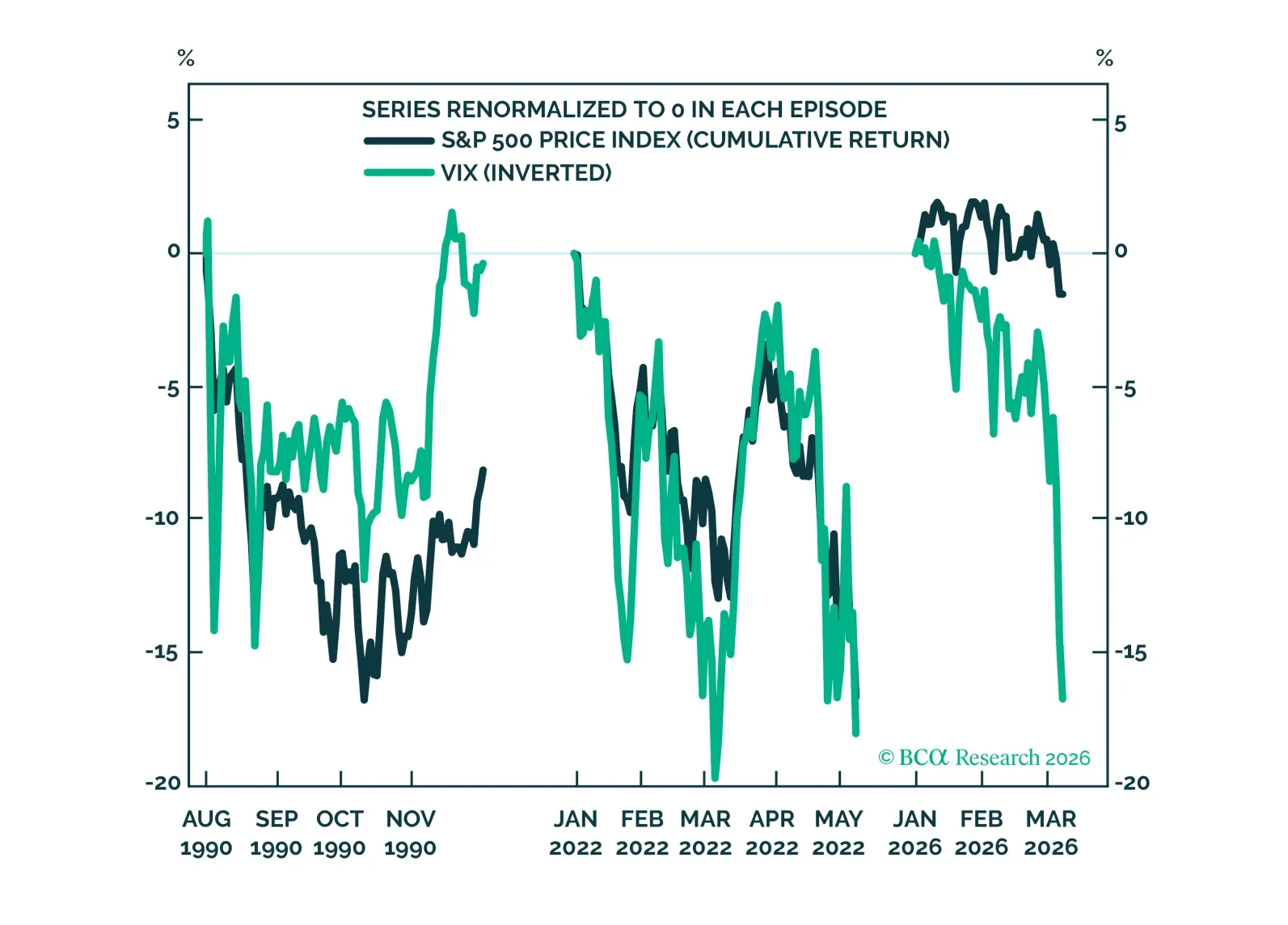
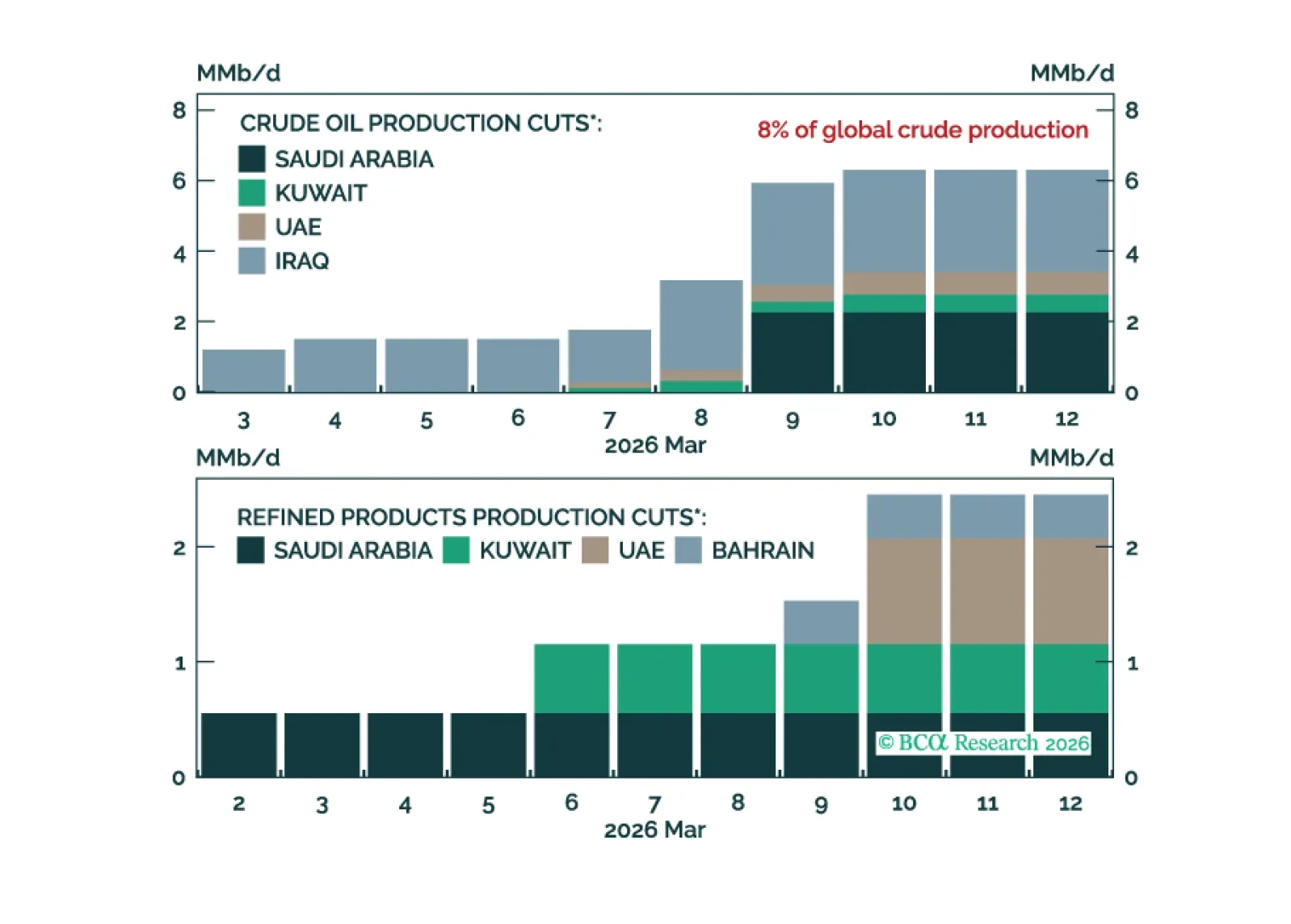
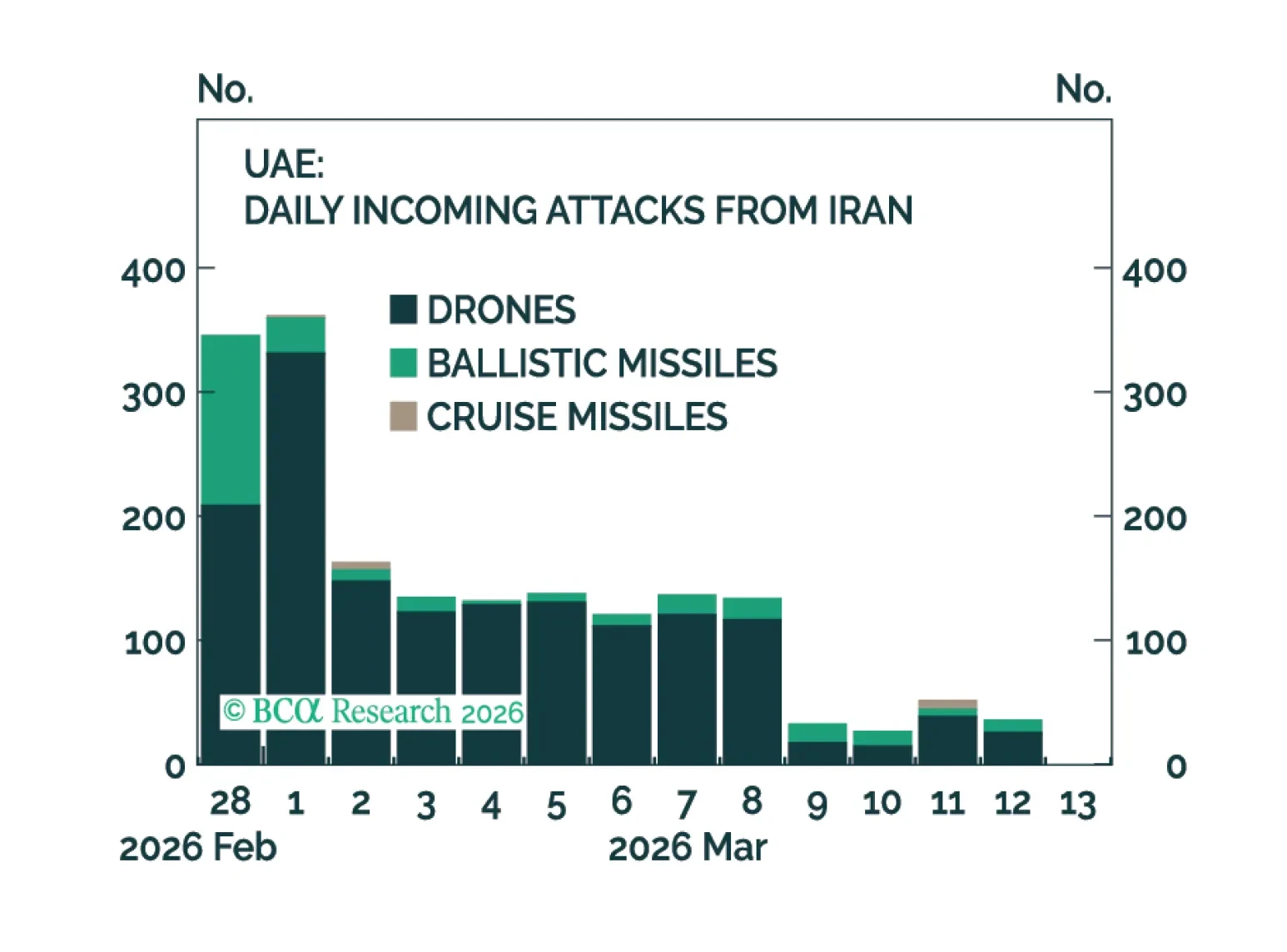
Chart 1 Market Response To Trade War, Iran War Market Response To Trade War, Iran War It is not yet clear that the Iran war is deescalating, despite the best efforts of global financial markets to dismiss its significance. True, Iran’s missile attacks on US military bases in Qatar and Iraq appear ineffectual as we go to press. Oil and gold both slid while equities gained on Monday (Chart 1), though oil has risen by 15% over the past two weeks while haven assets rallied.But Israel will keep striking until the US forces it to back down. Earlier we gave a 60/40 chance of a major oil shock if the US intervened to destroy the Iranian nuclear program (Diagram 1). But for that pessimistic scenario to come true, one would need to see Iran strike regional oil production or interfere with oil shipping. So far that has not happened.  Diagram 1 Israel-Iran: 62% Subjective Probability Of Major Oil Supply Shock Israel-Iran: 62% Subjective Probability Of Major Oil Supply Shock By major shock we mean a war that disrupts production throughout the Persian Gulf – for example, a disruption in excess of eight million barrels per day in OPEC+ spare capacity. Or one that causes the Brent price to rise by 50%-100%. So far physical oil supply has not really been hit, though investors should assume that Iran will retaliate against oil as well as US military bases. The risk event will subside for now given Iran’s pathetic response. But we are not sounding the “all clear” just yet. Investors should continue to position in a way that benefits even if the war escalates again, such as by overweighting US equities and defensive assets. Iran’s Refusal To SurrenderEverybody knows that Iran is a mountain fortress with a population of 90 million so there is no way that the US or its allies are going to invade with ground forces.The Iranian regime also believes it can survive bombardment campaigns by the Israeli and American air forces. Leaders have refused to surrender despite American ultimatums and demands, ultimately leading to the US attacks. If the regime believed that its nuclear program would be permanently extinguished and its regime certainly toppled, then it would have surrendered to try to stay alive via negotiations. Instead its choice was to fight.Hence the regime believes that it can survive air campaigns. It is very difficult to knock out a regime from the air. The Iranian people will rally around the flag in the short run while the country is bombarded by foreign powers. The Iranian youth, and others disenchanted by the regime, are now forced to recognize the regime’s enemies and the threat of the foreign invader. Eventually, economic collapse and social unrest could still topple the government, but that would require a bloody battle with ruthless internal security and the Iranian Revolutionary Guard Corps. It will not happen overnight.Meanwhile Israel and the US are domestically divided and have limited commitment to the war. The Trump administration does not want to see an economic shock that undermines its narrow grip on Congress and the US public. In short, Iran believes it will sustain these attacks and survive, with a new generation initiated into supporting the regime by seeing firsthand what they are up against. It even believes it will resuscitate its nuclear program. All of this means that Israel will escalate its attacks on critical infrastructure, the missile program, and the remnants of the nuclear program. The US will support Israel until it is satisfied that the job is done.Why Would Iran Take Any Further Action?As long as Israel continues its campaign, Iran’s leaders will need to raise the economic and political cost to the Trump administration, to encourage it to restrain Israel and refrain from additional US attacks. Striking US military bases is a way of saving face. President Trump would retaliate if soldiers were killed, but later the risk could encourage the US to draw down some of its forces. So this form of retaliation may not be finished, despite Iran’s official rhetoric, and the US will continue to expect it. Investors do not care about the war so far because it is not affecting global oil supply. But as Israel’s attacks continue, Iran will try to force the US to change policy.Striking oil production or distribution, in Iraq or elsewhere in the region, will push up the global oil price, undermine domestic political support for the Trump administration, and attract international pressure on the US to conclude the war.Iran can adjust the magnitude of the oil disruption without immediately closing the Strait of Hormuz or forcing the US to act with maximum aggression. For example, the IRGC or foreign militant proxies can disrupt production in Iraq or shipping in the Gulf of Oman or Indian Ocean.   While the US would respond initially, the Trump administration would be tempted to declare victory and reduce operations, for fear of escalating further and triggering a massive economic and political shock. For those who say that Iran can sustain Israel and American bombardment without retaliating, if that is true, then Iran can sustain the bombardment while retaliating.So Iran has an incentive to strike regional energy supply, suffer the US retaliation, and wait as pressure builds on the US economy and political system for a change of foreign policy. A retaliatory cycle of this nature will cause minor oil shocks and increase the odds of a major oil shock. A major shock would require Iran to attack Saudi Arabia or the other major Gulf Arab oil producers, which is not yet likely – and will not happen if the escalatory cycle that we are describing never takes place. Similarly, Iran will not close the Strait of Hormuz unless the US has already done much greater damage and Iran believes its regime already faces collapse and has nothing to lose. But a lack of trust means that any sign that Iran could move, or the US could preempt it, could precipitate some kind of crisis in the strait.A major oil shock would short-circuit the business cycle, so investors should remain cautious for now. It may not happen, but the downside for global risk assets is larger than the upside at this juncture. Investment Takeaways Chart 2 Regional And Sectoral Implications So Far Regional And Sectoral Implications So Far The conflict underscores our contention that the US remains “exceptional” and US assets retain their safe-haven properties.US stocks have outperformed global stocks by 0.3% over the past two weeks – while US energy shares have outperformed their global counterparts by 1.1% (Chart 2).The Middle East as a region has underperformed in line with our expectations.Global energy has outperformed other cyclicals.These trends will fall back temporarily while the crisis seems to abate, but we are not yet convinced that we should close our trades on a genuine de-escalation.Matt Gertken Chief Geopolitical Strategist mattg@bcaresearch.comFollow me onLinkedIn & X 
Elevated market complacency contrasts with high geopolitical risk as oil disruption remains a key threat. Middle East tensions escalated over the weekend after the US struck Iran’s nuclear capabilities, yet markets have reacted calmly as both Washington and…