Sorry, you need to enable JavaScript to visit this website.
Skip to main content

Peru

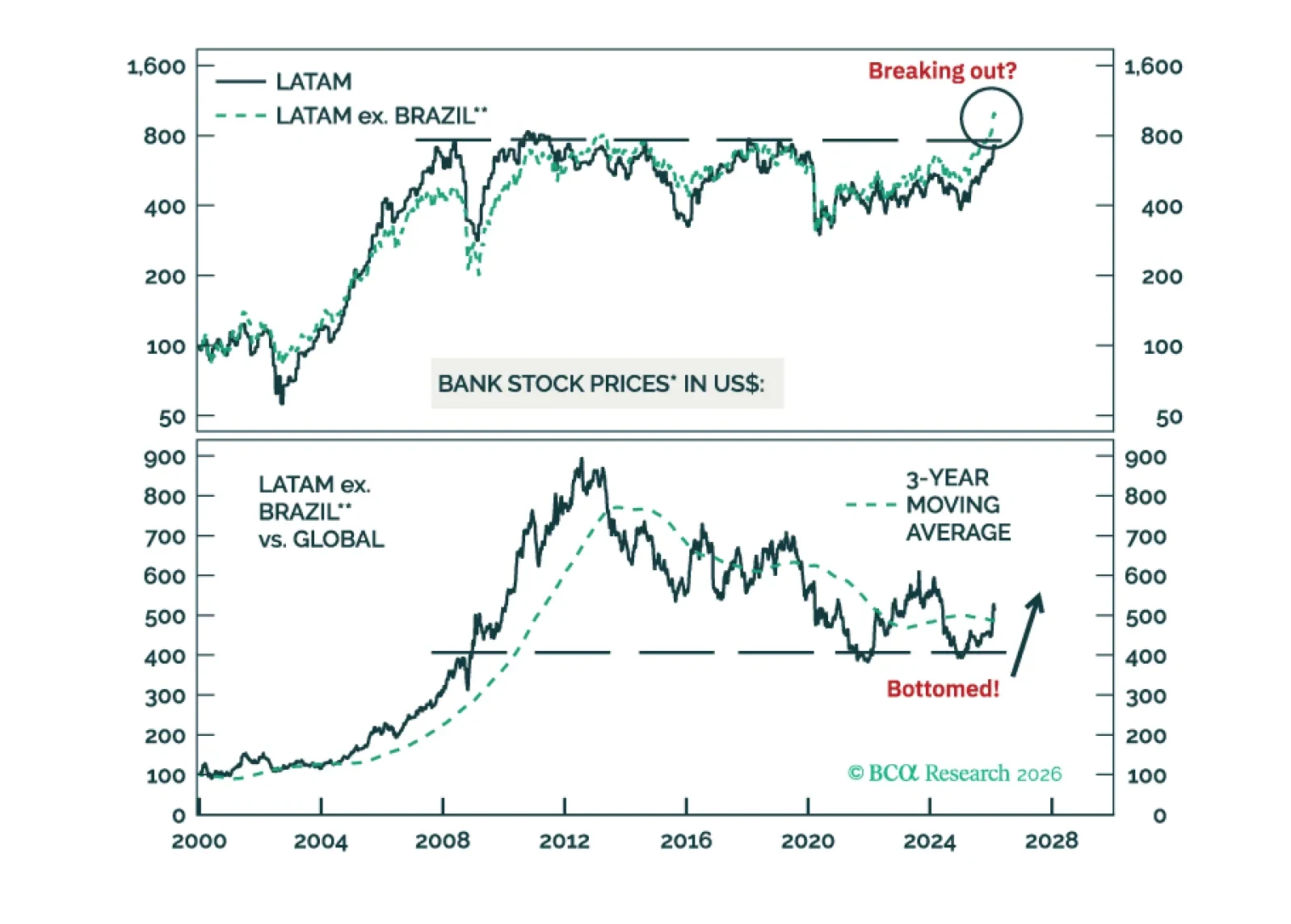
Go long LATAM ex. Brazil banks / short global bank stocks. Brazilian bank equities will underperform due to poor and worsening macro fundamentals. 
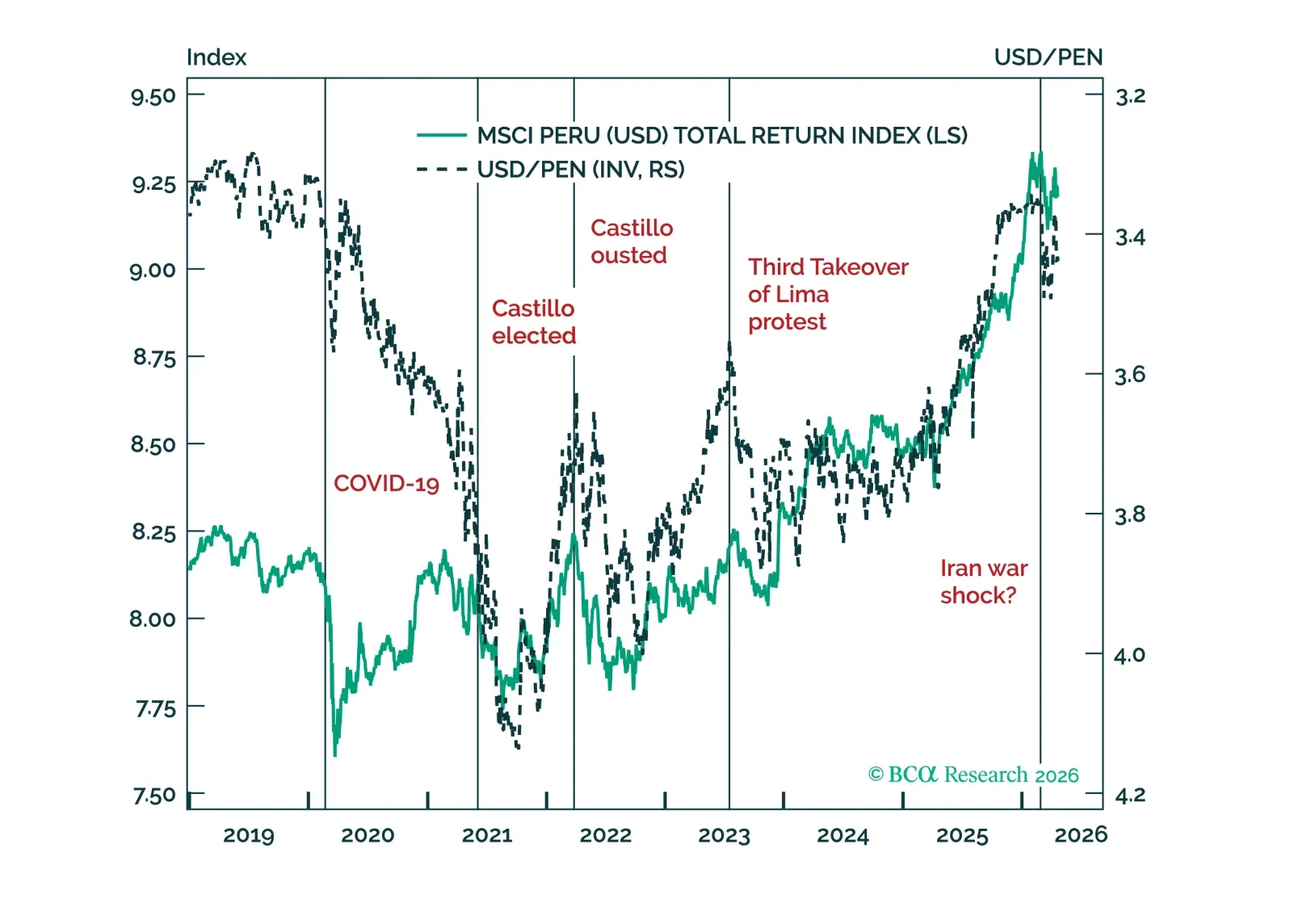
Peru’s April 2026 election will inject political volatility, but fundamentals are strong and we are constructive. Buy gold mining equities and gold on dips to capture the supportive global cycle and wait for a more attractive entry point for Peruvian assets.
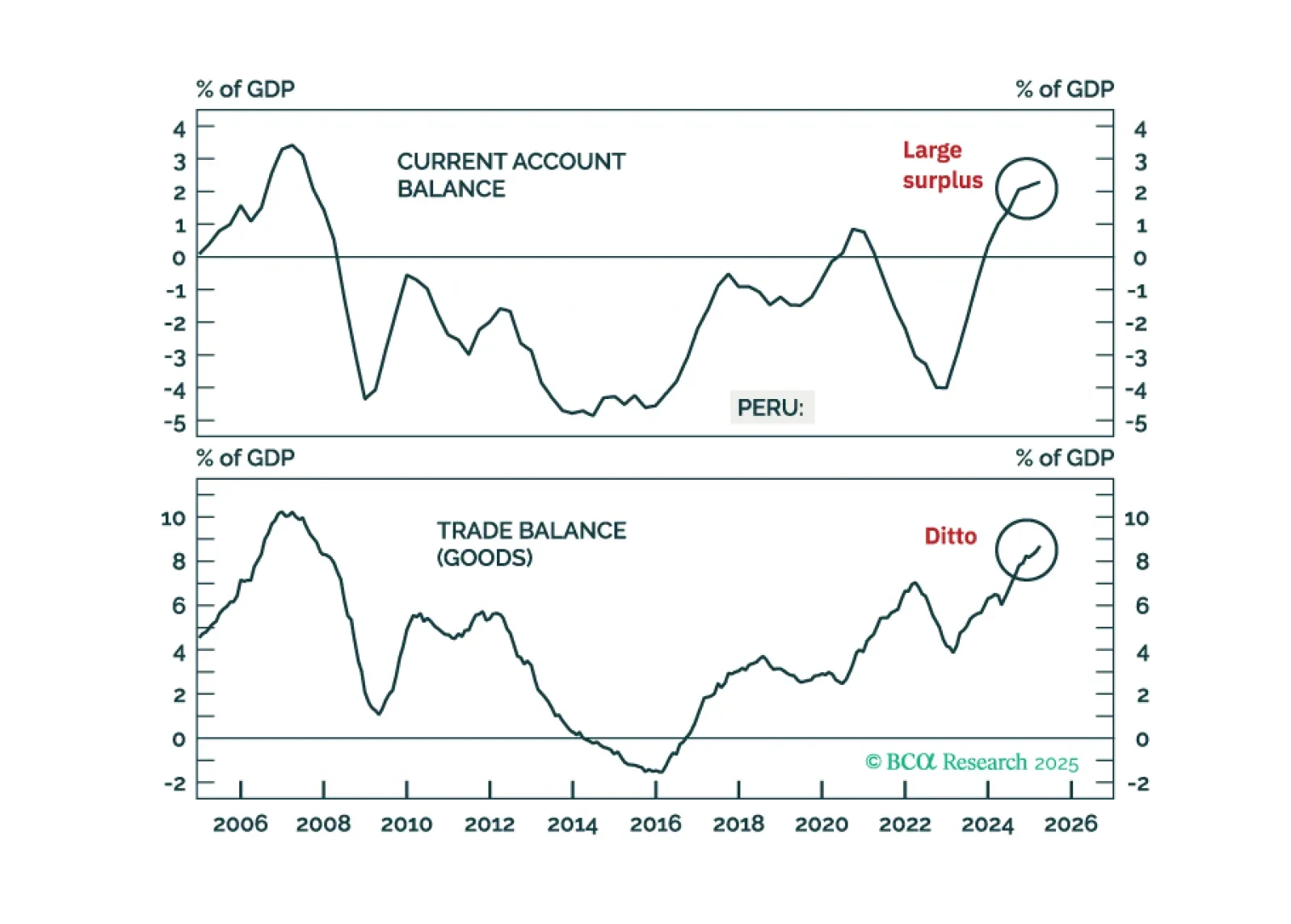
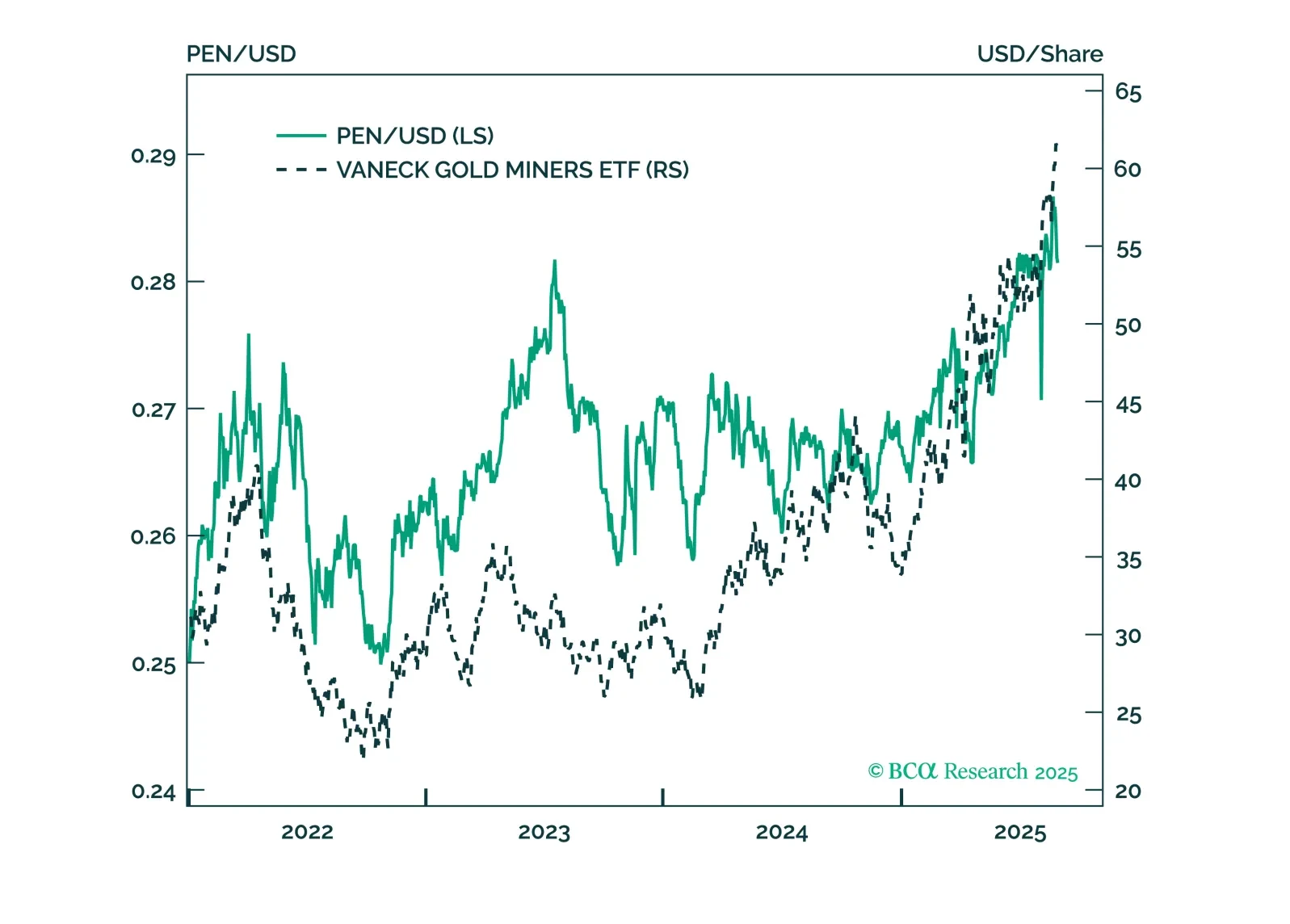
Peru’s economic resilience will help its markets outperform their EM peers. A global growth downturn will weigh on EM assets in absolute terms, but Peruvian markets offer attractive tradeable opportunities. The Andean nation has much better macro…

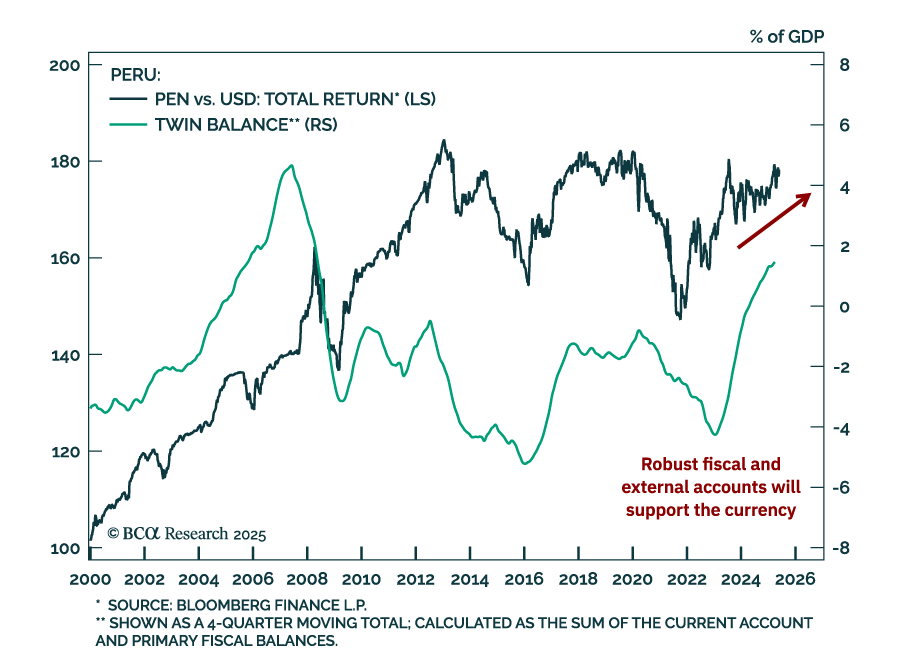
Peru’s economic resilience will help its markets outperform their EM peers. Domestic macro fundamentals are robust, and strong external accounts will lead to a stable-to-strengthening currency versus the US dollar. Overweight Peruvian equities, local bonds, and sovereign credit relative to their respective EM benchmarks, and go long 10-year domestic bonds (currency unhedged).
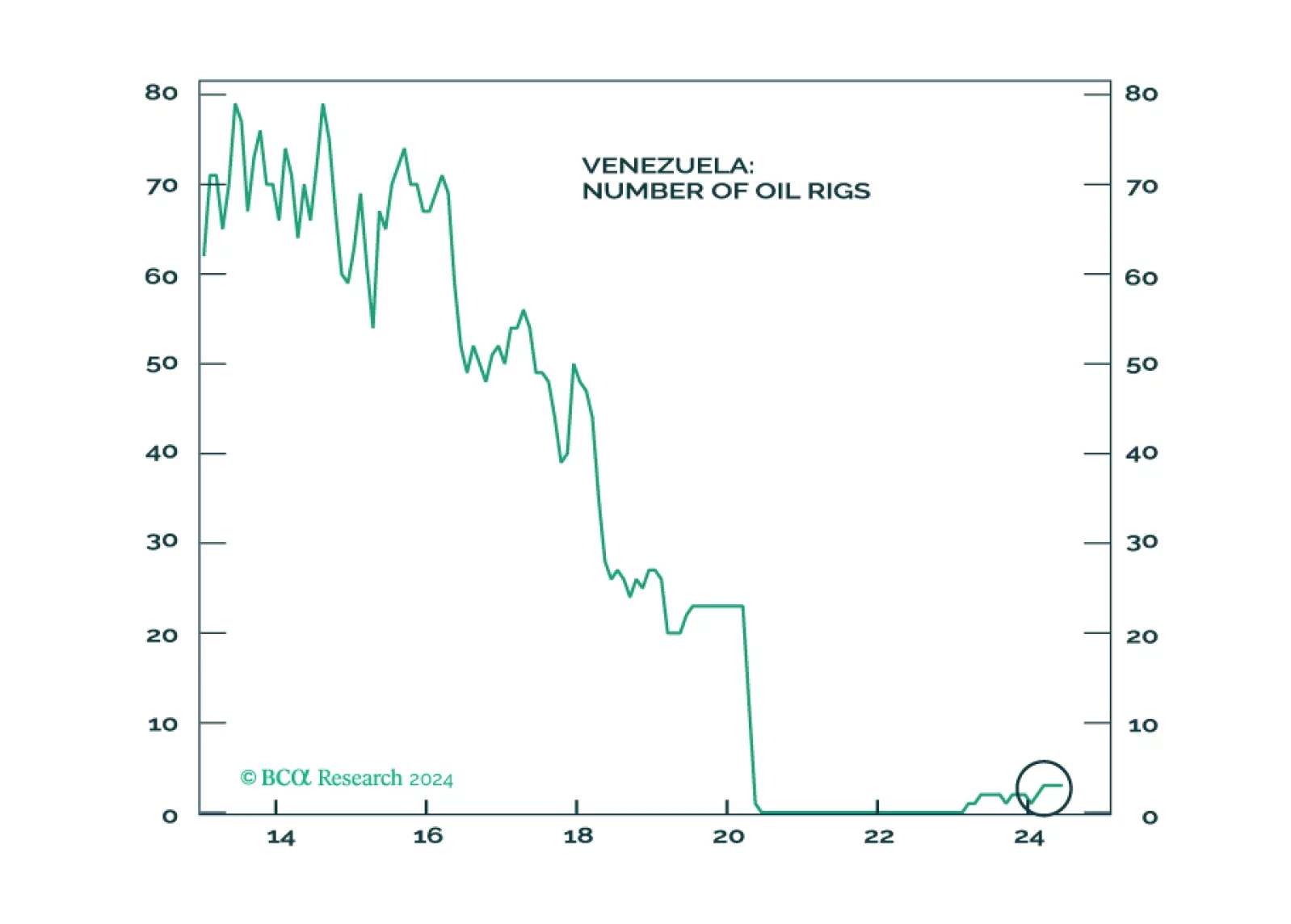
Oil markets will not be impacted by Venezuela in the near term, but by shocks from the Middle East. Maduro’s ability to stay in power in the short-term removes an avenue of oil supply relief. The same avenue is cut off if Trump is reelected. Geopolitical shocks in Venezuela could present tactical buying opportunities for Chile, Peru, and Colombia.
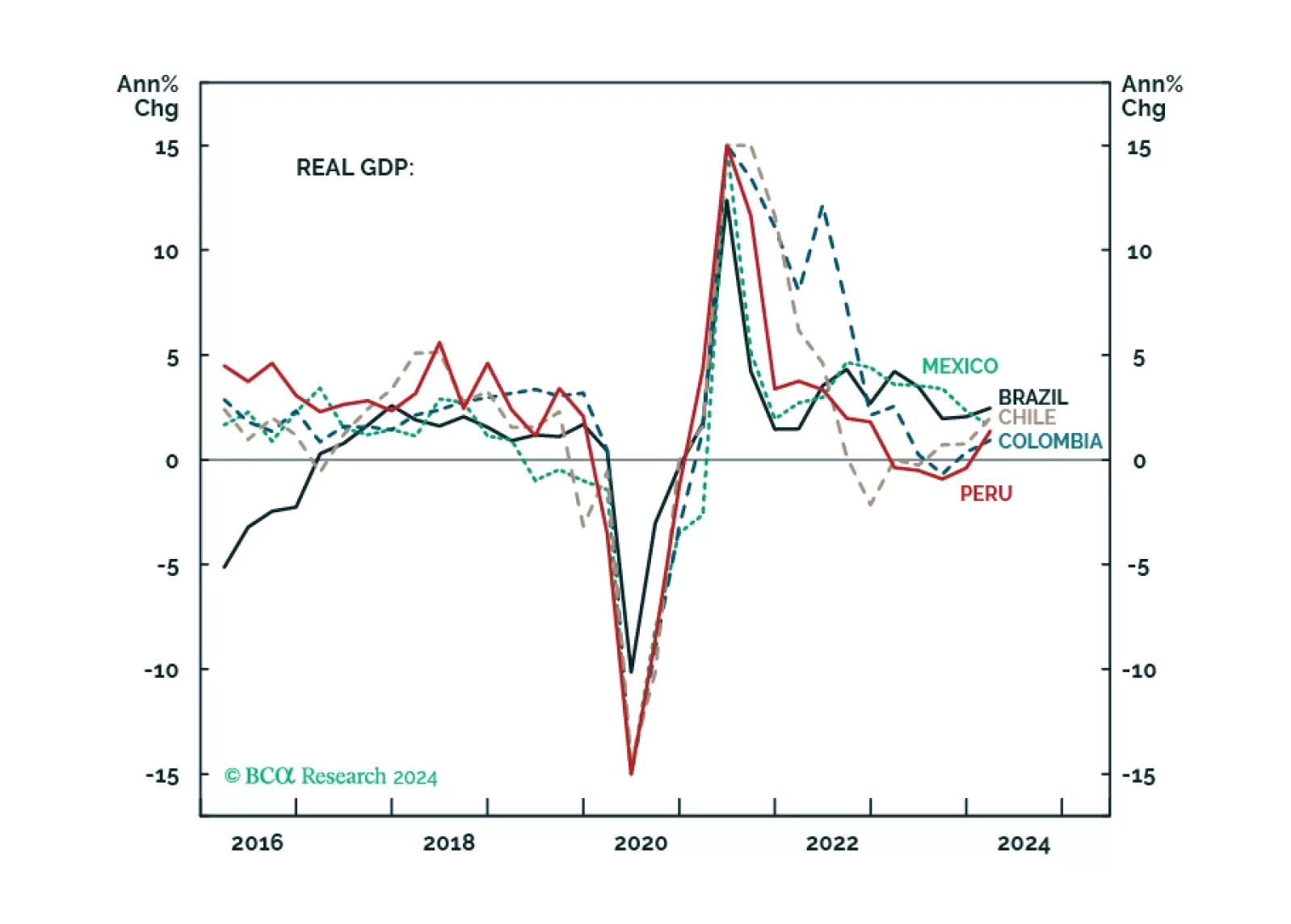
Non-trivial macro divergences have emerged between mainstream LATAM economies. This report compares and ranks Brazil, Mexico, Colombia, Chile, and Peru based on their business cycle outlook, macro policy stance, external accounts, and structural fundamentals. All in all, LATAM risk assets will fall in absolute terms given a strengthening US dollar and a global risk-off move in the coming months. Within LATAM, we favor Mexico, Chile and Peru, are neutral on Brazil, and bearish on Colombia.
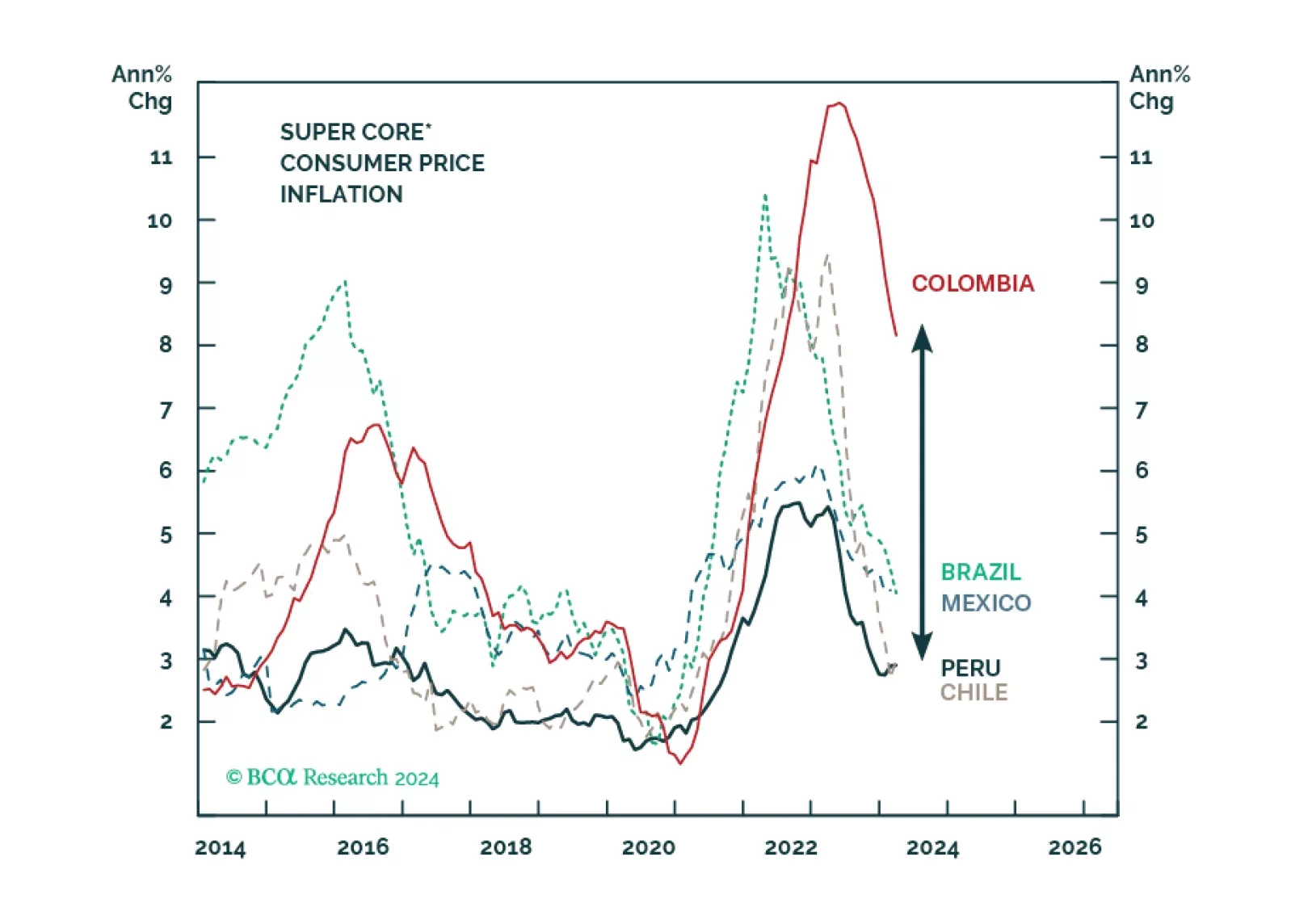
Peru is entering a benign macro environment: low and falling inflation amid a solid economic recovery. The country’s balance of payments position is robust, which will help the PEN depreciate by less than other EM currencies. The political situation is on shaky ground, but a regime shift will have to wait until 2026. We remain overweight on Peruvian equities, domestic bonds, and sovereign credit relative to the EM benchmarks.

Peruvian financial markets will outperform their EM peers given the country’s clear macroeconomic and political visibility. Low and plummeting inflation, a decelerating economy and a lack of economic excesses will allow the central bank to cut rates in the coming months and achieve a soft landing. A reluctant alliance between Congress and the President will ensure political stability until 2026.

Peru is not suffering from economic or financial excesses: genuine inflation is subdued, fiscal and monetary policies are orthodox, and external accounts are healthy. While political instability has risen anew, markets will likely push through the political noise. Given this, we are upgrading Peruvian equities and local and sovereign USD bonds to overweight within their respective EM portfolios.

Dear Client, Next week, we will be sending you BCA Research’s Annual Outlook, featuring long-time BCA client Mr. X, who visits towards the end of each year to discuss the economic, financial and commodity market outlook for the year ahead. All the best, Bob Ryan Chief Commodity & Energy Strategist  Highlights Local politics in Chile and Peru will become critical to the global energy transition, particularly as regards the supply side of the most critical metal for this transition: copper. Chile's runoff elections next month will pit a former congressman portrayed as a hard-right candidate against a protest leader-turned-legislator in a battle for the presidency of a country that accounts for ~ 30% of global copper mining output. In Peru, which accounts for just over 10% of global copper production, the left-of-center administration indicated it will mediate talks to close two gold and silver mines, despite protests from its corporate owners. Tightly balanced supply-demand fundamentals will keep inventories of refined copper extremely low, which will slow the early-stage global transition to renewable power generation until these stocks can be replenished (Chart of the Week).  Chinese copper smelters reportedly are collaborating to move refined metal to LME-approved warehouses to restock depleted inventories.  While this could reduce backwardations in futures markets, it has not overly depressed flat-price levels, which are within ~ 7% of all-time highs of $4.78/lb ($10,533/MT) put up in May. Fundamentally, base metals – especially copper and aluminum – will remain tight, which supports our long positions in the S&P GSCI and the COMT ETF. Feature Despite a marked deceleration of growth in China brought on by fuel and power shortages, and a strong USD creating tighter financial conditions globally, copper prices – and base metals generally – remain well supported, even as speculative interest, for the most part, has waned this year (Chart 2). Chart of the WeekTight Copper Inventories Support Prices, Backwardation Tight Copper Inventories Support Prices, Backwardation Tight Copper Inventories Support Prices, Backwardation Chart 2Specs Back The Truck Up For Copper Spec Interest Wanes Specs Back The Truck Up For Copper Spec Interest Wanes Specs Back The Truck Up For Copper Spec Interest Wanes   Copper and the other metals are well bid because of tight fundamentals – the level of demand has been and remains above the level of supply globally (Chart3). This will continue to exert pressure on inventories and force a re-shuffling of stocks globally – likely from China bonded warehouses to the LME (Chart 4). The London Metal Exchange (LME) was forced to take extraordinary measures to maintain orderly markets and has prompted Chinese smelters to collaborate on shifting material to LME sheds in Asia.1 However, much more refined copper will have to be shipped to these sheds to keep markets from launching into another steep backwardation on the LME similar to last month's $1,100/MT first-to-third-month spread last month – an indication of desperation on the buy side. Chart 3Low Copper Stocks Will Persist Low Copper Stocks Will Persist Low Copper Stocks Will Persist That said, if the only thing that improves LME stocks is a re-shuffle from existing inventories, the net position of the world will largely remain unchanged over time. Demand will be met with inventory draw-downs, but supply will not have increased, which, at the end of the day, means markets will continue to tighten. Chart 4Globally, Exchange Warehouses Tighten Globally, Exchange Warehouses Tighten Globally, Exchange Warehouses Tighten Chile, Peru Politics Become Fundamental Geopolitics always is at the heart of commodity markets: Who's in power and the agendas being pursued matter so much, because, in many cases, unrefined exports of raw commodities sustain governments and important elements of economies in many states. This is becoming clear in Chile and Peru, two states with contestable elections, where the outcomes can profoundly affect the supply side of global fundamentals. Earlier this year, it looked like Chile's presidential and congressional elections would favor left-of-center candidates who did not campaign on market-oriented policies. National elections this past weekend resulted in a run-off that will be held 19 December, as neither the left- nor right-of-center candidates polled an absolute majority. Right-of-center candidates also polled unexpectedly well in congressional elections. This likely translates into something resembling the divided government in the US, which means neither side will be able to get all it wants through the legislature. In the lead-up to the Constitutional re-write expected following elections, the agendas of the left and right are markedly opposed. On the left, greater government involvement in the resources sector has been part of the campaigning, while on the right increased private investment in the stated-owned Codelco, the largest copper producer in the world, is advocated. Both sides also disagree on changes in taxes and royalties, which obviously is of great concern to investors and copper-market participants.2 Chile also is a world-class supplier of lithium, zinc, gold, silver and lead, so it's not just copper markets following developments there with concern. In Peru, the country's newly sworn-in prime minister said she is willing to broker talks on shutting down gold and silver mines in communities where residents have been protesting as soon as possible. This drew a heated reply from mining interests immediately. Peru is the second largest copper miner in the world behind Chile, and the treatment of the owner of the disputed gold and silver mines, Hochschild Mining, is being followed closely. Base and precious metals markets are being forced to factor in a new set of political dynamics, as local political tensions spill into the supply side, causing overall political uncertainty in critical mining states to increase. This will restrain investment, which bodes ill for the global renewable- energy transition. Copper Defies Stronger USD  Despite a stronger-than-expected USD this year – boosted most recently by the re-appointment of Jay Powell as Fed Chair and the elevation of Lael Brainard as Vice Chair – copper and base metals have held up well.3 Generally, a strong dollar is bearish for base metals prices (Chart 5), and copper especially (Chart 6). A stronger USD tightens global financial conditions, which, not unexpectedly, is bearish for copper; however, as Chart 7 shows, this effect also has been overcome by the tight copper fundamentals globally.4 We remain bearish the USD going into next year, in line with our colleagues at BCA's Foreign Exchange Strategy. Massive fiscal stimulus in the US in particular, along with continued monetary accommodation from the Fed to fund the deficits this will produce, is expected to weaken the dollar and boost trade. Chart 5Base Metals Defy Strong USD Base Metals Defy Strong USD Base Metals Defy Strong USD Chart 6Copper Defies USD Strength, Boosted By Cyclicals Performance Copper Defies USD Strength, Boosted By Cyclicals Performance Copper Defies USD Strength, Boosted By Cyclicals Performance Chart 7Copper Overcomes Tighter Global Financial Conditions Copper Overcomes Tighter Global Financial Conditions Copper Overcomes Tighter Global Financial Conditions In a recent simulation, we show a 10% fall in the USD and a 5% pick-up in EM imports, along with continued strong performance from cyclicals would lift copper prices to $5.30/lb on the CME Comex by year-end 2022, in our estimation (Chart 8). Chart 8Weaker USD, Stronger EM Imports, Cyclical Strength Would Booster Copper. Weaker USD, Stronger EM Imports, Cyclical Strength Would Booster Copper. Weaker USD, Stronger EM Imports, Cyclical Strength Would Booster Copper. Investment Implications Base metals markets, particularly copper, have withstood tightening financial conditions brought on by a strong USD, a sharp slowdown in Chinese growth brought on by an energy shortage and rising interest rates. This is largely due to extremely tight supply-demand fundamentals, which continue to keep global inventories under pressure. Copper, metals generally, and precious metals also will get a lift from local political tensions spilling into the supply side of markets as overall political uncertainty in critical mining states restrains investment. We remain long the S&P GSCI and the COMT ETF, anticipating higher copper prices and a return to steeper backwardation.   Robert P. Ryan Chief Commodity & Energy Strategist rryan@bcaresearch.com Ashwin Shyam Research Associate Commodity & Energy Strategy ashwin.shyam@bcaresearch.com Paula Struk Research Associate Commodity & Energy Strategy paula.struk@bcaresearch.com   Commodities Round-Up Energy: Bullish Oil markets looked right through the announcement the US will tap its Strategic Petroleum Reserve (SPR) for 50mm barrels beginning next month, rallying 3.3% to $82.31/bbl by Tuesday's close following the announcement (Chart 9). Under a Congressionally mandated release, the 18mm barrels already authorized had been factored into market balances. The incremental 32mm barrels of crude oil being supplied to the market will be released to successful bidders between 16Dec21 and 30Apr22. These volumes will be repaid during US fiscal years 2022-24, with a volumetric premium added to the initial volume lifted by the successful bidders, which will be specified in the terms of the crude-oil loan. The US fiscal year begins on 1 October. The longer it takes to return the crude oil back to the SPR, the higher the premium volume of crude oil will be required, per the SPR's terms and conditions. The Biden administration succeeded in persuading the governments of China, India, Japan, South Korea and the UK to release unspecified volumes from their SPRs as well. Although volume commitments and release dates were not included in the press release from the White House some 20mm to 30mm barrels reportedly could be supplied from these SPRs. Precious Metals: Bullish Gold prices fell violently, and the US dollar rose following Jay Powell’s re-nomination to Fed chair (Chart 10). Markets assume the Fed will stay the course on its current monetary policy, as opposed to loosening further, which would have lifted gold prices on the back of higher inflation expectations. We believe interest rate hikes will not be brought forward unless inflation expectations become unhinged. In the short run, however, high fuel prices and logistical bottlenecks will continue to feed into higher inflation, implying the Fed will remain behind the curve. Both Powell and Lael Brainard, who was nominated as vice chair of the Fed, stressed vigilance against inflation. In his statement following Biden's decision to re-appoint him as Fed Chair, Powell noted: "Today, the economy is expanding at its fastest pace in many years, carrying the promise of a return to maximum employment. … We know that high inflation takes a toll on families, especially those less able to meet the higher costs of essentials like food, housing, and transportation. We will use our tools both to support the economy and a strong labor market, and to prevent higher inflation from becoming entrenched." Brainard's remarks struck a similar tone. Chart 9 Brent Prices Are Going Up... Brent Prices Are Going Up... Chart 10 ...As Well As Gold Prices ...As Well As Gold Prices   Footnotes 1     Please see Column: All eyes on China as LME copper spreads collapse: Andy Home, published by reuters.com 18 November 2021. 2     Please see Chile elections may impact a third of the world’s copper supply, published by mining.com on November 19, 2021.  3    Please see Precious Metals commentary in the Commodity Round-Up section. 4    The model shown in Chart 7 also includes iron ore and steel traded in China as explanatory variables.  It is noteworthy that copper prices remain resilient to a collapse in iron ore prices brought on by forced closures in China of steel mills to conserve coal and natural gas supplies for human-needs use going into what is expected to be a colder-than-normal winter on the back of a second La Niña in the Northern Hemisphere.  Please see our report published 30 September entitled La Niña And The Energy Transition for additional discussion.   Investment Views and Themes Strategic Recommendations