Policy

Dear Client, Next week, we will send you a special report published by our Geopolitical Strategy service, authored by my colleague Roukaya Ibrahim. Roukaya will provide her insights on the global shortages of medical equipment as well as the risk of food shortages. A significant portion of the special report focuses on China. We trust you will find her report very useful. Additionally, I will be having three webcasts next week, discussing the economic and financial implications of the COVID-19 pandemic on China. The webcasts will be in both English and Mandarin. Please check out the dates and time on our website. Best regards, Jing Sima China Strategist Highlights China’s official and Caixin manufacturing PMIs in March were weak at best. The indexes underscore that a quick recovery of Chinese and global economic growth is unlikely. A recent re-lockdown of a Chinese county, along with tightened containment measures in other key Asian economies, illustrates the risk of a second wave of infections and a precarious economic “return to normalcy”. Further policy supports announced in the past week suggest that Chinese authorities may be willing to match the size of stimulus from other major economies. In the next three months, risks to Chinese stock prices are still elevated barring a peak in the global pandemic. We maintain a neutral position in both Chinese investable and domestic stocks. Feature Global financial markets are unlikely to sustainably move higher in an environment where it is uncertain whether the COVID-19 virus is abating and business activities can start resuming (Chart 1). China’s economy and stock prices are not insulated from a deep global recession. Price volatility will remain high in Chinese stocks in the next three months and, therefore, we maintain a neutral position in Chinese investable and domestic stocks. Chart 1Close To A Peak In New Cases?
China Macro And Market Review
China Macro And Market Review
In financial markets, cyclical stocks have underperformed defensives since early March. In particular, information technology, materials, industrials and consumer discretionary, all have underperformed the broad market. This reflects a delayed recovery in China’s economic fundamentals. Tables 1 and 2 highlight key developments in China’s economic and financial market performance in the past month. On the growth front, both the official and Caixin PMIs rebounded to above the 50% boom-bust threshold from historic lows in February. However, the indexes suggest that headwinds to China’s economic recovery are not yet subsiding. Table 1China Macro Data Summary
China Macro And Market Review
China Macro And Market Review
Table 2China Financial Market Performance Summary
China Macro And Market Review
China Macro And Market Review
Chart 2Supply Shock Meets A Collapse In Demand
Supply Shock Meets A Collapse In Demand
Supply Shock Meets A Collapse In Demand
The methodology in calculating PMI indexes reflects the net reported improvement in activity relative to the previous month; a reading of 50 represents no month-over-month change. As such, a 52 reading in March’s official PMI suggests that manufacturing activity in China barely ticked up over February. This is concerning given the extremely depressed level of manufacturing activity in February (Chart 2). Furthermore, two important subcomponents of the PMI remained in contractionary territory even after February’s plunge. While the new orders subcomponent modestly improved in line with the overall index, new export orders and the imports index continued to contract (Chart 2, middle panel). The latter is particularly important for investors who focus on global growth because a modest improvement in Chinese domestic demand that does not translate into import growth is of limited benefit to China's trade partners and global economic activity. In our view, China's March PMI reflects a return to normalcy for the supply side, but it also indicates that domestic demand remains very weak (Chart 2, bottom panel). This is a discouraging result. While March’s economic data in the developed world will likely be uniformly negative, China’s weak PMI readings suggest that its economy may have been impacted by “second-round effects”. This aspect is an ominous sign for developed economies, particularly the US, where the number of new cases continues to escalate. A second wave of infections in China and other Asian nations also underlines the fragility of the rebound, both on the social and economic fronts. Although the pandemic in Asia was largely contained domestically by early March, there is now an increasing number of both imported and domestically transmitted cases. China recently locked down a county of about 600,000 residents and Singapore closed schools and workplaces last week due to a re-emergence of domestic cases.1 There are some encouraging signs in China’s housing market. The monthly real estate sector indicators in Table 1 show the severe impact of the pandemic on China’s property market in the first two months of the year. However, the seasonally adjusted daily data indicate that home sales in China’s 30 large- and medium-sized cities steadily picked up in March (Chart 3). By the end of March, the amount of floor space sold in those cities surpassed the same period of the previous year. A return to normal in housing demand and activity will be crucial for easing property developers’ cash constraints and a recovery in China’s construction sector. On the policy response front, monetary and fiscal stimulus measures continue to roll out. The PBoC chopped its 7-day reverse repo rate by 20bps on March 30, which was the third rate cut in 5 months. It helped to push the 3-month interbank repo rate back to its early-2010 low. We noted in a previous report2 that the 3-month repo rate is China's de facto short-term policy rate and that changes in the rate are strongly linked to average lending rates in the economy (Chart 4). A lowering in the repo rate will help to ease financial conditions and support an eventual rebound in China’s economic activity. Chart 3Signs Of A Gradual Revival In The Housing Market
China Macro And Market Review
China Macro And Market Review
Chart 4Lending Rates Bound To Drop Further
Lending Rates Bound To Drop Further
Lending Rates Bound To Drop Further
Further monetary and fiscal stimulus are also pending. The timing and magnitude of these measures suggest that Chinese policymakers may be willing to step up their efforts to match the size of stimulus from other major economies, such as the US.3 If so, it will support our cyclical (i.e. 6-12 months) overweight investment call on Chinese stocks relative to global benchmarks, even though we believe that the short-term risks to Chinese stock prices are still quite elevated. The PBoC adjusted down the interest rate on financial institutions’ central bank excess reserves from 0.72% to 0.35%, effective April 7. The move is significant: the last time that the PBoC reduced the excess reserve rate was in November 2008 during the global financial crisis. The excess reserve rate drop of 0.37% is also larger than the 0.27% dip in 2008. The cut in excess reserves will free up more liquidity for commercial banks and encourage them to lend to businesses. More importantly, the decrease will lower the floor of PBoC’s “interest rate corridor” and pave the way for further reduction in the MLF (the ceiling of the corridor), LPR, and even the benchmark deposit rate which has remained unchanged for the past five years (Chart 5). Last week’s Politburo meeting approved an increase in this year’s quota of local government special purpose bonds (SPBs) along with a bigger fiscal deficit, and the issuance of special treasury bonds (first time since 2007). We believe the fiscal support will help facilitate double-digit growth in infrastructure spending this year. The exact quantity of the SPB quota will be approved at the upcoming National People’s Congress (NPC), but we think the quota will be close to 4 trillion yuan. This amount, which is equivalent of 4% of China’s GDP, will almost double the 2.15 trillion yuan SPBs issued in 2019. Chart 5Lowering The Floor Opens The Door
Lowering The Floor Opens The Door
Lowering The Floor Opens The Door
Chinese stocks have lost more than 10% of their value year-to-date. In addition, cyclical stocks have underperformed defensives in the past month (Chart 6). We noted in our October 30 Special Report4 that historically these cyclical sectors have been positively correlated with pro-cyclical macroeconomic and equity market variables. Therefore, a return to outperformance in both the aggregate Chinese stocks and cyclical sectors will likely require strong evidence of an upturn in China’s business cycle. Chart 6Cyclicals Vs. Defensives Performance Has Reversed Course
Cyclicals Vs. Defensives Performance Has Reversed Course
Cyclicals Vs. Defensives Performance Has Reversed Course
Chart 7RMB Depreciated Due To A Dollar Rally...
RMB Depreciated Due To A Dollar Rally...
RMB Depreciated Due To A Dollar Rally...
The recent devaluation in the RMB against the USD is linked to the dollar’s strength. In the near term, the downward pressure on the RMB against the greenback will persist because the dollar will strengthen from signs that the global economy is entering a more protracted slowdown5 (Chart 7). We think it is unlikely that the PBoC will intervene in the exchange rate market to prop up the RMB; the weakness in the RMB has been benign and limited compared with a collapse in EM currencies (Chart 8). A strong RMB does not bode well either for China’s export price competitiveness or corporate profits (Chart 9). As such, we think that the PBoC will allow the RMB’s value to remain weak against the dollar. The ongoing race-to-the-bottom in interest rates and competitive currency devaluations have indeed provided a window for the PBoC to cut interest rates even more. Chart 8...But Appreciated Against EM Currencies
...But Appreciated Against EM Currencies
...But Appreciated Against EM Currencies
Chart 9A Strong RMB Is Not Desired In The Current Environment
A Strong RMB Is Not Desired In The Current Environment
A Strong RMB Is Not Desired In The Current Environment
Qingyun Xu, CFA Senior Analyst qingyunx@bcaresearch.com Jing Sima China Strategist jings@bcaresearch.com Footnotes 1 https://www.bloomberg.com/news/articles/2020-04-02/chinese-county-back-under-lockdown-after-infection-re-emerges?mc_cid=e33ef3872b&mc_eid=9da16a4859 https://www.scmp.com/week-asia/health-environment/article/3078297/singapore-close-schools-most-workplaces-next-week 2Please see China Investment Strategy Special Report "How To Analyze And Position Towards Chinese Government Bonds," dated January 29, 2020, available at cis.bcaresearch.com 3China has deployed bank re-lending programs and supplementary funds totaling about 1.5% of its 2019 GDP. A 4 trillion yuan local government SPBs will add more than 4% of GDP in fiscal spending. Fiscal deficit is likely to be augmented by 2% of GDP, and the issuance of special treasury bonds and local government general purpose bonds should amount to more than 2% of GDP. 4Please see China Investment Strategy Special Report "A Guide To Chinese Investable Equity Sector Performance," dated October 30, 2019, available at cis.bcaresearch.com 5Please see Foreign Exchange Strategy Weekly Report "Which Are The Most Attractive G10 Currencies?" dated March 27, 2020, available at fes.bcaresearch.com Cyclical Investment Stance Equity Sector Recommendations
Highlights Global shortages of medical equipment – including medicines – are frontloaded until emergency production kicks in. As the crisis abates, political recriminations between the US and China will surge. The US will seek to minimize medical supply exposure to China going forward, a boon for India and Mexico. China has escaped the COVID-19 crisis with minimal impact on food supply. Pork prices are surging due to African Swine Flu, but meat is a luxury. Still, the “Misery Index” is spiking and this will increase social instability. Food insecurity, inflation, and large current account deficits suggest that emerging market currencies will remain under pressure. Turkey and South Africa stand to suffer while we remain overweight Malaysia. Feature Chart 1Collapse In Economic Activity
Collapse In Economic Activity
Collapse In Economic Activity
With a third of the world population under some form of lockdown, general activity in the world’s manufacturing powerhouses has collapsed (Chart 1). The breakdown is a double whammy on market fundamentals. On the supply side, government-mandated containment efforts force workers in non-essential services to stay home while, on the demand side, households confined to their homes are unable to spend. Acute demand for medical supplies is causing shortages, while supply disruptions threaten states that lack food security. While global monetary and fiscal stimulus will soften the blow (Chart 2), the economic shock is estimated to be a 2% contraction in real GDP for every month of strict isolation. If measures are extended beyond April, markets will sell and new stimulus will be applied. Already the US Congress is negotiating the $1-$2 trillion infrastructure package that we discussed in our March 4 report, and cash handouts will be ongoing. When the dust settles the political fallout will be massive. Authoritarian states like China and especially Iran will face greater challenges maintaining domestic stability. Democracies like Italy and the US, which lead the COVID-19 case count, are the most likely to experience a change in leadership (Chart 3). Initially the ruling parties of the democracies are receiving a bump in opinion polling, but this will fade as households will be worse off and will likely vent their grievances at the ballot box.
Chart 2
Chart 3
Until a vaccine or treatment is discovered, medical equipment and social distancing are the only weapons against the pandemic. National production is (rightly) being redirected from clothing and cars to masks and ventilators to meet the spike in demand. Will the supply shock cause shortages in food and medicine – essential goods for humankind? In this report we address the impact of COVID-19 on global supply security and assess the market implications. Medical Equipment Shortages Will Spur Protectionism
Chart
Policymakers are fighting today’s crisis with the tools of the 2008 crisis, but a lasting rebound in financial markets will depend on surmounting the pandemic, which is prerequisite to economic recovery (Table 1). As the US faces the peak of its COVID-19 outbreak, public health officials and doctors are raising the alarm on the shortage of medical supplies. A recent US Conference of Mayors survey reveals that out of the 38% of mayors who say they have received supplies from their state, 84.6% say they are inadequate (Chart 4). Italy serves as a warning: A reported 8% of the COVID-19 cases there are doctors and health professionals, often treating patients without gloves or with compromised protective gear. These workers are irreplaceable and when they succumb the virus cannot be contained. In the US, doctors and nurses are re-using masks and sometimes treating patients behind a mere curtain, highlighting the supply shortage. While the shortages are mainly driven by a surge in demand from both medical institutions and households, they also come from the supply side, particularly China. Factory closures and transportation disruptions in China earlier this year, coupled with Beijing’s government-mandated export curbs, reduced Chinese exports, a major source of US and global supplies (Chart 5).
Chart 4
Chart 5
Other countries have imposed restrictions on exports of products used in combating the spread of COVID-19. Following export restrictions by the French, German, and Czech governments in early March, the European Commission intervened on March 15 to ensure intra-EU trade. It also restricted exports of protective medical gear outside of the EU. At least 54 nations have imposed new export restrictions on medical supplies since the beginning of the year.1 Both European and Chinese measures will reduce supplies in the US, the top destination for most of these halted exports (Chart 6).
Chart 6
Thus it is no wonder that the Trump administration has rushed to cut import duties and boost domestic production. The administration has released strategic stockpiles and cut tariffs on Chinese medical equipment used to treat COVID-19. With the whole nation mobilized, supply kinks should improve greatly in April. After a debacle in rolling out test kits (Chart 7), the US is rapidly increasing its testing capabilities to manage the crisis, with over a million tests completed as of the end of March (Chart 8). Meanwhile a coalition of companies is taking shape to make face masks. The president has invoked the defense production act to force companies to make ventilators.
Chart 7
Chart 8
However, with the pandemic peaking in the US, the hardest-hit regions will continue experiencing shortages in the near term. Shortages are prompting public outcry against the US government for its failure to anticipate and redress supply chain vulnerabilities that were well known and warned against. A report in The New York Times tells how Mike Bowen, owner of Texas-based mask-maker Prestige Ameritech, has advised the past three presidents about the danger in the fact that the US imports 95% of its surgical masks. “Aside from sitting in front of the White House and lighting myself on fire, I feel like I’ve done everything I can,” he said. He is currently inundated with emergency orders from US hospitals. The same report tells of a company called Strong Manufacturers in North Carolina that had to cut production of masks because it depends on raw materials from Wuhan, China, where the virus originated.2 The Trump administration will suffer the initial public uproar, but the US government will also seek to reduce import dependency going forward, and it will likely deflect some of the blame by focusing on the supply risks posed by China. Beijing, for its part, is launching a propaganda campaign against the US to distract from its own failures at home (some officials have even blamed the US for the virus). Meanwhile it is cranking up production and shipping medical supplies to crisis hit areas like Italy to try to repair its global image after having given rise to the virus. In addition, the city of Shenzhen is sending 1.2 million N95 masks to the US on the New England Patriots’ team plane. Even Russia is sending small donations. But these moves work to propagandistic efforts in these countries and will ultimately shame the Americans into taking measures to improve self-sufficiency. Bottom Line: The most important supply shortage amid the global pandemic is that of medical equipment. While these shortages will abate sooner rather than later, the supply chain vulnerabilities they have exposed will trigger new policies of supply redundancy and import substitution. The US in particular will seek to reduce dependency on China. That COVID-19 is aggravating rather than reducing tensions between these states, despite China’s role as a key supplier in a time of need, highlights the secular nature of their rising tensions. The US-China Drug War Shortages of pharmaceuticals are also occurring, despite the fact that the primary pandemic response is necessarily “non-pharmaceutical” (e.g. social distancing). The US Food and Drug Administration (FDA) announced the first COVID-19 related drug shortage in the US on February 27. While the specific drug was not disclosed, the announcement notes that “the shortage is due to an issue with manufacturing of an active pharmaceutical ingredient used in the drug.”3 The FDA is monitoring 20 other (non-critical) drugs potentially at risk of shortages because the sole source is China. The global spread of the pandemic will increase these shortages. On March 3 India announced export restrictions on 26 drugs, including paracetamol and several antibiotics, due to supply disruptions caused by the Chinese shutdown. While Chinese economic activity has since picked up, India is now among the string of countries under a nationwide lockdown. Similar measures enforced across Europe will also hamper the production and transportation of these goods. The implication is that even if Chinese drugs return to market, supplies further down the chain and from alternative suppliers will take a hit. The risk that this will evolve into a drug shortage depends on the intensity of the outbreak. Drug companies generally hold 3-6 months’ worth of inventories. Consequently, while inventories are likely to draw as supplies are disrupted, consumers may not experience an outright shortage immediately. In the US, as with equipment and protective gear, the government’s strategic stockpile will buffer against shortfalls in supplies of critical drugs. COVID-19 is aggravating rather than reducing US-China tensions. Nevertheless the supply chain is getting caught up in the larger US-China strategic conflict. Even before the pandemic, the US-China trade war brought attention to the US’s vulnerabilities to China’s drug exports. This dispute is not limited to illicit drugs, as with China’s production of the opioid fentanyl, but also extends to mainstream medicines, as highlighted in the selection of public statements shown in Table 2.
Chart
Chart 9
How much does the US rely on China for medicine? According to FDA data, just over half of manufacturing facilities producing regulated drugs in finished dosage form for the US market are located abroad, with China’s share at 7% (Chart 9).4 The figures are higher for manufacturing facilities producing active pharmaceutical ingredients, though still not alarming – 72% of the facilities are located abroad, with 13% in China. Of course, high-level data understate China’s influence. The complex nature of global drug supply chains means that the source of finished dosage forms masks dependencies and dominance higher up the supply chain (Figure 1).
Chart
For instance, active pharmaceutical ingredients produced in Chinese facilities are used as intermediate goods by finished dosage facilities in India as well as China. The FDA reports that Indian finished dosage facilities rely on China for three-quarters of the active ingredients in their generic drug formulations, which are then exported to the US and the rest of the world. Any supply disruption in China – or any other major drug producer – will lead to shortages further down the supply chain.
Chart 10
Chinese influence becomes more apparent when the sample is restricted to generic prescription drugs. These are especially relevant because nearly 70% of Americans are on at least one prescription drug, of which more than 90% are dispensed in the generic form. In this case, 87% of ingredient manufacturers and 60% of finished dosage manufacturers are located outside the US, with 17% of ingredient facilities and 8% of dosage facilities in China (Chart 10). Of all the facilities that manufacture active ingredients that are listed on the World Health Organization’s Essential Medicines List – a compilation of drugs that are considered critical to the health system – 71% are located aboard with 15% located in China (Chart 11). Moreover, manufacturers are relatively inflexible when adapting to market conditions and shortages. Drug manufacturing facilities generally operate at above 80% of their capacity and are thus left with little immediate capacity to ramp up production in reaction to shortages elsewhere. In addition, manufacturers face challenges in changing ingredient suppliers – there is no centralized source of information on them, and additional FDA approvals are required. The US will look to reduce its dependency on China for its drug supplies regardless of 2020 election outcome. China also has overwhelming dominance in specific categories. The Council on Foreign Relations reports that China makes up 97% of the US antibiotics market.5 Other common drugs that are highly dependent on China for supplies include ibuprofen, acetaminophen, hydrocortisone, penicillin, and heparin (Chart 12).
Chart 11
Chart 12
Taking it all together, US vulnerability can be overstated. Consider the following: Of the 370 drugs on the Essential Medicines List that are marketed in the US, only three are produced solely in China. None of these three are used to treat top ten causes of death in the United States. Import substitution is uneconomical. Foreign companies, especially Chinese companies, are attractive due to their lower costs and lax regulations. While China’s influence extends higher up the supply chain, this is true for US markets as well as other consumer markets. While China can cut off the US from the finished dosages it supplies, it cannot do the same for the ingredients that are used by facilities in other countries and eventually make their way to the US in finished dosage form. Americans are demanding that drug prices be reduced and an obvious solution is looser controls on imports. The recent activation of the Defense Production Act shows that the US can take action to boost domestic production in emergencies. Nevertheless, China is growing conspicuous to the American public due to general trade tensions and COVID-19. As it moves up the value chain, it also threatens increasing competition for the US and its allies. Hence the US government will have a strategic reason to cap China’s influence that is also supported by corporate interests and popular opinion. This will lead to tense trade negotiations with China and meanwhile the US will seek alternative suppliers. China will not want to lose market share or leverage over the United States, so it may offer trade concessions at some point to keep the US engaged. Ultimately, however, strategic tensions will catalyze US policy moves to reduce the cost differential with China and promote its rivals. Pressure on China over its currency, regulatory standards, and scientific-technological acquisition will continue regardless of which party wins the White House in 2020. The Democrats would increase focus on China’s transparency and adherence to international standards, including labor and environmental standards. Both Republicans and Democrats will try to boost trade with allies. The key beneficiaries will be India, Southeast Asia, and the Americas. Taiwan’s importance will grow as a middle-man, but so will its vulnerability to strategic tensions. Bottom Line: The US and the rest of the world are suffering shortfalls of equipment necessary to combat COVID-19. There is also a risk of drug shortages stemming from supply disruptions and emergency protectionist policies. These shortages look to be manageable, but they have exposed national vulnerabilities that will be reduced in future via interventionist trade policies. While the US and Europe will ultimately manage the outbreak, the political fallout will be immense. The US will look to reduce its dependency on China. This will increase investment in non-China producers of active pharmaceutical ingredients, such as India and Mexico. The US tactics against China will vary according to the election result, but the strategic direction of diversifying away from China is clear and will have popular impetus in the wake of COVID-19. Food Security In addition to the challenges posed by COVID-19 on medical supplies, food – another essential good – also faces risk of shortages. China is a case in point. Food prices there were on the rise well before the COVID-19 outbreak, averaging 17.3% in the final quarter of 2019. However inflation was limited to pork and its substitutes – beef, lamb and poultry – and reflected a reduction in pork supplies on the back of the African Swine Flu outbreak. While year-on-year increases in the prices of pork and beef averaged 102.8% and 21.0%, respectively, grain, fresh vegetable, and fresh fruit prices averaged 0.6%, 1.5%, and -5.0% in Q42019 (Chart 13). Chart 13Chinese Inflation Has (Thus far) Been Contained To Pork
Chinese Inflation Has (Thus far) Been Contained To Pork
Chinese Inflation Has (Thus far) Been Contained To Pork
Chart 14China's Misery Index Is Spiking - A Political Liability
China's Misery Index Is Spiking - A Political Liability
China's Misery Index Is Spiking - A Political Liability
However China’s COVID-19 containment measures had a more broad-based impact on food supplies, threatening to push up China’s Misery Index (Chart 14). Travel restrictions, roadblocks, quarantined farm laborers, and risk-averse truck drivers introduced challenges not only in ensuring supplies were delivered to consumers, but also to daily farm activity and planting. The absence of farm inputs needed for planting such as seeds and fertilizer, and animal feed for livestock, was especially damaging in regions hardest hit by the pandemic. Livestock farmers already struggling with swine flu-related reductions in herd sizes were forced to prematurely cull starving animals, cutting the stock of chicken and hogs. Now as the country transitions out of its COVID-19 containment phase and moves toward normalizing activity (Chart 15), food security is top of the mind. Authorities are emphasizing the need to ensure sufficient food supplies and adopt policies to encourage production.6 This is especially important for crops due to be planted in the spring. Delayed or reduced plantings would weight on the quality and quantity of the crops, pushing prices up.
Chart 15
With food estimated to account for 19.9% of China’s CPI basket – 12.8% of which goes towards pork (Chart 16) – a prolonged food shortage, or a full-blown food crisis, would be extremely damaging to Chinese families and their pocketbooks.
Chart 16
However, apart from soybeans and to a lesser extent livestock, China’s inventories are well stocked (Chart 17) and are significantly higher than levels amid the 2006-2008 and 2010-2012 food crises. Inventories have been built up specifically to provide ammunition precisely in times of crisis. Corn and rice stocks are capable of covering consumption for nearly three quarters of a year, and wheat stocks exceeding a year’s worth of consumption. Thus, while not completely immune, China today is better able to weather a supply shock. Moreover, with the exception of soybeans, China is not overly dependent on imports for agricultural supplies (Chart 18).
Chart 17
Chart 18
As the COVID-19 epicenter shifts to the US and Europe, farmers there are beginning to face the same challenges. Reports of delays in the arrival of shipments of inputs such as fertilizer and seeds have prompted American farmers to prepare for the worst and order these goods ahead of time.
Chart 19
While these proactive measures will help reduce risks to supply, farmers in Europe and parts of the US who typically rely on migrant laborers will need to search for alternative laborers as the planting season nears. Just last week France’s agriculture minister asked hairdressers, waiters, florists, and others that find themselves unemployed to take up work in farms to ensure food security. As countries become increasingly aware of the risks to food supplies, some have already introduced protectionist measures, especially in the former Soviet Union: The Russian agriculture ministry proposed setting up a quota for Russian grain exports and has already announced that it is suspending exports of processed grains from March 20 for 10 days. Kazakhstan suspended exports of several agricultural goods including wheat flour and sugar until at least April 15. On March 27, Ukraine’s economy ministry announced that it was monitoring wheat export and would take measures necessary to ensure domestic supplies are adequate. Vietnam temporarily suspended rice contracts until March 28 as it checked if it had sufficient domestic supplies. The challenge is that, unlike China, inventories in the rest of the world are not any higher than during the previous food crisis and do not provide much of a buffer against supply shortfalls (Chart 19). Higher food prices would be especially painful to lower income countries where food makes up a larger share of household spending (Chart 20). In addition to using their strategic food stockpiles, governments will attempt to mitigate the impact of higher food prices by implementing a slew of policies:
Chart 20
Trade policies: Producing countries will want to protect domestic supplies by restricting exports – either through complete bans or export quotas. Importing countries will attempt to reduce the burden of higher prices on consumers by cutting tariffs on the affected goods. Consumer-oriented policies: Importing countries will provide direct support to consumers in the form of food subsidies, social safety nets, tax reductions, and price controls. Producer-oriented policies: Governments will provide support to farmers to encourage greater production using measures such as input subsidies, producer price support, or tax exemptions on goods used in production. While these policies will help alleviate the pressure on consumers, they also result in greater government expenditures and lower revenues. Thus, subsidizing the import bill of a food price shock can weigh on public finances, debt levels, and FX reserves. Currencies already facing pressure due to the recessionary environment, such as Turkey, South Africa and Chile will come under even greater downward pressure. Food inventories ex-China are insufficient to protect against supply shortages. Bottom Line: COVID-19’s logistical disruptions are challenging farm output. This is especially true when transporting goods and individuals across borders rather than within countries. This will be especially challenging for food importing countries, as some producers have already started erecting protectionist measures and this will result in an added burden on government budgets that are already extended in efforts to contain the economic repercussions of the pandemic. Investment Implications Chart 21Ag Prices Inversely Correlated With USD
Ag Prices Inversely Correlated With USD
Ag Prices Inversely Correlated With USD
China will continue trying to maximize its market share and move up the value chain in drug production. At the same time, the US is likely to diversify away from China and try to cap China’s market share. This will result in tense trade negotiations regardless of the outcome of the US election. The COVID-19 experience with medical shortages and newfound public awareness of potential medical supply chain vulnerabilities means that another round of the trade war is likely. Stay long USD-CNY. Regarding agriculture, demand for agricultural commodities is relatively inelastic. This inelasticity should prevent a complete collapse in prices even amid a weak demand environment. Thus given the risk on supplies, prices face upward pressure. However, not all crops are facing these same market dynamics. While wheat and rice prices have started to move in line with the dynamics described above, soybeans and to a greater extent corn prices have not reacted as such (Chart 21). In the case of soybeans, we expect demand to be relatively muted. China accounts for a third of the world’s soybean consumption. 80% of Chinese soybeans are crushed to produce meal to feed China’s massive pork industry. However, the 21% y/y decline in pork output in 2019 on the back of the African Swine Flu outbreak will weigh on demand and mute upward pressures on supplies. Demand for corn will also likely come in weak. The COVID-19 containment measures and the resulting halt in economic activity reduce demand for gasoline and, as a consequence, reduce demand for corn-based ethanol, which is blended with gasoline. In addition to the above fundamentals, ag prices have been weighed down by a strong USD which makes ex-US exporters relatively better off, incentivizing them to raise exports and increase global supplies. A weaker USD – which we do not see in the near term – would help support ag prices. It is worth noting that if there is broad enforcement of protectionist measures, then producers will not be able to benefit from a stronger dollar. In that case we may witness a breakdown in the relationship between ag prices and the dollar. In light of these supply/demand dynamics, we expect rice and wheat prices to be well supported going forward and to outperform corn and soybeans. Roukaya Ibrahim Editor/Strategist Geopolitical Strategy RoukayaI@bcaresearch.com Matt Gertken Vice President Geopolitical Strategist mattg@bcaresearch.com Footnotes 1 See "Tackling COVID-19 Together: The Trade Policy Dimension," Global Trade Alert, University of St. Gallen, Switzerland, March 23, 2020. 2 See Rachel Abrams et al, "Governments and Companies Race to Make Masks Vital to Virus Fight," The New York Times, March 21, 2020. 3 The announcement also notes that there are other alternatives that can be used by patients. See "Coronavirus (COVID-19) Supply Chain Update," US FDA, February 27, 2020. 4 All regulated drugs include prescription (brand and generic), over the counter, and compounded drugs. 5 Please see Huang, Yanzhong, "The Coronavirus Outbreak Could Disrupt The US Drug Supply," Council on Foreign Relations, March 5, 2020. 6 The central government ordered local authorities to allow animal feed to pass through checkpoints amid the lockdowns. In addition, Beijing has relaxed import restrictions by lifting a ban on US poultry products and announcing that importers could apply for waivers on goods tariffed during the trade war such as pork and soybeans. The lifting of these restrictions also serves to help China meet its phase one trade deal commitments. Please see "Coronavirus hits China’s farms and food supply chain, with further spike in meat prices ahead," South China Morning Post, dated February 21, 2020.
Highlights The Federal Reserve’s temporary FIMA repo facility will go a long way in helping ease dollar-funding stress outside the US. However, with the duration of the lockdown highly uncertain, a liquidity crisis could rapidly evolve into a solvency one. If the containment measures prove successful by summer, then the global economy will be awash with much stimulus, which will be fertile ground for pro-cyclical currencies. However, in the event that we receive indications of a more malignant outcome, we could retest and break above the recent highs in the DXY. We assign a one-third probability to this outcome. For now, a barbell strategy is warranted. Hold a basket of the cheapest currencies, along with some safe-havens. Crude oil has approached capitulation lows, but conditions are not yet in place for a durable bottom. Stand aside on petrocurrencies for now. Feature Chart I-1The Fed's Liquidity Injections Are Working
The Fed's Liquidity Injections Are Working
The Fed's Liquidity Injections Are Working
The DXY index has once again broken above the psychological 100 level. This has occurred alongside the backdrop of very generous swap lines offered by the Federal Reserve to foreign central banks, as well as a temporary repo facility for foreign and international monetary authorities (FIMA). In fact, the euro-dollar cross-currency basis swap is now in positive territory, suggesting that a key funnel for offshore dollar liquidity has now significantly widened (Chart I-1). Why then has the dollar continued to strengthen, despite a concerted effort by the Fed to flood the global system with dollars? We offer and explore three reasons: The Fed’s actions are still insufficient. The dollar crisis is evolving from a liquidity one to a solvency one. The liquidity-to-growth transmission mechanism needs time. The Fed’s Actions Are Still Insufficient The Fed’s actions so far to ease the offshore dollar funding stress have been to: Offer unlimited funding through swap lines to five major central banks at the overnight index swap + 25 basis points.1 This was effective the week of March 16. Extend the swap lines to nine more central banks, with a cap of US$60 billion and a maturity of 84 days.2 This was announced March 19. Allow FIMA account holders to temporarily exchange their Treasury securities held with the Fed for US dollars. This was announced on Tuesday. Have these actions been sufficient? For most developed market currencies, yes. Chart I-2 shows that the currencies that have been most hit in the first quarter were of the countries initially excluded from the swap agreement such as Australia, Norway and New Zealand. Since the March 19 agreement, these currencies have staged significant rallies. Chart I-2Very Few Winners In Q1
Capitulation?
Capitulation?
However, there are three reasons why the Fed’s actions are still insufficient. First, they are limited to only 14 central banks, and need to be expanded further. While currencies such as the Brazilian real and Mexican peso have stabilized, others like the Turkish lira or South African rand continue their freefall. In short, many emerging market central banks do not have swap agreements with the US. These are countries with huge dollar liabilities that could continue to see their currencies fall, pushing up the aggregate dollar index. Developed market commodity currencies tend to be highly correlated to emerging market currencies (Chart I-3). There is a huge pool within the financial architecture unable to access funding through central bank swap lines. The second reason is that the pool of Treasury securities available to swap for US dollars has shrunk significantly. This has been on the back of slowing global trade, which sapped the current account surpluses of many countries, dampening their foreign exchange reserves. Thus, while the Fed’s latest actions may prevent an international dumping of US Treasurys, it may be insufficient to completely assuage funding stresses (Chart I-4). Chart I-3Commodity Currencies Still At Risk
Commodity Currencies Still At Risk
Commodity Currencies Still At Risk
Chart I-4A Smaller Pool Of Treasurys To Sell
A Smaller Pool Of Treasurys To Sell
A Smaller Pool Of Treasurys To Sell
Finally, a recent report by the Bank of International Settlements3 showed that of the US$86 trillion in outstanding foreign exchange swaps/forwards, about 60% is among non-bank financial and other institutions. This suggests there is a huge pool within the financial architecture unable to access funding through central bank swap lines. Given that hedge funds are included in this group, this category entails a lot more credit risk than any central bank will be willing to bear (Chart I-5). Chart I-5Can The Fed Bail Out Non-Banks?
Capitulation?
Capitulation?
Bottom Line: While the Fed’s injection of dollar liquidity has been massive and significant, access to these funds may be limited to entities that have significant credit risk. There is not much the Fed can do about this. But at the same time, it also suggests the Fed’s actions have been insufficient to quench the global thirst for dollar liquidity. From A Liquidity To A Solvency Crisis If the containment measures prove successful by summer, then the global economy will be awash with much stimulus, which will be fertile ground for pro-cyclical currencies. As a counter-cyclical currency, the dollar will buckle, lighting a fire under our favorites such as the Norwegian krone and the Swedish krona. The euro will be the most liquid beneficiary of this move. However, the DXY index has effortlessly broken above the psychological 100 level, suggesting we could catapult to new highs. When massive amounts of stimulus are injected into markets but prices keep falling (and the dollar keeps rallying), this portends a liquidity crisis morphing into a solvency one. What ensues is a liquidation phase where the only guiding signposts are technical indicators and valuation extremes. There are a few indications we could be stepping into this phase: During recessions, the dollar rally has tended to occur in two phases. The first phase prompts the US authorities to act, usually by dropping interest rates, which dampens the rally. The next phase epitomizes indiscriminate liquidation by financial markets (Chart I-6). Enter 2008. The US first introduced swap lines with a few central banks in December 2007. But from March to October 2008, the dollar soared by about 25%. This prompted the Fed to expand its swap lines to include even some emerging markets. Despite the knee-jerk fall in the dollar of 11%, we eventually made new highs by rallying 15%. While the Fed’s injection of dollar liquidity has been massive and significant, access to these funds may be limited. As the dollar rises, it takes time for economies to implode due to strong monetary and fiscal frameworks. The implosion of the euro area economy only surfaced well after the 2008 crisis. Specifically, there has been an epic rise in global nonfinancial corporate debt. As a result, credit default swaps across many countries are surging (Chart I-7). High-yield spreads are blowing out. Our bond strategists believe that even though there is value in investment-grade debt, high-yield paper remains at risk.4 Historically, whenever the default rate has breached 4% (as is the case now), a self-reinforcing feedback loop of higher refinancing rates and defaults ensues (Chart I-8). With a recovery rate that is going to be much lower than historical standards due to bloated balance sheets, this is worrisome. Chart I-6The Dollar Rally Occurs In Two Phases
The Dollar Rally Occurs In Two Phases
The Dollar Rally Occurs In Two Phases
Chart I-7CDS Spreads Are Widening Significantly
CDS Spreads Are Widening Significantly
CDS Spreads Are Widening Significantly
Chart I-8Large Defaults Are Ahead
Large Defaults Are Ahead
Large Defaults Are Ahead
It is difficult to pinpoint where the epicenter of the potential default wave will be. The energy sector looks like a prime candidate, putting many commodity currencies at risk. Bottom Line: There is a non-negligible risk that the liquidity crisis evolves into a solvency one. Though this is not our base case, we assign a one-third probability to this outcome. Liquidity To Growth Transmission Channel Monetary stimulus only affects the economy with a lag, and fiscal stimulus is so far unlikely to completely plug the hole from economic disruption. This leaves currency technicals and valuation as among the only few guiding signposts towards a peak in the DXY. There is usually a significant lag between easing in offshore dollar funding costs and a respective bottom in the domestic currency (Chart I-1). The AUD/JPY cross has broken below the key support zone of 70-72. This defensive line held notably during the European debt crisis, China’s industrial recession and, more recently, the global trade war. This pins the next level of support in the 55-57 zone, on par with the recessions of 2001 and 2008. The USD/JPY is weakening again and will likely hit 100. A rising yen is usually accompanied by a dollar rally against other procyclical currencies. Outside of the Fukushima crisis, this has been a key indicator that the investment environment is becoming precarious (Chart I-9). Chart I-9The Yen Could Touch 100
The Yen Could Touch 100
The Yen Could Touch 100
Some high-beta currencies such as the USD/TRY, USD/ZAR, and USD/IDR are still in freefall. These currencies are usually good at sniffing out a change in the investment landscape, specifically one becoming perilous for carry trades. Similarly, the USD/CNY has tested and has failed to break above 7.12. This will be a key level to watch since a break above will send Asian currencies into the abyss. “Doctor” copper has failed to stage a meaningful rebound. In fact, the copper-to-gold and oil-to-gold ratios continue to head lower from oversold levels. Whenever cyclical sectors are underperforming defensives at the same time as non-US markets underperforming US ones, this has signaled that the marginal dollar is rotating towards the US. This is usually dollar bullish (Chart I-10A and Chart I-10B). “Doctor” copper has failed to stage a meaningful rebound. In fact, the copper-to-gold and oil-to-gold ratios continue to head lower from oversold levels. This signifies impairment in the liquidity-to-growth transmission mechanism (Chart I-11). Earnings revisions continue to head lower across all markets. Chart I-10ACyclical Markets Are Not Confirming A Dollar Top
Cyclical Markets Are Not Confirming A Dollar Top
Cyclical Markets Are Not Confirming A Dollar Top
Chart I-10BCyclical Markets Are Not Confirming A Dollar Top
Cyclical Markets Are Not Confirming A Dollar Top
Cyclical Markets Are Not Confirming A Dollar Top
Chart I-11Dr Copper Is Sick
Dr Copper Is Sick
Dr Copper Is Sick
Bottom Line: Historically, signs of capitulation can usually be observed by paying close attention to market internals and currency technicals. While we have had some marginal improvement, we are not out of the woods yet. Portfolio Strategy Chart I-12Go Short CAD/NOK
Go Short CAD/NOK
Go Short CAD/NOK
We recommend maintaining a barbell strategy – a basket of the cheapest currencies, along with some safe-havens such as the yen and Swiss franc. Overall, investors should maintain a small upward bias in the dollar in the near term. Meanwhile, short USD/JPY positions make sense. Oil plays are becoming attractive, but conditions for a durable bottom are not yet in place. The strong rebound in the NOK/SEK cross is just an unwinding of the flash crash. If the dollar and oil have been at the epicenter of these moves, then the cross is still at risk of relapsing in the near term. We were stopped out of a long position in this cross, and will discuss oil and petrocurrencies next week. That said, a short CAD/NOK position is a much safer way to express a longer-term bearish view on the dollar (Chart I-12). We are going short this cross today with a stop-loss at 7.5. Finally, the pound remains extremely cheap versus the dollar, but the rally in recent days has eroded the potential for tactical upside. We will await better opportunities to own sterling. Chester Ntonifor Foreign Exchange Strategist chestern@bcaresearch.com Footnotes 1 These include the Bank Of Canada, Bank Of Japan, Bank Of England, European Central Bank, and the Swiss National Bank. 2 These include the Reserve Bank of Australia, the Banco Central do Brasil, the Danmarks Nationalbank (Denmark), the Bank of Korea, the Banco de Mexico, the Norges Bank, the Reserve Bank of New Zealand, the Monetary Authority of Singapore, and the Sveriges Riksbank. 3 Stefan Avdjiev, Egemen Eren and Patrick McGuire, “Dollar Funding Costs during the Covid-19 Crisis through the Lens of the FX Swap Market,” BIS Bulletin, dated April 1, 2020. 4 Please see US Bond Strategy and Global Fixed Income Strategy Joint Special Report, “Trading The US Corporate Bond Market In A Time Of Crisis,” dated March 31, 2020, available at usbs.bcaresearch.com Currencies U.S. Dollar Chart II-1USD Technicals 1
USD Technicals 1
USD Technicals 1
Chart II-2USD Technicals 2
USD Technicals 2
USD Technicals 2
Recent data in the US have been negative: The University of Michigan's consumer sentiment index plunged to 89.1 in March from 101 the previous month, the fourth largest monthly decline over the past half a century. ADP employment recorded a loss of 27K jobs in total nonfarm private sector, including a 90K decrease in small businesses payroll which was offset by the 48K increase in healthcare. Initial jobless claims surged to 6.6 million for the week ended March 27. The ISM manufacturing index came in at a relatively benign 49.1, but this was boosted by supplier deliveries. The DXY index appreciated by 1.1% this week amid growing concerns over COVID-19 and disappointing data releases. Shortly after the $2 trillion coronavirus rescue package last week, President Trump is now calling for another "very big and bold" $2 trillion "Phase 4" package on infrastructure spending. Report Links: The Dollar Funding Crisis - March 19, 2020 Are Competitive Devaluations Next? - March 6, 2020 The Near-Term Bull Case For The Dollar - February 28, 2020 The Euro Chart II-3EUR Technicals 1
EUR Technicals 1
EUR Technicals 1
Chart II-4EUR Technicals 2
EUR Technicals 2
EUR Technicals 2
Recent data in the euro area have been negative: The business climate indicator dropped to -0.28 from -0.06 in March, as the COVID-19 crisis deepens. The March consumer price inflation fell across the euro area: headline inflation fell from 1.2% to 0.7% year-on-year and core inflation decreased from 1.2% to 1%. EUR/USD depreciated by 1.1% this week. Euro zone countries have until April 9 to design another stimulus package to support the economy which might consist of financial loans and a short-term work scheme. The biggest challenge being faced is that while some member countries (including France, Italy and Spain) are calling for joint debt issuance, others (including Germany and Austria) are fiercely against it. Report Links: On The DXY Breakout, Euro, And Swiss Franc - February 21, 2020 Updating Our Balance Of Payments Monitor - November 29, 2019 On Money Velocity, EUR/USD And Silver - October 11, 2019 Japanese Yen Chart II-5JPY Technicals 1
JPY Technicals 1
JPY Technicals 1
Chart II-6JPY Technicals 2
JPY Technicals 2
JPY Technicals 2
Recent data in Japan have been negative: The jobs-to-applicants ratio dropped from 1.49 to 1.45 in February. Industrial production contracted by 4.7% year-on-year in February, down from -2.3% the previous month. Housing starts fell by 12.3% year-on-year in February. The Japanese yen appreciated by 1.6% against the US dollar this week, supported by growing concerns over COVID-19 and a global recession. The quarterly Tankan Survey shows that the sentiment index fell to a 7-year low of -8 in Q1 among large manufacturers, and dived to 8 from 20 among non-manufacturers. Besides, the survey points to a further deterioration of confidence over the next three months. Report Links: The Near-Term Bull Case For The Dollar - February 28, 2020 Building A Protector Currency Portfolio - February 7, 2020 Currency Market Signals From Gold, Equities And Flows - January 31, 2020 British Pound Chart II-7GBP Technicals 1
GBP Technicals 1
GBP Technicals 1
Chart II-8GBP Technicals 2
GBP Technicals 2
GBP Technicals 2
Recent data in the UK have been negative, despite some positive releases for Q4: Consumer confidence dropped from -7 to -9 in March. Markit manufacturing PMI slipped from 48 to 47.8 in March. The current account deficit narrowed from £15.9 billion to £5.6 billion in Q4. Annualized GDP growth was unchanged at 1.1% year-on-year in Q4. The British pound soared by 2% against the US dollar this week. To preserve cash during the pandemic, the BoE's Prudential Regulation Authority (PRA) suggested commercial banks to suspend dividends and buybacks until the end of this year in addition to cancelling outstanding 2019 dividends. Moreover, the PRA also expects banks not to pay any cash bonuses to senior staff. Report Links: Updating Our Balance Of Payments Monitor - November 29, 2019 A Few Trade Ideas - Sept. 27, 2019 United Kingdom: Cyclical Slowdown Or Structural Malaise? - Sept. 20, 2019 Australian Dollar Chart II-9AUD Technicals 1
AUD Technicals 1
AUD Technicals 1
Chart II-10AUD Technicals 2
AUD Technicals 2
AUD Technicals 2
Recent data in Australia have been mixed: Consumer confidence dropped from 72.2 to 65.3 in March. Manufacturing PMI slipped from 50.1 to 49.7 in March. New home sales increased by 6.2% month-on-month in February, up from 5.7% the previous month. Building permits grew by 20% month-on-month in February. However, we expect housing activities to slow down in March. The Australian dollar fell further by 0.4% against the US dollar this week. In the minutes released this Wednesday, the RBA warned that a "very material contraction" in economic activity was ahead. While the RBA said it was not possible to provide an update of the macro forecast given the "fluidity of the situation", it also expressed concerns that the contraction might linger beyond the June quarter. Report Links: On AUD And CNY - January 17, 2020 Updating Our Balance Of Payments Monitor - November 29, 2019 A Contrarian View On The Australian Dollar - May 24, 2019 New Zealand Dollar Chart II-11NZD Technicals 1
NZD Technicals 1
NZD Technicals 1
Chart II-12NZD Technicals 2
NZD Technicals 2
NZD Technicals 2
Recent data in New Zealand have been negative: Building permits grew by 4.7% month-on-month in February. However, business confidence plunged from -19.4 to -63.5 in March. The activity outlook index also dived from 12 to -26.7 in March. The New Zealand dollar fell by 0.8% against the US dollar this week. Similar to the BoE, the RBNZ is now restricting all locally-incorporated banks from paying dividends on ordinary shares until the economy has sufficiently recovered in order to preserve cash and support the stability of the financial system. The RBNZ is also taking measures to help support banks to lend to businesses. Report Links: Updating Our Balance Of Payments Monitor - November 29, 2019 Place A Limit Sell On DXY At 100 - November 15, 2019 USD/CNY And Market Turbulence - August 9, 2019 Canadian Dollar Chart II-13CAD Technicals 1
CAD Technicals 1
CAD Technicals 1
Chart II-14CAD Technicals 2
CAD Technicals 2
CAD Technicals 2
Recent data in Canada have been negative: Bloomberg Nanos confidence dropped from 51.3 to 46.9 for the week ended March 27. Markit manufacturing PMI fell below 50 for the first time since last September to 46.1 in March. The Canadian dollar fell by 1.2% against the US dollar this week, weighed down by the sharp decline in oil prices. The BoC lowered the overnight target rate by another 50 bps in an emergency meeting last Friday. It also joined the QE club by launching the Commercial Paper Purchase Program (CPPP) which aims to ease short-term funding stress. Report Links: The Loonie: Upside Versus The Dollar, But Downside At The Crosses Updating Our Balance Of Payments Monitor - November 29, 2019 Making Money With Petrocurrencies - November 8, 2019 Swiss Franc Chart II-15CHF Technicals 1
CHF Technicals 1
CHF Technicals 1
Chart II-16CHF Technicals 2
CHF Technicals 2
CHF Technicals 2
Recent data in Switzerland have been negative: KOF leading indicator dropped from 100.9 to 92.9 in March. Total sight deposits increased from CHF 609 billion to CHF 621 billion for the week ended March 27. The manufacturing PMI plunged from 49.5 to 43.7 in March. Headline consumer prices fell by 0.5% year-on-year in March, further down from the 0.1% decline in February. The Swiss franc fell by 1.5% against the US dollar this week. The SNB is not only battling a weaker economic backdrop, but also strong demand for safe-haven currencies. While the SNB has less room to further lower interest rates, it is taking part in easing funding stress from the pandemic. Report Links: On The DXY Breakout, Euro, And Swiss Franc - February 21, 2020 Currency Market Signals From Gold, Equities And Flows - January 31, 2020 Portfolio Tweaks Before The Chinese New Year - January 24, 2020 Norwegian Krone Chart II-17NOK Technicals 1
NOK Technicals 1
NOK Technicals 1
Chart II-18NOK Technicals 2
NOK Technicals 2
NOK Technicals 2
Recent data in Norway have been negative: Retail sales increased by 2% month-on-month in February, up from 0.5% the previous month. Manufacturing PMI fell to 41.9 from 51.6 in March, the lowest since the Great Financial Crisis. The new orders, production and employment components all plunged below 40, while suppliers' delivery index soared to 74. The Norwegian krone rebounded by 2% against the US dollar this week, following the brutal selloff in recent weeks weighed by the sharp decline in oil prices. The Norges Bank is stepping up in currency intervention to reduce volatility including buying the krone in exchange for the US dollar. We believe there is now tremendous value in the krone once oil prices stabilize. Report Links: Building A Protector Currency Portfolio - February 7, 2020 On Oil, Growth And The Dollar - January 10, 2020 Updating Our Balance Of Payments Monitor - November 29, 2019 Swedish Krona Chart II-19SEK Technicals 1
SEK Technicals 1
SEK Technicals 1
Chart II-20SEK Technicals 2
SEK Technicals 2
SEK Technicals 2
Recent data in Sweden have been negative: Retail sales grew by 2.8% year-on-year in February. Manufacturing PMI crashed to 43.2 in March from 52.7. The Swedish krona fell by 0.5% against the US dollar this week. In the Swedish Economy Report released on Wednesday, the NIER (Swedish National Institute of Economic Research) estimates that Sweden's GDP will fall by just over 6% in the second quarter. While the NIER believes that the current central bank measures are appropriate in supporting the economy in a wave of bankruptcies and mass unemployment, Sweden has more room to act with relatively lower government debt to its advantage. Report Links: Updating Our Balance Of Payments Monitor - November 29, 2019 Where To Next For The US Dollar? - June 7, 2019 Balance Of Payments Across The G10 - February 15, 2019 Trades & Forecasts Forecast Summary Core Portfolio Tactical Trades Limit Orders Closed Trades
Making predictions about the economic and market outlook seems a futile exercise in the midst of such massive uncertainty. The deluge of articles about COVID-19 merely serves to highlight that nobody really knows how things will play out in the year ahead. Much depends on whether an effective vaccine or treatment becomes available within a reasonable timescale and that remains an open question. Social and economic disruption will continue to intensify until the spread of the virus starts to abate. One thing is certain. Economic activity around the world faces its biggest contraction in modern times. Declines in second quarter GDP will be mind-numbingly bad in a wide range of countries, especially those that have instituted lockdowns and the closure of non-essential businesses. According to the OECD, the median economy faces an initial output decline of around 25% as a result of shutdowns and restrictions.1 Chart 1A Meltdown In Economic Activity
A Meltdown In Economic Activity
A Meltdown In Economic Activity
Estimates for the drop in US real GDP in the second quarter range as high as 50% at an annual rate. To put this into perspective, the peak-to-trough decline in US real GDP in the 2007-09 recession was a mere 4% over six quarters, and that felt catastrophic at the time. The New York Fed’s weekly economic index2 has already fallen to the lows of 2008 and worse is still to come (Chart 1). Could things be as bad as the 1930s Great Depression when US real GDP contracted by 25% over a three-year period? That would require an extreme apocalyptic view about the progression of the virus and does not bear thinking about. I am not that gloomy. Policymakers are acting aggressively to limit the economic damage. Central banks are flooding the system with liquidity and the cost of money is negligible. Meanwhile, fiscal caution has been thrown to the wind with massive government stimulus in many countries. While this will not prevent a deep recession, it will minimize the downside risks and support the eventual rebound. Markets are understandably in a deep funk because it is hard to price unknown risks. If this is no more than a two-quarter economic downturn followed by a sharp recovery, then a good buying opportunity in risk assets is in place given that monetary policy will stay hyper accommodative for a considerable time. If the downturn lingers much longer than that, then equities remain at risk. While loath to make a prediction, I am uncharacteristically tending to the more optimistic side. Let’s make the heroic assumption that we are not in an end of days scenario and that this crisis will pass at some point in the next year- hopefully sooner than later. What are some of the longer-run implications? A few come to mind. The backlash against globalization will gather impetus. Public sector debt will rise to unimaginable peacetime levels. Meanwhile, the crisis puts the final nail in the coffin of the private sector Debt Supercycle. Monetary policy will err on the side of ease for a very long time. The way that companies and other institutions have been forced to adapt to the crisis could trigger lasting changes in how they operate. Globalization In Full Retreat Chart 2A Retreat From Globalization
A Retreat From Globalization
A Retreat From Globalization
The peak of globalization has been a central part of the BCA view for several years.3 Long before the current crisis, it was clear that anti-globalization forces were gathering strength, illustrated by increased trade barriers, a backlash against inward migration in many countries, and reduced flows of foreign direct investment (Chart 2). The Trump Administration’s imposition of tariffs and the Brexit vote were two of the more obvious examples of the change in attitudes. The supply-chain interruptions caused by factory shutdowns in China will reinforce the view that shifting production to cheaper-cost countries overseas went too far. At a minimum, it seems inevitable that many companies will seek to reduce their reliance on a single producer for critical components. On the medical front, one striking fact to emerge was that China supplies around 80% of US antibiotics. There will be massive pressure to develop greater homegrown supplies of medical supplies and other products deemed critical for economic and national security. The crisis also has led to a breakdown of the Schengen Area of open borders within the European Union (EU). Many member countries have reinstituted border controls and it is unclear when these might be removed. The free movement of people is a core principle of the EU. Meanwhile, the Maastricht Treaty rules on fiscal discipline, a key element of economic union, have been thrown out of the window. Even Germany has bowed to the pressure of relaxing fiscal constraints. Finally, a worsening situation for the already troubled Italian banking system will threaten EU financial stability. Overall, the crisis will leave a huge question mark over the long-term viability of the EU. Globalization was a major force behind disinflation as production shifted to low-cost producers. A reversal of this trend will thus be inflationary, at the margin. For many, this will be a price worth paying if it means increased job security and reduced vulnerability of supply chains. But the shift away from globalization will not be the only trend that threatens an eventual resurgence of inflation. The Explosion In Government Debt: Last Gasp Of The Debt Supercycle BCA introduced the concept of the Debt Supercycle more than 40 years ago to describe the actions of policymakers to pump up demand rather than allow financial imbalances to be fully unwound during economic downturns. This inevitably meant that each new cycle began with a higher level of financial imbalances. As indebtedness rose, the economic costs of a financial cleansing increased, requiring ever-more desperate policy measures to shore things up. Unfortunately, such actions merely created the conditions for greater excesses and imbalances down the road. For example, the Federal Reserve’s aggressive response to the bursting of the tech bubble in 2000 helped set the scene for the even bigger housing bubble later in the decade. In that sense, the Debt Supercycle was a self-reinforcing trap that was bound to end badly, and that occurred in 2007. Chart 3The US Household Love Affair With Debt Died A Decade Ago
The US Household Love Affair With Debt Died A Decade Ago
The US Household Love Affair With Debt Died A Decade Ago
Our discussion of the US Debt Supercycle was focused largely on the private sector because that is where rising imbalances posed the greatest threat to economic and financial stability. Rising public sector imbalances were less of a concern because governments do not finance themselves through the banking sector. Moreover, unlike the private sector, taxes can always be raised to boost revenues or, in extremis, the authorities can resort to the printing press. At the end of 2014, we wrote that the Debt Supercycle was dead. By that, we meant that easing policy would no longer be able to encourage a new cycle of leverage-financed private-sector spending. The downturn of 2007-09 was a turning point in attitudes toward debt, much in the way that those who lived through the Great Depression were financially conservative for the rest of their lives. Our view has been vindicated by the fact the ratio of household debt to income has decisively broken its pre-housing bubble uptrend and has failed to revive in the face of record-low interest rates (Chart 3). Corporate borrowing has been strong, but largely to finance stock buybacks and M&A activity. Capital spending has been disappointing this cycle, despite strong profits and margins. The current deep downturn will add a further nail in the coffin of the private sector Debt Supercycle. The shock of the recession and destruction of wealth will leave a legacy of increased financial caution with households wanting to build precautionary savings and companies striving to repair damaged balance sheets. It would not be a surprise to see the US personal saving rate head back to the double-digit levels of the early 1980s. While the private sector embraces greater financial conservatism, we are witnessing the start of an extraordinary surge in public sector deficits and debt from already high levels. Chart 4A Bad Starting Point For A Surge In The Federal Deficit
A Bad Starting Point For A Surge In The Federal Deficit
A Bad Starting Point For A Surge In The Federal Deficit
Budget deficits automatically rise during recessions because tax receipts drop and spending on unemployment and welfare programs goes up (Chart 4). In the past, the starting point for deficits generally was low before a recession took hold. This time, the federal deficit has breached 5% of GDP when the economy was doing fine. With the current recession set to be deeper than in 2007-09 and fiscal stimulus likely to end up much more than the initial $2 trillion package, the deficit will far exceed the previous post-WWII peak of almost 10% of GDP, reached in fiscal 2009. The ratio of federal debt to GDP will soar past 100% within the next few years, exceeding the peak reached in WWII. A speedy decline in WWII debt burdens was helped by a sharp rebound in economic activity, supported by a powerful combination of demographics (the post-WWII baby boom) and pent-up demand. Real GDP grew at an average annualized pace of 4.3% in both the 1950s and 1960s. Unfortunately, slower population growth means that growth in the next one and two decades will be less than half that pace. At the same time, the federal deficit will be under upward pressure because of the impact of an aging population on healthcare and social security. In other words, restoring order to fiscal finances through normal measures (growth and/or austerity) will be an impossible task. High levels of government debt are perfectly manageable when private sector savings are plentiful, interest rates are negligible, and investors seek the safety of low-risk bonds. Thus, $1 trillion US federal deficits have not prevented Treasury yields from falling to all-time lows. However, such conditions will not last indefinitely. The timing of when bloated budget deficits start to impact markets and thus the economy will partly depend on the actions of the Fed. Monetary Policy: Is There A Limit To What It Can Do? Gone are the days when monetary policy was a rather technical exercise: tweaking the level of interest rates to ensure that money and credit trends delivered the economic growth consistent with low and stable inflation. In the past decade, the old rule book has been discarded with policymakers forced to take ever-more extreme measures to prevent total collapse of the economic and financial system. The 2007-9 downturn was easier to deal with than the current crisis. The primary problem a decade ago was a financial rather than economic seizure. While policymakers had to be creative, the main task was to shore up systemically important financial institutions and inject enough liquidity into the system to restore normal market functioning. And it worked. This time, the issue is an economic not financial seizure and associated liquidity strains are a symptom, not the primary problem. The immediate role of central banks is again to ensure that the financial system continues to function by injecting whatever amounts of liquidity are necessary. But monetary policy cannot directly bail out all the businesses that face bankruptcy or help those that have lost their jobs. That is the role of fiscal policy. What central banks can do is print money to finance the rise in budget deficits. During WWII, the Fed had an agreement with the Treasury Department to peg the level of long-term yields below 2.5% and this arrangement persisted until 1951, long after the war ended. This ensured that a post-war rebound in private credit demand would not cause a spike in interest rates that might short-circuit the recovery. We could well see a similar arrangement in the coming years, though it might be an informal rather than publicized agreement. The key point is that the Fed will be massively biased toward easy policy for many years. The current generation of central bankers have experienced periodic threats of deflation rather than inflation during the past 20 years and that will shape how they perceive the balance of risks going forward. After the Great Depression of the 1930s, fears of deflation lingered well into the 1950s and policymakers’ resulting complacency toward inflation led to the inflation spike of the 1970s. We are at a similar point again. The Fed will remain a massive buyer of Treasury bonds, even as the economy recovers because it will not want to risk higher yields undermining growth. Even if inflation starts to rise, the Fed will justify a continued easy stance on the grounds that inflation has fallen far short of its 2% target for many years. Given the combination of a global blowout in central bank balance sheets and the retreat from globalization, the scene will be set for inflation to surprise on the upside. But this may not occur for several years because the recession will create a lot of spare capacity and deflation is a greater near-term threat than inflation. We have long argued that a sustained upturn in inflation would be preceded by a final bout of deflation. The revival of inflation may be gradual but its insidious nature ultimately will make it more dangerous. It seems inevitable that there will have to be monetization of public sector debt, not only in the US but in other major economies. Once investor confidence returns, the demand for government bonds will recede and yields will be under upward pressure. Financial repression may help contain the rise, but that cannot be a long-term solution. In the end, central banks will be the bond buyers of last resort and ultimately it will have to be written off via making the debt effectively non-maturing. If the economic picture continues to deteriorate could central banks use quantitative easing to start buying assets such as equities and real estate? Current legislation prevents such purchases in the case of the Fed and European Central Bank. Of course, legislation can always be changed but the Fed would be reluctant for Congress to change the Federal Reserve Act. That could open a can of worms including amendments such as requiring regular audits of policy decisions and altering how regional presidents are chosen. But it will not be the Fed’s decision and if things get bad enough then nothing should be ruled out. An Accelerated Move To Virtual Activity? The restrictions on travel and public meetings and the closure of many businesses have forced companies to embrace online ways of conducting operations. And the same applies to schools and universities. In many cases, companies may find that virtual meetings between far-flung offices work rather well. This could cause a major rethink about future spending on business travel. Replacing travel with virtual meetings not only saves on airfares but also frees up employee time and reduces stress. And the improvements in communication technology make virtual meetings almost as good as the real thing. Of course, this is not a great story for airlines. The same arguments can be made for education but are slightly less compelling because of the social dimension. Mixing with friends and peers is one of the big attractions for students and most would be loath to give this up. And for working parents, it is not feasible to have children stuck at home. Nonetheless, at the post-secondary level, there could be a move to more online teaching. Another consequence of the current crisis has been a forced shift to more online shopping. This trend was already well established but is now likely to accelerate. Those retailers who fail to adapt will fall by the wayside. Market Implications As noted at the outset, it is hard to make predictions without knowing how the virus will progress. But we know a few things. First, there is not much scope for bond yields to fall from current levels. Second, equity valuations have improved as a result of the collapse in prices. Third, monetary policy will remain supportive of markets for a long time. On this basis, it is easy to conclude that stocks should beat bonds handsomely over the medium and long term. The short-term picture is cloudier. If the recession is short-lived and economic activity rebounds strongly, then we currently have a good buying opportunity for stocks. But there is no way to make a prediction about this with any conviction. The case for a strong recovery is that policy is massively stimulative and there will be a lot of pent-up demand. The case for a slow and drawn-out recovery is that consumers and businesses will be left with greatly weakened balance sheets and the loss of small businesses and associated jobs could be a lasting problem. A final issue is that fears of another virus wave could weigh on consumer and business confidence. Initially, there will be some extremely strong quarters of growth but beyond that, the odds favor a drawn-out recovery rather than a vigorous one. Faced with such uncertainty, one strategy is to rely on technical indicators rather than economic forecasts as a judge of whether it is safe to rebuild positions in risk assets. This gives some reason for encouragement as measures of sentiment are at depressed extremes, typically seen only at major bottoms. And this is supported by momentum indicators at oversold extremes. However, a word of caution: these indicators make the case for a near-term bounce but say nothing about the durability of any rally. For some time, non-US markets have looked more appealing than Wall Street from a valuation perspective. That remains the case, but there is an important caveat. Thus far, the virus has been more of a problem for the developed countries than emerging ones (China and Iran excepted). It remains to be seen whether Africa, and Latin America and other countries in Asia and the Middle East can avoid a catastrophic spread of the virus. It could potentially be disastrous given the poor infrastructure and lack of government resources in those regions. Moreover, a shift away from globalization is not bullish for the emerging world. Some positions in gold are a good hedge given current uncertainties and the fact that inflation fears will rise long before actual inflation picks up. In normal circumstances, the extraordinary rise in the US budget deficit would be bearish for the US dollar. But other countries are following the same path so in relative terms, the US is no worse off. And there is still no serious competition to the dollar as the global reserve currency. Thus, while the dollar might weaken somewhat, it should not be a major source of risk to US assets. In closing, it is impossible to provide the certainty and high-conviction predictions that investors crave. That makes it rash to make aggressive bets on how things will play out in the economy and markets. At BCA, we favor equities over bonds but advise continued near-term caution. The bottoming process in equities could be volatile and drawn-out. Building positions gradually seems the most sensible strategy. Martin H. Barnes, Senior Vice President Chief Economist mbarnes@bcaresearch.com Footnotes 1 For an estimate of the virus impact on a range of economies, please see the recent OECD report “Evaluating the initial impact of COVID-19 containment measures on economic activity”. Available at: www.oecd.org 2 The report and underlying data are available at www.newyorkfed.org. 3 For example, the retreat from globalization was discussed in our 2015 Outlook report published at the end of 2014.
Dear Client, This week’s report is written by BCA’s chief economist, Martin Barnes. Martin explores the myriad ways the pandemic could influence long-term economic and financial trends. I trust you will find his report very insightful. Best regards, Peter Berezin, Chief Global Strategist Making predictions about the economic and market outlook seems a futile exercise in the midst of such massive uncertainty. The deluge of articles about COVID-19 merely serves to highlight that nobody really knows how things will play out in the year ahead. Much depends on whether an effective vaccine or treatment becomes available within a reasonable timescale and that remains an open question. Social and economic disruption will continue to intensify until the spread of the virus starts to abate. One thing is certain. Economic activity around the world faces its biggest contraction in modern times. Declines in second quarter GDP will be mind-numbingly bad in a wide range of countries, especially those that have instituted lockdowns and the closure of non-essential businesses. According to the OECD, the median economy faces an initial output decline of around 25% as a result of shutdowns and restrictions.1 Chart 1A Meltdown In Economic Activity
A Meltdown In Economic Activity
A Meltdown In Economic Activity
Estimates for the drop in US real GDP in the second quarter range as high as 50% at an annual rate. To put this into perspective, the peak-to-trough decline in US real GDP in the 2007-09 recession was a mere 4% over six quarters, and that felt catastrophic at the time. The New York Fed’s weekly economic index2 has already fallen to the lows of 2008 and worse is still to come (Chart 1). Could things be as bad as the 1930s Great Depression when US real GDP contracted by 25% over a three-year period? That would require an extreme apocalyptic view about the progression of the virus and does not bear thinking about. I am not that gloomy. Policymakers are acting aggressively to limit the economic damage. Central banks are flooding the system with liquidity and the cost of money is negligible. Meanwhile, fiscal caution has been thrown to the wind with massive government stimulus in many countries. While this will not prevent a deep recession, it will minimize the downside risks and support the eventual rebound. Markets are understandably in a deep funk because it is hard to price unknown risks. If this is no more than a two-quarter economic downturn followed by a sharp recovery, then a good buying opportunity in risk assets is in place given that monetary policy will stay hyper accommodative for a considerable time. If the downturn lingers much longer than that, then equities remain at risk. While loath to make a prediction, I am uncharacteristically tending to the more optimistic side. Let’s make the heroic assumption that we are not in an end of days scenario and that this crisis will pass at some point in the next year- hopefully sooner than later. What are some of the longer-run implications? A few come to mind. The backlash against globalization will gather impetus. Public sector debt will rise to unimaginable peacetime levels. Meanwhile, the crisis puts the final nail in the coffin of the private sector Debt Supercycle. Monetary policy will err on the side of ease for a very long time. The way that companies and other institutions have been forced to adapt to the crisis could trigger lasting changes in how they operate. Globalization In Full Retreat Chart 2A Retreat From Globalization
A Retreat From Globalization
A Retreat From Globalization
The peak of globalization has been a central part of the BCA view for several years.3 Long before the current crisis, it was clear that anti-globalization forces were gathering strength, illustrated by increased trade barriers, a backlash against inward migration in many countries, and reduced flows of foreign direct investment (Chart 2). The Trump Administration’s imposition of tariffs and the Brexit vote were two of the more obvious examples of the change in attitudes. The supply-chain interruptions caused by factory shutdowns in China will reinforce the view that shifting production to cheaper-cost countries overseas went too far. At a minimum, it seems inevitable that many companies will seek to reduce their reliance on a single producer for critical components. On the medical front, one striking fact to emerge was that China supplies around 80% of US antibiotics. There will be massive pressure to develop greater homegrown supplies of medical supplies and other products deemed critical for economic and national security. The crisis also has led to a breakdown of the Schengen Area of open borders within the European Union (EU). Many member countries have reinstituted border controls and it is unclear when these might be removed. The free movement of people is a core principle of the EU. Meanwhile, the Maastricht Treaty rules on fiscal discipline, a key element of economic union, have been thrown out of the window. Even Germany has bowed to the pressure of relaxing fiscal constraints. Finally, a worsening situation for the already troubled Italian banking system will threaten EU financial stability. Overall, the crisis will leave a huge question mark over the long-term viability of the EU. Globalization was a major force behind disinflation as production shifted to low-cost producers. A reversal of this trend will thus be inflationary, at the margin. For many, this will be a price worth paying if it means increased job security and reduced vulnerability of supply chains. But the shift away from globalization will not be the only trend that threatens an eventual resurgence of inflation. The Explosion In Government Debt: Last Gasp Of The Debt Supercycle BCA introduced the concept of the Debt Supercycle more than 40 years ago to describe the actions of policymakers to pump up demand rather than allow financial imbalances to be fully unwound during economic downturns. This inevitably meant that each new cycle began with a higher level of financial imbalances. As indebtedness rose, the economic costs of a financial cleansing increased, requiring ever-more desperate policy measures to shore things up. Unfortunately, such actions merely created the conditions for greater excesses and imbalances down the road. For example, the Federal Reserve’s aggressive response to the bursting of the tech bubble in 2000 helped set the scene for the even bigger housing bubble later in the decade. In that sense, the Debt Supercycle was a self-reinforcing trap that was bound to end badly, and that occurred in 2007. Chart 3The US Household Love Affair With Debt Died A Decade Ago
The US Household Love Affair With Debt Died A Decade Ago
The US Household Love Affair With Debt Died A Decade Ago
Our discussion of the US Debt Supercycle was focused largely on the private sector because that is where rising imbalances posed the greatest threat to economic and financial stability. Rising public sector imbalances were less of a concern because governments do not finance themselves through the banking sector. Moreover, unlike the private sector, taxes can always be raised to boost revenues or, in extremis, the authorities can resort to the printing press. At the end of 2014, we wrote that the Debt Supercycle was dead. By that, we meant that easing policy would no longer be able to encourage a new cycle of leverage-financed private-sector spending. The downturn of 2007-09 was a turning point in attitudes toward debt, much in the way that those who lived through the Great Depression were financially conservative for the rest of their lives. Our view has been vindicated by the fact the ratio of household debt to income has decisively broken its pre-housing bubble uptrend and has failed to revive in the face of record-low interest rates (Chart 3). Corporate borrowing has been strong, but largely to finance stock buybacks and M&A activity. Capital spending has been disappointing this cycle, despite strong profits and margins. The current deep downturn will add a further nail in the coffin of the private sector Debt Supercycle. The shock of the recession and destruction of wealth will leave a legacy of increased financial caution with households wanting to build precautionary savings and companies striving to repair damaged balance sheets. It would not be a surprise to see the US personal saving rate head back to the double-digit levels of the early 1980s. While the private sector embraces greater financial conservatism, we are witnessing the start of an extraordinary surge in public sector deficits and debt from already high levels. Chart 4A Bad Starting Point For A Surge In The Federal Deficit
A Bad Starting Point For A Surge In The Federal Deficit
A Bad Starting Point For A Surge In The Federal Deficit
Budget deficits automatically rise during recessions because tax receipts drop and spending on unemployment and welfare programs goes up (Chart 4). In the past, the starting point for deficits generally was low before a recession took hold. This time, the federal deficit has breached 5% of GDP when the economy was doing fine. With the current recession set to be deeper than in 2007-09 and fiscal stimulus likely to end up much more than the initial $2 trillion package, the deficit will far exceed the previous post-WWII peak of almost 10% of GDP, reached in fiscal 2009. The ratio of federal debt to GDP will soar past 100% within the next few years, exceeding the peak reached in WWII. A speedy decline in WWII debt burdens was helped by a sharp rebound in economic activity, supported by a powerful combination of demographics (the post-WWII baby boom) and pent-up demand. Real GDP grew at an average annualized pace of 4.3% in both the 1950s and 1960s. Unfortunately, slower population growth means that growth in the next one and two decades will be less than half that pace. At the same time, the federal deficit will be under upward pressure because of the impact of an aging population on healthcare and social security. In other words, restoring order to fiscal finances through normal measures (growth and/or austerity) will be an impossible task. High levels of government debt are perfectly manageable when private sector savings are plentiful, interest rates are negligible, and investors seek the safety of low-risk bonds. Thus, $1 trillion US federal deficits have not prevented Treasury yields from falling to all-time lows. However, such conditions will not last indefinitely. The timing of when bloated budget deficits start to impact markets and thus the economy will partly depend on the actions of the Fed. Monetary Policy: Is There A Limit To What It Can Do? Gone are the days when monetary policy was a rather technical exercise: tweaking the level of interest rates to ensure that money and credit trends delivered the economic growth consistent with low and stable inflation. In the past decade, the old rule book has been discarded with policymakers forced to take ever-more extreme measures to prevent total collapse of the economic and financial system. The 2007-9 downturn was easier to deal with than the current crisis. The primary problem a decade ago was a financial rather than economic seizure. While policymakers had to be creative, the main task was to shore up systemically important financial institutions and inject enough liquidity into the system to restore normal market functioning. And it worked. This time, the issue is an economic not financial seizure and associated liquidity strains are a symptom, not the primary problem. The immediate role of central banks is again to ensure that the financial system continues to function by injecting whatever amounts of liquidity are necessary. But monetary policy cannot directly bail out all the businesses that face bankruptcy or help those that have lost their jobs. That is the role of fiscal policy. What central banks can do is print money to finance the rise in budget deficits. During WWII, the Fed had an agreement with the Treasury Department to peg the level of long-term yields below 2.5% and this arrangement persisted until 1951, long after the war ended. This ensured that a post-war rebound in private credit demand would not cause a spike in interest rates that might short-circuit the recovery. We could well see a similar arrangement in the coming years, though it might be an informal rather than publicized agreement. The key point is that the Fed will be massively biased toward easy policy for many years. The current generation of central bankers have experienced periodic threats of deflation rather than inflation during the past 20 years and that will shape how they perceive the balance of risks going forward. After the Great Depression of the 1930s, fears of deflation lingered well into the 1950s and policymakers’ resulting complacency toward inflation led to the inflation spike of the 1970s. We are at a similar point again. The Fed will remain a massive buyer of Treasury bonds, even as the economy recovers because it will not want to risk higher yields undermining growth. Even if inflation starts to rise, the Fed will justify a continued easy stance on the grounds that inflation has fallen far short of its 2% target for many years. Given the combination of a global blowout in central bank balance sheets and the retreat from globalization, the scene will be set for inflation to surprise on the upside. But this may not occur for several years because the recession will create a lot of spare capacity and deflation is a greater near-term threat than inflation. We have long argued that a sustained upturn in inflation would be preceded by a final bout of deflation. The revival of inflation may be gradual but its insidious nature ultimately will make it more dangerous. It seems inevitable that there will have to be monetization of public sector debt, not only in the US but in other major economies. Once investor confidence returns, the demand for government bonds will recede and yields will be under upward pressure. Financial repression may help contain the rise, but that cannot be a long-term solution. In the end, central banks will be the bond buyers of last resort and ultimately it will have to be written off via making the debt effectively non-maturing. If the economic picture continues to deteriorate could central banks use quantitative easing to start buying assets such as equities and real estate? Current legislation prevents such purchases in the case of the Fed and European Central Bank. Of course, legislation can always be changed but the Fed would be reluctant for Congress to change the Federal Reserve Act. That could open a can of worms including amendments such as requiring regular audits of policy decisions and altering how regional presidents are chosen. But it will not be the Fed’s decision and if things get bad enough then nothing should be ruled out. An Accelerated Move To Virtual Activity? The restrictions on travel and public meetings and the closure of many businesses have forced companies to embrace online ways of conducting operations. And the same applies to schools and universities. In many cases, companies may find that virtual meetings between far-flung offices work rather well. This could cause a major rethink about future spending on business travel. Replacing travel with virtual meetings not only saves on airfares but also frees up employee time and reduces stress. And the improvements in communication technology make virtual meetings almost as good as the real thing. Of course, this is not a great story for airlines. The same arguments can be made for education but are slightly less compelling because of the social dimension. Mixing with friends and peers is one of the big attractions for students and most would be loath to give this up. And for working parents, it is not feasible to have children stuck at home. Nonetheless, at the post-secondary level, there could be a move to more online teaching. Another consequence of the current crisis has been a forced shift to more online shopping. This trend was already well established but is now likely to accelerate. Those retailers who fail to adapt will fall by the wayside. Market Implications As noted at the outset, it is hard to make predictions without knowing how the virus will progress. But we know a few things. First, there is not much scope for bond yields to fall from current levels. Second, equity valuations have improved as a result of the collapse in prices. Third, monetary policy will remain supportive of markets for a long time. On this basis, it is easy to conclude that stocks should beat bonds handsomely over the medium and long term. The short-term picture is cloudier. If the recession is short-lived and economic activity rebounds strongly, then we currently have a good buying opportunity for stocks. But there is no way to make a prediction about this with any conviction. The case for a strong recovery is that policy is massively stimulative and there will be a lot of pent-up demand. The case for a slow and drawn-out recovery is that consumers and businesses will be left with greatly weakened balance sheets and the loss of small businesses and associated jobs could be a lasting problem. A final issue is that fears of another virus wave could weigh on consumer and business confidence. Initially, there will be some extremely strong quarters of growth but beyond that, the odds favor a drawn-out recovery rather than a vigorous one. Faced with such uncertainty, one strategy is to rely on technical indicators rather than economic forecasts as a judge of whether it is safe to rebuild positions in risk assets. This gives some reason for encouragement as measures of sentiment are at depressed extremes, typically seen only at major bottoms. And this is supported by momentum indicators at oversold extremes. However, a word of caution: these indicators make the case for a near-term bounce but say nothing about the durability of any rally. For some time, non-US markets have looked more appealing than Wall Street from a valuation perspective. That remains the case, but there is an important caveat. Thus far, the virus has been more of a problem for the developed countries than emerging ones (China and Iran excepted). It remains to be seen whether Africa, and Latin America and other countries in Asia and the Middle East can avoid a catastrophic spread of the virus. It could potentially be disastrous given the poor infrastructure and lack of government resources in those regions. Moreover, a shift away from globalization is not bullish for the emerging world. Some positions in gold are a good hedge given current uncertainties and the fact that inflation fears will rise long before actual inflation picks up. In normal circumstances, the extraordinary rise in the US budget deficit would be bearish for the US dollar. But other countries are following the same path so in relative terms, the US is no worse off. And there is still no serious competition to the dollar as the global reserve currency. Thus, while the dollar might weaken somewhat, it should not be a major source of risk to US assets. In closing, it is impossible to provide the certainty and high-conviction predictions that investors crave. That makes it rash to make aggressive bets on how things will play out in the economy and markets. At BCA, we favor equities over bonds but advise continued near-term caution. The bottoming process in equities could be volatile and drawn-out. Building positions gradually seems the most sensible strategy. Martin H. Barnes, Senior Vice President Chief Economist mbarnes@bcaresearch.com Footnotes 1 For an estimate of the virus impact on a range of economies, please see the recent OECD report “Evaluating the initial impact of COVID-19 containment measures on economic activity”. Available at: www.oecd.org 2 The report and underlying data are available at www.newyorkfed.org. 3 For example, the retreat from globalization was discussed in our 2015 Outlook report published at the end of 2014.
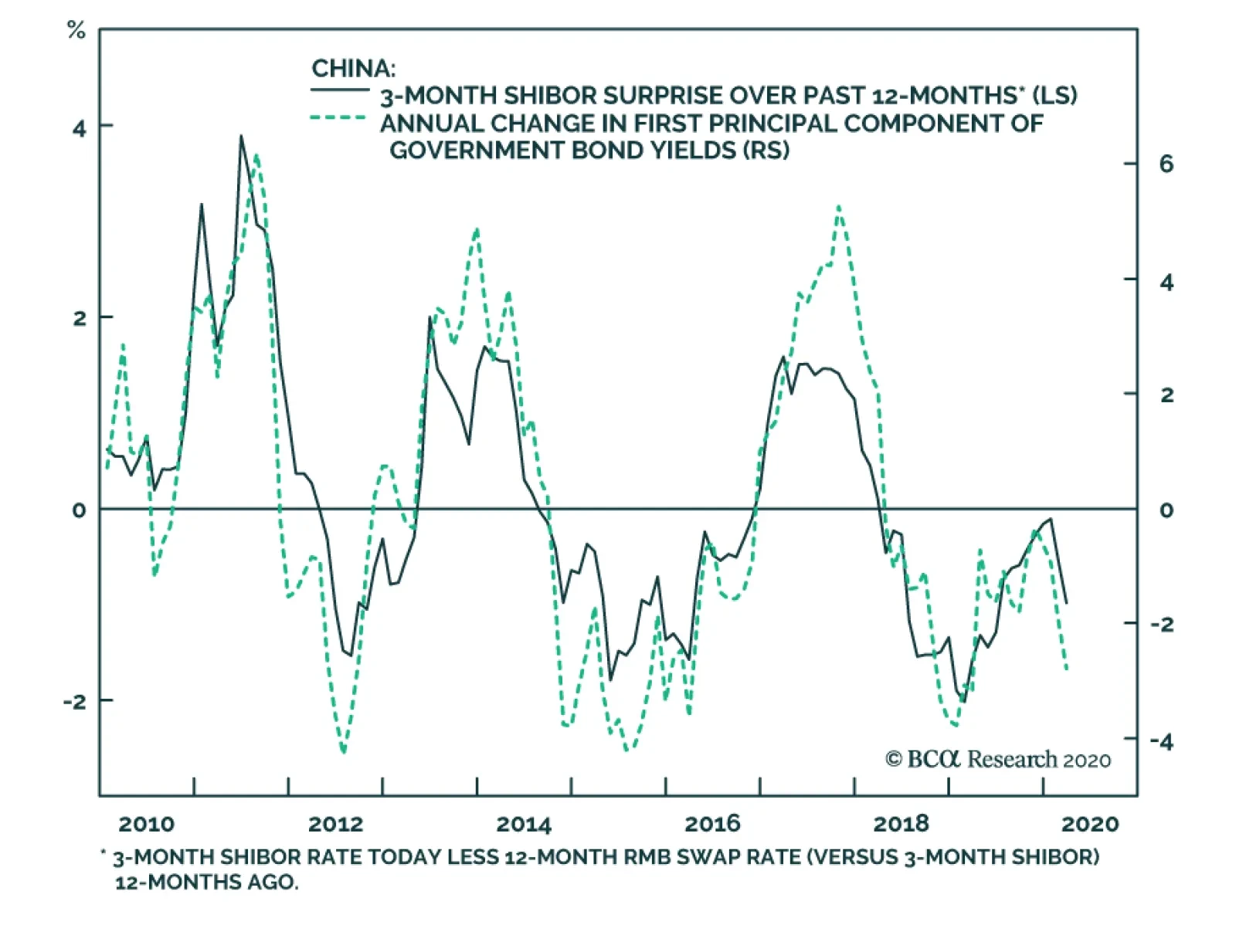
The PBOC cut its 7-day reverse repo rate on Monday, as part of an injection of liquidity into the Chinese banking system. Ma Jun, an advisor to the PBOC, guided expectations towards additional cuts by stating that the PBOC had entered “a stage with stronger…
Highlights Investment Grade: Investors should overweight investment grade corporate bonds relative to a duration-matched position in Treasury securities, with a particular focus on bonds that are eligible for the Fed’s purchase programs. High-Yield: Caution is still warranted in the high-yield market. At current levels, spreads do not adequately compensate investors for the coming default cycle. We would recommend buying high-yield if the average index spread rises to a range of 1075 bps – 1290 bps. Fed Purchases: Fed corporate bond purchases will cause investment grade spreads to tighten, particularly out to the 5-year maturity point. However, the program won’t stop the coming onslaught of ratings downgrades. High-Yield Sectors: The Energy, Transportation, Capital Goods, Consumer Cyclical and Consumer Noncyclical sectors are all highly exposed to the looming default cycle. Financials and Utilities look like the best places to hide out. Feature Chart 1Will The Fed's Corporate QE Mark The Top In Spreads?
Will The Fed's Corporate QE Mark The Top In Spreads?
Will The Fed's Corporate QE Mark The Top In Spreads?
The COVID pandemic and associated recession have already caused turmoil in financial markets and prompted a policy response from the Federal Reserve that is unprecedented in its aggressiveness. US investment grade and high-yield corporate spreads widened 280 bps and 764 bps, respectively, to start the year. Then, they tightened by 78 bps and 179 bps, respectively, after the Fed announced it is stepping into the corporate bond market for the first time (Chart 1). Clearly, this is a challenging time for corporate bond investors. But sifting through all the noise, we think there are three key questions to stay focused on: How will the Federal Reserve’s support for the corporate bond market impact spreads? At what level do spreads fully discount the looming default cycle? What sectors within the corporate bond market are most/least at risk of experiencing large-scale defaults? What Can The Fed Hope To Accomplish By Buying Corporate Debt? As part of its package of monetary policy stimulus measures to combat the US COVID-19 recession, the Fed has undertaken a dramatic new step to try and lower borrowing costs for US businesses – the outright buying of US investment grade corporate bonds. The main details of these new programs are as follows: The Fed will purchase investment grade corporate bonds, loans and related exchange-traded funds (ETFs) as part of these programs. Bonds can be purchased in the primary (newly-issued) and secondary markets. The purchases will not be held on the Fed’s balance sheet. Instead, two off-balance sheet Special Purpose Vehicles (SPVs), one for primary market purchases and one for secondary market purchases, will buy the bonds. Both SPVs are initially funded by the US Treasury and will be levered up via loans from the Fed. The primary market SPV will buy newly-issued bonds with credit ratings as low as BBB- and maturities of four years or less. Eligible issuers are US businesses with material operations in the United States; that list of companies may be expanded in the future. Eligible issuers do not include companies that are expected to receive direct financial assistance from the US government (i.e. no buying of bonds from companies getting bailout funds). The secondary market SPV will buy bonds with maturities of up to five years and credit ratings as low as BBB-, with a buying limit of 10% of the entire stock of eligible debt of any single company. This secondary market SPV will also buy investment grade bond ETFs, up to 20% of the outstanding shares of any single ETF. Through the primary market facility, any eligible company can “borrow” from the Fed, through bond purchases or direct loans, an amount greater than its maximum outstanding debt (bonds plus loans) on any day over the past twelve months. Specifically: 140% of all debt for AAA-rated issuers, 130% for AA-rated issuers, 120% for A-rated issuers and 110% for BBB-rated issuers. Since those percentages are all greater than 100, this effectively means that the Fed will allow eligible companies to potentially roll over their entire stocks of debt through this program, plus some net new borrowing. With the primary market facility, issuers can even defer interest payments on the funds borrowed from the Fed for up to six months, with the interest payments added to the final repayment amount (any company choosing this option cannot do share buybacks or make dividend payments). These programs are set to run until September 30 of this year, with an option to extend as needed. The Fed’s new initiatives represent a new step for the central bank, providing direct lending to any company that needs it. The Fed had to do this through off-balance-sheet SPVs, since direct buying of corporates is not permitted under the Federal Reserve Act. With this structure, it is technically the US Treasury department that bears the initial credit risk through its seed funding of each SPV. The BoJ was the first of the major central banks to start buying corporate bonds. This structure is different than the recent corporate bond QE programs of the European Central Bank (ECB), Bank of England (BoE) and Bank of Japan (BoJ), where the credit risk was directly taken onto the central bank balance sheets. But from an investment perspective, the difference in structure between the Fed’s corporate bond buying program and that of other central banks is nothing more than a technicality. It is still worthwhile to see if any lessons can be learned from these other countries. The Corporate Bond Buying Experience Of Other Central Banks The BoJ was the first of the major central banks to start buying corporate bonds, in a program that began in February 2009 and continued until October 2012. The program initially involved only the purchase of very high-quality corporate debt (rated A or higher) and only for maturities up to one year. The pool of eligible bonds was later increased to allow for lower credit quality (rated BBB or higher) and longer maturities (up to three years). The BoJ ended up buying a total of 3.2 trillion yen (US$30 billion) of bonds during that program, representing nearly 50% of total Japanese investment grade nonfinancial debt (Chart 2). Credit spreads tightened modestly over the life of the program, particularly for the shorter maturity debt that the BoJ was directly buying.1 Research from the BoJ concluded that the corporate bond buying did improve liquidity for the bonds that were eligible for the program, although there was no discernable pickup in overall Japanese corporate bond issuance.2 The BoE started its Corporate Bond Purchase Scheme (CBPS) in August 2016, as part of a package of stimulus measures to cushion the economic blow from the UK’s stunning vote to leave the European Union. The CBPS bought £10bn of UK nonfinancial investment grade corporate bonds over a period of 18 months, with ratings as low as BBB-. This was a relatively modest share of all eligible nonfinancial bonds (4.7%), but UK credit spreads did tighten over the life of the program (Chart 3). The BoE’s own research has determined that the spread tightening was due to lower downgrade/default risk premiums, and that the program triggered a surge in investment grade issuance in the weeks and months following its launch.3 Chart 2The BoJ's Corporate Bond Buying Experience
The BoJ's Corporate Bond Buying Experience
The BoJ's Corporate Bond Buying Experience
Chart 3The BoE's Corporate Bond Buying Experience
The BoE's Corporate Bond Buying Experience
The BoE's Corporate Bond Buying Experience
The ECB announced its Corporate Sector Purchase Program (CSPP) in March 2016, with the actual bond purchases beginning three months later. This was an expansion of the ECB’s overall Asset Purchase Program that had previously been focused on government debt. Like the BoJ and BoE programs, only nonfinancial debt of domestic euro area companies rated BBB- or higher was eligible. The ECB did buy bonds across a wide maturity spectrum of 1-30 years. The ECB’s purchases in the first 18 months of the CSPP were sizeable, between €60-80bn per month, reaching a cumulative total of nearly 20% of the stock of eligible bonds (Chart 4). This not only drove credit spreads tighter for bonds in the CSPP, but also pushed spreads lower for bonds that were not directly purchased by the ECB, like bank debt. The ECB described this as evidence of a strong “portfolio balance effect”, where investors who sold their bonds to the central bank ended up redeploying the proceeds into other parts of the euro area corporate bond market.4 One major difference between the ECB CSPP and the BoJ and BoE programs was that the ECB could conduct the necessary purchases in the primary market, if necessary. This represented a major new source of funding for smaller euro area companies that did not previously issue corporate bonds, preferring to get most of their debt financing through bank loans. As evidence of this, the year-over-year growth rate of euro area corporate bond issuance soared from 2.5% to 10% in the first year of the CSPP (Chart 5). Chart 4The ECB's Corporate Bond ##br##Buying Experience
The ECB's Corporate Bond Buying Experience
The ECB's Corporate Bond Buying Experience
Chart 5ECB Primary Market Buying Spurred A Boom In Issuance
ECB Primary Market Buying Spurred A Boom In Issuance
ECB Primary Market Buying Spurred A Boom In Issuance
Investment Conclusions Applying these lessons to the US, the first conclusion we reach is that Fed corporate bond purchases will tighten spreads for eligible securities. In this case, eligible securities include all investment grade rated US corporate bonds with maturities less than five years. In effect, the Fed’s primary market facility could be thought of as adding an agency backing to these eligible bonds since the Fed has effectively guaranteed that this debt can be rolled over and that bond investors will be made whole. It’s noteworthy that last week saw a record amount of new investment grade corporate bond issuance as firms rushed to take advantage of the program. Second, we should see some positive knock-on effects on spreads of ineligible investment grade securities, i.e. investment grade corporate bonds with maturities greater than five years. The impact will not be as large as for eligible securities, but since many of the same issuers operate at both ends of the curve, long-maturity spreads will benefit at the margin from any reduction in interest expense for the issuer. Third, any trickle-down effects to high-yield spreads will be much smaller. No high-yield issuers can benefit from the program, and while the Fed could eventually open up its facilities to include high-yield debt, we wouldn’t count on it. We suspect the moral hazard of “bailing out the junk bond market” would simply be a step too far for the Federal Reserve. We should see some positive knock-on effects on spreads of ineligible securities. In sum, we would advocate an overweight allocation to US investment grade corporate bonds today – especially on securities eligible for the Fed’s programs. We do not recommend a similar overweight stance on US high-yield, where spreads will continue to fluctuate based on the fundamental default outlook (see section titled “Assessing The Value In High-Yield” below). Can The Fed Re-Steepen US Credit Spread Curves And Prevent Ratings Downgrades? Prior to the Fed’s announcement of the new programs, the US investment grade corporate spread curve had become inverted, with shorter maturity spreads exceeding longer maturity ones. This has historically been a harbinger of increased investment grade downgrades and high-yield defaults (Chart 6). With the Fed’s new programs focusing on bonds with maturities of up to five years, the Fed’s buying can potentially lead to a re-steepening of the investment grade spread curve by driving down shorter maturity spreads. Chart 6Inverted US Credit Spread Curves Are Flashing An Ominous Message
Inverted US Credit Spread Curves Are Flashing An Ominous Message
Inverted US Credit Spread Curves Are Flashing An Ominous Message
Already, the investment grade spread curve has begun to disinvert in the first week of the Fed’s programs (Chart 7). At the same time, the bond rating agencies are moving aggressively to adjust credit opinions in light of the US recession. Already, downgrades from Moody’s and S&P are outpacing upgrades by a 3-1 ratio year-to-date – a pace not seen since the depths of the financial crisis, according to Bloomberg.5 Chart 7The Fed's New Programs Are Already Helping Disinvert Investment Grade Spread Curves
The Fed's New Programs Are Already Helping Disinvert Investment Grade Spread Curves
The Fed's New Programs Are Already Helping Disinvert Investment Grade Spread Curves
The Fed’s actions should be successful at re-steepening the investment grade credit curve. However, we doubt that they will have much impact on ratings decisions. While the Fed can reduce borrowing costs and prevent default by rolling over maturing debt for investment grade issuers, this has a relatively minor impact on corporate balance sheet health. In fact, the Fed's programs will only improve balance sheet health for firms that just roll over existing debt loads and don’t take on any new debt. Any firm that takes on new debt during this period will come out of the crisis with more leverage than when it entered. All else equal, that should warrant a downgrade. Bottom Line: Fed corporate bond purchases will cause investment grade spreads to tighten, particularly out to the 5-year maturity point. However, the program won’t stop the coming onslaught of ratings downgrades. Assessing The Value In High-Yield What Kind Of Default Cycle Is Already “In The Price”? High-yield debt may not benefit from the Fed’s corporate bond-buying programs. But, as in every other cycle, there will come a time when spreads discount the full extent of future default losses. At that point it will be appropriate to increase allocations to the sector. Our Default-Adjusted Spread will guide us as we make that determination. Our Default-Adjusted Spread is the excess spread available in the Bloomberg Barclays High-Yield index after subtracting realized default losses. Specifically, we calculate the Default-Adjusted Spread as: Index OAS – [Default Rate x (1 – Recovery Rate)] The default and recovery rates apply to the 12-month period that follows the index spread reading. For example, the Default-Adjusted Spread for January 2019 uses the index OAS from January 2019 and default losses incurred between February 2019 and January 2020. Table 1 shows that there is a strong link between the Default-Adjusted Spread and excess High-Yield returns relative to duration-matched Treasuries. Specifically, we see that losses are a near certainty if the Default-Adjusted Spread is negative and that return prospects are poor for spreads below 150 bps. A Default-Adjusted Spread above its historical average of 250 bps is an obvious buying opportunity, while a spread above 400 bps virtually guarantees strong returns. Table 1The Default-Adjusted Spread & High-Yield Excess Returns
Trading The US Corporate Bond Market In A Time Of Crisis
Trading The US Corporate Bond Market In A Time Of Crisis
This helps clarify the task at hand. We must make an assumption about what the default and recovery rates will be for the next 12 months, then apply those assumptions to the current index spread. The resulting Default-Adjusted Spread will tell us if High-Yield bonds are worth a look. Table 2 shows the Default-Adjusted Spread that results from different combinations of default and recovery rates.6 For example, a 10% default rate and 35% recovery rate together imply a Default-Adjusted Spread of 271 bps, suggesting an attractive buying opportunity. Table 2Default-Adjusted Spread (BPs) Given Different Assumptions For Default And Recovery Rates
Trading The US Corporate Bond Market In A Time Of Crisis
Trading The US Corporate Bond Market In A Time Of Crisis
What Sort Of Default Cycle Should We Expect? To answer this question we turn to Table 3. Table 3 lists periods since the mid-1980s when the default rate rose above 4%, along with several factors that influence the level of default losses: The magnitude of the economic downturn, proxied by the worst year-over-year real GDP growth reading recorded during that timeframe. The duration of the economic downturn, measured as the number of quarters from the peak to trough in real GDP. Nonfinancial corporate leverage – measured as total debt divided by book value of equity – at the cycle peak. Table 3A Brief History Of Default Cycles
Trading The US Corporate Bond Market In A Time Of Crisis
Trading The US Corporate Bond Market In A Time Of Crisis
Alongside these determining factors, the table also shows the peak 12-month default rate seen during the cycle and the recovery rate that occurred alongside it. First, we notice a strong relationship between the magnitude of the economic shock and the peak default rate. Meanwhile, corporate leverage does a better job explaining the recovery rate. Notice that recoveries were greater in 2008 than in 2001, despite 2008’s larger economic shock. Turning to the current situation, our base case assumption is that we will see severe economic contraction in Q1 and Q2 of this year followed by some recovery in the third and fourth quarters. All told, 2020 annual GDP growth could be close to the -3.9% seen in 2008, though the duration of the peak-to-trough economic shock will be only two quarters instead of six.7 Based on the historical comparables listed in Table 3, this sort of economic shock could generate a peak default rate somewhere between 11% and 13%. As for recoveries, nonfinancial corporate leverage is currently higher than during any of the prior episodes in our study. It follows that the recovery rate will be very low, perhaps on the order of 20%-25%. Turning back to Table 2, we see that our default and recovery rate assumptions imply a Default-Adjusted Spread somewhere between -119 bps and +96 bps. This is too low to be considered a buying opportunity. A Default-Adjusted Spread above its historical average of 250 bps is an obvious buying opportunity, while a spread above 400 bps virtually guarantees strong returns. Table 4 flips this analysis around and shows the option-adjusted-spread on the Bloomberg Barclays High-Yield index that would generate a Default-Adjusted Spread of 250 bps based on different assumptions for the default and recovery rates. Recall that we consider a Default-Adjusted Spread of 250 bps or above as a buying opportunity. Using the aforementioned default and recovery rate assumptions, we would see a buying opportunity in high-yield if the average index spread rose to a range of 1075 bps – 1290 bps, or above. As of Friday’s close, the index option-adjusted spread was 921 bps. Table 4High-Yield Index Spread (BPs) That Would Imply A Buying Opportunity* In Different Default Loss Scenarios
Trading The US Corporate Bond Market In A Time Of Crisis
Trading The US Corporate Bond Market In A Time Of Crisis
Bottom Line: High-yield spreads do not discount the full extent of the looming default cycle and will not benefit from the Fed’s asset purchase programs. Investors should stay cautious on high-yield for now and look to increase allocations when the average index spread moves into a range of 1075 bps to 1290 bps. Which High-Yield Sectors Are Most Exposed? Even during a period of large-scale defaults, sector and firm selection are vital in the high-yield bond market. In fact, you could argue that sector selection becomes even more important during a default cycle, as some sectors bear the brunt of default losses while others skate through relatively unscathed. To wit, Chart 8plots the 12-month trailing speculative grade default rate alongside a diffusion index that shows the percentage of 30 high-yield industry groups – as defined by Moody’s Investors Service – that have a trailing 12-month default rate above 4%. Even at the peaks of the default cycles during the last two recessions, only 47% and 63% of industry groups experienced significant default waves. Chart 8Sector Selection Is Vital In A Default Cycle
Sector Selection Is Vital In A Default Cycle
Sector Selection Is Vital In A Default Cycle
To help identify which sectors are most at risk during the current default cycle, we consider how the 10 main high-yield industry groups, as defined by Bloomberg Barclays, stack up on three crucial credit metrics: The share of firms rated Caa Growth in par value of debt outstanding since the last recession Change in the median firm’s net debt-to-EBITDA ratio since the last recession8 Charts A1-A10 in the Appendix show how the three credit metrics for each industry group have evolved over time. In the remainder of this report we compare the sectors against each other across each of the above three dimensions. Note that Box 1 provides a legend for the sector name abbreviations used in Charts 9, 10 and 11. Box 1Sector Abbreviations
Trading The US Corporate Bond Market In A Time Of Crisis
Trading The US Corporate Bond Market In A Time Of Crisis
Chart 9OAS Versus Share Of Caa-Rated Debt
Trading The US Corporate Bond Market In A Time Of Crisis
Trading The US Corporate Bond Market In A Time Of Crisis
Chart 10OAS Versus Debt Growth
Trading The US Corporate Bond Market In A Time Of Crisis
Trading The US Corporate Bond Market In A Time Of Crisis
Chart 11OAS Versus Net Debt-To-EBITDA
Trading The US Corporate Bond Market In A Time Of Crisis
Trading The US Corporate Bond Market In A Time Of Crisis
Share Of Caa-Rated Debt Even during a large default cycle the bulk of default losses will be borne by firms rated Caa and below. In Chart 9, we see that if we ignore the outlying Technology, Transportation and Energy sectors, there is a fairly linear relationship between credit spreads and the share of firms rated Caa in each sector. Transportation and Energy currently trade at very wide spreads because those sectors’ revenues are heavily impacted by the current crisis. Technology spreads remain low because, despite the high percentage of Caa-rated debt, the sector has one of the lower net debt-to-EBITDA ratios (see Chart A6). All in all, Chart 9 suggests that Capital Goods, Communications, Consumer Cyclicals and Consumer Noncyclicals all carry a large proportion of low-rated debt. In contrast, Financials and Utilities appear much safer. Debt Growth Another good way to assess which sectors are most likely to experience defaults is to look at which sectors added the most debt during the economic recovery (Chart 10). On that note, the rapid levering-up of the Energy sector clearly sticks out. Beyond that, Capital Goods, Consumer Noncyclicals and Technology also added significant amounts of debt during the recovery. In contrast, the Utilities sector actually reduced its debt load. Change In Net Debt-to-EBITDA Finally, it’s important to note that simply adding debt does not necessarily put a sector at greater risk of default if earnings are rising even more quickly. For this reason we also look at recent trends in net debt-to-EBITDA (Chart 11). Here, we see that wide spreads in Energy and Transportation are justified by large increases in net debt-to-EBITDA. Conversely, Financials and Communications have seen improvement. Bottom Line: Based on a survey of three important credit metrics: The Energy, Transportation, Capital Goods, Consumer Cyclical and Consumer Noncyclical sectors are all highly exposed to the looming default cycle. In contrast, Financials and Utilities look like the best places to hide out. Appendix Chart A1Basic Industry Credit Metrics
Basic Industry Credit Metrics
Basic Industry Credit Metrics
Chart A2Capital Goods Credit Metrics
Capital Goods Credit Metrics
Capital Goods Credit Metrics
Chart A3Consumer Cyclical Credit Metrics
Consumer Cyclical Credit Metrics
Consumer Cyclical Credit Metrics
Chart A4Consumer Non-Cyclical Credit Metrics
Consumer Non-Cyclical Credit Metrics
Consumer Non-Cyclical Credit Metrics
Chart A5Energy Credit Metrics
Energy Credit Metrics
Energy Credit Metrics
Chart A6Technology Credit Metrics
Technology Credit Metrics
Technology Credit Metrics
Chart A7Transportation Credit Metrics
Transportation Credit Metrics
Transportation Credit Metrics
Chart A8Communications Credit Metrics
Communications Credit Metrics
Communications Credit Metrics
Chart A9Utilities Credit Metrics
Utilities Credit Metrics
Utilities Credit Metrics
Chart A10Financial Institutions Credit Metrics
Financial Institutions Credit Metrics
Financial Institutions Credit Metrics
Ryan Swift US Bond Strategist rswift@bcaresearch.com Robert Robis, CFA Chief Fixed Income Strategist rrobis@bcaresearch.com Jeremie Peloso Senior Analyst jeremiep@bcaresearch.com Footnotes 1 The March 2011 earthquake and tsunami in Japan created a lot of short-term credit spread volatility, but even then, shorter-maturity bonds saw less spread widening than the overall index. 2 https://www.imes.boj.or.jp/research/papers/english/18-E-04.pdf 3 https://www.bankofengland.co.uk/quarterly-bulletin/2017/q3/corporate-bond-purchase-scheme-design-operation-and-impact 4 The ECB described this effect in a 2018 report that can be accessed here: https://www.ecb.europa.eu/pub/pdf/other/ecb/ebart201803_02.en.pdf 5 https://www.bloomberg.com/news/articles/2020-03-26/s-p-moody-s-cut-credit-grades-at-fastest-pace-since-2008-crisis 6 Calculations are based on the index spread as of market close on Friday March 27. 7 For more details on BCA’s assessment of the economic outlook please see Global Investment Strategy Second Quarter 2020 Strategy Outlook, “World War V”, dated March 27, 2020, available at gis.bcaresearch.com 8 Median net debt-to-EBITDA is calculated from our bottom-up sample of high-yield firms that consists of all the firms in the Bloomberg Barclays High-Yield index for which data are available. Data are retrieved on a quarterly basis and the sample is adjusted once per year based on changes in the composition of the Barclays indexes. As of Q2 2019, this sample includes 354 companies.
Dear Client, I will be discussing the economic and financial implications of the pandemic with my colleague Caroline Miller this Friday, March 27 at 8:00 AM EDT (12:00 PM GMT, 1:00 PM CET, 8:00 PM HKT). I hope you will be able to join us for this webcast. Next week, we will send you a special report prepared by BCA’s Chief Economist Martin Barnes. Martin will provide his perspective on the current crisis, focusing on some of the longer-run implications. Best regards, Peter Berezin, Chief Global Strategist Highlights The world is in the midst of a deep recession. Growth should recover in the third quarter as the measures taken to compensate for the initial slow response to the crisis are relaxed and existing measures are better calibrated to reduce economic distress. Continued monetary support and unprecedented fiscal stimulus should help drive the recovery once businesses reopen and workers return to their jobs. Investors should maintain a modest overweight to global equities. US stocks will lag their foreign peers over the next 12 months. The US dollar has peaked. A weaker dollar should help lift commodity prices and the more cyclical sectors of the stock market. High-yield credit spreads will narrow over the next 12 months, but we prefer investment-grade credit on a risk-reward basis. Investors are understating the potential long-term inflationary consequences of all the stimulus that has been unleashed on the global economy. Buy TIPS and gold. I. Macroeconomic Outlook The global economy is now in recession. The recession has occurred because policymakers saw it as the lesser of two evils. They judged, with good reason, that a temporary shutdown of most non-essential economic activities was a price worth paying to contain the virus. Outside of China, the level of real GDP is likely to be down 1%-to-3% in Q1 of 2020 relative to Q4 of 2019, and down another 5%-to-10% in Q2 relative to Q1. On a sequential annualized basis, this implies that GDP growth could register a negative print of 40% in some countries in the second quarter, a stunning number that has few parallels in history. Growth in China should stage a modest rebound in the second quarter, reflecting the success the country has had in containing the virus. Nevertheless, the level of Chinese economic activity will remain well below its pre-crisis trend, with exports increasingly weighed down by the collapse in overseas spending. A One-Two Punch The “sudden stop” nature of the downturn stems from the fact that the global economy was simultaneously hit by both a massive demand and supply shock. When households are confined to their homes, they cannot spend as much as they normally would. This is particularly the case in an environment of heightened risk aversion, which usually leads to increased precautionary savings. At times like these, businesses also slash spending in a desperate effort to preserve cash. All this reduces aggregate demand. On the supply side, production has been impaired because of workers’ inability to get to their jobs. According to the Bureau of Labor Statistics, less than 30% of US employees can work from home (Chart 1). Since modern economies rely on an intricate division of labor, disturbances in one part of the economy quickly ripple through to other parts. The global supply chain ceases to function normally. Chart 1US: Who Can Work From Home And Who Cannot?
Second Quarter 2020 Strategy Outlook: World War V
Second Quarter 2020 Strategy Outlook: World War V
Think of this as a Great Depression-style demand shock combined with a category five hurricane supply shock. The fact that both of these shocks have been concentrated in the service sector, which represents at least two-thirds of GDP in most economies, has made the situation even worse (Chart 2). During most recessions, the service sector is the ballast that helps stabilize the economy in the face of sharp declines in the more cyclical sectors such as manufacturing and housing. This time is different. Chart 2The Service Sector Accounts For A Big Chunk Of GDP And Has Been Very Hard Hit
Second Quarter 2020 Strategy Outlook: World War V
Second Quarter 2020 Strategy Outlook: World War V
The Shape Of The Recovery: L, U, or V? Provided that the number of new infections around the world stabilizes during the next two months, growth should begin to recover in the third quarter. What will the recovery look like? From the perspective of sequential quarterly growth rates, a V-shaped recovery is inevitable simply because a string of quarters of negative 20%-to-40% growth would quickly leave the world with no GDP at all. However, thinking in terms of growth rates is not the best approach. It is better to think of the level of real GDP. Chart 3 shows three scenarios: 1) An L-shaped profile for real GDP where the level of output falls and then remains permanently depressed relative to its long-term trend; 2) A sluggish U-shaped recovery where output slowly rebounds starting in the second half of the year; and 3) A rapid V-shaped recovery where output quickly moves back to its pre-crisis trend. Chart 3Profile Of The Recovery: L, U, or V?
Second Quarter 2020 Strategy Outlook: World War V
Second Quarter 2020 Strategy Outlook: World War V
We had previously thought that the recovery from the pandemic would be V-shaped. Compared to the sluggish recovery following the Great Recession, that is likely still true. However, at this point, we would prefer to characterize the probable recovery as being more U-shaped in nature. This is mainly because the measures necessary to contain the virus may end up having to remain in place, in one form or another, for the next few years. Why Not L? Given the likelihood that containment measures will continue to weigh on economic activity, how can an L-shaped “recovery” be avoided? While such a dire outcome cannot be ruled out, there are three reasons to think “U” is more likely than “L”. Reason #1: We Will Learn From Experience It is almost certain that we will figure out how to fine-tune containment measures to reduce the economic burden without increasing the number of lives lost. There are still many questions that remain unanswered. For example: Are restaurants where family members sit together really more dangerous than bars or conferences where strangers are milling about talking to one another? How dangerous is air travel? Modern airplanes have hospital-grade filtration systems that recirculate all the air in the cabin every three minutes. Might this explain why there has only been a handful of flight attendants that have tested positive for the virus? How contagious are children, who often may not present any symptoms at all? Which drugs might slow the spread of the disease or perhaps even cure it? To what extent would widespread mask-wearing help? Yes, a mask may not prevent you from catching the virus, but if there is major social stigma associated with being unmasked in public, then people who have the virus and may not know it will be less of a threat to others. One study estimates that the virus could be completely eradicated if 80% of people always wore masks.1 With time, we will learn the answers to these questions. We will also be able to stockpile masks, ventilators, respirators, and test kits – all of which are currently in short supply – to better combat the virus. Reason #2: We Are NowOvercompensating For Lost Time Second, most countries are currently at the stage where they are trying not just to bring down the basic reproduction number for the virus to 1, but to drive it down to well below 1. There is merit in doing so. If you can reduce the reproduction number to say, 0.5, meaning that 100 people with the virus will pass it on to only 50 other people, then the number of new infections will fall rapidly over time. This is what China was finally able to achieve. A recent study documented that China succeeded in bringing down the reproduction number in Wuhan from 3.86 to 0.32 once all the containment measures had been implemented (Chart 4).2 Chart 4Severe Containment Measures Have Changed The Course Of The Wuhan Outbreak
Second Quarter 2020 Strategy Outlook: World War V
Second Quarter 2020 Strategy Outlook: World War V
The critical point is that once you reduce the number of new infections to a sufficiently low level, you can then relax the containment measures by just enough so that the reproduction number rises back to 1. At that point, the number of new infections at any given point in time will be constant. One can see this point by imagining a bicycle coasting down a mountain road. Ideally, the rider should apply uniform pressure on the brakes at the outset of the descent to prevent the bicycle from accelerating too quickly. However, if the rider is too slow to apply the brakes and ends up going too fast, he or she will then need to overcompensate by pressing hard on the brakes to slow the bike down before easing off the brakes a bit. Most of the world is currently in the same predicament as the cyclist who failed to squeeze the brakes early on. We are overcompensating to get the infection rate down. However, once the infection rate has fallen by enough, we can ease off the most economically onerous measures, allowing GDP to slowly recover. Reason #3: Containment Measure Will Be Eased As More People Acquire Immunity Much of the popular discussion of the epidemiology of COVID-19 has failed to distinguish between the basic reproduction number, R0, and the effective reproduction number, Re. The former measures the average number of people a carrier of the virus will infect in an entirely susceptible population, whereas the latter measures the average number of people who will be infected after some fraction of the population acquires immunity either by surviving the disease or getting vaccinated. Mathematically, Re = R0*(1-P), where P is the proportion of the population which has acquired immunity. For example, suppose P=0.5, meaning that half the population has acquired immunity. In this case, the average number of people a carrier will infect will be only half as high as when no one has immunity. As we discuss below, there is considerable uncertainty about how fast P will increase over time, including whether it could spike upwards if a vaccine becomes widely available. Still, any increase in P will make it more difficult for the virus to propagate. Over time, this will permit policymakers to raise R0 at an accelerating rate towards the level it would naturally be in the absence of any containment measures (Chart 5). Such a strategy would allow economic activity to increase without raising Re; that is to say, without triggering an explosion in the number of new cases. Chart 5Populations Acquiring Immunity Is Key
Second Quarter 2020 Strategy Outlook: World War V
Second Quarter 2020 Strategy Outlook: World War V
The Virus Endgame How long will it take to dismantle all the containment measures completely? This partly depends on what medical breakthroughs occur and what measures are needed to “flatten the curve” of new infections (Chart 6). Right now, most countries are trying to drive down the number of new infections to very low levels in the hopes that either a vaccine will be invented or new treatment options will become available. Chart 6Flattening The Curve
Second Quarter 2020 Strategy Outlook: World War V
Second Quarter 2020 Strategy Outlook: World War V
We are not medical experts and will not offer an opinion on how likely a breakthrough may be. What we would say is that combating the virus has become a modern-day Manhattan project. If the project succeeds, a V-shaped recovery could still ensue. What if the virus evades the best efforts of scientists to eradicate it? In that case, the only way for life to return to some semblance of normalcy is for the population to acquire herd immunity. How many people would need to be infected? In the context of the foregoing discussion, this is equivalent to asking how high P needs to rise for Re to fall below 1. The equation above tells us this must correspond to the value of P for which R0 (1-P) <1. Solving for P yields P > 1-1/R0. In the absence of social distancing and other containment measures, most estimates of R0 for COVID-19 place it between 1.5 and 4. This implies that between one-third (1-1/1.5) to three-quarters (1-1/4) of the population would need to be infected for herd immunity to set in. Even if one allows for the likelihood that significantly more resources will be marshalled to allow hospitals to service a greater number of patients, we estimate that it would take 2-to-3 years to reach that point.3 To be clear, the virus’ ability to spread will decline even before herd immunity is achieved. An increase in the share of the population who survived and became naturally inoculated against the virus would allow policymakers to relax containment measures, perhaps to such an extent that eventually only the simplest of actions such as increased hand-washing and widespread mask-wearing would be enough to prevent hospitals from being overwhelmed. This underscores our baseline expectation of a U-shaped economic recovery. Second-Round Effects Suppose the global economy starts to recover in the third quarter of this year as the measures taken to compensate for the initial slow response to the crisis are relaxed, existing measures are better calibrated to reduce economic distress, and more younger and healthier people acquire natural immunity to the virus, thus reducing the vulnerability of the old and frail. Does that mean we are out of the woods? Not necessarily! We still have to worry about the second-round economic effects. Even if the virus is contained, there is a risk that the economy will be so scarred by the initial drop in output that it will fail to recover. A vicious circle could emerge where falling spending leads to higher unemployment, leading to even less spending. In the current environment, the tendency for unemployment to rise may be initially mitigated by the decision of a few large companies with ample financial resources to pay their workers even if they are confined to their homes. This would result in a decline in labor productivity rather than higher unemployment. That said, given the severity of the shock and the fact that many of the hardest-hit firms are in the labor-intensive service sector, a sharp rise in joblessness is still inevitable, particularly in countries with flexible labor markets such as the US. Chart 7Worries Over Job Security Abound
Worries Over Job Security Abound
Worries Over Job Security Abound
Today’s spike in US initial unemployment claims is testament to that point (Chart 7). In fact, the true increase in the unemployment rate will probably be greater than what is implied by the claims data because many state websites did not have the bandwidth to handle the slew of applications. In addition, under existing rules, the self-employed and those working in the “gig economy” do not qualify for unemployment benefits (this has been rectified in the bill now making its way to the White House). The Role Of Policy Could we really end up in a world where the virus is contained, and people are ready and able to work, only to find that there are no jobs available? While such a sorry outcome cannot be dismissed, we would bet against it. This outcome would only arise if there is insufficient demand throughout the economy when it reopens. Unlike in 2008/09 when there was a lot of moralizing about how this or that group deserved to be punished for their reckless behavior, no one in their right mind today would argue that the workers losing their jobs and the companies facing bankruptcy somehow had it coming. What can policymakers realistically do? On the monetary side, policy rates are already close to zero in most developed economies. A number of emerging markets still have scope to cut rates, but even there, many find themselves not far from the zero bound (Chart 8). Chart 8DM Rates At The Zero Bound, With EM Rates Approaching
DM Rates At The Zero Bound, With EM Approaching
DM Rates At The Zero Bound, With EM Approaching
Chart 9A Mad Scramble For Cash
A Mad Scramble For Cash
A Mad Scramble For Cash
That said, cutting interest rates right now is not the only, and probably not the most important, way for central banks to stimulate their economies. The global economy is facing a cash shortage. Companies are tapping credit lines at a time when banks would normally be looking to increase their own cash reserves. The mad scramble for cash has caused libor, repo, and commercial paper spreads to surge (Chart 9). And not just any cash. As the world’s reserve currency, the dollar is increasingly in short supply (Chart 10). This explains why cross-currency basis spreads have soared and why the DXY index has jumped to the highest level in 17 years. Chart 10Dollars Are In Short Supply
Dollars Are In Short Supply
Dollars Are In Short Supply
Flood The Zone Chart 11US Mortgage Spreads Have Spiked
US Mortgage Spreads Have Spiked
US Mortgage Spreads Have Spiked
The good news is that there is no limit to how many dollars the Federal Reserve can create. The Fed has already expanded the supply of bank reserves by initiating the purchase of $500 billion in treasuries and another $200 billion in agency mortgage-backed securities (MBS) since relaunching its QE program on March 15th. Further MBS purchases will be especially useful given that mortgage rates have not come down as quickly as Treasury yields (Chart 11). The Fed has also dusted off the alphabet soup of programs created during the financial crisis to improve proper market functioning, and has even added a few more to the list, including a program to support investment-grade corporate bonds and another to support small businesses. In order to ease overseas funding pressures, the Fed has opened up swap lines with a number of central banks. We expect these lines to be expanded to more countries if the situation necessitates it. The Coming Mar-A-Lago Accord? We also think that there is at least a 50-50 chance that we could see coordinated currency interventions designed to drive down the value of the US dollar. Federal Reserve, Treasury, and IMF guidelines all permit currency intervention to counter “disorderly market conditions.” While a weaker dollar would erode the export competitiveness of some countries, this would be more than offset by the palliative effects of additional dollar liquidity stemming from US purchases of foreign securities, as well as the relief that overseas dollar borrowers would receive from dollar depreciation. Thus, on balance, a weaker dollar would result in an easing of global financial conditions. Liquidity Versus Solvency Risk Some might complain that the actions of the Fed and other central banks go well beyond their mandates. They might argue that it is one thing to provide liquidity to the financial system; it is quite another to socialize credit risk. We think these arguments are largely red herrings. For one thing, concern about credit risk can be addressed by having governments backstop central banks for any losses they incur. Moreover, there is no clear distinction between liquidity and solvency risk during a financial crisis. The former can very easily morph into the latter. For example, consider the case of Italy. Would you buy more Italian bonds if the yield rises? That depends on two competing considerations. On the one hand, a higher yield makes the bond cheaper. On the other hand, a higher yield may make it more difficult for the government to service its debt obligations, which raises the risk of default. If the second consideration outweighs the first, your inclination may be to sell the bond. To the extent that your selling causes yields to rise further, that could lead to another wave of selling. As Chart 12 illustrates, this means that there may be multiple equilibria in fixed-income markets. It is absolutely the job of central banks to try to steer the economy towards the good ”low yield” equilibrium rather than the bad “default” equilibrium. Chart 12Multiple Equilibria In Debt Markets Are Possible Without A Lender Of Last Resort
Second Quarter 2020 Strategy Outlook: World War V
Second Quarter 2020 Strategy Outlook: World War V
In this light, ECB president Christine Lagarde’s statement on March 12th that “we are not here to close spreads” – coming on the heels of a spike in Italian bond yields and a 13% drop in euro area stocks the prior day – was one of the most negligent things a central banker has ever said. To her credit, she has since walked back her comments. The ECB has also launched the Pandemic Emergency Purchase Programme (PEPP), a EUR 750bn asset-purchase program, which gives the central bank considerable flexibility over the timing, composition, and geographic makeup of purchases. Further actions, including upsizing the PEPP, creating a “conditionality-lite” version of the ESM program, and perhaps even issuing Eurobonds, are possible. All this should help Italy. Accordingly, BCA’s global fixed-income team upgraded Italian government bonds to overweight this week. Using Fiscal Policy To Align Financial Time With Economic Time While central banks will play an important role in mitigating the crisis, most of the economic burden will fall on fiscal policy. How much fiscal support is necessary and what should it consist of? To get a sense of what is optimal, it is useful to distinguish between the concept of financial time and economic time. Financial time and economic time usually beat at the same pace. Most of the time, people have financial obligations – rent, mortgage payments, spending on necessities – that they match with the income earned from work. Likewise, companies have expenses that they match with the revenue that they derive from various economic activities. No one worries when economic time and financial time deviate in predictable ways. For example, GDP collapses around 5pm on Monday only to recover at 9am on Tuesday. The fact that many western Europeans take most of August off for vacation is also not a problem, since everyone expects this. The problem occurs when economic time and financial time deviate in unpredictable ways. That is the case at present. Today, economic time has ground to a halt as businesses shutter their doors and workers confine themselves to their homes. Yet, financial time continues to march on. This implies that in the near term, the correct course of action is for governments to transfer money to households and firms to allow them to service their financial obligations. One simple way of achieving this is through wage subsidies, where the government pays companies most of the wage bill of their employees who, through no fault of their own, are unable to work. Note that this strategy does not boost GDP. By definition, an idle worker is one who does not contribute to economic output. What this strategy does do is alleviate needless hardship, while creating pent-up demand for when businesses start to open their doors again. Once the virus is contained, traditional fiscal stimulus that boosts aggregate demand will be appropriate. How much money are we talking about? In the case of the US, suppose that annualized growth is -5% in Q1, -25% in Q2, and +10% in Q3 and Q4, respectively. That would leave the level of real GDP down 4% on the year compared to 2019. Assuming trend GDP growth of 2%, that implies an annual shortfall of income (consisting of wages and lost profits) that the government would have to cover amounting to 6% of GDP. The $2 trillion stimulus bill amounts to 10% of GDP, although not all of that will be spent during the next 12 months and about a quarter of the amount is in the form of loans and loan guarantees. Still, on size, we would give it an “A”. On composition, we would give it a “B”, as it lacks sufficient funding for state and local governments to cover the likely decline in the tax revenues that they will experience. This could result in layoffs of first responders, teachers, etc. Given that the US was running a fiscal deficit going into the crisis, all this additional stimulus could easily push the budget deficit to over 15% of GDP. While this is a huge number, keep in mind that in a world where interest rates are below the trend growth rate of the economy, a government can permanently increase its budget deficit by any amount it wants while still achieving a stable debt-to-GDP ratio over the long haul.4 Today, we are not even talking about a permanent increase in the deficit, but a temporary increase that could last a few years at most. If we end up in a depression, don’t blame the virus; blame politicians. Fortunately, given that the political incentives are aligned towards fiscal easing rather than austerity, our guess is that a depression will be averted. Appendix A summarizes the monetary and fiscal measures that have already been taken in the major economies. II. Investment Strategy As anyone who has ever watched a horror movie knows, the scariest part of the film is the one before the monster is revealed to the audience. No matter how good the makeup or set design, our imaginations can always conjure up something much more frightening than Hollywood can invent. Right now, we are fighting an invisible enemy that is ravaging the world. Victory is in sight. The number of new infections has peaked in China and South Korea. I mentioned during last week’s webcast that we should watch Italy very carefully. If the number of new infections peaks there, that would send an encouraging signal to financial markets that other western democracies will be able to get the virus under control. While it is too early to be certain, this may be happening: Both the number of new cases and deaths in Italy have stabilized over the past five days (Chart 13). Chart 13A Peak In The Number Of New COVID-19 Cases In Italy Would Send An Encouraging Signal
Second Quarter 2020 Strategy Outlook: World War V
Second Quarter 2020 Strategy Outlook: World War V
Of course, there is still the risk that the number of new infections will rise again if containment measures are relaxed prematurely. However, as we spelled out in this report, there are good reasons to think that these measures will not need to be as severe as the ones currently in place. As such, it is likely that global growth will begin to rebound in the third quarter of this year. Equities: A Modest Overweight Is Warranted We turned more cautious on the near-term outlook for global equities earlier this year, but upgraded our recommendation on the morning of February 28th after the MSCI All-Country World Index fell by 12% over the prior week. While stocks did rally by 7% during the following three trading days, they subsequently plunged to multi-year lows. In retrospect, we should have paid more attention to our own warnings in our earlier report titled “Markets Too Complacent About The Coronavirus.” 5 For now, we would recommend a modest overweight to stocks on both a 3-month and 12-month horizon. Monetary and fiscal easing and the prospect of a peak in the number of new cases in Italy could continue to support stocks in the near term, while a rebound in growth starting this summer should pave the way for a recovery in corporate earnings over a 12-month horizon. Chart 14US Equity Valuations Are Not Yet At Bombed-Out Levels
US Equity Valuations Are Not Yet At Bombed-Out Levels
US Equity Valuations Are Not Yet At Bombed-Out Levels
Of course, when it comes to financial markets, one should always be prepared to adjust one’s conviction level if prices either rise or fall significantly. We mentioned two weeks ago that we would move to a high-conviction overweight if the S&P 500 fell below 2250. While the index did briefly fall below this level, it has since bounced back to about 2630. At its current level, the S&P 500 is trading at 15.3-times forward earnings (Chart 14). While this is not particularly expensive, it is still well above the trough of 10.5-times forward earnings reached in 2011 during the height of the euro crisis. And keep in mind that current earnings estimates are based on the stale assumption that S&P 500 companies will earn $172 over the next four quarters, down only 3% from the peak earnings estimate of $177 reached in February. With this in mind, we are introducing a lower and upper bound for global equity prices at which we will adjust our view. To keep things simple, we will focus on the S&P 500, which accounts for over half of global stock market capitalization. If the S&P 500 falls below (and stays below) 2250, we would recommend a high-conviction overweight to global stocks. If the index rises above 2750, we would recommend a neutral equity allocation. Anything between 2250 and 2750 would justify the current stance of modest overweight. Going forward, we will adjust this range as events warrant it. Our full slate of views can be found in the table at the end of this report. Sector And Regional Equity Allocation: Favor Cyclicals and Non-US Over A 12-Month Horizon Not surprisingly, defensive equity sectors outperformed cyclicals both in the US and abroad during this month’s selloff. Financials also underperformed on heightened worries about rising defaults and the adverse effect on net interest margins from flatter yield curves (Chart 15). Chart 15Cyclicals And Financials Underperformed On The Way Down
Cyclicals And Financials Underperformed On The Way Down
Cyclicals And Financials Underperformed On The Way Down
Chart 16Non-US Stocks Are Cheaper Even After Adjusting For Differences In Sector Weights
Second Quarter 2020 Strategy Outlook: World War V
Second Quarter 2020 Strategy Outlook: World War V
Cyclicals and financials have outperformed the broader market over the past few days as risk sentiment has improved. They are likely to continue outperforming over a 12-month horizon as global growth eventually recovers and yield curves steepen modestly. To the extent that cyclicals and financials are overrepresented in stock market indices outside the US, this will give non-US equities the edge. Stocks outside the US also benefit from more favorable valuations. Even after adjusting for differences in sector weights, non-US stocks are quite a bit cheaper than their US peers as judged by price-to-earnings, price-to-book, and other valuation measures (Chart 16). The US Dollar Has Probably Peaked Another factor that should help cyclical stocks later this year is the direction of the US dollar. The greenback has been buffeted by two major forces this year (Chart 17). Chart 17The Dollar Has Been Facing Crosscurrents
The Dollar Has Been Facing Crosscurrents
The Dollar Has Been Facing Crosscurrents
Chart 18USD Is A Countercyclical Currency
USD Is A Countercyclical Currency
USD Is A Countercyclical Currency
Between February 19 and March 9, the dollar weakened as US bond yields fell more than yields abroad. This eliminated some of the yield advantage that had been supporting the dollar last year. Starting around the second week of March, however, global financial stresses escalated. Money began to flow into the safe-haven Treasury market. Global growth prospects also deteriorated sharply. As a countercyclical currency, this helped the dollar (Chart 18). Looking out, interest rate differentials are unlikely to return anywhere close to where they were at the start of this year, given that the Fed will probably keep rates near zero at least until the middle of 2021. Meanwhile, aggressive central bank liquidity injections should reduce financial stress, while a rebound in global growth will allow capital to start flowing back towards riskier foreign markets. This should result in a weaker dollar. Once Growth Bottoms, So Will Commodities Chart 19Low Prices Force US Shale Cutbacks
Second Quarter 2020 Strategy Outlook: World War V
Second Quarter 2020 Strategy Outlook: World War V
The combination of a weaker dollar, a rebound in global growth starting this summer, and increased infrastructure stimulus spending in China should help lift resource prices. This will also buoy currencies such as the AUD, CAD, and NOK in the developed market space, and RUB, CLP, ZAR, and IDR, in the EM space. Oil prices have tumbled on the back of the sudden stop in global economic activity and the breakdown of the agreement between OPEC and Russia to restrain crude production. BCA’s commodity strategists expect the Saudis and Russians to come to an agreement to reduce output, as neither side has an incentive to pursue a prolonged price war. They see Brent prices averaging $36/barrel in 2020 and $55/barrel in 2021. However, prices are not likely to go much higher than $60/barrel because that would take them well above the current breakeven cost for shale producers, eliciting a strong supply response (Chart 19). Spread Product: Favor IG Over HY A rebound in oil prices from today’s ultra-depressed levels should help the bonds of energy companies, which are overrepresented in high-yield indices. This, together with stronger global growth and improving risk sentiment, should allow HY spreads to narrow over a 12-month horizon. Chart 20High-Yield Credit Is Pricing In Only A Moderate Recession
High-Yield Credit Is Pricing In Only A Moderate Recession
High-Yield Credit Is Pricing In Only A Moderate Recession
Nevertheless, we think investment grade currently offers a better risk-reward profile. While HY spreads have jumped to more than 1000 basis points in the US, they are still nowhere close to 2008 peak levels of almost 2000 basis points. Like the equity market, high-yield credit is pricing in only a modest recession, with a default rate on par with the 2001 downturn (Chart 20). Moreover, central banks around the world are racing to protect high-quality borrowers from default. The Fed’s announcement that it will effectively backstop the investment-grade corporate bond market could be a game changer in this regard. Unfortunately for HY credit, the moral hazard consequences of bailing out companies that investors knew were risky when they first bought the bonds are too great for policymakers to bear. Government Bonds: Deflation Today, Inflation Tomorrow? As noted at the outset of this report, the current economic downturn involves both an adverse supply and demand shock. Outside of a few categories of consumer staples and medical products, we expect demand to fall more than supply, resulting in downward pressure on prices. This deflationary impulse will be exacerbated by rising unemployment. Looking beyond the next 12-to-18 months, the outlook for inflation is less clear. On the one hand, it is possible that the psychological trauma from the pandemic will produce a permanent, or at least semi-permanent, increase in precautionary savings. If budget deficits are reined in too quickly, many countries could find themselves facing a shortage of aggregate demand. This would be deflationary. On the other hand, one can easily envision a scenario where monetary policy remains highly accommodative and many of the fiscal measures put in place to support households are maintained long after the virus is eradicated. This could be particularly true in the US, where our geopolitical team now expects Joe Biden to win the presidential election. In such an environment, unemployment could fall back to its lows, eventually leading to an overheated economy. Our hunch is that the more inflationary scenario will unfold over the next 2-to-3 years. Interestingly, that is not the market’s opinion. For example, the 5-year US TIPS breakeven inflation rate is currently only 0.69% and the 10-year rate is 1.07%. This means that a buy-and-hold investor will make money owning TIPS versus nominals if inflation averages more than 0.69% per year for the next five years, or 1.07% per year for the next decade. That is a bet we would be willing to take. Finally, a word on gold. Just as during the Global Financial Crisis, gold failed to be an attractive hedge against financial risk during the recent stock market selloff – bullion dropped by 15% from $1704/oz to $1451/oz, before rebounding back to $1640/oz over the past few days as risk sentiment improved. Nevertheless, gold remains a good hedge against long-term inflation risk. And with the US dollar likely to weaken over the next 12 months, gold prices should move up even if near-term inflationary pressures remain contained. As such, we are upgrading our outlook on the yellow metal. Peter Berezin Chief Global Strategist peterb@bcaresearch.com Appendix A Appendix A Table 1Central Banks Still Had Some Options When Crisis Hit
Second Quarter 2020 Strategy Outlook: World War V
Second Quarter 2020 Strategy Outlook: World War V
Appendix A Table 2Massive Stimulus In Response To Pandemic
Second Quarter 2020 Strategy Outlook: World War V
Second Quarter 2020 Strategy Outlook: World War V
Footnotes 1 Jing Yan, Suvajyoti Guha, Prasanna Hariharan, and Matthew Myers, “Modeling the Effectiveness of Respiratory Protective Devices in Reducing Influenza Outbreak,” U.S. National Library of Medicine, (39:3), March 2019. 2 Chaolong Wang, Li Liu, Xingjie Hao, Huan Guo, Qi Wang, Jiao Huang, Na He, Hongjie Yu, Xihong Lin, Sheng Wei, and Tangchun Wu, “Evolving Epidemiology and Impact of Non-pharmaceutical Interventions on the Outbreak of Coronavirus Disease 2019 in Wuhan, China,”medrxiv.org, March 6, 2020. 3 This calculation assumes that 5% of infected people need ICU care and each spends an average of 2 weeks in the ICU. It also assumes that hospitals are able to expand their capacity by 30 additional ICU beds per 100,000 people per year to treat COVID-19. 4 Please see Global Investment Strategy Weekly Report, “Is There Really Too Much Government Debt In The World?” dated February 22, 2019, available at gis.bcarearch.com. 5 Please see Global Investment Strategy Weekly Report, “Markets Too Complacent About The Coronavirus,” dated February 21, 2020, available at gis.bcaresearch.com. Global Investment Strategy View Matrix
Second Quarter 2020 Strategy Outlook: World War V
Second Quarter 2020 Strategy Outlook: World War V
MacroQuant Model And Current Subjective Scores
Second Quarter 2020 Strategy Outlook: World War V
Second Quarter 2020 Strategy Outlook: World War V
Strategic Recommendations Closed Trades
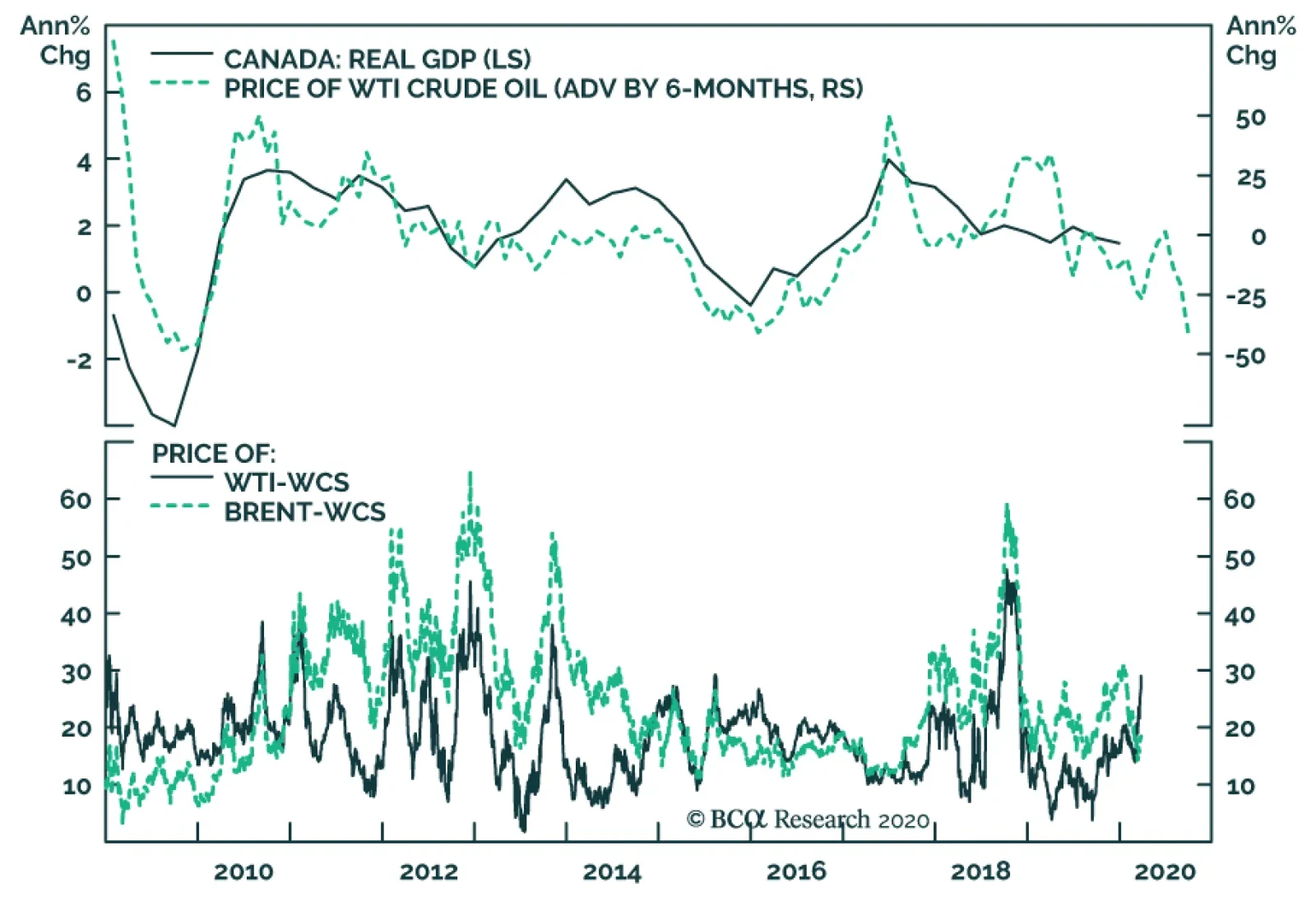
In an emergency meeting last Friday, the Bank of Canada lowered the overnight target rate by 50 basis points rate to 0.25%. Meanwhile, it also launched two new programs to restore liquidity to financial markets. The Commercial Paper Purchase Program…
Highlights The pillars of dollar support continue to fall, but the missing catalyst is visibility on the trajectory of global growth. For now, we remain constructive on the DXY short term, but bearish longer term. Market internals and currency technicals have become supportive of pro-cyclical trades in recent days. There is tremendous value in the Norwegian krone, Swedish krona and British pound. Buy a basket of NOK and SEK against a basket of USD and EUR. Feature Markets are getting some semblance of calm after being flooded with vast amounts of monetary and fiscal stimulus. The DXY index, having breached the psychological 100 level, failed to break above 103, and is now in a volatile trading pattern of lower intra-day highs. The message is that the Federal Reserve’s injection of liquidity, along with generous USD swap lines for major central banks, has eased the funding crisis (Chart I-1).1 All eyes will now begin to focus on fiscal support, especially from the US. As we go to press, US leaders have agreed to a $2 trillion fiscal package. As we highlighted last week, a central bank cannot do much about an economy in a liquidity trap, but governments can step in and be spenders of last resort. While fiscal stimulus is a welcome catalyst, the impact on the economy is likely to be felt a bit later. More importantly, until the number of new Covid-19 cases peak, the global economy will remain in shutdown, and visibility on the recovery will be opaque (Chart I-2). This provides an air pocket in which the dollar can make new highs, especially if the slowdown is not of a garden variety, but a deep recession. Chart I-1A Shortage Of Dollars
A Shortage Of Dollars
A Shortage Of Dollars
Chart I-2Some Reason For Optimism
Some Reason For Optimism
Some Reason For Optimism
We continue to monitor the behavior of market internals and currency technicals to gauge a shift in market dynamics. Both liquidity and valuation indicators are USD bearish, but as a momentum currency, the dollar will benefit from any signs we are entering a more protracted slowdown. In this report, we use a simple framework for ranking G10 currencies – the macroeconomic environment, valuation and sentiment. There has been a tectonic shift in currency markets over the last few weeks which has uncovered some very compelling opportunities. This is good news for investors willing to stomach near-term volatility. In short, we like the pound, Swedish krona and Norwegian krone. Are Policy Actions Enough? Chart I-3The Dollar And Interest Rates Diverge
The Dollar And Interest Rates Diverge
The Dollar And Interest Rates Diverge
There has been an unprecedented wave of monetary and fiscal stimulus announced in recent weeks.2 This should eventually backstop economic activity. Below we highlight a few key developments, along with our thoughts. USD: The Fed has cut interest rates to zero and announced unlimited QE. As we go to press, a $2 trillion fiscal package has been passed. This represents a much bigger monetary and fiscal package compared to the 2008 Great Recession. The near-term impact will be to boost aggregate demand, but the massive increase in the supply of dollars should lower the USD exchange rate. As a rule of thumb, lower interest rates in the US have usually been bearish for the currency (Chart I-3). EUR: The European central bank has announced a €750 billion package effectively backstopping the peripheral bond market. The good news is that the structural issues in the periphery are much less pronounced than during the 2010-2011 crisis. This is positive for the euro over the longer term, as cheaper funding should boost capital spending and productivity. GBP: The Bank of England has cut interests to almost zero and expanded QE. Meanwhile, there has been an intergenerational shift in the pound. The lesson from the imbroglio in British politics since 2016 is that cable at 1.20 has been the floor for a “hard Brexit” under normal conditions. This makes the latest selloff an indiscriminate liquidation of the pound. On a real effective exchange rate-basis, the pound is close to two standard deviations below its mean since 1965. On this basis, only two currencies are cheaper: the Norwegian krone and Swedish krona. AUD: The Reserve Bank Of Australia cut interest rates to 25 basis points and has introduced QE. The Aussie is now trading below the lows seen during the Great Financial Crisis. This suggests any shock to Aussie growth will have to be larger than 2008 to nudge the AUD lower. CAD: The Bank Of Canada has cut rates to 75 basis points and introduced a generous fiscal package. More may be needed if the downdraft in oil prices persists beyond the near term. We highlighted a few weeks ago how the landscape was rapidly stepping into one of competitive devaluations.3 We can safely assume that we are already into this zone. One end result of competitive devaluations is that as interest rates converge to zero, relative fundamentals resurface as the key drivers of currency performance. In short, the last few weeks have seen long bond yields converge in the developed world (Chart I-4). That means going forward, picking winners and losers will become as much a structural game as a tactical one. From a bird’s eye view, below are a few key indicators we are monitoring. Chart I-4The Race To Zero
The Race To Zero
The Race To Zero
G10 Basic Balances Chart I-5CHF, EUR, AUD and NOK Are Supported
CHF, EUR, AUD and NOK Are Supported
CHF, EUR, AUD and NOK Are Supported
The basic balance captures the ebb and flow of demand for a country’s domestic assets. Persistent basic balance surpluses are usually associated with an appreciating currency, and vice versa. This is especially important since the rise in offshore dollar funding has been particularly pernicious for deficit countries. Switzerland sports the best basic balance surplus in the G10 universe, followed by the euro area, Australia and then Norway (Chart I-5). Surpluses imply a constant underlying demand for these currencies - either for domestic goods and services or for investment into portfolio assets. The UK and the US rank the worst in terms of basic balances. As for the UK, the basic balance deficit explains why the recent flight to safety hit the pound particularly hard. Net International Investment Position Both Switzerland and Japan have the largest net international investment positions. These tend to buffet their currencies during crises, since foreign assets are liquidated and the proceeds repatriated home. This is at the root of their status as safe-haven currencies. There has been structural improvement in most G10 net international investment positions, especially compared to the US (Chart I-6). Should the returns on those foreign assets be sufficiently high, this will lead to income receipts for surplus countries, providing an underlying boost for their currency. Chart I-6Structural Increase In G10 NIIP
Structural Increase In G10 NIIP
Structural Increase In G10 NIIP
Interest Rates The race to the zero bound has pushed real interest rates into negative territory for most of the developed world. This has also greatly eroded the yield advantage of the US dollar against its G10 peers (Chart I-7). Within the G10 universe, the commodity currencies (Aussie, kiwi and loonie) have become the high yielders in real terms. This yield advantage should help stem structural depreciation in their currencies. Chart I-7Most Of The G10 Has Negative Real Rates
Most Of The G10 Has Negative Real Rates
Most Of The G10 Has Negative Real Rates
Valuation Models One of our favored valuation models for currencies is the real effective exchange rate. The latest downdraft in most G10 currencies has nudged them between one and two standard deviations below fair value (Chart I-8A and Chart I-8B). According to the BIS measure, the Norwegian krone and Swedish krona are currently the cheapest currencies, with the krone trading at more than three standard deviations below its mean fair value. Chart I-8ASome G10 Currencies Are Very Cheap
Some G10 Currencies Are Very Cheap
Some G10 Currencies Are Very Cheap
Chart I-8BSome G10 Currencies Are Very Cheap
Some G10 Currencies Are Very Cheap
Some G10 Currencies Are Very Cheap
Most importantly, despite the recent rise in the US dollar, it is not yet very expensive. The trade-weighted dollar will need to rise by 8% to bring it one standard deviation above fair value. This was a definitive top in the early 2000s. This rise will also knock the euro lower and push many pro-cyclical currencies into bombed-out levels, making them even more attractive over the long term. Chart I-9NOK and SEK Are Deeply Undervalued
NOK and SEK Are Deeply Undervalued
NOK and SEK Are Deeply Undervalued
Other valuation measures corroborate this view: Our in-house purchasing power parity (PPP) models show the US dollar as only slightly overvalued, by 7%. These models adjust the CPI baskets across countries so as to get closer to an apples-to-apples comparison. The cheapest currencies according to the model are the SEK, NOK, AUD and GBP (Chart I-9). The yen is more attractive than the Swiss franc as a safe-haven currency. Our intermediate-term timing models (ITTM) show the dollar as fairly valued. The main ingredients in these models are real interest rate differentials and a risk factor. On a risk-adjusted return basis, a dynamic hedging strategy based on our ITTMs has outperformed all static hedging strategies for all investors with six different home currencies since 2001. According to these models, the Australian dollar and Norwegian krone are the most attractive currencies, while the Swiss franc is the least attractive. Our long-term FX models are also part of a set of technical tools we use to help us navigate FX markets. Included in these models are variables such as productivity differentials, terms-of-trade, net international investment positions, real rate differentials, and proxies for global risk aversion. These models cover 22 currencies, incorporating both G10 and emerging market FX markets. According to these models, the US dollar is at fair value (mostly against the euro), but the yen, the Norwegian krone and the Swedish krona are quite cheap. In a forthcoming report, we will show how valuation can be used as a tool to enhance excess returns in the currency space. For now, the universal message from our models is that the cheapest currencies are the NOK, SEK, AUD and GBP. Speculative Positioning Chart I-10Speculators Have Been Taking Profits
Speculators Have Been Taking Profits
Speculators Have Been Taking Profits
Our favorite sentiment indicator is speculative positioning. More specifically, positioning is quite useful when it is rolling over from an overbought or oversold extreme. Being long Treasurys and the dollar has been a consensus trade for many years now (Chart I-10). According to CFTC data, this has been expressed mostly through the aussie and kiwi, although our bias is that the Swedish krona and Norwegian krone have been the real victims. The key question is whether the unwinding of dollar long positions we have seen in recent days reflects pure profit-taking, or represents a fundamental shift in the outlook for the greenback. Our bias is the former. Net foreign purchases of Treasurys by private investors have reaccelerated anew. Given the momentum of these purchases tends to be persistent over a six-month horizon, it is too early to conclude that dollar gains are behind us. That said, speculative positioning has also uncovered currencies in which investor biases are lopsided. This includes the Australian and New Zealand dollars. Currency Rankings And Portfolio Tweaks The depth and duration of the economic slowdown remain the primary concern for most investors. Should the world economy see a more protracted slowdown than in 2008, then more gains lie ahead for the greenback. This is on the back of a currency that is not too expensive, relative to history. That said, there have been a few currencies that have been indiscriminately sold with the global liquidation in risk assets. These include the Norwegian krone, the British pound and the Swedish krona, among others. To reflect the fundamental shift in both valuation and sentiment indicators, we are buying a basket of the Scandinavian currencies against a basket of both the dollar and euro. Finally, our profit targets on a few trades were hit, and we were stopped out of a few. Please see our trading tables for the latest recommendations. Appendix Table I-1
Which Are The Most Attractive G10 Currencies?
Which Are The Most Attractive G10 Currencies?
Chester Ntonifor Foreign Exchange Strategist chestern@bcaresearch.com Footnotes 1 Please see Foreign Exchange Strategy Weekly Report, titled “The Dollar Funding Crisis”, dated March 19, 2020, available at fes.bcaresearch.com. 2 Please refer to Appendix Table 1. 3 Please see Foreign Exchange Strategy Weekly Report, titled “Are Competitive Devaluations Next?”, dated March 6, 2020, available at fes.bcaresearch.com. Currencies U.S. Dollar Chart II-1USD Technicals 1
USD Technicals 1
USD Technicals 1
Chart II-2USD Technicals 2
USD Technicals 2
USD Technicals 2
Recent data in the US have been negative: The Markit manufacturing PMI dropped to 49.2 while the services PMI tanked to 39.1 from 49.4 in March. Initial jobless claims hit 3.3 million, a record high, in the week ended March 20. Nondefense capital goods orders, excluding aircraft, shrank by 0.8% month-on-month in February. The DXY index depreciated by 2.6% this week. The US Senate passed a $2 trillion economic relief package, which is now pending approval by the House. The bill includes direct payments to individuals, US$350 billion in loans to small businesses and investments in medical supplies. The Fed has created a backstop for investment grade bonds by vowing to purchase as many securities as needed to prop up the market. Report Links: The Dollar Funding Crisis - March 19, 2020 Are Competitive Devaluations Next? - March 6, 2020 The Near-Term Bull Case For The Dollar - February 28, 2020 The Euro Chart II-3EUR Technicals 1
EUR Technicals 1
EUR Technicals 1
Chart II-4EUR Technicals 2
EUR Technicals 2
EUR Technicals 2
Recent data in the euro area have been negative: ZEW economic sentiment crashed to -49.5 from 10.4 while consumer confidence fell to -11.6 from -6.6 in March. The Markit manufacturing PMI decreased to 44.8 from 49.2 while the services PMI tumbled to 28.4 from 52.6 in March. This pulled the composite index down to 31.4 from 51.6 in March. The current account increased to EUR 34.7 billlion from EUR 32.6 billion while the trade balance fell to EUR 17.3 billion in January. The euro appreciated by 2.4% against the US dollar this week. ECB President Lagarde argued for the one-off issuance of “coronabonds,” a shared debt instrument among member economies that pools risk and lowers lending costs for the more indebted nations affected by the pandemic. Report Links: On The DXY Breakout, Euro, And Swiss Franc - February 21, 2020 Updating Our Balance Of Payments Monitor - November 29, 2019 On Money Velocity, EUR/USD And Silver - October 11, 2019 Japanse Yen Chart II-5JPY Technicals 1
JPY Technicals 1
JPY Technicals 1
Chart II-6JPY Technicals 2
JPY Technicals 2
JPY Technicals 2
Recent data in Japan have been negative: The Jibun bank manufacturing PMI fell to 44.8 from 47.8 in March. The coincident index increased to 95.2 from 94.4 while the leading index fell to 90.5 from 90.9 in January. Imports shrank by 14% while exports shrank by 1% year-on-year in February. The Japanese yen appreciated by 0.9% against the US dollar this week. As expected, the Tokyo Olympics were postponed, striking a further blow to economic activity and the tourism sector. The government is considering a JPY 56 trillion stimulus package that includes cash payments to households and subsidies for small businesses, restaurants and other tourist-related sectors. Report Links: The Near-Term Bull Case For The Dollar - February 28, 2020 Building A Protector Currency Portfolio - February 7, 2020 Currency Market Signals From Gold, Equities And Flows - January 31, 2020 British Pound Chart II-7GBP Technicals 1
GBP Technicals 1
GBP Technicals 1
Chart II-8GBP Technicals 2
GBP Technicals 2
GBP Technicals 2
Recent data in the UK have been negative: The Markit manufacturing PMI declined to 28 from 51.7 while the services PMI collapsed to 35.7 from 53.2 in March. Retail sales contracted by 0.3% month-on-month in February from an increase of 1.1% in January. Headline CPI grew by 1.7% year-on-year in February. The public sector net borrowing deficit shrank to GBP 0.4 billion from GBP 12.4 billion in February. The British pound appreciated by 4.3% against the US dollar this week. The Bank of England (BoE) left rates unchanged at 0.1% and decided to continue purchases of UK government bonds and nonfinancial investment grade bonds, bringing the total stock to GBP 645 billion. The BoE has stated that it can expand asset purchases further if needed. Report Links: Updating Our Balance Of Payments Monitor - November 29, 2019 A Few Trade Ideas - Sept. 27, 2019 United Kingdom: Cyclical Slowdown Or Structural Malaise? - Sept. 20, 2019 Australian Dollar Chart II-9AUD Technicals 1
AUD Technicals 1
AUD Technicals 1
Chart II-10AUD Technicals 2
AUD Technicals 2
AUD Technicals 2
Recent data in Australia have been negative: The Commonwealth bank manufacturing PMI decreased slightly to 50.1 while the services PMI plunged to 39.8 from 49 in March. The house price index grew by 3.9% quarter-on-quarter from 2.4% in Q4. Unemployment decreased slightly to 5.1% in February. The Australian dollar appreciated by 5.1% against the US dollar this week. The government pledged an additional A$64 billion package, bringing total stimulus to 10% of GDP. The package includes assistance for individuals and small businesses impacted by the virus. Prime Minister Morrison said that more stimulus, including direct cash handouts to households, is likely to be announced over coming weeks. Report Links: On AUD And CNY - January 17, 2020 Updating Our Balance Of Payments Monitor - November 29, 2019 A Contrarian View On The Australian Dollar - May 24, 2019 New Zealand Dollar Chart II-11NZD Technicals 1
NZD Technicals 1
NZD Technicals 1
Chart II-12NZD Technicals 2
NZD Technicals 2
NZD Technicals 2
Recent data in New Zealand have been negative: Exports increased to NZD 4.9 billion, imports shrank to NZD 4.3 billion and the monthly trade balance showed a surplus of NZD 593 billion. Credit card spending grew by 2.5% in February from 3.7% the previous month. The New Zealand dollar appreciated by 4.2% against the US dollar this week. The RBNZ turned to quantitative easing and announced the purchase of up to NZ$30 billion of government bonds, at a pace of NZ$750 million per week. The government announced fiscal stimulus of just over NZ$12 billion that includes wage subsidies for businesses, income support, tax relief and support for the airline industry. Report Links: Updating Our Balance Of Payments Monitor - November 29, 2019 Place A Limit Sell On DXY At 100 - November 15, 2019 USD/CNY And Market Turbulence - August 9, 2019 Canadian Dollar Chart II-13CAD Technicals 1
CAD Technicals 1
CAD Technicals 1
Chart II-14CAD Technicals 2
CAD Technicals 2
CAD Technicals 2
Recent data in Canada have been negative: Headline CPI grew by 2.2% year-on-year in February. Retail sales excluding autos fell by 0.1% month-on-month in January, compared to growth of 0.5% the previous month. Wholesale sales grew by 1.8% month-on-month in January from 1% the previous month. Jobless claims soared to 929 thousand in the week ended March 22, representing almost 5% of the labor force. The Canadian dollar appreciated by 2.8% against the US dollar this week. The government approved a C$107 billion stimulus package that includes payments of C$2,000 per month to individuals unemployed due to Covid-19 and C$55 billion in deferred tax payments for businesses and individuals. Report Links: The Loonie: Upside Versus The Dollar, But Downside At The Crosses Updating Our Balance Of Payments Monitor - November 29, 2019 Making Money With Petrocurrencies - November 8, 2019 Swiss Franc Chart II-15CHF Technicals 1
CHF Technicals 1
CHF Technicals 1
Chart II-16CHF Technicals 2
CHF Technicals 2
CHF Technicals 2
Recent data in Switzerland have been negative: Producer and import prices contracted by 2.1% from 1% year-on-year in February. ZEW expectations sank to -45.8 from 7.7 in March. Imports fell to CHF 15.7 billion from CHF 16 billion while exports fell to CHF 19.2 billion from CHF 20.7 billion in February. The Swiss franc appreciated by 1.6% against the US dollar this week. The Swiss government proposed stimulus worth CHF 32 billion, bringing total stimulus to 6% of GDP. The package will largely consist of bridge loans to small- and medium-sized businesses, social insurance and tax deferrals. The SNB also set up a refinancing facility to provide liquidity to banks. Report Links: On The DXY Breakout, Euro, And Swiss Franc - February 21, 2020 Currency Market Signals From Gold, Equities And Flows - January 31, 2020 Portfolio Tweaks Before The Chinese New Year - January 24, 2020 Norwegian Krone Chart II-17NOK Technicals 1
NOK Technicals 1
NOK Technicals 1
Chart II-18NOK Technicals 2
NOK Technicals 2
NOK Technicals 2
Recent data in Norway have been negative: The trade balance declined to 18.3 billion from 21.2 billion in February. Norwegian unemployment soared to 10.9% in March, the highest level since the Great Depression. The Norwegian krone appreciated by 7% against the US dollar this week. The Norges Bank cut rates from 1% to a record low of 0.25%, citing worsening conditions since the 50 basis point cut on March 13. Parliament approved loans, tax deferrals, and extra spending worth NOK 280 billion. The government expects private-sector activity to contract by 15-20% in the near-term. The government will likely need to draw on its sovereign wealth fund to finance spending. Report Links: Building A Protector Currency Portfolio - February 7, 2020 On Oil, Growth And The Dollar - January 10, 2020 Updating Our Balance Of Payments Monitor - November 29, 2019 Swedish Krona Chart II-19SEK Technicals 1
SEK Technicals 1
SEK Technicals 1
Chart II-20SEK Technicals 2
SEK Technicals 2
SEK Technicals 2
Recent data in Sweden have been negative: The producer price index contracted by 1.2% year-on-year in February, deepening from 0.4% the previous month. Consumer confidence dropped to 89.6 from 98.5 in March. The trade balance grew to SEK 13.2 billion from SEK 11.8 billion in February. The unemployment rate rose to 8.2% from 7.5% in February. The Swedish krona appreciated by 3.5% against the US dollar this week. The Swedish government bucked the lockdown strategy, choosing to keep businesses open during the pandemic. In addition, the government announced stimulus measures of up to SEK 300 billion, which includes relief for employees that have been laid off or taken sick leave. Report Links: Updating Our Balance Of Payments Monitor - November 29, 2019 Where To Next For The US Dollar? - June 7, 2019 Balance Of Payments Across The G10 - February 15, 2019 Trades & Forecasts Forecast Summary Core Portfolio Tactical Trades Limit Orders Closed Trades