Sorry, you need to enable JavaScript to visit this website.
Skip to main content

Sugar

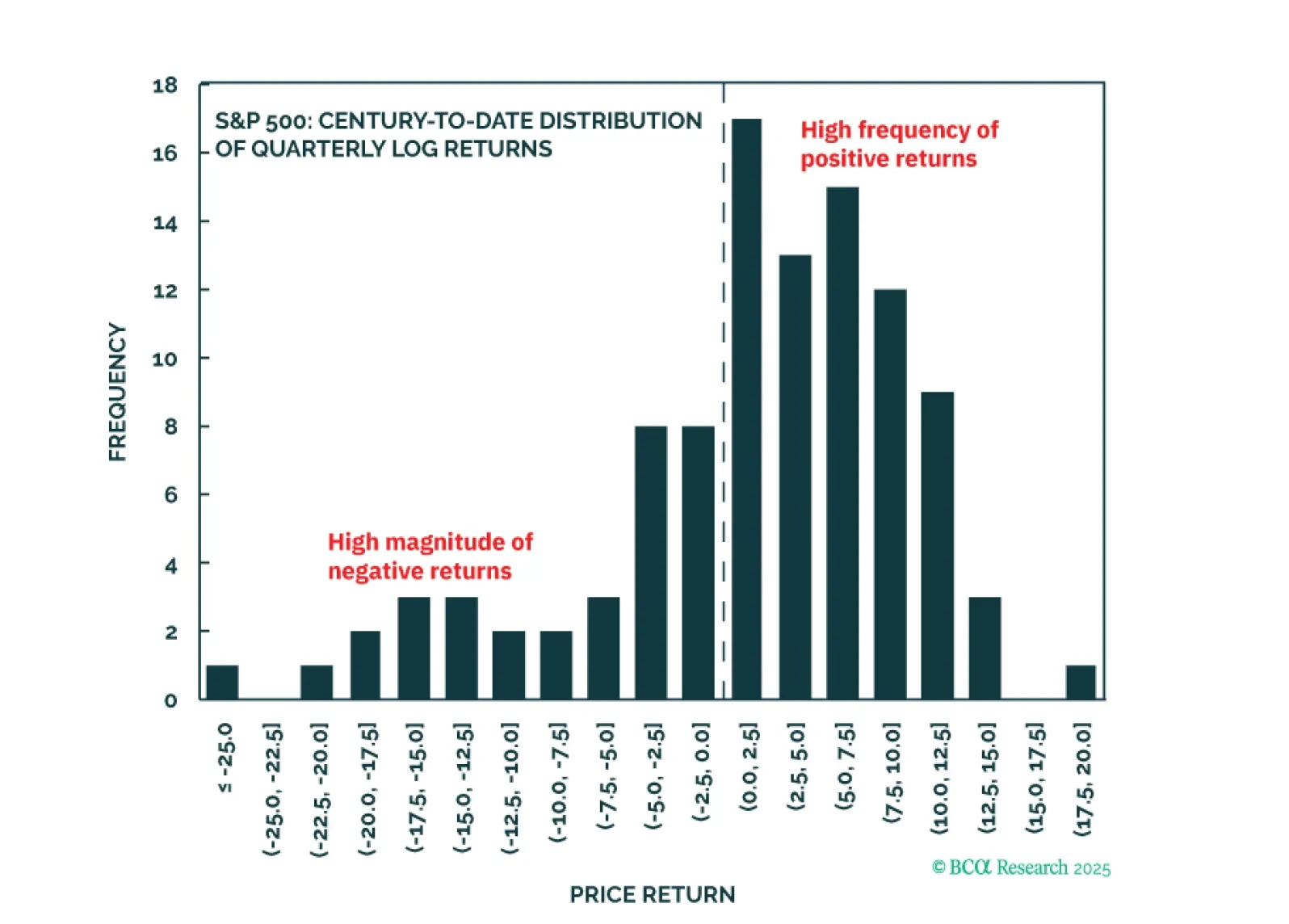
Asset allocators must pay attention not only to the magnitude of an asset’s expected returns but also to its shape, a concept technically known as skew. Adding skew into our analysis moves our equity allocation up to neutral while bonds remain at underweight. Plus: a new tactical trade is to buy sugar.

Agriculture commodity prices have been on a steady decline for over a year. Since peaking in mid-May 2022, the GSCI Agriculture index has dropped by 34% -- nearly half of which occurred in 2023. The weakness is generally broad-based. Corn prices are down 32%,…
Highlights The tactical environment is dynamic, chaotic and unpredictable. ...Chaos also brings opportunity. We must recognize and exploit opportunities when chance presents them. Look for recurring patterns to exploit.1 Feature Highlights Strategically, major commodity markets are balanced with the exception of ags, where we remain underweight on the back of record grain harvests and high stock-to-use ratios. Otherwise, broad exposure to the asset class is warranted. However, within the larger investment context, we believe tactical positioning once again will produce higher returns than strategic index exposure to commodities. Chart of the WeekTactical Positioning ##br##Rewarded In Oil Markets Tactical Positioning Rewarded In Oil Markets Tactical Positioning Rewarded In Oil Markets Supply-driven price volatility and erratic monetary policy presented commodity markets strategic and tactical opportunities in 2016, particularly in oil, where our recommendations returned an average of 95% (Chart of the Week). We remain overweight oil, expecting continued opportunities from volatile markets. Going forward, the contribution of demand-side risk to price volatility will increase. This will be evident in iron ore, steel and base metals, where the opacity of China's fiscal and monetary policy - especially re heavily indebted state-owned enterprises (SOEs) and the banks that support them - in the lead-up to the Communist Party's Congress abounds. Continued adjustments by the U.S. Fed to random-walking data will again contribute to volatility, particularly in oil and gold markets. A stronger dollar resulting from continued Fed tightening will hit U.S. ag exports, and benefit competitors such as Argentina and the EU. However, uncertainty re the Trump administration's fiscal and trade policies could keep the Fed looser for longer, particularly if border-adjusted taxation favoring exports over imports is realized. Geopolitics - particularly vis-à-vis U.S. and China trade and military policy - will become more important if America tilts toward dirigisme, i.e., actively managing its economy by adjusting taxation and policy to support favored industries. Governments typically allocate resources inefficiently, which distorts fundamentals. If border-adjusted taxation becomes law in the U.S. we will look to get long volatility across commodity markets: Such legislation likely would rally the USD, which would lower global demand for commodities generally and lift supply by lowering local costs. This would run smack into higher U.S. inflation arising from the increasing cost of imported goods. This is a recipe for heightened uncertainty and price volatility. Russia lurks in the background: U.S. sanctions in the wake of alleged interference in American presidential elections, and Russia's response, will keep oil markets on edge. 2017 Weightings Energy: Overweight. The OPEC-Russia co-operation pact to limit production could evolve into a durable modus operandi for managing oil supply. Markets will judge the pact effective if tanker chartering out of the Persian Gulf falls, and global inventories draw by mid- to end-February. Base Metals: Neutral. Bulks and base metals prices will remain rangebound, until greater clarity on China's fiscal and monetary policy emerges. Fiscal stimulus in the U.S. will have a marginal effect on demand toward year-end. Precious Metals: Neutral. Gold will remain sensitive to shifts in U.S. fiscal and monetary policy expectations. The possibility of border-adjusted taxes in the U.S. will hang like the proverbial Sword of Damocles over the gold market. Should it pass, the Fed could be forced to keep interest rates lower for longer to offset the massive tightening in financial conditions such a tax would impose. Ags/Softs: Underweight. We see limited downside for grains, despite record harvests. We favor wheat and rice over corn and beans. A stronger USD will be bearish for grain exports. Feature Commodities as an asset class remain attractive. However, constantly changing information flows affecting these markets compel us once again to favor tactical positioning over a broad strategic exposure to the asset class. Fundamentals - supply, demand, inventories - and financial variables remain in a state of flux. In the oil market, the durability of the OPEC-Russia co-operation pact to reduce oil production will be tested, following a year-end surge in global production. Markets will closely follow shipping activity - particularly out of the Persian Gulf - and global oil inventory levels for signs the production cuts engineered late last year by OPEC, led by the Kingdom of Saudi Arabia (KSA), and non-OPEC producers, led by Russia, are taking hold. Uncertainty regarding the incoming Trump administration's tax and trade policies - and responses from states targeted by such policies (e.g., China and Mexico) - will keep decisions affecting supply and demand fluid. The incoming Trump administration's trade policies could alter global oil flows: e.g., a re-working of NAFTA that reduces U.S. refined-product exports to Latin America would result in lower demand for crude at American refineries, and present an opening to Chinese refiners. In addition, as mentioned above, legislation authorizing border-adjusted taxes favoring exports and penalizing imports likely will be taken up this year in the U.S. Congress. If we did see tax policy favouring U.S. exports over imports, we believe it would prompt a USD rally via reducing America's current account deficit. This would, all else equal, send commodity prices sharply lower, as EM commodity demand will contract, owing to higher USD prices for commodities, and production ex U.S. will increase, due to lower local costs. That said, border-adjusted taxation in the U.S. also would increase the price of imports, and lift realized and expected inflation. How this plays out is highly uncertain at present. A border-adjusted tax bill likely will be taken up in the current session. If it passes, it would have major implications for pricing relationships globally - chiefly WTI vs. Brent, and Brent vs. Dubai crudes, along with product differentials that drive shipping economics. If such a bill looks like it will pass, we expect a sharp increase in commodity-price volatility globally. If the odds do favor such a tax regime shift, we would look to get long WTI and short Brent further out the curve, expecting higher U.S. exports and lower imports. In addition, we would look to get long gold volatility - buying puts and calls - as policy uncertainty effects resolve themselves. Heightened Uncertainty Means Tactical Positioning Once Again Trumps Passive Commodities Allocation The primacy of tactical positioning was demonstrated in 2016 in the oil market, when strategic positions quickly became tactical, either because they were stopped out or reached their P&L targets quicker than expected. Supply destruction dominated price formation last year, following OPEC's decision to abandon its strategy to support prices via production management in November 2014. This destruction occurred mostly in non-Gulf OPEC, which was down 7.0% yoy in 2016 (Chart 2), and non-OPEC producers, particularly the U.S. shale-oil fields, where yoy production was down 12.0% by year-end 2016 (Chart 3). Chart 2Low Prices Crushed Non-Gulf Production... Low Prices Crushed Non-Gulf Production ... Low Prices Crushed Non-Gulf Production ... Chart 3...And U.S. Production ... and U.S. Production ... and U.S. Production Even in states where production increased - chiefly KSA and Russia (Chart 4) - domestic finances crumbled, leaving them in dire straits. By our estimates, between July 2014, just prior to its decision to launch OPEC's market-share war, and December 2016, KSA had burned through $220 billion of it foreign reserves, equivalent to 30% of its central-bank holdings. Russia had drawn down its official reserves by $77 billion over the same period, or 16% of its holdings; its burn rate was reduced by allowing its currency to depreciate, which lowered the local cost of producing oil and boosted profitability of exports priced in USD. This was the background that forced OPEC, led by KSA, and non-OPEC, led by Russia, to negotiate the year-end pact that resulted in an agreement to cut production by up to 1.8 mm b/d. The stated volumes to be cut are comprised of 1.2 mm from OPEC, 300k b/d from Russia, and another 300 from other non-OPEC producers. The goal of this agreement is to reduce global oil inventories to more normal levels (Chart 5). Chart 4KSA, Russia Production Ramp ##br##Exacerbated Price Weakness KSA, Russia Production Ramp Exacerbated Price Weakness KSA, Russia Production Ramp Exacerbated Price Weakness Chart 5KSA-Russia Production Pact Aimed ##br##At Lowering Inventories KSA-Russia Production Pact Aimed at Lowering Inventories KSA-Russia Production Pact Aimed at Lowering Inventories Throughout 2016, as the supply-destruction drama was unfolding, numerous opportunities opened up to investors to fade market overshoots, brought about by over-reactions to fast-moving news flows. Unrestrained output by OPEC and non-OPEC producers strained oil-storage facilities early in the year, taking markets to the brink of breaking down entirely. Unexpected shifts in U.S. monetary policy - driven by random-walking data - also contributed to oil price volatility and opened numerous trading opportunities. Markets essentially ignored the cumulating right-tail price risks last year, following the supply destruction wrought by OPEC's declaration of a market-share war, and Russian overtures to OPEC seeking a production-allocation dialogue, which were very much in evidence in January 2016. The continual OPEC-Russia dialogue, which appeared to be bearing fruit in Doha before it was scuppered by KSA at the last minute in April, was the underlying geopolitical driver last year, and kept the odds of a production deal elevated. Based on our modeling, the supply surge following OPEC's decision made getting long contingent upside price exposure extremely compelling, particularly as it imperiled the finances of all oil producers - rich and poor, but mostly the poorer states like Venezuela and Nigeria. Our reasoning was lower prices would accelerate rebalancing of global markets and raise the odds of a major supply disruption at one of these failing states.2 Our modeling consistently indicated global oil markets would rebalance in 2016H2.3 Ultimately, this is how things played out, aided in no small measure by mid-year wildfires in Canada, which temporarily removed move than 1mm b/d from global markets, and sabotage of pipelines and loading facilities in Nigeria. Even with that, markets remained under pressure as Canadian barrels returned, and foreign reserves in KSA and Russia were rapidly depleted. These fundamentals, along with constantly changing Fed guidance, provided numerous opportunities to exploit recurring patterns thrown up by chance, as is evident in the returns on recommendations we made - averaging 95.1% last year - that naturally followed from our analysis (Table 1). Our favored exposure was getting long contingent exposure (i.e., options), using deferred call spreads in WTI and Brent, given our assessment the odds of higher prices exceeded the market's. Later in the year, following the OPEC-Russia pact, we got long a front-to-back crude oil spread (Dec/17 WTI vs. Dec/18 WTI) expecting the goal of the deal - reducing global inventories - stood a good chance of being realized. We got lucky putting the trade on as the market was correcting, but just ahead of the statement by KSA's oil minister that the Kingdom would do "whatever it takes" to make the deal work. This transformed a strategic position - one we expected to hold for months - into a one-week exposure that returned 493% (Table 1). Table 1Energy Trades Closed In 2016 Tactical Focus Again Required In 2017 Tactical Focus Again Required In 2017 In order to obtain a more detailed assessment of our energy portfolio's performance, we built an information ratio (IR) to evaluate how our energy recommendations performed compared to a selected benchmark, the S&P GS Commodity Index (GSCI). Essentially, our IR is used to assess whether an active portfolio has outperformed the selected benchmark in a consistent manner during the period of analysis, given the risk it incurred. To that end, our ratio looks at the average excess return of the active portfolio against the benchmark. This average excess return is then divided by its standard deviation (also referred to as the tracking error volatility) in order to get a risk-adjusted metric to evaluate whether the risk we took were compensated by the returns we generated. Our IR thus is calculated as: Formula Tactical Focus Again Required In 2017 Tactical Focus Again Required In 2017 The higher the IR, the better the risk-adjusted relative performance of the portfolio. Three elements can explain a high IR: high returns in the portfolio, low returns in the benchmark, or low tracking error volatility. Hence, this measure helps analyzing the notion of risk-reward tradeoff; it tells us whether or not the risk assumed in our trades was compensated by larger returns. In our case, to get the risk-adjusted returns of the energy portfolio, we selected the GSCI as a benchmark, as it is heavily skewed towards Energy commodities (around 60% of its composition). We believe this is a plausible benchmark alternative to our energy trade recommendations for an investor, whose choice is passive index exposure with a significant energy weighting. Our portfolio's average return in 2016 was 95%, while the GSCI return was 11%. The tracking error volatility was 56%.4 Using these inputs, we calculated the IR of our recommendations was 1.47. This is an excellent risk-adjusted return, and indicates the high volatility of our returns was more than compensated for by consistent positive excess returns our recommendations generated relative to passive GSCI exposure, which also can be used as a benchmark for energy-heavy commodity index exposure (i.e., "commodity beta"). Remain Overweight Oil We expect the combination of production cuts and natural declines will remove enough production from the market this year to restore global oil stocks to five-year average levels toward the end of 2017Q2 or early Q3 (Chart 5), even with cheating by OPEC and non-OPEC producers capable of increasing production. As a result, in 2017, we expect the OPEC-Russia deal to result in inventory draws of ~ 10% by 2017Q3. On the demand side, we continue to expect global growth of ~ 1.3 to 1.5mm b/d. Given these expectations, we expect U.S. benchmark WTI crude prices to average $55/bbl, up $5 from our 2016 forecast, on the back of the end-year OPEC-Russia pact. We are moving the bottom of the range in which we expect WTI prices to trade most of the time to $45/bbl and keeping the upside at $65/bbl. Markets already are pricing in a normalization of global inventories by year end (Chart 6 and Chart 7). We will look for opportunities to re-establish our long front-to-back positions, expecting the backwardation further out the curve will steepen. Chart 6Backwardation Steepening Near Term... Backwardation Steepening Near Term ... Backwardation Steepening Near Term ... Chart 7...And Further Out the Curve ... And Further Out the Curve ... And Further Out the Curve Further out the curve - i.e., mid-2018 and beyond - our conviction is lower: The massive capex cuts seen in the industry for projects expected between 2015 - 2020 will place an enormous burden on shale producers and conventional oil producers, chiefly Gulf Arab producers and Russia. It will be difficult to offset natural decline-curve losses - which will increase as U.S. shales account for a larger share of global supply - and meet increasing demand. As we've often noted, any indication U.S. shales or conventional supplies (Gulf states and Russian production) will not be able to move quickly enough to meet growing demand and replace natural declines could spike prices further out the curve. We expect U.S. oil exports to increase this year, which means the international benchmark, Brent crude oil, will increasingly price to move WTI into global markets. We expect U.S. WTI exports to increase from an average ~ 500k b/d, which should keep the price differential roughly around +$1.50/bbl differential (Brent over) for 2017. If we see border-adjusted taxation laws take effect, we would look to get long WTI vs. short Brent, and long U.S. products (e.g., U.S. Gulf gasoline and distillate exposure) vs. short Brent exposure. Remain Neutral Bulks, Base Metals Over in the bulks and base metals markets, a full-fledged iron-ore market-share war at the beginning of last year threatened to take prices to $30/ton. Then, seemingly out of the blue, an unexpected pivot by Chinese policymakers toward stimulating the "old economy" caught many bulks and base-metals traders and analysts - ourselves included - flat-footed. Powerful rallies in iron ore, steel and base metals early in the year on Chinese exchanges were dismissed as irrational exuberance on the part of retail investors. But, at the end of the day, these market participants were responsible for well-informed price signals that fully reflected low inventories and surging demand.5 The -0.5% average return in our bulks and base metals recommendations last year attests to how difficult we found these markets to read and anticipate (Table 2). Table 2Base Metals Trades Closed In 2016 Tactical Focus Again Required In 2017 Tactical Focus Again Required In 2017 As always, the evolution of China's economy will, as always, be critical to these markets, given that country's outsized role in iron ore, steel and base metals. We are broadly neutral the complex, and, with the exception of the nickel market, see supply and demand relatively balanced to slightly oversupplied globally and in China. Production globally and in China is growing yoy, while consumption shows signs of slowing. (Chart 8 and Chart 9). Chart 8World Base Metals Consumption Slowing,##br## Relative to Production... World Base Metals Consumption Slowing, Relative to Production ... World Base Metals Consumption Slowing, Relative to Production ... Chart 9...As Is ##br##China's ... As Is China's ... As Is China's Uncertainty re the direction of China's fiscal and monetary policy - chiefly, whether policymakers will, once again, resort to stimulating the "old economy" - will keep us broadly neutral bulks and base metals until we get further clarity on the direction of policy. We expect the monetary and fiscal stimulus that massively boosted China's housing market this year will wind down, bringing an end to the run-up in iron ore, steel and base metals prices. Odds favor "reflationary" policies to continue going into the Communist Party Congress next fall, but we do not expect anything along the lines of the surge in policy stimulus seen earlier this year: Unwinding and controlling property-market excesses and high debt levels will limit policymakers' desire to turbo-charge the housing market again, limiting the boost such policies provide. The fate of border-adjusted taxation in the U.S. Congress is critically important to bulk and base-metals markets, since it would encourage exports and discourage imports (along with raising their prices). Tax policy favouring U.S. exports over imports likely would prompt a USD rally, which would send commodity prices generally sharply lower. It would boost U.S. steel production and base metals exports, while raising the cost of imports. A border-adjusted tax bill likely will be taken up in the current session of Congress. We are downgrading our tactically bullish view on iron ore to neutral. Strategically, we retain a bearish bias, as rising iron ore supply may overwhelm the market again in 2017H2. We remain tactically neutral and strategically bearish steel. Low steel inventories and production disruptions caused by China's recently launched environmental inspection program likely will continue to support steel prices in the near term. However, persistently high steel output and falling demand from the Chinese property sector will eventually knock down prices in 2017H2. Manufacturing will play a larger role in copper markets, and will drive the demand side this year. However, if we see a stronger USD - either as a result of Fed policy or U.S. fiscal policy - price appreciation will be limited. We remain neutral copper, expecting a concerted effort to slow the housing boom in China. Reflationary policies will still support real demand for copper, but will reduce demand from new construction. The supply deficit in nickel will widen on the back of rising stainless steel demand and falling nickel ore supply in 2017, which will support prices. We expect nickel will outperform zinc over a one-year time horizon. For zinc, we remain tactically neutral and strategically bearish. We expect zinc supply to rise considerably in response to current high prices. Aluminum supply - for the moment - will lag demand globally, which keeps us tactically bullish and strategically neutral. Supply shortages will likely persist ex-China over the next three to six months. Stay Neutral Precious Metals Precious metals, gold in particular, staged an impressive rally on the back of unexpected easing by the U.S. Fed in response to weaker-than-expected sub-1% GDP growth in 1Q16 GDP. Markets had been pricing in as many as four interest-rate hikes earlier in the year into short-term expectations, which were quickly dashed. Markets lowered their expectations for multiple rate hikes last year, which weakened the USD and U.S. real rates, setting the stage for the gold rally. Nonetheless, gold proved a difficult commodity to trade last year, as our results indicate - the average return on our precious metals recommendations amounted to a paltry -0.65% (Table 3). For the near term - i.e., until greater clarity on Fed policy and the incoming Trump administration's fiscal policy direction becomes clear - we remain neutral precious metals, and will avoid taking any further exposure other than perhaps getting long gold volatility - i.e., buying puts and calls in the gold market - if the odds of border-adjusted taxation legislation passing increase. Such legislation likely would rally the USD, which would lower global demand and increase supply ex U.S. at the margin for commodities generally, oil and base metals in particular. This would be deflationary, given the high correlations between oil and base metals consumption and U.S. inflation (Chart 10).6 However, such a taxation scheme also would raise U.S. inflation by increasing the cost of imported goods, sending the U.S. core PCE, the Fed's preferred inflation gauge, higher. The global disinflationary impulse from a stronger USD would run headlong into higher U.S. inflation, which would be a recipe for heightened uncertainty and price volatility. Table 3Precious Metals Trades ##br##Closed In 2016 Tactical Focus Again Required In 2017 Tactical Focus Again Required In 2017 Chart 10Risk of Deflation Will Rise If Border-Adjusted ##br##Taxes Prove Deflationary Risk of Deflation Will Rise If Border-Adjusted Taxes Prove Deflationary Risk of Deflation Will Rise If Border-Adjusted Taxes Prove Deflationary This will complicate U.S. monetary policy. We believe the Fed also will be waiting on such direction, and that interest-rate policy will, therefore, remain pretty much be on hold, keeping precious metals - gold, in particular - rangebound. For the moment, the possibility of border-adjusted taxes in the U.S. will hang like the proverbial Sword of Damocles over the gold market. We are taking profits on the tactical long gold position we opened December 15, 2016, as of today's close. Remain Underweight AGS Lastly, Ag markets provided us no joy, as the El Nino wreaked havoc on our recommendations. Our average -1.0% return for the year amply demonstrates the difficulty of trading markets so heavily influenced by weather (Table 4). Going into 2017, we believe there is a limited downside for grains. The downtrend since August 2012 like forms a bottom this year, if, as we are modeling, we see a return to normal weather conditions. That said, the principal upside risk remains unfavorable weather in major grain-producing countries, which could send badly battered grain prices surging as they did in 2016H1. Among grains, we favor wheat and rice over corn and soybeans. Global soybean acreage is likely to expand as the crop provides higher returns than other grains. South American corn output will continue rising on favorable policies and weak currencies, adding further pressure to already-high U.S. corn inventories, in particular, and global inventories globally (Chart 11). Table 4AGS Trades Closed In 2016 Tactical Focus Again Required In 2017 Tactical Focus Again Required In 2017 Chart 11Global Grain Inventories Remain High Global Grain Inventories Remain High Global Grain Inventories Remain High Softs - cotton and sugar - likely will underperform grains in 2017, reversing their outperformance this year. We are tactically bearish cotton, as U.S. cotton acreage is likely to increase next spring. Strategically, we are neutral cotton. For the global sugar market, barring extremely unfavorable weather, we are tactically and strategically bearish. This year's extreme rally in prices may result in a small supply surplus in 2017. Our Ag strategies will continue to focus on relative-value investments. Robert P. Ryan, Senior Vice President Commodities & Energy Strategy rryan@bcaresearch.com Hugo Belanger, Research Assistant hugob@bcaresearch.com 1 Please see "Tactics Cliff Notes; A Synopsis of MCDP 1-3 Tactics," published by the United States Marine Corps, Marine Corps Warfighting Lab, Marine Corps Combat Development Command, Quantico, Virginia. 10 May 1998 (pp. 2, 3. sf). 2 In our January 7, 2016, publication we noted investors were ignoring growing upside price risk and suggested they get long a Dec/16 $50/$55 WTI call spread to gain exposure to higher volatility. We also recommended remaining long Dec/16 and Dec/17 WTI vs. Brent following passage of legislation to allow U.S. crude exports. We ultimately took profits on these recommendations of 172% on the call spread in June, and 97% on the Dec/16 WTI vs. Brent spread in June, and 88% on the Dec/17 WTI vs. Brent spread in July, respectively (Table 1). Please see "Oil Market Ignores Right-Tail Saudi Risks" in the January 7, 2016, issue of BCA Research's Commodity & Energy Strategy, which is available at ces.bcaresearch.com. 3 In our January 21, 2016, Commodity & Energy Strategy article entitled "Global Oil Sell-off Will Accelerate Rebalancing," we noted, "We expect oil markets to rebalance by late 2016Q3 or early Q4. We remain long Dec/16 $50 calls vs. $55 calls, in anticipation of rebalancing and as a hedge against geopolitical risk." 4 Note: In order to find the standard deviation of the portfolio's excess returns (tracking error volatility), we averaged the daily percentage change in each trade's underlying assets. Any given trade only weighed in the daily average return if it was open during that day of the year. We are not accounting for the type of trades (spreads, pairs or single trades), we only track the underlying asset returns. From these daily average returns we subtracted the daily return of the preferred benchmark to obtain the daily excess return. Using this, we computed an historical standard deviation (based on 20-day periods) for every day during which a trade was open in our portfolio (we had 203 days with at least one energy trade opened). Lastly, we annualized this standard deviation to obtain our tracking error volatility. 5 Please see "Dead-Cat Bounces Notwithstanding, Iron Ore Will Trade Lower" in the January 21, 2016 issue of BCA Research's Commodity & Energy Strategy, and "Fade The Copper Rally" in the February 25, 2016 issue. Both are available at ces.bcaresearch.com. 6 In earlier research, we've shown U.S. core PCE inflation is highly correlated with EM oil and base metals demand. Please see "2017 Commodity Outlook: Precious Metals" published December 15, 2016. Investment Views and Themes Recommendations Strategic Recommendations Tactical Trades Commodity Prices and Plays Reference Table Trades Closed In 2017 Tactical Focus Again Required In 2017 Tactical Focus Again Required In 2017
Dear Client, We are pleased to present our 2017 Outlook for Grains & Softs, covering corn, wheat, soybeans and rice in the grain markets, and cotton and sugar. This is our last regular Weekly Report for the year. You should have received BCA's annual "Mr. X" interview on December 20, and we trust you found it stimulating and insightful. We will resume regular publishing on January 5th with our annual Review and Outlook summarizing the performance of our market recommendations for 2016, with an eye on where we see value going into the New Year. As a preview, the average return on our recommendations this year was 33.1%, led by our Energy recommendations, which were up an average 95.1% in 2016. Please see page 15 of this week's report for a summary. The Commodity & Energy Strategy team wishes you and yours a wonderful holiday season and a prosperous New Year. Turning to the Ags, we believe there is a limited downside for grain prices in 2017. The downtrend since August 2012 may form a bottom next year under the assumption of normal weather conditions. However, the principal upside risk remains unfavorable weather in major grain-producing countries, which could send badly battered grain prices surging as they did in 2016H1. Among grains, we favor wheat and rice over corn and soybeans. Global soybean acreage is likely to expand as the crop provides higher returns than other grains. South American corn output will continue rising on favorable policies and weak currencies, adding further pressure to already-high U.S. corn inventories. Softs - cotton and sugar - likely will underperform grains in 2017, reversing their outperformance this year. We are tactically bearish cotton, as U.S. cotton acreage is likely to increase next spring. Strategically, we are neutral cotton. For the global sugar market, barring extremely unfavorable weather, we are tactically and strategically bearish. This year's extreme rally in prices may result in a small supply surplus in 2017. Our Ag strategies will continue to focus on relative-value investments. We have three investment strategies: We look to go long wheat versus cotton, long corn versus sugar, and long rice versus soybeans. Kindest regards, Robert P. Ryan, Senior Vice President Chart 1Ag In 2017: A Reversal Of Grain ##br##Underperformance? bca.ces_wr_2016_12_22_c1 bca.ces_wr_2016_12_22_c1 Feature Limited Downside For Grains; Softs ... Not So Much As of December 20, the CCI grain index had declined 0.3% since the beginning of this year. In comparison, sugar and cotton prices rallied 19.8% and 9.6% during the same period of time, respectively. For individual grains, soybean prices were up 15.4%, while corn, wheat and rice declined 2.4%, 14.2% and 18.2%, respectively. Cotton and sugar outperformed grains considerably this year (Chart 1, panel 1). Among grains, soybeans had the best run, while wheat and rice had the worst (Chart 1, panel 2). Going forward, the question is: Will these trends continue into 2017, or is a reversal likely to occur? For now, we cannot rule out the possibility of a continuation of these trends, but a reversal is possible, depending on weather conditions. We will tread water carefully and re-evaluate our calls next April when U.S. farmers' planting decisions are made, and the outlook for the South American soybean and sugar harvests become clearer. Grains In 2017: Likely Bottoming With Potential Upside We believe there is limited downside for grain prices in 2017. Four consecutive years of supply surpluses have driven grain prices down by more than 50% since August 2012, when grain prices reached all-time highs (Chart 2, panels 1 and 2). In the meantime, global grain inventories also rose to their highest levels since 2002 (Chart 2, panel 3). True, it is difficult to get bullish on such elevated inventories. Another year of supply surpluses obviously would send prices lower. Will that happen? No doubt, it could. But we believe the odds are fairly low. A Dissection Of This Year's Supply Increase Global grain output grew 5.2% this year, the second highest rate of growth since 2005. Yield growth, mainly due to extremely favorable weather, contributed 87% of the supply increase, while acreage expansion accounted for the rest (Chart 3, panels 1 and 2). Chart 2Grain: Too Much Supply In 2016... bca.ces_wr_2016_12_22_c2 bca.ces_wr_2016_12_22_c2 Chart 3...Less Supply in 2017? bca.ces_wr_2016_12_22_c3 bca.ces_wr_2016_12_22_c3 Now, with yields of corn, soybeans and wheat all at record highs, and rice yields near their record highs, grain yields are more likely to have a pullback than a continuation of growth in 2017. If global grain yields revert to their trend line as the third panel of Chart 3 suggests, global grain yields will decline 1.4% in 2017. This year, the world aggregate harvested grain acreage only grew 0.7%. Currently low grain prices are discouraging grain plantings, while new supportive policies in Argentina and a strengthening dollar are likely to encourage grain sowing in the southern hemisphere. Taking all related factors into account, we expect a 0.2 - 0.5% expansion in global grain acreage next year. Based on our analysis, we believe world grain output is likely to decline about 1% next year, assuming normal weather conditions. On the other side of the ledger, global grain demand has been growing steadily over the past 30 years (Chart 3, panel 4). Last year demand grew 3.4%. In 2017, low prices likely will boost consumption. Therefore, we expect similar growth in global grain demand next year. In the current crop year, the global grain market has a supply surplus of 55 million metric tons (mmt). Based on our calculations, given the assumptions we've outlined above, a 1% decline in global grain output coupled with 3.4% growth in global grain demand will swing the grain market into a supply deficit of 58 mmt. If we assume a more conservative scenario in which global grain output does not decline at all, a 2.2% rate of growth in global consumption still will send the global grain market into a supply deficit. The odds of seeing this scenario unfold are relatively high, given that the average growth in global grain consumption was 2.5% over the past 10 years, and 2.9% over the past four years, when grain prices were mired in a downtrend. We believe this would clearly be positive to global grain prices. Considering the elevated global grain inventories and the expected supply deficit we foresee, we believe, even if prices do not move to the upside, the downside for grain prices should be at least limited in 2017 as inventories are drawn down. In addition to the supply deficit, rising oil prices are supportive to grain prices as well. All else equal, higher oil prices will increase the production cost of grains. Bottom Line: We expect limited downside for grain prices next year. The 2017 Outlook For Individual Grains Corn, soybeans, wheat and rice prices are highly correlated with each other (Chart 4, panel 1). In terms of end consumption, they can all be consumed as either human food or animal feed. In terms of supply, farmers rotate among these crops depending on their profit outlook, soil conditions, and government policies. In 2017, we believe wheat and rice likely will outperform corn and soybeans, for two reasons: Crop-rotation economics and inventories. Chart 4Wheat & Rice May Outperform ##br##Corn & Soybeans In 2017 bca.ces_wr_2016_12_22_c4 bca.ces_wr_2016_12_22_c4 Firstly, global acreage rotation still favors soybeans most, then corn, over wheat and rice. If we rebase grain prices back to the beginning of 2006, corn and soybean prices are currently 62% and 67% higher than they were at the start of this interval. In comparison, wheat and rice prices are only 19% and 16% higher, respectively (Chart 4, panel 1). The U.S. is the world's biggest corn exporter, the second-largest soybean and wheat exporter. Informa Economics, a private consulting firm, projects 2017 soybean plantings will rise 6.2% to 88.862 million acres, while corn and winter wheat plantings will fall 4.6% and 8.1% to 90.151 million acres and 33.213 million acres, respectively. If these projections are realized, the 2017 U.S. winter wheat planted acreage will be the lowest since 1911. Winter wheat accounts for about 70% of U.S. total wheat production. Secondly, wheat and rice inventories ex-China declined, while corn and soybean inventories ex-China increased. Yes, it is true that the world wheat and rice stocks-to-use ratios rose to the highest since 2002 and 2003, respectively. (Chart 4, panel 2). But this does not show the full picture for these markets: 58% of global rice inventories and 44% of global wheat inventories are in China, even though that country accounts for only 12% of global rice imports and 2% of global wheat imports. China is unlikely to export these inventories to the world: the country tends to hold massive grain inventories, in order to prevent domestic food crises. This means that global wheat and rice importers outside China, which account for about 88% of the global rice trade and 98% of the global wheat trade, will compete for inventories outside China. The third panel of Chart 4 shows the rice stocks-to-use ratio for the ex-China world has already dropped to its lowest level since 2008, while the wheat stocks-to-use ratio ex-China already has declined for two years in a row. This is positive for wheat and rice prices. In comparison, the soybean and corn stocks-to-use ratios ex-China looks much less promising. Both ratios are at or near record highs (Chart 4, panel 3). China only accounts for 2% of the global corn trade, therefore corn importers outside China will have more abundant supplies available to them in 2017. China is the largest buyer of soybeans, accounting for 63% of the global soybean trade. The country will have more bargaining power, on the back of increasing competition among major soybean exporters (the U.S., Brazil and Argentina). In the meantime, China's central policy is currently focused on encouraging domestic soybean plantings mainly at the cost of corn, which is negative for global soybean prices and good for global corn prices. In 2016, the corn acreage in China fell for the first time since 2004 while its soybean acreage jumped 9.1% - the largest increase since 2001 (Chart 4, panel 4). Chart 5Downside Risks To Grains bca.ces_wr_2016_12_22_c5 bca.ces_wr_2016_12_22_c5 Downside Risks To Our Grain View Grain prices could decline more than 10% from current levels next year, if favorable weather results in a slight drop (less than 1.4%) or even an increase in global grain yields. Also, if grain prices rise significantly in 2017H1 - for whatever reason - this likely would spur plantings and depress prices. If either of these events transpire, we will re-evaluate our grain view. A strengthening dollar is also a major risk to our view. BCA's Foreign Exchange Strategy expects a further 5%-7% appreciation in U.S. dollar in 2017. We believe most of the negative effects of a strengthening dollar already are reflected in depressed grain prices, as the U.S. dollar has already appreciated 36% since July 2011. At the end of last week, the U.S. dollar was only 2% lower than all-time highs reached in February 2002 (Chart 5, panel 1). Another risk to watch is acreage expansion in Argentina, Brazil and the Former Soviet Union (FSU) region. All of these countries/regions had massive currency depreciations and supportive agricultural policies this year, especially in Argentina (Chart 5, panels 2, 3 and 4). However, our calculations show that for corn and wheat, acreage increases in these countries/regions are mostly offset by declines in the U.S. With an expectation of a continuing decline in U.S. wheat and corn plantings, we expect an insignificant growth in overall global wheat and corn acreage. For soybeans, however, the acreage expansion could pose a downside risk as all top three producers (the U.S., Brazil and Argentina) are likely to increase their plantings. We will re-evaluate the grain market at the end of March, when the U.S. posts its planting intentions for all major crops. Softs In 2017: Less Positive Than Grains Both cotton and sugar prices had strong rallies in 2016, following the second consecutive year of supply deficits (Chart 6). Global cotton acreage has declined 19% during the past five years when cotton prices fell significantly from peak prices in 2011. This is the main reason for the 18.3% decline in global cotton production during the same period of time and also for the two consecutive years of supply deficit in 2015 and 2016. For sugar, the El Niño phenomenon that ended this past summer hurt sugar plantings and crop development in major producing countries (Brazil, India, China and Thailand) in both 2015 and 2016, resulting in two years of supply deficit and a supercharged rally in 2016 sugar prices. Both cotton and sugar prices fell from their 2016 highs, with a 9.6% drop for cotton and a 23.4% decline for sugar. However, we are still tactically bearish on both commodities as speculators' net long positions are still crowed (Chart 7). Chart 6Cotton & Sugar: Supply Deficit in 2016 bca.ces_wr_2016_12_22_c6 bca.ces_wr_2016_12_22_c6 Chart 7Cotton & Sugar: Crowed Net Long Spec Positions bca.ces_wr_2016_12_22_c7 bca.ces_wr_2016_12_22_c7 Strategically, we are neutral cotton and bearish sugar. For cotton, global demand will stay sluggish in 2017. Even though there has been no growth at all in global cotton demand for the past three years, the bad news is that there still are no signs of improvement in global textile demand (Chart 8). On the supply side, global cotton output may rise significantly next year, if farmers shift some of their grain acreage to cotton due to a better profit profile for cotton (Chart 9). We believe, barring extreme weather, the global cotton market will become more balanced next year, leaving us neutral in our price outlook. For sugar, with weather patterns back to normal and the extreme rally in prices this year, sugar output in India, Thailand, China and the EU (European Union) should receive a strong boost. In addition, a strengthening U.S. dollar will also encourage sugar production in those countries whose currency had massive depreciation like Brazil, Russia and India (Chart 10). Chart 8Cotton: Demand Does Not Look Good bca.ces_wr_2016_12_22_c8 bca.ces_wr_2016_12_22_c8 Chart 9Cotton: Supply Will Increase In 2017 bca.ces_wr_2016_12_22_c9 bca.ces_wr_2016_12_22_c9 Chart 10Sugar Production Will Recover bca.ces_wr_2016_12_22_c10 bca.ces_wr_2016_12_22_c10 On the demand side, average global sugar consumption growth was only 1.3% p.a. during 2013-2015, even though average sugar prices declined every year during that period. This year, global demand growth slowed to only 0.6%, as average sugar prices were 35% higher than last year. If sugar prices go sideways, the average prices will still be higher than this year, which may result in an even slower growth in global sugar demand. Given an extremely oversupplied corn market, cheaper corn syrup will replace sugar in its industrial uses. Chart 11Ag Investment Strategies: ##br##Focus On Relative-Value Trades bca.ces_wr_2016_12_22_c11 bca.ces_wr_2016_12_22_c11 Our calculations indicate the global sugar market is likely to have a supply surplus next year, which will be a big shift from this year's supply deficit. This likely will pressure sugar prices lower. Upside Risks To Our Softs View Both the cotton and sugar markets are still in supply deficits, which means any unfavorable weather in the major producing countries could send prices sharply higher. For sugar, Brazilian sugarcane mills could favor ethanol production instead of sugar in 2017 if the country keeps hiking gasoline prices and promotes ethanol consumption. So far, the sugar/ethanol price ratio in Brazil still favors sugar production. This can change quickly if ethanol prices in Brazil rise faster than sugar prices in 2017. We will monitor this risk closely. Investment Strategy Our Ag strategies continue to focus on relative-value investments. As such, we look to go long wheat versus cotton, long corn versus sugar, and long rice versus soybeans through the following recommendations: Long July/17 wheat vs. short July/17 cotton: We recommend putting this relative trade on if the wheat-to-cotton ratio drops to 5.75 (current: 6.14) (Chart 11, panel 1). Long July/17 corn vs. short July/17 sugar: We put a limit-buy order at 17 on this position on November 3, 2016. Since then, this ratio rose 12.8% and only declined to 17.47 on November 9. Now, we suggest initiating this position if the ratio falls back to 18.5 (Chart 11, panel 2). Long November/17 rice vs. short November/17 soybeans: We recommend putting this relative-value trade on if the ratio drops to 0.95 (current: 1.01) (Chart 11, panel 3). Ellen JingYuan He, Editor/Strategist ellenj@bcaresearch.com Investment Views and Themes Recommendations Tactical Trades Commodity Prices and Plays Reference Table Closed Trades 2017 Commodity Outlook: Grains & Softs 2017 Commodity Outlook: Grains & Softs
Highlights By now, the Kingdom of Saudi Arabia (KSA) and Russia have figured out that if each cuts 500k b/d of production, the revenue enhancement for both will be well worth the foregone volumes. Even without additional cuts from other OPEC and non-OPEC producers - most of whom already have seen output drop as a result of OPEC's market-share war - KSA and Russia benefit. A 1mm b/d cut would accelerate the draw in oil inventories next year, allowing U.S. shale-oil producers to quickly move to replace shut-in output. Importantly, shale producers' marginal costs will then begin to set market prices. Longer term, KSA and Russia would have to manage their production in a way that keeps shale on the margin. Whether they can continue to cooperate over the long term remains to be seen. Energy: Overweight. We are recommending investors go long February 2017 $50 Brent calls vs. short $55 Brent calls, in anticipation of a production cut from KSA and Russia. Base Metals: Neutral. We remain neutral base metals, despite the better-than-expected PMIs for China reported earlier this week. Precious Metals: Neutral. We are moving our gold buy-stop to $1,250/oz from $1,210/oz, expecting higher core PCE inflation. Ags/Softs: Underweight. We are recommending a strategic long position in Jul/17 corn versus a short in July/17 sugar. Feature The options market gives a 43% probability to Brent prices exceeding $50/bbl by the end of this year (Chart of the Week). We think these odds are too low, given our expectation KSA and Russia will announce production cuts of 500k b/d each at the OPEC meeting scheduled for November 30, 2016 in Vienna. Chart of the WeekOptions Probability Brent Exceeds $50/bbl By Year-End Is Less Than 50% Raising The Odds Of A KSA-Russia Oil-Production Cut Raising The Odds Of A KSA-Russia Oil-Production Cut A production cut totaling 1mm b/d - plus whatever additional volumes are contributed by GCC OPEC members - will, in all likelihood, send Brent prices back above $50/bbl by year end. This is a fairly high-conviction call for us: We are putting the odds prices will exceed $50/bbl by year-end closer to 80%. As such, we are opening a Brent call spread, getting long February 2017 $50 Brent calls vs. short $55 Brent calls, in anticipation of this production cut from KSA and Russia.1 There are two simple facts driving our assessment: KSA and Russia are desperate for cash - they're both trying to source FDI, and will continue to need external financing for years. They can't wait for supply destruction to remove excess production from the market, given all they want to accomplish in the next two years. The vast majority of income for these states is derived from hydrocarbon sales - 70% by one estimate for Russia, and 90% for KSA - and both have seen painful contractions in their economies during the oil-price collapse, which forced them to cut social spending, raise fees, issue bonds and sell sovereign equity assets.2 With the exception of KSA, Russia, Iraq and Iran, most of the rest of the producers in the world have seen crude oil output fall precipitously - particularly poorer non-Gulf OPEC states (Chart 2), and market-driven economies like the U.S. (Chart 3). Thus, KSA's insistence that others bear the pain of cutting production has already been realized. Iran and Iraq, which together are producing ~ 8mm b/d, maintain they should be exempt from any production freeze or cut, given their economies are in the early stages of recovering from economic sanctions related to a nuclear program and years of war, respectively. Chart 2GCC OPEC Production Surges, ##br##Non-Gulf OPEC Production Collapses bca.ces_wr_2016_11_03_c2 bca.ces_wr_2016_11_03_c2 Chart 3Russia' Gains Lift Non-OPEC Production;##br## U.S. Declines Continue bca.ces_wr_2016_11_03_c3 bca.ces_wr_2016_11_03_c3 Why Would KSA And Russia Act Now? Neither trusts the other, which is why neither cut production unilaterally to accelerate storage drawdowns. Any unilateral cut would have ceded market share to the arch rival. Both states have gone to great efforts to show they can increase production even in a down market, just to make the point that they would not give away hard-won market share (Chart 4). Chart 4KSA and Russia Devoted##br## Significant Resources to Lift Production bca.ces_wr_2016_11_03_c4 bca.ces_wr_2016_11_03_c4 These states are at polar-opposite ends of the geopolitical spectrum - KSA is supporting Iran's enemies in proxy wars throughout the Middle East, while Russia is supporting Iran and its allies. In the oil markets, they are both going after the same customers in Asia and Europe. Each state had to convince the other it could endure the pain of lower prices, which brought both to the table at Algiers, and allowed their continued dialogue since then to flourish. Globally, the market rebalancing already is mostly - if not completely - done. Excess production has been removed from the market, and very shortly we will see inventory drawdowns accelerate. But, if KSA and Russia leave this process to the market, we may be looking at 2017H2 before stocks start to draw hard. By cutting production now, KSA and Russia accelerate the stock draw and hasten the day when shale is setting the marginal price in the market. While shale now is comfortably in the middle of the global cost curve, it still sits above KSA's and Russia's cost curve, which means the marginal revenue to both will be higher than if their marginal costs are driving global pricing. Both states have a lot they want to do next year and in 2018: Russia is looking to sell 19.5% of Rosneft; KSA is looking to issue more debt and IPO Aramco. Both must convince FDI that the money that's invested in their industries will not be wasted because production has not been reined in. And, they both must keep restive populations under control. Cutting production by 1mm b/d or more would push prices back above $50/bbl, perhaps higher, resulting in incremental income of some $50mm to $75mm per day for KSA and Russia. Viewed another way, the incremental revenue generated annually by higher prices brought on by lower production would service multiples of KSA's first-ever $17.5 billion global debt issue brought to market last month. Both KSA and Russia will be able to lever their production more - literally support more debt issuance - by curtailing production now. KSA will need that leverage to pull off the diversification it is attempting under its Vision 2030 initiative. Russia would be able to do more with higher revenues, as well. Balances Point To Supply Deficit Next Year The meetings - "sideline" and otherwise - in Algiers, Istanbul and Vienna over the past month or so at various producer-consumer conclaves were attended mostly by producers that already have endured painful revenue cutbacks brought on by the OPEC market-share war declared in November 2014. Even those producers that did not endure massive production cuts - e.g., Canada, where oil-sands investments sanctioned prior to the price collapse continue to come on line despite low prices - will see far lower E&P investment activity going forward, given the current price environment. Chart 5Oil Markets Will Go Into Deficit Next Year Oil Markets Will Go Into Deficit Next Year Oil Markets Will Go Into Deficit Next Year Global oil supply growth will be relatively flat this year and next (Chart 5). This will create a physical deficit in supply-demand balances, even with our weaker consumption-growth expectation: We've lowered our growth estimate to 1.30mm b/d this year, and expect 1.34mm b/d growth next year. We revised demand growth lower based on actual data from the U.S. EIA and weaker projections for global growth.3 Among the major producers, only Iran, Iraq, KSA, and Russia increased output yoy. North America considered as a whole is down despite Canada's gains, and will stay down till 2017H2, based on our balances assessments. South America is essentially flat this year and next. The North Sea's up slightly this year, down more than 5% yoy in 2017, while the Middle East ex-OPEC is flat. Lastly, we expect China's production to be down close to 7% this year, and almost 4% next year. Managing The KSA-Russia Production Cut If KSA and Russia can cut 1mm b/d of production, they'd have to actively manage global balances so that the U.S. shale barrel meets the bulk of demand increases, while conventional reserves fill in decline-curve losses. Iran and Iraq together will be up 1mm b/d this year, but only 350k b/d next year. Both states are going to have a tough time attracting FDI to accelerate production gains, although ex-North America, these states probably have a higher likelihood of attracting investment than Non-Gulf OPEC, which is in terrible shape, and will have a hard time funding projects. Recently recovered Libyan and Nigerian output likely is the best they will be able to do until additional FDI arrives.4 At low price levels, even KSA can't realize the full value of the assets it is attempting to sell and the debt it will be servicing (lower prices mean lower rating from rating agencies). This is a worry for KSA, as it looks to IPO 5% of Aramco and issue more debt.5 Without higher prices, they will need to continue to slash spending, cut defense budgets, salaries and bonuses, and begin to levy taxes and fees. Below $50/bbl Brent, Russia faces similar constraints, and cannot expect to realize the full value of the 19.5% share of Rosneft it hopes to sell into the public market. Net, if KSA and Russia can get prices up above $50/bbl by cutting 1mm from their combined production and increase their gross revenues doing so, it's a major win for them. Such a cut would bring forward the global inventory drawdown we presently see picking up steam in 2017H2 without any reductions in production. In addition, because International Oil Companies (IOCs) are limited in terms of capex they can deploy to invest in National Oil Company (NOC) projects, conventional oil reserves will not be developed in the near term due to funding constraints. That, and higher capex being devoted to the U.S. shales, will keep a lid on production growth ex-U.S. Given how we see investment in production playing out over the medium term - i.e., 3 - 5 years - it will fall to the U.S. shales and Iran-Iraq production to find the barrels to meet demand increases and to replace production lost to natural declines. Given that we expect non-Gulf OPEC yoy production in 2017 to be down close to 1.3mm b/d (or -13%), and that we expect Brazil to be flat next year, cutting 1mm b/d from KSA and Russia's near-record levels of production is a bet both states will find worth taking, in order to lift and stabilize prices over the medium term. GCC OPEC production is expected to be up ~ 1% next year, or ~ 150kb/d, so these states have some scope for reducing output, as well. Price Implications If KSA and Russia Cut If we do indeed see KSA and Russia reduce output 1mm b/d as we expect, we expect storage draws will likely accelerate next year, which will flatten WTI and Brent forward curves, and send both into backwardation (Chart 6). We also would expect prices to move toward $55/bbl in the front of the WTI and Brent forward curves, once the storage draws start backwardating these curves. This would be a boon to KSA's and Russia's gross revenues, generating ~ $75mm a day of incremental revenue post-production cuts. Chart 6Expect Backwardation With ##br##A KSA-Russia Production Cut bca.ces_wr_2016_11_03_c6 bca.ces_wr_2016_11_03_c6 Given this expected dynamic, we recommend going long a February 2017 Brent call spread: Buy the $50 Brent call and sell the $55/bbl Brent call. We also recommend getting long WTI front-to-back spreads expecting a backwardation by mid-year or thereabouts: Specifically, we recommend getting long August 2017 WTI futures vs. short November 2017 WTI futures. This scenario also will be bullish for our Energy Sector Strategy's preferred fracking Equipment services companies, HAL and SLCA. ...And if They Fail to Cut Production? If KSA and Russia fail to cut production, and instead freeze it or raise output following the November OPEC meeting, the market will quickly look through their inaction and continue to price to the actual supply destruction we've been observing for the better part of this year. In such a scenario, prices will push into the lower part of our expected $40 to $65/bbl price range for a longer period of time, which not only will prolong the financial stress of OPEC and non-OPEC producers, but will keep the probability of a significant loss of exports from poorer OPEC states elevated. Either way, global inventories will be significantly reduced by the end of 2017, either because of a production cut by KSA and Russia, or because of continued supply destruction brought about by lower prices. Bottom Line: We expect KSA and Russia to announce a 1mm b/d production cut at the upcoming OPEC meeting at the end of this month. This will rally crude oil prices above $50/bbl, and accelerate the drawdown in global storage levels, which will backwardate Brent and WTI forward curves. We recommend getting long Feb17 $50/bbl Brent calls vs. short $55/bbl Brent calls, and getting long Jul17 WTI vs. short Nov17 WTI futures in anticipation of these cuts. Robert P. Ryan, Senior Vice President Commodity & Energy Strategy rryan@bcaresearch.com SOFTS Sugar: Downgrade To Strategically Bearish, Look To Go Long Corn Vs. Sugar We downgrade our strategic sugar view from neutral to bearish, as we expect a much smaller supply deficit next year. We also downgrade our tactical sugar view from bullish to neutral, as prices have already surged over 120% since last August. We expect corn to outperform sugar in 2017. Brazil will likely increase its imports of cheaper U.S. corn-based ethanol. We look to long July/17 corn versus July/17 sugar if the price ratio drops to 17 (current: 17.94). If the position gets filled, we suggest a 5% stop-loss to limit the downside risk. Sugar prices have rallied more than 120% since last August on large supply deficits and an extremely low global stock-to-use ratio (Chart 7). Falling acreage and unfavorable weather have reduced sugarcane supplies from major producing countries Brazil, India, China and Thailand. Chart 7Sugar Tactically Neutral, Strategically Bearish bca.ces_wr_2016_11_03_c7 bca.ces_wr_2016_11_03_c7 Tactically, We Revise Our Sugar View From Bullish To Neutral. Sugar prices are likely to stay high over next three to six months on tight supplies. The global sugar stock-to-use ratio is at its lowest level since 2010 (Chart 7, panel 3). Inventories in India and China fell to a six-year low while inventories in the European Union (EU) were depleted to all-time lows. These three regions together accounted for 36.7% of global sugar consumption last year. However, we believe prices will have limited upside over next three to six months. Despite tight inventories, India and China likely will not increase imports. India currently has a 40% tax on sugar imports, and the government also imposed a 20% duty on its sugar exports in June to boost domestic supply. China started an investigation into the country's soaring sugar imports in late September. The probe will last six months, with an option to extend the deadline. In the meantime, other sugar importers likely will reduce or delay their sugar purchases because of currently high prices. Lastly, speculative buying is running out of steam, as traders already are deeply long sugar - net speculative positions as a percentage of total open interest is sitting at record-high levels (Chart 7, panel 4). Strategically, We Downgrade Our Sugar View From Neutral To Bearish. Assuming normal weather conditions across major producing countries next year, we believe the global sugar market will have a much smaller supply deficit over a one-year time horizon. Although sugar prices in USD terms reached their highest level since July 2012, prices in other currencies actually rose to all-time highs (Chart 8). Record high sugar prices in these countries will encourage planting and investment, which will consequently result in higher sugar production, especially in Brazil, India and Thailand. This year, due to adverse weather during April-September, the USDA has revised down its sugarcane output estimates for Brazil and Thailand by 3.2% and 7.1%, respectively. Assuming a return of normal weather next year, we expect sugarcane output in these two countries to recover. Farmers in China and India have cut their sown acreage for sugarcane this year on extremely low prices late last year and early this year. With prices up significantly in the latter half of this year, we expect sugar output in these two countries to rebound on acreage recovery as well. In addition, Brazilian sugar mills have clearly preferred producing sugar over ethanol so far this year on surging global sugar prices. According to the Brazilian Sugarcane Industry Association (UNICA), for the accumulated production until October 1, 2016, 46.31% of sugarcane was used to produce sugar, a considerable increase from 41.72% for the same period of last year. We expect this trend to continue in 2017, adding more sugar supply to the global market. Moreover, as the market becomes more balanced next year, speculators will likely unwind their huge long positions, which may accelerate a price drop sometime next year (Chart 7, panel 4). Where China Stands In The Global Sugar Market? China is the world's biggest sugar importer, the third-largest consumer and the fifth-biggest producer, accounting for 14.2% of global imports, 10.3% of global consumption and 4.9% of global production, respectively (Chart 9, panel 1). Chart 8Sugar Supply Will Increase In 2017 bca.ces_wr_2016_11_03_c8 bca.ces_wr_2016_11_03_c8 Chart 9Chinese Sugar Imports May Slow Chinese Sugar Imports May Slow Chinese Sugar Imports May Slow Sugar production costs are much higher in China than in Brazil and Thailand, due to higher wages and low rates of mechanization. Falling sugar prices in 2011-2015 further reduced the profitability of Chinese sugar producers. As a result, the sugarcane-sown area in China has dropped 24% in three years, resulting in a huge supply deficit (Chart 9, panel 2). Because domestic prices are much higher than global prices, the country has boosted its imports rapidly in recent years (Chart 9, panel 3). We believe, in the near term, the recently announced investigation into surging sugar imports will slow the inflow of sugar into the country, which will be negative for global sugar prices. In the longer term, the sugarcane-sown area in China will recover on elevated sugar prices, indicating the country's production is set to rebound, which likely will reduce its sugar imports. This is in line with our strategic bearish view. Chart 10Corn Is Likely To Outperform Sugar In 2017 bca.ces_wr_2016_11_03_c10 bca.ces_wr_2016_11_03_c10 Risks To Our Sugar View In the near term, sugar prices could rally further on negative weather news or if the USDA revises down its estimates of global sugar production and inventories. Prices also could go down sharply if speculators unwind their huge long positions before the year end. We will re-evaluate our sugar view if one of these risks materializes. In the long term, if adverse weather occurs and damages the Brazilian sugarcane yield outlook for next season, which, in general starts harvesting next April, we may upgrade our bearish view to bullish. How To Profit From The Sugar Market? In the softs market, we continue to prefer relative-value trades to outright positions. With regards to sugar, we look to go long corn vs. short sugar, as we expect corn to outperform sugar in 2017. Both sugar and corn are used in ethanol production. Ethanol is also a globally tradable commodity. While sugar prices rose to four-year highs, corn prices fell to seven-year lows, resulting in a significant increase in Brazilian sugar-based ethanol production costs and a considerable drop in U.S. corn-based ethanol production costs. We believe the current high sugar/corn price ratio is unlikely to sustain itself, as Brazil will likely increase its imports of cheaper U.S. corn-based ethanol (Chart 10, panels 1, 2 and 3). In addition, global ethanol importers will also prefer buying U.S. corn-based ethanol over Brazilian sugar-based ethanol. Eventually, this should bring down the sugar/corn price ratio to its normal range. Therefore, we look to long July/17 corn versus July/17 sugar if the price ratio drops to 17 (current: 17.94) (Chart 10, panel 4). If the position gets filled, we suggest a 5% stop-loss to limit the downside risk. In addition to the risks related to the fundamentals, this pair trade also faces the risk of a steep contango in the corn futures curve, and a steep backwardation in the sugar futures curve. The July/17 corn prices are 6.2% higher than the nearest futures prices and July/17 sugar prices are 5.2% lower than the nearest sugar futures prices. Long Wheat/Short Soybeans Relative Trade On another note, our long Mar/17 wheat/short Mar/17 soybeans relative trade was stopped out at a 5% loss on October 26. We still expect wheat to outperform soybeans over next three to six months. We will re-initiate this relative trade if the ratio drops to 0.41 (current: 0.426) (Chart 10, bottom panel). Ellen JingYuan He, Editor/Strategist ellenj@bcaresearch.com 1 The Feb17 options expire 22 December 2016, three weeks after the OPEC meeting. 2 Please see Commodity & Energy Strategy Weekly Report "Ignore The KSA - Russia Production Pact, Focus Instead On The Need For Cash," dated September 8, 2016, available at ces.bcaresearch.com. 3 The IMF expects slightly slower global GDP growth this year (3.1%), and a slight pick-up next year (3.4%). Please see "Subdued Demand, Symptoms and Remedies," in the October 2016 IMF World Economic Outlook. 4 Please see "OPEC Special-Case Nations Add 450,000 Barrels in Threat to Deal," by Angelina Rascouet and Grant Smith, published by Bloomberg news service November 2, 2016. 5 Please see Commodity & Energy Strategy Weekly Report "Desperate Times, Desperate Measures: Aramco And The Saudi Security Dilemma," dated January 14, 2016, available at ces.bcaresearch.com. Investment Views and Themes Recommendations Strategic Recommendations Tactical Trades Commodity Prices and Plays Reference Table Closed Trades

If the Fed convinces markets it is on track to lift rates this year and a couple of times next year, we expect a 10% appreciation of the USD over the next 12 months. This would be extremely bearish for commodities.

Clearing the refined-product overhang in the global storage markets is not as straightforward as it used to be: The Kingdom of Saudi Arabia (KSA), China, and India all are making concerted efforts to boost refining capacity, which is leaving them with surplus product that ends up being sold in export markets.

Global oil demand will continue to surprise to the upside over the balance of the year - growing at a rate of 1.6 MMb/d - following an unexpected surge over the first five months of 2016.

Gold will remain well bid over the short term. The surge in demand that pushed prices up by 20% ytd (Chart of the Week) will continue to dominate supply growth.

Monetary policy at systematically important central banks will determine the winners and losers in global ag export markets going forward. The evolution of fundamentals - supply, demand, and inventories - will remain essential drivers. Mother Nature is the wild card.

