Sorry, you need to enable JavaScript to visit this website.
Skip to main content

Telecommunication Services

The Draghi report highlights sensible reforms that would address many of Europe’s productivity shortcomings. Whether European capitals heed Mario Draghi’s advices remains to be seen.

According to BCA Research’s US Equity Strategy service while Telecoms are not attractive on a strategic investment horizon, as a low-beta defensive sector they offer excellent downside protection for a portfolio. The Telecom industry is incredibly…

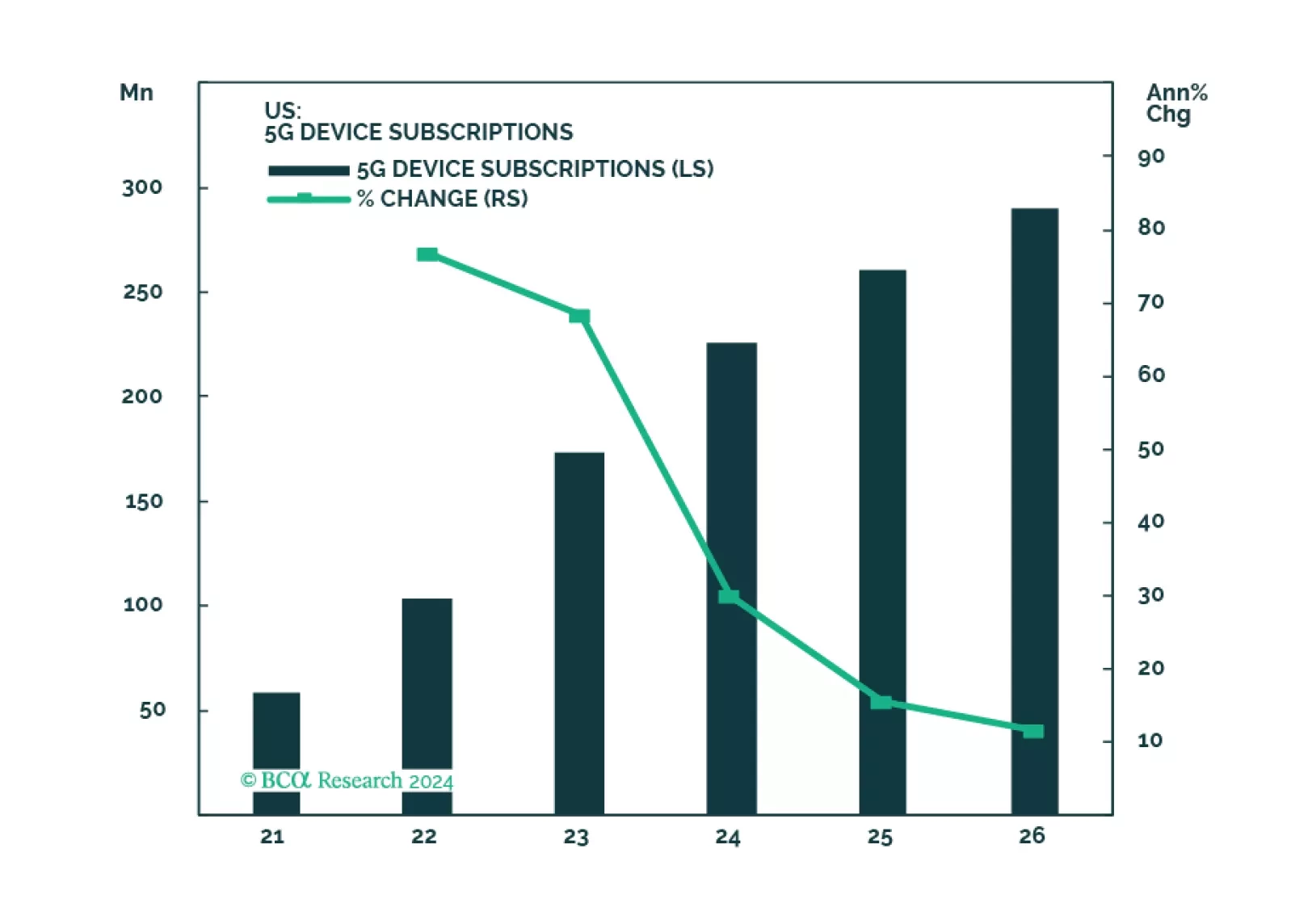
The Telecoms industry is highly concentrated, and carriers compete on price and quality of service in a slow growing market. Demand for capex is relentless. The roll out of 5G has disappointed. Recently, capex outlays have slowed, and operating cash flow has rebounded. Further, Telecoms is a quintessential defensive industry that will outperform during a market pullback.

The US equity market is in the midst of an earnings contraction driven by slowing sales growth – a manifestation of the weakening economic demand and loss of corporate pricing power that accompany disinflation. The telecommunications industry is a defensive industry that faces many challenges: Low growth, cut-throat competition, and incessant demands for capital investment.

Executive Summary If a loss of wealth persists for a year or more, it hurts the economy. The recent $40 trillion slump in global financial wealth is larger than that suffered in the pandemic of 2020, the global financial crisis of 2008, and the dot com bust of 2000-01. Partly countering this slump in global financial wealth is a $20 trillion uplift in global real estate wealth. However, Chinese home prices are already stagnating. And the recent disappearance of US and European homebuyers combined with a flood of home-sellers warns that US and European home prices will cool over the next 6 months. With the loss of wealth likely to persist, it will amplify a global growth slowdown already in train, aided and abetted by central banks that are willing to enter recession to slay inflation. The optimal asset allocation over the next 6-12 months is: overweight bonds, neutral stocks, and underweight commodities. A variation on this theme is: overweight conventional bonds and stocks versus inflation-protected bonds and commodities. Fractal trading watchlist: US telecoms versus utilities, and copper. We Have Just Suffered The Worst Loss Of Financial Wealth In A Generation The World Is $20 Trillion Poorer. Why That Matters The World Is $20 Trillion Poorer. Why That Matters Bottom Line: On a 6-12 month horizon, overweight bonds, neutral stocks, and underweight commodities. Feature Since the end of last year, the world has lost $40 trillion of financial wealth, evenly split between the crashes in stocks and bonds (Chart I-1). The slump in financial wealth, both in absolute and proportionate terms, is the worst suffered in a generation, larger than that in the pandemic of 2020, the global financial crisis of 2008, and the dot com bust of 2000-01.1 Chart I-1Global Stocks And Global Bonds Have Both Slumped By $20 Trillion Global Stocks And Global Bonds Have Both Slumped By $20 Trillion Global Stocks And Global Bonds Have Both Slumped By $20 Trillion Partly countering this $40 trillion slump in global financial wealth is a $20 trillion uplift in global real estate wealth. But in total, the world is still $20 trillion ‘asset poorer’ than at the end of last year. Given that global GDP is around $100 trillion, we can say that we are asset poorer, on average, by about one fifth of our annual income. Does this loss of wealth matter? A Loss Of Wealth Matters If It Persists For A Year Or More Some argue that we shouldn’t worry about the recent slump in our wealth, because we are still wealthier than we were, say, at the start of the pandemic (Chart I-2). Yet this is a facile argument. Whatever loss of wealth we suffer, there is always some point in the past against which we are richer! Chart I-2We Have Just Suffered The Worst Loss Of Financial Wealth In A Generation We Have Just Suffered The Worst Loss Of Financial Wealth In A Generation We Have Just Suffered The Worst Loss Of Financial Wealth In A Generation Another argument is that people do not care about a short-lived dip in their wealth. This argument has more truth to it. For example, in the extreme event of a flash crash, an asset price can drop to zero and then bounce back in the blink of an eyelid. In this case, most people would be oblivious, or unconcerned, by this momentary collapse in their wealth. But people do care if the slump in their wealth becomes more prolonged. How long is prolonged? The answer is, if the slump persists for a year or more. Why a year? Because that is the timeframe over which governments, firms, and households make their income and spending plans. Governments and firms do this formally in their annual budgets that set tax rates, wages, bonuses, and investment spending. Households do it informally, because their wages, bonuses, and taxes – and therefore disposable incomes – also adjust on an annual basis. Into this yearly spending plan will also come any change in wealth experienced over the previous year. For example, firms often do this formally by converting an asset write-down to a deduction from profits, which will then impact the firm’s future spending. This illustrates that what impacts your spending is not the level of your wealth, but the yearly change in your wealth. Spending Is Impacted By The Change In Wealth The intellectual battle here is between Economics and Psychology. The economics textbooks insist that it is the level of your wealth that impacts your spending, whereas the psychology and behavioural finance textbooks insist that it is the change in your wealth that impacts your spending. (Chart I-3and Chart I-4). In my view, the psychologists and behavioural finance guys have nailed this better than the economists, through a theory known as Mental Accounting Bias. Chart I-3The Change And Impulse Of Stock Market Wealth Are Both Negative The Change And Impulse Of Stock Market Wealth Are Both Negative The Change And Impulse Of Stock Market Wealth Are Both Negative Chart I-4The Change And Impulse Of Bond Market Wealth Are Both Negative The Change And Impulse Of Bond Market Wealth Are Both Negative The Change And Impulse Of Bond Market Wealth Are Both Negative Nobel Laureate psychologist Daniel Kahneman points out that we categorise our money into different accounts, which are sometimes physical, sometimes only mental – and that there is a clear hierarchy in our willingness to spend these ‘mental accounts’. Put simply, we are willing to spend our income mental account, but we are much less willing to spend our wealth mental account. Still, wealth can generate income through interest payments and dividends, which we are willing to spend. Clearly, the level of income generated will correlate with the amount of wealth – $10 million of wealth will likely generate much more income than $1 million of wealth. So, economists get the impression that it is the level of wealth that impacts spending, but the truth is that it is the income generated by the wealth that impacts spending.    We are willing to spend our income ‘mental account’, but we are much less willing to spend our wealth ‘mental account’. What about someone like Amazon founder Jeff Bezos who has immense wealth but seemingly negligible income – Mr. Bezos receives only a token salary, and his huge holding of Amazon shares pays no dividend – how then can we explain his largesse? The answer is that Mr. Bezos’ immense wealth generates tens of billions in trading income. So again, it is his income that is driving his spending. Wealth also generates an ‘income substitute’ via capital gains. For example, you should be indifferent between a $100 bond giving you $2 of income, or a $98 zero-coupon bond maturing in one year at $100, giving you $2 of capital gain. In this case the capital gain is simply an income substitute and fully transferred into the spending mental account. Nowhere is this truer than in China, where the straight-line appreciation in house prices through several decades has allowed homeowners to regard a reliable capital gain as an income substitute (Chart I-5). Which justifies rental yields on Chinese housing that are the lowest in the world and lower even than the yield on risk-free cash. In other words, which justifies a stratospheric valuation for Chinese real estate. Image Usually though, we tend to transfer only a proportion of our capital gains or losses into our spending mental account. As described previously, a firm will do this formally by transferring an asset write-down into the income statement. And households will do it informally by transferring some proportion of their yearly change in wealth into their spending mental account. The important conclusion is that spending is impacted by the yearly change in wealth. Meaning that spending growth is impacted by the yearly change in the yearly change in wealth, known as the wealth (1-year) impulse, where a negative impulse implies negative growth. Cracks Appearing In The Housing Market Given the recent slump in financial wealth, the global financial wealth impulse is in deeply negative territory. Yet by far the largest part of our wealth comprises housing, meaning the value of our homes2 (Chart I-6). In China, the recent stagnation of house prices means that the housing wealth impulse has turned negative. Elsewhere in the world though, the recent boom in house prices means that the housing wealth impulse is still positive, meaning a tailwind – albeit a rapidly fading tailwind – to spending (Chart I-7 and Chart I-8). Chart I-6Housing Comprises By Far The Largest Part Of Our Wealth Housing Comprises By Far The Largest Part Of Our Wealth Housing Comprises By Far The Largest Part Of Our Wealth Chart I-7Chinese House Prices Have Stagnated, US House Prices Have Surged The World Is $20 Trillion Poorer. Why That Matters The World Is $20 Trillion Poorer. Why That Matters Chart I-8The Chinese Housing Wealth Impulse Is Negative, The US Housing Wealth Impulse Is Fading The Chinese Housing Wealth Impulse Is Negative, The US Housing Wealth Impulse Is Fading The Chinese Housing Wealth Impulse Is Negative, The US Housing Wealth Impulse Is Fading In China, the recent stagnation of house prices means that the housing wealth impulse has turned negative. Still, as we explained in The Global Housing Boom Is Over, As Buying Becomes More Expensive Than Renting, the disappearance of homebuyers combined with a flood of home-sellers is a tried and tested indicator that US and European home prices will cool over the next 6 months. US new home prices have already suffered a significant decline in June (Chart I-9). Some of this is because US homebuilders are building smaller and less expensive homes. Nevertheless, it seems highly likely that the non-China housing wealth impulse will also turn negative later this year. Chart I-9US New Home Prices Fell Sharply In June US New Home Prices Fell Sharply In June US New Home Prices Fell Sharply In June To be clear, the wealth impulse is just one driver of spending growth. Nevertheless, it does have the potential to amplify the growth cycle in either direction. With global growth clearly slowing, and central banks willing to enter recession to slay inflation, the rapidly fading global wealth impulse will amplify the slowdown. Therefore, the optimal asset allocation over the next 6-12 months is: Overweight bonds. Neutral stocks. Underweight commodities. A variation on this theme is: Overweight conventional bonds and stocks versus inflation-protected bonds and commodities. Fractal Trading Watchlist After a 35 percent decline since March, copper has hit a resistance point on its short-term fractal structure, from which it could experience a countertrend move. Hence, we are adding copper to our watchlist. Of note also, the underperformance of US telecoms versus utilities has reached the point of fragility on its 260-day fractal structure that has signalled previous major turning points in 2012, 2014, and 2017 (Chart I-10). Hence, the recommended trade is long US telecoms versus utilities, setting a profit target and symmetrical stop-loss at 8 percent. Chart I-10US Telecoms Versus Utilities Are At A Potential Turnaround US Telecoms Versus Utilities Are At A Potential Turnaround US Telecoms Versus Utilities Are At A Potential Turnaround Fractal Trading Watchlist: New Additions Copper’s Selloff Has Hit Short-Term Resistance Copper's Selloff Has Hit Short-Term Resistance Copper's Selloff Has Hit Short-Term Resistance Dhaval Joshi Chief Strategist dhaval@bcaresearch.com   Footnotes 1     The value of global equities has dropped by $20tn to $80tn, the value of global bonds by $20tn to around $100tn, while the value of global real estate has increased by $20tn to an estimated $370tn. 2     Strictly speaking, housing wealth should be measured net of the mortgage debt that is owed on our homes. But as the wealth impulse is a change of a change, and mortgage debt changes very slowly, it does not matter whether we calculate the impulse from gross or net housing wealth. Chart 1CNY/USD At A Potential Turning Point CNY/USD At A Potential Turning Point CNY/USD At A Potential Turning Point Chart 2Copper's Selloff Has Hit Short-Term Resistance Copper's Selloff Has Hit Short-Term Resistance Copper's Selloff Has Hit Short-Term Resistance Chart 3US REITS Are Oversold Versus Utilities US REITS Are Oversold Versus Utilities US REITS Are Oversold Versus Utilities Chart 4CAD/SEK Is Reversing CAD/SEK Is Reversing CAD/SEK Is Reversing Chart 5Financials Versus Industrials Has Reversed Financials Versus Industrials Has Reversed Financials Versus Industrials Has Reversed Chart 6The Outperformance Of Resources Versus Biotech Has Ended The Outperformance Of Resources Versus Biotech Has Ended The Outperformance Of Resources Versus Biotech Has Ended Chart 7The Outperformance Of Resources Versus Healthcare Has Ended The Outperformance Of Resources Versus Healthcare Has Ended The Outperformance Of Resources Versus Healthcare Has Ended Chart 8FTSE100 Outperformance Vs. Euro Stoxx 50 Is Vulnerable To Reversal FTSE100 Outperformance Vs. Euro Stoxx 50 Is Vulnerable To Reversal FTSE100 Outperformance Vs. Euro Stoxx 50 Is Vulnerable To Reversal Chart 9Netherlands' Underperformance Vs. Switzerland Has Ended Netherlands' Underperformance Vs. Switzerland Has Ended Netherlands' Underperformance Vs. Switzerland Has Ended Chart 10The Sell-Off In The 30-Year T-Bond At Fractal Fragility The Sell-Off In The 30-Year T-Bond At Fractal Fragility The Sell-Off In The 30-Year T-Bond At Fractal Fragility Chart 11The Sell-Off In The NASDAQ Is Approaching Fractal Fragility The Sell-Off In The NASDAQ Is Approaching Fractal Fragility The Sell-Off In The NASDAQ Is Approaching Fractal Fragility Chart 12Food And Beverage Outperformance Is Exhausted Food And Beverage Outperformance Is Exhausted Food And Beverage Outperformance Is Exhausted Chart 13German Telecom Outperformance Has Started To Reverse German Telecom Outperformance Has Started To Reverse German Telecom Outperformance Has Started To Reverse Chart 14Japanese Telecom Outperformance Vulnerable To Reversal Japanese Telecom Outperformance Vulnerable To Reversal Japanese Telecom Outperformance Vulnerable To Reversal Chart 15ETH Is Approaching A Possible Capitulation ETH Is Approaching A Possible Capitulation ETH Is Approaching A Possible Capitulation Chart 16The Strong Trend In The 18-Month-Out US Interest Rate Future Has Ended The Strong Trend In The 18-Month-Out US Interest Rate Future Has Ended The Strong Trend In The 18-Month-Out US Interest Rate Future Has Ended Chart 17The Strong Downtrend In The 3 Year T-Bond Has Ended The Strong Downtrend In The 3 Year T-Bond Has Ended The Strong Downtrend In The 3 Year T-Bond Has Ended Chart 18A Potential Switching Point From Tobacco Into Cannabis A Potential Switching Point From Tobacco Into Cannabis A Potential Switching Point From Tobacco Into Cannabis Chart 19Biotech Is A Major Buy Biotech Is A Major Buy Biotech Is A Major Buy Chart 20Norway's Outperformance Has Ended Norway's Outperformance Has Ended Norway's Outperformance Has Ended Chart 21Cotton Versus Platinum Has Reversed Cotton Versus Platinum Has Reversed Cotton Versus Platinum Has Reversed Chart 22Switzerland's Outperformance Vs. Germany Is Exhausted Switzerland's Outperformance Vs. Germany Is Exhausted Switzerland's Outperformance Vs. Germany Is Exhausted Chart 23USD/EUR Is Vulnerable To Reversal USD/EUR Is Vulnerable To Reversal USD/EUR Is Vulnerable To Reversal Chart 24The Outperformance Of MSCI Hong Kong Versus China Has Ended The Outperformance Of MSCI Hong Kong Versus China Has Ended The Outperformance Of MSCI Hong Kong Versus China Has Ended Chart 25A Potential New Entry Point Into Petcare A Potential New Entry Point Into Petcare A Potential New Entry Point Into Petcare Chart 26GBP/USD At A Potential Turning Point GBP/USD At A Potential Turning Point GBP/USD At A Potential Turning Point Chart 27US Utilities Outperformance Vulnerable To Reversal US Utilities Outperformance Vulnerable To Reversal US Utilities Outperformance Vulnerable To Reversal Chart 28The Outperformance Of Oil Versus Banks Is Exhausted The Outperformance Of Oil Versus Banks Is Exhausted The Outperformance Of Oil Versus Banks Is Exhausted   Fractal Trading System Fractal Trades The World Is $20 Trillion Poorer. Why That Matters The World Is $20 Trillion Poorer. Why That Matters The World Is $20 Trillion Poorer. Why That Matters The World Is $20 Trillion Poorer. Why That Matters 6-12 Month Recommendations Structural Recommendations Closed Fractal Trades Indicators To Watch - Bond Yields Chart II-1Indicators To Watch - Bond Yields - Euro Area Indicators To Watch - Bond Yields - Euro Area Indicators To Watch - Bond Yields - Euro Area Chart II-2Indicators To Watch - Bond Yields - Europe Ex Euro Area Indicators To Watch - Bond Yields - Europe Ex Euro Area Indicators To Watch - Bond Yields - Europe Ex Euro Area     Chart II-3Indicators To Watch - Bond Yields - Asia Indicators To Watch - Bond Yields - Asia Indicators To Watch - Bond Yields - Asia Chart II-4Indicators To Watch - Bond Yields - Other Developed Indicators To Watch - Bond Yields - Other Developed Indicators To Watch - Bond Yields - Other Developed     Indicators To Watch - Interest Rate Expectations Chart II-5Indicators To Watch - Interest Rate Expectations Indicators To Watch - Interest Rate Expectations Indicators To Watch - Interest Rate Expectations Chart II-6Indicators To Watch - Interest Rate Expectations Indicators To Watch - Interest Rate Expectations Indicators To Watch - Interest Rate Expectations     Chart II-7Indicators To Watch - Interest Rate Expectations Indicators To Watch - Interest Rate Expectations Indicators To Watch - Interest Rate Expectations Chart II-8Indicators To Watch - Interest Rate Expectations Indicators To Watch - Interest Rate Expectations Indicators To Watch - Interest Rate Expectations    
Dear client, Next week instead of our regular Strategy Report we will be sending you a Special Report from BCA’s Equity Analyzer service on Inflation and Factor investing penned by my colleague Lucas Laskey, Senior Quantitative Analyst. Finally, on February 22 we will be hosting our quarterly webcast one at 10am EST for North American and EMEA clients and one at 8pm EST for Asia Pacific, Australian and New Zealand clients “From Alpha To Omega With Anastasios”. Mathieu Savary, who heads our Daily Insights service, will be our special guest in the morning webcast. On March 1 we will resume our regular publication schedule. Kind Regards, Anastasios Highlights Portfolio Strategy China’s engineered economic deceleration, the knee jerk US dollar bounce along with signs of soft US capital expenditures entice us to protect our deep cyclicals versus defensives portfolio gains and institute a 2.5% rolling stop to this share price ratio. Rising relative capital outlays, firming software pricing power and an M&A frenzy more than offset the negative relative profit signal from our models that sell side analysts already anticipate. Continue to overweight the S&P software index.  Recent Changes Last Tuesday we closed out our VIX futures hedge for a gain of 19% since the December 7, 2020 inception. Last Wednesday we re-initiated our long “Back-To-Work”/short “COVID-19 Winners” pair trade. Feature Equity volatility settled down last week following a ferocious ten-day SPX oscillation that sent the VIX soaring to roughly 38 near the peak at the end of January, courtesy of the GME/Wallstreetbets (WSB) saga before collapsing back down near 21 last week. Chart 1 shows that this was likely an equity-only event: both risk off currencies – the yen and the franc – actually fell versus the USD, junk bond spreads barely budged and the vol curve violently inverted, a move that more often than not signals that complacency has morphed into panic. Importantly, when the Fed embarks on active QE the SPX drawdown maxes out at 10% based on empirical evidence, including the recent September/October 10% drawdown. Using the ES futures low hit two Sundays ago, the S&P 500 experienced a 5.3% peak-to-trough pullback well within the range of previous Fed active QE iterations. As a reminder, the 2010 and 2011, 17% and 20% respective drawdowns took root after the Fed had concluded QE1 and QE2 operations. The implication is that for a more significant drawdown to materialize, likely the Fed has to end the current QE operation and reinject some volatility in the bond markets (bottom panel, Chart 1).  Isolating the true signal from all this noise, convinced us to book handsome gains to the tune of 19% in our VIX June futures hedge (conservatively assuming that no leverage was used), reinitiate the long “Back-To-Work”/short “COVID-19 Winners” pair trade and put the small cap size bias on our upgrade watch list. As volatility has slowly died down, investors can start to refocus on profit fundamentals. Similar to the steep fall in EPS that the SPX 35% drawdown predicted in March of 2020, in recent research we showed that were we to hold the SPX at current levels, its 12-month rate-of-change would surpass the 61% mark next month and forecast that profit growth would rise by a similar amount. Indeed, sell side analysts’ bottom up earnings estimates corroborate this analysis as quarterly EPS will peter out roughly at a 48% year-over-year (YOY) growth rate next quarter and vault to all-time highs in quarterly level terms in Q3 following a three-year hiatus (Chart 2). Chart 1Equity-only Event Equity-only Event Equity-only Event Chart 2Joined At The Hip Joined At The Hip Joined At The Hip Importantly, the tech sector no longer commands an earnings weight similar to its market cap weight likely because it’s run ahead of itself and also because the rest of the sectors are playing catch up this year as the US economy is slated to reopen on the back of the herculean inoculation efforts (profit weight and mkt cap weight columns, Table 1). Table 1Sector EPS And Market Cap Weights Re-grossing? Re-grossing? This is most evident on the sector contribution to this year's SPX earnings growth. Historically, the tech sector commanded the lion’s share of profit explanation for the SPX, but not in 2021. In fact, the S&P IT sector is ranked 4th in terms of contribution to overall SPX profits, behind industrials, financials and consumer discretionary (Chart 3).   Delving deeper into 12-month forward earnings growth figures is instructive. Table 2 shows our universe of coverage ranked first by GICS1 sector growth rates and then re-ranked per sub-group. As an aside the energy sector’s EPS is slated to contract in calendar 2020 and thus any YOY growth rate figures are rendered useless for the broad sector and the energy sub-industries. Chart 3Sector Contribution To 2021 SPX EPS Growth Re-grossing? Re-grossing? Table 2Identifying S&P 500 Sector EPS Growth Leaders And Laggards Re-grossing? Re-grossing? Our portfolio positioning is well aligned with the sector ranking of EPS growth for the coming year. Put differently, given the havoc that COVID-19 wreaked to the US industrial and service bases it is normal that deep cyclical sectors along with financials and the decimated services-heavy parts of the consumer discretionary sector to occupy the top ranks. In contrast, defensives sectors that were largely COVID-19 beneficiaries (especially health care and consumer staples) are near the bottom of the pit. The sole misalignment is the bombed out real estate sector that we remain overweight (Table 2). Netting it all out, our sense is that the market has successfully navigated a tumultuous two-week period and we reiterate our long-held sanguine 9-12 month cyclical view on the prospects of the S&P 500. This week, we update a defensive tech sub-group and put a tight stop in the cyclicals/defensives portfolio bent in order to protect profits. Risks To The Cyclicals Over Defensives Portfolio Bent Last December we highlighted that China’s four year cycle will peter out in the back half of 2021 and could cause some equity market consternation, with stocks likely sniffing out any trouble likely by the end of Q1/2021. It appears that investors have been sleeping at the wheel and largely distracted by the GME/WSB saga. Not only did they neglect the robust SPX profit season, but they also ignored that something is amiss in China as we first showed last week (please refer to Chart 12 here). Importantly, what worries us most is the transition from China being the primary locomotive of global growth to the US taking the reins in coming quarters. Clearly such a handoff is tumultuous, especially given the recent added risk of a reflex rebound in the greenback that we first warned about on January 12 when we set the cyclicals/defensives ratio on downgrade alert. Subsequently, we upgraded the S&P utilities sector to neutral locking in gains of 15% for the portfolio, and today we decide to institute a 2.5% rolling stop in the cyclicals/defensives portfolio bent, in order to participate on further upside but also protect 16% gains for the portfolio since the July 27, 2020 inception in case of a market relapse. Practically, when the rolling stop gets triggered we will move the cyclicals/defensives bent down to neutral via executing the downgrade alert we have in the S&P materials sector. In more detail, China’s slamming on the brakes is the key risk to cyclicals/defensives. Not only are the Chinese authorities trying to engineer a slowdown with the recent reverse repo operations, but also BCA’s China Monetary Indicator, the selloff in the Chinese sovereign bond market and the cresting in the PBOC’s balance sheet are all corroborating the economic deceleration signal (Chart 4). Chinese total social financing has peaked, the 6-month credit impulse is plunging, and the nosedive in Goldman Sachs’ Chinese current activity indicator (CAI) are all firing warning shots that the economy is slated to slowdown (Chart 5).  Chart 4Everywhere… Everywhere… Everywhere… Chart 5…One Looks… …One Looks… …One Looks… Already both the Chinese manufacturing and services PMIs have hooked down with the manufacturing new orders-to-inventories (NOI) in free fall and export orders in outright contraction. Tack on the reversal in the Citi economic surprise index (ESI) for China and the outlook dims further for US cyclicals/defensives (Chart 6). No wonder Chinese demand for loans has turned the corner, infrastructure spending has topped out and railway freight volumes have ticked down as a direct response to the tightening in Chinese monetary conditions (Chart 7). Chart 6…China… …China… …China… Chart 7…Is Slowing… …Is Slowing… …Is Slowing… Chinese imports flirting with the zero line best capture all this softening in Chinese data and also warns that the US cyclicals/defensives ratio is nearing a zenith (Chart 8). Beyond the dual risk of a counter trend rally in the USD and China’s undeniable deceleration, returning to US shores reveals another source of potential trouble for cyclicals/defensives. Chart 8…Down …Down …Down The US Citi ESI has come back down to earth, and the ISM manufacturing PMI cooled off last month with the NOI ratio flashing red (Chart 9). Importantly, Goldman Sachs’ US CAI is sinking like a stone corroborating that, at the margin, US economic data is softening (Chart 10). Moreover, US capex is in the doldrums courtesy of the collapse in EPS last year that dealt a blow to CEO confidence. Worrisomely, the rollover in the latest capex intentions from regional Fed surveys along with the downbeat NFIB survey’s capital outlays in 6-months component underscore that CEOs remain reluctant to invest (Chart 9). Chart 9Even US Trouble… Even US Trouble… Even US Trouble… Finally, relative valuations have surged to all-time highs leaving no cushion in case of a mishap, while relative technicals are in extreme overbought territory near a level that has marked the commencement of prior relative share price drawdowns (Chart 11). Chart 10…Is Brewing …Is Brewing …Is Brewing Netting it all out, China’s engineered economic deceleration, the knee jerk US dollar bounce along with signs of soft US capital expenditures entice us to protect our deep cyclicals versus defensives portfolio gains and institute a 2.5% rolling stop to this share price ratio. Bottom Line: Prepare to move the cyclicals/defensives portfolio bent back down to neutral from currently overweight. Today we recommend investors establish a 2.5% rolling stop to the cyclicals/defensives relative share price ratio as a risk management tool in order to protect profits. Chart 11Overstretched And Pricey Overstretched And Pricey Overstretched And Pricey Software On The Ascend While we remain on the sidelines with regard to the broad S&P technology sector we continue to recommend a barbell portfolio approach preferring defensive software and services stocks to aggressive hardware and equipment equities. In that light, we reiterate our overweight stance in the key S&P software sub-industry that still commands the highest market cap weight in the tech sector just shy of 33%. While overall capex is sluggish as we highlighted above, software capital outlays have recovered smartly and according to national accounts are growing at a 10%/annum pace. Stock market-reported capex confirms that software capital expenditures are on an absolute tear and remain a key pillar of our secular preference for this defensive tech group (Chart 12). On the sales front, COVID-19 accelerated the push to the cloud and 2020 has been a bumper year for industry sales. True there is an element of stealing revenues from the future, but as long-time readers of our publication know we do not believe that SaaS is a fad and the adoption of cloud services remains in the early innings. Impressively, while relative forward top line growth expectations have rolled over, the attempt of the software price deflator to exit deflation suggests that software stocks will easily surpass this lowered revenue bar in coming quarters (Chart 13). Chart 12Primary Capex Beneficiary Primary Capex Beneficiary Primary Capex Beneficiary Amidst the IPO frenzy that has captured investors’ imagination especially given the spectacular increases in both SNOW and PLTR (neither of which is in the SPX yet), software M&A fever remains as high as ever. This constant reduction of software stock supply, coupled with the insatiable appetite of software executives to aggressively retire equity, signals that software equity prices will remain well bid (Chart 14). Chart 13Software Tries To Exit Deflation Software Tries To Exit Deflation Software Tries To Exit Deflation Chart 14Positive Share Price Dynamics Positive Share Price Dynamics Positive Share Price Dynamics Nevertheless, our relative EPS growth models are waving a yellow flag. The SPX is slated to grow profits north of 25% this year, but according to our profit models software will only manage to grow in the single digits, thus trailing the broad market by a wide margin. Encouragingly, this grim relative profit growth backdrop is already reflected in depressed sell side analysts’ forecasts (Chart 15). Finally, while relative valuations are still lofty they recently have corrected back to one standard deviation above the historical mean. Similarly, relative technicals have worked off overbought conditions and have settled down near the recent historical average (Chart 16). Chart 15Risks… Risks… Risks… In sum, rising relative capital outlays, firming software pricing power and an M&A frenzy more than offset the negative relative profit signal from our models that sell side analysts already anticipate. Bottom Line: Continue to overweight the S&P software index. The ticker symbols for the stocks in this index are: BLBG: S5SOFT – MSFT, ADBE, CRM, ORCL, INTU, NOW, ADSK, ANSS, SNPS, CDNS, FTNT, PAYC, CTXS, NLOK, TYL. Chart 16…To Monitor …To Monitor …To Monitor   Anastasios Avgeriou US Equity Strategist anastasios@bcaresearch.com Current Recommendations Current Trades Strategic (10-Year) Trade Recommendations Overdose? Overdose? Size And Style Views January 12, 2021  Stay neutral small over large caps July 27, 2020 Overweight cyclicals over defensives (2.5% rolling stop) June 11, 2018 Long the BCA Millennial basket  The ticker symbols are: (AAPL, AMZN, UBER, HD, LEN, MSFT, NFLX, SPOT, ABNB, V). January 22, 2018 Favor value over growth
Many investors feel that the Phillips Curve has failed to predict weak inflation over the past decade. But this perception is due to a singular focus on the economic slack component of the modern-day version of the curve to the exclusion of inflation expectations, and a failure to fully consider the lasting impact of sustained periods of a negative output gap on those expectations. In addition, many investors tend to downplay the long-term balance sheet impact of two episodes of excesses and savings/capital misallocations on the relationship between the stance of monetary policy and the output gap, via a persistently negative shock to aggregate demand and a reduced sensitivity of economic activity to interest rates. The COVID-19 pandemic was certainly a major economic shock. But for now, it seems like this was a sharp income statement recession, not a balance-sheet recession. This fact, along with lower odds of negative supply-side shocks and several structural factors, suggest that inflation will be higher over the next ten years than it has over the past decade. Investors looking to protect against potentially higher inflation should look primarily to commodities, cyclical stocks, and US farmland. Gold is likely to remain well supported over the coming few years, but rich valuation suggests the long-term outlook for the yellow metal is poor. A hybrid TIPS/currency portfolio has historically been strongly correlated with the price of gold, and may provide investors with long-term protection against inflation – at a better price. Introduction Chart II-1A Surge In Long-Dated Inflation Expectations A Surge In Long-Dated Inflation Expectations A Surge In Long-Dated Inflation Expectations The pandemic, and the corresponding fiscal and monetary response is challenging the low-inflation outlook of many market participants. Chart II-1 highlights that long-dated market-based inflation expectations have surged past their pre-COVID levels after collapsing to the lowest-ever level in March. The shift in thinking about inflation has partly been a response to an extraordinary rise in government spending in many countries. But Chart II-1 shows that long-dated expectations in the US were mostly trendless from April to June as Federal support was distributed, and instead rose sharply in July and August in the lead-up to the Fed’s official shift to an average inflation targeting regime. This new dawn for US monetary policy has been prompted not just by the pandemic, but also by the extended period of below-target inflation over the past decade. In this report, we review how the past ten-year episode of low inflation can be successfully explained through the lens of the expectations-augmented (i.e. “modern-day”) Phillips Curve. Many investors fail to fully appreciate the impact that inflation expectations have on driving actual inflation, as well as the cumulative impact of two major capital and savings misallocations over the past 25 years on the responsiveness of demand to interest rates and on the level of inflation expectations. Using the modern-day Phillips Curve as a guide, we present several reasons in favor of the view that inflation will be higher over the next decade than over the past ten years. Finally, we conclude with an assessment of several ways for investors to protect their portfolios from rising inflation. Revisiting The “Modern-Day” Phillips Curve The original Phillips Curve, as formulated by New Zealand economist William Phillips in the late 1950s, described a negative relationship between the unemployment rate and the pace of wage growth. Given the close correlation between wage and overall price growth at the time, the Phillips Curve was soon extended and generalized to describe an inverse relationship between labor market slack and overall price inflation. Chart II-2Rising Unemployment And Inflation Challenged The Original Phillips Curve Rising Unemployment And Inflation Challenged The Original Phillips Curve Rising Unemployment And Inflation Challenged The Original Phillips Curve However, the experience of rising inflation alongside high unemployment from the late 1960s to the late 1970s underscored that prices are also importantly determined by inflation expectations and shocks to the supply-side of the economy (Chart II-2). In the 1980s and 1990s, the Federal Reserve’s success at reigning in inflation was achieved not only by raising interest rates to punishingly high levels, but also by sharply altering consumer, business, and investor expectations about future prices. The experience of the late 1960s and 1970s led to a revised form of the Phillips Curve, dubbed the “expectations-augmented” or “modern” version. As an equation, the modern Phillips Curve is described today by Fed officials, in terms of core inflation, as follows: πct = β1πet + β2πct-1 + β3πct-2 - β4SLACKt + β5IMPt + εt where: πct = Core inflation today πet = Expectations of inflation πct-n = Lagged core inflation SLACKt = Slack in the economy IMPt = Imported goods prices εt = Other shocks to prices Described verbally, this framework suggests that “economic slack, changes in imported goods prices, and idiosyncratic shocks all cause core inflation to deviate from its longer-term trend that is ultimately determined by long-run inflation expectations.1” This framework can easily be extended to headline inflation by adding changes in food and energy prices. In most formal models of the economy in use today, the modern Phillips Curve is combined with the New Keynesian demand function to describe business cycles: Yt = Y*t – β(r-r*) + εt where: Yt = Real GDP Y*t = Real potential GDP r = The real interest rate r* = The neutral rate of interest εt = Other shocks to output This equation posits that differences in the real interest rate from its neutral level, along with idiosyncratic shocks to demand, cause real GDP to deviate from potential output. Abstracting from import prices and idiosyncratic shocks, these two equations tell a simple and intuitive story of how the economy generally works: The stance of monetary policy determines the output gap and, The output gap, along with inflation expectations, determine inflation. The Modern-Day Phillips Curve: The Pre-2000 Experience This above view of inflation and demand was strongly accepted by investors before the 2008 global financial crisis, but the decade-long period of generally below-target inflation has caused a crisis of faith in the idea of the Phillips Curve. Charts II-3 and II-4 show the historical record of the New Keynesian demand function and the modern-day Phillips Curve, using five-year averages of the data in question to smooth out the impact of short-term and idiosyncratic effects. We use nominal GDP growth as our long-run proxy for the neutral rate of interest,2 the US Congressional Budget Office’s (CBO) estimate of potential GDP to determine the output gap, and a proprietary measure of inflation expectations based on an adaptive expectations framework3 (Chart II-5). Chart II-3With Just Two Exceptions, Monetary Policy Strongly Explained Demand Before 2000 With Just Two Exceptions, Monetary Policy Strongly Explained Demand Before 2000 With Just Two Exceptions, Monetary Policy Strongly Explained Demand Before 2000 Chart II-4Similarly, Pre-2000 The Output Gap Generally Explained Unexpected Inflation Similarly, Pre-2000 The Output Gap Generally Explained Unexpected Inflation Similarly, Pre-2000 The Output Gap Generally Explained Unexpected Inflation Chart II-3 shows that until 1999, the stance of monetary policy was highly predictive of the output gap over a five-year period, with just two exceptions where major structural forces were at play: the late 1970s, and the second half of the 1990s. In the case of the former, the disruptive effect of persistently high inflation negatively impacted output growth despite easy monetary policy, and in the latter case, economic activity was modestly stronger than what interest rates would have implied due to the beneficial impact of the technologically-driven productivity boom of that decade. Similarly, Chart II-4 shows that until 1999 there was a good relationship between the output gap and the deviation in inflation from expectations, again with the late 1970s and late 1990s as exceptions. Along with the beneficial supply-side effects of the disinflationary tech boom, persistent import price weakness (via dollar strength) seems to have also played a role in suppressing inflation in the late 1990s (Chart II-6). Chart II-5The Expectations Component Of The Modern Phillips Curve, Visualized The Expectations Component Of The Modern Phillips Curve, Visualized The Expectations Component Of The Modern Phillips Curve, Visualized Chart II-6A Strong Dollar Also Played A Role In Suppressing Inflation During The 1990s A Strong Dollar Also Played A Role In Suppressing Inflation During The 1990s A Strong Dollar Also Played A Role In Suppressing Inflation During The 1990s   The Modern-Day Phillips Curve Post-2000 Following 2000, deviations between the monetary policy stance, the output gap, and inflation become more prominent, particularly after 2008. As we will illustrate below, these deviations are more apparent on the demand side. In the case of inflation, the question should be why inflation was not even lower in the years immediately following the global financial crisis. On both the demand and inflation side, these deviations are explainable, and in a way that helps us determine future inflation. Charts II-7 and II-8 show the same series as in Charts II-3 and II-4, but focused on the post-2000 period. From 2000-2007, Chart II-8 shows that the relationship between the output gap and the deviation in inflation from expectations was not particularly anomalous. The output gap was negative from the end of the 2001 recession until the beginning of 2006, and inflation was correspondingly below expectations on average for the cycle. Chart II-7Post-2000, The Output Gap Decoupled From The Monetary Policy Stance Post-2000, The Output Gap Decoupled From The Monetary Policy Stance Post-2000, The Output Gap Decoupled From The Monetary Policy Stance Chart II-8Since The GFC, The Real Mystery Is Why Inflation Has Been So Strong Since The GFC, The Real Mystery Is Why Inflation Has Been So Strong Since The GFC, The Real Mystery Is Why Inflation Has Been So Strong   Chart II-7 shows that the anomaly during that cycle was in the relationship between the output gap and the stance of monetary policy. Monetary policy was the easiest it had been in two decades, yet the output gap was negative for several years following the recession. Larry Summers pointedly cited this divergence in his revival of the secular stagnation theory in November 2013, arguing that it was strong evidence that excess savings were depressing aggregate demand via a lower neutral rate of interest and that this effect pre-dated the financial crisis. Why was demand so weak during that period? Chart II-9 compares the annualized per capita growth in the expenditure components of GDP during the 2001-2007 expansion to the 1991-2001 period. The chart shows that all components of GDP were lower than during the 1991-2001 period, with investment – the most interest rate sensitive component of GDP – showing up as particularly weak. On the surface, this supports the idea of structural factors weighing heavily on the neutral rate, rendering monetary policy less easy than investors would otherwise expect. But Chart II-9 treats the 2001-2007 years as one period, ignoring what happened over the course of the expansion. Chart II-10 repeats the exercise shown in Chart II-9 from Q1 2001 to Q3 2005, and highlights that the annualized growth in per capita residential investment was much stronger than it was during the 1991-2001 period – and nonresidential fixed investment was much weaker. Spending on goods was roughly the same, which is impressive considering that the late 1990s experienced a productivity boom and robust wage growth. All the negative contribution to growth from residential investment during the 2001-2007 expansion came after Q3 2005, as the housing market bubble burst in response to rising interest rates. In short, Chart II-10 highlights that there was a strong relationship between easy monetary policy and the demand for housing, but that this was not true for the corporate sector. Chart II-9Looking At The Whole 2001-2007 Period, Investment Was Extremely Weak January 2021 January 2021 Chart II-10Housing Absolutely Responded To Easy Monetary Policy January 2021 January 2021   Explaining Weak CAPEX Growth In The Early 2000s This leads us to ask why CAPEX was so weak during the 2001-2007 period. In addition to changes in interest rates, business investment is strongly influenced by expectations of consumer demand and corporate profitability. Chart II-11 shows that real nonresidential fixed investment and as-reported earnings moved in lockstep during the period, and that this delayed corporate-sector recovery also impacted the pace of hiring. Weak expectations for consumer spending do not appear to be the culprit. Chart II-12 highlights that while real personal consumption expenditure growth fell during the recession, spending did not contract (as it had done during the previous recession) and capital expenditures fell much more than what real PCE would have implied. Chart II-11Post-2001, Persistently Weak Profits Led To Weak Investment And Jobs Growth Post-2001, Persistently Weak Profits Led To Weak Investment And Jobs Growth Post-2001, Persistently Weak Profits Led To Weak Investment And Jobs Growth Chart II-12CAPEX Was Much Weaker In 2002 Than Justified By Consumer Spending CAPEX Was Much Weaker In 2002 Than Justified By Consumer Spending CAPEX Was Much Weaker In 2002 Than Justified By Consumer Spending   Instead, persistently weak CAPEX in the early 2000s appears to be best explained by the damaging impact of corporate excesses that built up during the dot-com bubble. The Sarbanes-Oxley Act of 2002 was passed in response to a series of corporate accounting frauds that came to light in the wake of the bubble, but in many cases had been occurring for several years. Chart II-13 highlights that widespread write-offs badly impacted earnings quality and the growth in the asset value of equipment and intellectual property products (IPP), both of which only began to improve again in early 2003. This occurred alongside an outright contraction in real investment in IPP as investors lost faith in company financial statements and heavily scrutinized corporate spending. Chart II-14highlights that a contraction in IP spending was a huge change from the double-digit pace of growth that occurred in the late 1990s. Chart II-13The Damaging Impact Of Corporate Excesses The Damaging Impact Of Corporate Excesses The Damaging Impact Of Corporate Excesses Chart II-14A Near-Unprecedented Collapse In IPP Investment Followed The Tech Bubble A Near-Unprecedented Collapse In IPP Investment Followed The Tech Bubble A Near-Unprecedented Collapse In IPP Investment Followed The Tech Bubble   In addition, corporate sector indebtedness also appears to have played a role in driving weak investment in the early 2000s. While the interest burden of nonfinancial corporate debt was not as high in 2000 as it was in the early 1990s, Chart II-15 highlights that debt to operating income surged in the late 1990s – which likely caused investors already skeptical about company financial statements to impose a period of elevated capital discipline on corporate managers following the recession. Chart II-16 shows that while the peak in the 12-month trailing corporate bond default rate in January 2002 was similar to that of the early 90s, it was meaningfully higher on average in the lead-up to and following the recession. Chart II-15The Late-1990s Saw A Major Increase In Corporate Debt The Late-1990s Saw A Major Increase In Corporate Debt The Late-1990s Saw A Major Increase In Corporate Debt Chart II-16Above-Average Corporate Defaults Before And After The 2001 Recession Above-Average Corporate Defaults Before And After The 2001 Recession Above-Average Corporate Defaults Before And After The 2001 Recession   To summarize, Charts II-10-16 underscore that management excesses, governance failures, and elevated debt in the corporate sector in the 1990s were the root cause of the seeming divergence between monetary policy and the output gap from 2001 to 2007. This was, unfortunately, the first of two major savings/capital misallocations that have occurred in the US over the past 25 years. Explaining The Post-GFC Experience In the early 2000s, the Federal Reserve was faced with a decision between two monetary policy paths: one that was appropriate for the corporate sector, and one that was appropriate for the household sector. The Fed chose the former, and it inadvertently contributed to the second major savings/capital misallocation to occur over the past 25 years: the enormous debt-driven bubble in US housing that culminated into the global financial crisis (GFC) of 2007-2009. Chart II-17It Is No Mystery Why Demand And Inflation Were Weak Last Cycle It Is No Mystery Why Demand And Inflation Were Weak Last Cycle It Is No Mystery Why Demand And Inflation Were Weak Last Cycle As a result, 2007 to 2013/2014 was a mirror image of the early 2000s. Unlike previous post-war downturns, the GFC precipitated a balance-sheet recession that deeply affected homeowners and the financial system. This lasting damage led to a multi-year household deleveraging process, which substantially lowered the responsiveness of the economy to stimulative monetary policy. On a year-over-year basis, Chart II-17 shows that total nominal household mortgage credit growth was continuously negative for six and a half years, from Q4 2008 until Q2 2015, underscoring that the large divergence during this period between the stance of monetary policy and the output gap should not, in any way, be surprising to investors. And this is even before accounting for the negative impact of the euro area sovereign debt crisis and double-dip recession, or the persistent fiscal drag in nearly every advanced economy last cycle. What is surprising about the post-GFC experience is that inflation was not substantially weaker than it was, which is ironic considering that the secular stagnation narrative was revived to help explain below-target inflation. Chart II-8 showed that actual inflation steadily improved versus expected inflation alongside the closing of the output gap and the decline in the unemployment rate, but that it was much stronger than the output gap would have implied – particularly during the early phase of the economic recovery. It is still an open question as to why this occurred. A weak dollar and a strong recovery in oil prices likely helped support consumer prices, but we doubt that these two factors alone explain the discrepancy. A more credible answer is that expectations stayed very well anchored due to the Fed’s strong record of maintaining low and stable inflation (thus preventing a disinflationary spiral). In addition, the fact that the Fed actively communicated to the public during the early recovery years that a large part of its objective was to prevent deflation may have helped support prices. For example, in a CBS interview following the Fed’s November 2010 decision to engage in a second round of quantitative easing (“QE2”), then-Chair Bernanke prominently tied the decision to the fact that “inflation is very, very low.” When asked whether additional rounds of easing might be required, Bernanke responded that it was “certainly possible” and again cited inflation as a core consideration. Chart II-18Rising US Oil Production Caused The Massive 2014 Oil Price Shock Rising US Oil Production Caused The Massive 2014 Oil Price Shock Rising US Oil Production Caused The Massive 2014 Oil Price Shock While inflation did not ultimately fall relative to expectations post-GFC as much as the output gap would have implied, the long-lasting weakness in demand left expectations vulnerable to exogenous shocks. In 2014, such a shock occurred: oil prices collapsed almost exactly at the point that US tight oil production crossed the four-million-barrels-per-day mark (Chart II-18), a level of output that many experts had previously believed would not be attainable (or would roughly mark the peak in production). We view this event as a truly exogenous shock to prices, given that research & development of shale technology had been ongoing since the late 1970s and only happened to finally gain traction around 2010. Chart II-19 shows that the 2014 oil price collapse caused a clear break lower in our measure of inflation expectations, to the lowest value recorded since the 1940s. This break also occurred in market-based expectations of inflation, such as long-dated CPI swap rates and TIPS breakeven inflation rates, and surveys of consumer inflation expectations (Chart II-20). This decline in inflation expectations meant that the output gap needed to be above zero in order for the Fed to hit its 2% target (absent any upwards shock to prices), and that the meaningful acceleration of inflation from 2016 to 2018 should actually be viewed as inflation “outperformance” because its long-term trend had been lowered by the earlier downward shift in expectations. Chart II-19The 2014 Oil Price Shock Collapsed Inflation Expectations... The 2014 Oil Price Shock Collapsed Inflation Expectations... The 2014 Oil Price Shock Collapsed Inflation Expectations... Chart II-20...No Matter What Inflation Expectations Measure Is Used ...No Matter What Inflation Expectations Measure Is Used ...No Matter What Inflation Expectations Measure Is Used   The Modern-Day Phillips Curve: Key Takeaways Based on the evidence presented above, we see the perceived “failure” of the Phillips Curve to predict weak inflation over the past decade as being due to: A singular focus on the output gap/slack component of the modern Phillips Curve, to the exclusion of expectations A failure to fully consider the lasting impact of sustained periods of a negative output gap on expectations Downplaying the long-term balance-sheet impact of two episodes of excesses and savings/capital misallocations on the relationship between the stance of monetary policy and the output gap, via a persistently negative shock to aggregate demand and a reduced sensitivity of economic activity to interest rates. One crucial takeaway from the modern-day Phillips Curve equation presented above is that if inflation expectations are largely formed based on the experience of past inflation, then inflation is ultimately determined by three dimensions of the output gap: whether it is rising or falling, whether it is above or below zero, and how long it has been above or below zero. The extended period of below-potential output over the past two decades, accelerated recently by a major negative shock to energy prices, has now lowered inflation expectations to a point that merely reaching the Fed’s target constitutes inflation “outperformance.” This realization, made even more urgent by the COVID-19 pandemic, has strongly motivated the Fed’s official shift to an average inflation targeting regime. That shift does not suggest that the Fed is moving away from the modern-day Phillips Curve framework; rather, the Fed’s new policy is aimed at closing the output gap as quickly as possible in order to prevent a renewed decline in inflation expectations (and thus inflation itself) from another long period of activity running below its potential. The Outlook For Inflation While the Fed has shifted its policy to prefer higher inflation, that does not necessarily mean it will get it. Why is it likely to happen this time, if the last economic cycle featured such a large divergence between monetary policy and the output gap? Chart II-21Above-Target Inflation Is Not Imminent Above-Target Inflation Is Not Imminent Above-Target Inflation Is Not Imminent First, to clarify, we do not believe that above-target inflation is imminent. The COVID-19 pandemic was an extreme event, and even given the very substantial recovery in the labor market, the unemployment rate remains almost 2½ percentage points above the Congressional Budget long-run estimate of NAIRU (Chart II-21). But based on our analysis of the modern-day Phillips Curve presented above, there are at least four main reasons to expect that inflation may be higher on average over the next ten years than over the past decade. Reason #1: This Appears To Be A Sharp Income Statement Recession, Not A Balance-Sheet Recession We highlighted above the importance of savings/capital misallocations in driving a gap between monetary policy and the output gap over the past two decades, but this recession was obviously not sparked by such an event. The onset of the pandemic came following a long period of US household sector deleveraging which, while painful, helped restore consumer balance sheets. Chart II-22 highlights that household debt to disposable income had fallen back to 2001 levels at the onset of the pandemic, and the interest burden of debt servicing had fallen to a 40-year low. From a wealth perspective, Chart II-23 highlights that total household liabilities to net worth have fallen below where they were at the peak of the housing market boom in 2005 for almost all income groups, and that a decline in leverage has been particularly noteworthy for the lowest income group since mid-2016. Chart II-22Households Have Repaired Their Balance Sheets... Households Have Repaired Their Balance Sheets... Households Have Repaired Their Balance Sheets... Chart II-23...Across Almost All Income Brackets ...Across Almost All Income Brackets ...Across Almost All Income Brackets   Total credit to the nonfinancial corporate sector rose significantly relative to GDP over the course of the last cycle, but subpar growth in real nonresidential fixed investment and a rise in share buybacks highlight that this debt went largely to fund changes in capital structure rather than increased productive capacity. Chart II-24 highlights that corporate sector interest payments as a percentage of operating income are low relative to history, and they do not seem to be necessarily dependent on extremely low government bond yields.4 Finally, the corporate bond default rate may have already peaked (Chart II-25) and the percentage of jobs permanently lost looks more like 2001 than 2007 (Chart II-26), signaling that a prolonged balance-sheet recession is unlikely. Chart II-24Corporate Sector Debt Is Currently High, But Affordable Corporate Sector Debt Is Currently High, But Affordable Corporate Sector Debt Is Currently High, But Affordable Chart II-25Corporate Defaults Have Already Peaked Corporate Defaults Have Already Peaked Corporate Defaults Have Already Peaked Chart II-26So Far, Permanent Job Losses Look Like The 2001 Recession, Not 2007/2008 So Far, Permanent Job Losses Look Like The 2001 Recession, Not 2007/2008 So Far, Permanent Job Losses Look Like The 2001 Recession, Not 2007/2008 The bottom line is that while the pandemic has not yet been resolved and that major and permanent economic damage cannot be ruled out, the absence of “balance-sheet dynamics” is likely to eventually lead to a stronger responsiveness of demand for goods and services to what is set to be an extraordinarily easy monetary policy stance for at least another two years. Reason #2: The Fed May Be Able To Jawbone Inflation Higher The Fed’s public commitment to set interest rates in a way that will generate moderately above-target inflation is highly reminiscent of its defense of quantitative easing in the early phase of the last economic expansion, and (in the opposite fashion) of Paul Volker’s campaign in the 1980s against the “self-fulfilling prophecy” of inflation. From 2008-2014, the Fed explicitly linked the odds of future bond buying to the pace of actual inflation in its public statements. On its own, this was not enough to cause inflation to rise, but we highlighted above that it may have contributed to the fact that inflation expectations did not collapse. Chart II-1 on page 12 showed that long-dated market-based expectations for inflation have already been impacted by the Fed’s regime shift, suggesting decent odds that Fed policy will contribute to self-fulfilling price increases if the US economy does indeed avoid “balance-sheet dynamics” as a result of the pandemic. Reason #3: The Odds Of Negative Supply Shocks Are Lower Than In The Past We noted above the impact that energy price shocks and large typically exchange-rate driven changes in import prices can have on inflation, with the 2014 oil price collapse serving as the most vivid recent example. On both fronts, a value perspective suggests that the odds of negative shocks to inflation over the coming few years from oil and the dollar are lower than they have been in the past. Chart II-27 shows that the cost of global energy consumption as a share of GDP has fallen below its median since 1970, and Chart II-28 highlights that the US dollar is comparatively expensive relative to other currencies – which raises the bar for further gains. Stable-to-higher oil prices alongside a flat-to-weak dollar implies reflationary rather than disinflationary pressure. Chart II-27Massive, Downward Shocks To Oil Prices Are Now Less Likely Massive, Downward Shocks To Oil Prices Are Now Less Likely Massive, Downward Shocks To Oil Prices Are Now Less Likely Chart II-28Valuation Favors A Declining Dollar, Which Is Inflationary January 2021 January 2021   Reason #4: Structural Factors In addition to the cyclical arguments noted above, my colleague Peter Berezin, BCA’s Chief Global Strategist, has also highlighted several structural arguments in favor of higher inflation. Chart II-29 highlights that the world support ratio, calculated as the number of workers relative to the number of consumers, peaked early last decade after rising for nearly 40 years. This suggests that output will fall relative to spending the coming several years, which should have the effect of boosting prices. Chart II-30 also highlights that globalization is on the back foot, with the ratio of trade-to-output having moved sideways for more than a decade. Since the early 1990s, rising global trade intensity has corresponded with very low goods prices in many countries, and the end of this trend reduces the impact of a factor that has been weighing on consumer prices globally over the past two decades. Chart II-29Less Production Relative To Consumption Is Inflationary Less Production Relative To Consumption Is Inflationary Less Production Relative To Consumption Is Inflationary Chart II-30Trade Is Not Suppressing Prices As Much As It Used To Trade Is Not Suppressing Prices As Much As It Used To Trade Is Not Suppressing Prices As Much As It Used To   Positioning For Eventually Higher Inflation Below we present an assessment of several potential candidates across the major asset classes that investors can use to protect their portfolios from rising inflation once it emerges. We conclude with a new trade idea that may provide investors with inflation protection at a better valuation profile than more traditional inflation hedges. Fixed-Income Within fixed-income, inflation-linked bonds and derivatives (such as CPI swaps) are the obvious choice for investors seeking inflation protection. Inflation-linked bonds are much better played relative to nominal equivalents, as inflation expectations make up the difference between nominal and inflation-linked yields. But Table II-1 shows that 5-10 year TIPS are also likely to provide positive absolute returns over the coming year even in a scenario where 10-year Treasury yields are rising, so long as real yields do not account for the vast majority of the increase. Barring a major and positive change in the long-term economic outlook over the coming year, our sense is that the Fed would act to cap any outsized increase in real yields and that TIPS remain an attractive long-only option until the Fed becomes sufficiently comfortable with the inflation outlook. Table II-1TIPS Will Earn Positive Absolute Returns Next Year Barring A Surge In Real Yields January 2021 January 2021 Commodities Commodities are arguably the most traditional inflation hedge, and are likely to provide investors with superior risk-adjusted returns in an environment where inflation expectations are rising. Our Commodity & Energy Strategy service is positive on gold, and recently argued that Brent crude prices are likely to average between $65-$70/barrel between 2021-2025.5 Chart II-31Gold Is Expensive And Long-Term Returns May Be Poor Gold Is Expensive And Long-Term Returns May Be Poor Gold Is Expensive And Long-Term Returns May Be Poor One caveat about gold is that, unlike oil prices, it appears to be quite expensive relative to its history. Since gold does not provide investors with a cash flow, over time real (or inflation-adjusted) prices should ultimately be mean-reverting unless real production costs steadily trend higher. Chart II-31 highlights that the real price of gold is already sky-high and well above its historical average. Over a ten-year time horizon, gold prices fell meaningfully following the last two occasions where real gold prices reached current levels, suggesting that the long-term outlook for gold returns is poor. However, over the coming few years, gold prices are likely to remain well supported given our economic outlook, the Fed’s new monetary policy regime, and the consistently negative correlation between real yields and the US dollar and gold prices. As such, we would recommend gold as a hedge against the fear of inflation, which is likely to increase over the cyclical horizon. Equities We provide two perspectives on how equity investors may be able to protect themselves against rising inflation. The first is simply to favor cyclical versus defensive sectors. The former is likely to continue to benefit next year in response to a strengthening economy as COVID-19 vaccines are progressively distributed, and historically cyclical sectors have tended to outperform during periods of rising inflation. In addition, my colleague Anastasios Avgeriou, BCA’s Equity Strategist, presented Table II-2 in a June Special Report,6 and it highlights that cyclical sectors (plus health care) have enjoyed positive relative returns on average during periods of rising inflation. Table II-2S&P 500 Sector Performance During Inflationary Periods January 2021 January 2021 The second strategy is to favor companies that are more likely to successfully pass on increasing prices to their customers (i.e., firms with “pricing power”). Pricing power is a difficult attribute to identify, but one possible approach is to select industries that have experienced above-average sales per share growth over the past decade. While it is true that the past ten years have seen low rather than high inflation, it has also seen firms in general struggle to achieve robust top-line growth. Industries that have succeeded in this environment may thus be able to pass on higher costs to their customers without disproportionately suffering from lower sales. Chart II-32Last Decade's Revenue Winners: Potential Pricing Power Candidates Last Decade's Revenue Winners: Potential Pricing Power Candidates Last Decade's Revenue Winners: Potential Pricing Power Candidates Chart II-32 presents the historical relative performance of these industries in the US plus the materials and energy sector, equally-weighted and compared to an equally-weighted industry group portfolio (level 2 GICS). The chart shows that the portfolio has outperformed steadily over the past decade, although admittedly at a slower pace since 2018. An interesting feature of this approach is that, in addition to including industries within the industrials, consumer discretionary, and health care sectors (along with the food & staples retailing component of the consumer staples sector), tech stocks show up prominently due to their outstanding revenue performance over the past decade. Table II-2 above highlighted that tech stocks have historically performed poorly during periods of rising inflation, although it is unclear whether this is due to increasing prices or expectations of rising interest rates. Tech stocks are typically long-duration assets, meaning that they are very sensitive to the discount rate, but the Fed’s new monetary policy regime all but guarantees that investors will see a gap between inflation and rates for a time. It is thus an open question how tech stocks would perform in the future in response to rising inflation, and we plan to revisit this topic in a future report. Chart II-33Owners Of Existing Infrastructure Assets Are Primarily Utilities And Telecom Companies Owners Of Existing Infrastructure Assets Are Primarily Utilities And Telecom Companies Owners Of Existing Infrastructure Assets Are Primarily Utilities And Telecom Companies As a final point within the stock market, we would caution against equity portfolios favoring companies that are owners or operators of infrastructure assets. While increased infrastructure spending may indeed occur in the US over the coming several years, indexes focused on companies with sizeable existing infrastructure assets tend to be highly concentrated in the utilities and telecommunications sectors. Chart II-33 shows that the relative performance of the MSCI ACWI Infrastructure Index is nearly identical to that of a 50/50 utilities/telecom services portfolio, two sectors that are defensive rather than pro-cyclical and that have historically performed poorly during periods of rising inflation. Direct Real Estate Alongside commodities, direct real estate investment is also typically viewed as a traditional inflation hedge. For now, however, the outlook for important segments of the commercial real estate market is sufficiently cloudy that it is difficult to form a high conviction view in favor of the asset class. CMBS delinquency rates on office properties have remained low during the pandemic, but those of retail and accommodation have soared and the long-term outlook for all three may have permanently shifted due to the impact of the pandemic. By contrast, industrial and medical properties are likely to do well, with the former likely to be increasingly negatively correlated with the performance of retail properties in the coming few years (i.e., “warehouses versus malls”). I noted my colleague Peter Berezin’s structural arguments for inflation above, and Peter has also highlighted farmland as a real asset that is likely to do well in an environment of rising inflation.7 Chart II-34 further supports the argument: the chart shows that despite a significant increase in real farm real estate values over the past 20 years, returns to operators as a % of farmland values are not unattractive. In addition, USDA forecasts for 2020 suggest that operator returns will be the highest in a decade relative to current 10-year Treasury yields, underscoring both the capital appreciation and relative yield potential of US farmland. A Hybrid TIPS/Currency Inflation-Hedged Portfolio Finally, as we highlighted in Section 1, in a world of extremely low government bond yields, global ex-US investors have the advantage of being able to hedge against deflationary risks in a long-only portfolio by employing the US dollar as a diversifying asset. The dollar is consistently negatively correlated with global stock prices, and this relationship tends to strengthen during crisis periods. The flip side is that US-based investors have the advantage of being able to hedge against inflationary risks in a long-only portfolio by buying global currencies. Chart II-35 presents a 50/50 portfolio of US TIPS and an equally-weighted basket of six major DM currencies against the US dollar. The chart highlights that the portfolio is strongly positively correlated with gold prices, but with a better valuation profile. We already showed in Chart II-28 on page 28 that global currencies are undervalued versus the US dollar. TIPS valuation is not as attractive given that real yields are at record low levels, but the 10-year TIPS breakeven inflation rate currently sits at its 40th percentile historically (and thus has room to move higher). Chart II-34Farmland: Protection Again Inflation, At A Decent Yield Farmland: Protection Again Inflation, At A Decent Yield Farmland: Protection Again Inflation, At A Decent Yield Chart II-35A Hybrid TIPS/Currency Portfolio: Liquid, And Cheaper Than Gold A Hybrid TIPS/Currency Portfolio: Liquid, And Cheaper Than Gold A Hybrid TIPS/Currency Portfolio: Liquid, And Cheaper Than Gold   As such, while gold prices are likely to remain supported over the cyclical horizon, a hybrid TIPS/currency portfolio may also provide investors with long-term protection against inflation – at a better price. Jonathan LaBerge, CFA Vice President The Bank Credit Analyst Footnotes 1 “Inflation Dynamics and Monetary Policy,” Janet Yellen, Speech at the Philip Gamble Memorial Lecture, University of Massachusetts - Amherst, Amherst, Massachusetts, September 24, 2015. 2 The use of nominal GDP growth as our proxy for the neutral rate of interest is based on the idea that borrowing costs are stimulative if they are below that of income growth. 3 An adaptive expectations framework suggests that expectations for future inflation are largely determined by what has occurred in the past. Our proxy for inflation expectations is thus calculated using simple exponential smoothing of the actual PCE deflator, which provides us with a long and consistent time series for expectations. 4 The second debt service ratio shown in Chart II-24 would only rise to its 68th historical percentile if the 10-year Treasury yield were to rise to 3%, or the 75th with a 10-year yield at 4%. This would be elevated relative to history, but not extreme. 5 Please see Commodity & Energy Strategy Report “BCA’s 2021-25 Brent Forecast: $65-$70/bbl,” dated November 12, 2020, available at ces.bcaresearch.com 6 Please see US Equity Strategy Special Report “Revisiting Equity Sector Winners And Losers When Inflation Climbs,” dated June 1, 2020, available at uses.bcaresearch.com 7 Please see Global Investment Strategy Weekly Report “Will There Be A Fiscal Hangover?” dated May 29, 2020, available at gis.bcaresearch.com
The Fed’s efforts to jawbone the US dollar are paying off as investors have been shedding their greenback exposure over the past several weeks. In recent research,1 we have also been highlighting that although Powell would never admit it, the Fed is trying to devalue the greenback and reflate the global economy. The knock-on effect of a depreciating USD is to rekindle S&P sales. According to S&P Dow Jones Indices,2 the SPX derives approximately 43% of its sales from abroad making the US dollar among the key macro profitability drivers (Chart 1, middle panel, US dollar shown advanced and inverted). One of the mechanisms to undermine the greenback is to flood the market with dollars. Ample US dollar based liquidity has historically served as a catalyst to reignite global growth and consequently S&P earnings (Chart 1, bottom panel). Chart 1US Dollar - The Key Driver US Dollar - The Key Driver US Dollar - The Key Driver Chart 2Bearish Across All Timeframes Bearish Across All Timeframes Bearish Across All Timeframes The Dollar: A Bearish Case The fate of the US dollar is yet to be sealed, but piling evidence suggests that the path of least resistance will be lower. Looking at structural (five years+) dynamics, swelling twin deficits emit a bearish USD signal. In more detail, prior to COVID-19 outbreak, the US twin deficits were estimated to gradually rise towards the 7.5% mark (Chart 2, top panel, dotted red line), but now the US Congressional Budget Office (CBO) estimates3 that the US fiscal deficit alone will be approximately 11% of nominal GDP for 2020. In other words, the recent pandemic has exacerbated already structurally bearish dynamics for the US dollar. Switching gears from a structural to a medium term horizon (2-3 years), BCA’s four-factor macro model, is sending an unambiguous bearish message regarding the greenback’s fate (Chart 2, middle panel). Finally, on a short-term time horizon, the USD is lagging the money multiplier by approximately 3 months. The COVID-19 induced recession and resulting money printing will likely exert extreme downward pressure on the US dollar (Chart 2, bottom panel). Summarizing, when looking across three different time horizons, the evidence is pointing toward a weakening US dollar for the foreseeable future. SPX Sectors And US Dollar Correlations With a rising probability of a US dollar bear market on the horizon, it pays to look back in time and examine which S&P GICS1 sectors benefited from a depreciating US dollar. The purpose of this Special Report is to shed light on the empirical evidence of SPX sectors and USD correlations and serve as a roadmap of sector winners and losers during USD bear markets. Table 1 provides foreign sales exposure for each of the sectors. All else equal, a falling greenback should be synonymous with technology, materials, and energy sectors outperforming as they are the most internationally exposed sectors. In contrast, should the USD change its course and head north, financials, telecom, REITs, and utilities will be the key beneficiaries. Why? Because most of these industries are landlocked in the US and thus in a relative sense should benefit when the US dollar roars. Table 1S&P 500 GICS1 Foreign Sales As A Percent Of Total Sales* US Dollar Bear Market: What To Buy & What To Sell US Dollar Bear Market: What To Buy & What To Sell To confirm the above hypothesis, we have identified three previous US dollar bear markets (Chart 3) and computed GICS1-level sector relative returns (Table 2). Chart 3US Dollar Bear Markets US Dollar Bear Markets US Dollar Bear Markets Table 2S&P 500 Gics1 Returns* During US Dollar Bear Markets US Dollar Bear Market: What To Buy & What To Sell US Dollar Bear Market: What To Buy & What To Sell Looking at median return profile reveals that our hypothesis held as all three: technology, materials, and energy decisively outperformed the market when the US dollar headed south. Similarly, domestically focused and predominately defensive industries such as utilities and telecoms underperformed the market with the consumer staples sector being a notable outlier – something that we address in the consumer staples section of the report. What follows next is a detailed discussion on each of the GICS1 sectors historical relationship with the US dollar, ranked in order of foreign sales exposure from highest to lowest. For completion purposes, we also provided S&P 500 GICS1 relative sector performance against the US dollar charts since 1970 in the Appendix.     Arseniy Urazov Research Associate arseniyu@bcaresearch.com   Technology (Neutral)  Technology sits atop the foreign sales exposure table garnering 58% of revenues from abroad, which is a full 15% percentage points higher than S&P 500 (Table 1). In two out of the three periods of USD bear markets that we examined, tech stocks bested the broad market and the median outperformance sat over 9%. Nevertheless, the correlation between the US dollar and relative share prices is muted over a longer-term horizon (see Appendix Chart A1 below). Likely, one reason for the inconclusive long-term correlation between tech and the greenback is that the majority of tech gadgets are manufactured overseas (Chart 4, third panel). Therefore, an appreciating currency boosts margins via deflating input costs. Tack on the resilient nature of demand for tech hardware goods and especially software and services which preserves high selling prices and offsets and negative P&L losses from a rising greenback. We are currently neutral the S&P technology sector and employ a barbell portfolio approach preferring software and services and avoiding hardware and equipment. Chart 4Technology Technology Technology Materials (Neutral) The materials sector behaves similarly to its brother the energy sector as both move in the opposite direction of the greenback (Chart 5, top panel). Consequently, materials stocks have outperformed the market during periods of US dollar weakness that we analyzed. The third panel of Chart 5 shows that our materials exports proxy is the flip image of the greenback. This tight inverse relationship is exacerbated by the negative impact of a firming dollar on underlying metals commodity prices (Chart 5, second panel). As a result, materials profit margins widen when the dollar falls and narrow when it rises. Ultimately, S&P materials earnings reflect this USD-commodity dynamic (Chart 5, bottom panel) We are currently neutral the S&P materials index. Chart 5Materials Materials Materials Energy (Overweight) The energy sector enjoys a tight inverse correlation with the US dollar (Chart 6, top panel) as it is the third most globally exposed sector as shown in Table 1 with 51% of sales coming from abroad. As nearly all of the global oil trade is conducted in US dollars, a weakening USD underpins the price of crude oil (Chart 6, second panel). In turn, US energy sector exports rise reflecting the fall in the greenback (Chart 6, third panel). Finally, the S&P energy companies enjoy a boost to their income statements (Chart 6, bottom panel), which explains the sizable median sector outperformance of 43% during dollar bear markets as highlighted in Table 2. We are currently overweight the S&P energy sector and have recently capitalized on 40%+ combined gains in the long XOP/short GDX pair trades.4 Chart 6Energy Energy Energy Industrials (Overweight) US industrials stocks’ foreign sales exposure is on a par with the S&P 500, which explains why the sector only barely outperformed the broad market during periods of dollar weakness. Still, the correlation between this manufacturing-heavy sector and the greenback is negative (Chart 7, top & second panels). Similar to its deep cyclical brethren (materials and energy), the link comes via the commodity channel. A softening dollar boosts global growth, which in turn supports higher commodity prices. Not only do US capital goods producers benefit from overall rising demand (i.e. infrastructure spending), but also via market share gains in global markets as the falling greenback results in a comparative input cost advantage (Chart 7, third panel). Finally, P&L translation gain effects act as another fillip to industrials stocks profits when dollar heads south. We are currently overweight the S&P industrials index. Chart 7Industrials Industrials Industrials Health Care (Overweight) The defensive health care sector is positively correlated with the dollar as its foreign sales revenues are below the ones of the SPX (Chart 8, top panel). Moreover, empirical evidence suggests that the relationship between the sector’s exports and the USD has been mostly positive, which is counterintuitive (Chart 8, middle panel). Keep in mind that pharma and biotech represent roughly half the index and derive 75%+ of their profits domestically as they dictate pricing terms to the US government (it is written into law). This is not the case in Europe where the NHS and the German government for example, have a big say on what pharmaceuticals can charge for their drugs. The bottom panel of Chart 8 summarizes the domestic nature of the health care sector, highlighting the tight positive relationship between the sector’s earnings and the greenback. We are currently modestly overweight the S&P health care sector. Chart 8Health Care Health Care Health Care Consumer Discretionary (Overweight) While the impact of the US dollar on the consumer discretionary sector varied over time switching from a positive to a negative and vice versa, today the sector enjoys a positive correlation with the currency (Chart 9, top panel). The 33% foreign sales exposure may appear as a significant proportion, but it is still a full 10% percentage points below the SPX (Table 1). The implication is that even though the exports benefit from a falling dollar (Chart 9, middle panel), this bump is not enough to drive sector outperformance. Likely, the key reason why consumer discretionary stocks currently enjoy a positive correlation with the dollar is the US large trade deficit. In other words, the US imports the lion’s share of its consumer goods. As the dollar grinds higher, the cost of imports decreases for the US consumer, which provides a boost to companies’ earnings (Chart 9, bottom panel). Tack on the heavy weight AMZN has in the sector (comprising 40% of consumer discretionary sector market cap) and the positive correlation with the currency is explained away. We are currently overweight the S&P consumer discretionary index. Chart 9Consumer Discretionary Consumer Discretionary Consumer Discretionary Consumer Staples (Neutral) While a softening US dollar generally favors cyclical industries as it reignites global trade, the defensive S&P consumer staples sector outperformed the overall market on a median basis during USD bear markets (Table 2). Granted, the results are likely skewed as staples stocks rallied more than 300% in the last two decades of the 20th century. Nevertheless, there is a key differentiating factor at play that helped the consumer staples sector trounce other defensive industries during US dollar bear markets. Staples stocks derive 33% (Table 1) of their sales from abroad, whereas other traditional defensive industries (utilities, telecom services) have virtually no export exposure. In other words, given that staples companies are mostly manufacturers, a depreciating currency acts as a tonic to sales via the export relief valve (Chart 10, bottom panel). We are currently neutral the S&P consumer staples sector. Chart 10Consumer Staples Consumer Staples Consumer Staples Financials (Overweight) Financials sit at the bottom half of our Table 1 in terms of their foreign sales exposure, which underpins the sector’s positive correlation with the greenback (Chart 11, top panel), and explains why the sector underperforms the market during dollar bear markets. One of the transmission channels between this sector’s performance and the currency is via increased credit demand. Currency appreciation suppresses inflation and supports purchasing power, and thus loan demand, in addition to keeping bond yields low (Chart 11, middle panel). The process reverses as the US dollar stars to depreciate. We are currently overweight the S&P financials index. Chart 11Financials Financials Financials Utilities (Underweight) Utilities underperformed in all three dollar bear markets we analyzed. As we highlighted in the energy section of the report, a softening dollar is synonymous with higher crude oil prices, which in turn raise inflation expectations. The ensuing selloff in the 10-year Treasury, compels investors to shed this bond proxy equity sector (Chart 12, middle panel). With virtually no exports, utilities also miss on the positive currency translation effects that other GICS1 sectors enjoy. In fact, utilities underperformed by the widest margin on a median basis across all GICS1 sectors (Table 2). This defensive sector typically attracts safe haven flows when the dollar spikes and investors run for cover. This positive correlation with the dollar is clearly reflected in industry earnings, which rise and fall in lockstep with momentum in the greenback (Chart 12, bottom panel). We are currently underweight the S&P utilities sector. Chart 12Utilities Utilities Utilities Telecommunication Services (Neutral) Telecom services relative performance is positively correlated with the dollar, similarly to its defensive sibling, the utilities sector. In fact, telecom carriers go neck-in-neck with utilities as the former is the second worst performing sector during dollar bear markets (Table 2). A softening dollar has proven to be fatal to the industry’s relative pricing power beyond intra industry competition. In fact, industry selling prices are slated to head south anew if history at least rhymes (Chart 13, middle panel). Importantly, this defensive sector is in a structural downtrend and is trying to stay relevant and avoid becoming a “dumb pipeline” with the eventual proliferation of 5G. Worrisomely, telecoms only manage to claw back some of their severe losses during recessions. But, the latest iteration is an aberration as this safe haven sector has failed to stand up to its defensive stature likely owing to the heavy debt load. We are currently neutral the niche S&P telecom services index that now hides underneath the S&P communication services sector. Chart 13Telecom Services Telecom Services Telecom Services REITs (Underweight) Surprisingly, US REITs enjoy an overall negative correlation with the dollar, especially since 1993, and in fact lead the greenback by about 18 months (Chart 14). Our hypothesis would have been a positive correlation courtesy of the landlocked nature of this sector i.e. no export exposure. Granted, in the three periods of dollar bear markets we examined, REITs slightly outperformed the market by 2.5% on a median basis. While the causal link (if any) is yet to be established and the correlation may be spurious, our sense is that forward interest rate differentials are at work and more than offset the domestic nature of this index. REITs have a high dividend yield and thus outperform when the competing risk free asset the 10-year Treasury yield is falling and vice versa (except during recessions). As a result, REITs outperformance is more often than not synonymous with a depreciating currency as lower Treasury yields would exert downward pressure on the USD ceteris paribus.  We are currently underweight the S&P REITs index. Chart 14REITs REITs REITs   Appendix Chart A1Appendix: Technology Appendix: Technology Appendix: Technology Chart A2Appendix: Materials Appendix: Materials Appendix: Materials Chart A3Appendix: Energy Appendix: Energy Appendix: Energy Chart A4Appendix: Industrials Appendix: Industrials Appendix: Industrials Chart A5Appendix: Health Care Appendix: Health Care Appendix: Health Care Chart A6Appendix: Consumer Discretionary Appendix: Consumer Discretionary Appendix: Consumer Discretionary Chart A7Appendix: Consumer Staples Appendix: Consumer Staples Appendix: Consumer Staples Chart A8Appendix: Financials Appendix: Financials Appendix: Financials Chart A9Appendix: Utilities Appendix: Utilities Appendix: Utilities Chart A10Appendix: Telecommunication Services Appendix: Telecommunication Services Appendix: Telecommunication Services Chart A11 landscapeAppendix: REITs Appendix: REITs Appendix: REITs   Footnotes 1    Please see BCA US Equity Strategy Weekly Report, “The Bottomless Punchbowl” dated May 11, 2020, available at uses.bcaresearch.com. 2    https://us.spindices.com/indexology/djia-and-sp-500/sp-500-global-sales 3    https://www.cbo.gov/system/files/2020-05/56351-CBO-interim-projections.pdf 4    Please see BCA US Equity Strategy Weekly Report, “Gauging Fair Value” dated April 27, 2020, available at uses.bcaresearch.com.  
Highlights Building on a previous special report focused on the investable market, in this report we construct and present models designed to predict the odds of Chinese domestic equity sector outperformance. BCA Research's China Investment Strategy service will aim to use our newly developed sector outperformance probability models to better understand the drivers of performance at any given moment, and to make more active equity sector recommendations in the future. Episodes of domestic equity sector outperformance over the past decade appear to be more idiosyncratic (or sector specific) than has been the case for the investable market, suggesting that periods of “abnormal” relative sector performance may occur more frequently than in the investable universe. Among the predictors included in our model, our Li Keqiang leading indicator (based on monetary conditions, money, and credit growth) has been the most important. Our base case view argues in favor of domestic cyclicals over defensives over the coming year, but recent sector performance suggests that domestic consumer discretionary and tech should be favored within a cyclical equity portfolio over energy, materials, and industrials barring a surge in oil prices or a capitulation by Chinese policymakers in favor of “flood irrigation-style” stimulus. Over the long-term, we argue that investors have a good reason to favor domestic defensives over cyclicals until the latter demonstrates meaningfully better earnings performance. Feature We examined China’s investable equity sector performance in detail in our October 30 Special Report,1 with a particular emphasis on understanding the specific macroeconomic or equity market factors that have historically predicted relative sector performance. In today’s report, we extend our approach to China’s A-share market. Our research focused on constructing and presenting models that quantify a checklist-based approach to determining the odds of equity sector performance. The aim is to use these models to better understand the drivers of performance at any given moment, and to make more active equity sector recommendations in the future. These recommendations will not mechanically follow the models; rather, we plan to use them as a stand in for what typically would be expected given the macro and financial market environment, and as a basis to investigate “abnormal” relative performance. We find that episodes of domestic equity sector outperformance over the past decade appear to be more idiosyncratic (or sector specific) that has been the case for the investable market, suggesting that periods of “abnormal” relative sector performance may occur more frequently than in the investable universe. Among the macroeconomic and equity market factors that we found to be important predictors, our Li Keqiang leading indicator was the most significant. This confirms that China’s domestic market is more sensitive to monetary conditions, money, and credit growth than its investable peer. We also note the sharp difference in the relative performance of cyclicals versus defensives in the domestic market compared with the investable market, and what this means for investors over the coming 6-12 months. Finally, we argue that investors should maintain a structural bias towards defensive stocks in the domestic market until cyclicals demonstrate meaningfully better earnings performance, and point to an existing position in our trade book for investors interested in strategically allocating to the A-share market. Detailing Our Approach In our effort to better understand historical periods of domestic sector performance, we have chosen to model the probability of outperformance of each level 1 GICS sector (plus banks) based on a set of macro and equity market variables. Specifically, we use an analytical tool called a logistic regression, which forecasts the probability of a discrete event rather than forecasting the value of a dependent variable. We utilized this approach when building our earnings recession model for China (first presented in our January 16 Special Report).2 The “events” that we modeled are historical periods of individual Chinese investable sector outperformance from 2010 to 2018, relative to the MSCI China index (the “broad market”). We find that episodes of domestic equity sector outperformance over the past decade appear to be more idiosyncratic (or sector specific) than has been the case for the investable market. Chart I-1A and Chart I-1B illustrate these periods with shading in each panel. We then attempt to explain these episodes of outperformance with the following macro predictors: Chart I-1AThis Report Builds Models ##br##Aimed At... Chart 1A This Report Builds Models Aimed At… This Report Builds Models Aimed At… Chart I-1B...Predicting The Shaded Regions Of These Charts Chart IB …Predicting The Shaded Regions Of These Charts …Predicting The Shaded Regions Of These Charts Periods of accelerating economic activity, represented by our BCA's China Activity Index Periods of rising leading indicators of economic activity, represented by our BCA Li Keqiang (LKI) Leading Indicator Episodes of tight monetary policy, defined as periods where China’s 3-month interbank repo rate is rising Periods of accelerating inflation, measured both by headline and core inflation We also include several equity market variables: uptrends in relative sector earnings, periods of rising broad market stock prices, uptrends in broad market earnings, and episodes of extreme technical conditions and relative over/undervaluation for the sector in question. In the case of energy stocks, we also include oil prices as a predictor. Chart I-2A and Chart I-2B illustrate these periods as well as the macro & market variables that we have included as predictors. Chart I-2AWe Use These Macroeconomic And Equity Market Factors... Chart 2A We Use These Macroeconomic And Equity Market Factors… We Use These Macroeconomic And Equity Market Factors… Chart I-2B...To Predict Periods Of Equity Sector Outperformance Chart 2B …To Predict Periods Of Equity Sector Outperformance …To Predict Periods Of Equity Sector Outperformance Our approach also accounts for the existence of any leading or lagging relationships between the macro and market variables we have used as predictors and sector relative performance. In most cases the predictors lead relative sector performance, but in some cases it is the opposite. In the case of the latter, we have limited the lead of any variable in our models to three months in order to reduce the need to forecast. Finally, our approach also limits the extent to which we consider a leading relationship between our predictors and relative sector performance, in order to avoid picking up overlapping economic cycles. This issue, and the evidence supporting the existence of a 3½-year credit cycle in China, is detailed in Box I-1 of our October 30 Special Report (please see footnote 1). Key Drivers Of Sector Performance: Domestic Versus Investable Pages 11-22 present the results of each sector’s outperformance probability model, along with a list of factors that were found to be useful predictors and a summary of the results. The importance of the factors included in the models is shown in each of the tables at the top right of pages 11-22 by a score of 1-3 stars, (loosely representing key levels of statistical significance) as well as each factor’s optimal lead or lag. A minus sign shows that the predictor leads sector relative performance, whereas a plus sign shows that it lags. Following a review of our domestic equity sector outperformance models, differences in the results from those presented in our previous report can be organized into three distinct elements: 1) the breadth of macro & equity market factors in predicting sector performance, 2) the relative importance of our LKI leading indicator, and 3) the difference between domestic/investable cyclical versus defensive performance. The Breath Of Predictive Factors Chart I-3In The Domestic Market, The Breadth Of Predictive Factors Is Narrower Chart 3 In The Domestic Market, The Breadth Of Predictive Factors Is Narrower In The Domestic Market, The Breadth Of Predictive Factors Is Narrower Compared with the models for investible sector performance that we detailed in our previous report, our work modeling domestic equity sector performance highlights that the breadth of predictive factors is narrower, particularly among cyclical sectors (Chart I-3). Our model for domestic materials (shown on page 12) is one exception to this rule, but we found that our models for energy, industrial, and consumer discretionary relative performance were all focused on fewer predictors than is the case for the investable market. In addition, our domestic utilities model has considerably worse predictive power than our model for investable utilities. The case of industrials is particularly notable: our model for investable industrials highlighted the importance of tight monetary policy, rising core inflation, rising broad market stock prices & earnings, and overbought and oversold technical conditions in explaining past periods of industrial sector outperformance. By contrast, our domestic industrials model is quite simple: the sector has been more likely to outperform, with a lag, when our BCA China Activity Index and LKI leading indicator have been rising, and underperform following periods of extreme overvaluation. One of the core conclusions of our previous report was that investors should view the relative performance of investable industrials versus consumer staples as a reflationary barometer, given the strong sensitivity of both sectors to tight monetary policy. We explained this sensitivity by pointing to the substantial difference in corporate health between the two sectors: industrial firms are heavily debt-laden and thus experience deteriorating operating performance and an environment of rising interest rates. In comparison, food and beverage firms appear to have the strongest balance sheets among the sub-sectors that we have examined, suggesting that they would benefit less from easier monetary conditions than firms in other industries. Our leading indicator for Chinese economic activity has been considerably more important in predicting domestic equity sector outperformance than in the investable market. However, these dynamics appear to be completely absent in influencing performance in China’s domestic equity market. Not only has domestic industrial sector relative performance not been negatively linked to periods of tight monetary policy, but our model for consumer staples (shown on page 15) highlights that periods of staples performance have been driven by two simple factors: the relative trend in staples EPS  (positive sign), and the trend in broad market EPS (negative sign). The Relative Importance Of Monetary Conditions, Money, And Credit Growth Chart I-4 summarizes the significance of the factors in predicting sector performance in general, by summing up each predictor’s number of stars across all of the models. The chart shows that our LKI leading indicator is the most important signal of sector performance that emerged from our analysis, followed by rising core inflation, rising broad market stock prices, rising economic activity, and oversold technical conditions. The ranking of results shown in Chart I-4 is fairly similar to those that we listed for the investable market, with two exceptions. First, for the domestic market, periods of tight monetary policy were considerably less important than in the investable market as an important predictor of relative sector performance. Instead, our LKI leading indicator was by far the most important predictor, which underscores a point that we have made in previous reports: domestic stocks appear to be much more sensitive to the trend in monetary conditions, money, and credit growth than for the investable market. This increased sensitivity has helped explain the difference in performance this year between the investable and domestic market, underscoring that the former has more catch-up potential than the latter in a trade truce scenario. Chart I-4Monetary Conditions, Money, & Credit Growth Drive A-Share Performance Chart 4 Monetary Conditions, Money, & Credit Growth Drive A-Share Performance Monetary Conditions, Money, & Credit Growth Drive A-Share Performance Second, in the investable market, episodes of significant overvaluation had essentially no power to predict future episodes of equity market underperformance. But this factor was an important or very important contributor to our domestic industrials, health care, and tech models. This finding is consistent with our May 23 Special Report, which noted that value stocks have outperformed in China’s domestic equity market over the past five years and underperformed in the investable market (Chart I-5). Chart I-5Value Has Been A More Successful ##br##Factor In The Domestic Market Chart 5 Value Has Been A More Successful Factor In The Domestic Market Value Has Been A More Successful Factor In The Domestic Market   Major Differences In The Performance Of Cyclicals Versus Defensives The results of our models for domestic equity sector performance did not change the cyclical & defensive labels that we applied in our previous report. The signs of the predictors shown in the tables on pages 11-22 clearly highlight that the domestic energy, materials, industrials consumer discretionary, and information technology sectors are cyclical sectors, and that consumer staples, health care, financials, telecom services, utilities, and real estate are defensive. What is striking, however, is that there is a major difference in the relative performance of equally-weighted domestic cyclicals versus defensives compared with what has occurred in the investable market over the past decade. Chart I-6A and Chart I-6B illustrate the different relative performance trends, along with their corresponding trends in relative P/E and relative EPS. Whereas the relative performance of investable cyclicals versus defensives has had somewhat of a stable mean over the past decade, domestic cyclicals have badly underperformed since early-2011. The charts also make it clear that this underperformance has been driven by a downtrend in relative EPS, not due to trend differences in relative valuation. Chart I-6ACyclicals/Defensives Somewhat Mean-Reverting In The Investable Market... Chart 6A Cyclicals/Defensives Somewhat Mean-Reverting In The Investable Market… Cyclicals/Defensives Somewhat Mean-Reverting In The Investable Market… Chart I-6B...But Not So In The Domestic##br## Market Chart 6B …But Not So In The Domestic Market …But Not So In The Domestic Market Digging further, it appears that this discrepancy can be largely explained by the significant difference in performance between investable and domestic tech over the past decade (Chart I-7). Whereas the former has outperformed the overall investable index by roughly 4-5 times since 2010, the relative performance of the latter has only very modestly risen. In effect, Charts I-6 and I-7 highlight that Chinese cyclical sectors have been structurally impaired over the past decade and have only been “saved” in the investable market by massive outsized outperformance of the tech sector. The fact that investable tech sector performance itself has been largely driven by 2 extremely successful firms underscores how narrowly based the investible cyclical versus defensives performance trend has been. Chart I-7A Huge Gap In Tech Explains Domestic Cyclical Underperformance Chart 7 A Huge Gap In Tech Explains Domestic Cyclical Underperformance A Huge Gap In Tech Explains Domestic Cyclical Underperformance Investment Conclusions There are three conclusions that investors can draw from our analysis. First, our research shows that episodes of domestic equity sector outperformance over the past decade appear to be more idiosyncratic (or sector specific) that has been the case for the investable market. This does not mean that domestic sector performance is not significantly impacted by macro and top down equity market factors, but it suggests that periods of “abnormal” relative sector performance may occur more frequently than in the investable universe. As such, investors should be prepared to include episode-specific investigation of abnormal performance as a regular part of their domestic equity sector allocation decisions. Investors should favor domestic cyclicals over the coming year, with exposure focused on consumer discretionary and tech. Second, the fact that our LKI leading indicator is in an uptrend suggests that investors should favor domestic cyclicals over defensives over the coming year, with a caveat. We have noted in several previous reports that our indicator is in a shallow uptrend, and the slower pace of money and credit growth than during previous economic upswings suggests that the bar may be higher for some cyclical sectors to outperform. We would advise investors to watch closely over the coming 3-6 months for signs of a technical breakout in all cyclical sectors. But sector performance in Q1 of this year, when the overall A-share market rose sharply versus global stocks, suggests that domestic consumer discretionary and tech should be favored within a cyclical equity portfolio over energy, materials, and industrials barring a surge in oil prices or a capitulation by Chinese policymakers in favor of “flood irrigation-style” stimulus (Chart I-8). Within resources, we prefer the investable energy sector to its domestic peer, due to a sizeable valuation advantage. Chart I-8Favor Select Domestic Cyclical Sectors Over The Coming Year Chart 8 Favor Select Domestic Cyclical Sectors Over The Coming Year Favor Select Domestic Cyclical Sectors Over The Coming Year As a third and final point, abstracting from our bullish outlook for select cyclical sectors over the coming year, Charts 6 and 7 clearly argue for investors to maintain a structural bias towards defensive stocks in the domestic market until cyclicals demonstrate meaningfully better earnings performance. In the May 23 Special Report that we referred to above, we noted that an A-share portfolio formed of industry groups with above-median return on equity and below-median ex-post beta has significantly outperformed over the past decade. Table I-1 presents the current industry group weights of this portfolio, and shows that overweight exposure is concentrated in the health care, consumer staples, and real estate sectors (all of which are defensive), and a heavy underweight towards industrials. Table I-1Current High ROE / Low Beta Factor Industry Group Portfolio Weights* Table 1 Current High ROE / Low Beta Factor Industry Group Portfolio Weights* Current High ROE / Low Beta Factor Industry Group Portfolio Weights* For clients who are interested in strategically allocating to the A-share market, we maintain a long position in this portfolio relative to the MSCI China A Onshore index in our trade book, and plan to continue to update the performance of the trade on a weekly basis. Energy Chart II-1 Chart II-1 Energy Energy Table II-1 A Guide To Chinese Domestic Equity Sector Performance A Guide To Chinese Domestic Equity Sector Performance Similar to the investable energy sector, periods of domestic energy sector outperformance are strongly positively related to rising oil prices and rising headline inflation in China. We noted in our previous report that this is a behavioral relationship, rather than a fundamental one. Domestic energy stocks are negatively associated with rising broad market stock prices, unlike their investable peers. This largely reflects the fact that the relative performance of domestic energy stocks has been in a structural downtrend over the past decade. From 2010 to mid-2016, this decline was caused by a persistent underperformance in earnings. Since mid-2016, domestic energy sector EPS have been rising in relative terms, meaning that more recent underperformance has been due to multiple contractions. While not as relatively cheap as their investable peers, domestic energy stocks are heavily discounted versus the broad domestic market based on both the price/earnings ratio and the dividend yield. Consequently, it is possible that domestic energy stocks may at some point begin to outperform in a rising broad equity market environment. For now, our model argues for an underweight stance towards domestic energy due to the lack of a clear uptrend in oil prices. As a pure value play, investable energy stocks maintain a dividend yield of nearly 6.5%, and are thus more attractive than their domestic peers. Materials Chart II-2 Chart II-2 Materials Materials Table II-2 A Guide To Chinese Domestic Equity Sector Performance A Guide To Chinese Domestic Equity Sector Performance Our model for the domestic materials highlights that the sector’s performance has been related to strengthening economic activity and strongly related to a rising Li Keqiang leading indicator. Among the equity market variables that we tested, materials outperformance has been positively associated with rising relative EPS, rising broad market EPS, and prior oversold technical conditions. Similarly, the investable materials sector, these results show that domestic materials are a strong play on accelerating Chinese economic activity. The factors included in our domestic materials sector model are similar to those included in our investable material, except that relative material earnings have also been a significant predictor of sector relative performance. In addition, the macro & equity market predictors included in our domestic materials model have done a better job of leading material sector performance. The odds of domestic materials outperformance rose twice above the 50% mark this year according to our model, without any corresponding improvement in relative stock prices. The spikes in the model occurred largely because domestic materials became significantly oversold; technical conditions for the sector have only twice been weaker over the past decade. This underscores that investors should be watching domestic materials closely in Q1 of next year for signs of a relative rebound. Industrials Chart II-3 Chart II-3 Industrials Industrials Table II-3 A Guide To Chinese Domestic Equity Sector Performance A Guide To Chinese Domestic Equity Sector Performance The results of our model for domestic industrial sector outperformance are interesting, as they imply that the drivers of performance are different between the domestic and investable markets. In the investable index, we found that industrials were heavily sensitive to monetary policy, rising core inflation, relative sector earnings, and periods of rising broad market stock prices. Our domestic model is considerably simpler: industrials outperform, with a lag, when our activity index and Li Keqiang leading indicator are rising. Periods of strong overvaluation have also been significant in predicting future episodes of domestic industrial sector underperformance. It is not clear to us why the drivers of relative performance for domestic industrials have been different than in the investable equity index, But the good news is that the relative simplicity of the model makes the investment decision making process for domestic industrials considerably easier. Today, domestic industrials are significantly undervalued, and our Li Keqiang leading indicator is in a shallow uptrend. This suggests that domestic industrials are likely to begin outperforming at some point in early-2020 following a bottoming in Chinese economic activity, unless policymakers are quick to tighten once activity begins to improve (which would be contrary to our expectations). Consumer Discretionary Chart II-4 Chart II-4 Consumer Discretionary Consumer Discretionary Table II-4 A Guide To Chinese Domestic Equity Sector Performance A Guide To Chinese Domestic Equity Sector Performance Our domestic consumer discretionary model highlights that the sector’s relative performance is positively associated with a rising Li Keqiang leading indicator, rising core inflation, and rising broad market stock prices. Similar to its investable peers, domestic consumer discretionary stocks are cyclical, and positive relationship with core inflation may reflect improved pricing power for the sector. Unlike investable consumer discretionary, the domestic consumer discretionary has not been meaningfully impacted by the December 2018 changes to the global industry classification standard. Hence, our model does not exclude the internet & direct marketing retail sector as we did in our previous report on investable sectors. For now, our model suggests that the domestic consumer discretionary sector is likely to continue to underperform, given decelerating core inflation and the lack of a clear uptrend in the broad domestic equity index. However, as a cyclical sector, we will be watching closely for an upside breakout in domestic consumer discretionary performance in the first quarter as a signal to increase exposure to the sector. Consumer Staples Chart II-5 Chart II-5 Consumer Staples Consumer Staples Table II-5 A Guide To Chinese Domestic Equity Sector Performance A Guide To Chinese Domestic Equity Sector Performance Our domestic consumer staples model is significantly different than that shown in our previous report for investable staples. This reflects sizeable differences in investable/domestic staples relative performance over the past decade, particularly from mid-2015 to late-2017 (where domestic staples outperformed significantly and investable staples languished). Of the two predictors found to be significant in explaining historical periods of domestic staples performance, a negative relationship with the trend in broad market EPS has been the most important. This underscores that staples are defensive sector. The trend in staples relative earnings has closely followed in importance, showing that the tremendous outperformance in domestic consumer staples over the past several years has, at least in part, been driven by fundamentals. Still, domestic consumer staples are currently priced at 34x earnings per share, compared with 15x for the overall domestic market. While our model currently argues for continued staples outperformance, the risk of a valuation mean reversion next year, against the backdrop of an improving economy, is above average. Over the coming 6-12 months, investors should be closely monitoring domestic staples for signs of waning earnings momentum and/or a major technical breakdown as potential signals to reduce domestic staples exposure. Health Care Chart II-6 Chart II-6 Health Care Health Care Table II-6 A Guide To Chinese Domestic Equity Sector Performance A Guide To Chinese Domestic Equity Sector Performance Over the past decade, periods of domestic health care outperformance have been negatively associated with rising economic activity, rising core inflation, and rising broad market stock prices. Oversold technical conditions and periods of overvaluation have also helped predict future episodes of health care relative performance. These factors clearly point to the defensive nature of domestic health care, similar to health care stocks in the investable index. However, one clear difference between investable and domestic health care is that the former appears to have leading properties and the latter does not. We noted in our previous report that periods of investable health care underperformance appeared to lead, on average, our BCA Activity Index, periods of rising core inflation, and uptrends in the broad investable index. By contrast, domestic health care lags the Activity Index and core inflation by just over a year, and also lags the trend in broad market EPS. Our model points to further health care outperformance, but we would expect domestic health care stocks to underperform at some point next year following an improvement in economic activity and a resumed uptrend in broad domestic EPS. Financials Chart II-7 Chart II-7 Financials Financials Table II-7 A Guide To Chinese Domestic Equity Sector Performance A Guide To Chinese Domestic Equity Sector Performance Our outperformance probability model for domestic financials highlights that the sector is countercyclical: periods of outperformance have been negatively related to our LKI leading indicator, rising core inflation, and rising broad market stock prices. Similar to the case of the investable index and unlike the case globally, financials are clearly defensive. Investable financials have exhibited atypical performance this year according to the model presented in our previous report. By contrast, domestic financials have performed in line with what our model has suggested: our LKI leading indicator is in a shallow uptrend, and the relative performance of domestic financials has trended flat-to-down since late-2018. Barring a major shift by the PBoC towards a hawkish stance in the coming year (which we do not expect), our base case view for the Chinese economy implies that domestic financials are likely to continue to underperform. Banks Chart II-8 Chart II-8 Banks Banks Table II-8 A Guide To Chinese Domestic Equity Sector Performance A Guide To Chinese Domestic Equity Sector Performance Our model for domestic banks is similar to that of financials, with some important differences. In addition to being sensitive to our LKI leading indicator, domestic bank performance is negatively related to our Activity Index. Oversold technical conditions have also been quite important in predicting future episodes of domestic bank outperformance. The model is currently forecasting domestic bank underperformance, although it was late in predicting the selloff in bank stocks that began late last year. Similar to the case for domestic financials, our baseline view for the Chinese economy implies that domestic bank are likely to continue to underperform over the coming year. Information Technology Chart II-9 Information Technology Information Technology Table II-9 A Guide To Chinese Domestic Equity Sector Performance A Guide To Chinese Domestic Equity Sector Performance Our model for the domestic technology sector is different than that of investable tech, which reflects the vast difference in performance between the two sectors. While the relative performance of domestic tech has trended sideways over the past decade, investable tech stock prices have risen fourfold relative to the broad investable index. This difference is largely accounted for by the absence of the BAT stocks (Baidu, Alibaba, Tencent) from the domestic market. Similar to investable tech, domestic technology stocks are negatively related to tight monetary policy, and positively linked with a pro-cyclical economic variable (a rising LKI leading indicator). However, strangely, domestic tech has been strongly and negatively related to rising headline inflation, a finding with no clear fundamental basis. The model has been less successful in predicting domestic tech performance over the past year than in the past, which appears to be linked to the inclusion of headline inflation in the model. Rising headline inflation has been clearly associated with three major episodes of domestic tech underperformance since 2010, but over the past year domestic tech has outperformed as headline inflation accelerated. For now we would advise investors to focus on the other factors in the model: the lack of overvaluation, and our view that policy will remain easy on a measured basis, supports an overweight stance towards domestic tech over the coming year. Telecom Services Chart II-10 Telecom Services Telecom Services Table II-10 A Guide To Chinese Domestic Equity Sector Performance A Guide To Chinese Domestic Equity Sector Performance Our domestic telecom services relative performance model highlights that the sector is defensive like its investable peer, but the factors driving performance are somewhat different. The only similarity between the two models is that periods of outperformance are negatively related to rising broad market stocks prices for both investable and domestic telecom services, with domestic telecom stocks responding with a lag. Among the macro factors included in the model, periods of domestic telecom services outperformance are negatively and coincidently related to our LKI leading indicator, and positively related to tight monetary policy (with a slight lead). Oversold technical conditions have also proven to help predict future episodes of outperformance. The model failed to predict a brief period of outperformance in mid-2018, but has generally accurately predicted underperformance of domestic telecom stocks since early-2017. Barring a collapse in the US/China trade talks or considerably weaker near-term economic conditions than we expect, domestic telecom services will likely continue to underperform until the specter of tighter monetary policy emerges. This is unlikely to occur until the middle of 2020, at the earliest. Utilities Chart II-11 Utilities Utilities Table II-11 A Guide To Chinese Domestic Equity Sector Performance A Guide To Chinese Domestic Equity Sector Performance Overall, our domestic utilities model has considerably worse predictive power than our model for investable utilities. The model shows that the performance of domestic utilities is negatively related to rising core inflation (with a lag) and rising broad market EPS, but these relationships are not particularly strong. We noted in our June 19 Special Report that domestic utilities ranked highly on the impact that relative EPS had on predicting relative stock prices , yet relative sector earnings did not register as a significant predictor in our model. This apparent discrepancy is resolved by differences in the time horizon between these two approaches. The analysis that we presented in our June 19 Special Report examined the relationship between earnings and stock prices over the entire sample period (2011-2018), meaning that it examined the predictive power of earnings over the long-term. The models built in this report have focused strongly on explaining periods of outperformance over a 6-12 month time horizon, there have been enough deviations in the trend between the relative performance of utilities and relative utilities earnings that the relationship between the two was not sufficiently strong to show up in the model. In other words, the long-term link between utilities relative earnings and stock prices is strong, but the short-term link is fairly weak. Real Estate Chart II-12 Real Estate Real Estate Table II-12 A Guide To Chinese Domestic Equity Sector Performance A Guide To Chinese Domestic Equity Sector Performance Similar to investable real estate, our model shows that domestic real estate is a counter-cyclical sector in that it is negatively related to periods of rising economic activity, a rising LKI leading indicator, tight monetary policy, and rising core inflation. Overbought technical conditions have also aided in predicting future episodes of domestic real estate underperformance. Our model for domestic real estate stocks has performed quite well on average, but its predictive success since late-2017 has been mixed. This period of atypical underperformance has coincided with a considerably weaker rebound in residential floor space sold than has occurred in previous recoveries in the real estate market. This suggests that domestic real estate stocks are more susceptible to trends in housing sales than their investable peers (which appear to be mostly sensitive to rising house prices). We noted in our November 6 Weekly Report that floor space sold is picking up , but it still remains weak when compared with history. This, in combination with our view that the Chinese economy will improve over the coming year, suggests that investors should avoid domestic real estate exposure relative to the overall domestic equity market. Footnotes 1  Please see China Investment Strategy Special Report "A Guide To Chinese Investable Equity Sector Performance," dated October 30, 2019, available at cis.bcaresearch.com 2  Please see China Investment Strategy "Six Questions About Chinese Stocks," dated January 16, 2019, available at cis.bcaresearch.com 3  Please see China Investment Strategy Special Report "Chinese Equity Sector Earnings: Predictability, Cyclicality, And Relevance," dated June 19, 2019, available at cis.bcaresearch.com 4  Please see China Investment Strategy Weekly Report "China Macro And Market Review," dated November 6, 2019, available at uses.bcaresearch.com Cyclical Investment Stance Equity Sector Recommendations
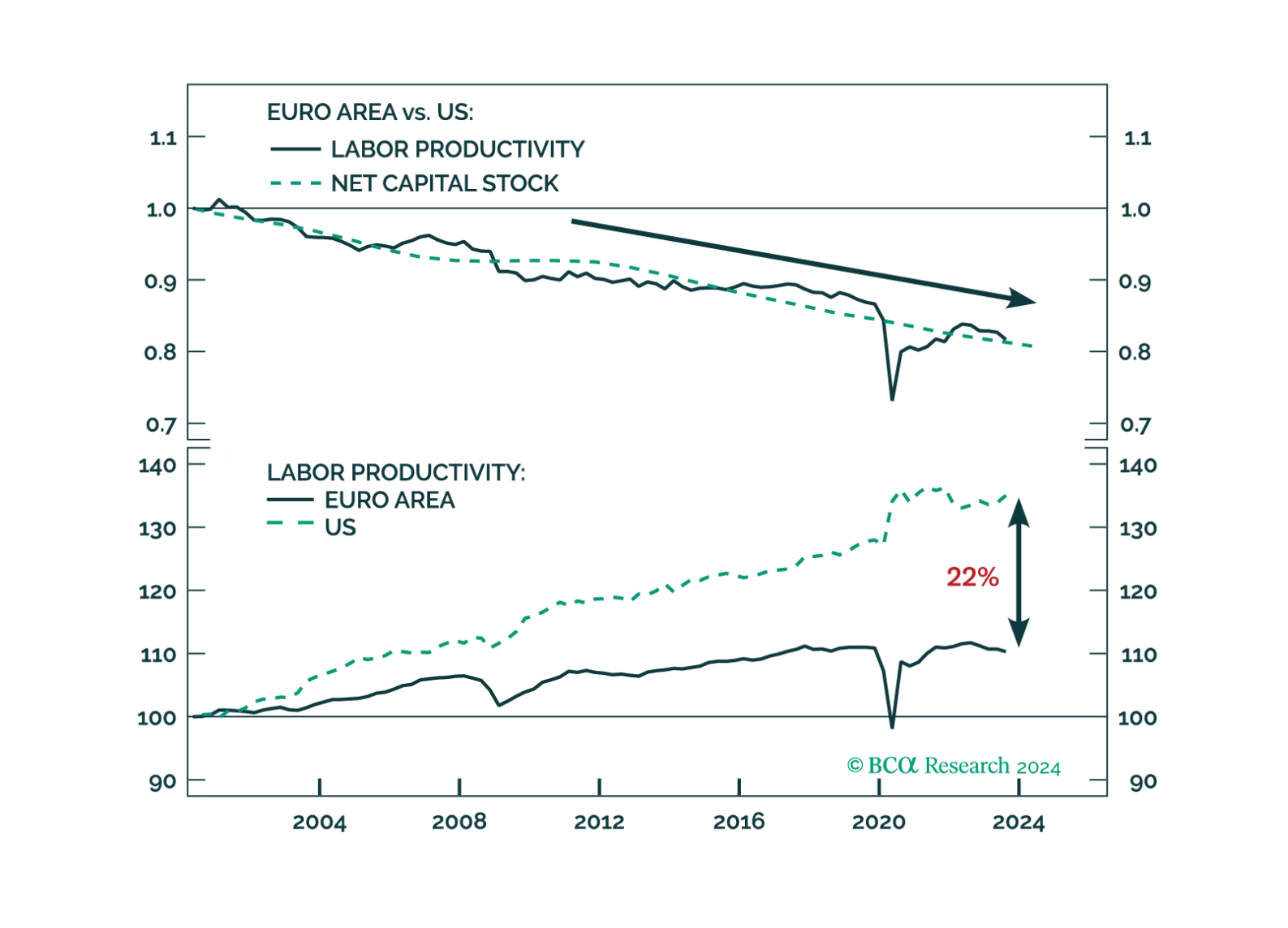
Highlights In this report, we build and present models designed to predict the odds of Chinese investable equity sector outperformance, based on a set of macroeconomic and equity market factors. BCA Research's China Investment Strategy service will aim to use our newly developed sector outperformance probability models to help investors to better understand the drivers of performance at any given moment, and to make more active equity sector recommendations in the future. Among the top six factors explaining historical periods of sector performance, three were macroeconomic in orientation, and two were directly related to the broad Chinese equity market. We see this as strongly supportive of the potential returns to be earned from active top-down sector rotation within China’s investable market. Cyclical stocks are very depressed relative to defensives, and we would favor them versus defensives over the coming year if China strikes a trade deal with the US and the Chinese economy incrementally improves, as we expect. Feature In our June 19 Special Report, we reviewed the predictability and cyclicality of equity sector earnings in China's investable & domestic markets, and examined the relevance of earnings in predicting relative sector performance over the past decade. We noted that a few sectors scored highly in terms of earnings predictability and the relevance of those earnings in predicting relative performance. But we also highlighted that most of China's equity sectors, in both the investable and domestic markets, either demonstrated earnings trends that were difficult to predict based on the trend in overall market earnings or exhibited relative performance that was difficult to explain based on the relative earnings profile. Our models are designed to predict equity sector relative performance using a series of macroeconomic and equity market factors. In short, our June report underscored that China’s equity sectors warranted a closer examination, with a particular emphasis on understanding the specific macroeconomic or equity market factors that have historically predicted relative sector performance. Today’s report examines this question in depth, focused on China’s investable equity market. We hope to extend our research to the A-share market in the near future. Our approach focuses on constructing and presenting models that quantify a checklist-based approach to determining the odds of equity sector performance. The aim is to use these models to better understand the drivers of performance at any given moment, and to make more active equity sector recommendations in the future. These recommendations will not mechanically follow the models; rather, we plan to use them as a stand in for what typically would be expected given the macro and financial market environment, and as a basis to investigate “abnormal” relative performance. We conclude by highlighting the substantial underperformance of cyclical vs defensives sectors over the past two years, and argue that it is highly unlikely that cyclicals will underperform defensives over the coming 12 months if China strikes a trade deal with the US and the economy incrementally improves, as we expect. We also explain the importance of monitoring the relative performance of health care & utilities stocks over the coming few months, and present a unique sector-based barometer for gauging China’s reflationary stance. The latter two relative performance trends are likely to assist investors in positioning for the big call: the outperformance of Chinese investable stocks vs the global benchmark. Detailing Our Approach In our effort to better understand historical periods of sector outperformance, we have chosen to model the probability of outperformance of each level 1 GICS sector (plus banks) based on a set of macro and equity market variables. Specifically, we use an analytical tool called a logistic regression, which forecasts the probability of a discrete event rather than forecasting the value of a dependent variable. We utilized this approach when building our earnings recession model for China (first presented in our January 16 Special Report1), and investors will often see it (in its conceptually different but practically similar probit form) employed when analyzing the likelihood of an economic recession. The New York Fed’s US recession model is a notable example of the latter,2 which has received much attention by market participants over the past year following the inversion of the US yield curve. The “events” that we modeled are historical periods of individual Chinese investable sector outperformance from 2010 to 2018, relative to the MSCI China index (the “broad market”). Charts I-1A and I-1B illustrate these periods with shading in each panel. We then attempt to explain these episodes of outperformance with the following macro predictors: Chart I-1AThis Report Builds Models Aimed At... This Report Builds Models Aimed At... This Report Builds Models Aimed At... Chart I-1B...Predicting The Shaded Regions Of These Charts ...Predicting The Shaded Regions Of These Charts ...Predicting The Shaded Regions Of These Charts Periods of accelerating economic activity, represented by our BCA's China Activity Index Periods of rising leading indicators of economic activity, represented by our BCA Li Keqiang Leading Indicator Episodes of tight monetary policy, defined as periods where China’s 3-month interbank repo rate is rising Periods of accelerating inflation, measured both by headline and core inflation We also include several equity market variables: uptrends in relative sector earnings, periods of rising broad market stock prices, uptrends in broad market earnings, and episodes of extreme technical conditions and relative over/undervaluation for the sector in question. In the case of energy stocks, we also include oil prices as a predictor. Charts I-2A and I-2B illustrate these periods as well as the macro & market variables that we have included as predictors. Chart I-2AWe Use These Macroeconomic And Equity Market Factors... We Use These Macroeconomic And Equity Market Factors... We Use These Macroeconomic And Equity Market Factors... Chart I-2B...To Predict Periods Of Equity Sector Outperformance ...To Predict Periods Of Equity Sector Outperformance ...To Predict Periods Of Equity Sector Outperformance Our approach also accounts for the existence of any leading or lagging relationships between the macro and market variables we have used as predictors and sector relative performance. In most cases the predictors lead relative sector performance, but in some cases it is the opposite. In the case of the latter, we have limited the lead of any variable in our models to 3 months in order to reduce the need to forecast. The link between tight monetary policy and industrial sector performance is one exception to this rule that we detail below. Finally, our approach also limits the extent to which we consider a leading relationship between our predictors and relative sector performance, in order to avoid picking up overlapping economic cycles. This issue, and the evidence supporting the existence of a 3½-year credit cycle in China, are detailed in Box 1. Box 1 Accounting For China’s 3½-Year Credit Cycle Over the course of the analysis detailed in this report, judgments concerning how much of a lead or lag to allow when accounting for any leading or lagging relationships between sector relative performance and either macroeconomic & stock market predictors were necessary. In cases where sector relative performance led any of our predictors, we capped the lead at 3-months to reduce the need to forecast the predictors when using the models. As explained below, the 8-month lead between industrial sector relative performance and tight monetary policy was the only exception to this rule. We also did not include any leading relationship between relative sector stock performance and the trend in relative sector EPS, and allowed at most a co-incident relationship. Limits were also required in the cases where our predictors led relative sector performance. While more lead time is usually better from the perspective of investment strategy, Chart I-B1 presents strong evidence of a 3½ -year credit cycle in China. Chart I-B2 illustrates the problem with including significant lags between predictors and relative sector performance when economic cycles are short. The chart shows the lead/lag correlation profile of the stylized cycle shown in Chart I-B1, and highlights that lags greater than 12-14 months risk picking up the impact of the previous economic cycle. Given this, we have limited the extent to which our predictors can lead relative sector performance in our models, and in practice lead times are generally less than one year. Chart I-B1Over The Past Decade, China Has Experienced A 3½-Year Credit Cycle A Guide To Chinese Investable Equity Sector Performance A Guide To Chinese Investable Equity Sector Performance Chart I-B2With Short Cycles, Excessive Lags Risk Picking Up The Previous Cycle With Short Cycles, Excessive Lags Risk Picking Up The Previous Cycle With Short Cycles, Excessive Lags Risk Picking Up The Previous Cycle The Key Drivers Of Chinese Investable Equity Sectors Pages 12-23 present the results of each sector’s outperformance probability model, along with a list of factors that were found to be useful predictors and a summary of the results. The importance of the factors included in the models is shown in each of the tables at the top right of pages 12-23 by a score of 1-3 stars, (loosely representing key levels of statistical significance) as well as each factor’s optimal lead or lag. A minus sign shows that the predictor leads sector relative performance, whereas a plus sign shows that it lags. Rising core inflation in China is the most important signal of sector performance that emerged from our analysis. Chart I-3China’s Sectors Linked Strongly To Core Inflation, Monetary Policy, And Growth A Guide To Chinese Investable Equity Sector Performance A Guide To Chinese Investable Equity Sector Performance Chart I-3 summarizes the significance of the factors in predicting sector performance in general, by summing up each predictor’s number of stars across all of the models. The chart shows that rising core inflation in China is the most important signal of sector performance that emerged from our analysis, followed by tight monetary policy, rising economic activity, rising broad market stock prices, oversold technical conditions, and rising broad market earnings. Chart I-3 highlights two important points: If regarded through the lens of causality alone, the strong relationship between rising core inflation and sector performance is somewhat surprising: normally, pricing power is subordinate to revenue/sales/demand as the primary factor driving fundamental performance. However, given that inflation is a lagging economic variable, we suspect that the significance of inflation in our models actually reflects the middle phase of the economic cycle in which sectors tend to best exhibit meaningful out/underperformance. It is also a stronger predictor of periods of tight monetary policy in China than headline inflation.3 This is an encouraging result for investors, as it suggests good odds that future episodes of meaningful sector outperformance can be identified given a particular macro view. Among the top six factors explaining historical periods of sector performance, three were macroeconomic in orientation, and two were directly related to the broad Chinese equity market. While Chinese equity sector performance can sometimes be idiosyncratic, we see this as strongly supportive of the idea that investors can earn positive excess returns by actively shifting between China’s equity sectors using a top-down approach. Turning to the specific results of our sector models, we present the following big-picture findings of our research: Defining China’s Cyclical & Defensive Sectors From a top-down perspective, the most important element of sector rotation typically involves shifting from defensive to cyclical stocks when economic activity is set to improve (and vice versa). In China, it is clear from the results of our models that the investable energy, materials, industrials, consumer discretionary, and information technology sectors are cyclical sectors. The relative performance of these sectors exhibits a positive relationship to pro-cyclical macro variables, or broad market trends. Following last year’s GICS changes, we also include the media & entertainment industry group (within the new communication services sector) in this list. Correspondingly, investable consumer staples, health care, financials, telecom services, utilities, and real estate are defensive sectors in China. Chart I-4Cyclical Stocks Are Bombed Out Versus Defensives Cyclical Stocks Are Bombed Out Versus Defensives Cyclical Stocks Are Bombed Out Versus Defensives Chart I-4 illustrates how these sectors have performed over the past decade by grouping them into equally-weighted cyclical and defensive stock price indexes, as well as the relative performance of cyclicals versus defensives. The chart makes it clear that cyclical stock performance is essentially as weak as it has ever been relative to defensives over the past decade, with the exception of a brief period in 2013. Panel 2 highlights that all of the underperformance of cyclicals over the past two years has been due to de-rating, rather than due to underperforming earnings. The Atypical Case Of Financials & Real Estate The fact that financial and real estate stocks are defensive in China is somewhat curious. In the case of financials, the abnormality is straightforward: most global equity portfolio managers would consider financials to be cyclical, and our work suggests that this is not true for the investable market. Our explanation for this apparent discrepancy is also straightforward: while small and medium banks in China have obviously grown in prominence over the past decade, large state-owned or state-affiliated commercial banks are still dominant in the provision of credit to China's old economy. In most cases China’s large banks lend to state-owned enterprises with implicit government guarantees, meaning that the earnings risk for Chinese banks has typically been lower than for the investable market in the aggregate. It remains to be seen whether this will remain true in a world where Chinese policymakers are keen to slow the pace at which China’s macro leverage ratio rises and to render the existing stock of debt more sustainable for the non-financial sector. Indeed, over a multi-year time horizon, the risk are not trivial that banks will be forced to recapitalize as a result of forced changes to loan terms (eg: significant increases in the amortization period of existing loans) or the recognition of sizeable loan losses, which would clearly increase the cyclicality of the Chinese investable financial sector. Chart I-5A Seeming Contradiction: Real Estate Is High-Beta, But Defensive A Seeming Contradiction: Real Estate Is High-Beta, But Defensive A Seeming Contradiction: Real Estate Is High-Beta, But Defensive On the real estate front, the anomaly is not that real estate stocks respond defensively to macroeconomic and stock market variables, it is that real estate stock prices are considerably more volatile than this defensive characterization would suggest. Globally (and especially in the US), real estate stocks are often viewed as bond proxies and thus are typically low-beta, but Chart I-5 shows that this is not the case in China. In our view, this issue is reconciled by the fact that Chinese investable real estate stocks are also highly positively linked to Chinese house price appreciation, with relative performance typically leading a pickup in house prices by up to 1 year. This strongly leading relationship has meant that real estate stocks have often outperformed the broad market as economic activity is slowing, in anticipation that policy easing will lead to an eventual recovery in house prices. Chart I-6Still Following The Defensive Playbook This Year Still Following The Defensive Playbook This Year Still Following The Defensive Playbook This Year In effect, investable real estate stocks are a high-beta sector that have acted counter-cyclically due to the historical interplay between economic activity, monetary policy, and the housing market. Real estate performance this year has not deviated from this playbook (Chart I-6), and so for now we are content to include real estate stocks in our defensive index. But similar to the case of financials, we can conceive of scenarios in which ongoing Chinese financial sector reform may change this relationship in the future. The Unique Monetary Policy Sensitivity Of Industrials And Consumer Staples Pages 14 and 16 highlight that industrials and consumer staples stocks have typically been sensitive to periods of tight monetary policy. In the case of industrials the relationship is negative, whereas consumer staples relative performance has been positively linked to these periods. In both cases, relative performance has led periods of tight monetary policy, significantly so in the case of industrials (by an average of 8 months). While the relative performance of banks, tech, and real estate stocks have also been linked to periods of tight monetary policy, industrials and consumer staples are the only sectors that have tended to lead these periods. Chart I-7Diverging Corporate Health Explains Industrials/Staples Monetary Policy Sensitivity Diverging Corporate Health Explains Industrials/Staples Monetary Policy Sensitivity Diverging Corporate Health Explains Industrials/Staples Monetary Policy Sensitivity This is a revelatory finding, and in our view it is explained by divergences in corporate health and leverage for the two sectors. We reviewed Chinese corporate health in our August 28 Special Report,4 and noted that the food & beverage sub-industry was a clear (positive) outlier based on our corporate health monitors. In particular, Chart I-7 highlights that food & beverage corporate health is markedly better than that for machinery companies or for industrial firms in general, supporting the notion that high (low) leverage is impacting the relative performance of industrials (consumer staples). The Leading Nature Of Health Care & Utilities Health care and utilities exhibit similar key drivers of relative performance: in both cases, periods of rising economic activity, rising core inflation, and rising broad market stock prices are all negatively associated with performance. Health care and utilities relative performance also happens to lead all three of those predictors, by 1-3 months on average depending on the variable in question. Our modeling work highlights that these are the only sectors whose relative performance has led multiple factors, suggesting that health care & utilities stocks are particularly interesting market bellwethers to monitor. Core Inflation Matters More Than Headline, Except For Energy & Real Estate As highlighted in Chart I-3, rising core inflation has been a much more important signal about relative sector performance than headline inflation. Chart I-8In China, Food Prices (Not Energy) Account For Headline/Core Differences In China, Food Prices (Not Energy) Account For Headline/Core Differences In China, Food Prices (Not Energy) Account For Headline/Core Differences The two exceptions to this rule relate to the energy and real estate sectors, with the former positively linked to headline inflation and the latter negatively linked. In both cases, we suspect that the relationship is a behavioral rather than a fundamental one. For energy, while rising headline inflation in developed countries is usually associated with rising energy prices, this is not true in the case of China. Chart I-8 highlights that differences between headline and core inflation over the past decade have almost always been driven by rising food prices. This implies that some investors (incorrectly) view energy stocks as a hedge against increases in consumer prices, even if those increases are not driven by rising fuel costs. In the case of real estate, investor expectations of eroding real disposable income and its impact on the housing market are likely the best explanation for the negative link between real estate relative performance and rising headline inflation. Whereas rising core inflation likely reflects a durable improvement in economic momentum (and thus would be positively correlated with income growth), episodes of rising Chinese headline inflation often reflect supply shocks that investors may perceive to be detrimental to household spending power (and thus expected housing demand). Investment Conclusions Our work aimed at explaining historical periods of Chinese investable sector outperformance has three investment implications in the current environment. Cyclicals will probably outperform defensives over the coming year if China strikes a trade deal with the US and the Chinese economy incrementally improves, as we expect. First, within China’s investable market, Chart I-4 illustrated that cyclical stocks are very depressed relative to defensives. Given our view that Chinese investable stocks are likely to outperform their global peers over a 6-12 month time horizon, we would also favor cyclicals to defensives over that period. For investors who are not yet overweight cyclical stocks in China, we would advise waiting for concrete signs that growth has bottomed (which should emerge sometime in Q1) before putting on a long position as we remain tactically neutral towards Chinese versus global stocks. But the key point is that it is highly unlikely that cyclicals will underperform defensives over the coming year if China strikes a trade deal with the US and the Chinese economy incrementally improves, as we expect. Second, the fact that investable health care and utilities stocks have particularly leading properties suggests that they should be monitored closely over the coming few months. A technical breakdown in the relative performance of these sectors would be an important sign that market participants are anticipating a bottoming in China’s economy, which may give investors a green light to position for a bullish cyclical stance. For now, both of these sectors continue to outperform (Chart I-9), supporting our decision to remain tactically neutral towards Chinese stocks. Third, the heightened negative sensitivity of industrials and positive sensitivity of consumer staples to monetary policy suggests that the relative performance trend between the two sectors may serve as a reflationary barometer for China’s economy. Chart I-10 shows that industrials outperformed staples last year once the PBOC shifted into easing mode, and anticipated the recovery in the pace of credit growth. However, industrials soon began to underperform staples, which also seems to have anticipated the fact that the recovery in credit was set to be less powerful than what has occurred during previous cycles. The fact that the relative performance trend is off its recent low is notable, and may suggest that China’s existing reflationary stance will be sufficient to stabilize economic activity if a trade deal with the US is indeed finalized in the near future. Chart I-9Key Defensive Sectors Are Still Outperforming, Supporting Our Neutral Tactical Stance Key Defensive Sectors Are Still Outperforming, Supporting Our Neutral Tactical Stance Key Defensive Sectors Are Still Outperforming, Supporting Our Neutral Tactical Stance Chart I-10Industrials Vs. Staples Anticipated That Easing Would Only Be Measured Industrials Vs. Staples Anticipated That Easing Would Only Be Measured Industrials Vs. Staples Anticipated That Easing Would Only Be Measured As a final point, BCA Research's China Investment Strategy service will aim to use our newly developed sector outperformance probability models to make more active equity sector recommendations in the future. These recommendations will not mechanically follow the models; rather, we plan to use the models as a stand in for what typically would be expected given the macro and financial market environment, and as a basis to investigate “abnormal” relative performance. We hope you will find these models to be a helpful quantification of the risk versus return prospects of allocating among China’s investable sectors. As always, we welcome any feedback that you may have about our approach.   Energy Chart II-1 Energy Energy Table II-1 A Guide To Chinese Investable Equity Sector Performance A Guide To Chinese Investable Equity Sector Performance   Unsurprisingly, our energy sector model highlights that periods of energy outperformance are strongly linked to periods of rising crude oil prices. However, what is surprising is that periods of accelerating headline inflation in China are even more closely linked to periods of energy sector outperformance than episodes of rising oil prices, and that these periods of accelerating inflation are not generally caused by rising energy prices. The lack of a clear economic rationale for this relationship implies that some investors (incorrectly) view energy stocks as a hedge against increases in consumer prices, even if those increases are largely driven by rising food prices. The model also highlights that periods of strong undervaluation have historically been significant in predicting future energy sector outperformance, with a lag of roughly 8 months. The probability of energy sector outperformance has fallen sharply according to our model, but for now we continue to recommend a long absolute energy sector position on a 6-12 month time horizon. BCA’s Commodity & Energy Strategy service expects oil prices to trade at $70/barrel on average next year,5 Chinese headline inflation continues to rise, and we noted in our October 2 Weekly Report that energy stocks are heavily discounted.6 Barring a durable decline in oil prices below $55/barrel, investors should continue to favor China’s energy sector. Materials Chart II-2 Materials Materials Table II-2 A Guide To Chinese Investable Equity Sector Performance A Guide To Chinese Investable Equity Sector Performance Our model highlights that the materials sector is one of the clearest plays on accelerating industrial activity within the investable universe. Among the macro variables that we tested, periods of investable materials outperformance are strongly positively linked with periods when our BCA Activity Index and our leading indicator for the index have been rising. Periods of materials sector outperformance have also been positively correlated with prior periods of oversold technical conditions and rising broad market stock prices, underscoring that materials are a strongly pro-cyclical sector. We currently maintain no active relative sector trades, but our model suggests that investors should be underweight the investable materials sector relative to the broad investable index. Industrials Chart II-3 Industrials Industrials Table II-3 A Guide To Chinese Investable Equity Sector Performance A Guide To Chinese Investable Equity Sector Performance Periods of industrial sector outperformance have historically been positively correlated with relative industrial sector earnings, broad market stock prices, and prior oversold technical conditions. They have been negatively correlated with periods of tight monetary policy, rising core inflation, and prior overbought technical conditions. Since 2010, periods of industrial sector performance have led periods of tight monetary policy by 8 months, the longest lead of relative equity performance to any macro variable that we tested in our model (and the longest lead that we allowed). Industrial sector performance has also been strongly negatively linked with periods of rising core inflation. These findings, and the fact that our Activity Index and its leading indicator have not been highly successful at predicting periods of industrial sector outperformance, strongly suggest that industrials, while pro-cyclical, are primarily driven by expectations of easy monetary policy. We noted in an August 2018 Special Report that state-owned enterprises have become substantially leveraged over the past decade,7 and in a more recent report we highlighted that industries such as machinery have experienced a significant deterioration in corporate health over the past decade.8 This helps explain why industrial sector performance is so negatively impacted by tight policy. Our model suggests that the best time to be overweight industrial stocks is the early phase of an economic rebound, when Chinese stock prices are rising but market participants are not yet expecting tighter policy. These conditions may present themselves sometime in Q1, but probably not over the coming 0-3 months. Consumer Discretionary Ex-Internet & Direct Marketing Retail Chart II-4 Consumer Discretionary Ex-Internet & Direct Marketing Retail Consumer Discretionary Ex-Internet & Direct Marketing Retail Table II-4 A Guide To Chinese Investable Equity Sector Performance A Guide To Chinese Investable Equity Sector Performance Besides materials, China’s investable consumer discretionary sector has historically been the most positively associated with coincident and leading measures of industrial activity. Rising core inflation is also highly positively related to consumer discretionary outperformance, which may reflect improved pricing power for the sector. The strong link with industrial activity is in contrast to depictions of China’s consumer sector as being less correlated to money & credit trends than the overall economy, and is supportive of our view that industrial activity forms one of the three pillars of China’s business cycle.9 We ended the estimation period of our model as of December 2018, in order to avoid including the distortive effects of last year’s changes to the global industry classification standard (which resulted in Alibaba’s inclusion and overwhelming representation in the investable consumer discretionary sector). As such, the results of our model apply today to consumer discretionary stocks ex-internet & direct marketing retail. For now, the absence of an uptrend in our Activity Index and in core inflation is signaling underperformance of discretionary stocks outside of internet & direct marketing retail. Outperformance this year largely reflects a significant advance in consumer durable and apparel: by contrast, automobiles & components have underperformed the broad market by roughly 14% year-to-date. Consumer Staples Chart II-5 Consumer Staples Consumer Staples Table II-5 A Guide To Chinese Investable Equity Sector Performance A Guide To Chinese Investable Equity Sector Performance Historically, periods of consumer staples outperformance have been predicted by a falling Activity Index, periods of tight monetary policy, and over/undervalued conditions. The impact of monetary policy is particularly heavy in the model, suggesting that consumer staples are somewhat the mirror image of industrials in terms of the impact of leverage on relative equity performance. This too is supported by our August 28 Special Report,10 which noted that corporate health for the food & beverage sector was the strongest among the sectors we examined. However, the model failed to capture what has been very significant staples outperformance this year, highlighting the occasional limits of a rule-of-thumb approach to sector allocation. Investable consumer staples are reliably low-beta compared with the broad market, and we are not surprised that investors have strongly favored the sector this year amid enormous economic and policy uncertainty. An eventual improvement in economic activity, coupled with fairly rich valuation, should work against consumer staples stocks sometime in the first quarter of 2020. Investors who are positioned in favor of China-related assets should also be watching closely for any signs of a technical breakdown in the relative performance trend of investable staples. Health Care Chart II-6 Health Care Health Care Table II-6 A Guide To Chinese Investable Equity Sector Performance A Guide To Chinese Investable Equity Sector Performance Among the macro variables tested in our model, periods of health care outperformance are negatively related to coincident and leading measures of industrial activity and strongly negatively related to rising core inflation.  Health care outperformance is also strongly negatively related to periods of rising broad market stock prices, and positively related to prior oversold technical conditions. These results clearly signify that investable health care is a defensive sector, to be owned when the economy is slowing and when investable stocks in general are trending lower. Our model suggests that health care stocks are likely to continue to outperform, as they have been since the beginning of the year. A substantive US/China trade deal that meaningfully reduces economic uncertainty remains the key risk to health care outperformance over a 6- to 12-month time horizon. Financials Chart II-7 Financials Financials Table II-7 A Guide To Chinese Investable Equity Sector Performance A Guide To Chinese Investable Equity Sector Performance Our model highlights that periods of financial sector outperformance over the past decade have been negatively associated with periods of rising core inflation (a strong relationship), and with periods of rising index earnings. Oversold technical conditions have also helped explain future episodes of financial sector outperformance. The link between core inflation and the outperformance of financials appears to represent a behavioral rather than a fundamental relationship. When modeling periods of rising financial sector relative earnings, the trend in broad market EPS is more predictive than that of core inflation, highlighting that the latter’s explanatory power is due to investor behavior. The results of our model, and the fact that core inflation leads Chinese index earnings, suggests that financials are fundamentally counter-cyclical and that investors see rising Chinese core inflation as confirmation that an economic expansion is underway (and that broad market earnings are likely to rise). Our model is currently predicting financial sector outperformance, but investable financials have modestly underperformed since the beginning of the year. This appears to have been caused by the underperformance of financial sector earnings this year as overall index earnings growth has decelerated, contrary to what history would suggest. We suspect that the ongoing shadow banking crackdown is related to financial sector earnings underperformance, and we would advise against an overweight stance towards investable financials until signs of improving relative earnings emerge. Banks Chart II-8 Banks Banks Table II-8 A Guide To Chinese Investable Equity Sector Performance A Guide To Chinese Investable Equity Sector Performance Our model shows that periods of banking sector outperformance are more linked to macro variables than has been the case for the overall financial sector. Specifically, bank performance is negatively correlated with leading indicators of economic activity and rising core inflation, and especially negatively correlated with periods of tight monetary policy. Banks have also typically outperformed following periods of oversold technical conditions. Similar to financials, bank earnings are typically counter-cyclical, but relative bank earnings have not been good predictors of relative bank performance over the past decade. Still, the negative association of relative stock prices with leading economic indicators, rising core inflation and rising interest rates underscores that investors should normally be underweight banks if they expect overall Chinese stock prices to rise. Also similar to the overall financial sector, our model is currently predicting outperformance for bank stocks, but investable banks have underperformed year-to-date. The shadow banking crackdown is also likely impacting investable bank earnings, leading to a similar recommendation to avoid bank stocks until relative earnings look to be trending higher. “Tech+”   Chart II-9 Tech+' Tech+' Table II-9 A Guide To Chinese Investable Equity Sector Performance A Guide To Chinese Investable Equity Sector Performance Our technology model has worked well at predicting periods of tech sector outperformance over the past several years, particularly from 2015 – 2017. The model suggests that, in addition to being negatively related to prior overbought conditions, periods of technology sector outperformance are associated with improving growth conditions, easy monetary policy, and rising prices. In other words, tech stocks are a growth & liquidity play. Owing to last year’s changes to the GICS, the results of our model apply today to Chinese investable internet & direct marketing retail, the media & entertainment industry group (within the new communication services sector), and the now considerably smaller information technology sector (the sum of which could be considered the “tech+” sector). The model has been predicting tech sector outperformance since May (in response to easier monetary policy), which has occurred for the official information technology sector. However, the BAT (Baidu, Alibaba, and Tencent) stocks are only up fractionally in relative terms from their late-May low. Our expectation that China’s economy is likely to bottom in Q1 means that we may recommend upgrading “tech+” stocks relative to the investable benchmark in the coming months. Telecom Services Chart II-10 Telecom Services Telecom Services Table II-10 A Guide To Chinese Investable Equity Sector Performance A Guide To Chinese Investable Equity Sector Performance Our model for telecommunication services (now a level 2 industry group within the communication services sector) illustrates that telecom stocks have historically been counter-cyclical. Periods of telecom outperformance have been negatively associated with periods of rising core inflation, rising broad market stock prices, and rising broad market EPS. It is notable that telecom services stocks are driven more by cycles in overall stock prices than by cycles in economic activity. This suggests that investors tend to focus on the fact that telecom stocks are reliably low-beta compared with the overall investable market, causing out(under)performance of telecoms when the broad market is falling(rising). Similar to financials & banks, telecom stocks have not outperformed this year, in contrast to what our model would suggest. Earnings also appear to be the culprit, with the level of 12-month trailing earnings having fallen nearly 10% since the summer. China Mobile accounts for a sizeable portion of the telecom services index, and the company’s recent earnings weakness seems to be due to depreciation charges stemming from forced investment on 5G spending (mandated by the Chinese government). Our sense is that this will have only a temporary effect on telecom services EPS, meaning that investors should continue to expect the sector to behave in a counter-cyclical fashion over the coming year. Utilities Chart II-11 Utilities Utilities Table II-11 A Guide To Chinese Investable Equity Sector Performance A Guide To Chinese Investable Equity Sector Performance The early performance of our utilities model was mixed, as it generated several false sell signals during the 2011 – 2013 period despite recommending, on average, an overweight stance. However, over the past five years, the model has performed extremely well in terms of explaining periods of relative utilities performance. The model highlights that utilities are straightforwardly counter-cyclical. The relative performance of utilities stocks is positively related to its relative earnings trend, and negatively related to economic activity, rising core inflation, and broad market stock prices.  Consistent with a decline in the overall MSCI China index, the model has correctly predicted utilities outperformance this year. We expect utilities to underperform over a 6-12 month time horizon, but would advise against an aggressive underweight position until hard evidence of a bottom in Chinese economic activity emerges. Real Estate Chart II-12 Real Estate Real Estate Table II-12 A Guide To Chinese Investable Equity Sector Performance A Guide To Chinese Investable Equity Sector Performance Our model for the relative performance of investable real estate has been among the most successful of those detailed in this report, which is somewhat surprising given the macro factors that the model shows drive real estate performance. While periods of relative real estate performance are modestly (negatively) associated with periods of tight monetary policy, rising headline inflation is the most important macro predictor of real estate underperformance. Among market factors driving performance, real estate stocks reliably underperform when broad market EPS are trending higher, and they historically outperform for a time after becoming relatively undervalued. Real estate relative performance is also strongly linked to periods of rising house prices, but the former tends to significantly lead the latter. Given that core inflation has better predicted episodes of tight monetary policy than headline inflation, investor expectations of eroding real disposable income is likely the best explanation for the negative link between real estate relative performance and rising headline inflation. Whereas rising core inflation likely reflects a durable improvement in economic momentum (and thus would be positively correlated with income growth), episodes of rising Chinese headline inflation often reflect supply shocks that investors may perceive to be detrimental to household spending power (and thus expected housing demand). Beyond the negative link between higher inflation and interest rates on investable real estate performance, the strong negative association with broad market earnings underscores that investors treat real estate as a defensive sector. We thus expect real estate stocks to continue to outperform in the near term, but underperform over a 6-12 month time horizon.   Jonathan LaBerge, CFA Vice President jonathanl@bcaresearch.com   Footnotes 1. Please see China Investment Strategy, "Six Questions About Chinese Stocks," dated January 16, 2019. 2. Please see Federal Reserve Bank of New York, The Yield Curve as a Leading Indicator at https://www.newyorkfed.org/research/capital_markets/ycfaq.html 3. This is despite frequent concerns among investors that the PBOC is inclined to tighten in response to detrimental supply shocks. 4. Please see China Investment Strategy, "Messages From BCA’s China Industry Watch," dated August 28, 2019. 5. Please see Commodity & Energy Strategy, "Policy Uncertainty Lifts USD, Stifles Global Oil Demand Growth," dated October 17, 2019. 6. Please see China Investment Strategy, "China Macro & Market Review," dated October 2, 2019. 7. Please see China Investment Strategy, "Chinese Policymakers: Facing A Trade-Off Between Growth And Leveraging," dated August 29, 2018. 8. Please see China Investment Strategy, "Messages From BCA’s China Industry Watch," dated August 28, 2019. 9. Please see China Investment Strategy, "The Three Pillars Of China’s Economy," dated May 16, 2018. 10. Please see China Investment Strategy, "Messages From BCA’s China Industry Watch," dated August 28, 2019. Cyclical Investment Stance Equity Sector Recommendations