Sorry, you need to enable JavaScript to visit this website.
Skip to main content

US Dollar

Every year we highlight five low-odds scenarios that would have a major impact on global financial markets if they happened. This year we contemplate a total reversal of Chinese policy, a US-Iran nuclear deal, a breakdown of NATO, US military action across the Americas, and an internationally coordinated FX intervention.

Paradoxically, raging optimism on the US economy is making a reacceleration in growth less likely in 2025. The reaction of the bond market has made the Fed rethink its cutting campaign. Markets are also constraining Trump’s agenda. US manufacturing will not recover with a surging dollar. Fears of inflation and debt sustainability have made moderate House Republicans push back against the President Elect’s wishes. Given the sky-high optimism embedded in asset prices, we believe a defensive portfolio stance is warranted on a 12-month horizon. Overweight gold to hedge the risk of a fiscal crisis.

Our Emerging Markets, China, and Commodities strategy teams published their 2025 joint outlook. Our colleagues remain bullish on the US dollar for now but see rising odds of the Trump administration actively pursuing greenback devaluation. To avoid steep…

For our last publication of the year, we explore five key themes that will dominate the European macro landscape and markets next year. While the start of 2025 will be challenging for European assets, the latter part will offer some much-needed relief.

Trump's policies aim to support domestic producers and will be pro-growth and inflationary, at least initially. This environment is supportive of equities. Earnings will likely be strong, but elevated valuations make equities prone to a correction. Earnings growth broadening will translate into performance broadening – the S&P 493, Cyclicals, Value, Small and Mid are likely to outperform.

The US Treasury yield curve recently bull flattened, with the 2-year/10-year segment almost completely flat. Meanwhile, the breakeven inflation curve has re-inverted, with 2-year breakeven inflation rate now above the 10-year maturity by about 25 basis…

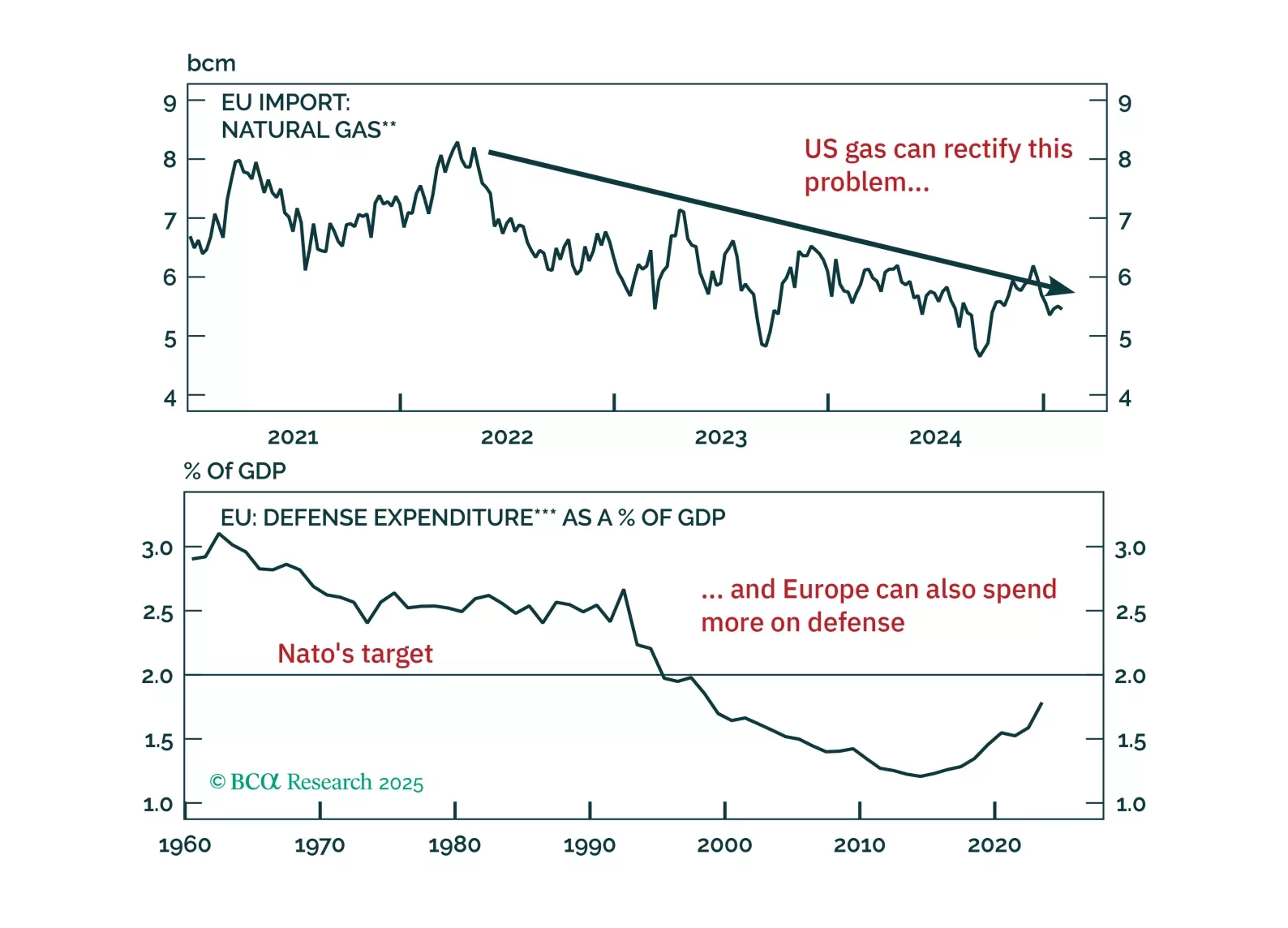
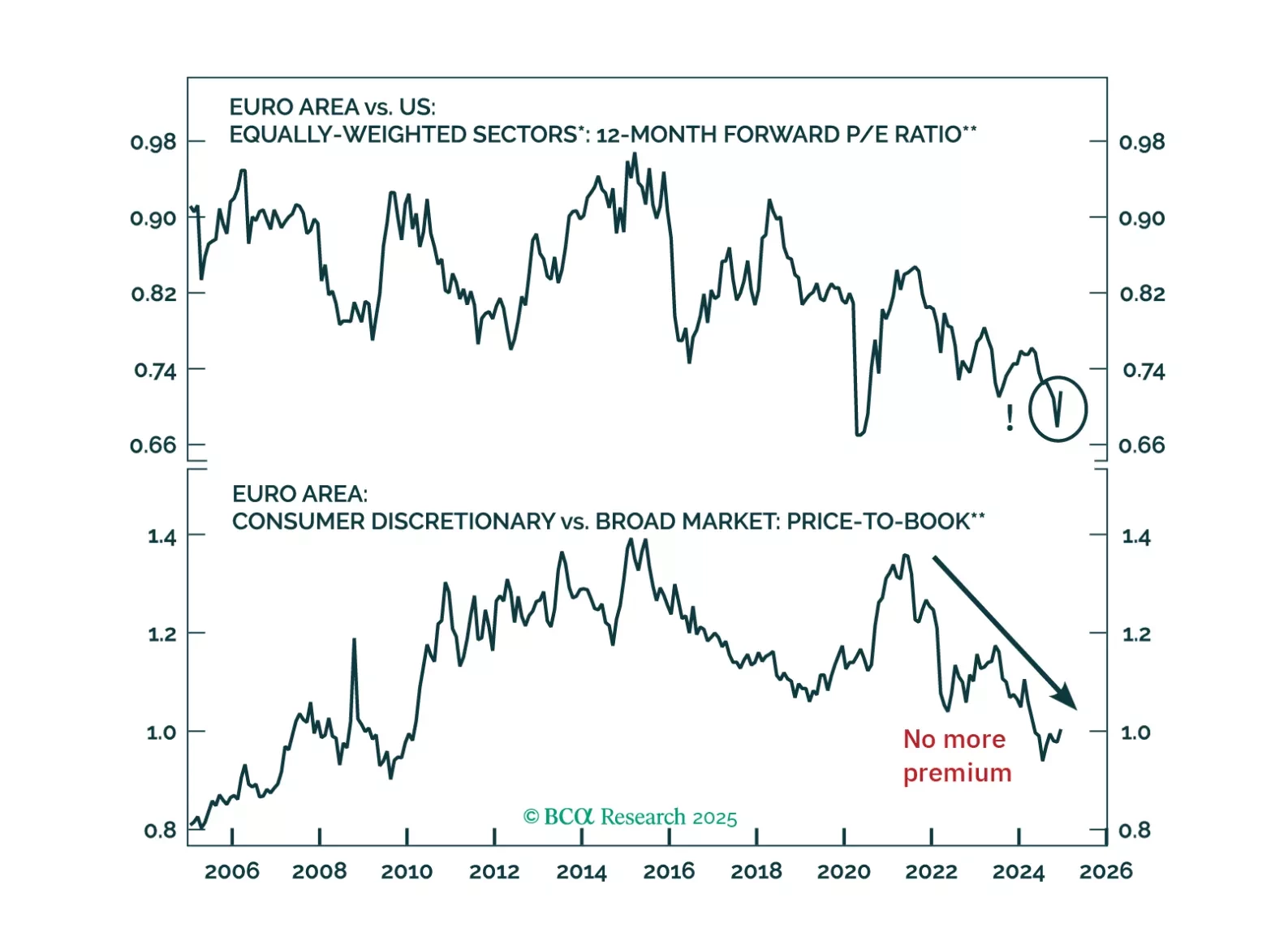
Investors have given up on European assets, which now suffer exceptional discounts to US ones. However, tighter US fiscal policy, the end of Europe’s austerity and deleveraging, the LNG Tsunami about to hit European shores, and the global capex fueled by the Impossible Geopolitical Trinity mean that Europe’s time to shine will soon come back.

Investors have given up on European assets, which now suffer exceptional discounts to US ones. However, tighter US fiscal policy, the end of Europe’s austerity and deleveraging, the LNG Tsunami about to hit European shores, and the global capex fueled by the Impossible Geopolitical Trinity mean that Europe’s time to shine will soon come back.

We used last Friday’s BCA Live & Unfiltered Meeting to assess our views on the US dollar after its recent bull run. While technical indicators may show short-term exhaustion, and Scott Bessent’s nomination for Treasury Secretary put a lid on recent dollar…
Executive Summary Political Uncertainty And The Dollar Too Soon To Book Profits On The Dollar Too Soon To Book Profits On The Dollar The consensus is that Republicans will blow out the budget deficit, leading to a higher fiscal risk premium on the dollar. That seems unlikely for now. If the deficit does not blow out, that path of least resistance for the dollar remains up, for now. The US economy is already outperforming the rest of the world, so does not need outsized tax cuts to keep the economy humming. Longer term, what matters are expected rates of return, and the US stock market will likely see outflows in the coming years. However, the bond market matters more for currencies, and real yields remain elevated in the US.  Short-term investors should remain long the greenback. Longer-term investors should start bottom-fishing opportunities in non-currency adjusted terms where valuations are becoming very compelling. Bottom Line: Stay long the US dollar. Feature The standard economic theory is that Republicans will blow out the budget deficit, so that should be negative for the dollar, as it pushes up inflation expectations and depresses real interest rates. This is also true given a campaign trail of deregulation, tax cuts and siphoning off US competitors, via tariffs, which all sound inflationary. So far, Republicans have been rather budget friendly. For example, one of the most contested issues amongst Democrats and Republican has been what should be done around social security and Republicans are giving in to social security cuts (Chart 1). While too early to tell, the budget deficit is unlikely to be much wider under a Trump administration. Chart 1What Rising Budget Deficit? Too Soon To Book Profits On The Dollar Too Soon To Book Profits On The Dollar Deficits And Risk Premia Chart 2Deficits And Risk Premia Too Soon To Book Profits On The Dollar Too Soon To Book Profits On The Dollar Bond volatility has tended to rise as risks of a rising fiscal deficit increase. We might well end up in world where the US budget deficit does blow out, and investors will require a bigger risk premium to hold US bonds or the dollar. We are not there yet. It is true that the rise in the VIX and corporate bond spreads could be attributed to concerns about a widening deficit in the US (Chart 2), but a strong dollar tells us those concerns are premature for now. Putting President elect Donald Trump’s policies into perspective, the effective corporate tax rate in the US will be in line with many other countries (Chart 3). This means the prospect of an administration that fans the US inflationary wave is plausible, but not probable for now. That should keep US real interest rates high for now. Chart 3No Outsized Tax Cuts In The US Too Soon To Book Profits On The Dollar Too Soon To Book Profits On The Dollar Putting everything together, the US runs a fiscal deficit of around 8% of GDP, while the unemployment rate only sits around 4.1% (Chart 4). Ergo, this is not an economy that needs more fiscal stimulus. Most economists on the Trump administration will consider this point. Chart 4The US Does Not Need More Fiscal Stimulus Too Soon To Book Profits On The Dollar Too Soon To Book Profits On The Dollar The External Balance The exorbitant privilege of the dollar has meant that the US has earned more on its assets, than it has paid on its liabilities. That remains the case today, suggesting that the short-term outlook for the greenback remains positive from the basis of the US external balance (Chart 5). Ergo, more inflows into the US. That said, this is one area we are very concerned about when it comes to the dollar. For one, we know that payments on US liabilities are rising and will especially explode if we have a fiscal crisis in the US. This is worth monitoring. For now, real interest rates in the US are very positive suggesting that there should be little appetite for a massive capital flight from US Treasury securities (Chart 6). Chart 5The US External Balance Too Soon To Book Profits On The Dollar Too Soon To Book Profits On The Dollar Chart 6Real Interest Rates And The Dollar Too Soon To Book Profits On The Dollar Too Soon To Book Profits On The Dollar Chart 7Prospective Equity Returns Too Soon To Book Profits On The Dollar Too Soon To Book Profits On The Dollar Another source of risk is also the US equity market. US stocks are overbought and over owned, and a massive outflow from this market is a source of risk for the dollar. Over a five-to-ten-year horizon, valuations are a perfect guide for what happens in both equity, fixed income and currency markets. The message from our valuation models is that US securities are overvalued, and we should be using dollar strength to diversify into cheaper markets like Japan (Chart 7). The bottom line is that the US market remains defensive and will likely attract inflows in a global market selloff. US bonds are also a high-yielding vehicle for many foreign investors. That is bullish the dollar. Longer-term, these factors will be outweighed by valuation concerns and rising opportunities in other markets. What Should Investors Do? Here is what we know. When global policy uncertainty is rising, especially vis-à-vis the US, American stocks perform better and the dollar soars (Chart 8). With a Trump presidency baked in the cake, the potential source of any uncertainty could come from outside the US. This will keep the dollar bid. Carry trades have been a big trend in currency markets, and with EM volatility rising, a lot of these trades could still be unwound (Chart 9). EM currencies typically have a higher carry, and the yen was the perfect vehicle to fund these trades. That said, these have blown up. Within the rubble, some interesting opportunities like the Mexican Peso and the Norwegian krone that are no longer market darlings, are emerging. Stay tuned. Chart 8Political Uncertainty And The Dollar Too Soon To Book Profits On The Dollar Too Soon To Book Profits On The Dollar Chart 9Rising Risks In EM Currencies Too Soon To Book Profits On The Dollar Too Soon To Book Profits On The Dollar Chart 10Our Trading Model Is Short The USD Too Soon To Book Profits On The Dollar Too Soon To Book Profits On The Dollar A final note on our US dollar trading model – it remains short the greenback. The model has underperformed our recommendations since August but keeps us grounded in the methodology we use to analyze FX markets. We are excited about a new version of this model, that is more tactical in nature. That said, the blueprint of the original model was capital preservation which will remain an important tenet of any changes (Chart 10). Chester Ntonifor Foreign Exchange/ Global Fixed Income Strategist chestern@bcaresearch.com Trades & Forecasts Strategic View Cyclical Holdings (6-18 months) Tactical Holdings (0-6 months) Limit Orders Forecast Summary