United States
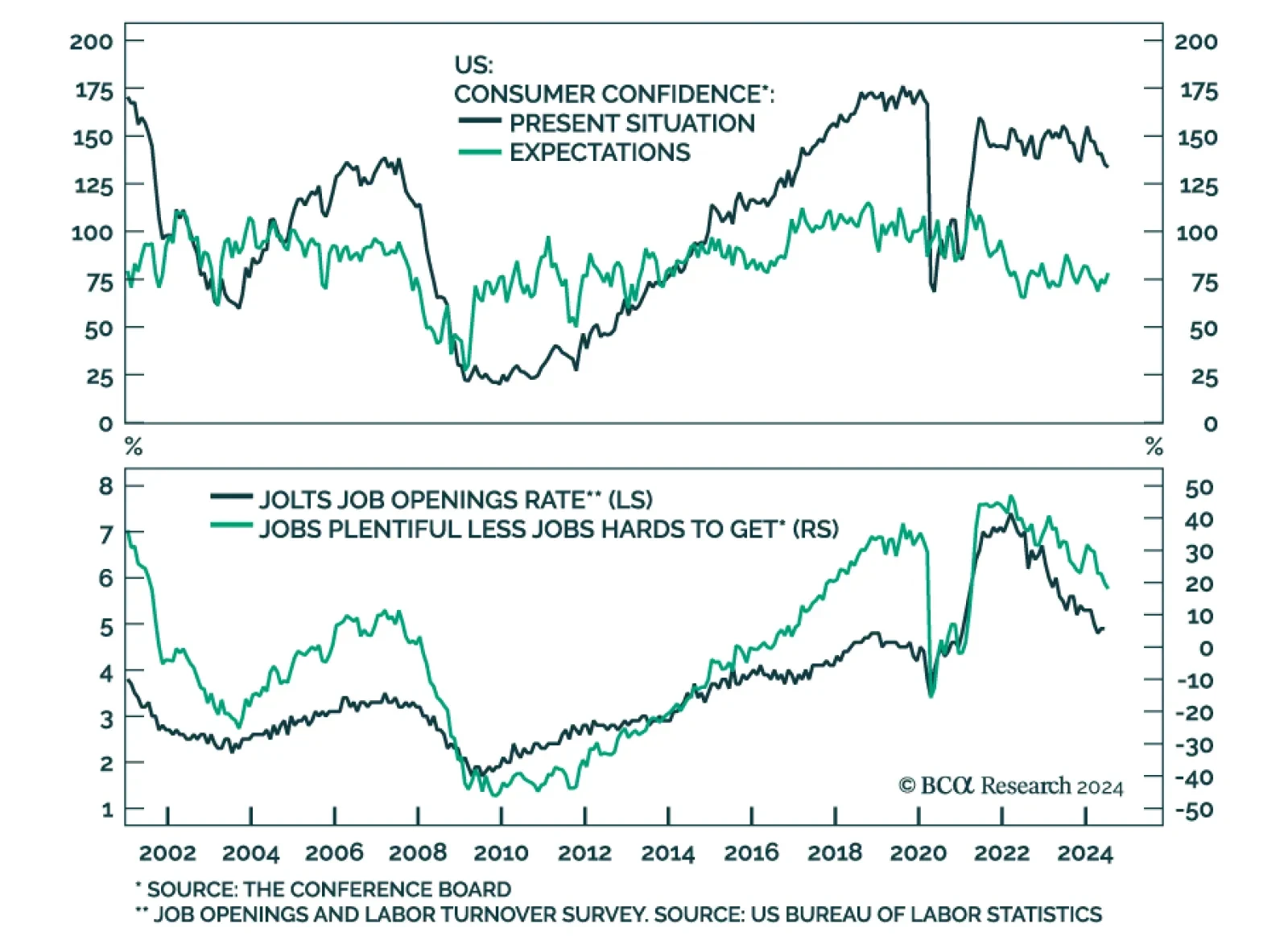
The Conference Board measure of consumer confidence surprised to the upside, rising from 97.8 to 100.3 in July. Respondents’ more optimistic economic outlook drove the overall increase, offsetting a bleaker view of current conditions. Consumers’ assessment of…

Historically, interest-rate sensitive sectors such as financials and real estate have tended to post the highest returns in the 3 months preceding the first Fed rate cut. Interestingly, industrials, typically a deep cyclical sector, have also tended to post…
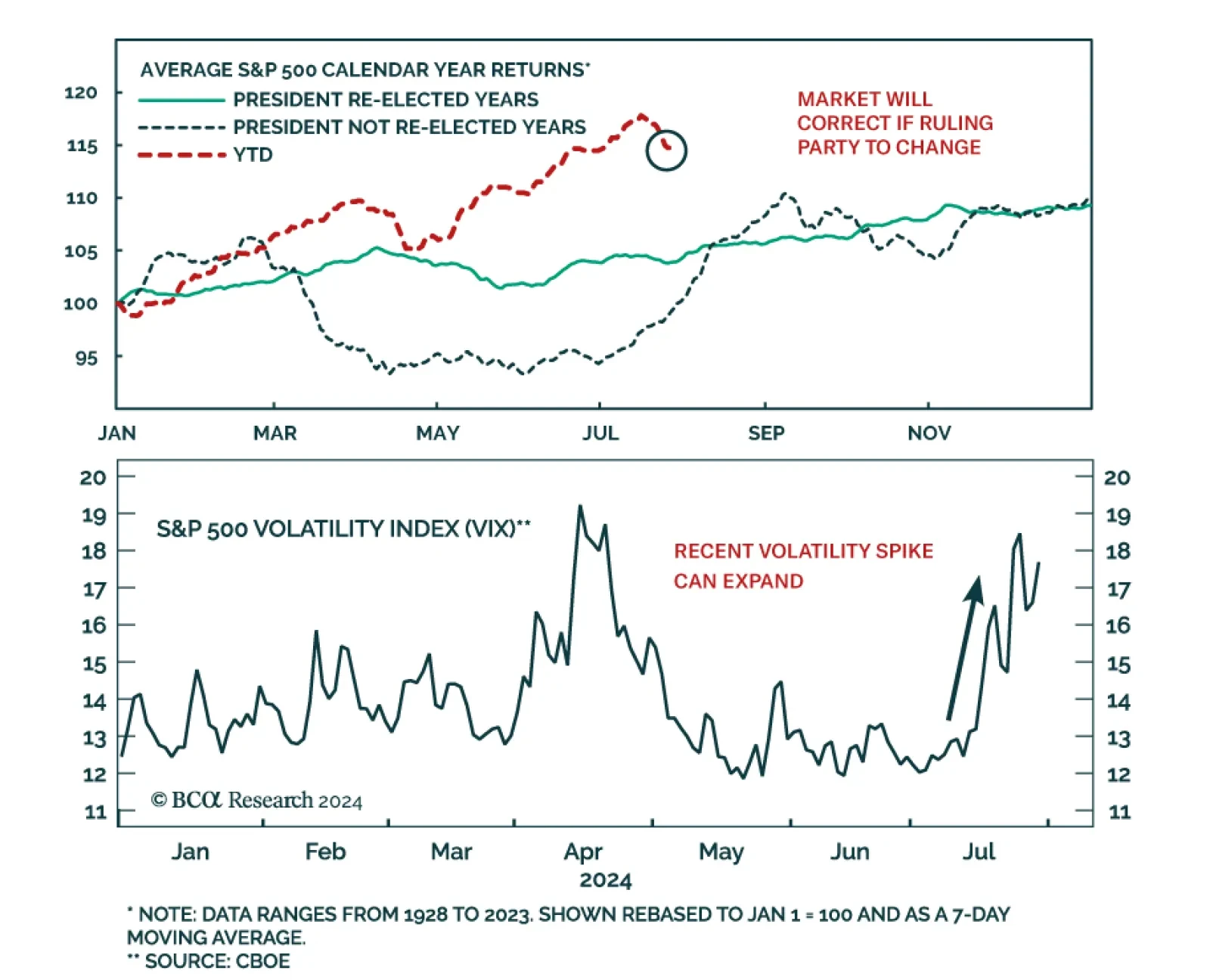
According to BCA Research’s US Equity Strategy service, the stock market outperformance in 2024 thus far is an unusual pattern in election years. The historical data imply that the market will suffer a spill if investors come to believe the incumbent party…
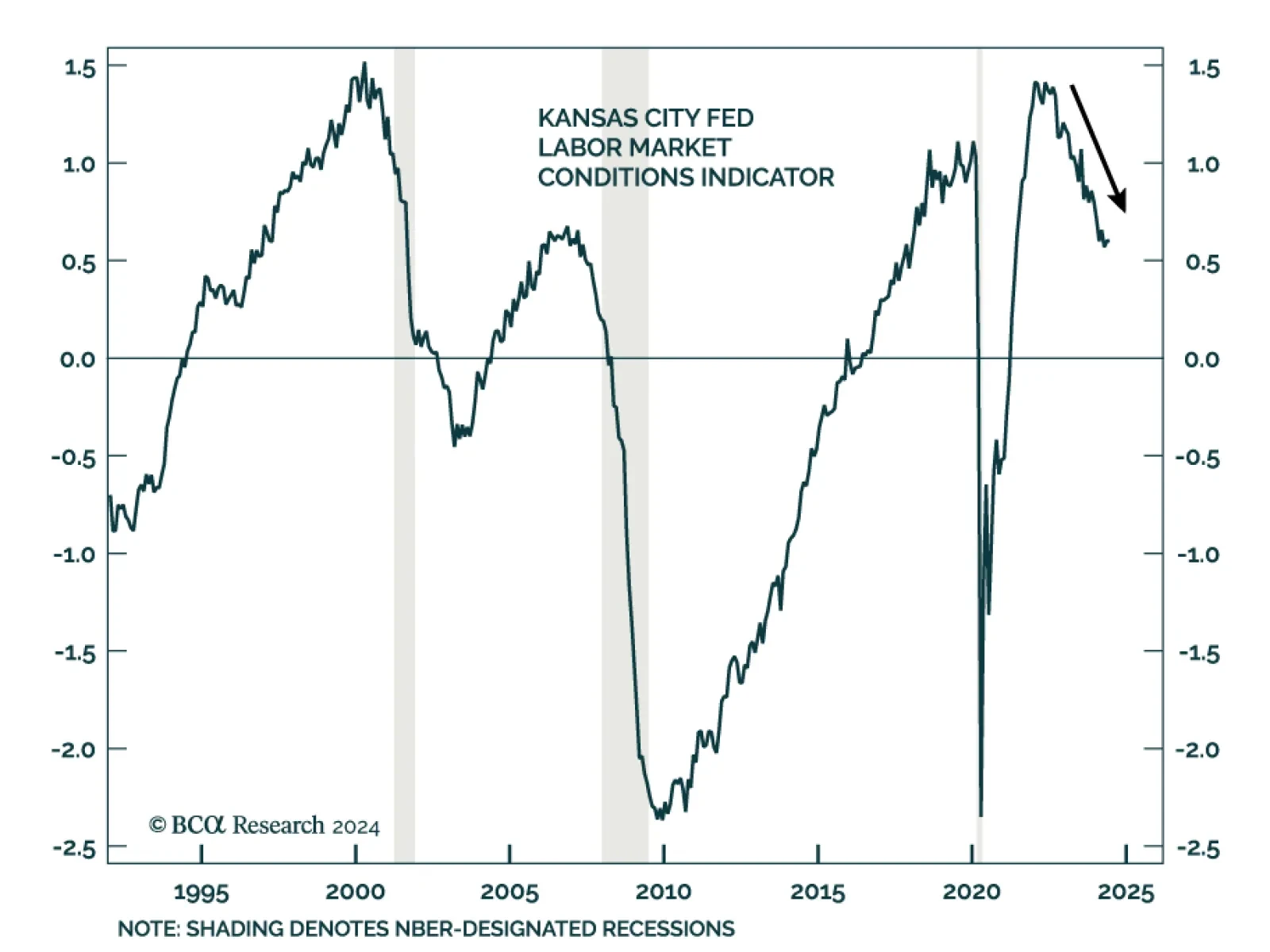
The Kansas City Labor Market Conditions Indicator (LMCI) is a broad measure of labor market trends incorporating 24 national labor market variables. It has been on a steady downtrend since 2022, though at 0.6, it remains slightly higher today than it was at…
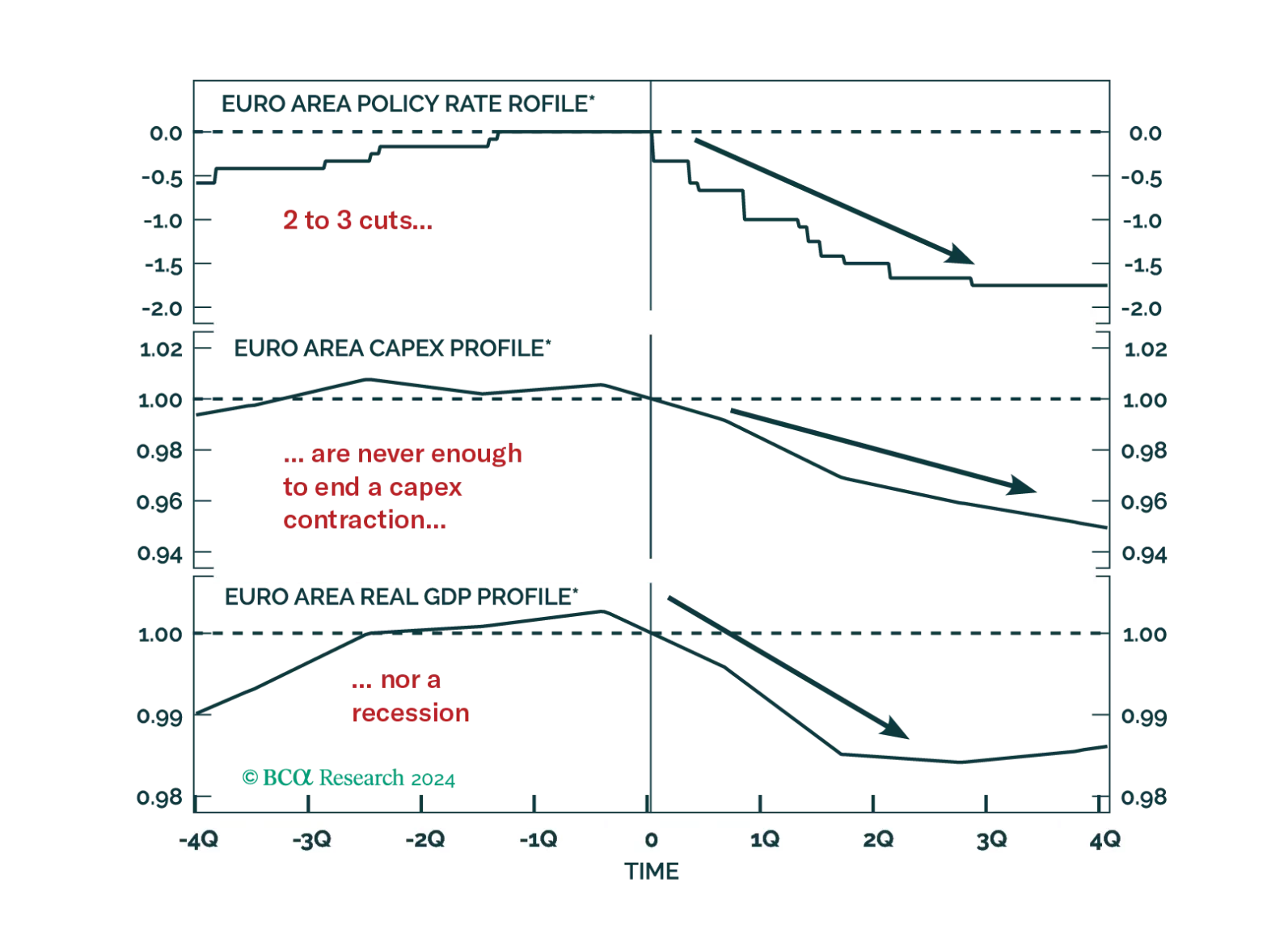
Investors hope that the ECB rate cuts priced into the curve will be sufficient to achieve a soft landing in Europe. History argues against this view, but will this time be different?
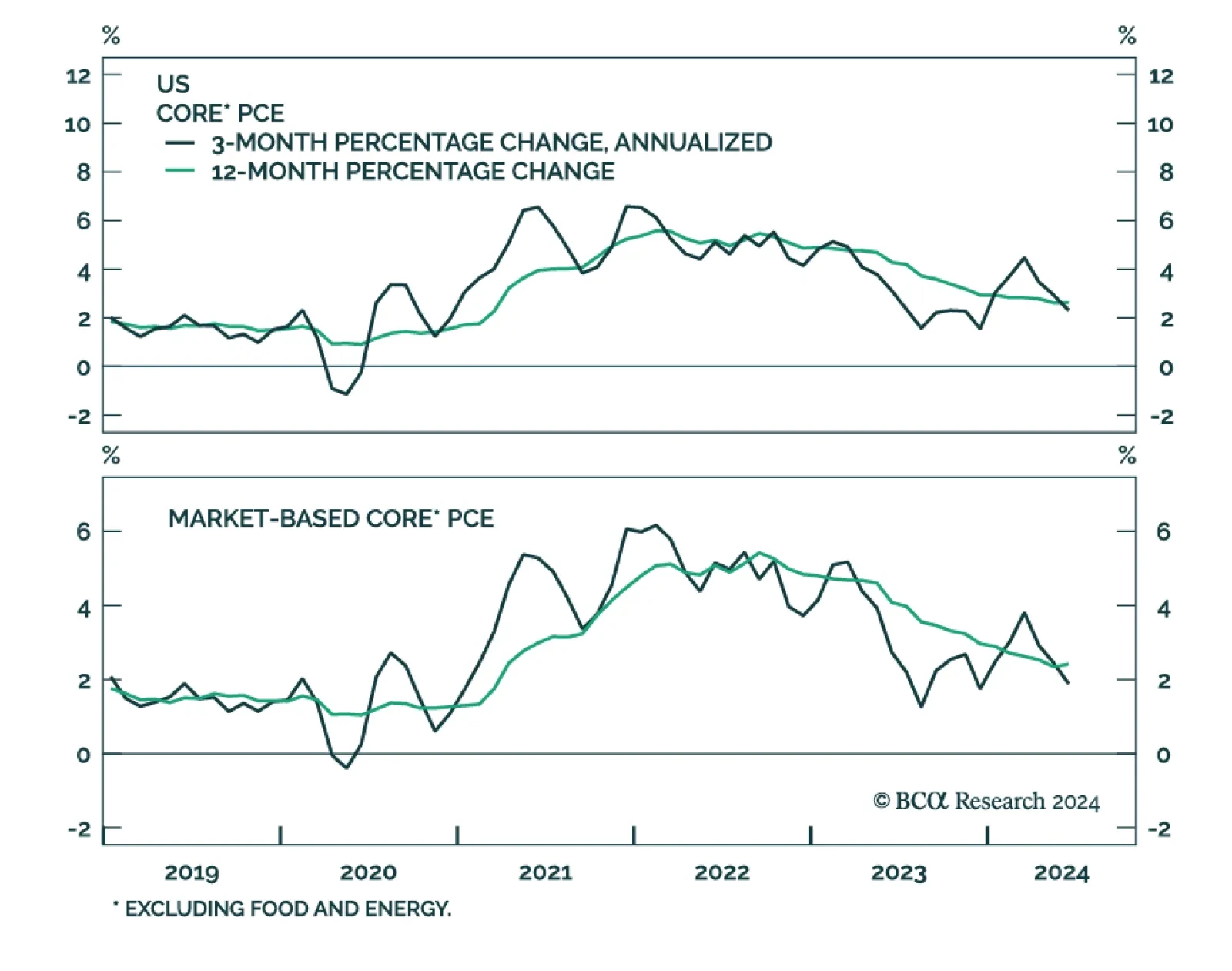
US nominal personal income growth and real personal spending decelerated at a faster-than-expected pace in June, both moderating to 0.2% m/m from 0.4% in May. Core PCE – the Fed’s favored inflation gauge – remained unchanged, growing at 2.6% y/y. Notably,…
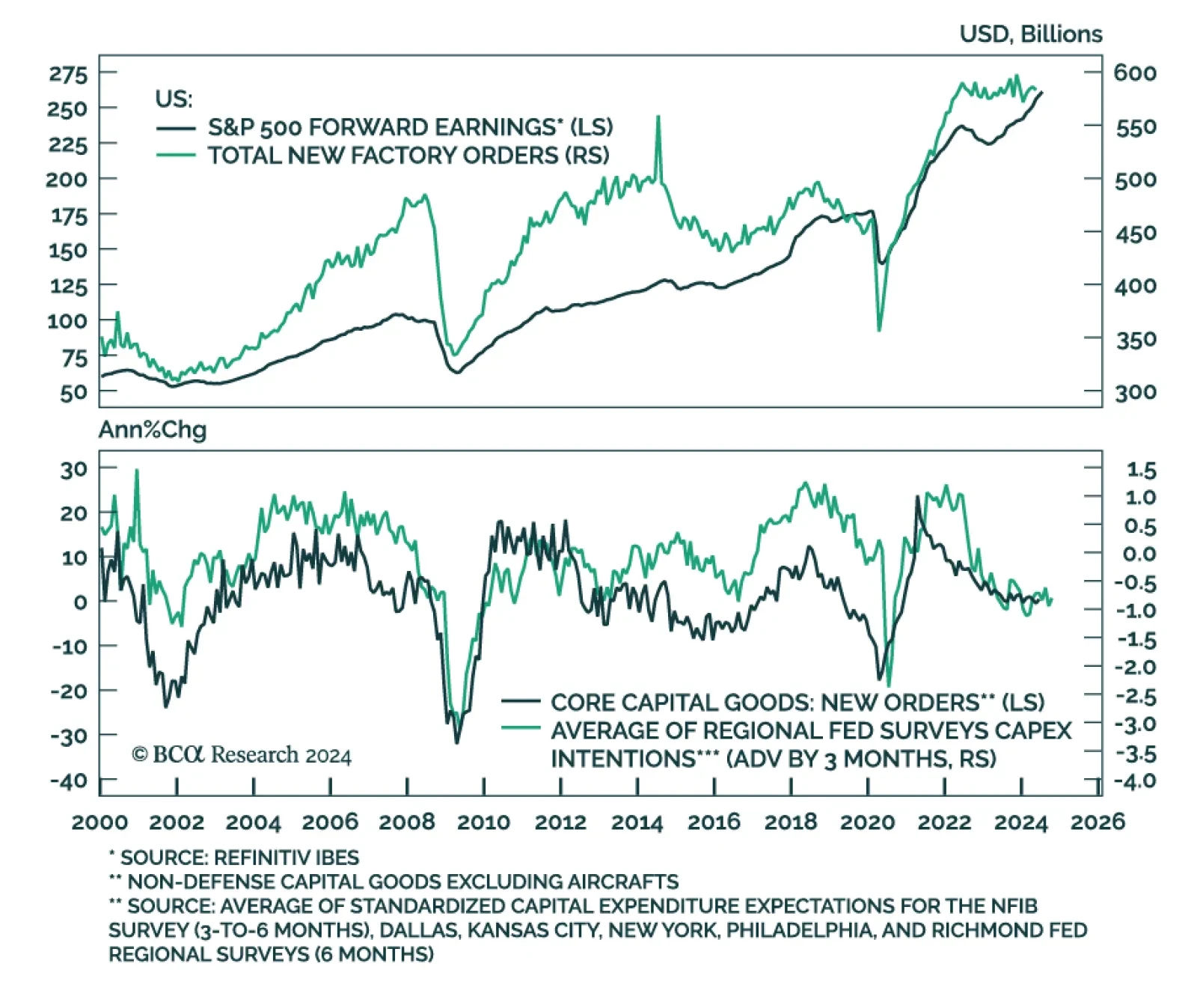
Preliminary estimates suggest that US durable goods orders plummeted in June. They contracted 6.6% m/m, largely disappointing expectations of a faster pace of growth. However, a whopping 127% monthly decrease in highly volatile commercial aircrafts orders…
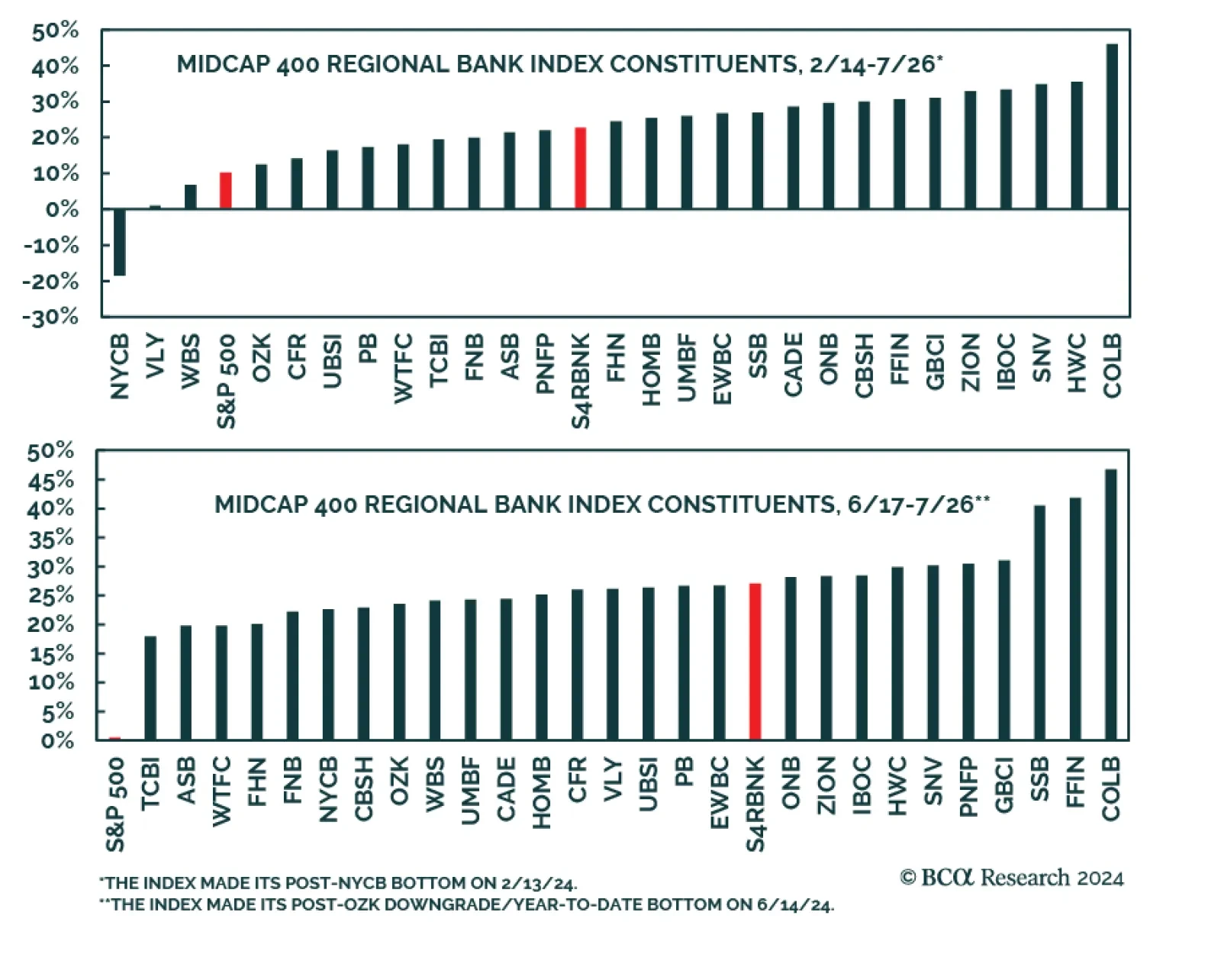
Equity investors have been skittish about mid-cap banks ever since Silicon Valley Bank failed in March 2023. The S&P MidCap 400 Regional Banks Index remains 4% below its February 2023 high while the S&P 500 Diversified Banks Index, dominated by the…
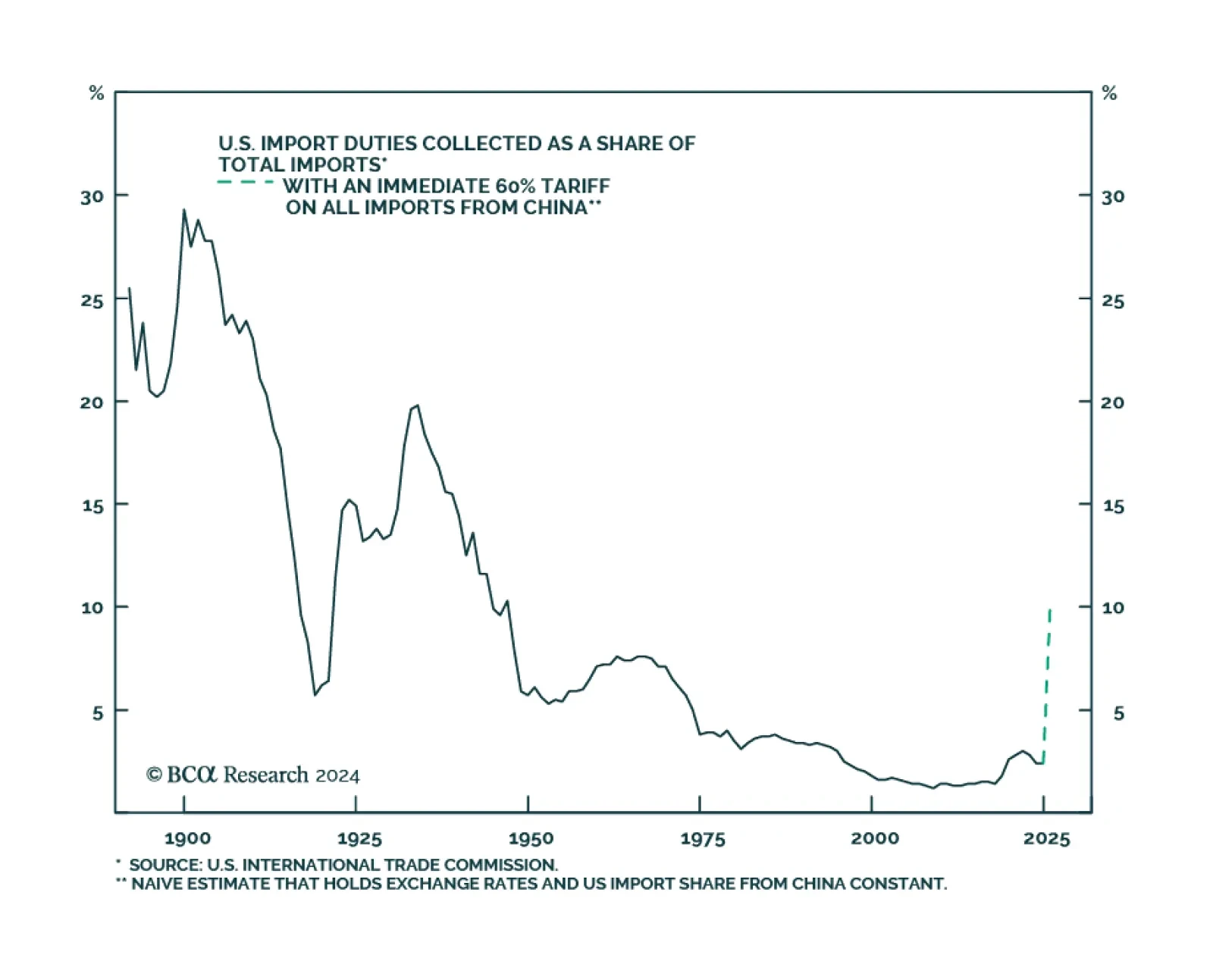
According to BCA Research’s Bank Credit Analyst service, trade policy under a second Trump presidency represents one of the greatest cyclical risks to investors. A key question for investors is whether tariffs are prioritized early in the administration or…
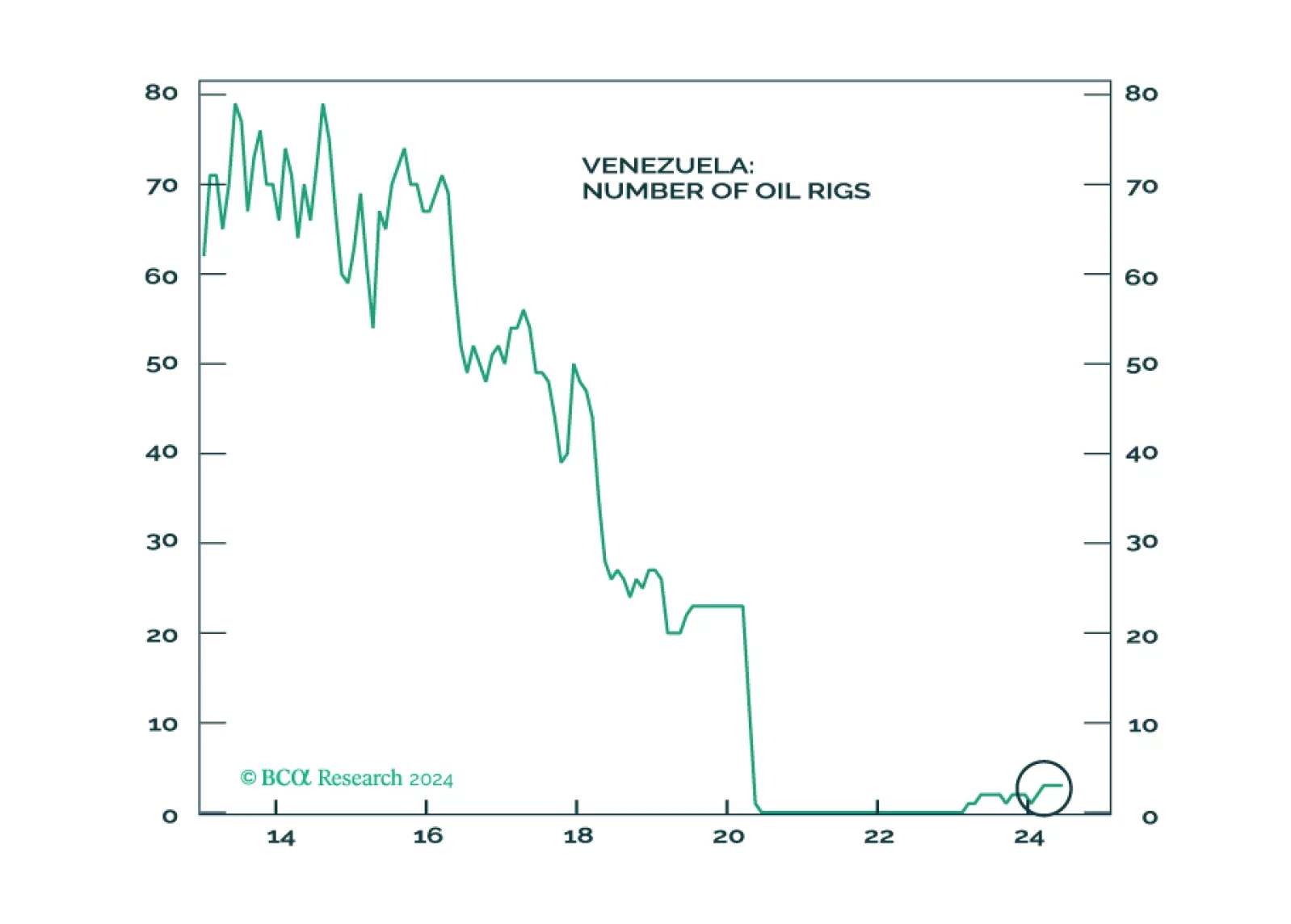
Oil markets will not be impacted by Venezuela in the near term, but by shocks from the Middle East. Maduro’s ability to stay in power in the short-term removes an avenue of oil supply relief. The same avenue is cut off if Trump is reelected. Geopolitical shocks in Venezuela could present tactical buying opportunities for Chile, Peru, and Colombia.