Sorry, you need to enable JavaScript to visit this website.
Skip to main content

United States

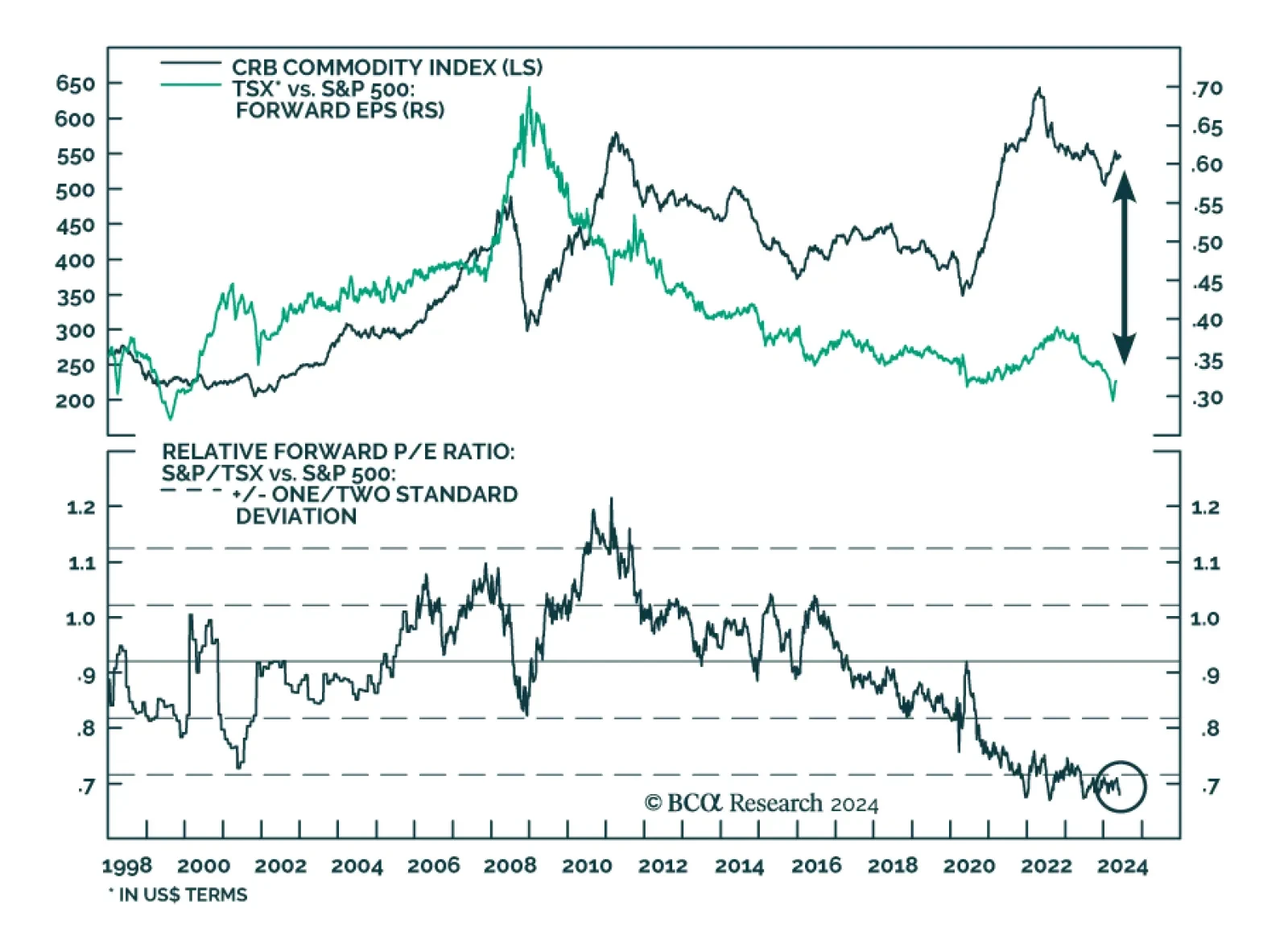
A decade of Canadian equity underperformance has led to a historical discount relative to the S&P 500. Sector composition largely explains this underperformance. Banks and natural resources stocks are overrepresented in the TSX while the US stock market…

We close our overweights to Energy and Aerospace & Defense. The macroeconomic backdrop is deteriorating for Energy. As for A&D, the good news is already priced in.

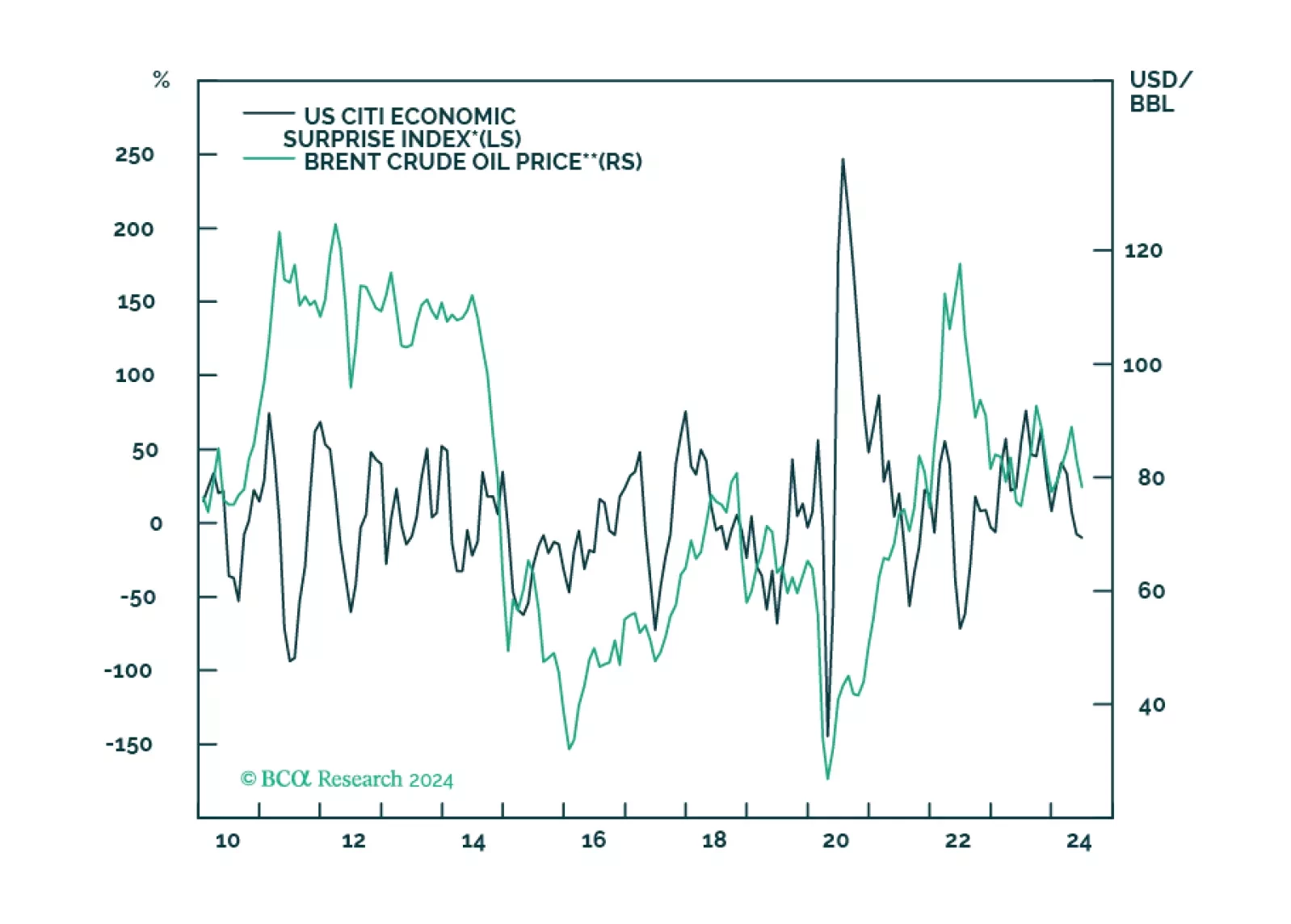
Although the comprehensive economic surprise indexes continued weakening in May, the metrics in our equity downgrade checklist haven’t softened enough to check more boxes now. While we continue to expect the US economy will enter a recession before year end, it is not yet certain and we remain tactically neutral.
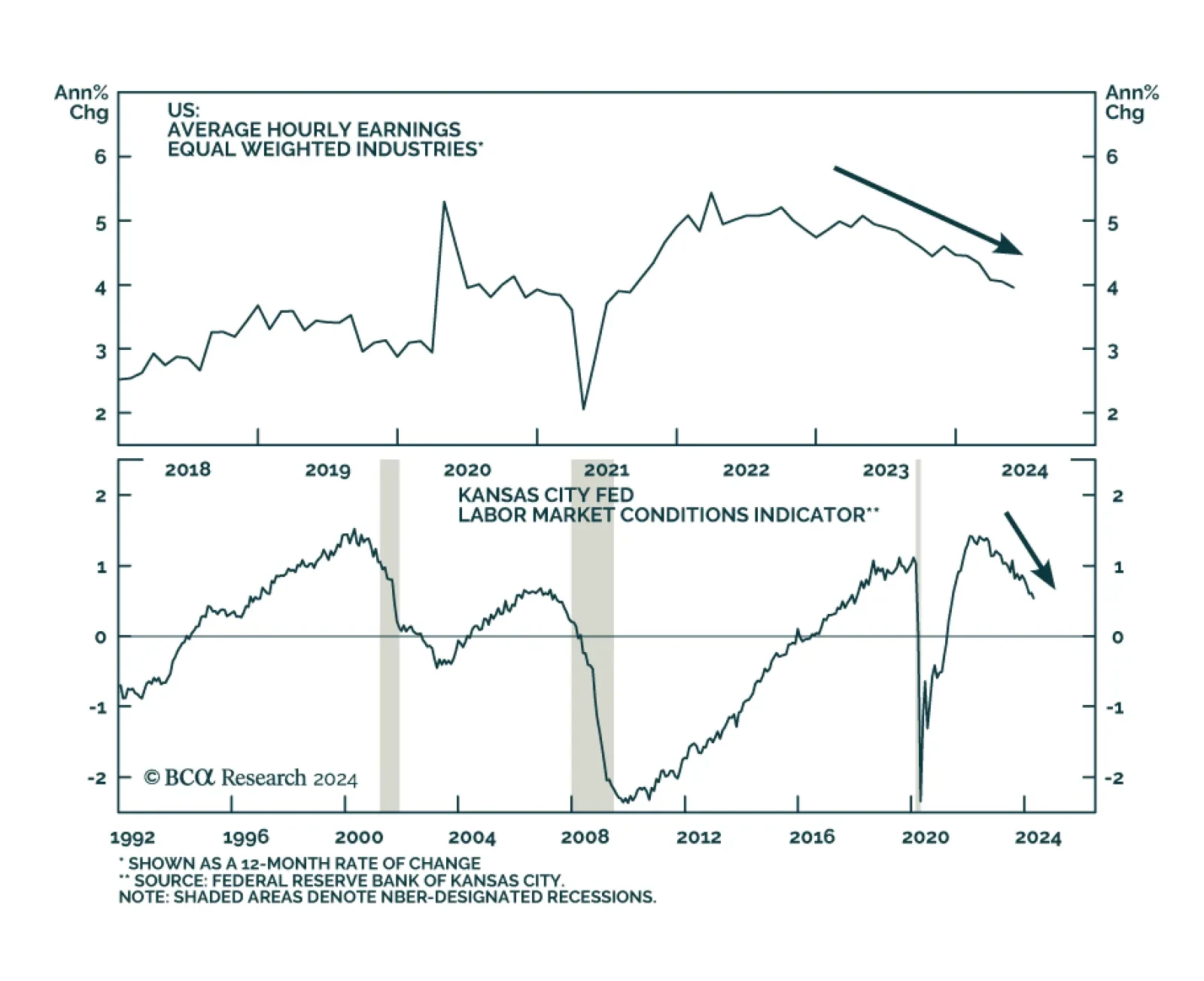
US nonfarm payrolls grew by 272 thousand in May, accelerating from 165 thousand in April, and swamping expectations of 180 thousand. Average hourly earnings increased by 4.1% y/y from an upwardly revised 4.0%. However, the unemployment rate unexpectedly…
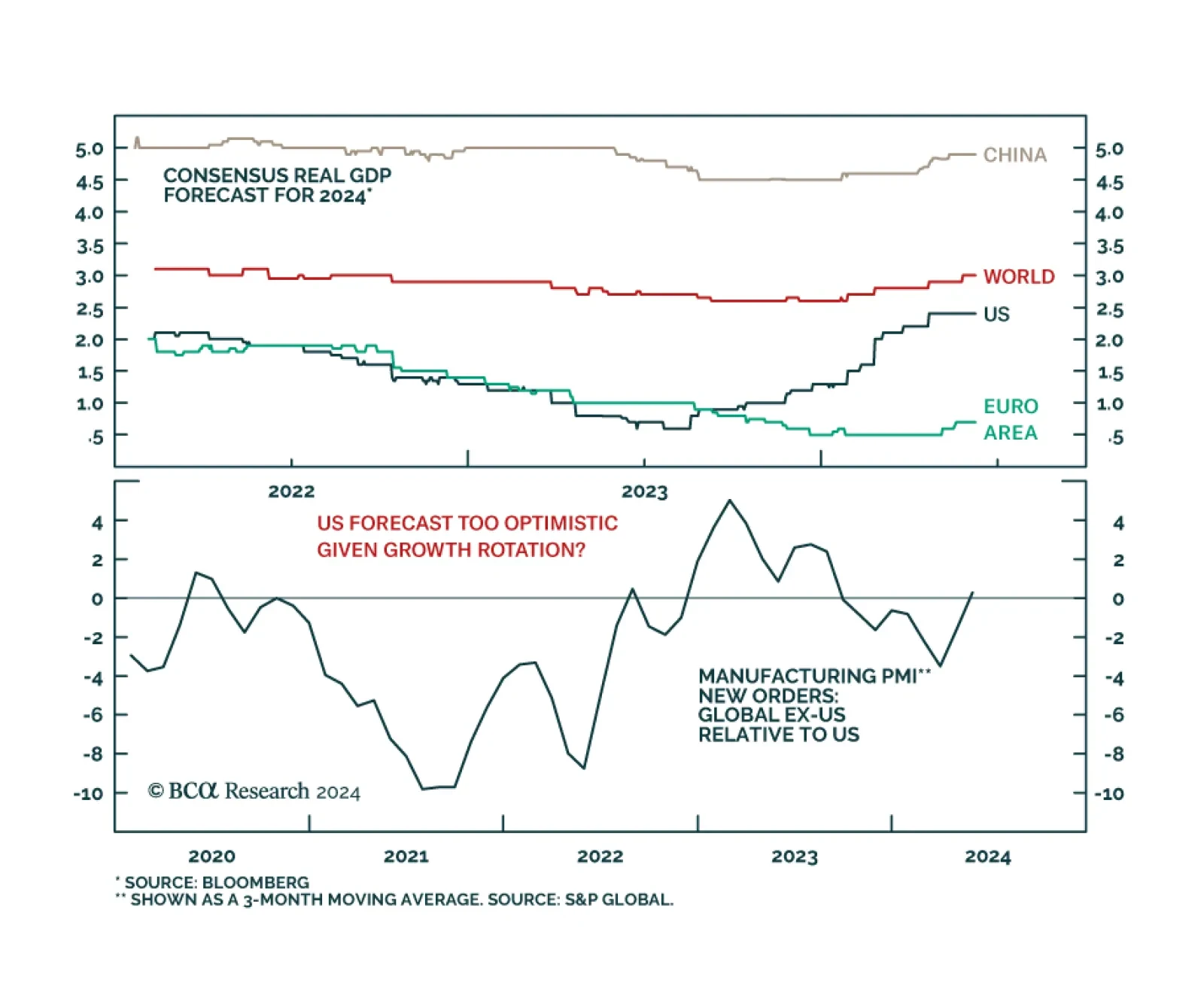
Global growth expectations for 2024 have been revised higher. Investors now forecasts 2024 GDP growth to clock in at 3%, up from 2.6% at the beginning of this year. A 1.1% upward revision in US growth expectations since January is driving the increased…
Our colleagues at Global Investment Strategy have shown that postwar US (and global) manufacturing cycles have tended to last 3 years, divided equally between an 18-month up leg and an 18-month down leg. This framework has been a useful gauge for the…
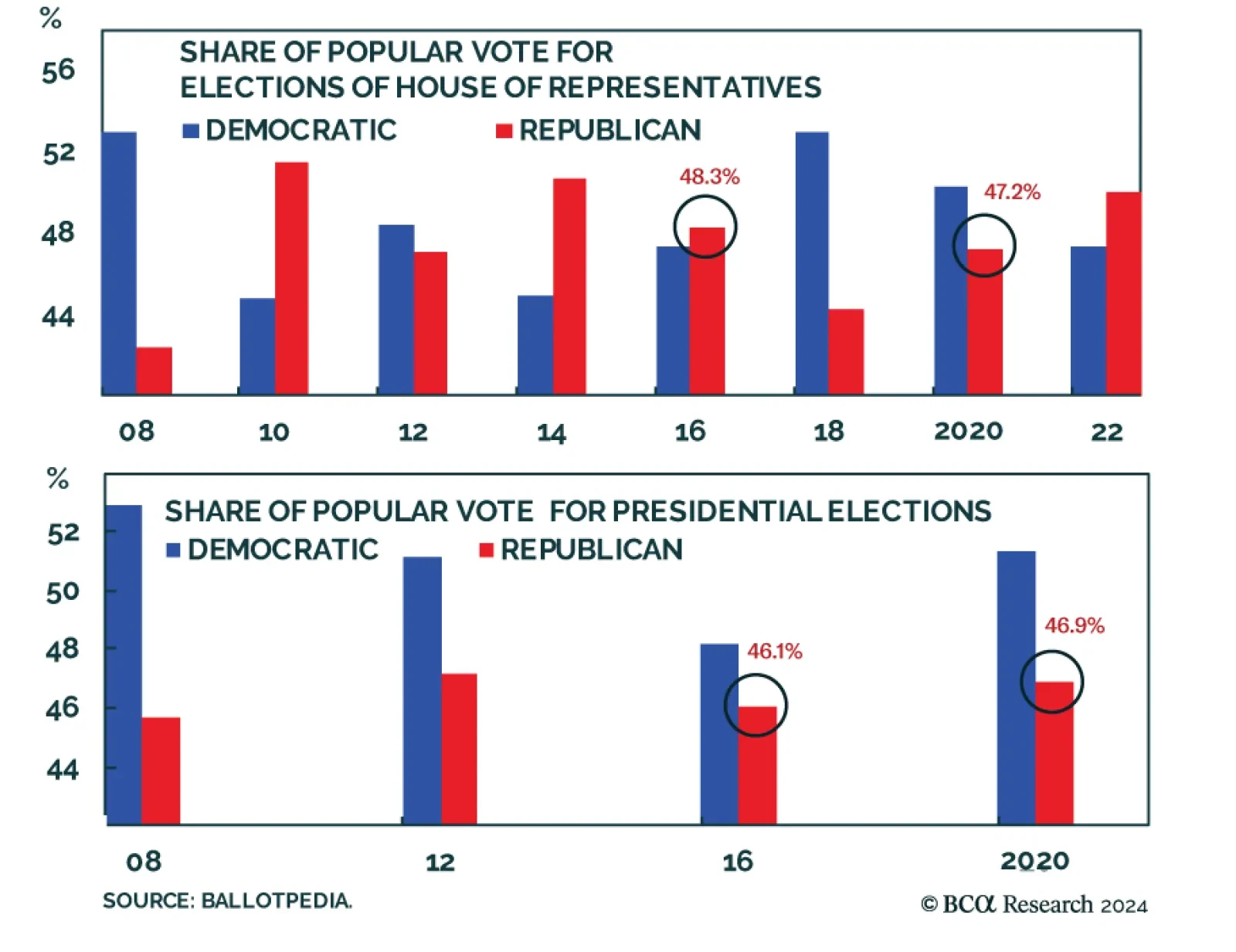
According to BCA Research’s US Political Strategy service, Republicans are more likely to win the Senate than the White House – and more likely to win either of these than the House. But Republicans are favored in both Senate and House if they win the White…

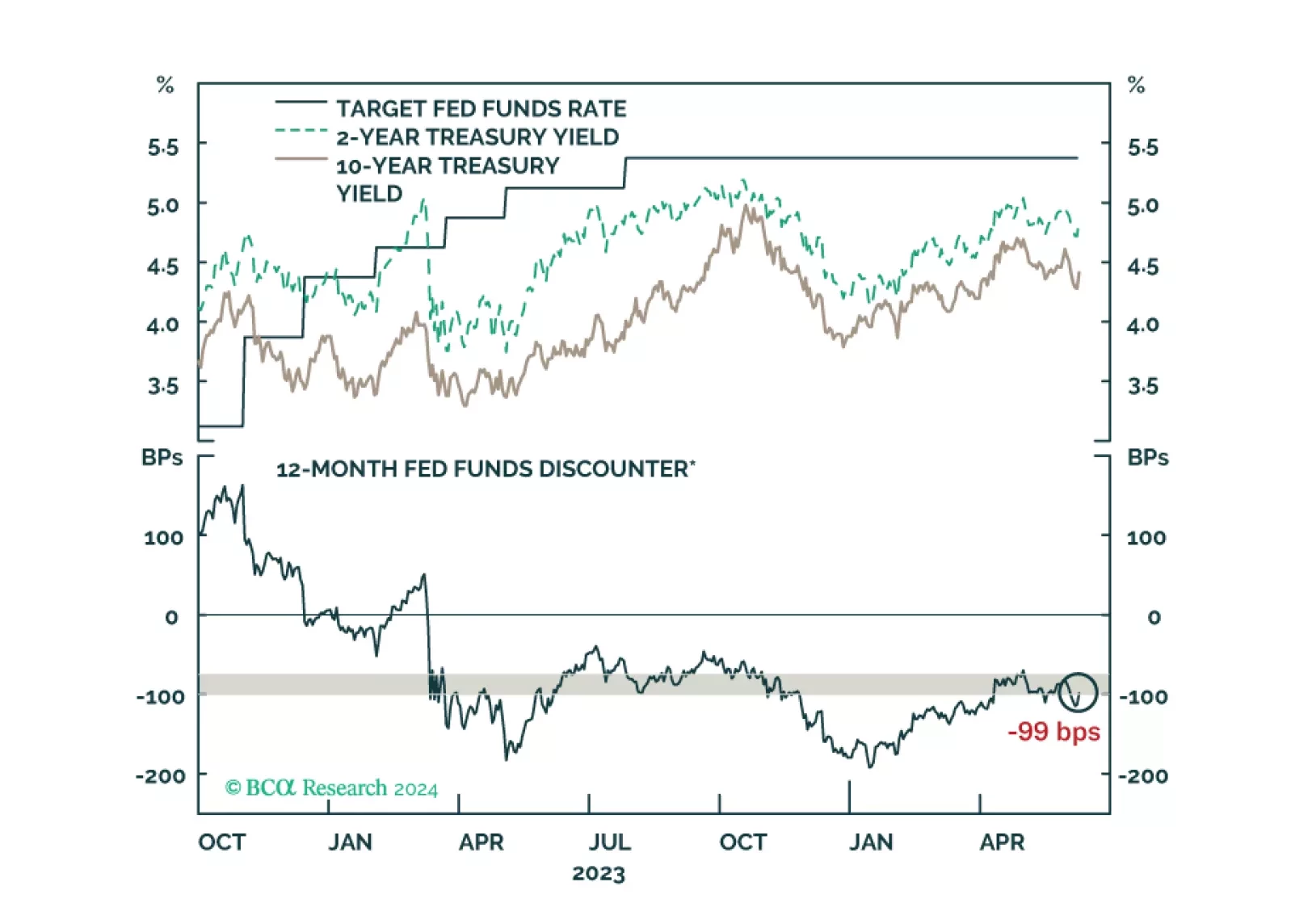
US Treasury yields bounced after this morning’s employment report. We offer our updated views about how long the recent trading range will hold.

The US economy remains on a path towards a recession, most likely starting in late 2024 or early 2025. For now, investors should maintain a benchmark allocation to equities, but employ a barbell strategy of overweighting defensives and materials.
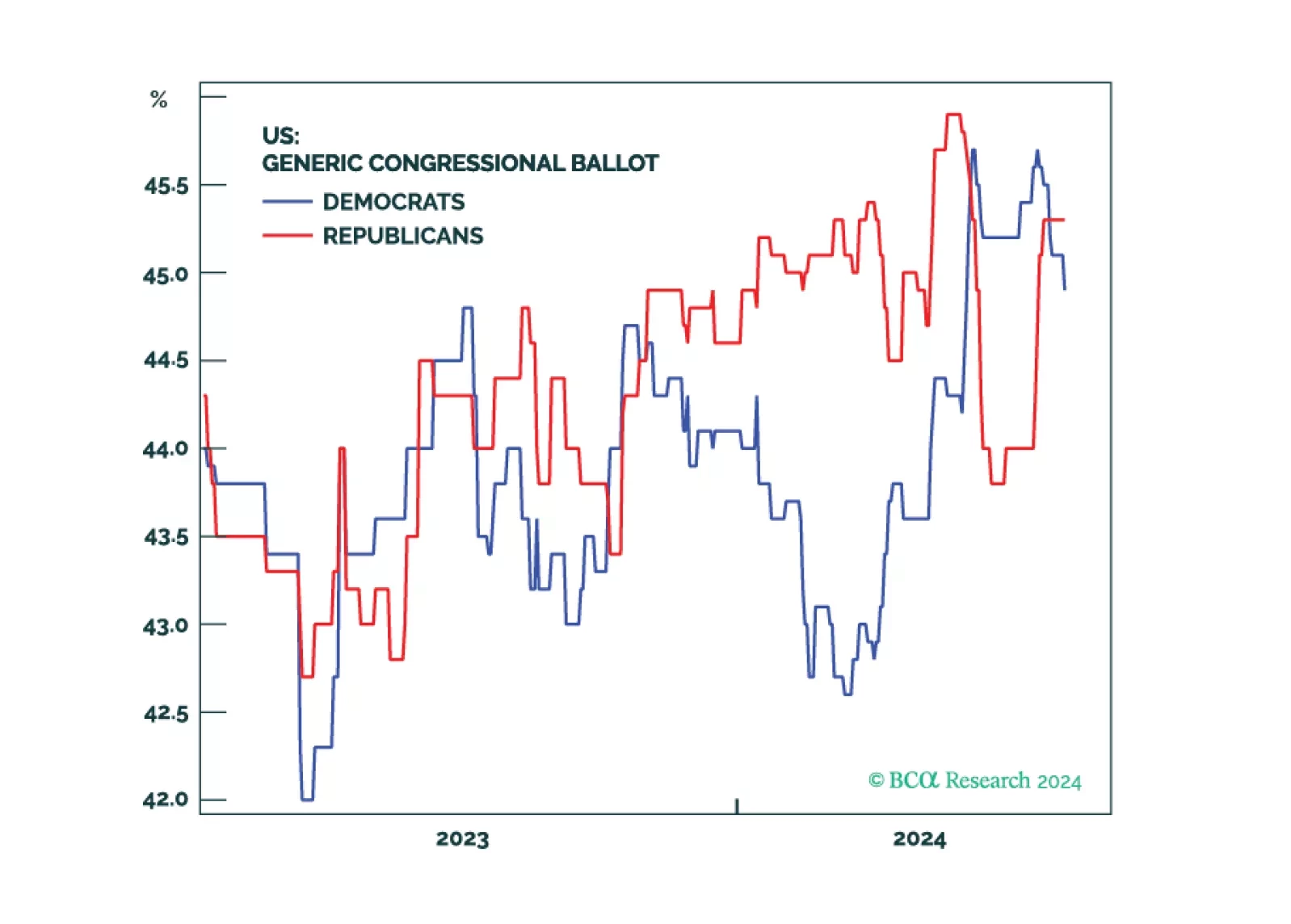
Republicans are favored in the House and Senate even if they do not win the White House. A Democratic sweep is a 20% risk. The policy implication would be inflationary, but not so much as under a Republican sweep. Election uncertainty should increasingly weigh on cyclical and high-beta assets in the second half of 2024.