Sorry, you need to enable JavaScript to visit this website.
Skip to main content

United States

China’s housing market adjustment will be protracted, causing several years of sub-par growth in the world’s second largest economy. We go through the major investment implications.

The rebound in growth is pushing up inflation. More aggressive monetary policy is likely to trigger recession over the next 12 months or so. Investors should stay defensive.
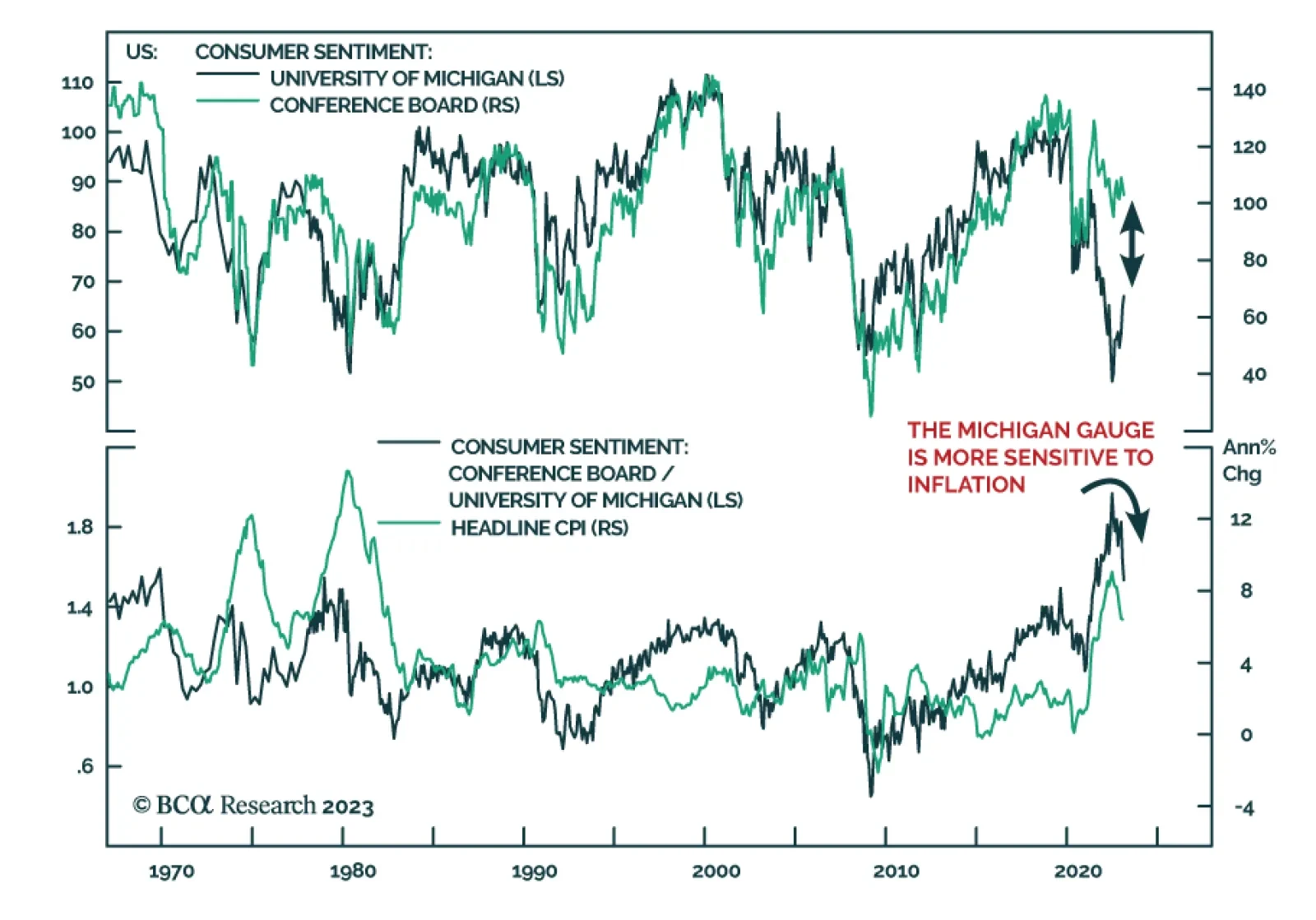
The Conference Board’s Consumer Confidence index fell from 106 to 102.9 in February, disappointing expectations of an increase to 108.5. In particular, a 6.3-point drop in the expectations component – which fell to its lowest level since July – drove the…
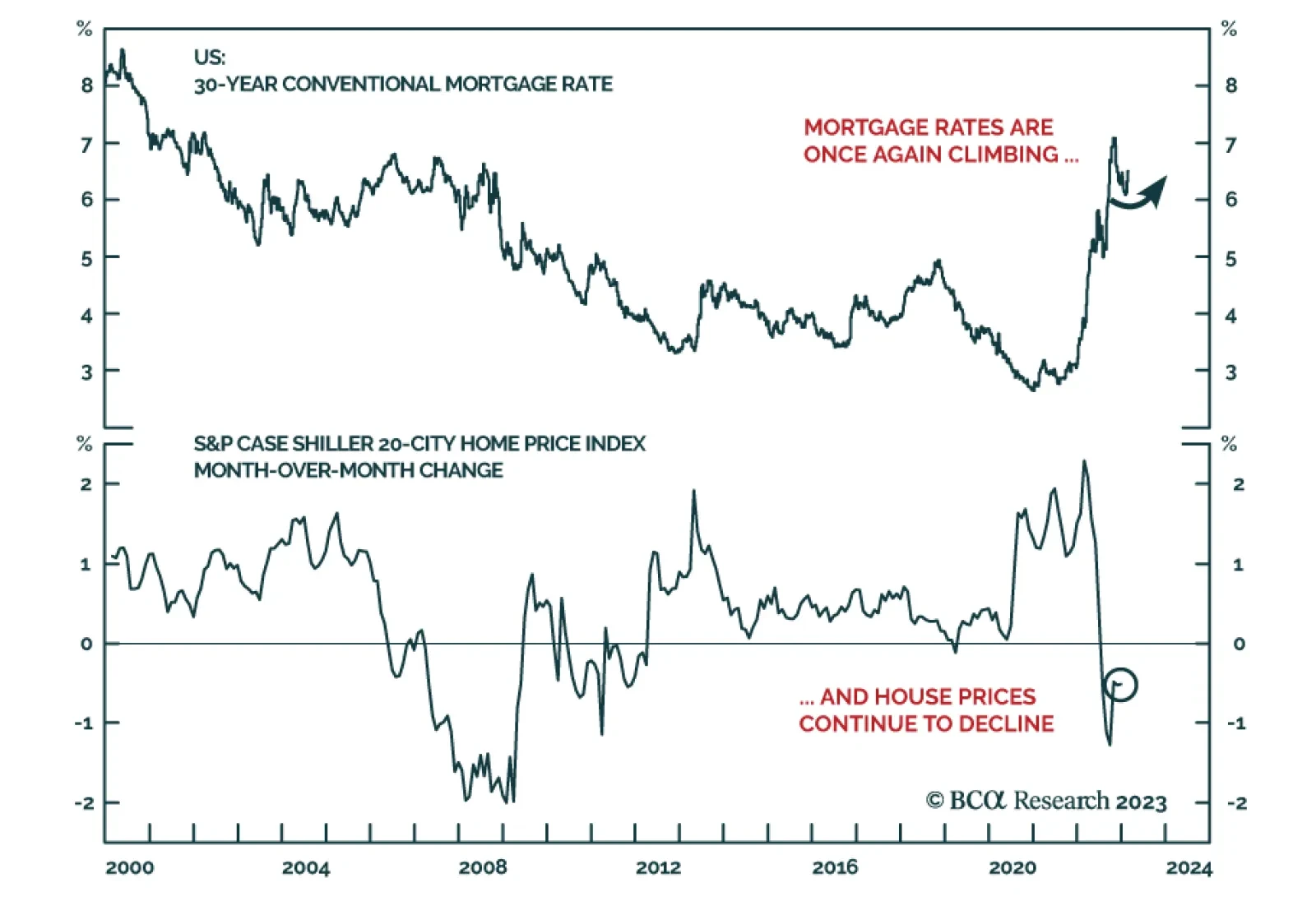
Some US housing indicators have been improving over the past few months. In particular, the NAHB/Wells Fargo Housing Market Index rebounded in January and February, suggesting that homebuilder sentiment is firming. Similarly, pending home sales jumped by 8.1%…
BCA Research’s US Bond Strategy service’s base case outlook implies that fair value spreads for both investment grade and high-yield will rise during the next 6-12 months. The team’s base case view is that the US economy will avoid a recession this year.…

Bulls and bears are perplexed because they suffer from recency bias. The investment roadmap and framework of the past 15 to 20 years should not be used to analyze current US financial markets. US corporate earnings will likely plunge substantially even in the case of a mild recession.
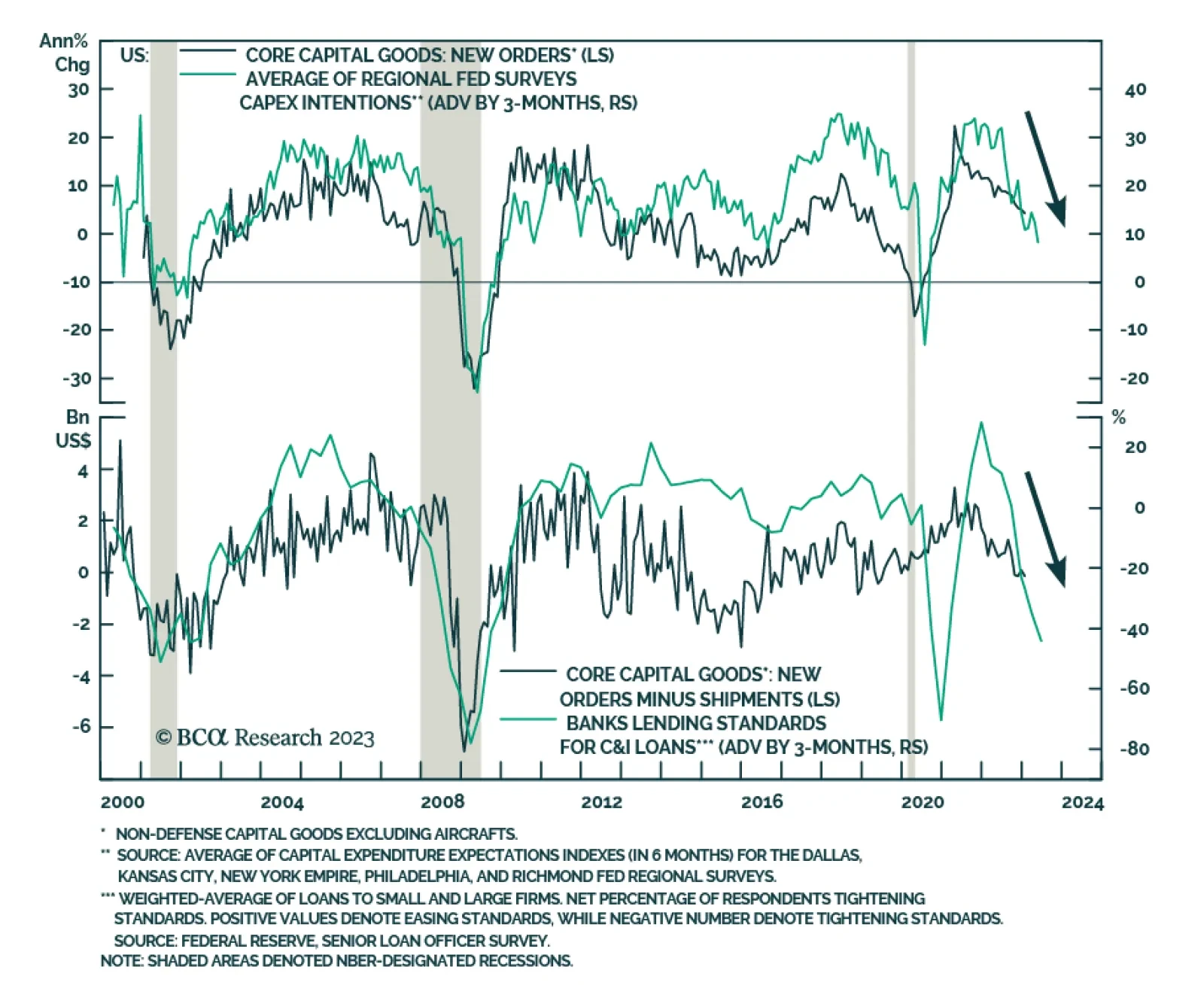
Although the 4.5% m/m drop in US durable goods orders in January (below expectations of a 4% m/m decline) painted a bleak picture of businesses’ willingness to invest, the contents of the report were significantly more positive. Specifically, a 13.3% m/m…
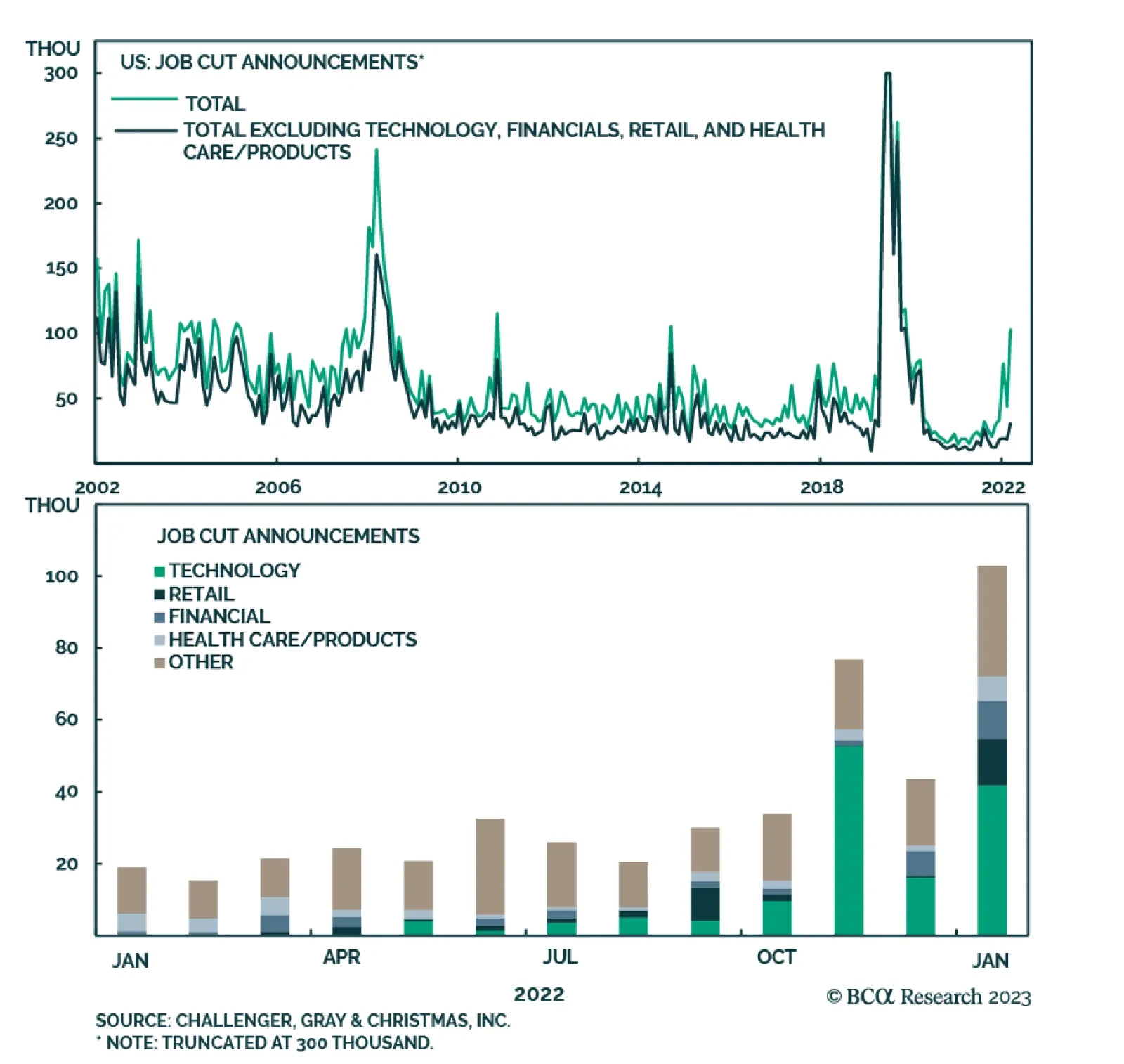
The number of job cut announcements as measured by Challenger, Gray, and Christmas has been trending higher in recent months. The 103 thousand cuts announced in January were the highest since September 2020 – marking a 136% m/m increase and a 440% y/y rise. …
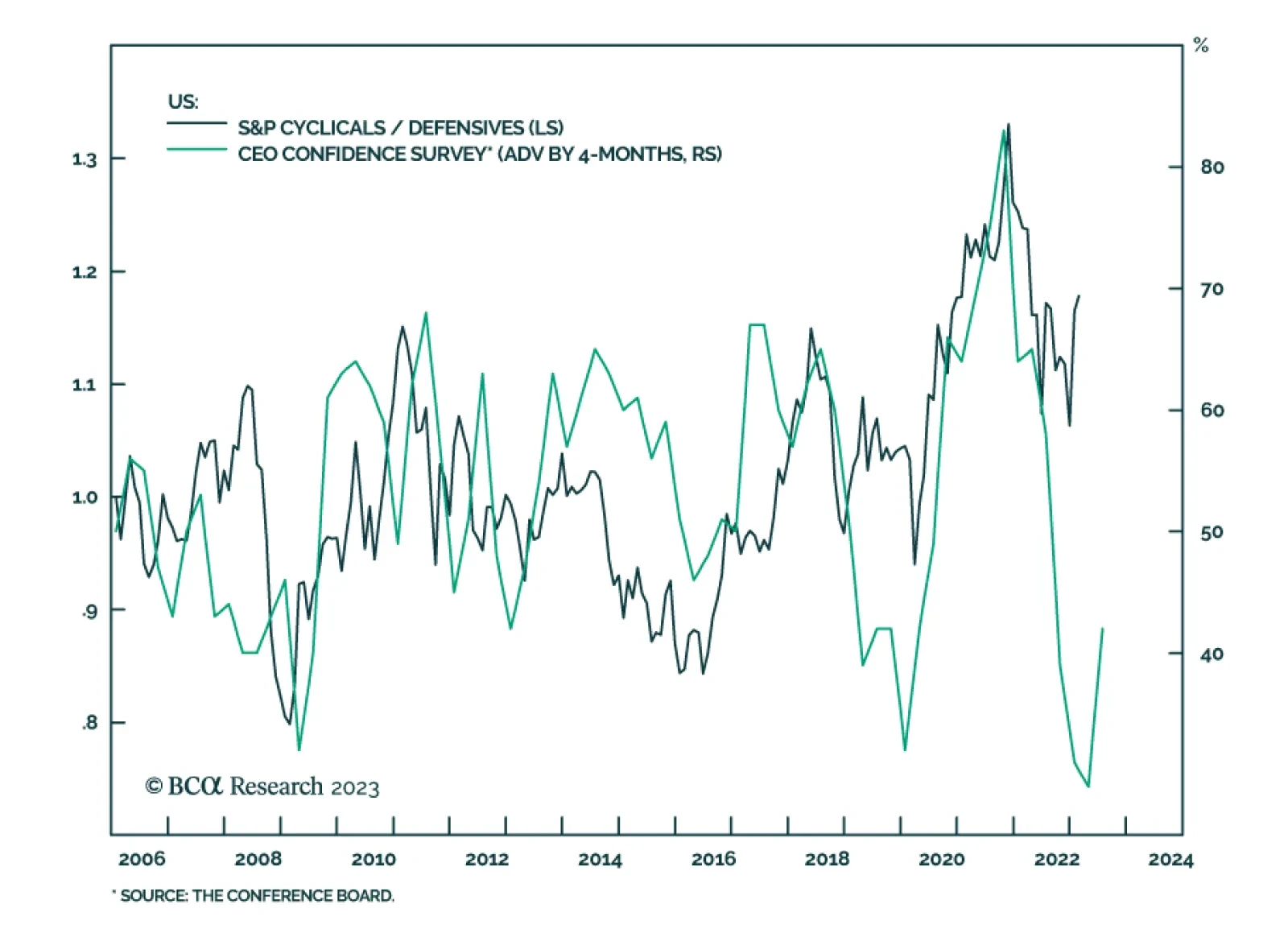
Results of the US Conference Board’s latest quarterly survey show an improvement in CEO Confidence in Q1. The share of CEOs reporting better economic conditions versus six months ago increased by 11 percentage points to 16% while the share of those indicating…

This report considers the outlook for the US corporate credit cycle based on a suite of economic, monetary and corporate health indicators. We conclude that both the default rate and US corporate bond spreads will grind higher during the next 6-12 months.