United States
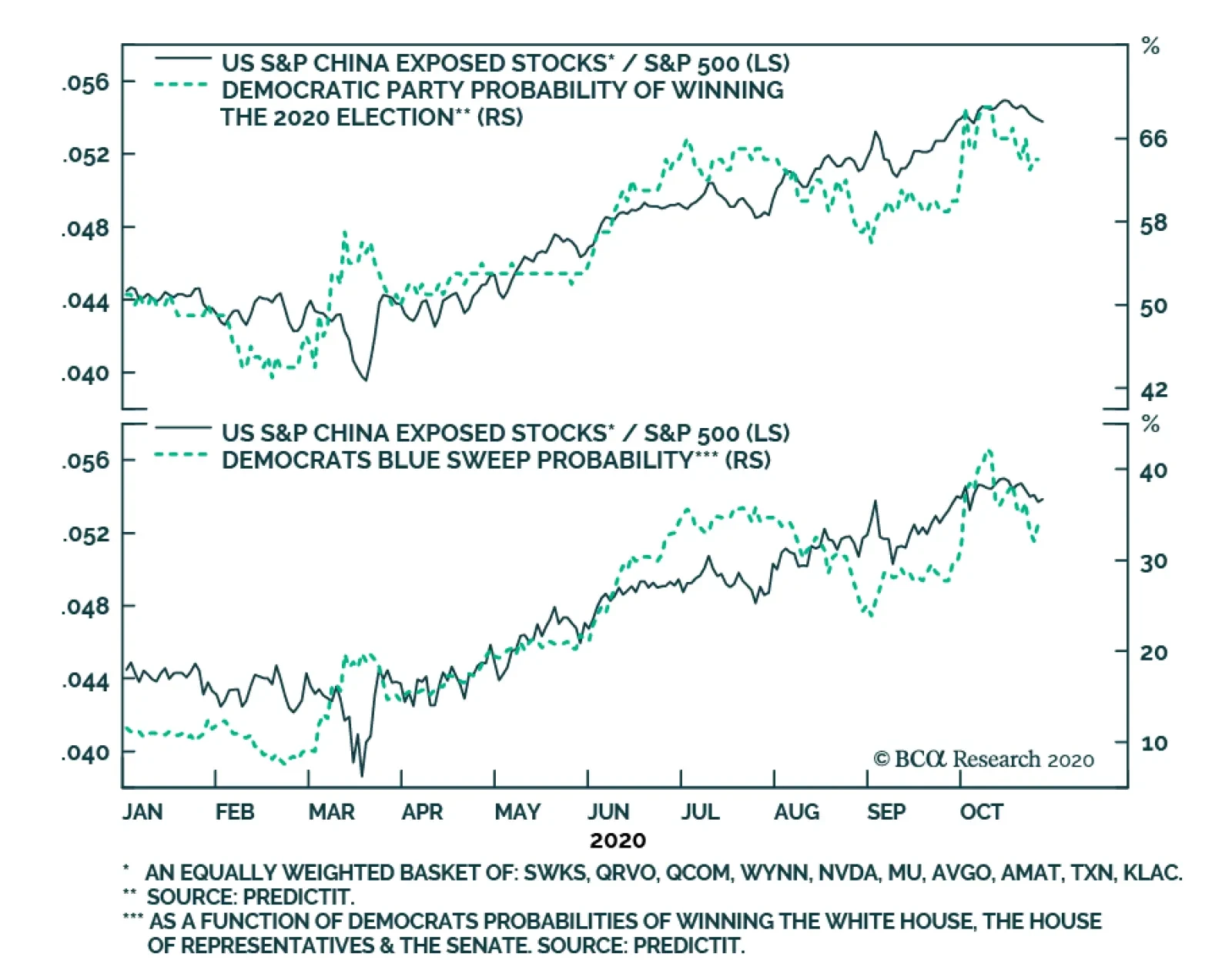
According to BCA Research's Geopolitical Strategy service, the market is over-optimistic on Biden's boost to China plays. China’s 14th Five Year Plan and broader national strategy will continue to provoke opposition from the US and the West, regardless of…
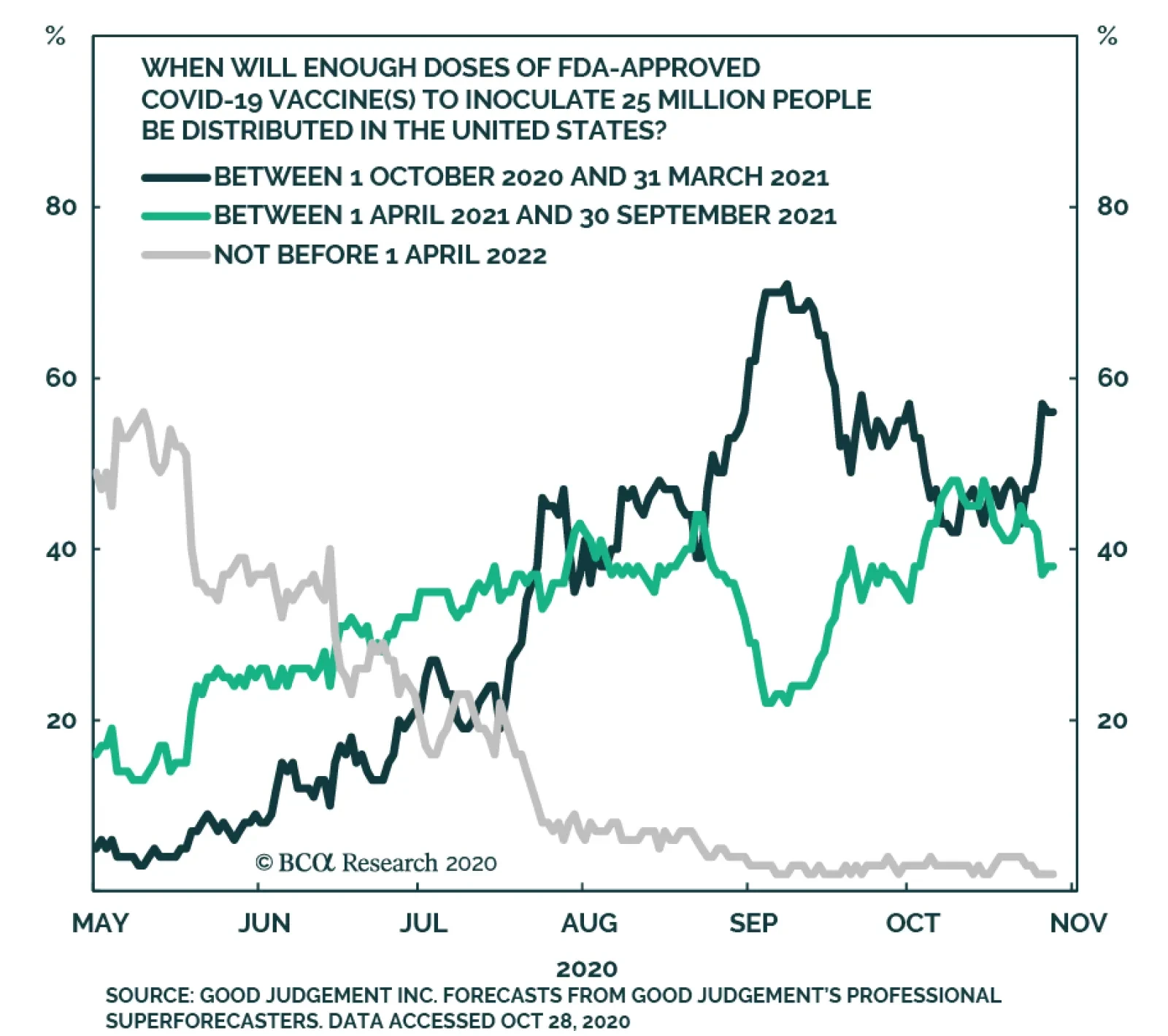
The recent selloff in US risky assets has been triggered by the continued surge in COVID-19 cases, and concerns that US fiscal policy is no longer supportive of the nascent recovery in economic activity. Against this backdrop, the chart above highlights…
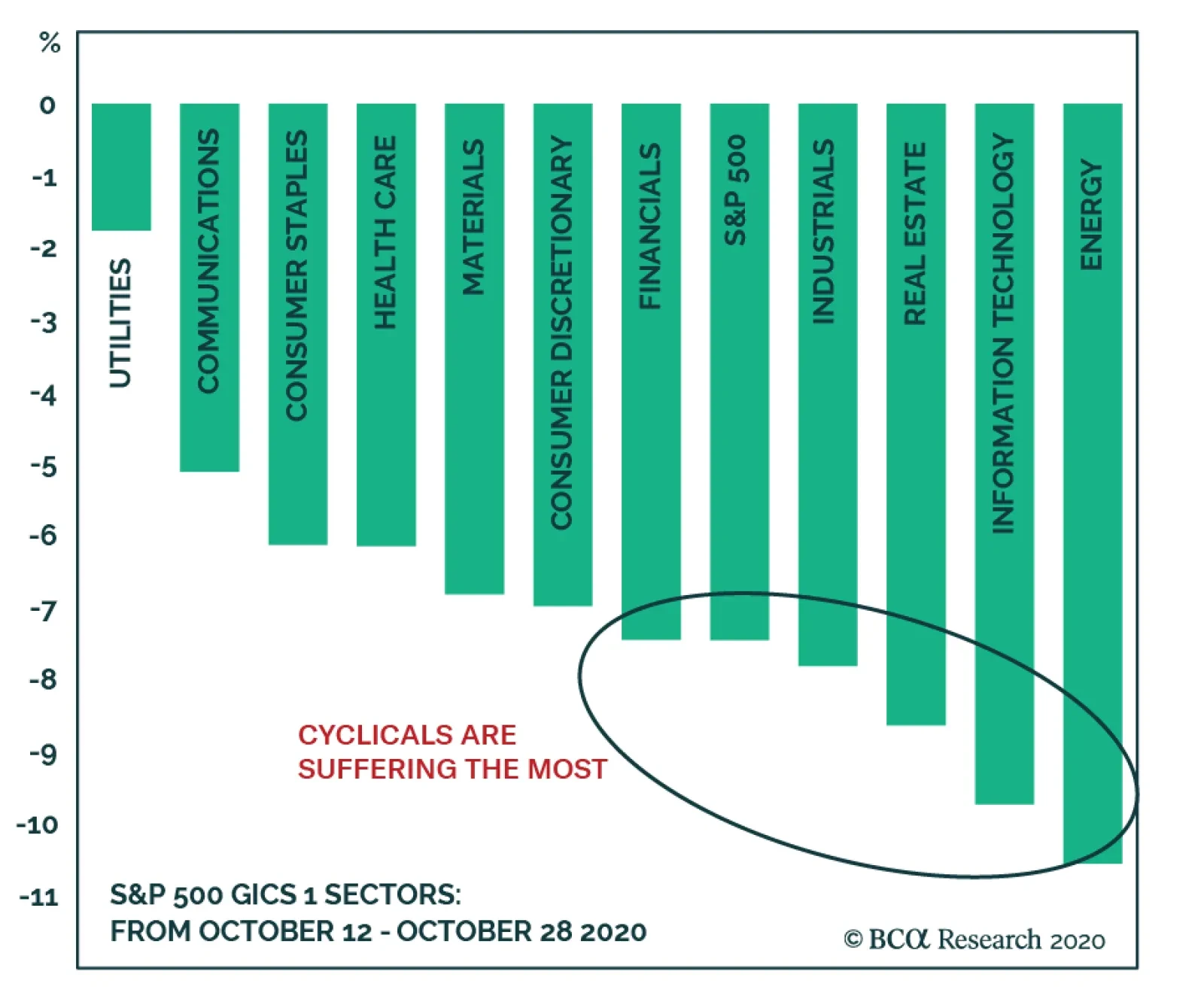
It took a while but it finally happened, the European second and US third wave of infections are weighing on equities. The absence of fiscal stimulus is exacerbating the fear that the impact on economic activity of the new lockdowns (and potential…

Highlights China’s 14th Five Year Plan and broader national strategy will continue to provoke opposition from the US and the West, regardless of the US election. China’s economic blueprint will focus on self-sufficiency, “dual circulation” (import substitution), state subsidies, and high-tech advancement – all factors that will continue to provoke western ire. US political polarization creates geopolitical risks, particularly for China, which will support the dollar and US equity outperformance, depending on the election result. If Trump wins, polarization will persist, he will face gridlock at home, and he will thus continue his aggressive foreign and trade policies, with China facing disruptive consequences. The CNY, EUR, and especially TWD would suffer. If Biden wins, he could face either gridlock or full Democratic control. The former case presents a greater risk of a focus on trade and foreign policy. The latter would result in a domestically focused Washington, which gives China breathing space. The CNY and EUR would benefit, but the TWD would face limited upside. Either way, investors are likely to become over-exuberant about assets that are exposed to the US-China relationship in the event of a Biden victory. Over the long run, this is a bull trap. Feature In the years after the 2008 financial crisis, the global news media proclaimed the rise of China and the demise of the United States as a global leader. The US’s free-wheeling democracy and capitalism led to economic collapse, partisan gridlock, and nearly a self-inflicted default on sovereign debt. Meanwhile China’s state-controlled system stimulated its economy, cracked down on the first inklings of unrest in the spring of 2011, and expanded its regional and global influence. The conclusion is similar today in the wake of the COVID-19 crisis. The US has squandered its response to the pandemic, while partisan gridlock threatens the economic recovery. China has suppressed the virus that started within its borders and its economy is rapidly on the mend. The orgy of social unrest and political dysfunction in the US has weighed on its international image and leadership. What the past decade showed, however, is that the first narrative to take hold after a global crisis is not likely to be the final narrative. In fact, the past decade was the most difficult for China since the 1980s. The next decade will be even more challenging. The COVID-19 pandemic brought to an official conclusion the unprecedented economic boom of the past four decades (Chart 1). Though Chinese policy makers have navigated relatively well, the social and political system faces greater challenges in a new economic and international environment. Chinese potential GDP growth has now fallen to 3%, as the labor force contracts and productivity remains flat. Chart 1China Already Plucked The Long-Hanging Fruit
China Already Plucked The Long-Hanging Fruit
China Already Plucked The Long-Hanging Fruit
China is well-situated in the short run to benefit from domestic and global economic stimulus, but over the long run its challenges are significantly underrated. China Faces Headwinds From Abroad Chinese leaders are prepared for any of the possible outcomes in the US election. With regard to US foreign and trade policy, the election is about tactics, not strategy. US grand strategy clearly dictates that Washington focus on curbing China, which is the only country that can challenge the US for global supremacy over the long run. But the US is not alone – other countries are also taking a more skeptical stance toward China’s geopolitical prominence. The result is that China will continue to emphasize self-sufficiency, a centrally guided economic model, and state-supported technological advancement in its fourteenth Five Year Plan for 2021-25 (see Appendix). This policy trajectory, combined with the key policy developments of the past decade, suggests that China’s self-sufficiency drive will continue to attract geopolitical opposition from the US and the West: Capital Controls: China tightened its capital controls aggressively during the financial turmoil of 2015-16. This emergency decision undercut the liberal reform agenda and alienated the western world on one of its critical structural demands. With China having grown its money supply from 175% to 197% of GDP since 2009, and capital flowing out again amid this year’s crisis (Chart 2), Beijing will not be able to fully liberalize its capital account anytime soon. Chart 2China's Capital Controls
China's Capital Controls
China's Capital Controls
Chart 3China's State-Owned Enterprises Revived
China's State-Owned Enterprises Revived
China's State-Owned Enterprises Revived
State-Owned Enterprises: The current administration has struggled with slowing trend growth and deflationary pressures. This is not an environment opportune for restructuring or liquidating inefficient state-owned enterprises (SOEs). It is the opposite of the 1990s, when SOEs were last culled. The regime has instead promised to make SOEs bigger and stronger (Chart 3). While it has pursued reforms to allow more private ownership of state assets, it has also encouraged public ownership of private assets, thus producing “mixed ownership” and a fusion of state and corporate power. The US and western countries resent this reassertion of state-backed economic power, notwithstanding the fact that all countries are increasing state support amid the collapse in global demand. Notably, China will likely resist cutting manufacturing capacity any faster than it will already be cut due to the global recession and foreign protectionism, meaning that stimulus-fueled overcapacity will continue to be a problem for foreign competitors. Chart 4The Tech Race Continues
The Tech Race Continues
The Tech Race Continues
The Tech Race: Beijing is continuing a frantic dash to upgrade its science and technology capabilities in order to lift total factor productivity, which is essential to maintaining growth in the coming decades in the post-export-industrial phase. Expenditures on research and development are skyrocketing, now rivaling the United States. True, R&D spending is flattening out as a percentage of GDP, but this is likely temporary — even faster R&D spending will probably become an official target for the next five years (Chart 4). The full weight of the political system is being thrown behind the goal of creating a “Great Leap Forward” in advanced and emerging technologies. Western countries are increasingly sensitive to China’s advances in semiconductor manufacturing, artificial intelligence, new vehicles, new energy, new materials, and computing. The new strategy of “dual circulation” will consist of import substitution, especially for critical tech goods, and will incorporate programs like “Made in China 2025” as well as “new infrastructure” that are high tech and have become targets of the West. The US and others are openly adopting export controls and reducing supply chain dependency on China. Beijing will struggle to maintain its rapid innovation drive without inviting more punitive measures from the West. Chart 5US Fears China’s Military Rise
Is China Afraid Of Big Bad Biden?
Is China Afraid Of Big Bad Biden?
Military Spending: China adopted a more assertive foreign policy in the mid-2000s and intensified this approach after 2012. Military spending has risen along with economic heft and western experts have long believed that China spends considerably more than it lets on. If we assume that China began to spend 3.75% of GDP per year after its strategic break with the US – a reasonable number in keeping with Russia’s long-term average – then China is narrowing the defense spending gap with the US more rapidly than is widely believed (Chart 5). Given the US’s giant defense spending, this is a continual source of distrust. Bear in mind that China’s defense and security aims are more limited than those of the US, at least in the short run. While the US must maintain the ability to project power globally, China need only grow its regional sphere of influence. Regionalism: While the Xi administration consolidates power within the Communist Party and central government in Beijing, it is also consolidating Beijing’s authority within Greater China. This includes efforts to bring to heel wayward provinces and regions such as Xinjiang, Tibet, Hong Kong, and Taiwan. Much of this is a fait accompli that western governments can do little about. Even in Hong Kong, public opinion is showing signs of resignation to the new legislative powers that Beijing has asserted. However, Taiwan is the clear outlier. Public opinion has shifted sharply against mainland China. Given that Taiwan is the epicenter of the new cold war with the US, both for reasons of political legitimacy as well as technological capability, a fourth Taiwan Strait crisis is looming (Chart 6). China has economic leverage to use first, but if this fails then a military confrontation cannot be ruled out. The above points do not hinge on the US election outcome or other cyclical factors, and highlight that geopolitical tensions will persist, particularly with the United States. The US’s adoption of a confrontational rather than cooperative posture toward China is a paradigm shift in international relations. Unlike Washington’s crackdown on Japanese trade in the 1980s, the US and China do not have an underlying trust or sense of shared security interests. Beijing’s willingness to increase US imports or appreciate its currency arbitrarily, to suit the shifting demands of US administrations, have substantial limits. Economic decoupling will continue in an environment of strategic insecurity (Chart 7). Chart 6Struggles In Greater China
Is China Afraid Of Big Bad Biden?
Is China Afraid Of Big Bad Biden?
Chart 7US Redistributes Trade Deficit
US Redistributes Trade Deficit
US Redistributes Trade Deficit
President Trump’s biggest mistake in pursuing his trade war with China lies in his failure to build a grand alliance, or coalition of the willing, among likeminded liberal democracies. This would have amplified his leverage over China in making demands for structural reform and opening up. But this point can be overstated. China’s international image has collapsed, in Europe and Asia as well as in North America, despite the Trump administration’s diplomatic failures. Much of this effect stems from COVID-19, but that does not mean it is less grave. If the US courts allies in the trade conflict with China, it will find governments willing to cooperate (Chart 8). Chart 8China’s Image Suffers Under Trump
Is China Afraid Of Big Bad Biden?
Is China Afraid Of Big Bad Biden?
Map 1Proxy Battles In Asia Pacific
Is China Afraid Of Big Bad Biden?
Is China Afraid Of Big Bad Biden?
Chart 9US Arms Sales To Taiwan
US Arms Sales To Taiwan
US Arms Sales To Taiwan
China’s perennial geopolitical challenge is shown in Map 1. It is geographically encircled by nations that have grown increasingly wary of its regional ambitions and will reach out to the US and West. These countries wish to continue benefiting from China’s economic rise but seek security guarantees to offset China’s rising strategic clout. The result will be “proxy battles,” in some cases political, in others military (Chart 9). Taiwan, South Korea, the Philippines, and Vietnam each face substantial geopolitical risk. In the case of South Korea and the Philippines, this risk is partially priced by financial markets. But in the case of Taiwan and Vietnam, it is almost entirely underrated. Taiwan has only an ambiguous defense commitment from the US, while Vietnam is a Chinese rival that entirely lacks a security guarantee from the United States. Bottom Line: Geopolitical risk will remain elevated in Asia Pacific regardless of what occurs in the US election. The growth of Chinese power, and its state-led economic model, will ensure that trade tensions persist. These will culminate in strategic conflicts in certain neighboring countries. China Will Re-Consolidate Power When Trump was inaugurated in January 2017, we argued that the looming US-China trade war would not be determined solely by relative economic size and export exposure. Instead, political unity would be a critical factor. While the US ostensibly had the economic advantage, China had the political advantage. The nineteenth National Party Congress would see Xi Jinping consolidate power domestically, while President Trump would struggle with domestic opposition and divisions within the US and the West over his protectionism. Having secured an economic rebound this year, China is likely to consolidate domestic power even further in 2021-22. This period culminates in the critical twentieth National Party Congress. Originally Xi Jinping was expected to step down at this time and hand the reins to the leader of the opposing faction. Now the opposing faction has been laid low, and Xi is likely to promote his faction and entrench his rule. The period will likely be marked with at least one major crackdown on the regime’s political rivals. Ultimately, social and political control will be tightened, particularly beginning in late 2021. These events provide good reasons for anticipating that Chinese monetary, fiscal, and regulatory policy will not tighten drastically, but rather will merely normalize by mid-2021, assuming that the recovery stays on track (Chart 10). Yet this logic only goes so far – it is more bullish for the macro view today and in 2021, than it is in 2022. Obviously the regime wants to avoid a slump in 2021, the hundredth anniversary of the Communist Party, and investors should keep this in mind. But the 2017 party congress was attended by a deleveraging campaign that surprised the world in its intensity. The point is that stability, not rapid growth, is the imperative in 2022. If speculative bubbles have become a greater threat by that time, then the monetary and fiscal policy backdrop will lean hawkish rather than dovish. Tightening central control over the economy helps the Xi administration consolidate power. Chart 10China Still Consolidating Domestic Power, 2021-22
China Still Consolidating Domestic Power, 2021-22
China Still Consolidating Domestic Power, 2021-22
US Polarization A Risk For China If China continues to consolidate, the key question is what will happen in the United States. The answer will be known in short order, but what is critical to observe is that US political polarization is a geopolitical risk, and therefore if it continues to escalate it will be positive for the US dollar and negative for Chinese and other emerging market assets. The past several years have been marked by an increase in US social and political instability. Indeed, according to Worldwide Governance Indicators, the US’s governance has declined while China’s has improved, notably on the issue of political stability and the absence of violence (Chart 11). While these rankings are partial, nevertheless they point to the reality of US political division. The decade’s giant increase in political polarization has coincided with a bull market in US equities and the greenback, best exemplified by the outperformance of the US technology sector (Chart 12). Chart 11US Instability A Source Of Global Risk
Is China Afraid Of Big Bad Biden?
Is China Afraid Of Big Bad Biden?
If President Trump prevails, this trend will continue. Trump cannot win the popular vote, but his regional support could grant him a victory in the Electoral College. Or he could prevail through a contested election adjudicated by the Supreme Court or the House of Representatives. If this should occur, polarization will intensify, as the government’s legitimacy will suffer due to lack of popularity in a democracy. Facing gridlock at home, Trump would pursue trade war – not only with China, but also conceivably with the European Union. The consequence is that a surprise Trump victory (45% odds) would be negative for the euro, the renminbi, and especially the Taiwanese dollar (Chart 13). Chart 12US Polarization Reinforces Safe-Haven Status
US Polarization Reinforces Safe-Haven Status
US Polarization Reinforces Safe-Haven Status
Chart 13Trump Second Term Would Weigh On CNY, EUR, TWD
Trump Second Term Would Weigh On CNY, EUR, TWD
Trump Second Term Would Weigh On CNY, EUR, TWD
However, if former Vice President Biden prevails, he could win in two possible ways: one with gridlock in Congress, the other with a Democratic sweep of the House and Senate. In the former case, US polarization will persist. Biden will be incapable of executing his domestic agenda, as he will be obstructed by a Republican Senate. This will drive him into foreign policy, where he will ultimately prove to be tough on China – and certainly tougher than the Obama administration. In the latter case, a Democratic sweep of legislative and executive branches, Biden will not face domestic constraints and will be primarily focused on an ambitious agenda for rebuilding and rebalancing the US economy, with elements of the New Deal and the Green New Deal. He will be less focused on international affairs, at least initially. Trade risks will decline, along with US fiscal risks, thus producing a higher-growth macro policy environment. In both cases, while we expect a President Biden to seek a diplomatic “reset” with China, he is unlikely to repeal President Trump’s tariffs. Instead he will seek to utilize the leverage that Trump has built up, while pursuing a new strategic and economic dialogue with China. Ultimately this dialogue will be undermined by China’s state-backed economic policies and foreign policy assertiveness (see previous section), as well as Biden’s simultaneous courting of Europe and other liberal democracies. But clearly there is more room for Chinese assets to outperform under a Biden victory, especially a Democratic sweep. Investment Takeaways If Biden wins, the stock market is likely to become overly exuberant about a Biden administration’s positive implications for China-exposed companies (Chart 14). The same can be said for Chinese tech companies that are highly export-oriented (Chart 15). In a Democratic sweep, this rally can be prolonged, as US equities will face greater political risk than international equities. But any rally in assets exposed to the US-China relationship will ultimately be a bull trap, as US grand strategy calls for containing China, while Chinese grand strategy calls for breaking through containment. The US and Chinese tech sectors and Taiwanese assets are by far the most vulnerable to this dynamic, given their lofty valuations. Chart 14Market Over-Optimistic On Biden Boost To China Plays
Market Over-Optimistic On Biden Boost To China Plays
Market Over-Optimistic On Biden Boost To China Plays
Chart 15Chinese Tech Faces Trade Tensions
Chinese Tech Faces Trade Tensions
Chinese Tech Faces Trade Tensions
If we are correct that geopolitical risk will persist for China regardless of US political party, then the primary beneficiaries of Chinese stimulus and US decoupling will be domestic-oriented Chinese equities as well as “China plays” – external markets that export machinery and resources to China, such as Australia, Brazil, and Sweden. China will still invest heavily in traditional infrastructure, property, and manufacturing to shore up demand whenever it sags amid the difficulties of the economic transition. Our China Play Index, designed by Mathieu Savary of our flagship The Bank Credit Analyst, neatly captures the potential for this index to outperform on the back of Chinese stimulus, which will be even more necessary if US policy continues to be punitive (Chart 16). The near term could involve substantial US fiscal risks as well as geopolitical risks with China, which can occur under a gridlocked Biden administration or a second term Trump administration. Over the next year, the looming Chinese and global recovery, combined with ultra-dovish US monetary policy, spells continued downside for the US dollar and upside for Chinese and emerging market currencies and risk assets (Chart 17). But while the dollar may face challenges to its reserve currency dominance, China’s geopolitical risks, at home and abroad, will prevent the renminbi from making more than incremental gains on the dollar. The euro is a much likelier alternative for the foreseeable future. Chart 16China Plays Will Benefit From Reflation
China Plays Will Benefit From Reflation
China Plays Will Benefit From Reflation
Chart 17King Dollar Persists … But Cyclical Downside Looms
King Dollar Persists ... But Cyclical Downside Looms
King Dollar Persists ... But Cyclical Downside Looms
Appendix Table 1China’s 14th Five Year Plan Goals
Is China Afraid Of Big Bad Biden?
Is China Afraid Of Big Bad Biden?
Matt Gertken Vice President Geopolitical Strategy mattg@bcaresearch.com
The equity volatility curve inverted on Monday for the first time since June when the SPX had suffered an 8% pullback. The election and fiscal policy related uncertainty has injected fear back into the equity market and the volatility curve inversion is contrarily positive. As a reminder, a VIX with a 33 handle implies that in the next 30 days the S&P 500 will either fall or rise by roughly 10% and vault to all-time highs or sink back to 3100. While there is a chance that the VIX will continue to roar as it did early in the year and push the vol curve deeper in backwardation, our sense is that the correction that commenced in early September is close to running its course. Historically, the chart shows that the VIX inversion is typically short-lived and more often than not serves as a launchpad for the SPX. Bottom Line: Our view remains that the SPX could glide lower into the November election before rallying into year-end courtesy of receding election and fiscal policy uncertainties.
The VIX Curve Inverted. Now What?
The VIX Curve Inverted. Now What?
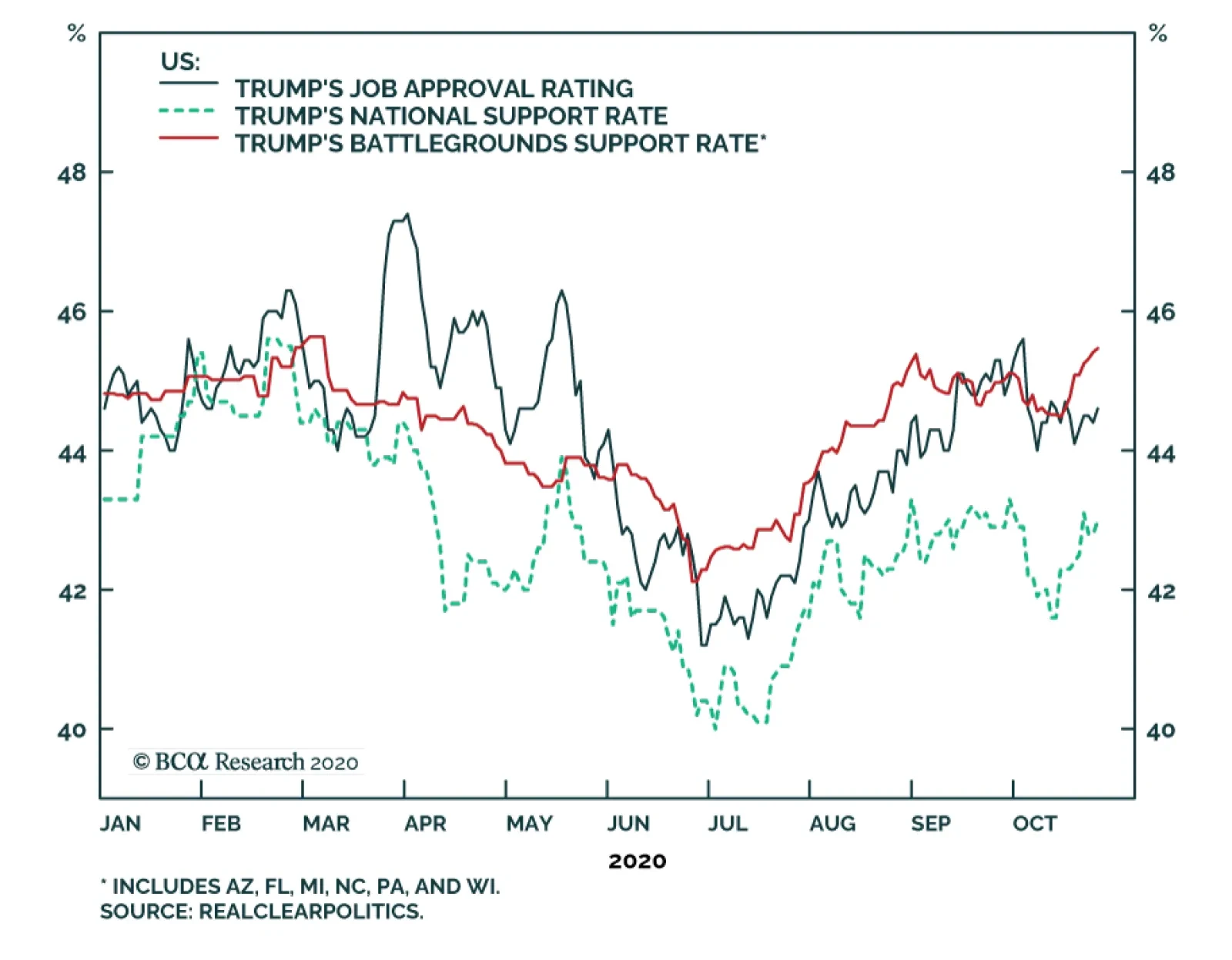
BCA Research's Geopolitical Strategy service is upgrading Trump’s odds of winning to 45%. BCA has bet on a Democratic sweep all year. Incumbent parties rarely survive recessions, and President Trump has mishandled the pandemic. However, our updated…
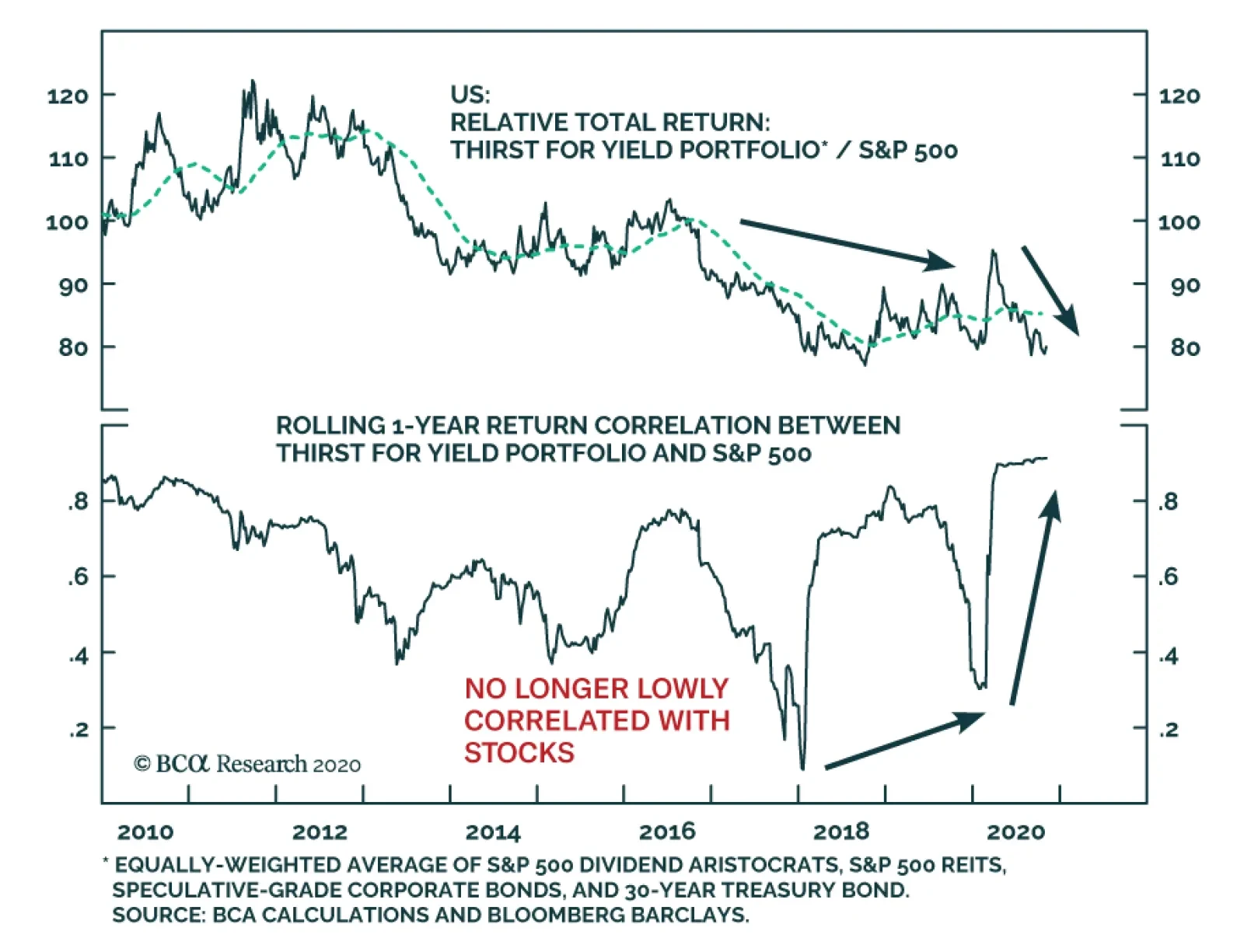
In the middle of the last economic recovery, BCA Research’s US Investment Strategy service created a portfolio to track the performance of assets popular among investors searching for yield. We dubbed it the “thirst for yield” portfolio and calculated it…
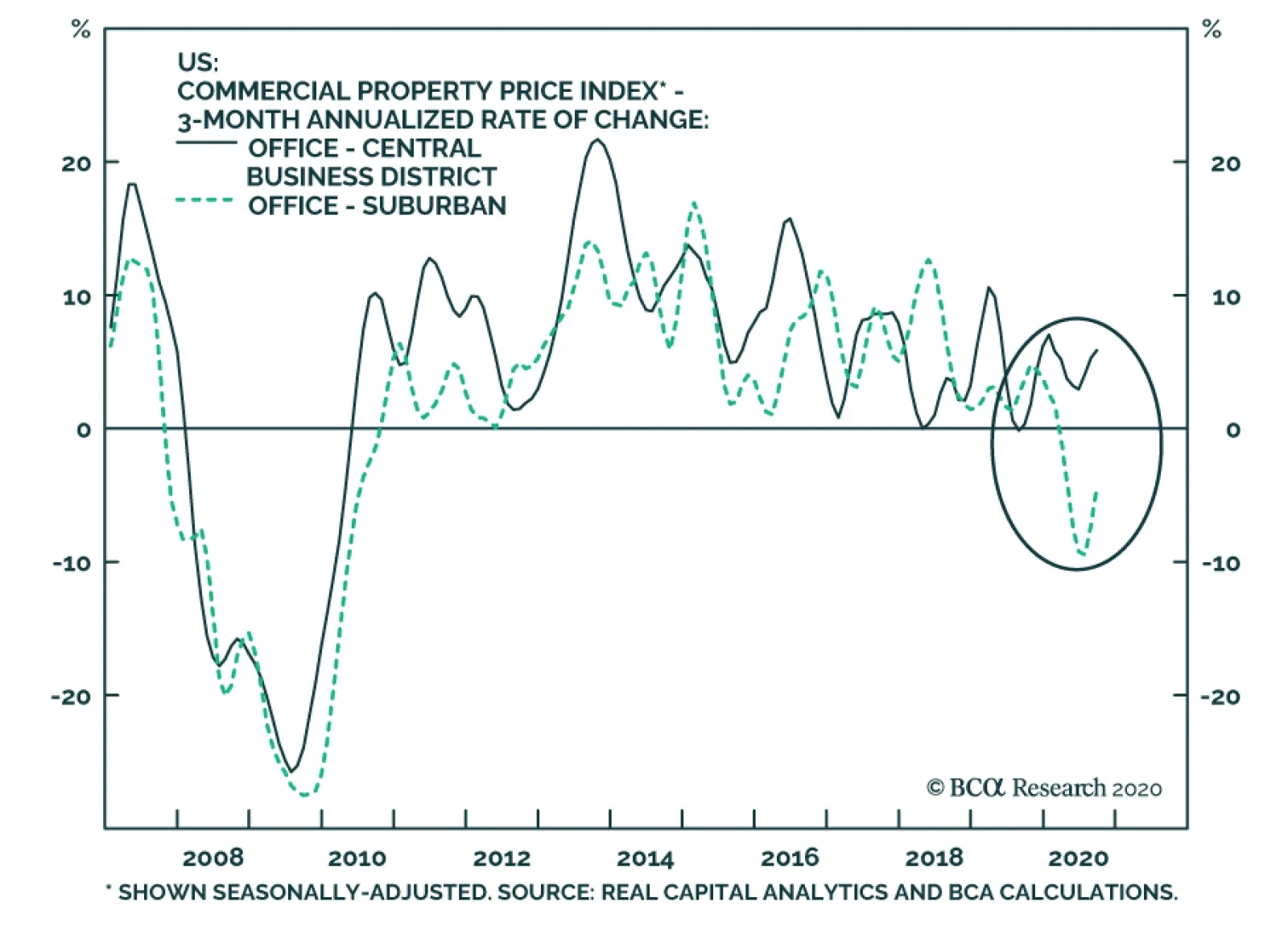
September US commercial real estate prices revealed that fears of a total collapse in the value of office property, along with the likely sizeable effects on small US bank balance sheets, have yet to materialize. We detailed the commercial real estate…
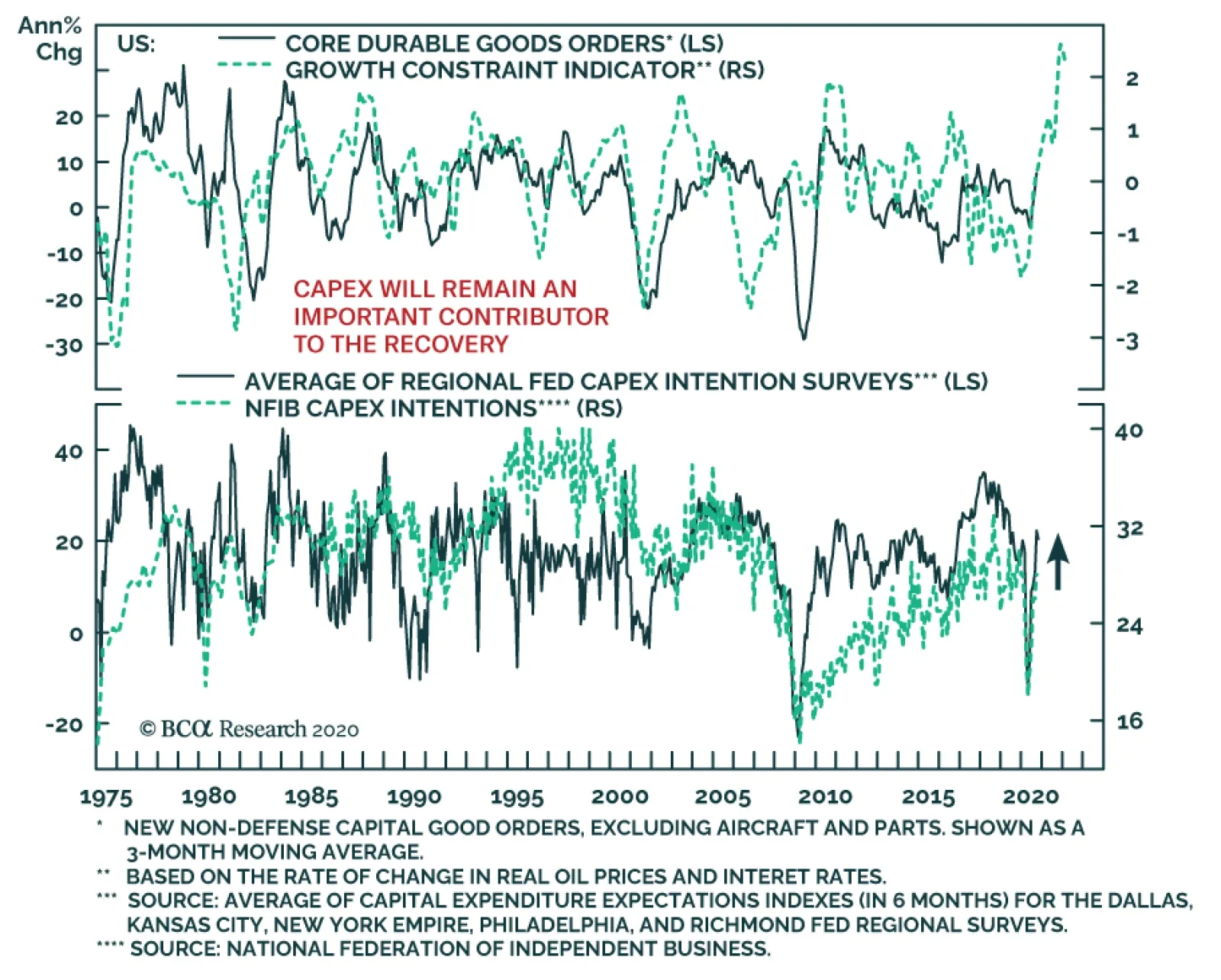
The September US Durable Goods exceeded expectations virtually across the board. Durable goods orders came in at 1.9%, handily beating consensus estimates of 0.5% and rebounding from August's revised 0.4%. Nondefense capital goods orders (excluding aircraft…
This week we instituted a new size view preferring small caps to large caps as the sector composition of the former is better positioned to benefit from reviving economic growth. Table 1 shows that industrials comprise the largest market cap weight in small cap indexes, and coupled with the materials and energy laggards, the deep cyclical (ex-tech) weight adds up to 26% or twice the SPX weight. With regard to defensives, small caps have lower exposure compared with the SPX to the tune of 700bps (ex-telecom services). Taken together, the relative cyclicals (ex-tech)/defensives (ex-telecom) gap is 20 percentage points. Moreover, rising yields will act as a headwind to the technology universe that large caps have a disproportionately high exposure to (or 14% delta with small caps). Bottom Line: We initiated a long small caps/short large caps trade with a 9-12 month time horizon via the long IWM:US/short SPY:US exchange trade funds. For more information, please refer to this Monday’s Weekly Report. Table 1
Good Things Come In Small Packages
Good Things Come In Small Packages