Economic Growth
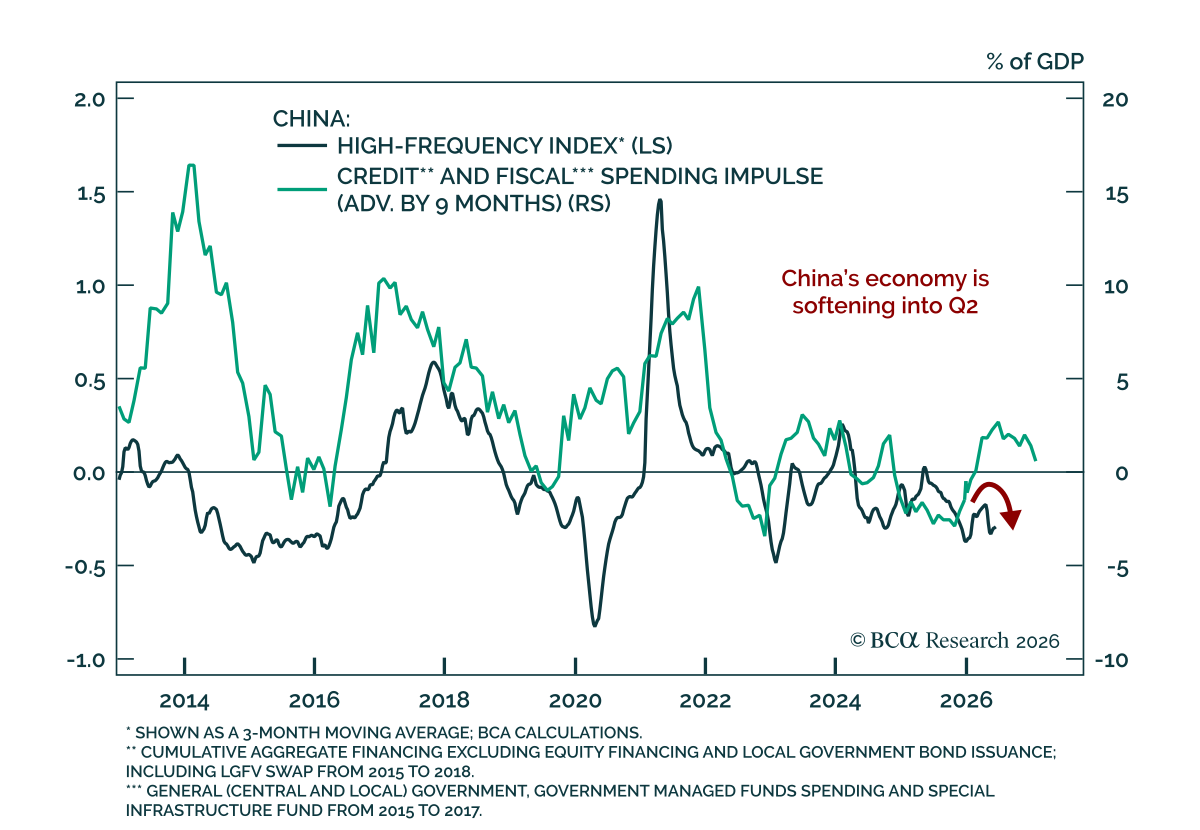
China’s weakening economy is likely to bring more fiscal support in H2, but the benefits will be concentrated and equity volatility is set to rise. Our Chart Of The Week comes from Jing Sima, Chief China Strategist. Jing looks at China’s outlook for the rest…
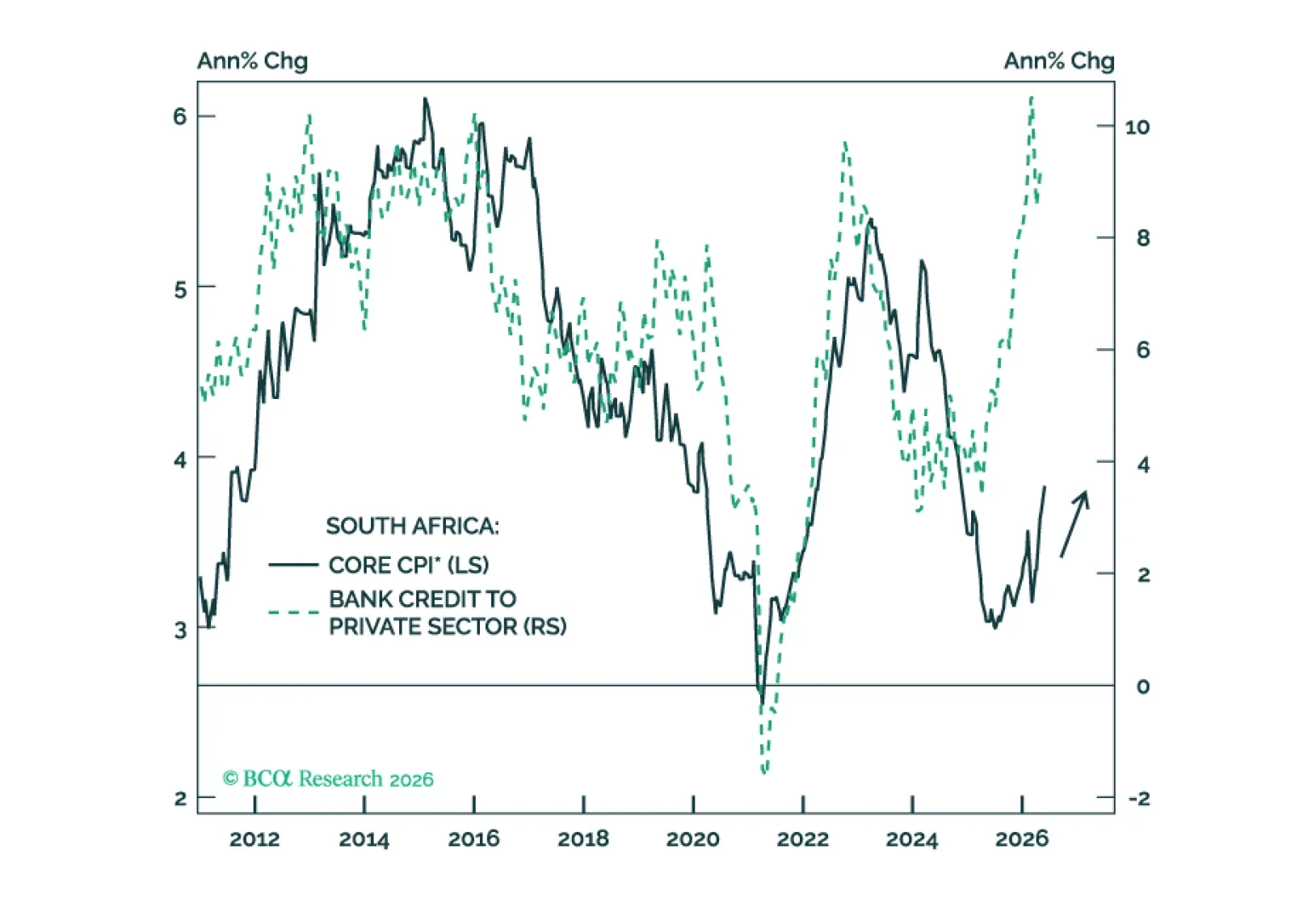
South Africa’s ambitious reform agenda will take time to bear fruit. Meanwhile, the country faces a stagflationary squeeze as inflation rises while growth slows. South African stocks, bonds, and currency are all vulnerable.
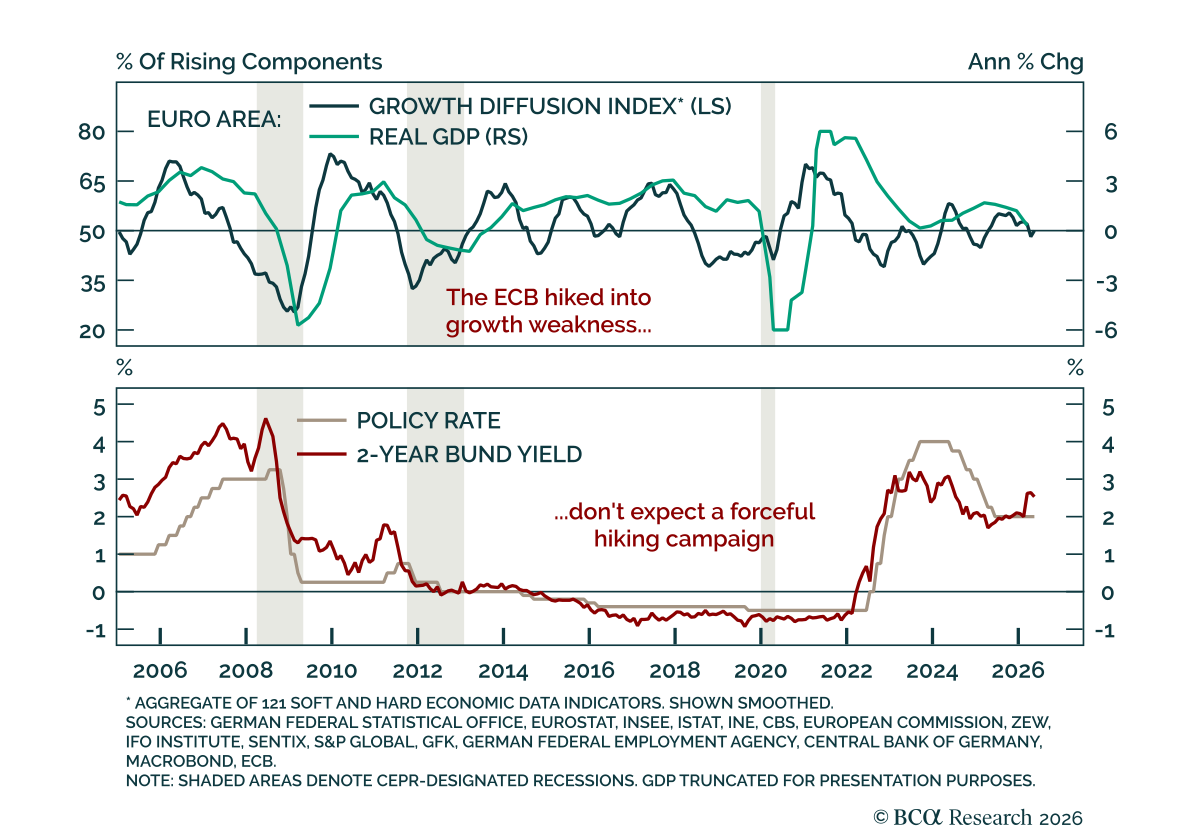
The ECB hiked as expected, but further tightening would be a mistake that ultimately supports European bonds. The policy rate was raised by 25 bps to 2.25%, as expected. The ECB also revised its inflation forecasts higher and its growth forecasts lower. It…
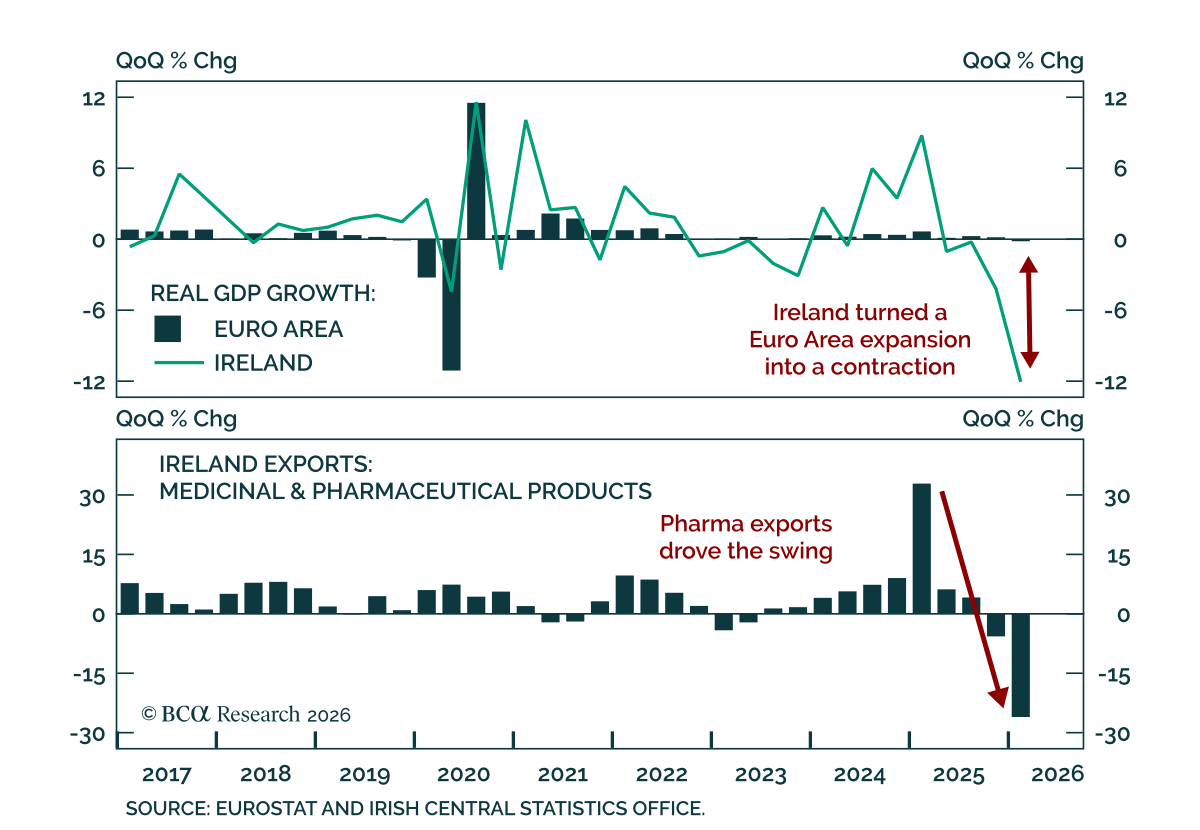
Ireland is making the Euro Area look weaker than it is. The bloc reportedly contracted 0.2% in Q1 2026, but stripping out Ireland would have shown a 0.3% expansion. That reversal can be traced back to a dramatic downward revision in Irish GDP, from -2% to…
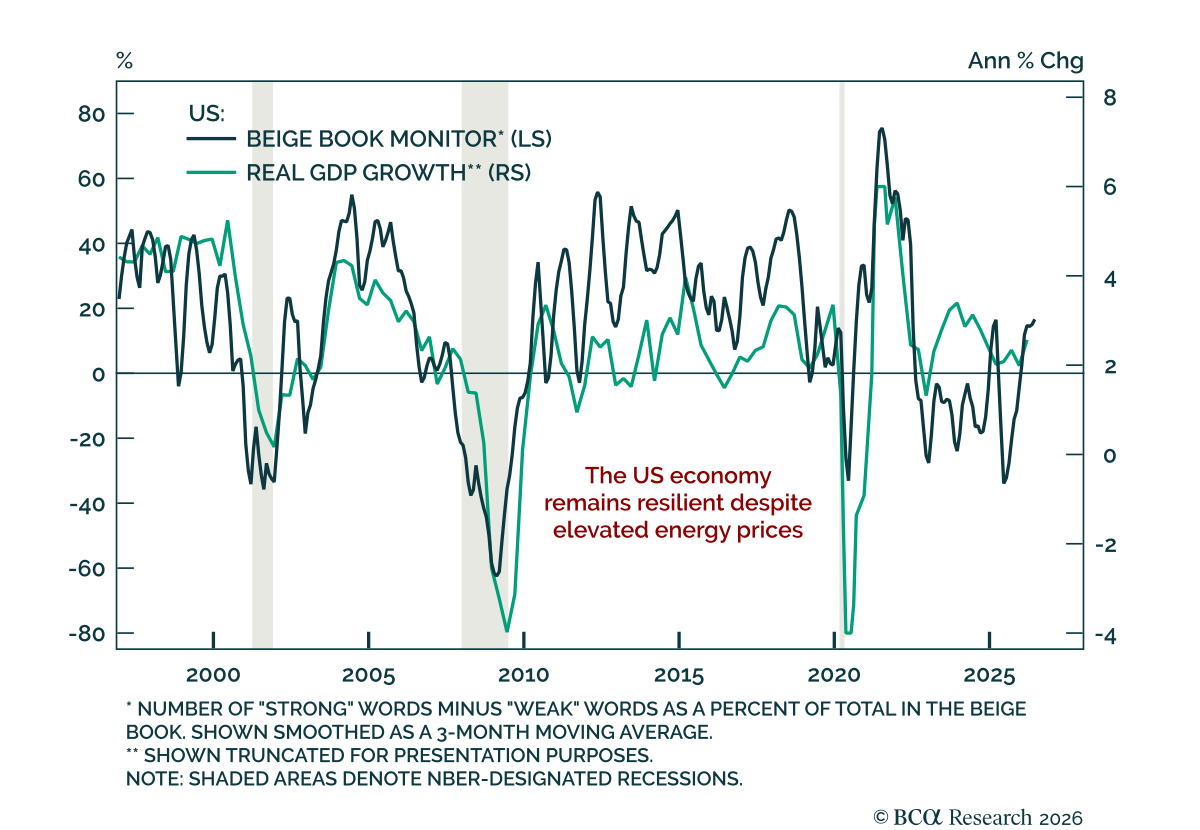
The Beige Book reinforces a slight-to-moderate growth backdrop with widening consumer stress, stronger manufacturing, and sticky cost pressures. Latest comments provide a new angle into recent developments and the sentiment of economic agents in the face of…
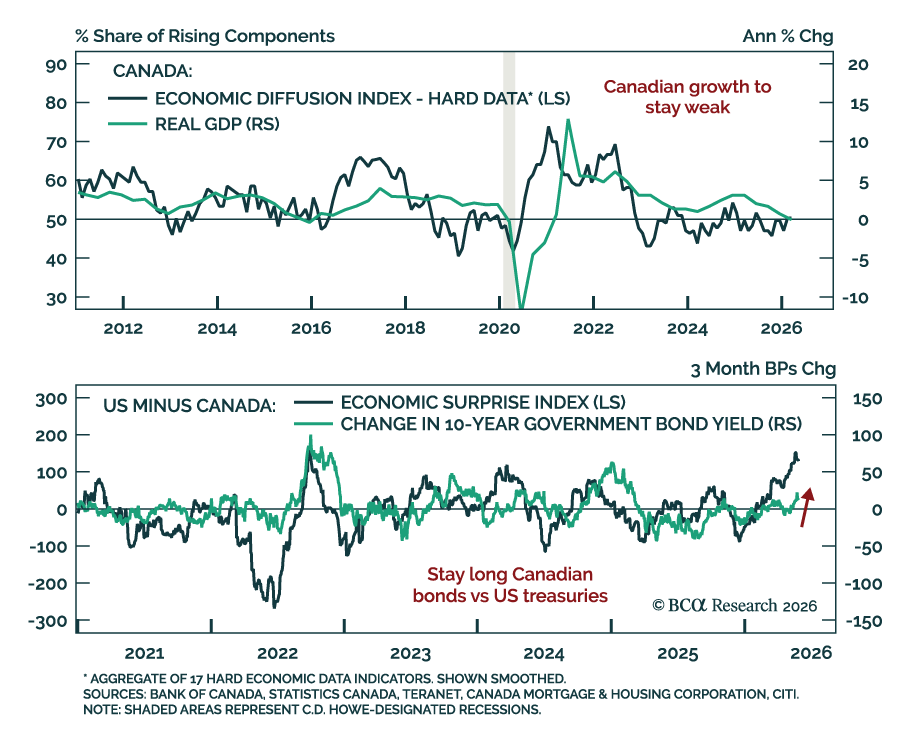
Canada’s growth backdrop has weakened sharply. Q1 GDP fell 0.1% on a quarterly annualized basis, missing expectations for 1.5% growth, after Q4 was revised down to a 1% contraction. The drag is broadening. Business capital investment fell 0.7% q/q, its…
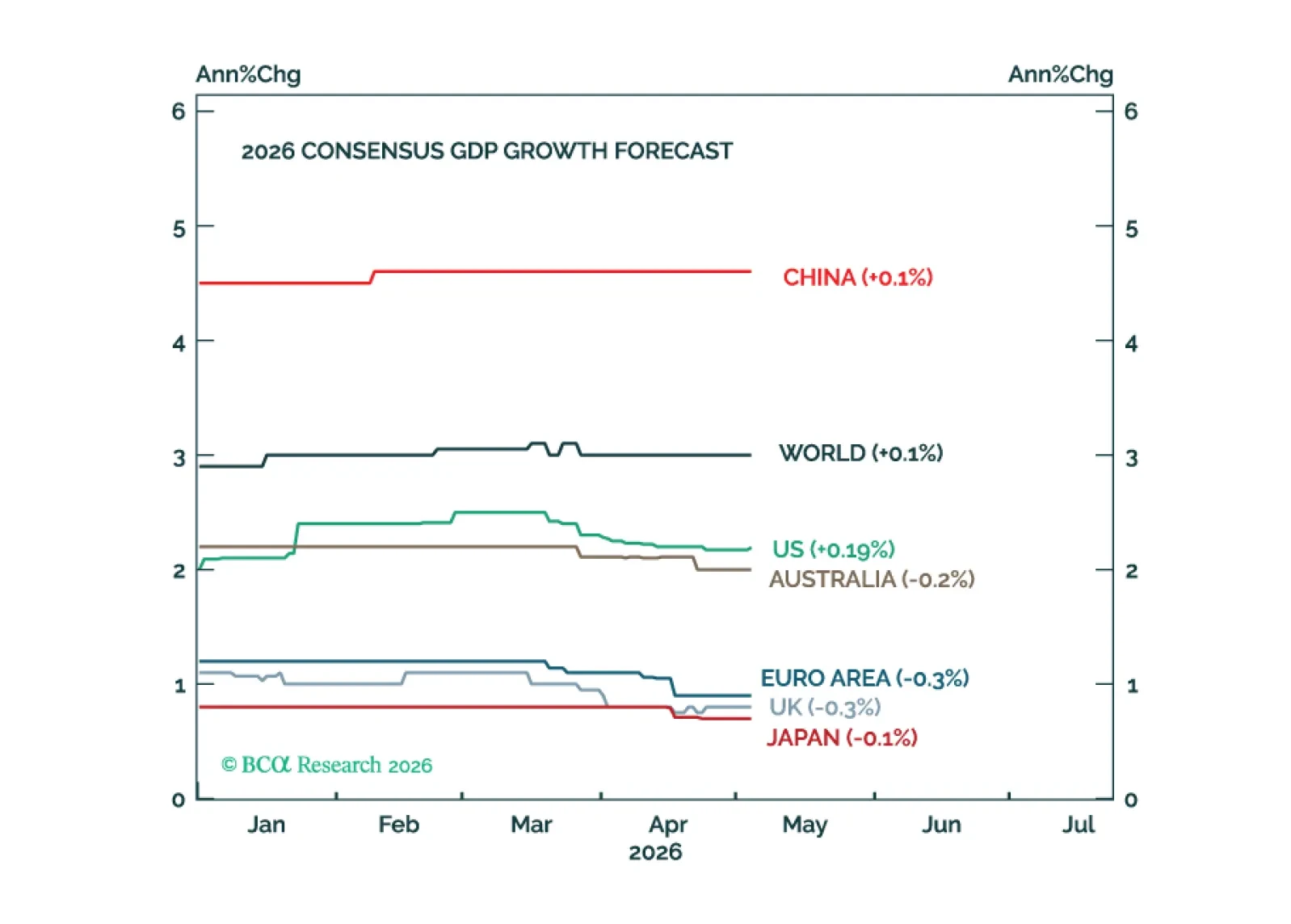
The global economy has weathered the oil shock reasonably well so far. However, the risk of a recession will increase meaningfully if the Strait of Hormuz remains closed into June.
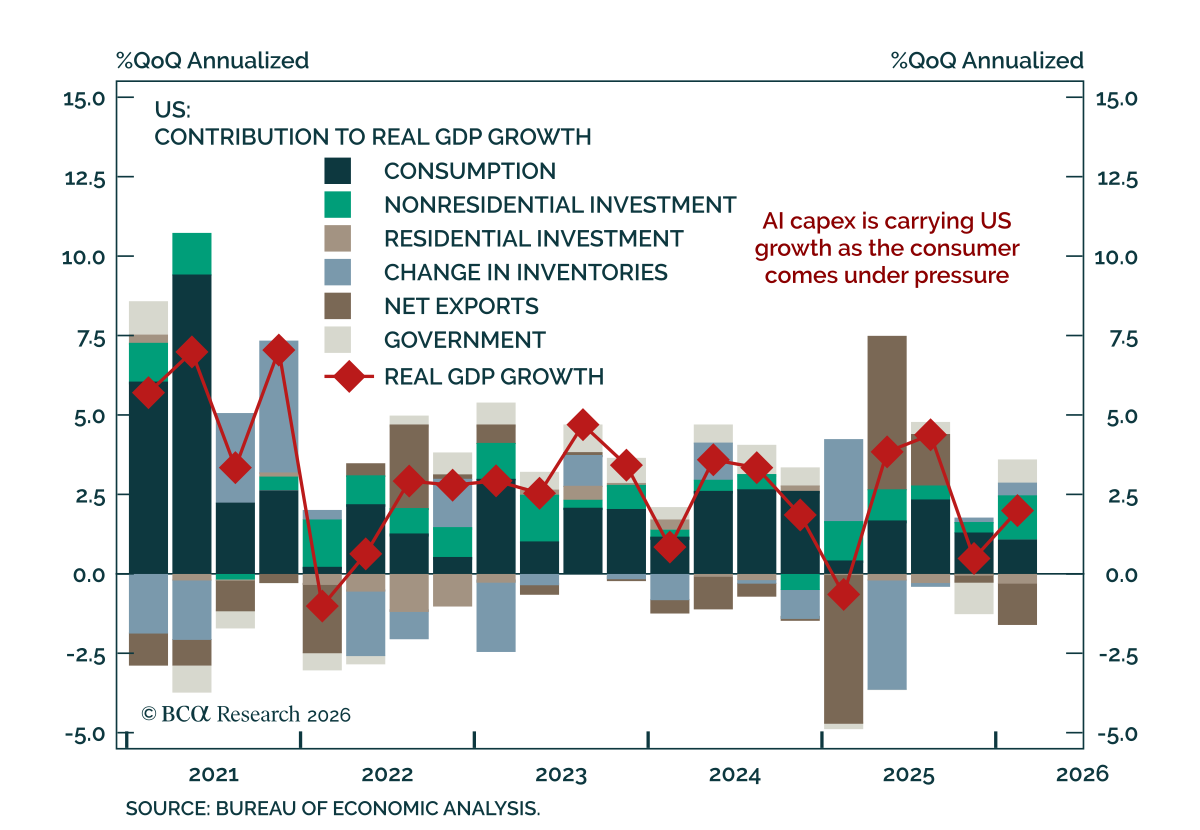
US Q1 GDP and March income data point to cooling but still-positive demand, with higher inflation keeping the Fed on the sidelines. Advanced Q1 GDP came in slightly below expectations, rising 2.0% q/q annualized from 0.5% in Q4. The Q4 2025 numbers were…
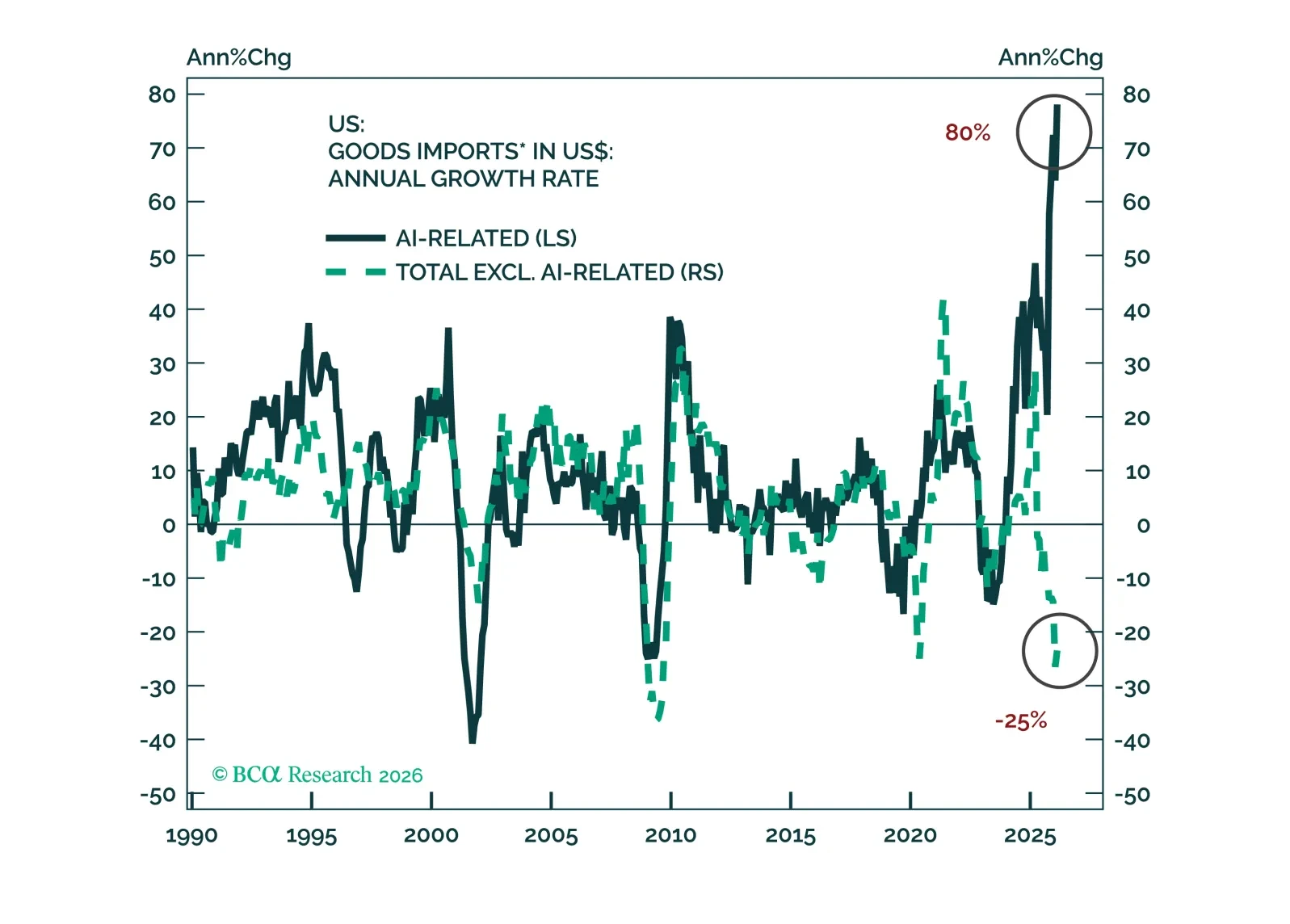
Global trade has held up despite US non-AI import volumes contracting by 25% over the past 12 months. The strength in global trade has concentrated in two areas: (1) imports of AI-related hardware and (2) developing countries’ imports, especially from China. Will these continue?
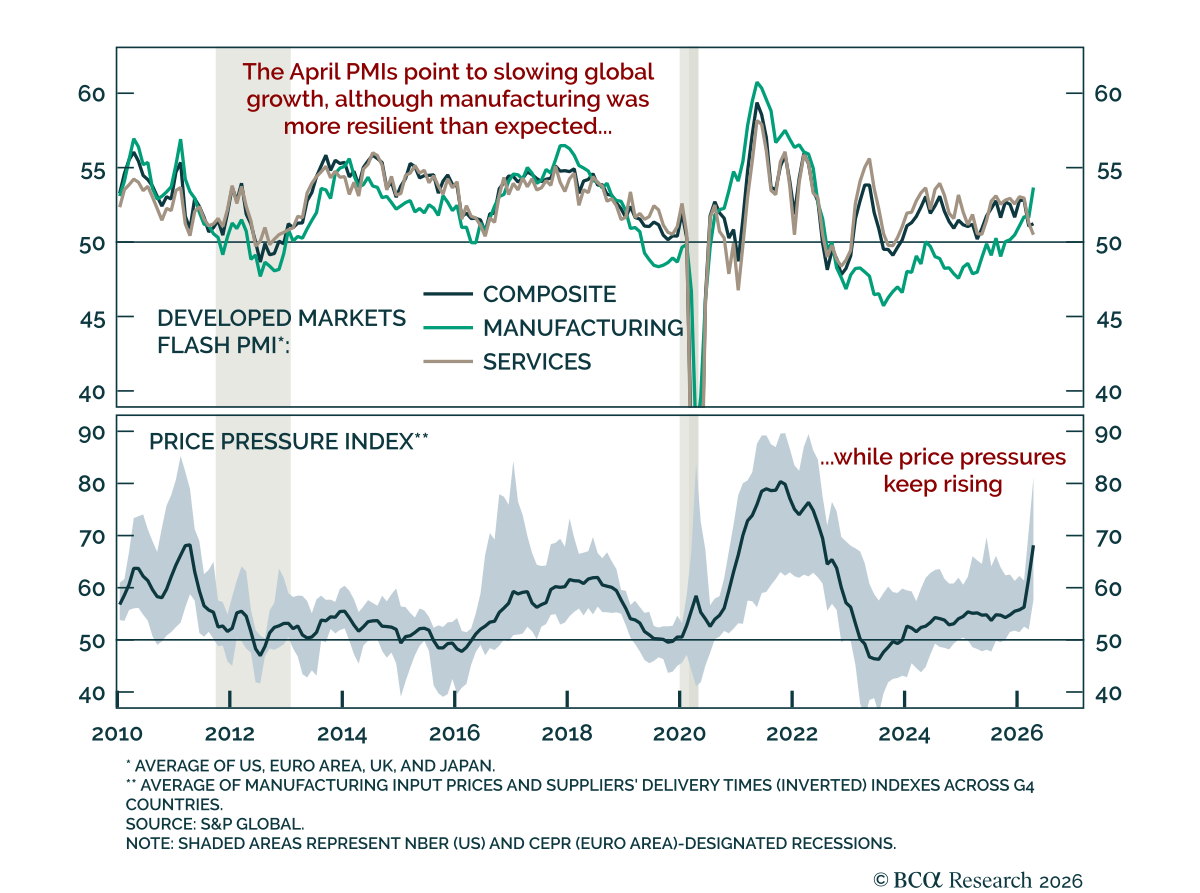
The April flash PMIs show the US weathering the energy shock better than the rest of the world, especially Europe. Global growth is slowing in the face of higher energy costs. Manufacturing beat estimates across the board, helped by longer delivery times and…