Russia
Dear Friends,
As part of our new and improved GeoMacro service, please find attached our Global Risk Outlook, a quarterly digest of scenario probabilities and estimated market impacts for all the major geopolitical topics in the world today.
Our strong record of forecasting geopolitical events with numerical probabilities — including the Russian invasion of Ukraine in 2022, Liberation Day tariffs in 2025, Iran oil shock this year, and last few US elections, among others — is reflected in the constraints-based, Bayesian, and empirical method that we use to produce this report.
The Global Risk Outlook minimizes text and narrative, instead focusing attention on our risk matrixes, with bullet points to explain each scenario. It compiles our global coverage into a single document organized by Red Alerts, Gray Rhinos, Black Swans, and Red Herrings. The forecasting horizon is 12 months, while the financial assets covered are treasuries, the dollar, US and global equities, oil, and gold. Asset allocators and risk managers around the world have found these tables useful as inputs into their investment process, including portfolio stress tests.
On the first page you will find our subjective global geopolitical risk score on a scale of one to ten. Right now the score stands at eight, pending a downgrade whenever durable ceasefires in Iran and Ukraine are settled without spreading to larger conflicts between the great powers — a positive outcome that we ultimately expect, albeit not within the next three months.
Markets have grown accustomed to a high level of geopolitical risk in recent years and are mostly trading on macro and tech themes, but they will respond to significant changes up or down from that level. In the third quarter, we expect the shaky Iran ceasefire to hold together and we give fair odds of a Ukraine ceasefire, which is neutral-to-positive for global risky assets. But we expect Russian provocations to precede a ceasefire, and Iran threats — as well as US-China trade tensions — to escalate again after the US midterm elections, preventing us from being purely optimistic in the third quarter.
Our detailed study of financial market history amid past geopolitical crises informs our estimates of market impacts — and we update our historical table of geopolitical events and market reactions over different time horizons in the appendix of every issue for your convenience.
As always, we welcome any feedback — and we appreciate your readership!
All very best,
Matt Gertken
Head of GeoMacro
mattg@bcaresearch.com
Access BCA's US Midterm Election Dashboard
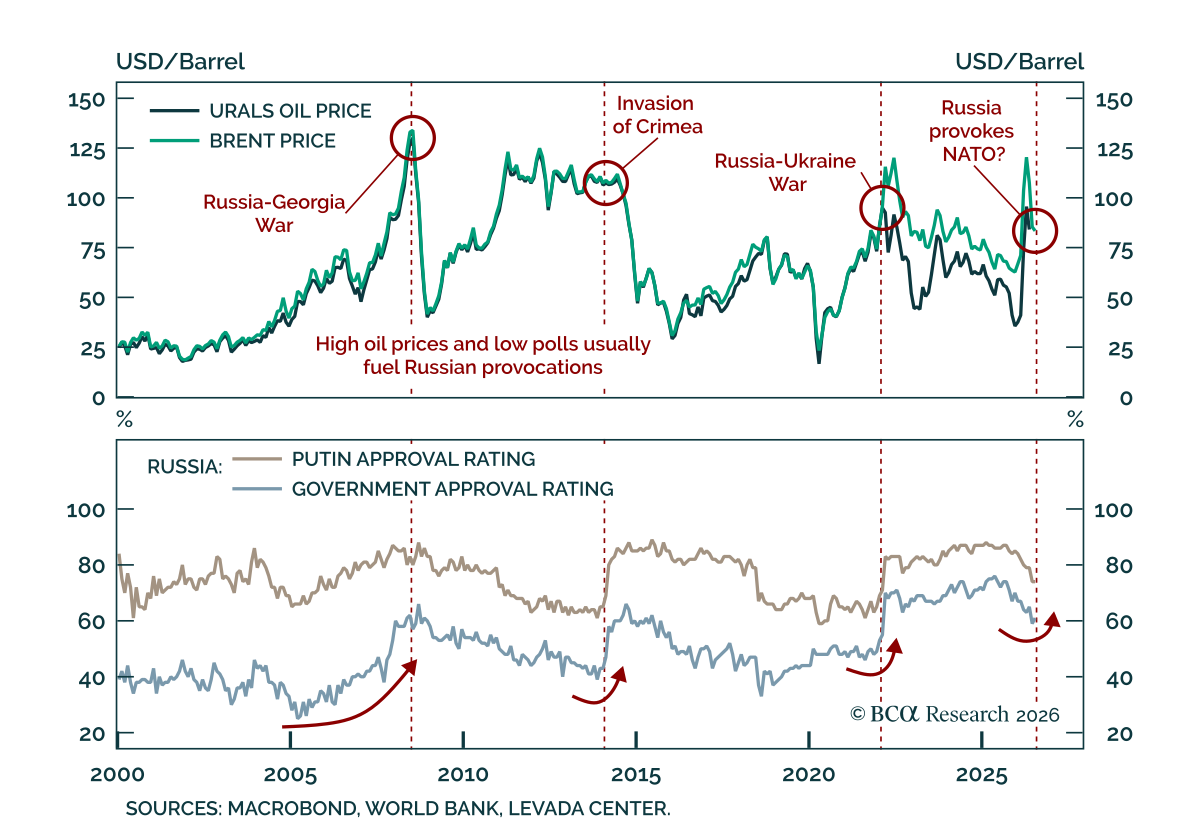
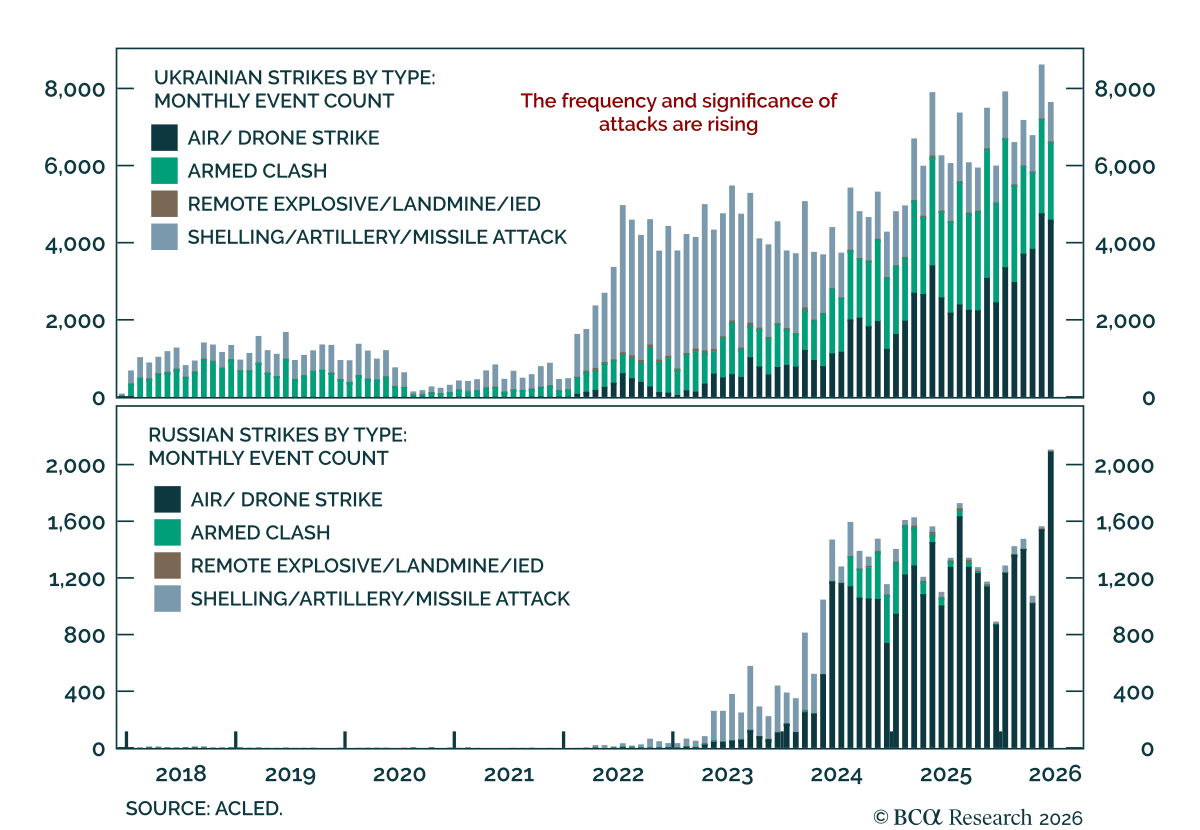
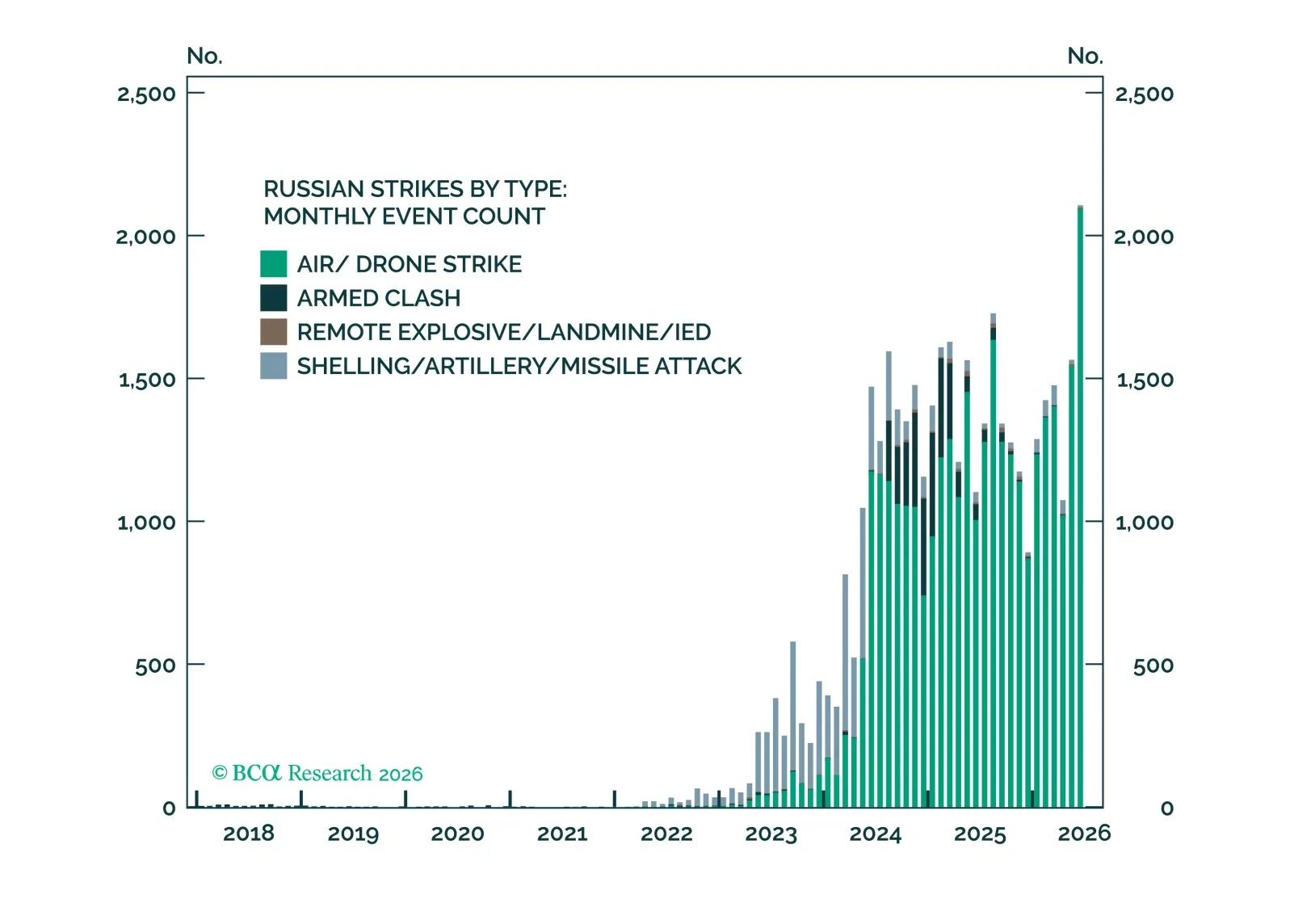
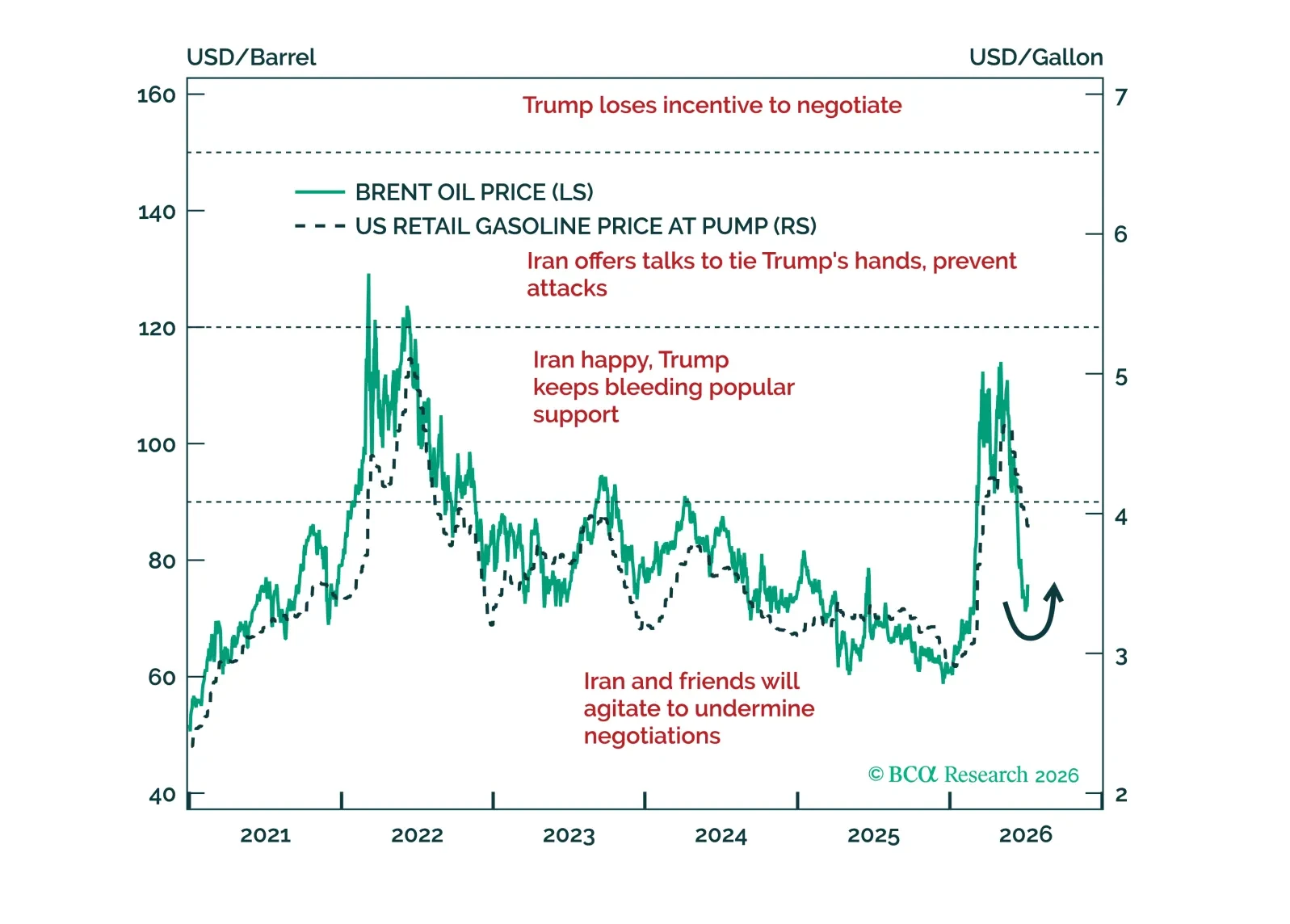
The odds of a near-term US-Iran deal have gone up slightly, but the odds of a Russian provocation that divides NATO have also gone up.
US restrictions on Russian crude exports could disrupt global oil supplies and trade flows over the near term. However, they are unlikely to have a meaningful impact on crude prices over a cyclical timeframe. Stay short Brent.
Reduce risk exposure in the very near term as President Trump's ceasefire effort falters, Russia tensions spike, and US-China trade prospects suffer.
A world of political churn favors safe havens — buy yen, stay overweight US stocks, and avoid chasing the fragile rally in China.
Rising Russia-NATO risks, tactical oil/gold trades, tougher sanctions on Russia (maybe China), China stimulus with ~5% growth target, and US checks on Trump’s ambitions will define Q4.